A warehouse team can print beautiful product labels, apply them to 12,000 cartons, stack everything three high, and then discover the tags barely read through the load. Very glamorous. Very expensive. That is the uncomfortable truth with custom rfid stickers: they are not just printed labels with a techy bonus hidden inside.
Good RFID labels sit at the intersection of packaging, electronics, and workflow planning. The artwork can look perfect. The logo can match the brand guide. The finish can feel premium. None of that matters if the inlay is wrong, the adhesive fails, or the tag lands in the one spot where the reader hates it. Physics is rude like that.
Custom RFID Stickers Are Not Just Fancy Barcodes
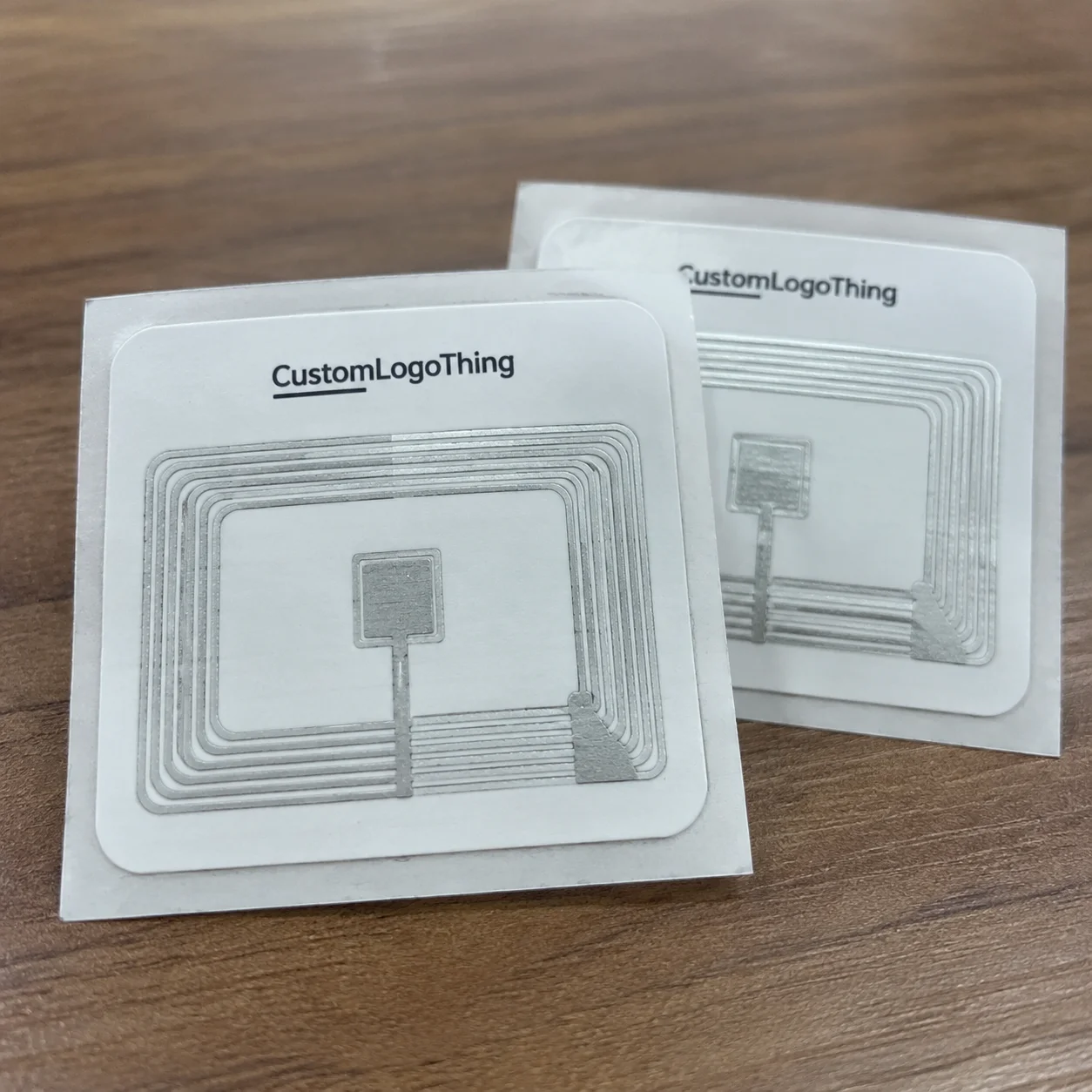
Custom RFID stickers are adhesive labels with an embedded RFID inlay, antenna, and microchip. They can also carry printed branding, QR codes, barcodes, serial numbers, batch codes, warnings, or variable product data. Think of them as labels that can talk to a reader, not just sit there looking tidy.
The main difference between RFID and a barcode is line-of-sight. A barcode must be visible and scanned one at a time. RFID can be read without direct visual contact, and in the right setup, many tags can be read quickly in bulk. That matters for inventory tracking, warehouse receiving, retail cycle counts, access control, asset management, event credentials, anti-counterfeit packaging, and smart product packaging.
Does that mean RFID scans everything from anywhere? No. That is brochure logic. Real read performance depends on frequency, antenna design, tag size, product material, reader power, reader angle, software settings, and the surrounding environment. A tag that reads beautifully on a flat cardboard mailer may be useless on a foil cosmetic pouch or stainless steel bottle.
For branded packaging, RFID can work quietly behind the scenes while the front label still supports the shelf presentation. Many programs pair the tag with printed graphics, a backup barcode, and human-readable numbers so operations teams are not helpless if a reader misses a scan. Smart buyers treat the RFID portion as a technical spec, not a decorative add-on.
Practical rule: if scan reliability matters, approve RFID performance before obsessing over the gloss level. Yes, the finish matters. No, it will not rescue a bad inlay.
How RFID Label Technology Works Inside the Sticker
An RFID label looks simple from the outside, which is partly why people underestimate it. Inside the construction, you usually have a printed face stock, adhesive layer, RFID inlay, antenna, chip, release liner, and sometimes a protective coating or laminate. Face stocks may be paper, PET, PP, direct thermal, or thermal transfer material depending on the print method and durability requirements.
Most packaging and inventory labels use passive RFID. There is no battery inside the sticker. The reader sends radio energy, the antenna collects that energy, the chip wakes up, and the tag sends back an identifier. Your software then connects that identifier to product data, location, batch, owner, shipment, or whatever record your system uses.
There are three buyer-level categories worth knowing. NFC is usually used for phone taps and short-range customer interaction. A shopper taps a phone and opens a URL, authentication page, loyalty offer, care instructions, or product story. HF RFID is also short-range and controlled, often used for library systems, tickets, cards, and some access applications. UHF RFID is the common choice for warehouse, logistics, and retail item scanning at longer ranges.
Read range is not a single magic number. It is a system result. A UHF sticker might read from 3 feet in one setup and 15 feet in another. Reader power, antenna gain, tag orientation, product density, liquids, metals, foil, and even carton stacking can change the outcome. A spec sheet helps narrow options. Testing decides.
Encoding also matters. Some RFID stickers ship blank so the buyer can encode tags in-house. Others are pre-encoded with EPC numbers, UID values, URLs, serial numbers, or database references. For larger production orders, specify encoding format, data length, lock requirements, and duplicate ID checks before the job starts. Spreadsheet chaos is not a production strategy.
Key Specs That Decide Whether Your RFID Labels Actually Scan
Start with frequency. Pick the wrong RFID type and you get expensive decorative stickers. Nice branding. Zero function. NFC works for customer phone interaction at close range, often under 2 inches. UHF works for warehouse gates, handheld readers, and retail scanning where items may be read from several feet away. HF sits in the controlled short-range middle.
Next, choose the inlay and antenna. This is not random. A carton label used on corrugated shipping boxes has different needs than a small authentication sticker on a glass jar. Metal and liquid are especially annoying because they interfere with radio waves. Standard RFID labels often perform poorly there unless you use an on-metal inlay, foam spacer, tuned antenna, or very specific placement.
Label size is another trap. Smaller looks cleaner, sure. But smaller antennas usually reduce read range and increase placement sensitivity. A 25 mm NFC sticker may work fine for phone taps. A tiny UHF tag expected to read through a dense retail shelf from 10 feet away is fantasy unless the whole system is engineered around that limitation.
Material choice affects both print quality and survival. Paper is economical for indoor dry use. PET and PP films resist moisture and abrasion better. Tamper-evident films help with authentication, warranty control, and security seals. Waterproof films make sense for cold chain, cosmetics, beverage, outdoor, and freezer exposure. Thermal transfer stocks usually hold up better than direct thermal labels when heat, sunlight, friction, or longer shelf life are factors.
Adhesive deserves more respect than it gets. Permanent acrylic adhesive works for many clean paperboard and plastic surfaces. Removable adhesive helps with temporary tracking. Freezer-grade adhesive may be needed below 32°F. High-tack adhesive grabs rough corrugated, fabric, or textured plastic. Low-surface-energy adhesive is used for tricky plastics like PE and PP. Curved bottles, oily surfaces, and flexible pouches need testing, not optimism.
Print still matters. Custom Labels & Tags can include logo printing, barcode backup, QR codes, color matching, white ink underprint, matte coating, gloss coating, and human-readable serials. If the label needs to survive handling, specify rub resistance, moisture exposure, chemical contact, and expected life span. ASTM test methods can be useful for checking label durability, adhesion, and abrasion resistance when a program needs formal validation.
| RFID Type | Typical Use | Common Read Style | Buyer Watchout |
|---|---|---|---|
| NFC | Phone taps, authentication, product pages | Very short range, usually tap distance | Not designed for bulk warehouse scanning |
| HF RFID | Access, tickets, library, controlled reads | Short-range reader interaction | Less common for long-distance inventory workflows |
| UHF RFID | Retail, logistics, cartons, asset tracking | Handheld or fixed reader at distance | Sensitive to metal, liquids, placement, and orientation |
Cost, MOQ, and Pricing Factors for RFID Sticker Orders
RFID labels cost more than regular printed stickers because each label includes an electronic component, not just ink and adhesive. Obvious, but somehow still surprising during quoting. A plain printed paper sticker might be pennies at volume. A printed and encoded RFID sticker can cost several times more, depending on the chip, inlay, material, print coverage, and testing requirements.
Typical cost drivers include RFID frequency, chip memory, antenna size, face stock, adhesive, print complexity, variable data, encoding, verification, spoilage allowance, packaging format, and quantity. A simple blank UHF label on paper stock is very different from a waterproof, serialized, branded NFC sticker with matte laminate and encoded URLs.
Small runs carry higher unit costs because setup, sourcing, proofs, testing, and machine time do not disappear at 250 pieces. Pilot orders are still smart. Just do not expect pilot pricing to look like full production pricing. Low MOQs are useful for testing; serious pricing usually improves once quantities move into the thousands.
| Order Scenario | Typical Quantity | Pricing Behavior | Best Use |
|---|---|---|---|
| Pilot test | 100-500 pieces | High unit cost due to setup and sourcing | Testing inlay, placement, reader workflow |
| Small launch | 1,000-5,000 pieces | Better unit cost, still sensitive to specs | Limited retail run, event batch, asset rollout |
| Production run | 10,000+ pieces | Lower unit cost as setup spreads out | Retail packaging, warehouse labels, recurring programs |
As a broad planning range, simple RFID labels may land around $0.12-$0.35 each in larger quantities, while specialty NFC, on-metal, waterproof, tamper-evident, or heavily customized labels can run $0.45-$1.50+ each. Very small quantities can be higher. Final pricing depends on sourcing, chip availability, dimensions, print method, encoding, and test requirements. Anyone promising one universal price is selling confidence, not accuracy.
Prepare quote inputs before asking for numbers: dimensions, quantity, application surface, target read range, RFID type if known, reader type, indoor or outdoor use, artwork, variable data, encoding needs, and delivery deadline. A cheap RFID sticker that fails on your product is not cheap. It is confetti with a chip in it.
Process and Timeline: From Test Samples to Production Run
A sane buying process starts with the use case, not the artwork. Define the job: retail inventory scanning, asset tracking, customer NFC tap, access credential, anti-counterfeit verification, or carton-level logistics. Then choose the RFID type, match the inlay, order test samples, approve the print proof, confirm encoding data, produce the labels, run QC, and ship.
Testing should happen before bulk production, especially with metal containers, liquids, cosmetics, electronics, foil packaging, cold chain items, and dense warehouse stacks. A sticker that reads on a loose sample at a desk may struggle once it is on a filled bottle, inside a case, inside a pallet, next to 60 similar tags.
Artwork proofing and RFID performance testing are two separate approvals. A perfect logo proof says nothing about read reliability. The proof confirms size, color, layout, barcode quality, serial placement, and finish. Performance testing confirms the tag works on the real product with the intended reader and workflow.
Timeline ranges vary. Sample sourcing and testing often take 3-10 business days for standard inlays and materials. Specialty inlays, on-metal constructions, unusual adhesives, or imported components can push sampling to 2-3 weeks. Production after proof approval may run 7-15 business days for straightforward orders, while encoded, serialized, or specialty material jobs can take 15-25 business days or more.
What slows jobs down? Unclear data files. Missing EPC structure. Artwork changes after proofing. No approved product sample. Specialty adhesives. Backordered inlays. Last-minute quantity changes. Database fields that do not match the encoding plan. Operations teams love to blame the label supplier, but half the delay often starts with incomplete input.
For new systems, run a pilot. Test the labels with actual readers, software, packaging, staff workflow, and storage conditions. Document read rates, failed locations, tag placement, scan distance, and exception handling. Then adjust the inlay or placement before placing the larger order. Boring? Yes. Cheaper than re-labeling 20 pallets? Also yes.
Packaging programs that ship through parcel, pallet, or retail channels may also need transport testing. Groups such as ISTA publish distribution testing protocols that help teams evaluate whether product packaging survives handling, vibration, compression, and environmental stress. RFID labels do not live in a vacuum; they live on packaging that gets dropped, rubbed, stacked, frozen, heated, and scanned by busy people.
Step-by-Step Guide to Ordering RFID Stickers Without Rework
Rework usually starts early. Someone orders labels before defining the reader, surface, scan range, or data structure. Then the labels arrive, operations tries them, and everyone discovers the “simple sticker order” was actually a technical packaging project. Fun little surprise. Avoid it with a tighter process.
- Write the job goal in one sentence. Examples: scan retail inventory by handheld reader, track reusable totes through a warehouse, let shoppers tap a phone for authentication, or identify assets during quarterly audits.
- Identify the surface and environment. List metal, liquid, glass, cardboard, plastic, fabric, freezer storage, outdoor exposure, heat, abrasion, cleaning chemicals, or curved packaging. Photos help more than vague descriptions.
- Choose the scan method. Smartphone tap, handheld scanner, fixed portal, conveyor reader, access reader, and point-of-sale reader setups all create different tag requirements.
- Decide what data lives on the tag. Many programs only need a unique ID on the chip, while the detailed record lives in software. Overcomplicating chip memory is a classic budget leak.
- Prepare production-safe artwork. Include quiet zones for barcode or QR backup, readable serial numbers, realistic color expectations, and enough clear area for the RFID inlay construction.
- Order samples before bulk production. Test them on the actual item, confirm read performance, then approve the print proof and encoding file before manufacturing.
If you are already developing Custom Packaging Products, build RFID requirements into the packaging design stage. Do not wait until Custom Printed Boxes, retail packaging, or inserts are already finalized. Label placement, material choice, and reader access may affect dielines, coatings, panel layout, and how staff apply labels on the line.
For sustainability-sensitive programs, ask about FSC-certified paper stocks where appropriate and confirm whether the RFID component affects disposal or recycling claims. The Forest Stewardship Council is a useful reference for paper sourcing claims, but an RFID label is still a mixed-material component. Be precise with claims. Greenwashing is not a packaging strategy either.
Common Mistakes That Make RFID Stickers Fail in the Field
Mistake one: placing standard RFID labels directly on metal. Then everyone acts surprised when physics does physics. Metal detunes many tags and can destroy read performance unless the label uses an on-metal inlay, spacer, or design made for that surface.
Mistake two: assuming one sticker works everywhere. A full product line may include cardboard cartons, plastic bottles, glass jars, foil pouches, metal tins, and wet products. One label spec rarely performs equally across all of them.
Mistake three: making the label too small. Marketing wants it invisible. Operations wants it magical. The antenna still needs enough physical space to do its job. If the desired read distance is long, size limits need an honest discussion early.
Mistake four: skipping packed-condition testing. Test loose units, packed cartons, stacked shelves, pallets, liquids, curved surfaces, and foil packaging. Dense tag environments can create collision issues, missed reads, or inconsistent scan zones.
Mistake five: forgetting data validation. Encoding verification, duplicate ID checks, barcode backup, and data formatting rules should be defined before production. Otherwise, enjoy the spreadsheet archaeology later.
Mistake six: choosing weak adhesive. Cold, textured, oily, flexible, curved, or low-energy surfaces are not kind to basic adhesive. If the sticker falls off, the RFID did not fail. The label construction failed.
Quality control should include more than a visual check. For production programs, ask about read testing, sample retention, barcode grading if backup codes are used, serialization checks, and packing sequence. For retail and logistics programs, consistency matters because one bad roll can create hours of receiving headaches.
Next Steps: Build a Test-Ready RFID Sticker Brief
Before asking for a quote, create a one-page brief. Keep it simple, but include the details that affect function. The supplier cannot Choose the Right inlay from “we need a smart label for packaging.” That sentence is basically fog with a logo.
- Sticker basics: size, shape, quantity, face material, finish, artwork, and whether variable printing is needed.
- Application details: product photos, surface material, curve radius if relevant, indoor or outdoor use, temperature range, abrasion, moisture, and handling conditions.
- RFID requirements: NFC, HF, or UHF if known; target read range; reader type; scan direction; and whether tags are read one at a time or in bulk.
- Data requirements: blank tags, pre-encoded IDs, serialized printing, QR or barcode backup, database format, lock protection, and duplicate ID checks.
- Testing plan: sample quantity, real product samples, reader model, success criteria, and who approves performance before production.
Send physical product samples when possible, especially for metal, liquid, curved packaging, cosmetics, electronics, freezer products, or dense retail displays. Photos help. Real samples help more. If the item has a coating, foil layer, moisture content, or unusual shape, the label needs to meet the actual thing it will live on.
Start with a small test batch, document read results, adjust inlay or placement, then move into the production quote. Custom rfid stickers work best when the buyer treats them like a technical packaging component, not a last-minute label rushed onto the purchase order because someone saw a competitor using smart packaging.
FAQ
What are custom RFID labels used for?
They are used for inventory tracking, asset management, retail item tagging, product authentication, access control, event passes, and smart packaging. The best use case depends on scan distance, reader type, product material, and whether customers or internal teams need to interact with the tag.
How much do custom RFID stickers cost?
Pricing depends on RFID type, inlay, chip memory, material, adhesive, print complexity, encoding, testing, and order quantity. Small pilot runs have higher unit costs, while larger production runs usually reduce the per-label price once setup and sourcing are spread out.
Can RFID stickers work on metal or liquid products?
Yes, but standard RFID stickers usually perform poorly on metal and liquid unless the tag is designed for that surface. Use on-metal inlays, spacers, proper placement, and real product testing before approving bulk production.
Can custom NFC stickers be scanned with a phone?
Yes. NFC stickers are a type of RFID label that many modern smartphones can scan at close range. They are best for customer interactions, authentication pages, product information, loyalty programs, and tap-to-open URLs.
Do RFID stickers need to be encoded before shipping?
Not always. Some buyers order blank tags and encode them in-house, while others need pre-encoded tags matched to serial numbers or database records. For production orders, encoding verification and duplicate ID checks are worth specifying. Otherwise, enjoy the spreadsheet archaeology later.