A finished stack of garments should mean the hard part is over. In practice, the label station is often where the line slows down. That is the setting where custom thermal labels prove their value: they let apparel teams print size stickers, barcode labels, carton IDs, and short-life retail tags on demand without turning packing into a bottleneck.
The design is only one part of the job. A label can look fine on a screen and still fail in production if the stock is wrong, the adhesive is too aggressive, or the printer method does not fit the use case. Apparel teams have to balance product packaging, retail presentation, and warehouse handling at the same time. A label spec should be treated like production equipment, not decoration.
The practical goal is straightforward. Pick the right stock, print method, adhesive, and run size before the first roll ships. That is how you avoid reprints, scanner failures, and last-minute label swaps that slow a launch.
Why thermal labels fix the messy-label problem
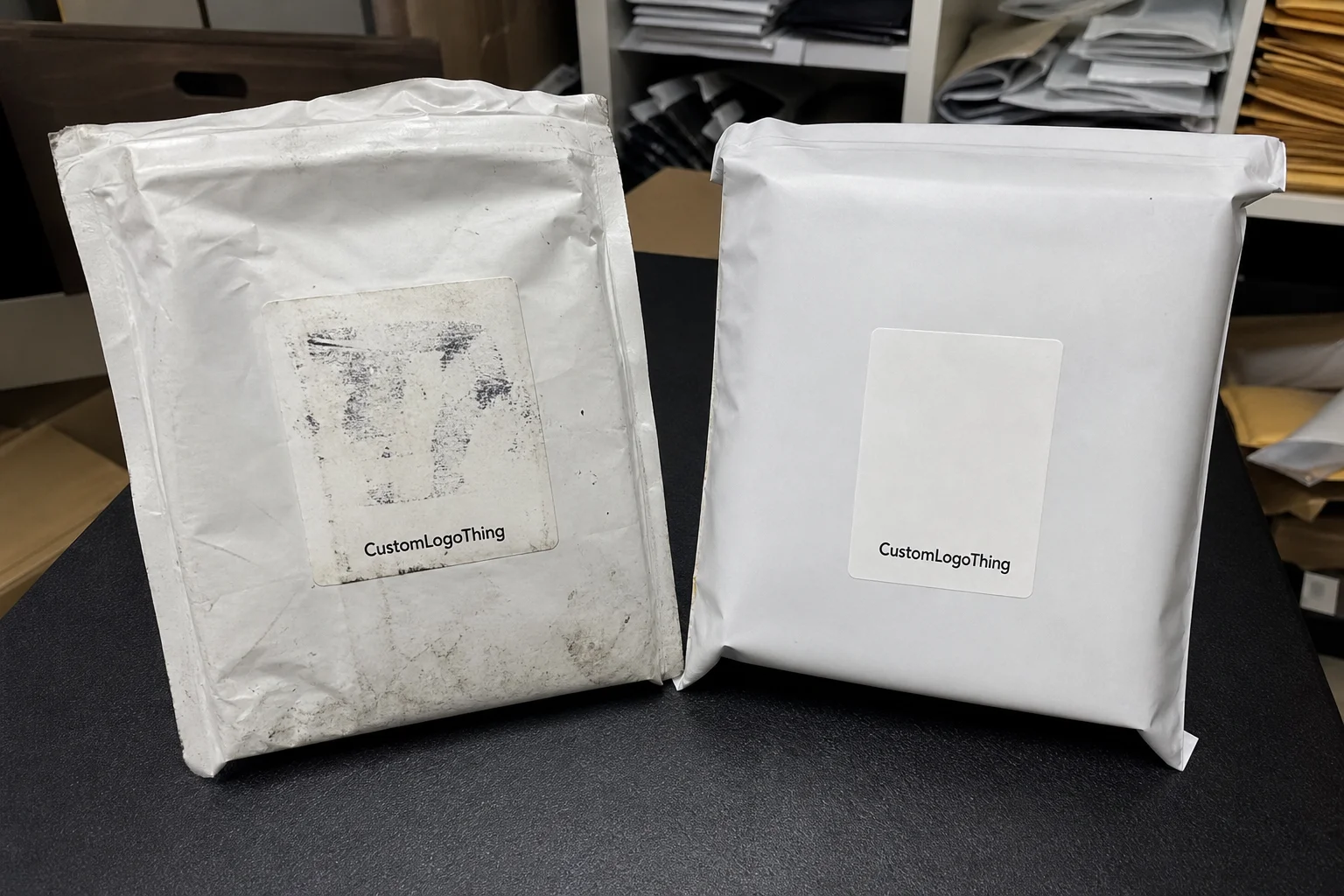
Thermal labels are built for on-demand printing. Instead of preprinting large quantities of static labels and hoping the SKU data never changes, you print only what you need, when you need it. That matters in apparel because size runs change, colorways get added, and packing teams need labels that can keep up.
The use cases are not interchangeable. A size sticker on folded apparel is not the same thing as a carton label for receiving. A barcode label for an internal bin does not need the same surface finish as a price tag on retail packaging. Care labels, hang tags, bundle stickers, and shipping labels all have different durability requirements, even if they originate from the same printer room.
Handwritten tags still show up in smaller operations, and preprinted labels still make sense for fixed information. Both break down quickly once volume rises. Handwriting creates inconsistency. Static labels create waste. Custom thermal labels reduce both problems by standardizing the information and printing it close to the point of use.
If you are building Custom Labels & Tags into a broader packaging system, the label has to match the job. A stock that survives a warehouse shelf may be overbuilt for a soft polybag. A label designed for garment surfaces may not hold up on corrugated cartons. That mismatch is where money disappears.
If the label has to survive friction, storage, or temperature swings, the cheapest stock is often the most expensive choice later.
How custom thermal labels work in apparel
There are two main print methods: direct thermal and thermal transfer. They are related, but the durability difference is real.
Direct thermal uses heat to activate a coating on the label itself. No ribbon. No second consumable. That keeps the setup simple and fast, which is useful for short-run size stickers, shipping labels, and temporary carton labels. The tradeoff is durability. Heat, sunlight, friction, and long storage can fade the print.
Thermal transfer uses a ribbon to transfer ink onto the label surface. It usually produces sharper print and stronger resistance to handling, moisture, and storage. If the barcode needs to stay readable for a longer stretch, or the label will rub against fabric, film, or outer packaging, thermal transfer is usually the safer choice.
The real tradeoff is speed versus staying power. Direct thermal is efficient for temporary labels. Thermal transfer costs more because of the ribbon, but it lowers the risk of reprints and unreadable codes. That matters more than the line-item ribbon cost suggests.
| Option | Best for | Typical durability | Relative cost |
|---|---|---|---|
| Direct thermal | Short-life size labels, shipping labels, temporary IDs | Days to a few months, depending on storage | Lower upfront cost |
| Thermal transfer | Barcode labels, warehouse labels, longer-use garment tags | Better resistance to friction, handling, and fading | Higher upfront cost, lower reprint risk |
Printer settings matter more than most teams expect. Darkness, speed, and calibration all affect scanability. A barcode can look acceptable to the eye and still fail at the scanner because the bars are too light, the contrast is weak, or the stock bleeds at the edges. That is a production issue, not a design issue.
Application matters too. A hang-tag barcode may need thermal transfer because it stays in inventory longer. A polybag sticker may only need to survive a short packing window and can use direct thermal. A warehouse ID label may need synthetic stock if dust, moisture, or cold storage are in the picture. One printer room does not mean one label specification.
Specs to lock down before you request samples
If you ask for a quote without a clear spec sheet, the supplier has to guess. That is how buyers end up with the wrong core size, the wrong roll direction, or a label that does not load in the printer they already own.
Start with the basics: label width, label height, shape, core size, outer roll diameter, roll direction, and printer compatibility. Those details control whether the job runs cleanly or turns into a jam problem. If the plant uses Zebra, SATO, TSC, or another platform, say so clearly. “Desktop printer” is too vague to be useful.
Next comes the face stock. Paper works for many short-life jobs. Top-coated paper improves print sharpness and holds up better against minor abrasion. Synthetic films perform better with moisture, oil, and heavy handling. Specialty stocks make sense for harder jobs, but only if the use case justifies the cost. Overbuilding a label for a short-life sticker is wasteful.
Adhesive choice deserves the same attention. A removable adhesive is useful for temporary application and clean removal. Permanent adhesive is safer for retail labeling and shipping. Freezer-grade adhesive is for cold storage. Strong tack helps on textured or uneven surfaces, but it can be too aggressive for garments if the label has to come off cleanly. The adhesive should match the surface, not the assumption.
Layout matters as much as material. A SKU, barcode, size, price, lot number, and care note do not all need equal space. If the label is overloaded, the barcode usually loses first. That is a bad trade. The point of custom thermal labels is to make data readable, not to force every field into a tiny square.
Before production, ask for a sample roll and test it on the actual printer, actual speed setting, and actual surface. If the label will go on a polybag, test on the same polybag. If it will go on corrugate, test on the same carton. A desktop proof is not a workflow test.
For broader packaging programs, it helps to keep the label spec aligned with Custom Packaging Products so artwork, carton markings, and retail-facing materials do not work against each other. A packaging system should reduce decisions at the packing table, not create new ones.
Standards can help keep the conversation grounded. If a label or package has to withstand transit testing, the ISTA test library is a useful reference point. If paper-based packaging is part of the plan, the FSC system is worth knowing. Neither one picks the right label for you, but both help separate marketing language from actual performance.
What custom thermal labels cost and what changes the quote
Pricing moves with material, adhesive, print method, quantity, roll configuration, and finishing. If you want a clean quote, describe the use case. Otherwise, the number you receive may be accurate in the abstract and wrong in practice.
At small quantities, setup costs and proofing time matter a lot. As the order grows, those fixed costs spread out and the unit price falls. That drop is real, but not linear. A 500-roll order is not automatically ten times cheaper per unit than a 50-roll order because every job still needs artwork review, setup, and press time.
These are practical pricing ranges for common apparel label runs:
| Run Type | Typical Unit Range | What Usually Drives It |
|---|---|---|
| Simple direct thermal roll labels | $0.02-$0.05 per label | Paper stock, standard adhesive, basic black print |
| Custom thermal transfer labels | $0.04-$0.10 per label | Ribbon requirement, more durable stock, tighter tolerances |
| Specialty or synthetic labels | $0.08-$0.18 per label | Moisture resistance, stronger adhesive, more demanding print quality |
Those ranges move with quantity, coverage, and finishing. A barcode-only label is cheaper than one with a logo, multiple text fields, and a special surface treatment. Sequential numbering and variable data add handling. Coated synthetic stock pushes the quote upward.
The hidden costs are the ones that cause real pain. Ask about rush charges, freight, extra proof rounds, and artwork cleanup. Those can change the real total more than the face stock does. Two quotes can look close until one includes shipping, setup, and proofing while the other does not.
There is a simple rule here. If the label has to survive handling, washing, shipping, or cold storage, paying for the right stock is usually cheaper than scrapping failed labels and reworking product. That is especially true in clothing, where one weak label can slow the whole order.
From a packaging standpoint, the label should support the product, not distract from it. In some programs, better label execution improves shelf read and reduces confusion at receiving. It is not the same thing as custom printed boxes, but it still shapes the customer’s first impression of the product.
Production steps and lead time from file to shipment
A sound thermal label job follows a predictable sequence. Art review comes first. Then proofing. Then sample approval if the application is sensitive. After that comes production setup, printing, slitting, packing, quality check, and shipment. Each step exists because the next one depends on it.
Delays usually begin with bad inputs. Missing barcode specs. Artwork exported incorrectly. No clear roll direction. Last-minute text changes after proof approval. A printer operator can only run what was approved, and “close enough” is not a production spec.
Simple reorders move faster because the setup already exists. New custom jobs take longer because the supplier has to confirm artwork, output, and stock compatibility. For a straightforward run, a lead time of roughly 7 to 12 business days after proof approval is common. More complex jobs, especially those using synthetic stock or variable data, often land in the 12 to 15 business day range, sometimes longer if revisions pile up. Rush orders can compress that, but they usually cost more.
One planning mistake shows up constantly: labels are ordered after apparel production is already close to shipping. Once that happens, every delay is visible. The packing team gets blamed for being late, even though the real issue was sequencing. That is avoidable.
Label timing should be part of the same schedule as cartons, inserts, and outer packaging. If your labels, Custom Packaging Products, and garment bags all run on different clocks, launch coordination gets messy fast.
Mistakes that make labels unreadable, smudged, or rejected
The most common failure is choosing a stock that looks fine in a sample photo and fails in the real workflow. Fabric contact, plastic film, moisture, and cold storage behave differently. A label that sticks to matte carton board may lift on slick polybags or smear after a few hours in a warm packing area.
Poor contrast is another easy route to scan failure. Tiny type and low-contrast barcodes are trouble, especially on labels with a lot of copy. If the scanner has to work hard, the line slows down. That is why barcode sizing and quiet zones matter. The label is a tool. It has to read cleanly under pressure.
Adhesive mismatch causes a lot of waste. Too weak, and the label falls off. Too strong, and it leaves residue or damages the garment. On apparel, that matters because the customer sees the damage before they see the product. Sticky residue on a premium shirt is not a small defect. It is a return risk.
Skipping test prints is another classic mistake. A label can look correct on a desktop proof and still fail at production speed because density, temperature, or ribbon type was off. Test it on the real printer, at the real speed, with the real handling conditions. That is the only test that matters.
Storage problems are quieter, but they still create waste. Rolls left in heat, humidity, or sunlight can degrade before they are opened. Mixing print methods can also create issues, because direct thermal and thermal transfer behave differently over time. Core size still matters too. A roll can be technically correct and still be useless if it does not fit the machine.
From a waste-reduction standpoint, failed label runs are avoidable scrap. Material choice, print method, and storage practices all affect how much ends up in the trash. The EPA has useful baseline resources on waste prevention and responsible material handling. Not glamorous, but relevant.
There is a broader packaging lesson in that. A label system should fit the workflow, not the mockup. Good product packaging systems reduce friction. Bad ones multiply exceptions. Exceptions cost money.
How to choose the right run size and next steps for ordering
Start with the use case. Is the Label for Retail, warehouse scanning, or garment packaging? The answer changes the spec. A retail-facing label may need cleaner print and easier removal. A warehouse label may need durability and scan reliability. A temporary size sticker only needs to stay attached long enough to do its job.
Then choose the print method. If the label is short-life and low-stress, direct thermal can be efficient. If it has to hold up under handling or storage, thermal transfer is usually the safer call. After that, match the adhesive to the surface instead of the assumption. Polybags, cartons, and fabric-backed items do not behave the same way.
For a first run, keep the quantity conservative unless the SKU system is already stable. If the artwork, barcode data, or packaging layout is still changing, a smaller run limits exposure. If the system is locked and the label will be reused across multiple drops, a larger order can lower unit cost in a way that actually matters.
A useful quote request should include:
- Label size and shape
- Material and finish
- Adhesive type
- Quantity
- Printer model and core size
- Roll direction and roll diameter
- Barcode format or sequential numbering needs
- Target turnaround
Ask for a line-item quote. That gives you visibility into where the money goes instead of treating the order like a black box. If the supplier cannot separate material, setup, and freight, comparison shopping becomes guesswork. Clear costing saves budget.
For apparel brands, the safest path is usually sample, test, approve, then reorder. That sequence catches the weak points before they hit the line. Custom thermal labels work best when the spec matches the actual workflow instead of the imagined one.
What are the best custom thermal labels for clothing brands?
The best option depends on whether the label is temporary, retail-facing, or used for warehouse scanning. Direct thermal is usually fine for short-life applications; thermal transfer is better when the print needs to last longer. Match the adhesive to the garment or packaging surface so the label stays put without damaging the product.
Do custom thermal labels work on polyester, cotton, and polybags?
Yes, but the adhesive and face stock need to match the surface. Smooth polybags usually need less aggressive tack than textured fabric cartons or woven garment bags. Always test on the actual surface before approving a full run.
How long do thermal printed clothing labels last?
Direct thermal prints are best for short-term use because heat, light, and friction can fade them. Thermal transfer prints last longer and are the safer choice for storage, shipping, or handling-heavy workflows. Longevity depends on stock quality, ribbon choice, and storage conditions.
What should I include in a quote request for custom thermal labels?
Include label size, material, adhesive, quantity, printer type, roll direction, and whether you need barcodes or sequential numbering. Add any special requirements like freezer use, removable adhesive, or fast turnaround. The more exact the spec sheet, the fewer quote revisions you will need.
What is the smartest order size for a first thermal label run?
Start with the smallest run that still lets you test the label in real use. If the label is part of a stable SKU system, a larger run can lower unit cost quickly. If art, barcode data, or product packaging may change soon, keep the first run conservative.

