A custom travel makeup bag looks simple until it has to survive real use. The logo usually does not fail first. The zipper does. Or the seam. Or the lining after one leaky foundation bottle rides around in a packed carry-on and leaves a mess nobody wanted to clean up at 6 a.m.
That is the part buyers miss if they only look at mockups. The bag has to protect cosmetics from pressure, moisture, and friction while staying small enough to fit inside a tote, weekender, or suitcase pocket. Cute matters. So does cleanup. A good custom travel makeup bag does both without pretending it is a luxury object first and a working item second.
What a custom travel makeup bag has to survive on the road
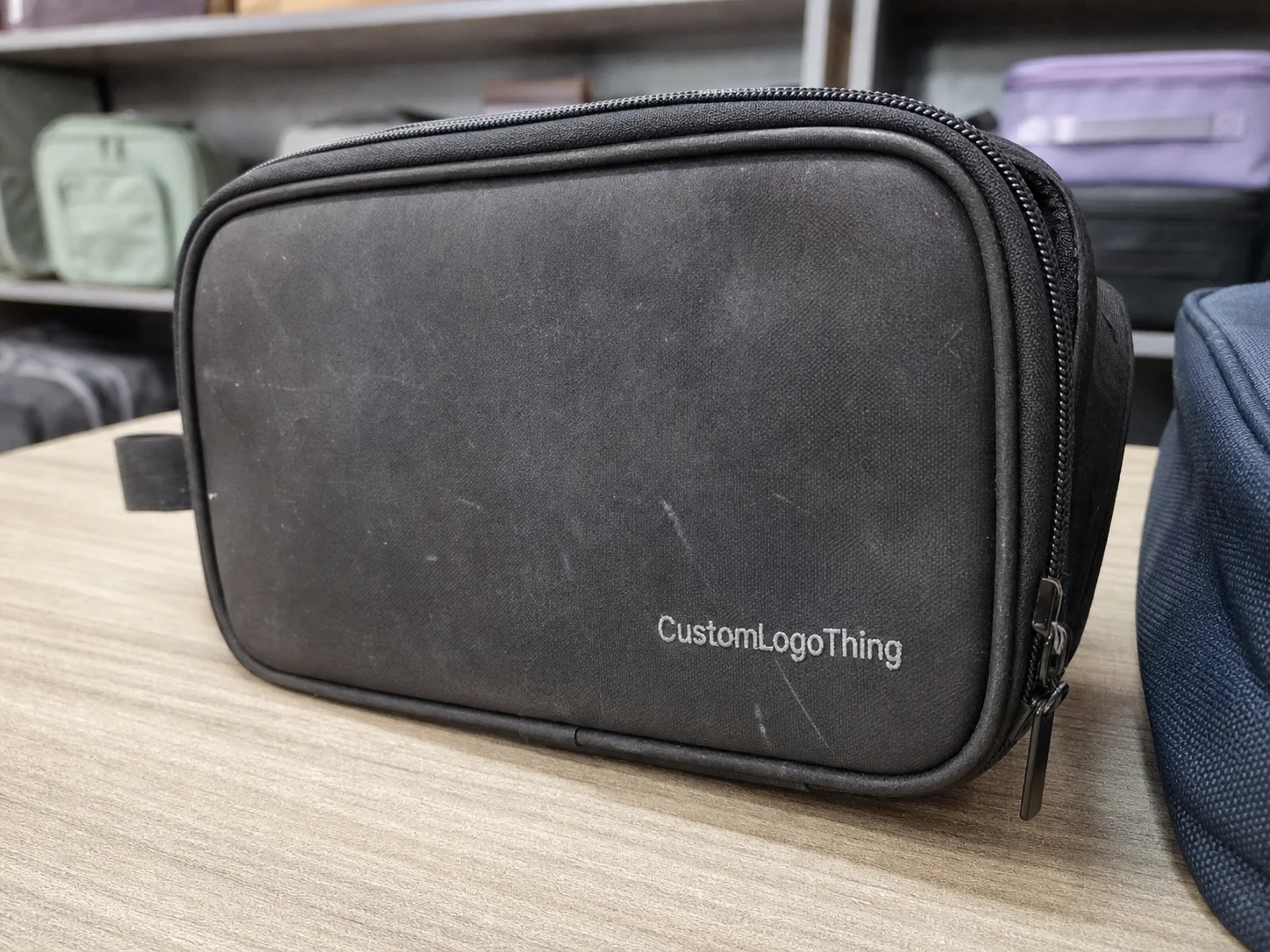
People picture a pouch. In practice, it is a small container that gets shoved into luggage, pulled across hotel counters, opened with one hand, and packed too full by people who swear they are only bringing “the essentials.” The design has to handle pressure, spills, and repeated zipper use. If it cannot survive that, the branding is irrelevant.
Material choice shapes most of the experience. Fabric looks soft and premium, but it absorbs stains and odors faster than buyers expect. Plastic-based builds clean up faster, which is why EVA, PEVA, TPU, and PVC keep showing up in travel cosmetic bags. They wipe clean, resist damp surfaces, and hold shape better under load. That is not marketing language. It is the reason they get ordered.
The usual failure points are predictable: the zipper track, the side seam, and the bottom corners where weight builds in a crowded bag. A pouch should be treated like product packaging for personal items, not as a decorative extra. Strong construction supports the brand story just as much as package branding on a retail set or Custom Printed Boxes around a gift kit.
Most complaints do not start with the print. They start with leaks, odor, weak zippers, or a bag that looked larger online than it does in someone’s hand.
The best version of this product starts with a real use case. A minimalist weekend pouch is not the same thing as a bag built for brushes, skincare, and multiple liquid products. If the buyer defines the routine first, the bag can be sized and structured around reality instead of a fantasy of perfect packing.
Materials, liners, and closures that keep contents clean
Material choice drives odor, clarity, stiffness, wipeability, and cost. PVC is usually the lowest-cost option and can deliver strong clarity and good shape retention, though some buyers care about odor and compliance questions. EVA is lighter and often feels cleaner in hand, with solid structure and easy wipe-down performance. PEVA sits in the middle for softness and price. TPU usually costs more but tends to feel more refined and premium.
Thickness matters just as much as material type. A film around 0.20 mm to 0.30 mm may be enough for a lightweight promo pouch, but a travel case that needs real durability usually lands closer to 0.35 mm to 0.50 mm, depending on the shape and closure. Thicker material improves body and dent resistance. It also raises cost and can make the bag feel stiffer. There is no free lunch here.
Closure quality is where many first-time buyers get caught. A zipper that seems fine on a flat sample can become annoying in a cramped bathroom when someone is opening the bag with wet hands. Smooth alignment matters. So does the puller shape. If the closure is hard to grip, the product will feel cheap even if the material is decent.
Leak resistance depends on the seam method as much as the material. Welded seams are usually better for spill-prone builds because they avoid stitch holes and help keep liquid inside the pouch. Reinforced stitching can work on hybrid designs that use textile panels, but stitching is not the same thing as leak containment. If a bottle cap fails, the seam construction becomes part of the cleanup story.
Transparency versus privacy is another practical tradeoff. Clear panels help users find lipstick, liner, or skincare fast. Opaque panels hide clutter and can make the bag feel more finished. Many buyers want both, which is reasonable. A mixed build usually handles that best: clear front, opaque back, and a gusset or base that gives structure without turning the pouch bulky.
If the order includes paper inserts, sleeves, or belly bands, FSC-certified stock can support the sustainability story in a cleaner way. For those components, the FSC standard is worth checking because it gives the buyer a stronger sourcing claim than vague “eco-friendly” language ever will.
How the process and timeline usually work from proof to shipment
The production flow is predictable if the buyer gives useful information. It starts with inquiry, then quote, artwork review, sample or mockup, approval, mass production, quality check, and shipment. The process only gets messy when details stay vague and everyone hopes the missing pieces will sort themselves out later. They will not.
A clean spec sheet saves time. The factory needs dimensions, material type, thickness, closure style, logo file format, print area, packaging requirements, and destination country if compliance questions matter. If any of that is unclear, proofing slows down. If pocket layout changes after sampling, the clock resets. That is not drama. It is production.
Lead times depend on complexity and capacity. A simple stock-style pouch with basic print can often move from proof approval to production in about 12 to 18 business days. A more customized bag with special shaping, compartment dividers, or unusual hardware can stretch to 20 to 30 business days before shipping. Freight time comes after that. Air is faster and more expensive. Ocean is slower and cheaper, which matters if the launch date is fixed.
Sampling is where buyers should pay close attention. A digital proof shows placement. It does not show feel. A physical sample shows zipper action, seam behavior, odor, stiffness, and how the bag holds shape when packed. If the pouch will move through retail packaging or e-commerce fulfillment, ask whether it was evaluated against an ISTA profile or a similar drop and vibration test sequence. Not every pouch needs lab-level testing, but basic transit testing is not overkill.
Delays usually come from the same few places:
- Artwork is still changing after proofing starts.
- Color targets are described as “close enough.”
- Dimensions leave room for interpretation.
- The buyer approves a sample before packing it full.
- Packaging details, including custom printed boxes or inserts, get added late.
The fastest path is dull, which is usually a good sign. Lock the spec first. Approve the sample quickly. Keep revisions tight. That is how a custom pouch stops acting like a moving target.
Custom travel makeup bag cost, MOQ, and quote drivers
Price depends on more than the logo. Material thickness, zipper type, number of compartments, print method, finish, and packaging all move the number. MOQ matters too. Bigger runs spread setup costs across more pieces, so the per-unit price drops. Smaller runs cost more per unit. That is normal, not a secret fee structure.
For a straightforward build, a rough range at 5,000 pieces might look like this:
| Build style | Typical use | Indicative unit price | What drives the cost |
|---|---|---|---|
| Basic PVC pouch | Simple promo or retail packaging insert | $0.18-$0.32 | Film thickness, one-color print, standard zipper |
| EVA or PEVA travel case | Mid-range travel organizer | $0.28-$0.55 | Material grade, welded seams, shape retention |
| TPU premium pouch | Higher-end branded packaging or gift set | $0.45-$0.85 | Cleaner finish, premium feel, tighter quality control |
| Multi-pocket organizer | Brushes, skincare, and larger kits | $0.65-$1.40 | Compartments, binding, extra labor, larger cut size |
Those figures are directional, not universal. They are still useful because they keep the conversation honest. If one quote comes in far below the others, something is missing. Most of the time it is sampling, freight, packaging, or a hidden tooling charge. Sometimes it is just a thinner material than the buyer expected.
The clean way to compare quotes is to make every supplier price the same spec sheet. Same dimensions. Same material. Same zipper. Same print coverage. Same packaging. Anything else is a comparison between different products that happen to share a name, which is how budgets get distorted and arguments start.
Big price drivers include full-color printing, metallic hardware, thicker transparent film, custom labels, and internal dividers. Special packaging can add another layer if the order needs hang tags, inserts, or Custom Packaging Products that match the pouch branding. If the project also needs presentation boxes or shelf-ready retail packaging, treat that as a separate line item instead of burying it inside the pouch price.
Rule of thumb: if the quote feels too cheap, check what it excludes. If it feels too expensive, check whether the supplier priced a premium zipper, a heavier film, or a retail-ready kit instead of just the pouch.
Sizes, pockets, and layouts that match real makeup routines
The right size depends on how the bag will actually be used. A minimal carry-on kit might only need concealer, mascara, lip color, and a few tools. A weekend bag usually needs room for skincare minis, cleanser, brush handles, and a compact mirror. A larger organizer can handle palettes and bottles, but once it grows too much, it stops being convenient and starts behaving like another piece of luggage.
For most buyers, a useful pouch lands around 7 to 10 inches wide for compact routines and 10 to 12 inches wide for fuller kits. Depth matters just as much as width. A wide pouch with no gusset looks fine flat on a table and becomes frustrating the second it gets stuffed.
Pocket layout should follow use, not decoration. Too many compartments make loading and cleaning harder. A brush loop helps if the user carries brushes often. A flat bottom keeps the bag stable on hotel counters. A wide opening makes it easier to see what is inside, which sounds obvious until someone is digging for lip balm in a dark carry-on pocket.
Transit matters too. A pouch that bulges too much wastes space and crushes other items in the suitcase. A controlled profile fits better in luggage and looks cleaner on a retail shelf. That matters if the bag is part of a broader product packaging or gift-set program where presentation influences the sale.
Some brands want the pouch to double as a display piece. That can work, but the best designs stay practical first. A clear panel, one useful divider, and a strong zipper usually beat a cluttered bag with five pockets nobody uses. Smart packaging design is not about adding features. It is about avoiding bad ones.
If the product line already includes tote bags, boxes, or rigid sets, the pouch should stay aligned with the rest of the system. Fabric texture, print style, and closure finish should not fight the collection. That matters even more if the launch also includes custom packaging options for a broader retail kit.
Common mistakes when ordering travel cosmetic bags
The biggest mistake is choosing a pouch that looks premium in photos but fails basic use tests. A glossy finish can hide weak seams. A nice zipper pull can still snag. A transparent panel can still smell if the material grade is poor. Buyers sometimes approve a sample based on appearance alone and skip the part where they pack it full. That is how problems show up too late.
Overbranding is another trap. A giant logo can overpower the product and leave no room for structure, pockets, or a clean layout. Brand visibility matters, but the pouch still has a job to do. If the logo size wrecks function, the brand has not been strengthened. It has just been printed on a weak product.
Skipping sample testing is expensive in a quiet way. A zipper that feels fine on a proof can be stiff in hand. A welded seam can look neat and still fail under pressure. A pouch that smells acceptable in a sample room can smell different once it has been packed in bulk and boxed for shipping.
Size mismatch is another classic problem. A spec sheet that says “medium” is not a spec sheet. It is a guess. Buyers need exact dimensions, gusset depth, zipper length, and closure type. If the size is vague, the sample can be technically correct and still completely wrong for the use case.
Color mistakes happen for the same reason. A buyer says “soft beige” and the factory hears something else. If the brand needs consistency, provide Pantone references, finish notes, and whether the pouch should match existing branded packaging. If the bag is part of a cosmetic set, the color should fit the visual system instead of drifting off on its own.
Another miss is forgetting the outer package. If the bag is meant to sell at retail or ship as a gift item, the outside presentation matters. That may mean a paper sleeve, insert card, or custom printed box. If those details are not defined early, the pouch can be perfect and the launch can still feel unfinished.
Next steps for a sample, spec sheet, and order plan
The cleanest ordering sequence is straightforward. Define the use case first. Lock the dimensions next. Then choose material, closure, pocket layout, and branding method. After that, gather the artwork files and ask for a quote based on one exact spec sheet. Vague briefs create vague pricing. Nobody benefits from that.
Ask for at least one sample review, physical if possible and digital if the timeline is tight. Check size, feel, seal quality, logo placement, and zipper action before bulk production starts. If the sample shows a problem, fix it before the order turns into thousands of reminders of a design mistake.
Then compare two or three quotes against the same spec. Not three different versions of the product. The same spec. That is the only way to see whether the cost gap comes from material grade, labor, packaging, or margin. It also makes negotiations easier because the numbers are actually comparable.
If the project sits inside a larger merchandising plan, line up the pouch with the rest of the launch package. That may include cartoning, inserts, or other custom packaging products. A travel cosmetic bag can stand alone, but it usually performs better as part of a coherent retail packaging set.
Planning checklist:
- Use case defined: daily carry, weekend travel, or multi-product organizer
- Dimensions confirmed in inches or millimeters
- Material chosen with thickness target
- Closure and seam style specified
- Artwork files prepared in vector format if possible
- Packaging needs listed, including inserts or boxes
- Sample review scheduled before bulk approval
If those steps happen in order, the custom travel makeup bag becomes a controlled production item instead of a guess. That is the difference between a quote that keeps moving and a project that actually ships on time.
Frequently Asked Questions
What size should a custom travel makeup bag be for carry-on use?
A practical carry-on size usually lands around 7 to 10 inches wide for a compact routine, with more room if the bag also needs to hold brushes or skincare minis. The right size depends on whether the user carries only makeup or a full routine. Pick a size that still closes cleanly when full, because an oversized pouch turns into a clutter problem fast. A custom travel makeup bag should fit the routine, not force the routine to fit the bag.
Is a custom travel makeup bag waterproof or just water-resistant?
Most are water-resistant or splash-proof unless the seams, zipper, and material are built for stronger leak control. PVC, EVA, and welded-seam constructions usually handle spills better than standard fabric pouches because they wipe clean instead of soaking up liquid. If the buyer wants real leak protection, the closure and seam method matter as much as the surface material. The outside finish alone does not solve the problem.
What is the typical MOQ for a custom travel makeup bag?
MOQ varies by factory and by how customized the bag is, but smaller runs usually cost more per unit because setup is spread across fewer pieces. Stock-style pouches are easier to order in lower quantities than highly customized shapes, printed panels, or multi-pocket builds. A quote should show whether MOQ is tied to material sourcing, print method, or packaging requirements. If it does not, ask for a cleaner breakdown before you approve anything.
How long does sampling and production usually take?
Sampling is usually the first bottleneck because the buyer has to approve size, material, closure, and decoration before bulk production starts. Once the sample is approved, production time depends on artwork complexity, stock availability, and whether the design needs special construction. Fast buyer approval can save days. Slow revision cycles can do the opposite. If the project includes a custom travel makeup bag, the sample stage is where most delays can still be avoided.
What artwork files do I need for a custom travel makeup bag logo?
Vector files are best because they keep edges sharp at different print sizes and reduce proofing errors. The factory also needs logo placement, color references, and any small text that must stay readable. If the artwork is not final, send the cleanest source file available so the proof stage stays accurate. That makes the logo review faster and helps the bag match the rest of the brand system without guesswork.


