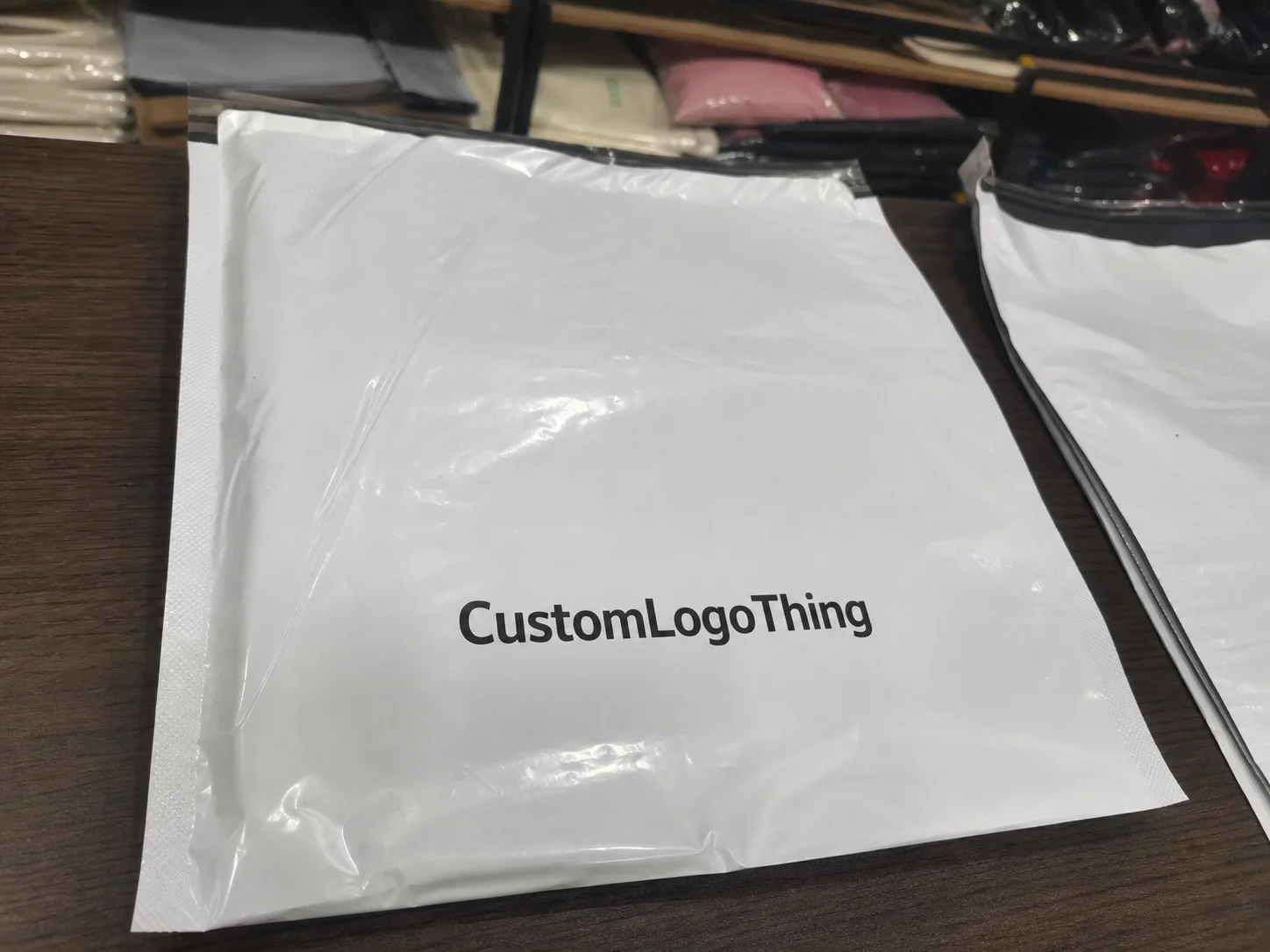
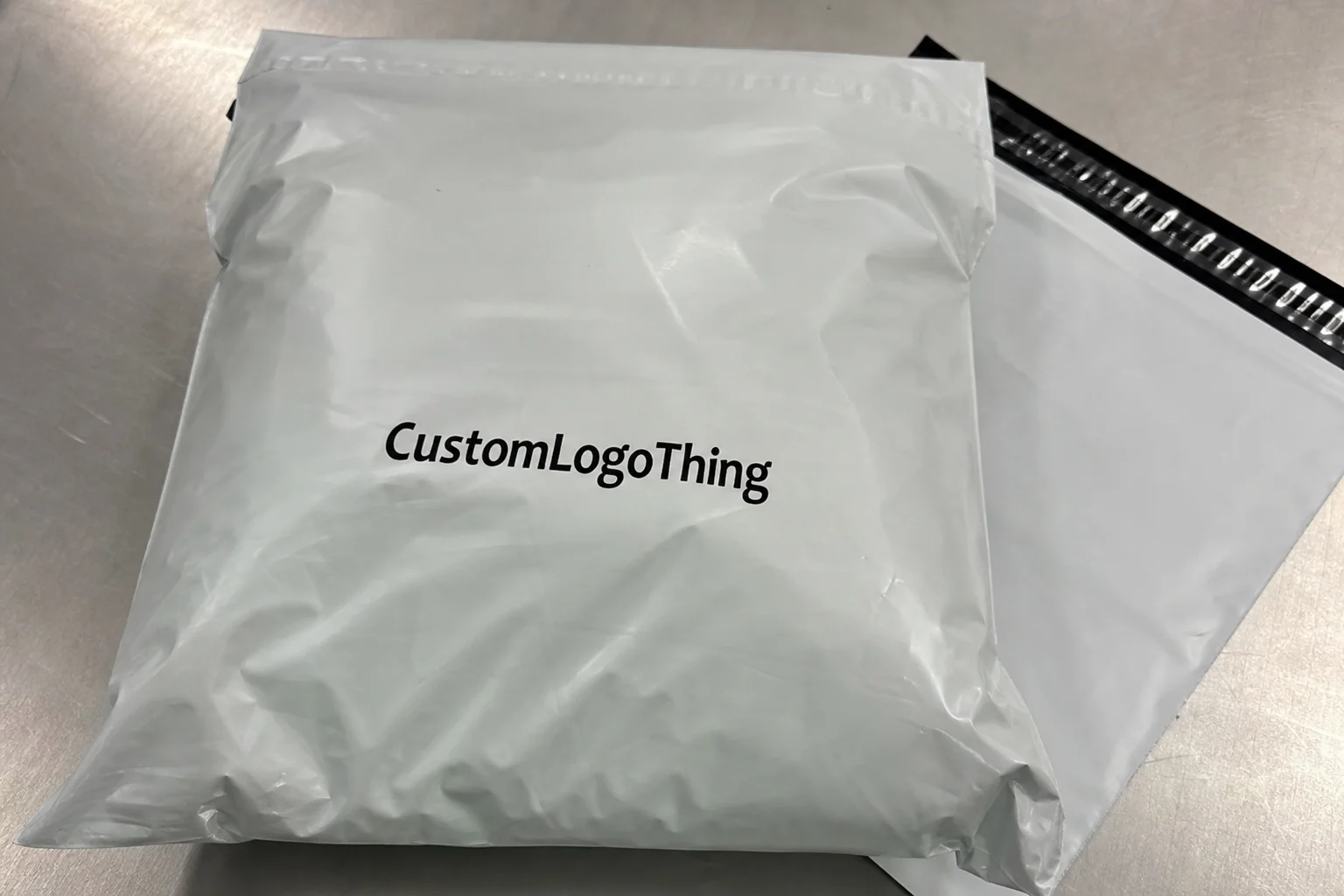
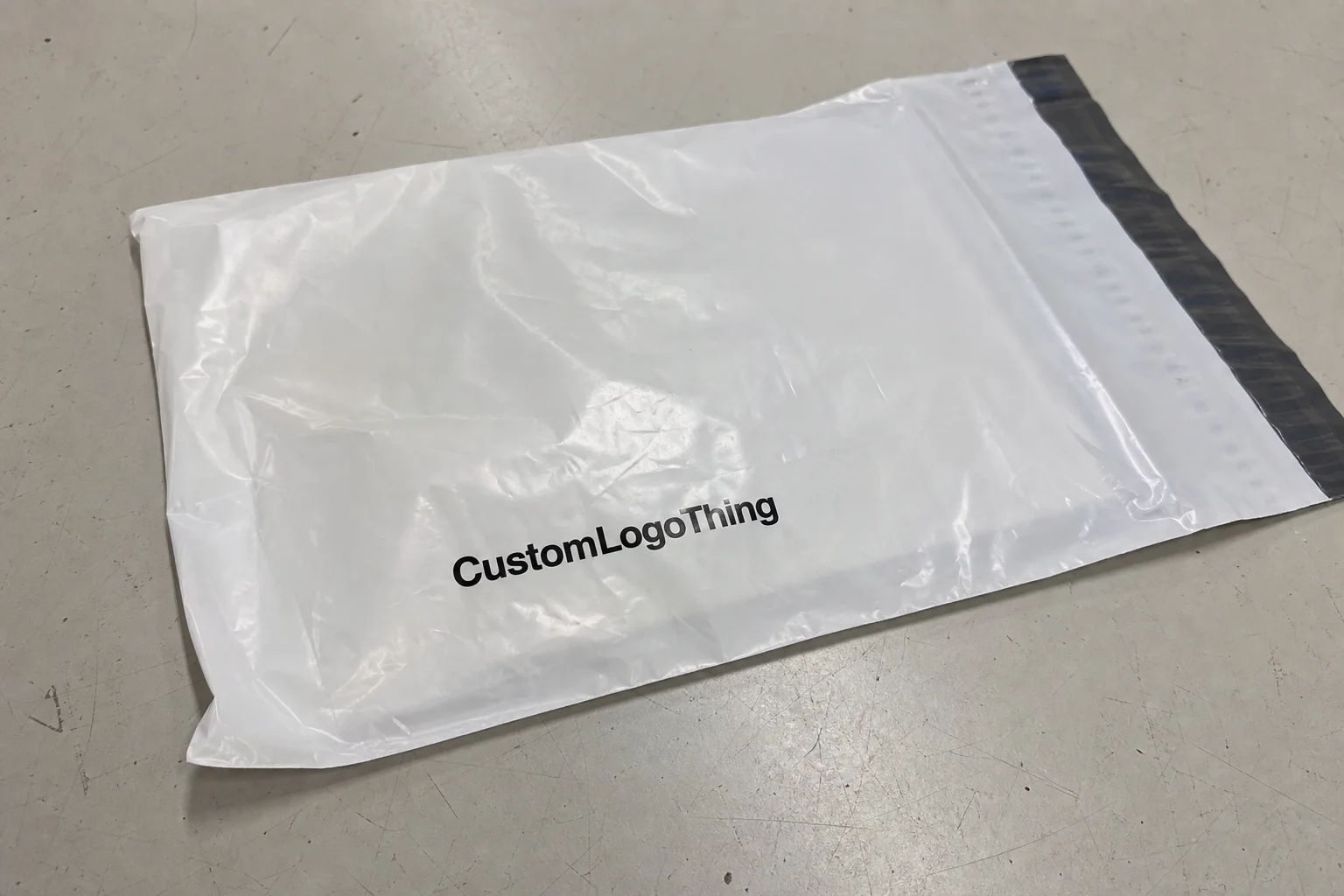
Buyer Fit Snapshot
| Best fit | Dual Adhesive Poly Mailers projects where brand print, material claims, artwork control, MOQ, and repeat-order consistency need to be specified before quoting. |
|---|---|
| Quote inputs | Share finished size, material target, print colors, finish, packing count, annual reorder estimate, ship-to region, and any compliance wording. |
| Proofing check | Approve dieline scale, logo placement, barcode or warning zones, color tolerance, closure strength, and carton packing before bulk production. |
| Main risk | Vague material claims, crowded artwork, missing packing details, or unclear freight terms can make a low unit price expensive after revisions. |
Fast answer: Dual Adhesive Poly Mailers: Material, Print, Proofing, and Reorder Risk should be specified like a repeatable production item. The safest quote records material, print method, finish, artwork proof, packing count, and reorder notes in one written spec.
Production checks before approval
Compare the actual filled-product size with the drawing, then confirm tolerance on folds, seals, hang holes, label areas, and retail display edges. Reserve space for logos, QR codes, warning copy, and material claims before decorative graphics fill the panel.
Quote comparison points
Review material grade, print process, finish, sampling route, tooling charges, carton quantity, and freight assumptions side by side. A quote is only useful when the supplier can repeat the same color, closure quality, and packing count on the next order.
Dual Adhesive Poly Mailers Guide: Why They’re a Small Packaging Upgrade with Big Payoff
On packing floors in places like Charlotte, North Carolina and Rancho Cucamonga, California, the most irritating return problems often begin long before a carrier scans the label; they begin with the mailer sitting on the table, and that is exactly why this dual adhesive poly mailers guide matters. I’ve watched apparel teams lose hours because customers had to search for tape, grab a box cutter, or cram a garment back into a thin bag that never had return reuse in mind. A dual adhesive mailer solves that with two seal lines in one package: one strip for the outbound shipment and a second strip for the return trip, usually built into a 2.5 mil to 3 mil polyethylene film.
That design does a surprising amount of work. In a standard fulfillment flow, the first adhesive strip is covered by a release liner, so the packer seals the order once the product is inside, often in 3 to 5 seconds per unit on a busy line. The second strip stays ready for the shopper if they need to send the item back. No extra return bag, no extra tape, and usually no extra confusion. While visiting a contract pack-out operation in Charlotte, a supervisor pointed to a pallet of returned sweaters and told me that nearly a third of the delays came from bad reclosure, not transit damage. That stuck with me because it’s such a practical problem, and dual adhesive mailers were built to address it. Honestly, packaging gets unfairly blamed for all kinds of messes, but in this case the packaging really is part of the fix.
This dual adhesive poly mailers guide is especially useful for e-commerce brands shipping apparel, accessories, soft goods, lightweight home textiles, and other non-fragile products. If your items do not need a corrugated box, foam, or bubble protection, this format can keep shipping lean while still supporting reverse logistics. I’ve seen it work well for T-shirts, leggings, scarves, swimwear, small soft goods, and subscription apparel programs where the return rate is high enough that a clean re-seal matters. I remember one subscription brand in Pennsylvania that had customers stuffing returns into grocery bags, which looked like a craft project gone wrong, and the support inbox was a disaster until they switched to a reclose-friendly mailer ordered at about $0.15 per unit for 5,000 pieces.
The benefit reaches beyond convenience. One mailer supports both outbound shipping and the return journey, which can reduce packaging SKUs, simplify training, and cut down on waste. That does not mean it is the right answer for everything, and that is where many buyers get tripped up. A dual adhesive design is only as good as the product fit, the film strength, and the way the return instructions are communicated. In this dual adhesive poly mailers guide, I’ll walk through how they work, what materials matter, how pricing is usually built, and where the common mistakes show up on the floor.
I’ll also share what I’ve seen in real plants: the seal that fails in a cold dock in Minneapolis, the oversized mailer that quietly increases dimensional weight on a route out of Dallas, and the custom print that saves customer service from answering the same return question 400 times a week. That kind of detail is what separates a good packaging choice from a frustrating one. And yes, I’ve had my own moments of muttering at a stubborn liner that refused to peel straight, usually on a damp morning when the humidity in the warehouse crept past 70 percent and the release paper got a little too eager.
How Dual Adhesive Poly Mailers Work in Real Fulfillment
At the simplest level, a dual adhesive poly mailer is a polyethylene shipping bag with two adhesive strips, often built from a co-extruded 3-layer LDPE film or a 100% virgin polyethylene structure depending on the supplier. The first strip is used by your fulfillment team when the order leaves the warehouse, and the second strip is reserved for the customer if they need to return the item. That is the heart of this dual adhesive poly mailers guide, because the whole value proposition lives inside that construction detail.
The first closure usually sits under a release liner. Your packer removes the liner, folds the flap, and presses the adhesive down to create the outbound seal, often with a flap length of 1.5 to 2 inches for full contact across the seam. The second adhesive line is positioned so that, when the customer opens the package carefully, they can later fold the mailer back and use that second strip to close it again. Placement matters more than most people expect. If the strips are too close together, the opening process can feel cramped. If they’re too far apart, customers may not understand where the return seal is supposed to go. In a lot of ways, this dual adhesive poly mailers guide comes down to ergonomics, not just materials.
Here’s the customer journey in plain terms:
- The outbound package arrives sealed with the first adhesive strip.
- The customer opens the mailer, usually by tearing or cutting along the top edge.
- If a return is needed, the customer places the item back inside.
- The second adhesive strip is exposed and used to close the same mailer.
- The package can then go back through the return process with less repacking time.
I’ve seen this flow tested at a soft-goods brand in New Jersey that processed around 6,000 outbound units a day from a 48,000-square-foot facility outside Newark. Their team measured how long it took customers to complete a return using a standard poly mailer versus a dual adhesive version. The difference was not dramatic on paper, but it mattered in customer comments: fewer complaints about “not knowing how to repack,” fewer support tickets, and fewer cases where the item came back damaged because it was shoved into a new bag with half a roll of tape. That kind of feedback usually tells the better story anyway.
Construction details also matter. Most of these mailers use co-extruded polyethylene film, often with a matte or glossy finish, and they may be printed or clear depending on the brand’s needs. Clear versions are useful when the product label needs to remain visible, while printed mailers can carry logos, return directions, size markers, or handling warnings. If you run a manual packing line, the bag needs to open cleanly and seal quickly. If you run automation, the film slip, gauge consistency, and adhesive release behavior all have to be stable enough for machine feeding. I’ve seen a gorgeous printed bag jam a feeder because the film spec was chosen by marketing before operations had a say, which usually means the film basis weight was never checked against the feeder’s grip pressure or the liner’s release value.
For brands building a packaging lineup, I often point them toward broader sourcing options like Custom Packaging Products and specifically Custom Poly Mailers when they need a format matched to apparel and soft goods, especially if they are comparing stock inventory against a custom 11 x 15 inch or 14 x 17 inch format.
Operationally, these mailers are usually handled just like standard poly mailers, but the details matter at the station. Packers need a clear fold line, enough flap length for full adhesive contact, and a liner that peels cleanly without sticking to gloved hands or creating static clumps. On high-volume lines, even a half-second delay per unit can add up to a real labor number by the end of a shift. I’ve seen teams save nearly 20 minutes per thousand units simply by switching from a finicky liner to a cleaner-release format, and that kind of gain can show up as 1.5 to 2 labor hours saved on a 5,000-unit run.
One more practical point: the mailer does not magically improve returns if your customer does not understand it. The second adhesive strip has to be visible, and the return instructions should be obvious. Some brands print a small arrow, a “reclose here” cue, or a short line of text right above the second strip. That kind of clarity can save a lot of customer service time, and this dual adhesive poly mailers guide would be incomplete without saying so plainly. I once watched a team send out thousands of bags with the return strip effectively hidden by their own artwork placement. Beautiful print, terrible usability. We fixed it, but not before a very long meeting in a conference room where the whiteboard still had notes from a 9:00 a.m. carton audit.
Key Factors to Compare Before Buying Dual Adhesive Poly Mailers
Supplier comparisons should begin with performance, not price alone. I’ve sat in enough sourcing meetings to know that the cheapest quote can turn into the most expensive decision once you factor in splits, returns, and replacements. This dual adhesive poly mailers guide works best when you compare the mailers on how they behave on the packing table and in transit, especially if you’re buying out of Shenzhen, Dongguan, or a domestic converting plant in Ohio or North Carolina.
Material thickness is usually the first spec to examine. Mailer film is often measured in mils, and for soft goods you’ll commonly see options around 2.5 mil, 3 mil, or thicker depending on the load. A 2.5 mil bag may be perfectly fine for a folded T-shirt, while a 3 mil or higher option can be safer for heavier garments, bundled units, or items with rough trims, zippers, or tags that can press into the film during transit. I’ve seen packages fail because the item corner acted like a little wedge inside the bag. That is a packaging problem, not a carrier problem.
Adhesive performance is just as critical. A strong seal on a 70°F warehouse floor does not tell the whole story if your outbound dock gets cold in winter or your trailer sits in 100°F heat in summer. Some adhesives hold up better across temperature swings, while others lose tack if the film has dust, ink rub, or humidity on it. If your operation is in a humid region like coastal Georgia or southern Florida, test samples under those conditions. A good dual adhesive poly mailers guide should always push you toward real warehouse testing, not catalog assumptions. Ask for peel strength data, typically measured in grams per inch or newtons per 25 mm, and compare it against your actual handling environment.
| Mailing Option | Typical Use | Common Price Range | Notes |
|---|---|---|---|
| Stock dual adhesive mailer, 2.5 mil | Light apparel, accessories | $0.11 to $0.16/unit at 10,000 pieces | Lowest entry cost, limited branding |
| Custom printed dual adhesive mailer, 3 mil | Branded apparel programs | $0.15 to $0.24/unit at 10,000 pieces | Better presentation, clearer return messaging |
| Heavy-duty dual adhesive mailer, 4 mil+ | Bulkier soft goods, higher transit stress | $0.20 to $0.32/unit at 10,000 pieces | Higher protection, usually stronger seal costs |
| Short-run custom size with specialty adhesive | Test programs, niche SKUs | $0.28 to $0.45/unit at 5,000 pieces | Useful for pilots, higher setup cost |
Size and gusset options deserve close attention. A mailer that’s too large lets the product move around, which can make the package look sloppy and can also increase dimensional weight. A bag that’s too tight can stress the seal or make packing slow. I usually advise brands to test with the most common folded dimensions of the product, not just the flat garment size on the spec sheet. A hoodie folded to 12 by 10 inches is not the same as a slim tee folded to 10 by 8 inches. The packaging should fit the folded stack, not the fantasy version of the product, and a size chart from a sample run in Atlanta or Columbus often tells the truth faster than a mockup on a screen.
Printing and branding matter more than some buyers expect. A clean logo, a clear return cue, and perhaps a simple message like “Reuse this mailer for returns” can reduce confusion immediately. In one meeting with a subscription apparel brand, their customer service manager told me the new printed return instructions cut “how do I send this back?” emails by a noticeable margin within the first month. Not dramatic, but real. That kind of operational savings belongs in the buying decision. If your artwork uses a 350gsm C1S artboard insert for folded instructions, match the tone and dimensions so the mailer’s message stays consistent from outer bag to inner card.
Cost and pricing usually depend on film gauge, custom printing, order volume, adhesive quality, bag size, and whether you buy stock or custom dimensions. A plain stock mailer may come in at 5,000-unit pricing that looks attractive, while a printed 3 mil version with a return message and a wider flap can cost more. That is normal. What matters is total landed cost, not just the unit number on the quote. If a slightly higher-cost mailer reduces inserts, shortens packing time, and improves return handling, the math can still favor the better product. This dual adhesive poly mailers guide is really about that bigger picture, and in many Chinese converting plants the lead time for a custom run is typically 12-15 business days from proof approval, with another 3-7 days for ocean or air dispatch depending on the destination.
If you want to compare packaging standards and sustainability considerations, the EPA’s waste reduction resources are a useful reference point, especially when you’re trying to trim unnecessary packaging layers and keep film usage closer to 1.8 to 2.2 ounces per mailer instead of overspecifying a thicker bag than your products require.
Dual Adhesive Poly Mailers Guide: Step-by-Step Selection and Setup
A good selection process keeps you from buying a mailer that looks fine in a sample photo but fails on the packing table. I’ve seen buyers order based on a single showroom sample, then discover three weeks later that the flap is too short for their folding method. This dual adhesive poly mailers guide is meant to help you avoid that kind of mistake, especially if your bag is being produced in Jiangsu, Guangdong, or a domestic plant near Greensboro, North Carolina.
Step 1: Define what you’re shipping
Start with product weight, folded dimensions, fragility, and return rate expectations. A 6-ounce scarf, a 14-ounce hoodie, and a pair of leggings all behave differently in transit. If the item has buttons, zippers, embellishments, or sharp tag hardware, that changes the film choice. If returns run at 8% versus 28%, the value of the second adhesive strip changes too. This is the stage where the dual adhesive poly mailers guide turns into a product-fit exercise rather than a general packaging decision. A SKU with a 9 x 12 inch folded footprint will rarely need the same bag as a winter knit that compresses to 13 x 11 inches.
Step 2: Match the material to the warehouse reality
Think about the packing station, not just the product. Is the area warm and dry, or does it get cold near the dock doors? Are bags hand-packed, or are they fed from a stack into a high-speed line? Do staff wear gloves? These details matter because film stiffness, adhesive release, and fold memory all affect the actual pack speed. For most apparel programs, I like to see samples tested with the exact folding method used in the warehouse, because even a good mailer can become annoying if the flap collapses or the liner tears unevenly. If your line runs 1,200 units per hour, a 2-second hesitation per pack can erase almost 40 minutes over a full shift.
Step 3: Decide on stock or custom printing
Stock mailers are fine when speed matters and your return workflow is already clear. Custom Printed Mailers make sense when brand presentation, customer instructions, or retail-like unboxing matter. I once worked with a mid-size basics brand that switched from plain gray mailers to a white custom-printed version with a bold return cue and a 1-color logo in Pantone black. Their fulfillment manager told me the packing team needed almost no retraining because the print itself acted like a visual guide. That is exactly the kind of operational clarity a well-planned dual adhesive poly mailers guide should promote.
Step 4: Test the closure on your line
Before placing a large order, have your team run a live test at the packing station. Watch how quickly the liner peels, how cleanly the flap folds, and whether the seal reaches full contact along the width of the bag. If the adhesive is sticky but awkward, workers will fight it. If the second strip is hidden too well, customers will miss it. I recommend at least 50 to 100 test units, packed by the same people who will use the production mailers. That gives you a realistic read on speed and handling. If your supplier can send samples from a converting facility in Ho Chi Minh City or Foshan within 7 to 10 days, even better, because the real test begins with a real sample in your hands.
Step 5: Pilot, collect feedback, and refine
Send a smaller batch to internal staff or a controlled customer group and ask what happened when they tried to open and return the item. Did they see the second strip? Did the mailer reclose without creasing? Did the printed instruction help? That feedback is gold. I’ve seen brands save thousands of dollars by making one simple change to strip placement before scaling up. A short pilot is never wasted time. It’s insurance, and it saves you from finding out the hard way that a tiny layout choice can turn a smart idea into a daily annoyance.
For packaging verification, some brands reference broad transport testing standards such as ISTA testing protocols when they want a more disciplined view of distribution performance. Not every apparel program needs full lab testing, but if your items travel long distances from Los Angeles to Miami or go through rough handling in regional hubs like Memphis, that kind of discipline can be useful.
Common Mistakes When Using Dual Adhesive Poly Mailers
The biggest mistake I see is choosing a mailer that is too large. It sounds harmless, but oversized bags raise dimensional weight, let the product move, and can make the package feel cheap in the customer’s hand. A loose package also puts more stress on the adhesive because the contents shift during transit. In one factory audit in southern California, I watched a brand spend more on shipping because the bag was almost 4 inches too tall for the folded product. That was a packaging decision, not a logistics one, and it cost them on every label.
Another common error is selecting a film that is too thin for the item. A 2.5 mil mailer might be fine for soft, smooth garments, but not for items with rough trims, rigid labels, or accessories that can poke during movement. If the film splits, the whole return-friendly concept falls apart. The customer sees damage, and the brand pays for a replacement. In a dual adhesive poly mailers guide, I always stress that durability should match the sharpest point inside the package, not the average one. Otherwise, you’re asking the bag to do a job it was never built to survive, especially if the seam is sitting under 18 to 22 pounds of top-stack pressure in a trailer.
Adhesive compatibility gets ignored more often than it should. Some seals behave beautifully in a climate-controlled room and then lose strength in a cold trailer or humid receiving area. If your operation has seasonal swings, test the adhesive in both conditions. A weak return strip is bad, but a weak outbound seal is much worse because it creates carrier risk before the customer even sees the package. I’ve had suppliers swear a formulation was “universal,” then watched it struggle on a wet winter morning in an unheated dock in Minneapolis. Reality is a stricter tester than a sales sheet.
Clear return instructions are another weak point. If the customer cannot find the second adhesive strip, the design fails its main purpose. Printing “Open here” and “Reclose here” sounds basic, but basic is good when the package is in someone’s kitchen at 9 p.m. with scissors nearby. I’ve also seen brands forget to orient the print so the return message stays visible after opening. That’s a small design miss, but it has a big customer-service impact. A strong dual adhesive poly mailers guide should push for clarity, not cleverness, and the instruction panel should sit within the top 2 inches of the flap where eyes naturally land.
And then there’s the failure to think through the return process at all. Some teams buy the mailer because it sounds efficient, then never update support scripts, website copy, or warehouse SOPs. If the customer support team doesn’t know how the mailer works, they can’t answer return questions confidently. If the warehouse team doesn’t know how the adhesive is positioned, they may pack it inconsistently. Packaging decisions have a habit of becoming cross-functional whether the company plans for that or not, and if anyone has ever had to explain that in a meeting, they know exactly how fast the room gets quiet, especially when the operations director asks for a process map by 4:00 p.m.
Expert Tips for Better Performance, Lower Waste, and Smarter Costs
My first recommendation is simple: test samples on the same table, with the same products, and the same packers who will use them every day. A spec sheet can tell you a lot, but it cannot tell you how a liner feels when it’s being peeled 600 times a shift. I’ve seen sample bags that looked perfect in the sourcing office and turned irritating on the line because the liner grabbed the film edge. Real testing is where the truth comes out, especially if your production floor sits in a humid zone like coastal South Carolina or uses fans that dry the adhesive too quickly.
Second, right-size your inventory. You do not need 14 SKUs if five sizes cover 90% of your shipments. A tighter size range reduces confusion, simplifies purchasing, and can lower carrying cost. That said, do not force one “universal” mailer to handle wildly different products just because the inventory team likes fewer part numbers. If the sizes are wrong, the labor and shipping penalties will eat the savings. This dual adhesive poly mailers guide is about practical fit, not theoretical simplicity, and a 10 x 13 inch bag is not a substitute for a 14 x 19 inch bag just because both are “close enough” on paper.
Third, for high-return categories, make the return strip obvious. I usually like printed visual cues placed near the second adhesive line, especially for apparel brands that want to keep the return process low-friction. A short instruction line, a contrasting arrow, or a note inside the flap can help a lot. One buyer I worked with added a tiny diagram to the back panel and saw fewer support tickets asking how to reuse the bag. That kind of micro-change is inexpensive and effective, and it often costs less than $0.01 per unit when added to a larger print run of 10,000 pieces.
Fourth, work with a manufacturer that can explain the film structure, adhesive chemistry, and print registration instead of only quoting the lowest price. If a supplier can tell you whether the film is co-extruded, how the adhesive behaves in cold storage, and how the print holds up against abrasion, that tells you they understand the real use case. If they only send a unit price and a lead time, I’d be cautious. Too many buyers treat packaging as a commodity when their returns process depends on details that are anything but generic. A plant in Dongguan or a finishing line in Illinois should be able to tell you the exact release value, flap width, and production tolerance without hesitation.
Fifth, compare the total cost against the savings. A slightly higher unit price can still be a win if it removes a return insert, reduces labor by 3 to 5 seconds per pack, and cuts the need for separate return packaging. On a 10,000-unit run, those little savings add up fast. I’ve watched brands justify an extra $0.03 to $0.05 per unit because the reduced repacking time and lower support burden paid for it within a few months. That’s the kind of math a smart dual adhesive poly mailers guide should encourage.
Finally, document the spec once you settle on it. Put the bag dimensions, film thickness, adhesive type, print artwork, liner format, and approved vendor in a shared sheet that purchasing, fulfillment, and customer service can all access. That sounds boring, but boring is what keeps the operation consistent. When the team changes or a secondary supplier steps in, a clear spec sheet prevents drift. I’ve seen too many good packaging programs unravel because the “approved sample” lived in someone’s desk drawer instead of a shared folder with a version number and an approval date.
Next Steps After Reading This Dual Adhesive Poly Mailers Guide
Start with an audit of what you’re already shipping. Pull a sample of your top 10 SKUs, note their folded dimensions, and check return rates over the last 3 to 6 months. Pay attention to where customers struggle: damaged corners, confusing repacking, missing tape, or support calls about the return process. That quick audit will tell you whether a dual adhesive format is actually solving a problem or just adding another packaging feature. If your average return rate is 12%, that number changes the economics much more than a line item on the bag quote.
Then build a shortlist of 2 or 3 sizes and request samples with the right film thickness and adhesive placement. If you sell mostly soft goods, ask for at least one 2.5 mil sample and one 3 mil sample so you can compare seal speed and durability. If the items have sharper hardware or heavier folds, ask for a thicker option as well. A good dual adhesive poly mailers guide should always end with hands-on sample testing, not guesswork, and sample approval should happen before you commit to a 5,000-piece run with a 12 to 15 business day production window.
Next, run the samples through your actual packing line. Watch the packers. Time the seal. Check whether the liner tears cleanly. If possible, send a small batch to internal staff or a controlled customer group and ask them to simulate a return. You’ll learn more from 25 realistic tests than from 250 abstract opinions. I know it sounds tedious, but so does processing preventable returns, and nobody misses that.
After that, compare landed cost, labor time, and return usability side by side. That comparison should include unit price, shipping cost, packing time, and support burden. I often tell clients to think in terms of total Packaging Cost Per order, not bag cost alone. If the better mailer saves 4 seconds and avoids a return complaint, it may outperform the cheaper one very quickly, even if the custom printed version is $0.18 instead of $0.12 per unit at a 10,000-piece order.
Once you’ve made the choice, finalize a spec sheet and train the team. Include product dimensions, approved folding method, seal position, artwork placement, and any customer-facing wording. That keeps fulfillment, purchasing, and customer support aligned. In my experience, alignment is half the battle, especially when the mailers are sourced from one factory in Hangzhou and printed at a second plant in Foshan.
If you want a cleaner return experience, lower waste, and a more thoughtful shipping setup, a well-chosen dual adhesive poly mailers guide can point you in the right direction. The right mailer does not just hold a product; it supports the whole journey, outbound and back again. The practical takeaway is simple: match the film, adhesive, and size to the product and the warehouse reality, then pilot before you scale. That’s the part that saves money and prevents the annoying little failures that keep showing up in customer service tickets.
What is a dual adhesive poly mailers guide useful for when choosing packaging?
It helps you understand how the two adhesive strips work and whether the format fits your return workflow. It also clarifies material, size, and pricing decisions before you place an order, which can save time during sourcing and reduce trial-and-error purchases. For example, comparing a 2.5 mil stock bag at $0.11 per unit against a 3 mil printed version at $0.19 per unit can make the tradeoffs much clearer.
How do dual adhesive poly mailers work for customer returns?
The first strip seals the outbound shipment, and the second strip lets the customer reseal the same mailer for a return. That reduces the need for extra return packaging and makes the process simpler for shoppers, especially for apparel and other soft goods. In many warehouse tests, the return step takes under 30 seconds once the customer understands where the second strip sits.
What affects dual adhesive poly mailers pricing the most?
Film thickness, custom printing, order volume, adhesive quality, and whether you choose stock or custom dimensions usually drive the price. Special features like matte finishes, wider flaps, or tamper-evident designs can also raise the unit cost. As a reference point, a short-run custom size at 5,000 pieces can land around $0.28 to $0.45 per unit depending on the print count and finish.
How long does it take to set up dual adhesive poly mailers in a fulfillment workflow?
Basic adoption can happen quickly if the size and seal format already match your products. A short pilot period is still wise to test sealing speed, return usability, and staff training needs before you commit to larger volumes. In many supply chains, production is typically 12-15 business days from proof approval, then transit time is added on top of that.
What products are best suited for dual adhesive poly mailers?
Soft goods like apparel, accessories, and lightweight non-fragile items are the best fit. Avoid using them for sharp, rigid, or highly breakable items unless you add extra protection, because the mailer is designed for flexible product categories. A folded tee, scarf, or leggings set usually fits much better than a rigid accessory box or anything with pointed hardware.