Buyer Fit Snapshot
| Best fit | Eco Poly Mailers Custom Printed projects where brand print, material claims, artwork control, MOQ, and repeat-order consistency need to be specified before quoting. |
|---|---|
| Quote inputs | Share finished size, material target, print colors, finish, packing count, annual reorder estimate, ship-to region, and any compliance wording. |
| Proofing check | Approve dieline scale, logo placement, barcode or warning zones, color tolerance, closure strength, and carton packing before bulk production. |
| Main risk | Vague material claims, crowded artwork, missing packing details, or unclear freight terms can make a low unit price expensive after revisions. |
Fast answer: Eco Poly Mailers Custom Printed: Production Review should be specified like a repeatable production item. The safest quote records material, print method, finish, artwork proof, packing count, and reorder notes in one written spec.
Production checks before approval
Compare the actual filled-product size with the drawing, then confirm tolerance on folds, seals, hang holes, label areas, and retail display edges. Reserve space for logos, QR codes, warning copy, and material claims before decorative graphics fill the panel.
Quote comparison points
Review material grade, print process, finish, sampling route, tooling charges, carton quantity, and freight assumptions side by side. A quote is only useful when the supplier can repeat the same color, closure quality, and packing count on the next order.
Eco Poly Mailers custom printed are one of those packaging choices people assume are simple until they sit through a damaged-goods review meeting and see the numbers. I’ve watched brands spend $0.12 on a plain mailer, then lose $8.40 replacing a crushed order, plus another $3 to reship it. That math gets attention fast. If you’re trying to balance branded packaging, product packaging efficiency, and sustainability claims, eco poly mailers custom printed can do a lot more than carry clothing from A to B.
What I like about Eco Poly Mailers custom printed is that they sit at the intersection of package branding and practical shipping. They can reduce empty space, look sharp on arrival, and, if specified correctly, use less material than people expect. “Eco” is not a magic stamp. I’ve seen too many buyers treat eco poly mailers custom printed as interchangeable when the film structure, recycled content, and print method all change the outcome. Honestly, that drives me a little nuts because the packaging looks the same only until it doesn’t.
At Custom Logo Things, the best projects I’ve seen have one thing in common: the brand knew what it wanted the mailer to do. Not just “look nice.” They wanted lower corrugate usage for soft goods, clearer return handling, and a cleaner unboxing experience without moving to custom printed boxes for every order. That’s where Eco Poly Mailers custom printed start to make real operational sense, especially for apparel brands shipping 1,000 to 25,000 orders per month from hubs like Los Angeles, Dallas, and Chicago.
Eco Poly Mailers Custom Printed: What They Are and Why Brands Use Them
Many e-commerce teams still act like every mailer performs the same way. It doesn’t. I’ve seen two mailers that looked nearly identical on a receiving dock behave very differently: one had a strong seal, 60% recycled content, and solid opacity; the other tore near the flap, had vague “eco” language, and arrived with print registration off by 2 mm. Same general category. Very different customer experience. That’s why Eco Poly Mailers custom printed deserve a closer look.
In plain language, eco poly mailers are plastic-based shipping mailers designed with sustainability in mind. That can mean recycled polyethylene, downgauged film, mono-material construction, or a design that fits into common recycling streams more easily than mixed-material packaging. Some versions also use post-consumer recycled content, often abbreviated PCR. The exact structure matters more than the label. Eco poly mailers custom printed may be made to use less virgin resin, and some are engineered to be recyclable where film collection programs exist.
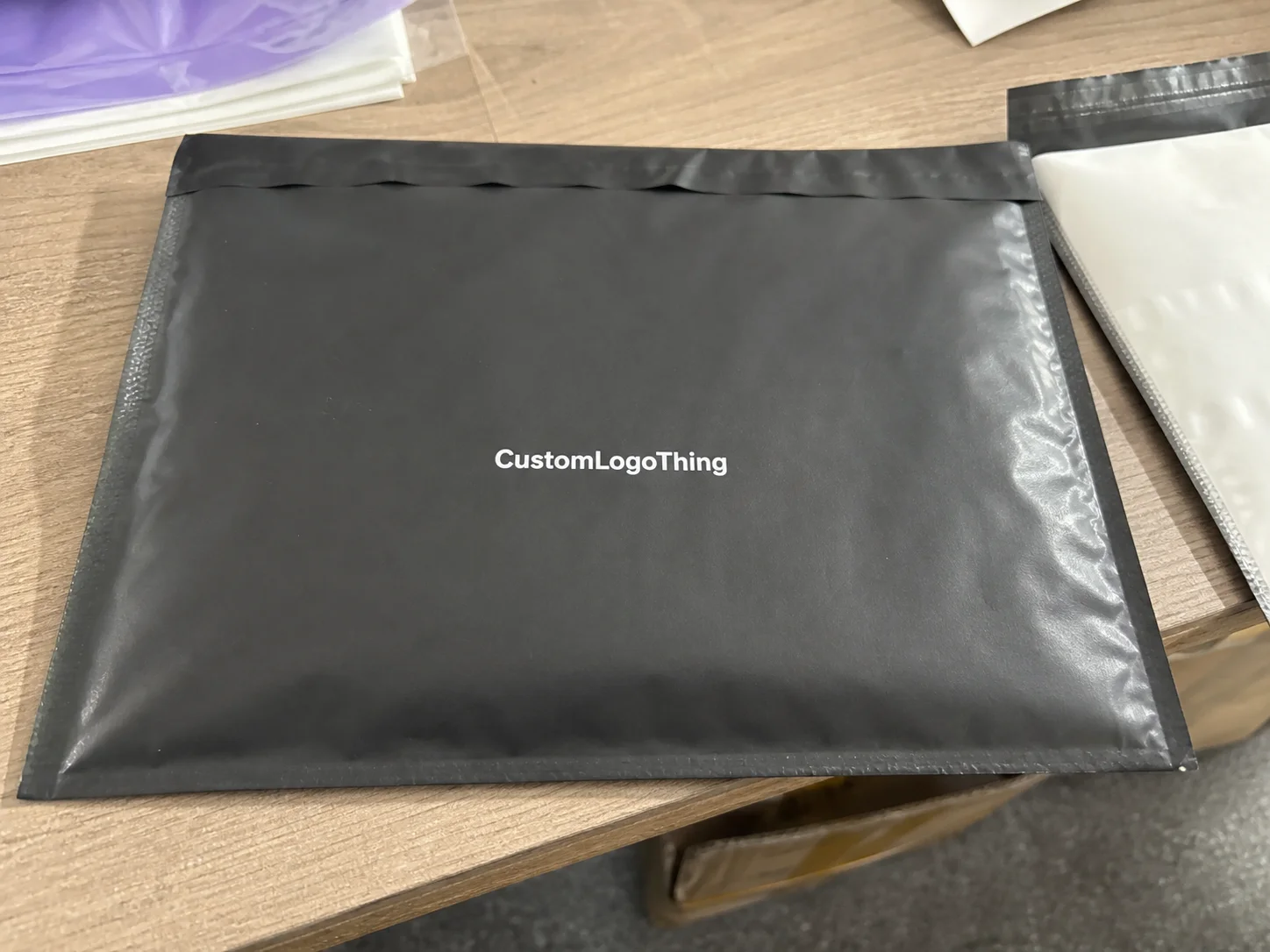
The “custom printed” part changes the role of the mailer entirely. Now it becomes branded packaging, not just a shipping bag. It can show a logo, a website, a campaign message, or a return instruction. On the receiving end, that changes perception fast. A plain mailer says utility. Eco poly mailers custom printed say intention. That can be valuable in retail packaging and product packaging programs where the mailer is the first physical touchpoint the customer sees, whether the parcel leaves a warehouse in New Jersey, Ontario, or Manchester.
Here’s the catch: eco claims need scrutiny. A mailer may contain recycled content but still not be recyclable everywhere. Another may be technically recyclable, but if local collection systems don’t accept film plastic, the real-world outcome is different. I’ve had procurement teams quote the word “recyclable” back to me as if it were universal. It isn’t. The better question is: what is the film made of, and where does the customer live? For reference, the EPA’s packaging and plastics guidance is a useful starting point, especially if your team is reviewing disposal language and broader waste claims: EPA recycling resources.
“We stopped treating the mailer as an afterthought after one batch of returns came back in ripped bags. The packaging looked fine on paper. On the dock, it was another story.” — operations manager at a seven-figure apparel brand I worked with
In my experience, eco poly mailers custom printed are best for lightweight, non-fragile items: apparel, socks, swimwear, accessories, soft home goods, and folded textiles. I would not push them for sharp-edged products, glass, or anything that needs cushioning and crush protection. If your catalog has a mixed profile, you may need a split strategy: eco poly mailers custom printed for soft goods, and something else for heavier SKUs. Sometimes that “something else” is one of the Custom Packaging Products lines you already use for higher-protection shipments.
One more practical point. Custom printing is not just decoration. It can support returns labeling, seasonal drops, and campaign-specific instructions. I’ve seen a minimalist black logo mailer outperform a fully covered design because it looked cleaner and printed with better contrast on a 2.5-mil film. That’s the sort of detail people miss when they only compare unit price, especially when a 5,000-piece order lands at $0.18 to $0.24 per unit instead of the $0.15 headline number they hoped for.
How Eco Poly Mailers Custom Printed Work
The production process is more mechanical than most buyers realize. First, the supplier selects the film structure. Then the artwork is prepared for print, plates or digital files are set up, the mailers are printed, converted into finished bags, sealed, boxed, and shipped. If any of those steps is off by a few millimeters, the final product can feel cheap even if the materials are decent. That’s especially true with eco poly mailers custom printed, because flexibility in the film can exaggerate minor design issues. In a factory like Shenzhen or Dongguan, a 1.5 mm layout shift can show up immediately on a full-coverage design.
Material choice comes first. Recycled polyethylene is common, and for good reason: it keeps the package in the same material family, which helps when the goal is a mono-material recycling stream. Co-extruded films are also common because they can combine layers for strength, opacity, and seal performance. Then there are so-called compostable-looking alternatives that can confuse buyers. A bag that looks matte and earthy is not automatically compostable, and some films marketed as “green” are not accepted by municipal compost systems at all. If your sustainability team is auditing claims, check the spec sheet, not the color of the mailer. A typical recycled PE mailer might use 2.5 mil or 3.0 mil film, while premium versions can run 3.5 mil for heavier garments or bundled orders.
Printing method matters too. Flexographic printing is usually the workhorse for higher-volume eco poly mailers custom printed orders. It’s efficient once the plates are made, and it handles simple logos or limited color systems well. Digital printing makes more sense for smaller runs, design testing, or fast-turn campaigns because it avoids some of the plate setup. The tradeoff is cost and, sometimes, color consistency across large runs. A three-color design can be manageable. A five-color gradient-heavy illustration usually pushes you toward more setup and more complexity. For a 10,000-piece flexo run, a supplier may quote a 12- to 15-business-day production window from proof approval; a 2,000-piece digital test can often move in 7 to 10 business days if the factory slot is open.
On the factory floor, the small things decide whether the bag works. Adhesive flap strength is one. Tear resistance is another. I remember visiting a converting line where the team was running a batch of 2.25-mil mailers; the film looked fine until the flap adhesive was tested in cold storage conditions, where peel strength dropped noticeably. That one test changed the specification before release. Another time, a buyer insisted on ultra-thin material to save $0.01 per unit, then complained when employees needed extra tape during packing. The savings disappeared in labor. And yes, the warehouse team was not thrilled. I wouldn’t have been either.
Eco poly mailers custom printed also depend on lead time realities. Artwork approval, plate creation, production queue position, and freight distance all affect delivery. A straightforward reorder can be very different from a first-time launch. If the supplier is producing in a facility like Shenzhen, transit time and port conditions can shift your planning window by several days, sometimes more if the shipment hits peak congestion. For ocean freight into the West Coast, I usually plan 28 to 35 days door-to-door; air freight can cut that to 4 to 7 days, but the shipping cost can jump by 3x to 5x.
Here’s a simple comparison of common options:
| Option | Typical Material | Best Use | Notes |
|---|---|---|---|
| Recycled PE mailer | 30%–100% PCR polyethylene | Apparel, soft goods | Often a strong fit for eco poly mailers custom printed when recyclability is a priority |
| Co-extruded mailer | Multi-layer PE film | High-volume shipping | Good balance of strength, opacity, and seal integrity |
| Digital-printed small run | Various PE structures | Seasonal campaigns | Useful when you want eco poly mailers custom printed without committing to a massive run |
| Mixed-material “eco” bag | Blend of films or coatings | Special cases only | Sometimes harder to recycle; verify claims carefully |
If you want a reference point on material stewardship and forestry-related claims that sometimes appear in packaging discussions, FSC is a good authority for paper-based sourcing standards, even though it is less directly relevant to film mailers: FSC standards and certification.
One reason eco poly mailers custom printed are so popular is operational simplicity. They are light. They pack flat. They reduce dimensional shipping waste. If your order is a folded tee or a scarf, putting that into a poly mailer instead of a box can save cubic space, lower freight charges, and speed up pick-pack work. A standard 10 x 13-inch mailer can often handle a single folded hoodie, while a 14 x 19-inch size is more practical for bulkier sets or two-item bundles. That said, the right choice depends on the item and the unboxing standard your brand wants to maintain.
Key Factors That Affect Sustainability, Durability, and Brand Impact
There are three variables buyers need to keep in view at the same time: sustainability, durability, and brand impact. Pull one too hard and the others suffer. That’s the real balancing act behind eco poly mailers custom printed. If you increase recycled content but the film becomes brittle, you may create tears and returns. If you make the design too elaborate, the print can lose sharpness on flexible film. If you chase the cheapest option, the brand experience can look flat and disposable.
Sustainability starts with structure. Recycled content percentage matters, but so does the total weight of the mailer. A 30% PCR bag that uses less resin per unit may sometimes be a better material choice than a heavier 100% PCR option that tears more easily in transit. That’s not always the case, which is why you need real testing rather than assumptions. Look at mono-material design, film thickness, and whether the mailer is compatible with local film recovery systems. “Eco” means more than a buzzword; it means measurable specs, like a 2.8-mil mono-PE film with 50% PCR content and a tested seal strength of 1.5 kgf or better.
Durability is not a luxury. It is waste prevention. I once sat in a client meeting where the sustainability lead argued for the thinnest possible bag to reduce virgin plastic. Fair point. Then the operations team showed 4.8% of orders were being rebagged after tear failures. Suddenly the environmental math changed. Replacement shipments carry cardboard, tape, labor, fuel, and customer frustration. A slightly thicker mailer can be the greener choice if it eliminates a repeat shipment. For a brand shipping 100,000 orders a year, cutting return-related reprints by even 1% can save 1,000 parcels and thousands of dollars in labor.
Brand impact is where eco poly mailers custom printed can punch above their weight. The mailer is a moving billboard in transit, at the doorstep, and in the customer’s hands. Print placement matters. So does contrast. A one-color logo on a matte recycled film can look far more premium than a crowded design with four shades and tiny legal text. I’ve reviewed hundreds of packaging design proofs, and the most effective ones tend to be the simplest. Good package branding is usually a matter of restraint, not a 6-color print stack and a full-coverage front panel.
Customer perception is also tied to honesty. If your mailer is partially recycled, say that. If it is recyclable only in certain collection programs, say that clearly. Vague environmental language can backfire. People are good at spotting greenwashing, especially when they already know the brand sells premium product packaging. A smart sustainability message is specific: “Made with 50% post-consumer recycled polyethylene” is much stronger than “eco-friendly mailer.”
There’s a reason many brands use eco poly mailers custom printed alongside other formats like custom printed boxes. Boxes make sense for delicate items or premium presentation. Mailers make sense for speed and lower material usage. The best e-commerce operations often use both. I’ve seen apparel brands reserve boxes for gift sets and launch kits, then use eco poly mailers custom printed for core catalog shipments. That mixed model can protect margin and preserve the brand feel.
Here’s a practical comparison of priorities:
- Lowest material use: thin mono-material mailer, properly sized, with simple print.
- Highest perceived quality: matte or frosted finish, strong logo contrast, accurate sizing.
- Best sustainability story: documented recycled content, recyclable structure, clear disposal instructions.
- Best operational efficiency: durable seal, easy loading, low tear rate, standard sizing.
The tricky part is that these goals can conflict. That is normal. A brand team once asked me for the “greenest” mailer possible, then insisted it must arrive in under ten business days and cost less than a plain bag they were already buying. Those requests can coexist only if the order volume, material choice, and print complexity are reasonable. Otherwise, tradeoffs show up fast, especially on a 5,000-piece reorder where the difference between $0.19 and $0.27 per unit quickly changes the budget by $400.
Eco Poly Mailers Custom Printed Cost and Pricing Factors
Price conversations about eco poly mailers custom printed usually start in the wrong place. Buyers ask for a unit price before they define size, film type, print colors, and annual volume. That’s like asking what a car costs without mentioning whether you want a compact sedan or a box truck. The better approach is to map total landed cost, not just the factory quote.
The main cost drivers are straightforward. Material type matters first. Recycled PE can cost more than commodity film, and specialty eco materials can cost even more. Quantity matters next; larger runs reduce unit price because the setup cost spreads out. Print complexity is another lever. One color is cheaper than four. A full-coverage print usually costs more than a small logo panel. Size matters because bigger bags use more film, more ink, and more packaging space for freight.
There are also hidden costs that a lot of procurement spreadsheets ignore. Proofing takes time. Plates cost money in flexographic production. Freight is never free. If you need warehouse storage for a three-month supply, that has a carrying cost too. I’ve seen a brand celebrate a unit cost drop from $0.22 to $0.17, only to realize they had tied up nearly $18,000 in inventory they did not need for another quarter. Everyone loves a lower unit price right up until finance asks where the cash went.
To make this concrete, here is a rough pricing framework I’ve seen in real sourcing conversations for eco poly mailers custom printed. These are not universal quotes, because artwork, film thickness, and shipping lane all matter, but they help frame the discussion:
| Order Size | Typical Print Setup | Indicative Unit Range | Notes |
|---|---|---|---|
| 2,000–3,000 pieces | Digital or simple flexo | $0.24–$0.42/unit | Good for testing eco poly mailers custom printed before a wider rollout |
| 5,000 pieces | Flexo, 1–3 colors | $0.18–$0.30/unit | Often a practical middle ground for growing brands |
| 10,000+ pieces | Flexo, optimized production | $0.12–$0.24/unit | Lower unit cost, but more inventory exposure if SKUs change |
Those numbers can shift with thickness, recycled content, and freight, so treat them as decision support rather than a promise. If a supplier gives you a quote that looks far below market, ask what is missing. Is the film downgraded? Is the print area smaller? Is shipping excluded? Is there a steep minimum order quantity? Those questions save headaches later. A quote like $0.15 per unit for 5,000 pieces can be real, but only if the specs are narrow, the print is one color, and the shipment is consolidated from a factory in Shenzhen or Xiamen.
Another thing people get wrong: the cheapest mailer is not always the least expensive. A mailer that saves $0.02 but causes a 1% increase in damage or a 2% increase in return friction can wipe out the savings across a large order base. I’ve seen brands calculate packaging spend and ignore the downstream effects on customer service tickets and re-ship labor. That is a false economy. Eco poly mailers custom printed should be evaluated against the whole shipping process, not just the purchase order. If you ship 50,000 units a year, a $0.02 overspend or underspend changes the annual total by $1,000, which is small next to the cost of even 120 failed deliveries.
If you’re comparing suppliers, ask for the exact film specification, not only a photo. Ask whether the mailer is 2.5 mil, 3 mil, or another thickness. Ask whether the adhesive flap is permanent or tamper-evident. Ask what color system they’re using. A good vendor will answer in details, not adjectives. That’s how you separate a reliable source from a sales pitch. For many standard programs, a printed approval sample and one production proof are enough; for first-time orders, I’d insist on both a digital proof and a physical sample before signing off.
Step-by-Step Process and Timeline for Ordering
Ordering eco poly mailers custom printed is easier when you think like a production planner instead of a shopper. Start with the product dimensions in its packed form, not the retail shelf size. Then define the film requirement, print area, and delivery date. That sequence matters because changing any one of those inputs later can move the entire schedule.
When I help brands scope a mailer program, I ask for five items up front: finished dimensions, packed product weight, artwork files, preferred color system, and monthly or quarterly volume. If the buyer cannot answer those questions yet, we start with samples and a size test. That saves time. It also prevents the classic mistake of ordering a beautiful design in the wrong format, like a 14 x 19-inch bag for a garment that fits neatly in a 10 x 13-inch sleeve.
A realistic timeline for eco poly mailers custom printed usually includes these steps:
- Needs assessment: confirm SKU dimensions, product weight, and shipment profile.
- Material selection: choose recycled PE, co-extruded film, or another approved structure.
- Artwork preparation: finalize logo placement, Pantone or CMYK values, and any disposal messaging.
- Proof review: check line placement, spelling, contrast, and bag dimensions.
- Sample approval: review a physical sample whenever possible, not just a PDF.
- Production: print, convert, cut, and seal the finished mailers.
- Quality check: confirm seal strength, print alignment, and count accuracy.
- Freight transit: ship by air or ocean depending on speed and budget.
For first-time projects, I usually tell clients to allow enough time for at least one revision cycle. If there is custom artwork, a plate-based method, or a special recycled-content film, you may need longer. Simple reorders can be faster because setup is already approved. Rush orders do exist, but they often narrow your material choices and increase cost. That is true across the packaging category, from eco poly mailers custom printed to other Custom Poly Mailers programs. A well-run first order typically takes 12 to 15 business days from proof approval to factory completion, then another 5 to 8 business days for air freight to the U.S. East Coast or 20 to 30 days for ocean freight.
Here’s a story from a supplier negotiation that still sticks with me. A retail brand wanted to launch a new line in six weeks. Their artwork had six colors, a silver accent, and a sustainability claim that needed legal review. The factory quoted a clean 18-business-day production window, but the client kept asking for changes after proof stage. We lost four days to approvals alone. They made launch, but only because the freight plan was upgraded from sea to air at the last minute. That added about $1,600 to the shipment. Planning earlier would have been cheaper. Much cheaper, actually.
Bottlenecks usually fall into three buckets: artwork revisions, tooling or plate creation, and queue timing at the factory. Seasonal peaks make all three worse. If your brand launches in Q4, do not assume a 12-business-day estimate will hold without buffer. I prefer to build in extra time for eco poly mailers custom printed, especially if the packaging is tied to a promotion, influencer drop, or subscription launch. In Q4, a factory in Guangdong can see lead times stretch by 3 to 5 extra business days simply because every brand wants the same print slot.
If your team needs broader support materials, it can help to bundle the mailer project with other packaging design work. Coordinating specs across inserts, labels, and outer packs keeps the whole system coherent. Otherwise, the package branding gets fragmented. The mailer says one thing, the insert says another, and the customer senses the mismatch immediately. I’ve seen that happen with a launch in Austin where the mailers arrived on time, but the insert cards were still being revised at a printer in Portland.
Common Mistakes to Avoid With Eco Poly Mailers Custom Printed
The biggest mistake is believing “eco” is a complete specification. It isn’t. I’ve seen buyers sign off on eco poly mailers custom printed because the sample looked green, then discover the final version contained only 10% recycled content and used a mixed film that local facilities would not accept. That is not a minor issue. It affects the credibility of the entire sustainability story.
Size errors are probably the second most common problem. Oversized bags waste material, increase dimensional bulk, and make the shipment look sloppy. Undersized bags create bulging seams, awkward inserts, and a higher risk of tears. I always recommend testing the two or three most common packed combinations before finalizing the size. If you ship one hoodie alone, that’s one thing. If you ship a hoodie plus a tote, that changes the envelope quickly. Eco poly mailers custom printed should match the real packed product, not the wish list.
Design errors are surprisingly expensive. Tiny logos disappear. Low-contrast colors blur on flexible film. Overly detailed artwork can print poorly and look fuzzy at the edges. I once reviewed a bag proof where the brand had stacked a slogan, website, QR code, legal copy, and five icons onto one narrow panel. It looked like a flyer. On a moving mailer, it read like clutter. Simple wins more often than people expect, especially on a 3-mil matte film where ink spread can soften fine lines.
There are also procurement errors. Not asking about minimum order quantities can create internal friction. Not checking lead time can break a launch calendar. Not clarifying reprint policy can turn a proofing mistake into a budget surprise. Ask whether samples are charged, whether plate fees are one-time, and what happens if the shipment count varies by 3% to 5%. These details matter in real-world purchasing. Some suppliers require a 5,000-piece minimum for flexo and 1,000 pieces for digital; knowing that before you brief the design team saves time.
Another mistake: ignoring customer disposal behavior. If the mailer is recyclable only where film collection exists, tell customers what that means in practical terms. A short line on the bag or on the order insert can help. Better yet, include it in your site FAQ and shipping confirmation. Customers who understand the disposal path are more likely to trust your sustainability claims. That trust is part of package branding, even if it does not show up in a spreadsheet.
Here’s a short list of questions I always ask before approving eco poly Mailers Custom Printed:
- What is the exact film structure and thickness?
- How much recycled content is documented?
- What is the print method and how many colors are included?
- What is the minimum order quantity and lead time from proof approval?
- What local disposal instructions should customers receive?
If a supplier hesitates on those questions, that is a warning sign. Good partners answer in specs, not slogans.
Expert Tips for Better Results and a Smarter Rollout
My first recommendation is to test two or three sizes before committing to a full program. This is especially true if your catalog changes often. A size that works for a T-shirt may be wrong for a knit sweater or bundled accessories. Testing early avoids inventory waste. It also lets you see how eco poly mailers custom printed behave in packing stations with real workers, not just in a mockup photo. A $75 sample kit is cheap compared with 2,000 unusable bags sitting in a warehouse in Dallas.
Second, keep the design system simple and repeatable. I like a core layout that can support seasonal colors, limited-edition drops, or holiday messages without reworking the whole print file. That lowers artwork churn. It also keeps the brand system consistent across branded packaging, inserts, and any Custom Packaging Products you use elsewhere in the customer journey. A strong template can move from a January launch in Toronto to a July promotion in Los Angeles with only one color change.
Third, ask for both proof files and physical samples. PDFs can hide distortion. A physical sample tells you how the seal feels, how the film folds, and whether the colors sit cleanly on the substrate. I’ve had a sample that looked nearly perfect online but revealed a weak flap adhesive in-hand. That one test prevented a larger operational mess later. If the supplier can mail a sample from their factory in Shenzhen or Ningbo, make sure you review it in actual packing conditions, not just on a desk.
Practical tip: If your brand voice is energetic, don’t make the print design loud just to prove it. A clean logo, a website URL, and one concise sustainability line often outperform a crowded back panel. I’ve watched this play out more times than I can count. The smaller the canvas, the more editing matters. That is true for eco poly mailers custom printed and for most forms of retail packaging.
Fourth, pair the mailer with clear disposal guidance. A one-line note such as “Check local film recycling options” can be more credible than a vague green slogan. If your legal team wants tighter language, use it. The point is to reduce confusion. Customers notice when the sustainability message is specific and practical, especially if the order ships from a fulfillment center in California, Texas, or Ontario where local waste rules differ.
Fifth, measure a few metrics after rollout. I usually suggest damage rate, customer feedback, repeat purchase signals, packaging cost per order, and any change in pick-pack time. Those five data points tell a useful story within one or two reorder cycles. If damage drops and customer comments improve, the packaging is doing its job. If not, adjust the size or structure. Eco poly mailers custom printed should earn their keep through both utility and brand lift.
One of the more interesting client meetings I attended involved a beauty accessory brand that wanted to move from plain poly bags to eco poly mailers custom printed. We tested three versions: a minimal logo on recycled film, a full-bleed pattern, and a matte film with one color plus a small disposal note. The simple version won. It packed faster, printed cleaner, and looked more premium in photos. More ink did not equal better branding. That lesson is nearly universal.
Finally, do not ignore the rest of the shipping system. If your outer pack is strong but your tape, labels, or inserts are inconsistent, the customer still sees a messy experience. Packaging works as a system. A mailer is one part of that system, not the whole story. The best eco poly mailers custom printed programs align with labels, warehouse workflows, and the broader brand standard, not just a single SKU specification.
If you are comparing options, think about the role each packaging format plays. Eco poly mailers custom printed are strong on speed, weight efficiency, and brand presence. Custom printed boxes are better for crush protection and premium presentation. A good packaging mix uses each format where it performs best. That is how smart brands build a durable, credible shipping experience.
FAQ
Are eco poly mailers custom printed actually recyclable?
Some are, but recyclability depends on the exact film structure and local collection programs. Mono-material polyethylene mailers are usually easier to recycle than mixed-material films. Always verify the supplier’s material specification and include disposal guidance for customers so eco poly mailers custom printed are handled correctly.
How long do eco poly mailers custom printed usually take to produce?
Lead times depend on artwork approval, sample review, production method, and shipping distance. Simple reorders are usually faster than first-time jobs because setup is already complete. Rush orders may be possible, but they often limit material choices or increase cost for eco poly mailers custom printed. A standard run from proof approval to finished goods is typically 12 to 15 business days, excluding ocean transit.
What size should I choose for eco poly mailers custom printed?
Choose based on the product’s packed dimensions, not just the item’s retail size. Leave enough room for insertion without excessive empty space that wastes material. If you ship multiple product types, test the two most common order combinations before finalizing eco poly mailers custom printed. For example, a folded tee may fit a 10 x 13-inch mailer, while a hoodie and tote bundle may need 14 x 19 inches.
Do custom printed eco poly mailers cost much more than plain mailers?
They often cost more upfront because of printing, setup, and material selection. The price gap can narrow at higher quantities. Brand visibility and reduced need for extra inserts can offset part of the added cost, especially when eco poly mailers custom printed replace generic packaging. In many sourcing quotes, 5,000 pieces might land around $0.18 to $0.30 per unit depending on color count and film thickness.
What should I put on the print design for eco poly mailers custom printed?
Keep it simple: logo, brand name, web address, or a short sustainability message. High-contrast designs usually print cleaner and look more premium on flexible film. Avoid overcrowding the surface, since too much text can weaken both branding and readability on eco poly mailers custom printed.
Eco poly mailers custom printed are not a silver bullet, but they are a smart tool when the fit is right. If you ship soft goods, care about branded packaging, and want a more efficient outer pack than a box, they can pull a lot of weight. The key is to match the film structure, print method, and size to the actual product—not the theory of the product.
My honest take? The brands that get eco poly mailers custom printed right are the ones that treat them like a business decision, not a decorative one. They ask for specs, they test samples, they check lead times, and they think about customer disposal behavior. That discipline pays off. If you want a clear next step, start by confirming your two most common packed product sizes, then request sample mailers in those dimensions before you lock the artwork. That one move usually cuts down on waste, reprints, and the kind of last-minute scrambling nobody enjoys. That’s the real takeaway.