Equipment Stickers Custom Buyers Need Before the First Breakdown
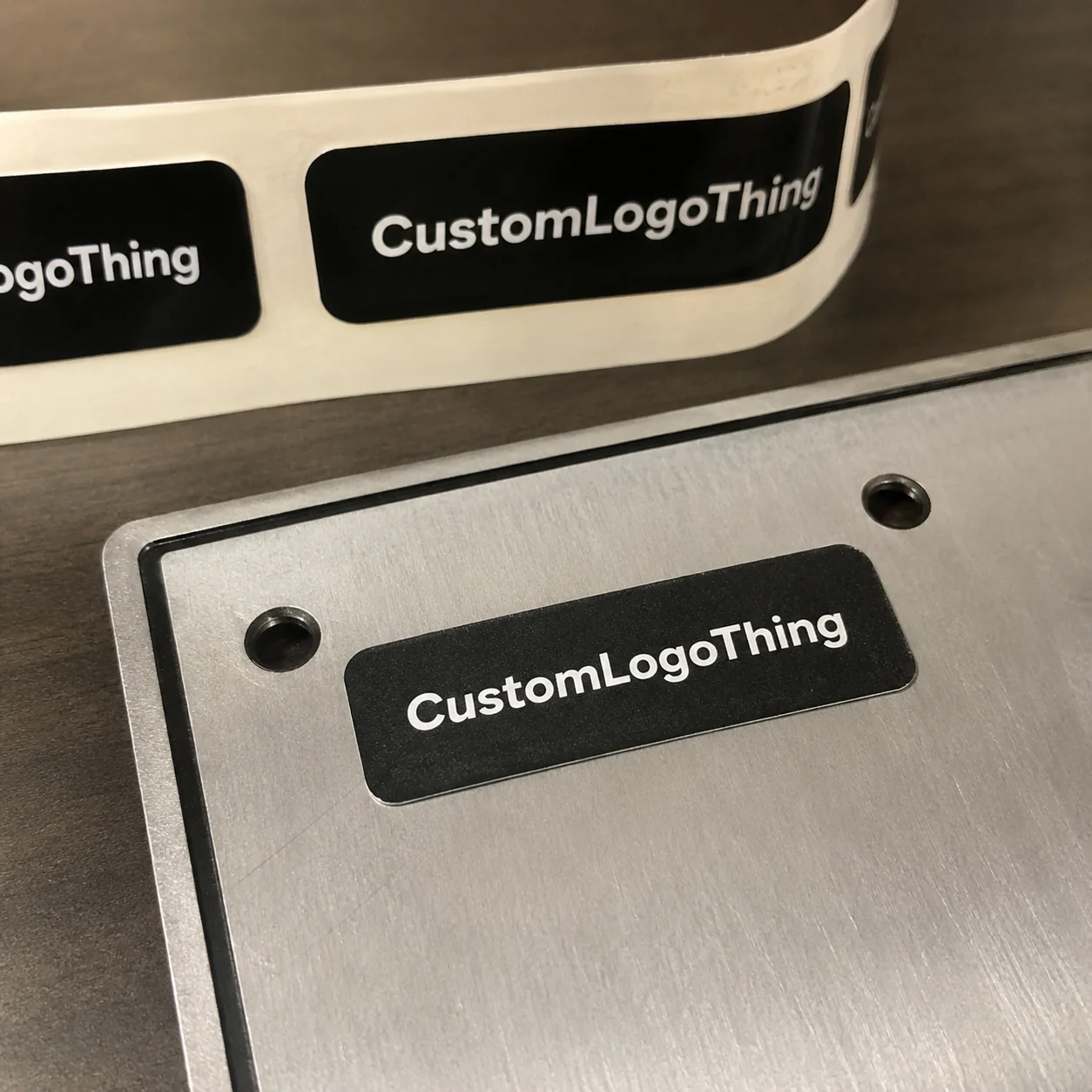
The cheapest sticker on a machine can become the most expensive failure point in the building. If it peels before a technician can scan it, read a warning, verify ownership, or confirm a maintenance date, that label has created downtime, safety risk, and administrative cleanup. That is the practical reason buyers search for equipment stickers custom: generic labels often fail under real operating conditions.
These are not promotional decals with tougher language attached. Custom equipment stickers are adhesive labels built for tools, machinery, vehicles, warehouse scanners, rental assets, medical devices, gym machines, safety gear, contractor cases, and field equipment. A laptop decal needs to look decent. An equipment label may need to survive hydraulic oil, glove abrasion, pressure washing, sunlight, and a cleaner-wipe at 6 a.m.
The job list gets long fast. A good label can support asset tracking, operator safety, inspection proof, calibration dates, preventive maintenance, theft deterrence, warranty control, and quick identification in dirty or noisy environments. In practice, that often means a barcode, QR code, serial number, company logo, warning icon, voltage rating, and a short instruction block all competing for space on a two-inch sticker.
Retail and product labels rarely face that combination of abuse. Product packaging is usually designed for controlled handling, shelf visibility, and brand recognition. Equipment labels face abrasion, oil, solvents, UV exposure, temperature swings, moisture, curved surfaces, powder-coated metal, textured plastic, and repeated human contact. Same broad printing category. Different battlefield.
Practical rule: if the equipment earns revenue, protects a worker, proves inspection status, or controls warranty history, specify the label like a functional component rather than a throwaway sticker.
How Durable Equipment Labels Actually Work
A durable equipment label is a small system. The main layers are the face stock, printed graphics, and adhesive. Many industrial labels add a fourth layer: a clear laminate or protective coating. The label succeeds only when those layers match the application. Strong vinyl with the wrong adhesive can fail. Excellent adhesive with unprotected ink can still leave you with an unreadable tag.
Vinyl is flexible and forgiving, which makes it useful on curved housings, service cases, tools, vehicles, and outdoor assets. Polyester is stiffer, more dimensionally stable, and common for asset tags, rating plates, warning labels, and barcode labels that need clean edges and long-term readability. Polypropylene can work for moderate-use labels where budget matters and exposure is limited. Tamper-evident films are used when removal must leave evidence, such as warranty seals, calibration labels, inspection stickers, or controlled-access equipment.
Adhesive choice deserves more attention than it usually gets. Permanent adhesive is common for general equipment identification. Removable adhesive can work for temporary inspection or rental rotation, but it is a poor default for long-term field assets. High-tack adhesive grabs faster and helps on rougher surfaces. Freezer-grade adhesive is designed to bond in cold conditions. Low-surface-energy adhesive is used for difficult plastics such as polyethylene and polypropylene. Aggressive industrial adhesive may be needed for textured, oily-prone, curved, or weather-exposed surfaces.
Surface energy sounds like lab language, but the buying implication is simple: some surfaces welcome adhesive, and others resist it. Smooth stainless steel usually behaves better than a rubberized tool grip. Powder-coated metal can be excellent or difficult depending on texture and coating chemistry. Painted equipment may bond well after full cure; fresh paint can release gases or solvents. Textured plastic cases are notorious because only the raised peaks touch the adhesive. Less contact area means less bond strength.
Print method changes performance too. Digital printing is useful for short runs, color logos, QR codes, serial numbers, and variable data. Screen printing costs more to set up but can deliver heavier ink coverage and strong durability for warning labels or high-wear markings. Thermal transfer printing is common for barcodes, serialized asset labels, and small-batch identification because it produces crisp black data when matched with the correct ribbon and material.
Laminate is not just shine. Matte or gloss laminate protects ink from scratches, cleaning chemicals, fingerprints, sunlight, and scan degradation. A barcode that scans on day one but fails after three months of abrasion is not an asset system. It is a delayed maintenance problem.
Key Specs to Decide Before You Request Artwork
Before artwork starts, define the buying specs. The core list is straightforward: label size, shape, face material, adhesive, finish, color count, quantity, roll or sheet format, barcode requirements, and expected service life. A 1 x 2 inch serialized polyester asset tag is a different product from a 4 x 6 inch outdoor warning sticker, even if both get described as equipment labels in a purchasing request.
Environmental questions drive the construction. Will the label live indoors or outdoors? Will it face direct sun, washdowns, oil mist, battery acid, disinfectant wipes, salt spray, freezer storage, or heat near motors? Will operators rub against it daily? Will the surface flex? Does the equipment sit in a 68°F warehouse, or does it ride on a trailer through summer heat and winter freeze?
Readability is its own specification. For safety labels, text smaller than 6 pt can become a liability, especially if the viewer stands two to six feet away. QR codes need quiet zones around them, usually at least four modules of empty space. Linear barcodes should be tested at the final printed size, not judged on a monitor. Strong contrast matters: black on white or black on yellow usually scans and reads better than gray on silver or red on black.
Compliance-driven stickers include warning labels, lockout tags, voltage labels, inspection stickers, calibration labels, equipment ID plates, service interval labels, and ownership labels. For packaging-adjacent standards and testing language, buyers often recognize organizations such as ISTA, which focuses on transport packaging performance, and ASTM, which publishes test methods used across materials and adhesives. Not every equipment sticker needs formal certification. Standards vocabulary still helps vendors understand whether you need routine identification or documented durability.
Branding has a role, as long as it does not crowd the working information. Rental fleets, contractor tools, gym machines, factory equipment, medical devices, and field service cases all benefit from visible ownership cues. The same discipline used in packaging design and package branding applies here: make the identity obvious, keep the information hierarchy clean, and avoid turning the label into a miniature billboard. Custom Logo Things also offers Custom Labels & Tags for teams that need equipment identification to sit alongside broader packaging or operational labeling programs.
Many quote problems start because buyers ask for “durable stickers” without a spec sheet. Build a one-page brief first. It does not need polish. It needs to force every supplier to quote the same construction rather than one vendor pricing paper, another pricing vinyl, and a third pricing laminated polyester.
| Material Option | Best Fit | Typical Strength | Watch-Out |
|---|---|---|---|
| Paper label | Short-term indoor use | Low cost, easy printing | Poor moisture and abrasion resistance |
| Vinyl | Curved tools, vehicles, outdoor assets | Flexible, weather resistant | Can stretch during application if handled poorly |
| Polyester | Asset tags, barcodes, rating plates | Stable, clean, durable | Less forgiving on tight curves |
| Tamper-evident film | Warranty seals, calibration control | Shows removal attempt | Requires surface testing before rollout |
Process and Timeline From Quote to Finished Stickers
The usual path runs through spec review, artwork setup, material recommendation, quote approval, proofing, prepress checks, printing, finishing, quality review, and shipping. Simple repeat jobs may move in a few business days after proof approval. New equipment stickers custom orders often need more time because the supplier is not just printing a logo; they are matching construction to risk.
Lead time depends on material availability, quantity, variable data, die-cut complexity, laminate choice, proof revisions, color matching, and rush capacity. A rectangular two-color asset label on stocked polyester is easier to schedule than a custom-shaped outdoor label with 3,000 unique serial numbers and a specialty adhesive. For many custom label projects, a realistic planning window is 7 to 15 business days after approved proof. Specialty materials, high volumes, and test batches can push that longer.
Proofing is where buyers should slow down for ten minutes. Check spelling, exact dimensions, color, barcode scanability, serial number sequence, cut line, bleed, corner radius, roll direction, and sheet layout. Roll orientation matters if labels will be applied with a dispenser or aligned to a fixture. A correct design in the wrong unwind direction can irritate the production floor all day.
Send useful information at the beginning. Vector logos are best, usually AI, EPS, or clean PDF files. Include exact dimensions, application photos, surface material, use environment, required standards, barcode type, numbering spreadsheet, and any color references such as Pantone values. If the label supports a broader system of Custom Printed Boxes, product packaging, or retail packaging, mention that too; color consistency may matter across the customer-facing experience.
Pilot runs are underrated. Testing 25 to 100 labels can prevent a full-batch failure on textured plastic, oily metal, outdoor fleet assets, or curved housings. Apply samples to the actual surface, wait at least 24 to 72 hours, then expose them to the real abuse: cleaners, cold, heat, flexing, sunlight, gloves, stacking, and scanning. Adhesives often build bond over time, so a five-minute peel test is weak evidence.
The fastest timeline usually comes from complete specs, not pressure. Missing data can add more delay than production itself. If the supplier has to chase surface photos, barcode files, logo resolution, and quantity breaks across four emails, the job loses momentum before it reaches the press.
Cost and Pricing Factors That Change the Unit Cost
Pricing is shaped by material, adhesive, laminate, size, shape, print method, quantity, variable data, setup time, and finishing format. That is why two stickers with the same dimensions can have very different quotes. A plain paper label might cost pennies in volume. A laminated polyester asset label with serialized data, tight barcode grading, and industrial adhesive may cost several times more, but it may also last years instead of weeks.
Unit cost falls as quantity rises because setup, proofing, and machine time spread across more stickers. A small run of 100 labels carries the full burden of setup. At 1,000 or 5,000 pieces, the fixed work is distributed more efficiently. As a rough buyer-facing range, simple indoor labels may land around $0.08 to $0.20 each at mid-volume, while durable vinyl or polyester equipment labels might sit around $0.18 to $0.65 each depending on size, print coverage, laminate, adhesive, and variable data. Very small orders can climb above $1.00 per label. Large standardized runs can drop significantly. These ranges are not universal, but they help expose quotes that are unusually vague.
Minimum order quantities are not always arbitrary. Some materials come in minimum roll widths. Dies take time to set up. Specialty inks, laminates, and roll finishing require efficient press time. A supplier may quote 250, 500, or 1,000 pieces as a minimum because running fewer would make the setup cost look absurd on a per-label basis.
Cheap paper labels can work for temporary bin IDs, internal test equipment, or dry indoor tracking. They are a poor bet for outdoor assets, chemical exposure, washdowns, and high-touch tools. Polyester and vinyl cost more upfront, yet the better comparison is cost per month of useful service life. A $0.12 label that fails in two months costs more operationally than a $0.42 label that stays readable for three years, especially if a technician loses ten minutes hunting for an asset ID.
Ask quotes to break out unit cost, setup fees, proof fees, die charges, rush charges, shipping, overrun and underrun policy, and reorder pricing. Also ask whether the price assumes sheets, rolls, or individually cut pieces. Labor on your side changes too. Rolls may speed application for 2,000 labels. Sheets may be easier for office-controlled asset tagging. Individually cut pieces can look premium but usually add handling cost.
| Order Scenario | Likely Cost Driver | Typical Buyer Move |
|---|---|---|
| 100 serialized asset tags | Setup and variable data | Use a standard rectangle and clean spreadsheet |
| 1,000 outdoor warning labels | Material, laminate, UV exposure | Compare vinyl and polyester constructions |
| 5,000 rental equipment labels | Durability and application labor | Request roll format and reorder pricing |
| Small custom-shaped logo labels | Die-cutting and finishing | Standardize size if budget is tight |
Common Mistakes That Make Equipment Labels Fail Early
The biggest failure pattern is choosing by appearance instead of surface, environment, and handling conditions. A glossy label can look tough in a proof and still peel off a textured plastic case after one week. A metallic finish can feel premium and still create scan issues if barcode contrast is weak. Pretty is not the same as durable.
Surface preparation causes a large share of failures. Labels applied over dust, oil, moisture, silicone residue, mold release, fresh paint, cold metal, or chemical film may never bond properly. Many pressure-sensitive adhesives prefer application around room temperature, often near 60°F to 80°F, unless specified otherwise. If a crew applies labels to cold equipment in an unheated warehouse, the adhesive may not flow into the surface texture.
QR codes and barcodes fail when they are undersized, scratched, curved too tightly, laminated with glare, or scanned in dim maintenance areas. A code that works on a designer’s monitor may not work on a greasy pump housing under poor lighting. Build in quiet zones, use strong contrast, and test the final printed sample with the scanners or phones your team actually uses.
Design mistakes are common: low contrast, tiny warning text, overly complex logos, weak color choices, missing bleed, and no room for serial numbers or inspection dates. A label is not a brochure. It has a job to do in seconds. Put the most important information first, then support it with branding. For custom equipment sticker projects tied to safety or inspection, readability should beat decoration every time.
Adhesive mismatch is another quiet killer. Removable adhesive on permanent assets can release too soon. General-purpose adhesive on powder-coated metal may struggle if the coating is textured. Standard adhesive on freezer equipment, high-heat machinery, or rubberized tool grips may fail because the chemistry is wrong. In those cases, a test batch is not bureaucracy. It is insurance.
Storage matters before application. Rolls left in heat, humidity, or sunlight can lose performance before the labels ever touch equipment. Keep labels in their packaging, away from direct sun, and generally near stable indoor conditions unless the supplier gives different instructions. Rotate stock if you reorder often. Adhesives age.
Next Steps: Build a Sticker Brief Your Supplier Can Quote
A good sticker brief saves money because it removes guesswork. Start with the equipment type, surface material, indoor or outdoor exposure, cleaning chemicals, temperature range, size, quantity, expected lifespan, and required data fields. Add whether the label needs a barcode, QR code, serial number, inspection date, company logo, warning icon, or operator instruction.
- Equipment: forklift, compressor, drill case, control panel, rental tool, gym machine, medical cart, or vehicle.
- Surface: powder-coated metal, painted steel, stainless steel, textured plastic, rubberized grip, glass, or composite.
- Exposure: indoor dust, outdoor UV, oil, solvents, washdowns, cold storage, heat, abrasion, or frequent handling.
- Data: asset ID, serial number, barcode type, QR destination, inspection date, warranty code, or technician notes.
- Priority: lowest cost, longest durability, fastest turnaround, premium branding, compliance readability, or scan performance.
Take three photos before requesting a quote: a close-up of the application surface, a wider view showing equipment context, and any old label that failed or needs replacing. Failed labels are useful evidence. Curling edges, faded print, adhesive residue, or cracked film can point to the wrong material, poor surface prep, UV damage, or chemical attack.
Choose your priority before asking for options. Lowest cost and longest durability rarely point to the same construction. Fast turnaround may require stocked material and a standard shape. Premium branding may call for better color control, matte laminate, or a cleaner die-cut edge. Barcode performance may force a larger label than the marketing team first imagined.
Ask for material samples or a small test batch if the label will go on textured plastic, rental equipment, outdoor machinery, chemical-exposed surfaces, or assets that stay in the field for several years. For sustainability conversations around broader packaging programs, resources from groups such as the Forest Stewardship Council can help buyers think about paper-based materials, although most industrial equipment labels rely on films because durability is the priority.
Send vector artwork, color references, serial number spreadsheets, barcode type, roll direction needs, and shipping deadline with the quote request. If your procurement team is also ordering Custom Packaging Products, align artwork files and brand standards so labels, cartons, inserts, and package branding do not drift apart over time.
Small labels carry operational weight. They help people find assets, service machines, avoid hazards, prove inspection status, and protect ownership. Treat equipment stickers custom as a small purchasing decision with an outsized effect on assets, people, and uptime.
Equipment Sticker FAQs
What materials work best for custom equipment stickers used outdoors?
Vinyl and polyester are common outdoor choices because they resist moisture, sunlight, abrasion, and general handling better than paper. For long exposure, pair the material with UV-resistant ink and a protective laminate to slow fading and surface wear. The best option still depends on the surface, climate, chemicals, and expected service life.
How long do equipment stickers custom orders usually take to produce?
Simple repeat orders can move quickly once artwork and materials are approved, while new custom jobs need extra time for proofing and material selection. Variable data, special adhesives, die-cut shapes, laminates, and large quantities can extend the timeline. Sending complete specs, photos, and print-ready artwork at the start is the easiest way to avoid delays.
Can custom equipment labels include barcodes, QR codes, or serial numbers?
Yes. Equipment labels can include barcodes, QR codes, serial numbers, asset IDs, inspection dates, and other variable data. The artwork must leave enough quiet zone around codes, and the label size must support reliable scanning. A scan test before full production is smart for small labels, curved surfaces, dark backgrounds, or laminated finishes.
Why do some equipment stickers peel off even when they look durable?
Most early peeling comes from adhesive mismatch, poor surface preparation, cold application, oil residue, or textured low-energy plastics. A durable face material cannot compensate for the wrong adhesive or a contaminated surface. Testing on the actual equipment surface is the safest step before ordering a large batch.
How can I lower the unit cost of custom equipment stickers?
Order larger quantities when possible, standardize sizes across equipment types, and avoid unnecessary custom shapes or specialty finishes. Provide clean vector artwork and final data files to reduce setup and proofing time. Ask for reorder pricing and compare total project cost, including setup, shipping, rush fees, and expected label lifespan.


