FedEx custom labels sit at an awkward intersection of branding and logistics. They are small enough to overlook, yet expensive enough to misjudge. One bad barcode, one wrong adhesive, or one dimension that does not match the carton and the whole shipment starts to behave like a systems problem rather than a print job.
For clothing brands, the term can mean more than one thing. Sometimes it refers to shipping labels for outbound cartons and poly mailers. Sometimes it means inventory labels, carton IDs, or branded packaging elements that need to move through FedEx-managed handling without causing a scan failure or a receiving exception. Those are not the same product, even if buyers use the same shorthand for all of them.
The practical question is not whether the label looks good on a screen. It is whether it survives the route it is supposed to take. Does it scan cleanly at intake? Does it stay attached on a recycled corrugated carton? Does it remain legible after friction, compression, and a few hours in transit? Those are the details that decide whether fedex custom labels support the operation or slow it down.
FedEx Custom Labels for Clothing: What They Actually Solve
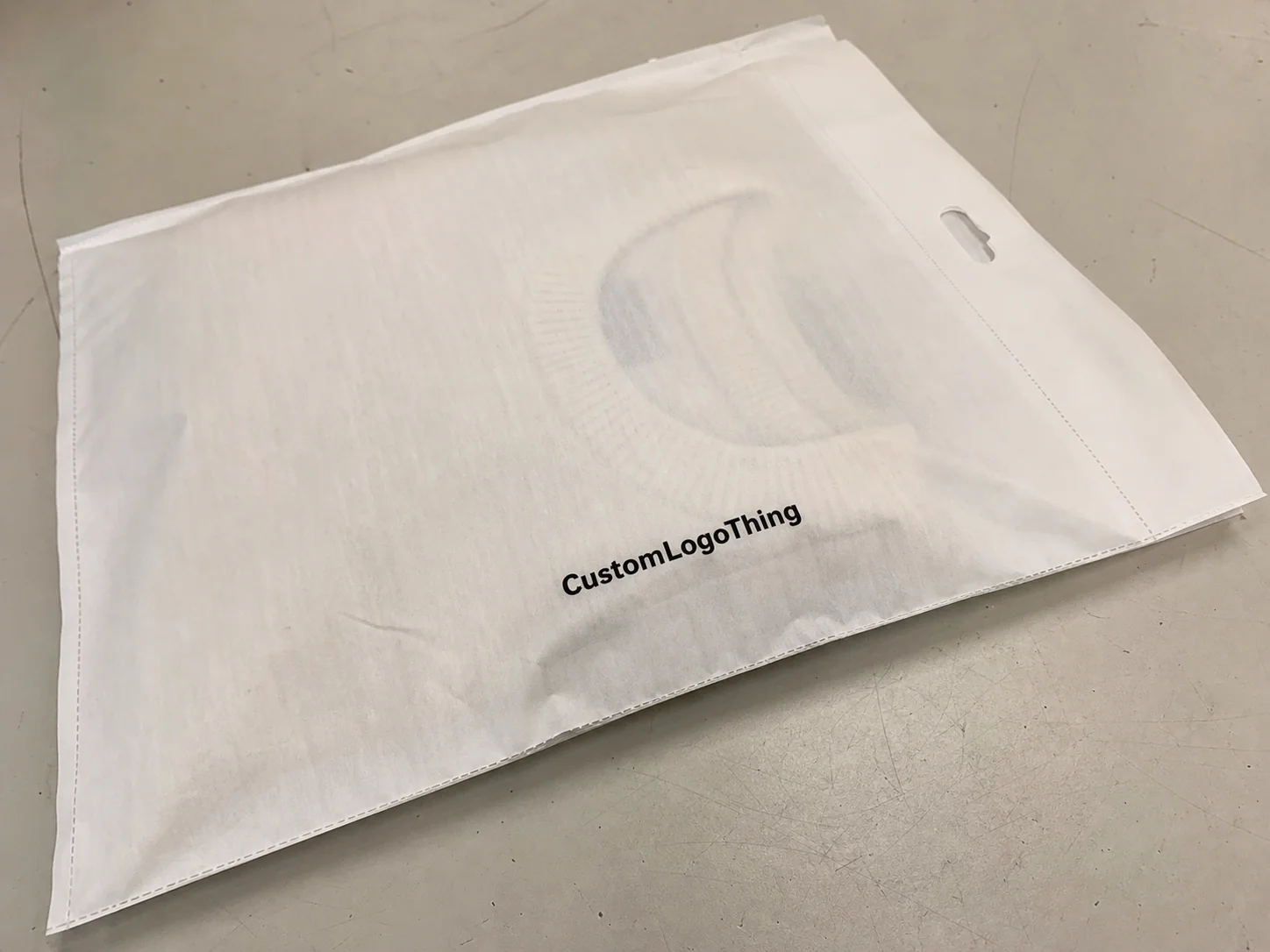
Most apparel buyers want the same three outcomes from FedEx custom labels: identify the shipment, route it correctly, and keep the brand presentation consistent. That sounds straightforward. It is not. A label can do one of those jobs well and still fail the others. A clean brand mark means little if the barcode cannot scan. A perfect barcode does little if the adhesive peels before receiving checks the carton.
For clothing operations, the label usually plays one of four roles:
- Shipping labels for cartons, mailers, and outbound freight.
- Carton identifiers for warehouse intake and routing.
- Barcode or SKU labels for inventory control and picking.
- Branded packaging labels that carry the visual identity onto the package.
Each role has different failure points. Shipping labels care about scanability and adhesion. Inventory labels care about data accuracy and consistency. Branded labels care about contrast, finish, and how the package reads beside the carton graphics, insert cards, or hang tags. A buyer who treats all of them as interchangeable usually discovers the mistake after the first run, when the cost of fixing it is no longer a design decision.
Data quality is the hidden issue most teams underestimate. A receiving department may scan hundreds of cartons in an hour. If the label is crowded, the quiet zone is too tight, or the print contrast is weak, the error is not aesthetic. It is operational. The carton gets set aside, and the exception ripples through intake, inventory, and fulfillment. That is why fedex custom labels should be evaluated as part of the full packaging system, not as a finishing touch.
A label that passes the mockup and fails the dock is not a printing problem alone. It is a logistics problem with print attached.
When the label is part of broader packaging work, the adjacent components matter too. A carton graphic, a garment insert, and a shipping label that all follow different visual rules will make the brand look disjointed. For teams also sourcing Custom Labels & Tags or broader Custom Packaging Products, consistency is not about style for its own sake. It reduces confusion across the packout table, the warehouse, and the receiving line.
Process and Timeline: From Artwork to Delivery
Most label orders move through the same sequence: request, specification check, proof, approval, production, finishing, and shipment. The sequence is simple; the delays are not. They usually show up when the buyer sends incomplete data or when the label has to serve too many purposes at once. That pattern shows up with fedex custom labels just as often as it does with apparel boxes or insert cards.
The fastest quotes come from complete spec packages. At minimum, the printer needs final size, quantity, substrate, adhesive type, artwork files, barcode values, and destination ZIP code or appointment window. If any of those are vague, the job pauses. That pause looks small on paper and expensive in real time.
Proofing deserves more attention than it usually gets. A static shipping label can move quickly if the layout is standard and the barcode is already approved. Variable data changes the timeline. Sequential numbering, multiple SKUs, or several destination fields often require a second pass, especially if the labels will be scanned inside a warehouse where one bad code creates a manual exception.
For straightforward runs, a realistic planning window is often 5-10 business days after proof approval. More complex orders, especially those with specialty materials, variable data, or unusual finishing, can take 12-15 business days. Rush service is possible, but only when the artwork is already print-ready and the specifications are locked. If the job still needs clarification, the rush request tends to become a re-quote rather than a shortcut.
Transit time is separate from press time. That distinction matters more than many buyers expect. A job can print quickly and still miss the receiving appointment because freight took longer than planned. The safer approach is to ask for both a production window and a shipping estimate, then build launch timing around the slower of the two. That is tedious, but it is the difference between a label arriving before the product needs it and arriving after the intake window has closed.
There is another practical issue: handoffs. A label may be approved by merchandising, printed for operations, and received by a warehouse team that never saw the original design file. The more teams involved, the more important it is to freeze the workflow early. Otherwise, every department thinks someone else already checked the barcode, and the error survives until the pallet is on the dock.
Materials, Adhesives, and Size Specs That Decide Performance
Material choice controls durability, print quality, and cost. Paper stock is usually the lowest-cost option and works well for indoor use, short shipping windows, and cartons that will not be exposed to much abrasion. Coated paper offers sharper print and better scuff resistance. Synthetic stock costs more, but it stands up better to moisture, repeated handling, and the kind of friction that turns an ordinary label into a maintenance item.
Adhesive selection is just as consequential. A carton with clean corrugated board needs a different adhesive than a recycled mailer, textured apparel packaging, or a box that may see condensation in transit. Temporary adhesive can make sense for inserts, internal tracking, or short-lived display labels. Permanent adhesive is the safer choice for carton IDs and shipping labels. If the surface is dusty, rough, or slightly fibrous, standard adhesive often underperforms in ways that are hard to spot until the first production run.
Size is not a visual preference. It is a data-capacity decision. Once a label has to fit a logo, a barcode, a destination code, handling text, maybe a SKU, and in some cases compliance language, a small format fills up fast. Buyers often cut labels too small because the proof looks neat. Then the barcode gets compressed, the copy crowds the margins, and the quiet zone disappears. The result is pretty in a mockup and weak in a warehouse.
For apparel workflows, the common tradeoffs look like this:
| Option | Best For | Typical Cost Range | Performance Notes |
|---|---|---|---|
| Paper label with standard adhesive | Short-run shipping and carton ID | $0.05-$0.12 per unit at 5,000 pieces | Lowest cost; sensitive to moisture and abrasion |
| Coated label with stronger adhesive | Retail packaging and moderate handling | $0.08-$0.16 per unit at 5,000 pieces | Better print contrast and cleaner scanning |
| Synthetic label with specialty adhesive | High-handling cartons or exposed transit | $0.14-$0.30 per unit at 5,000 pieces | More durable; better for friction and moisture |
Print method changes the result too. Digital printing is typically the better fit for shorter runs and variable data. Flexographic printing can make sense at scale when the same label repeats across a larger apparel program. There is no universal winner. Quantity, number of colors, data changes, and registration tolerance all shape the better choice. A buyer who ignores those variables usually overpays in one of two ways: either the unit price is too high, or the label is under-specified and needs to be redone.
If the labels will sit beside custom printed boxes or a premium insert card, the finish should match the broader packaging system. A matte label can work next to a gloss carton, but only if the contrast feels deliberate. Otherwise, the package looks assembled from unrelated parts. That may not break the logistics, but it weakens the brand signal the moment the carton is opened.
Material decisions also touch sustainability and sourcing. Buyers who need a reference point for broader material choices can compare internal requirements against the EPA's guidance on material efficiency and the FSC's sourcing standards. Those sources do not choose the label for you, but they help frame the tradeoff between durability, recyclability, and material origin: EPA Sustainable Materials Management and FSC.
Pricing, MOQ, and Quote Variables
The price of fedex custom labels is driven by more than quantity. Material, size, adhesive, print coverage, finishing, and variable data all affect the quote. A one-color paper shipping label is not priced like a synthetic branded label with sequential numbering and tight registration requirements. Comparing those quotes as if they are equivalent leads to bad purchasing decisions.
MOQ changes unit economics fast. A smaller run can look expensive per label even when the total invoice is manageable. That is because setup, proofing, plate or press prep, and scheduling are spread across fewer pieces. At 500 units, the per-label price often feels high. At 5,000 or 10,000, the same setup cost is diluted enough to look much more reasonable.
Hidden costs matter as much as the base quote. Proof revisions, rush handling, freight, and reprints caused by avoidable spec errors often do more damage to the budget than the print price itself. A quote that appears cheaper may become more expensive once the job needs extra approvals or a second shipment. Buyers of branded packaging and retail packaging get caught here all the time: the first number is rarely the final number.
A usable quote should spell out these items clearly:
- Exact dimensions.
- Material and adhesive.
- Quantity tiers.
- Print method and number of colors.
- Variable data requirements.
- Lead time and ship method.
- Setup, proof, or revision fees.
For planning, a straightforward order may land around $0.08-$0.18 per unit at mid-volume. More specialized fedex custom labels can run $0.18-$0.30 or more, depending on stock, adhesive, and complexity. Those are planning ranges, not promises. Print coverage, throughput, and quantity can move them in either direction.
The label budget should also be read next to the rest of the package budget. A clothing brand may spend more on carton graphics, inserts, or branding components than on the shipping label itself. That does not make the label minor. It still determines whether the order gets to the right destination with the right scan data. A small line item can carry an outsized operational burden.
Step-by-Step Order Setup for a Cleaner First Run
Start with the use case, not the artwork. Is the label for shipping, internal tracking, branded presentation, or some combination of those? The answer determines size, adhesive, and substrate. A carton-routing label should not be designed like a boutique sticker. That mistake creates confusion both visually and operationally.
Next, gather the spec package. The more complete the first submission, the less back-and-forth the job needs later. For fedex custom labels, the most useful inputs are the logo files, final copy, barcode values, SKU list, approved dimensions, delivery ZIP code, and the deadline tied to launch, warehouse intake, or retail appointment.
Proof review needs more than spelling checks. Measure the label against the carton or garment surface. Confirm barcode contrast and quiet zones. Check that the variable fields are populated correctly. If the label will be folded, wrapped, or handled before use, confirm that it still scans from a practical viewing angle. That check is cheap before print. It is expensive after print.
Shipping details should be confirmed last, but carefully. Carton count, palletization, receiving contact, and the destination address all matter. If the printer flags a mismatch, the person approving the order should be reachable quickly. A slow approval cycle can hold a production slot and move the order into the next queue.
A clean first-order workflow usually looks like this:
- Define the end use.
- Select material and adhesive.
- Lock dimensions and quantity.
- Submit artwork and barcode data.
- Review the proof line by line.
- Approve only after a fit and scan check.
If the labels are tied to a larger launch, sync them with the rest of the packaging schedule. That means carton printing, insert card approval, and any Custom Packaging Products that need to arrive on the same timeline. A disconnected schedule can leave the labels finished while the package system around them is still waiting for approval. That is a waste of time and warehouse space.
Common Mistakes That Cause Reprints and Delays
The most common mistake is designing for appearance first and logistics second. A label can look polished and still fail in a warehouse if the barcode is too small, the contrast is weak, or the data fields are crowded. For clothing workflows, appearance matters, but function has to win.
Barcode issues are one of the fastest paths to a reprint. Wrong dimensions are another. Low-contrast color combinations can pass on a monitor and fail on the dock. Dark gray code on a dark blue background is the kind of choice that looks refined in a proof and costs money in receiving. With fedex custom labels, the warehouse team is the final judge, not the design team.
Skipping the proof is expensive for the same reason. It feels efficient until a variable data field prints incorrectly across several hundred labels. If the order includes legal copy, care instructions, or compliance text, the proof needs to be reviewed as an operational document, not just as artwork.
Last-minute quantity changes create another class of problems. They can shift the price tier, alter scheduling, or expose a setup issue that was invisible at the original volume. If the run is near an MOQ threshold, the quote may need to be rebuilt. That is not a penalty. It is how print economics work.
These are the mistakes that cause the most trouble:
- Choosing size before the data is finalized.
- Approving color from screen only.
- Ignoring the adhesive surface.
- Changing quantities after proof approval.
- Assuming one label spec fits every apparel use case.
Many buyers lose money here because the label line item looks small enough to rush. It is small. That is why it gets rushed. But the consequences are not small when a reprint holds a launch or forces a warehouse to stop and reconcile cartons by hand.
Expert Tips and Next Steps for a Faster Reorder
The most effective way to speed up future orders is to create a repeat-order spec sheet. It should record the approved material, adhesive, dimensions, print format, quantity, delivery address, and the exact barcode or variable data rules. Once that exists, reordering becomes a confirmation exercise instead of a new project.
Archive the proof package too. Keep the final artwork, approved PDF, and barcode values together. That matters more than it seems. If a new team member has to reconstruct the job from memory, the odds of drift rise immediately. One missing dimension or one changed copy field can force a new proof cycle.
Timing should be tied to the launch calendar, not just the print schedule. Build in room for proof revisions, transit time, and receiving delays. For clothing programs with multiple suppliers, the label should arrive before the product is packed, not at the same time. That ordering sounds obvious. It still gets missed.
For a new apparel program, the most useful next step is to Request a Quote using the exact approved specs for fedex custom labels, then ask whether the same configuration should be locked for the next run. That reduces the chance of drift and turns the label into a repeatable part of the packaging system rather than a one-off task.
Used well, the label does more than identify a box. It keeps the supply chain moving without forcing people to guess. For clothing brands balancing package branding, product packaging, and outbound logistics, that is the part worth getting right first.
Are FedEx custom labels better for apparel shipping or branded clothing labels?
Use shipping-focused labels when the priority is routing, carton identification, or warehouse intake. Use branded clothing labels when presentation and product identity matter more. If one order has to support both functions, ask for a dual-purpose spec so the logistics data and brand artwork do not compete for the same space.
What should I send to get an accurate FedEx custom labels quote?
Send the dimensions, quantity, material preference, adhesive requirement, and whether variable data or sequential numbering is needed. Include artwork files, barcode values, delivery ZIP code, and any deadline tied to a launch or warehouse appointment. Exact inputs reduce quote changes after proofing.
How long do FedEx custom labels usually take to produce and ship?
Simple orders can move in about 5-10 business days after approval. Jobs with specialty materials, variable data, or more complex proofing can take longer. Ask for production time and shipping time separately so the schedule does not blur the print window with transit.
Which label material works best for clothing and apparel workflows?
Paper is usually the lower-cost choice for short-lived or indoor use. Coated paper improves print clarity and scuff resistance. Synthetic stocks are better when the labels face moisture, friction, or repeated handling. The best material depends on where the label goes and how long it needs to stay readable.
How can I reduce reprints when ordering FedEx custom labels?
Lock the specs before quoting, then verify size, barcode, copy, and quantity during proof review rather than after production starts. Use a checklist for artwork, variable data, shipping destination, and receiving requirements so nothing stays ambiguous. Keep the approved version on file and reuse it for future orders so fedex custom labels can be reordered without rebuilding the job.


