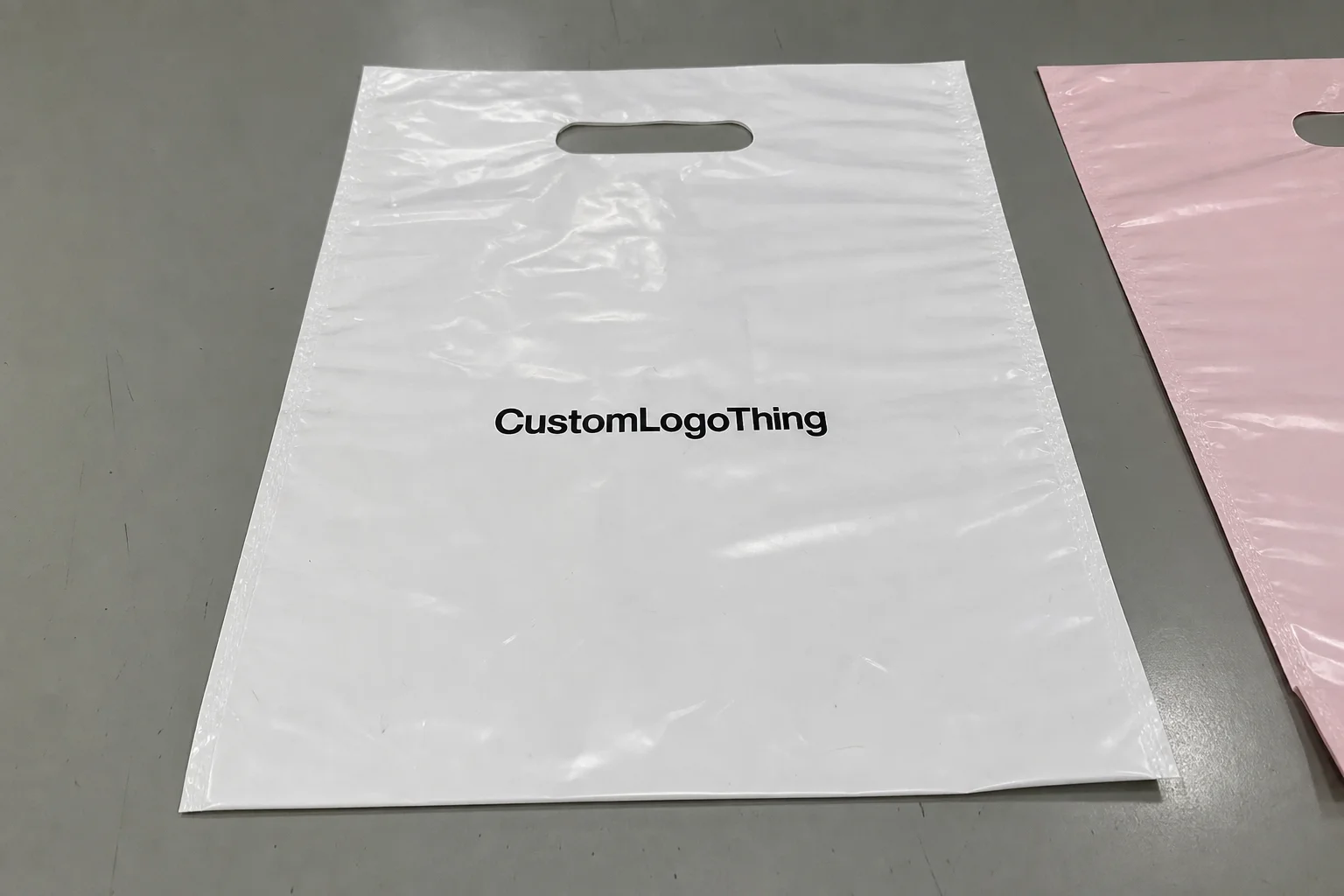
Generic clear zip bags with a sticker on the front can make a decent product look forgettable. That is why buyers searching for frosted zipper Bags Small Batch Custom Order usually want the same thing: better presentation without committing to a huge run.
For jewelry, cosmetics, stationery, accessories, handmade goods, and sample kits, frosted film gives a softer, more deliberate look than plain clear poly. A small batch also reduces risk. Ordering 500 to 3,000 units lets a brand test fit, artwork, and packing speed before scaling up.
This format is not right for every product. Heavy hardware, sharp items, products needing strong barrier protection, or categories requiring tamper evidence may need a different structure. In those cases, it makes more sense to review other Custom Packaging Products as part of a broader product packaging plan.
Frosted zipper bags small batch custom order: why buyers switch from plain stock bags fast

Most buyers switch because stock bags do little for recognition. A frosted finish with a centered logo and consistent sizing builds package branding quickly, whether the product is sold online, on a retail peg, or at a market table.
The finish also solves practical problems. Frosted film softens the view of the contents, hides minor packing mess, and still lets customers understand what they are buying. Clear bags reveal everything, including crooked inserts and uneven folds.
Small batches work well for seasonal launches, new SKUs, and test runs. The main tradeoff is cost: lower quantities usually mean higher unit prices, fewer print efficiencies, and less room for extras like full coverage graphics or custom dimensions.
For lightweight, non-fragile goods, custom frosted bags can deliver a stronger visual upgrade than jumping straight to custom printed boxes. Boxes can protect better, but they also cost more, take more space, and are harder to forecast.
Practical rule: if the product is light, presentation-sensitive, and does not need a rigid pack, a frosted zip bag is often the simplest upgrade. If the item is heavy, sharp, or compliance-sensitive, start with another format.
Material, finish, and closure details that affect performance
Not all frosted bags perform the same. Many are made from PE-based film, often LDPE or blended polyethylene, selected for softness, seal strength, and translucency. Typical retail thickness falls around 70 to 120 microns.
Frosted means matte and translucent, not opaque white. Customers can usually see the product shape and dominant color, but fine details are muted. That is one reason the format often feels cleaner in retail packaging.
The zipper matters as much as the print. A good closure should align cleanly, reopen without stressing the side seals, and match the intended use. A bag meant for single-fill presentation does not need the same zipper feel as one expected to be opened repeatedly.
Useful construction and feature choices include:
- Bottom seal bags: common for flat items like stickers, cards, and jewelry sets.
- Side seal bags: tidy and stackable for standard pouch layouts.
- Stand-up variants: better for bulkier contents, though less common in simple frosted zip formats.
- Hang holes: for peg displays.
- Tear notches: for a cleaner first-open experience.
- Rounded corners: to reduce snagging and soften the look.
- Vent holes: useful for some apparel packs, but not ideal where dust or moisture protection matters.
Printing method depends on quantity and artwork. Smaller runs usually use simpler setups with limited color counts. Larger runs may justify flexographic or gravure printing for better consistency and coverage. On frosted film, white ink underlay is often needed if you want colors to stay bright instead of turning muted.
Most durability complaints come from three causes: scuffing, punctures, and split seals. Overpacking is common. A thicker bag does not fix bad sizing.
Size ranges, thickness, print area, and customization specs to confirm before quoting
“Small” is not a spec. Buyers need actual dimensions based on the packed product.
| Use Case | Typical Size Range | Common Thickness | Notes |
|---|---|---|---|
| Jewelry, pins, stickers | 2.5" x 3.5" to 4" x 6" | 70-80 microns | Best for flat, light items |
| Stationery, cards, small accessories | 5" x 7" to 6" x 9" | 80-100 microns | Allows room for backing cards and inserts |
| Socks, undergarments, beauty kits | 8" x 10" to 10" x 12" | 100-120 microns | Better hand feel for repeated handling |
| T-shirts, bundled apparel, multi-item kits | 10" x 13" to 12" x 16" | 120 microns and up | Watch total volume and zipper stress |
Always measure the packed product, not the bare item. Include backing cards, folded inserts, tissue, and the actual filled thickness. A bag that technically fits but looks swollen works against the presentation you are paying for.
As a starting point, flat items often work at 70 to 80 microns, while garments, kits, and bags meant for repeated handling usually fit better in the 100 to 120 micron range.
Print area also has limits. Keep critical artwork away from the zipper track, side seals, bottom seal, tear notch, and hang hole. Flexible film can shift slightly during printing, so leave a safety margin.
For many orders, one-side printing is enough for strong packaging design. Two-side printing is useful if you need instructions, QR codes, warning text, or a barcode panel. Spot colors are usually more economical than full-process builds.
Useful specification add-ons include:
- Barcode or SKU panel
- QR code
- Writable area for batch notes
- Suffocation warning text where required
- Hang hole placement matched to display fixtures
Before requesting pricing, prepare vector artwork in AI, EPS, or print-ready PDF format. Include Pantone references if color matters, target dimensions, thickness, print side count, and whether you want a stock size with custom printing or a fully custom bag.
Pricing, MOQ, and unit cost: what changes the number most
Price usually moves most with size, thickness, print colors, print coverage, bag style, and quantity. Freight can also change the landed cost more than expected once bag size and carton volume increase.
For a small custom run, quotes usually include four cost buckets:
- Sample cost
- Setup cost
- Plate or cylinder cost for some print methods
- Per-unit production cost
These ranges are useful for planning:
| Order Type | MOQ Range | Typical Unit Cost | Comments |
|---|---|---|---|
| Stock size, one-color logo | 500-1,000 pcs | $0.18-$0.45 | Best entry point for testing |
| Stock size, two-color print | 1,000-3,000 pcs | $0.22-$0.55 | Moderate branding upgrade |
| Custom size, one-color logo | 1,000-3,000 pcs | $0.28-$0.65 | Higher setup complexity |
| Custom size, higher print coverage | 3,000+ pcs | $0.40-$0.90+ | Coverage and underlays push costs up |
These figures often exclude shipping, duties, taxes, and sometimes plate charges. Physical samples commonly range from $35 to $150+, depending on whether you need a stock sample, visual mock sample, or pre-production piece.
MOQ is tied to setup efficiency. Stock-size Bags with Custom print usually support lower minimums because the dimensions already exist. Fully custom size-and-print projects often start higher.
For many brands, one-color printing is the cost-effective sweet spot. A restrained logo in white, black, or one Pantone color usually looks strong on frosted film without pushing the unit cost too far.
Shipping method can reshape the budget. Express is fastest and most expensive. Air is the middle ground. Sea freight lowers landed cost on larger runs but is usually too slow for a short launch window. Ask for carton dimensions early.
A practical quoting approach is to request tiers at 500, 1,000, and 3,000 units. If repeat orders across several SKUs are likely, it may also help to review Wholesale Programs for consolidated planning.
Artwork approval process, production steps, and lead time expectations
A typical order flow is simple: submit specs, receive a quote, review artwork, approve a mockup, request a sample if needed, confirm production, and arrange shipment. It stays simple only if the specifications stop changing.
Most delays come from missing or unclear inputs:
- Missing dimensions
- Low-resolution logo files
- Unclear Pantone references
- No thickness confirmation
- Late edits after proof approval
Lead time depends heavily on whether the bag size already exists. A stock-size bag with custom print may take roughly 10 to 18 business days after proof approval. A fully custom size-and-print order often needs 15 to 25 business days for production, plus shipping.
Sample timing follows the same pattern. Stock samples may take 3 to 7 business days, while a more tailored mock sample or pre-production piece often needs 7 to 14 business days.
Color on frosted film has limits. It will not behave like coated paperboard. White underprint affects brightness, and very fine reverse text or low-contrast palettes are common failure points. If the bag needs to match cartons, labels, or inserts, compare proofs across formats before approval.
Quality checks should cover more than the logo. Confirm zipper alignment, side-seal strength, print registration, color consistency, bag count per carton, and dimensional tolerance. Short runs leave less margin for defects.
For buyers testing broader e-commerce durability, transport guidance from ISTA is useful. If your wider packaging program includes paper inserts or cartons, chain-of-custody standards through FSC may matter as well.
What is the best way to order frosted zipper bags small batch custom order for a new product?
The best first order is narrow enough to learn from and specific enough to quote accurately. Start with one proven or near-standard size, one sensible thickness, and one restrained print treatment.
For most launches, the most efficient path looks like this:
- Measure the packed product, not just the item itself.
- Choose a stock size if it fits well.
- Select thickness based on weight, fullness, and expected reuse.
- Use one-color artwork unless heavier coverage is necessary.
- Request price tiers at 500, 1,000, and 3,000 units.
- Approve a physical sample if color, feel, or zipper quality matters.
This approach reduces setup complexity and gives clearer data on fit, packing speed, and customer response.
Common ordering mistakes with custom frosted zip bags and how to avoid them
The biggest mistake is choosing size from the bare product alone. Add insertion tolerance, top space, and room for any backing card or insert.
Another common error is making the first order too complicated with multiple sizes, print versions, or speculative SKUs. Start with one core size, one logo treatment, and one practical gauge.
Compliance is another issue buyers leave too late. Depending on the product and destination market, warning labels or safety text may be required. If the requirement is unclear, use the supplier FAQ process to confirm what is commonly needed.
Other frequent problems include:
- Ignoring zipper orientation during packing
- Using lines or text that are too fine for flexible film
- Choosing colors that disappear against the frosted finish
- Ordering too close to launch
- Skipping spare quantity for packing waste or defects
A buffer of 3% to 5% above exact need is often sensible for hand-packed orders.
Simple first-order framework: choose one proven size, one moderate thickness, one clean logo treatment, and enough units to cover the next selling cycle. Improve the second run using actual packing and sales data.
How to place the right order: specs to send, sample choices, and quote-ready next steps
Fast quoting starts with complete information. Vague requests slow everything down and usually lead to revised pricing later.
Use this checklist:
- Product type and packed dimensions
- Packed weight
- Desired bag size or acceptable size range
- Thickness target, such as 80, 100, or 120 microns
- Print colors and one-side or two-side print
- Quantity tiers, ideally 500, 1,000, and 3,000
- Destination country or zip code
- Deadline and preferred shipping method
- Artwork files in vector format
- Special features such as hang hole, tear notch, rounded corners, barcode area, or warning text
Stock samples help if size, feel, or thickness is still uncertain. Move to a custom proof if dimensions are locked and the main question is print placement. If color matching matters, a physical sample is usually worth the extra cost.
Compare quotes only when the specs match exactly: same size, same gauge, same print method, same quantity, and same freight terms. Otherwise the cheapest number is often not the same product.
Decision makers can keep the process clean by following this sequence:
- Choose one standard or near-standard size
- Confirm artwork and print colors
- Request quotes in multiple quantity tiers
- Review the mockup for placement and safety margins
- Approve a physical sample if color or feel matters
- Lock production and shipping method
FAQ
What is the MOQ for a frosted zipper bags small batch custom order?
MOQ depends on bag size, print method, and whether you are using a stock size or fully custom dimensions. Stock-size custom print runs usually support lower minimums, often starting around 500 to 1,000 pieces. Fully custom bag production is commonly higher because setup is less efficient and waste allowances increase.
How much does a frosted zipper bags small batch custom order cost per unit?
Unit cost usually changes most with size, film thickness, number of print colors, print coverage, and quantity tier. A simple stock-size bag with a one-color logo may land around $0.18 to $0.45 per unit in smaller runs, while custom-size bags with heavier coverage can climb to $0.40 to $0.90 or more before freight and taxes.
What lead time should I expect for a frosted zipper bags small batch custom order?
Stock-size bags with custom printing often run about 10 to 18 business days after proof approval. Fully custom size-and-print orders more often need 15 to 25 business days for production alone. Add sample time and shipping time on top. The most common delay is late artwork changes.
Can I print full color logos on frosted zip bags in a small batch?
Yes, but it depends on artwork style, order quantity, and the available print method. Frosted film softens color appearance, so white underprinting is often needed to keep colors bright. In shorter runs, simpler graphics usually produce cleaner results and better value than full-coverage artwork.
What size and thickness should I choose for custom frosted zipper bags?
Choose size from the packed product, not the bare item. Leave room for insertion, top clearance, and any backing card or insert. Lighter gauges suit flat, lightweight goods, while heavier films are better for garments, kits, and repeated handling. If the right spec is unclear, send packed dimensions, weight, and a product photo for a more accurate recommendation.