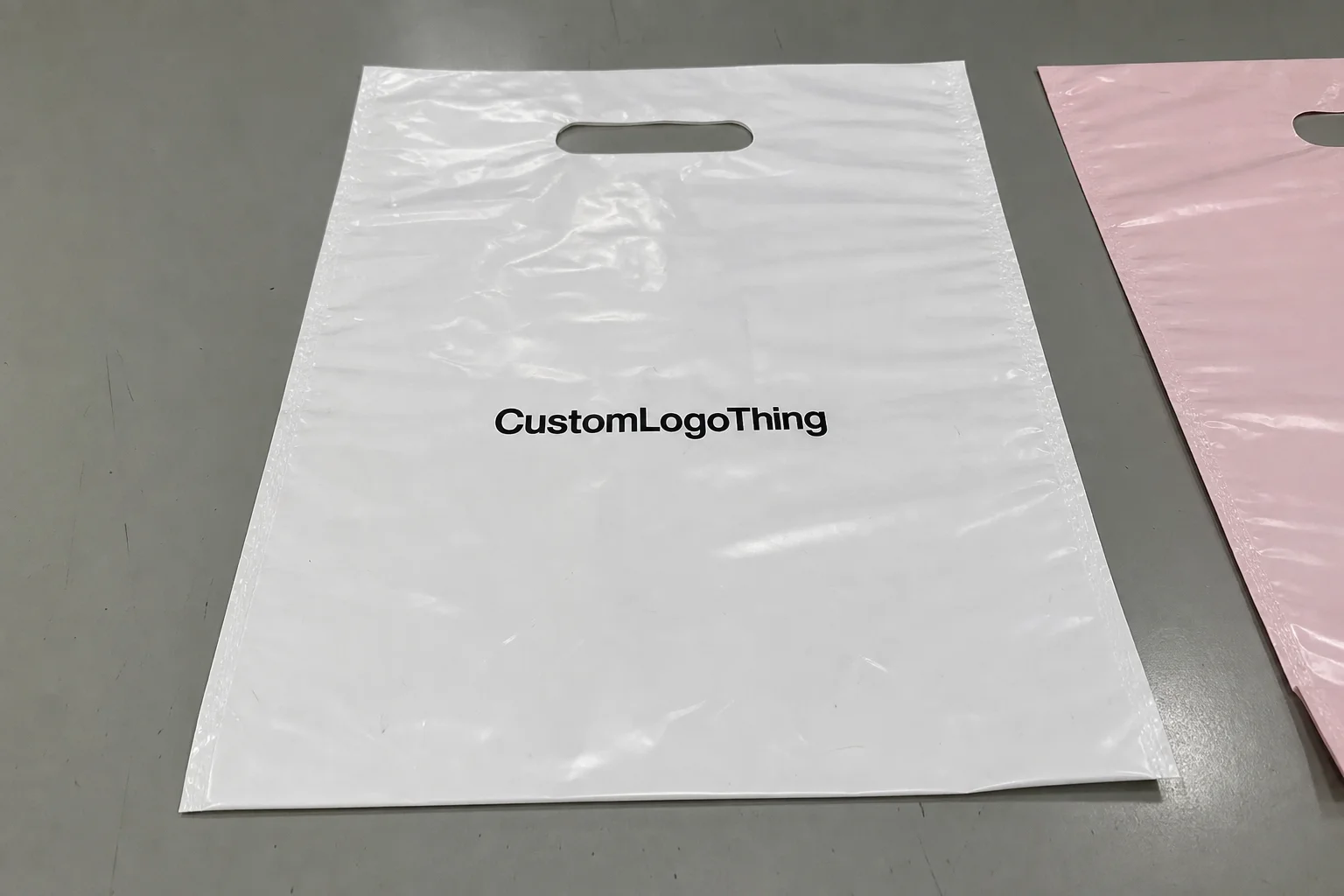
Small gift items are judged fast—often in under three seconds on a peg wall or counter rack. That is why a clear gift shop OPP Header Bags moq lead time guide matters. Buyers sourcing packaging for pins, keychains, sticker sets, jewelry cards, candy favors, mini craft kits, and similar items are not just buying “a bag.” They are buying visibility, hang performance, pack speed, and a certain level of retail discipline.
Many gift shops do not have a product problem. They have a packaging problem. The item is appealing, but the bag wrinkles, the header folds over, the euro slot tears, or the whole package vanishes next to sharper-looking merchandise.
OPP Header Bags solve a specific retail problem well. They keep the product visible, keep material use low, hang neatly, and usually cost less than a folding carton for lightweight goods. For museum stores, souvenir shops, boutiques, event merchandise, and seasonal displays, that can mean better presentation without adding much bulk or freight weight.
The useful questions are straightforward. How are these bags built? Which products suit them? Which specs affect cost first? What pushes minimum order quantity up? What usually stretches production lead time? Good decisions start there, not with a vague request for “best price.”
Why small gift items sell better when the bag does the merchandising

Small products rarely get generous shelf space. Most get one hook, half a spinner arm, or a narrow lane near the register. In that cramped real estate, packaging has to do several jobs at once: catch the eye, explain the item, stay neat after repeated handling, and make restocking simple for staff.
That sounds obvious, yet packaging still gets treated as an afterthought. Buyers review the product carefully, then default to a thin bag and a header that looked fine on a screen. The shipment arrives. The film clouds under scuffing. The header bows. Pegs look messy by the second day. A small failure repeats across every unit.
Those losses add up in ways stores feel but do not always measure cleanly: weaker visibility, slower replenishment, bent headers, more damaged units, and lower perceived value. Packaging is quiet labor. If it hangs straight and frames the product well, the item gets a fair chance.
OPP Header Bags work best for flat or moderately dimensional products that already sell visually: enamel pins on backer cards, patches, sticker packs, small stationery sets, socks, tea towels, bath accessories, lightweight ornaments, and compact craft kits. Compared with ordinary polyethylene, OPP film tends to look crisper and glossier. Compared with cartons, it shows the actual product instead of hiding it. In impulse categories, that matters more than many teams admit.
The format also has limits. Heavy items, sharp corners, uneven weight distribution, or bulky packs that swell below the header can all create trouble. If the product is likely to stress the hang area, the bag may need thicker film, a stronger board, reinforcement, or a different package format entirely.
How OPP header bags work for gift shop packaging formats
An OPP header bag usually combines a clear oriented polypropylene bag with a folded printed header card attached at the top. The bag may load from the top or bottom. The header may be attached with adhesive, staples, heat, or a mixed method chosen for speed, strength, and cost.
The header does more than carry branding. It creates a flat, controlled area for SKU data, barcode placement, pricing, legal copy, and the die-cut hang hole or euro slot. That structure matters in stores. A barcode placed too near a fold can scan poorly. Warning copy hidden in the crease may satisfy no one. A header that looks balanced in artwork can hang awkwardly once the product weight pulls on it.
Common gift shop uses include:
- Souvenir patches and pins on backer cards
- Sticker packs and stationery sets
- Travel-size bath items and accessories
- Socks, tea towels, and light textiles
- Holiday ornaments and compact crafts
- Party favors and handmade goods
Buyers usually choose OPP film for three reasons: clarity, gloss, and stiffness. That stiffness helps the bag hold its shape better than softer low-density films, so the pack reads cleaner on a peg. But it is still not structural packaging. A dense product with metal edges can stress seams quickly. If most of the weight hangs directly beneath the hole, board caliper and attachment method suddenly matter a great deal.
Header proportion matters too. Too small, and the package looks unstable. Too large, and the board overwhelms the product while adding cost and dead weight. The strongest presentations tend to be surprisingly restrained: enough board to support hanging and communication, not so much that the top card starts selling itself instead of the item.
Material, size, and print specifications buyers should confirm first
Before price discussions go very far, lock down the physical spec. A large share of quote revisions trace back to loose dimensions, vague material requests, or artwork built before the package structure is settled.
Film gauge and bag sizing
Typical OPP bag gauges for gift packaging often fall around 1.0 mil to 1.6 mil. Thin sticker packs or light jewelry cards may work at the lower end. Products with metal parts, stacked components, or frequent customer handling often need thicker film for puncture resistance and a cleaner appearance after transport and store use.
Bag size should be based on the packed product, not the loose item. That distinction causes endless trouble. A patch on a backer card may need room for the card thickness, insertion tolerance, flap clearance, and the small swell created by embroidery or hardware. Too tight, and loading slows down or seams split. Too loose, and the package sags while material cost rises for no benefit.
Header board options
Most headers use SBS paperboard, coated card stock, or a similar folding box board. A practical range is often 12pt to 18pt, depending on package width, product weight, and hang style. Lighter board folds neatly but may curl or weaken at the hole. Heavier calipers improve rigidity and hook performance, though they raise cost and shipping weight slightly.
Some buyers also require certified fiber content through programs such as FSC. That can support sourcing standards, but it does not fix a weak structure. A certified board that is too thin is still too thin.
Print, hole style, and closure details
Header printing can be simple one-color branding or full CMYK on both sides. Cost climbs with flood coverage, added colors, coatings, backside print, and special finishes. For many gift SKUs, a clean front panel with good contrast does more work than decorative effects that add expense but little selling power.
Barcode placement deserves more attention than it usually gets. Busy dark backgrounds behind a UPC often lead to scan trouble. Small text should stay away from folds, staples, and adhesive zones. Common hang styles include a round hole and the more retail-friendly euro slot, which generally performs well on standard peg systems.
Closure choices should be decided early because they affect both labor and pack behavior:
- Resealable adhesive flap
- Permanent adhesive closure
- Heat-sealed format
- Staple reinforcement at the header
- Bags supplied open for manual filling
- Preassembled bag-and-header units
Storage and transit conditions matter more than many first-time buyers expect. Heat can encourage curling. Compression in master cartons can flatten headers. Long warehouse dwell times can dull presentation. If the package is moving through a demanding distribution cycle, comparing the design against handling expectations and basic transport protocols such as those referenced by ISTA is sensible risk control.
Pricing and MOQ: what changes your unit cost fastest
The bag itself is only part of the cost story. Unit price in a header bag program is shaped by film size, board size, print coverage, quantity, assembly method, and how the finished units will be packed for shipment. Buyers asking for a single blanket number usually get a soft estimate that changes later.
Typical cost inputs include:
- OPP film material and conversion
- Header board substrate
- Printing and ink coverage
- Die cutting for header shape and hole style
- Adhesive, heat sealing, or staple attachment
- Labor for manual or semi-automatic assembly
- Master packing and carton configuration
- Freight and possible tooling fees or setup charges
For a stock-size clear bag paired with a custom printed header at moderate volume, rough working prices may land around $0.12 to $0.28 per piece at several thousand units. Fully custom bag conversions with custom headers and more labor often move into the $0.22 to $0.45+ range. Those are broad market estimates, not guaranteed quotes. Film gauge, print complexity, labor content, and freight can move the number quickly.
MOQ is not arbitrary. It follows setup economics. Presses need makeready. Die cutting may require tooling. Board suppliers may have their own minimums. Film widths convert more efficiently at certain repeats. If your dimensions create waste on the web or sheet, cost pressure appears almost immediately.
Three common program structures show the trade-off clearly:
| Program Type | Typical MOQ Pattern | Cost Effect | Best Use Case |
|---|---|---|---|
| Stock OPP bag + custom printed header | Often lower starting MOQ | Lower setup burden, good for shorter runs | Multiple gift SKUs with similar packed size |
| Custom bag size + custom header | Higher MOQ more common | Better fit, but more conversion and setup cost | Higher-volume items or products needing precise presentation |
| Finished assembled units | MOQ depends on labor model and SKU count | Higher labor cost, easier inbound handling | Retail-ready programs that need fast store replenishment |
Minor dimensional changes can affect price far more than expected. A bag width that misses an efficient film layout by a small fraction can create recurring waste on every run. The same is true for header shapes that do not nest well on a sheet. In practice, shaving or adding a small amount to one dimension can lower cost without changing the retail look in any meaningful way.
Common cost escalators include double-sided print, metallic effects, heavy flood coverage, hand insertion, barcode labels applied separately, split shipments, and rush scheduling. Margin is usually protected through a few unglamorous but effective moves:
- Standardize bag sizes across related SKUs
- Use one header structure with artwork variations where possible
- Choose stock bag formats if the fit is acceptable
- Reduce empty air without making the bag hard to fill
- Reserve premium print effects for lines that genuinely need them
Lead time and production steps for custom header bag orders
Lead time is often misunderstood because teams collapse quoting, proofing, production, and transit into one date. That is how unrealistic launch calendars get built.
Typical order flow
- Specification review
- Quotation and MOQ confirmation
- Artwork and barcode check
- Dieline approval
- Sample or proof stage if required
- Production scheduling
- Header printing and die cutting
- Bag converting and sealing
- Header attachment or assembly
- Packing, palletizing, and shipment
Quoting may take a few business days if the inputs are complete. Sampling can add several days or run to two weeks, especially if a custom die is needed. After final approval, production for a straightforward job often falls around 12 to 20 business days. Multi-SKU launches, hand assembly, custom tooling, or material constraints can stretch that. Transit sits outside the production window and should be calculated separately.
The biggest lead-time variables are usually predictable:
- Custom die creation for the header shape or hole style
- Incomplete or changing artwork
- Manual assembly requirements
- Number of SKUs and artwork versions
- Material availability
- Quantity and packing configuration
In real projects, delays are often administrative rather than mechanical. Missing packed dimensions. Barcode changes after proof approval. A late request to add several SKUs under one compressed schedule. Internal signoff that drifts between merchandising, legal, and operations. A week disappears quietly that way.
Rushed schedules usually tax quality first. Fast approvals, compressed assembly windows, and last-minute freight bookings tend to cost more than a realistic calendar set at the beginning.
Seasonal gift programs feel this sharply. A package that arrives after the store set date is not merely “late.” It misses the highest-traffic selling window. The practical fix is simple: provide packed samples or exact packed dimensions, quantity by SKU, closure preference, artwork files, destination, and a firm in-hands date at the first quote stage.
Common buying mistakes with hanging poly bag programs
Most header bag problems start before production. The first mistake is sizing from the bare item instead of the packed one. Add an insert card, fold a textile, or include a second component and the fit changes immediately. The result is often a package that bows, strains, or looks stuffed.
Another frequent error is underspecifying film gauge. Thin OPP may look acceptable in a fresh sample and then fail after a week of customer handling, especially if the product has corners, metal hardware, or stacked edges. A slightly heavier gauge often adds little to unit cost compared with the cost of split seams, returns, or scrapped inventory.
Header artwork creates its own failures. Text gets buried in the fold. Barcodes sit too close to creases. Dark backgrounds lower contrast. A narrow header on a wide product can make the pack tilt, while an oversized bag around a tiny item can sag and look cheap.
Ordering strategy causes trouble too. Some teams force unrelated SKUs into one bag size for savings. Sometimes that works. Often it gives one SKU a decent fit and makes the rest look careless. Others split volume across too many artwork versions and discover that setup charges eat the savings they expected from a larger total order.
Basic preproduction checks are cheap insurance. Run a hook-hang test. Check how the bag behaves after repeated handling. Test a small drop in a master carton. Compare the package side by side with competing items already selling in the same fixture. Those checks catch far more than another round of email ever will.
What to send for a fast quote and a cleaner first production run
Better first inquiries lead to faster, cleaner quoting. General requests force the supplier to guess at size, material, assembly, and shipping assumptions. That is where price revisions begin.
Send these details up front:
- Product dimensions: width, height, and thickness after packing
- Packed weight per unit
- Clear product photo or mock-packed image
- Desired bag style and opening direction
- Preferred header dimensions and fold style
- Hang hole type: round hole or euro slot
- Print requirements: colors, one side or two, coating preference
- Quantity by SKU and total order volume
- Shipping destination and requested in-hands date
- Whether bags ship loose, preassembled, or fully assembled with product
If the item has soft fill, uneven thickness, sharp hardware, or an unusual shape, send a physical sample if possible. Samples save time because they reveal stress points that dimensions alone do not show.
Artwork, UPC data, warning copy, legal language, and brand standards should also be consolidated before quote approval. Late changes during art review are a common reason schedules reset. Broader packaging terminology and process questions are also covered in the Custom Logo Things FAQ.
A practical review sequence looks like this:
- Request a dieline matched to packed dimensions
- Confirm MOQ breakpoints for each SKU
- Review production time and transit as separate windows
- Ask which specs are flexible without changing retail appearance
- Decide whether a sample run or physical proof is necessary
What is the best way to plan MOQ and lead time for gift shop OPP header bags?
The best approach is to treat MOQ and lead time as design inputs, not cleanup work at the end. Start with packed dimensions, packed weight, quantity by SKU, and the real in-hands date. Then decide whether a stock bag with a custom header can do the job or whether a custom bag size is justified. That single choice often changes both minimum order quantity and production lead time more than buyers expect.
Next, split the calendar into stages: quote review, dieline approval, sample or proof, production, and transit. Production cannot begin just because the quote looks acceptable. Artwork, barcode placement, header structure, closure style, and bag spec all need to be fixed first.
If the order includes many SKUs, hand assembly, or custom tooling, build extra days into the schedule early rather than trying to claw them back later. If the goods are seasonal, work backward from the store set date, not the ship date. Retail has a cruel habit of making a package that arrives one week late feel three months late.
Finally, simplify where the product allows. Shared bag sizes, standardized header structures, and fewer unnecessary print effects usually reduce both cost pressure and scheduling risk. That is the central lesson of any useful gift shop OPP Header Bags moq lead time guide: the cleanest first runs usually come from the clearest specifications.
FAQ
What is a typical MOQ for custom gift shop OPP header bags?
MOQ depends on what is custom. Stock-size OPP bags with custom printed headers usually support lower starting quantities than fully custom bag conversions. MOQ also tends to rise when volume is split across multiple SKUs, sizes, or artwork versions. For many programs, the meaningful answer starts with packed size, quantity by SKU, print details, and whether assembly is required.
How long is the lead time for gift shop OPP header bags after artwork approval?
Lead time starts after final spec and artwork approval, not after the first inquiry. Straightforward production often runs about 12 to 20 business days, but timing shifts with print complexity, custom die work, quantity, and hand assembly. Transit should be treated as a separate part of the schedule.
Are OPP header bags strong enough for heavier gift shop items?
Usually they are best for lightweight or moderately light products with smooth edges. Heavier items may need thicker film, stronger seams, reinforced headers, or another package format. Weight distribution matters as much as total weight because hanging stress concentrates at the header and closure area.
What details do I need for an accurate quote on custom header bags?
Provide packed product dimensions, packed weight, bag opening style, header dimensions, hang hole type, artwork files, quantity, destination, and whether the bags ship flat, partially assembled, or fully assembled with product. Include barcode, warning copy, and any retailer compliance requirements early. Broader packaging questions are also covered in our FAQ.
Can I reduce unit cost on gift shop OPP header bags without changing the retail look?
Yes. Standardizing sizes across similar products, reducing excess empty space, simplifying header print, and using stock bag sizes with a custom header can all lower cost. The best savings usually come from smarter specifications, not from weakening the film or using a flimsy header.