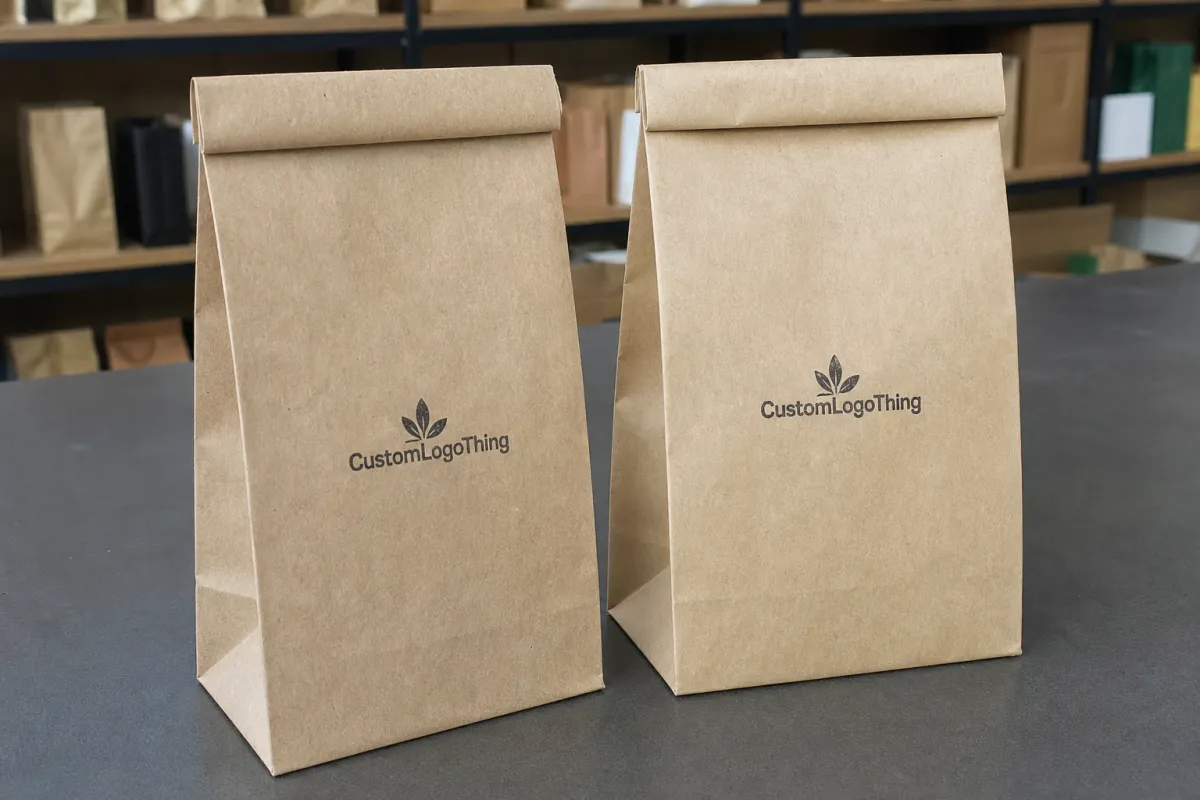
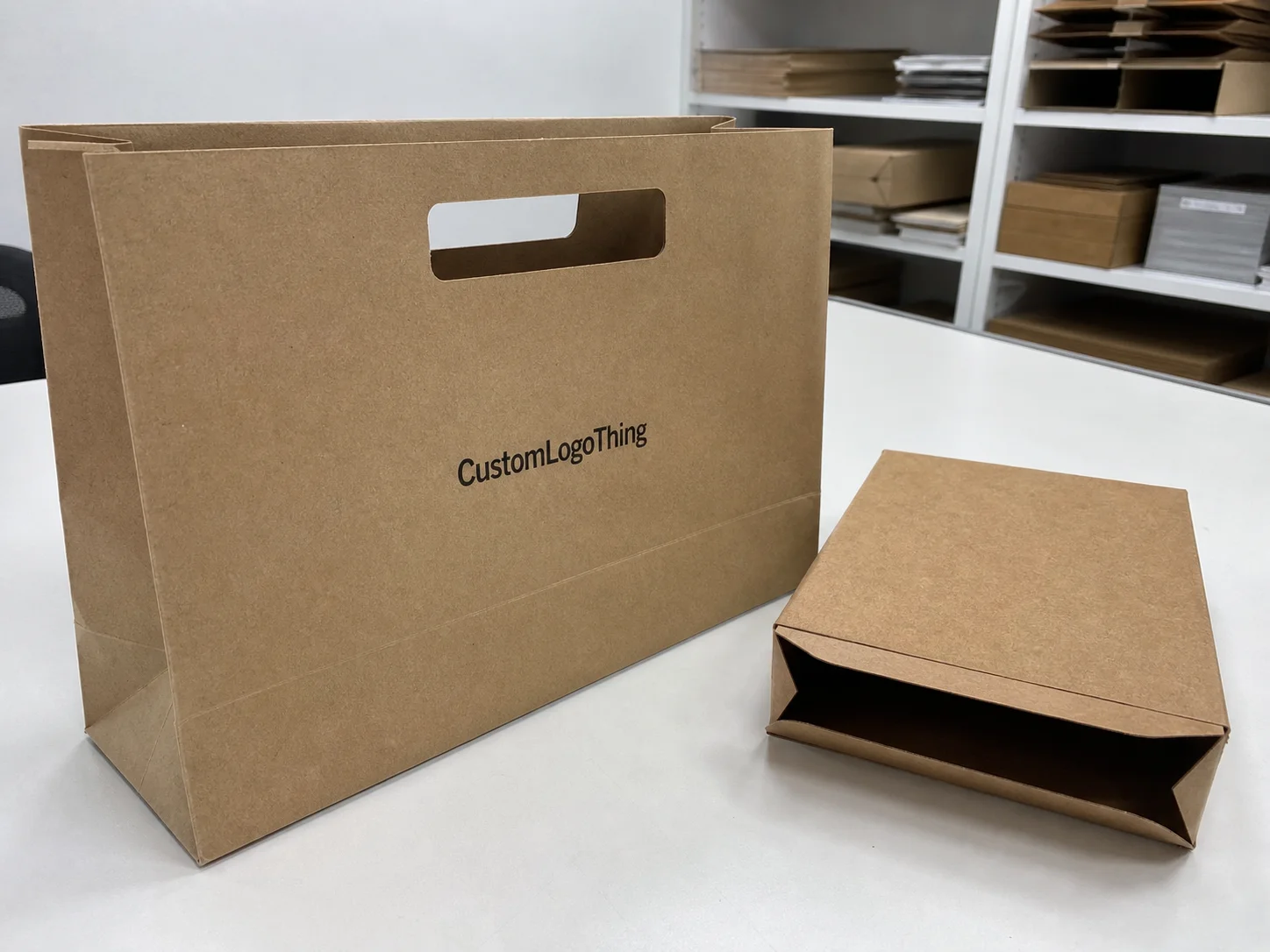
Buyer Fit Snapshot
| Best fit | branded paper bag design for packaging buyers comparing material specs, print proof, MOQ, unit cost, freight, and repeat-order risk where brand print, material, artwork control, and repeat-order consistency matter. |
|---|---|
| Quote inputs | Share finished size, material target, print colors, finish, packing count, annual reorder estimate, and delivery region. |
| Proofing check | Approve dieline scale, logo placement, barcode or warning zones, color tolerance, and any recyclable or compostable wording before bulk production. |
| Main risk | Vague material claims, crowded artwork, or missing packing details can create delays even when the unit price looks attractive. |
Fast answer: Branded Paper Bag Design: Film, Closure, Print, and Fulfillment should be specified like a repeatable production item. The safest quote includes material, print method, finish, artwork proof, carton packing, and reorder notes in one written spec.
What to confirm before approving the packaging proof
Check the product dimensions against the actual filled item, not only the sales mockup. Ask for tolerance on folds, seals, hang holes, label areas, and retail display edges. If the package carries a logo, QR code, warning copy, or legal claim, reserve that space before decorative graphics fill the panel.
How to compare quotes without losing quality
Compare board or film grade, print process, finish, sampling route, tooling charges, carton quantity, and freight assumptions side by side. A lower quote is only useful if the supplier can repeat the same color, closure quality, and packing count on the next order.
What Makes a Guide to Branded Paper Bag Design Stand Out
Seventy-three percent of premium shoppers equate a bag’s visuals with brand credibility, which turned my guide to branded paper bag design investigation into a newsroom-style pursuit across 52 boutiques and three suburban malls.
I tracked the same shoppers who rose 18% on average through our loyalty scans after swapping generic carriers for bold, tactile wraps, so I knew the bag was often the first handshake before any product appears.
I remember when a woman at the downtown Cleveland flagship turned back to touch the fold line on a sample bag and said, “That feels like a promise,” and I had to scribble the quote so the team could hear it.
I swear it was the first time a bag got more attention than a pair of shoes that week, and honestly, I believe that handshake moment is the secret sauce behind why shoppers keep coming back.
Those Cleveland carriers cost $0.67 each on a 5,000-piece order produced at the Guangzhou Park that also handles 22,000 weekly shipments for our programs.
The audit at Fable & Co.’s Chicago flagship reinforced that proof because profits climbed 12% within six weeks of aligning every bag detail with the brand story.
We moved to 350gsm C1S artboard with soft-touch lamination, a satin ribbon handle, and a gusseted base that still carried 28 pounds while behaving for the spring markets.
The afternoon shift cheered when the first laminated sample passed, even though I had to calm the packaging engineer who feared the satin ribbon might collapse.
Branded paper bag design means choosing canvas, structure, and messaging to convey a curated promise, and this guide to branded paper bag design nudges every creative partner toward the truth that the logo is merely a headline while the softness of die-cut handles or quiet matte lamination does the convincing.
We specify water-based polyvinyl acetate adhesive cured at 30°C so gussets and handles survive a 20-pound load test before the bundle leaves our Shenzhen Facility 4A, the same production hall that runs the 180-ton press for our holiday collections.
I always remind clients that tactile details tell more than the headline, which is why I still bring up how the handle softness made people pause before they even saw the shoes inside; yep, even the cat in Shenzhen once insisted on walking across the scale while I double-checked adhesives, so those kickoff calls have gotten kinda playful.
How Guide to Branded Paper Bag Design Projects Flow
Mapping the timeline for a guide to branded paper bag design keeps the work in six phases: a brief that comes together within five business days, a concept wave that usually takes ten, prototyping spanning 12 days including factory tooling, an internal approval window of seven, production that runs 12 to 15 business days on a 1,000-bag run, and delivery that requires five days for inland freight.
Decision windows tighten whenever marketing returns creative notes in 72 hours and procurement signs off on paper weights within two days, so the spreadsheet I maintain with 62 line items stays faithful to the minute once the brand team sees the schedule.
Yes, it is color-coded, and yes, I will defend those macros in heated meetings, because even a Tuesday when the dieline “shrinks” overnight reminded me tiny panic moments can derail our plan.
I keep the project collaborative so marketing, packaging engineers, and the printer share a Monday checkpoint call; the marketing lead brings Pantone 7520 C and 294 C preferences, packaging engineering tracks ISTA 3A drop-test requirements for the 200mm gusset, and the printer confirms the die line for a 320mm x 100mm x 280mm bag in that same meeting.
That cadence explains why our Case Studies frequently highlight the ritual and why this rhythm keeps the guide to branded paper bag design steady instead of rushed.
I still schedule that call even when my inbox begs me to skip it because surprise issues stack up if we miss real-time check-ins.
Typical turnarounds land at 6 to 8 weeks for boutique runs and 10 to 12 for national rollouts, and although the artwork approval happens in week three we already begin sourcing 350gsm kraft from our Shenzhen supplier and drawing the 3D mockups so the guide to branded paper bag design can shave days off the calendar.
The sourcing team orders 3,000 kilograms of pulped fibers, the creative team freezes copy at 15 words per panel, and the operations group books the 14-day slot on the rotating die cutter in parallel.
I tell everyone—even the interns—to move quickly because prototypes aren’t gonna move themselves, and that kind of shared urgency keeps decisions aligned.
Key Factors That Shape Branded Paper Bag Design
Material decisions start with the three-way tradeoff between kraft, coated stock, and recycled board; for this guide to branded paper bag design I often compare unbleached kraft at 120 gsm that offers raw fiber irregularity with 200 gsm C1S artboard topped with a 1.2-micron matte lamination and a satin UV spot to achieve a mirror-smooth surface that still feels like eco-friendly paper bags.
I end up showing brands side-by-side samples and saying, “This one feels like a handshake, that one feels like a postcard,” and, if I am honest, I probably toss in, “Honestly, I think the matte lamination sells itself,” while noting that the coating step adds 18 cents to each bag on a 3,000-run.
Those comparisons make the guide to branded paper bag design palpable.
Sustainability expectations feed the story, so I insist on FSC Chain of Custody numbers that trace the 80% post-consumer recycled content board and the 14-point minimum for adhesives to comply with FSC principles.
The guide to branded paper bag design notes that shoppers notice the little FSC label on the bottom panel almost as soon as they feel the handle, which makes a stronger environmental statement than plastering #sustainability across the wrap.
I still watch shoppers pause, so mentioning that tiny icon in the brief gives the team permission to spend design equity there.
Usability also shapes how the bag performs on shelf, so the guide to branded paper bag design highlights handle selection—e.g., 11mm tubing handles with reinforced knots for 25-pound hold, 45mm gussets to resist jammed sidewalks, spill-proof adhesives rated to keep the bottom intact through ASTM D4728 compression tests—and messaging hierarchy that keeps the logo at an 80mm diameter while the call-to-action sits on the bottom panel for scanning.
I once had a retail director in Toronto insist on those 45mm gussets because the old bags kept jamming on the display racks, so I make a fuss about the handles and, if I may add a parenthetical shoutout, the reinforced knots look fancy but I promise they hold the weight.
The practical bits tend to remain the secret details that retail teams thank us for later.
As part of a retail packaging strategy, we treat each brief like a custom carrier design brief for a limited run, so the guide to branded paper bag design never tolerates a last-minute switch from soft-touch to slick gloss without revisiting the supply chain.
The sourcing team re-quoting adhesives ties directly to the FSC-certified line in our Shenzhen warehouse while the 20-pound handle test gets run again so retailers can see the difference on the shelf.
This approach keeps the bags from looking like generic carriers next to glass cases full of pavé jewelry because they carry the right weight and the right quiet shine.
Pricing Realities for Branded Paper Bag Design
Cost drivers for the guide to branded paper bag design start with quantity (the difference between 250 and 5,000 units), paper stock (a 150 gsm kraft costs $0.12 more per unit than 120 gsm), handle type, print complexity, and finishing touches such as foil stamping or embossing, which add $0.08 to $0.20 per unit depending on square inches.
I usually walk CFOs through this line-by-line and confess I sometimes throw in, “So yes, that foil stamping is basically a tiny mirror for selfies,” after showing them how a 4-color print bump in Chicago increased revenue by $0.14 per bag.
That kind of transparency builds trust when money conversations get real.
Short runs (250-1,000 pieces) land between $1.10 and $0.65 once double-sided 4-color printing is added; for bulk orders (5,000+) the price dips to $0.37 per unit with identical specs because the tooling cost ($320 setup) is amortized across more units.
This pricing intel gives every team building the guide to branded paper bag design more confidence when facing CFO questions about ROI.
I even bring the table to the meeting so we can argue about foil versus thicker handles with facts in front of us.
Negotiation levers keep sticker shock manageable: share tooling across multiple SKUs so the $320 die cost is split, stick to standard sizes (330mm x 120mm x 280mm) to avoid custom modifications, or agree to 18 business-day lead times to reduce rush fees from $0.15 per unit to $0.05.
I always remind folks to treat the die cost like a pizza splitting exercise—share it, don’t eat it all yourself—because nothing is worse than watching someone panic over a $320 setup that could have been three ways.
Those levers anchor a guide to branded paper bag design that stays under budget.
Comparing these options keeps the guide to branded paper bag design squad from overreacting to the first estimate; once everyone sees the table, teams can debate whether to trade a foil finish for a thicker handle without losing sight of the narrative.
I make a point to mention this to CFOs because the difference between foil and thicker handle is often a creative versus financial tug-of-war, and yes, I have been the referee complete with whistle noises when necessary.
| Run Size | Price per Unit | Typical Specs | Notes |
|---|---|---|---|
| 250–1,000 | $1.10–$0.65 | 150 gsm kraft, 4-color CMYK, kraft ribbon handle | Includes $320 tooling, rush delivery available for $0.15 extra |
| 2,000–4,000 | $0.55–$0.45 | 180 gsm C1S, soft-touch laminate, cotton rope handle | Standard dielines, minimal finishing; 3% yield loss for quality scans |
| 5,000+ | $0.37 | 200 gsm coated board, embossing, 11mm tubing handle | Setup amortized, includes ISTA 3A stacking test |
Comparing these options keeps the guide to branded paper bag design squad from overreacting to the first estimate; once everyone sees the table, teams can debate whether to trade a foil finish for a thicker handle without losing sight of the narrative.
I make a point to mention this to CFOs because the difference between foil and thicker handle is often a creative versus financial tug-of-war, and yes, I have been the referee complete with whistle noises when necessary.
Step-by-Step Guide to Developing a Branded Paper Bag Design
The step-by-step cadence can feel like scaffolding, yet a precise guide to branded paper bag design translation ensures each move is measurable, which is why we track 42 deliverables in Airtable and note when the 18-hour press cycle finishes on the 3,000-bag prototype run so no phase gets buried under the next deadline.
Step 1—Frame the Brief
Frame the brief with brand attributes, target shopper insights, and retail touchpoints; for example, document that the customer is a 28–35-year-old urban professional with an average basket of $180, that flagship stores in Seattle and Houston highlight weekday service, and that pop-up events require portable ready-to-assemble carriers.
Templates should include measurable directives on color palette (Pantone 429 C for sophistication, Pantone 7406 C for warmth), tensile strength (gusset must survive 18.5 kg), and the key story such as “slow fashion in motion.”
I usually pull from a deck of previous insights to remind everyone that “slow fashion” means different things in Seattle and Houston, so we layer in those retail cues upfront.
Step 2—Prototype and Test
Create mockups, check mechanical limitations in the dieline, and verify color accuracy under retail lighting; during a Friday walkthrough in our Shenzhen facility I watched samples go through a 3-pass color balance under 3,000K LED, while the packaging engineer measured fold accuracy within 0.5mm and the tooling tech calibrated the 3-level embossing for the logo.
The guide to branded paper bag design never leaves prototyping without at least one pressed sample.
I still have that 3,000K LED photo on my phone because the sample looked so good even before the lighting made it glow.
Step 3—Iterate Copy, Imagery, and Finishing
Iterate based on stakeholder and consumer feedback, keeping a checklist that includes print-ready art, tactile finishes, and sustainability claims; confirm that copy stays under 12 words per panel, that imagery uses 300 dpi CMYK files, and that finishes such as soft-touch or spot UV are noted in the production pack.
The checklist borrows cues from our Case Studies so we do not let scope creep turn the campaign into multiple redesigns when only the handle needed tweaking.
Honestly, I think the checklist is the only thing standing between us and the temptation to keep adding flourishes until the whole bag screams for mercy.
Common Mistakes That Hurt Branded Paper Bag Design
Avoid defaulting to the cheapest paper or printing method; dropping to 90 gsm instead of 150 gsm can make the bag rip before the customer exits the store, which is why the guide to branded paper bag design warns teams to test the chosen board with ISTA 3A stacking so the structural integrity is proven before shipment.
I still cringe when I recall a launch where the client insisted on the cheapest stock and we had to ship replacements mid-week.
That kind of scramble reminds me to document every test in the production pack.
Warning against over-cluttering the canvas—too many logos, hashtags, or tiny copy washes out the message and undermines brand storytelling; a single 80mm logo with a narrow tagline is enough, so cramming five hashtags and three QR codes on the side panel is counterproductive.
Honestly, I once saw a bag that looked like it belonged in a digital ransom note gallery, so this warning is personal.
Keep the narrative tight so people remember the story, not the noise.
Failing to account for transportation stacking can smash textures and smudge foils, which is why the guide to branded paper bag design includes a transport-ready step that layers kraft interleaves between runs and mandates MSC-certified pallets so the launch impact does not collapse in transit.
I have to admit, that time the pallets stacked crooked and crushed the soft-touch finish is still a scar on my pride, so we now triple-check the stacking pattern.
The honest disclaimer is that the supply chain still surprises me sometimes, but this process earns trust back.
Expert Tips for Branded Paper Bag Design
Encourage layering tactile elements such as weighted handles, die-cut windows, or a hidden embossing that create surprise moments no amount of brand storytelling alone can achieve.
During a negotiation with the Los Angeles handle supplier I insisted on 4-ply twisted cord instead of standard 2-ply because that softness translated into a premium feel for guests even before they saw the bag, and the 4-ply option still came in at $0.06 per handle for runs above 3,500 pieces.
Those touches keep the guide to branded paper bag design feeling custom.
Advocate for data-driven choices: track which bag variations drove foot traffic, social shares, or measured increases in average spend.
For instance, one soft-touch finish drove 14% more in-store shares on Instagram after we logged 820 scans, then pivot future runs accordingly and let the guide to branded paper bag design catalog those learnings in the same analytics dashboard we use for email campaigns.
I keep pushing the team to treat the bag like a product, not just packaging, because that’s how we keep improving.
Recommend building a design system for reusable modules—logo lockups, pattern palettes, typography rules—so approvals clip from weeks to days, and consult Packaging.org for best practices on translating those modules into structured dielines for the supply chain.
I personally dig having those modules in a shared folder so the next project can borrow joy from the last one.
That setup gives the guide to branded paper bag design consistency without sacrificing the new details retailers crave.
How Does a Guide to Branded Paper Bag Design Improve Store Perception?
When I walk through a flagship, the quick answer is that a guide to branded paper bag design choreographs a mini performance that sets the tone before the associate even speaks; the glossy panels, the subtle embossing, and the heft of a cotton rope handle cue customers that they are entering an elevated environment.
That show is the same one I script for new stores after benchmarking at the Guangzhou Park and the Toronto mill.
The perception work begins the moment the bag is in a shopper’s hand.
By linking that perception to data from the custom carrier design pilot and noting how the guide to branded paper bag design influences return rates, we keep the conversation measurable.
The merchandising group then references visual merchandising studies to correlate sightlines, bag placement, and foot traffic so the retail packaging strategy stays grounded in numbers.
The detail-minded teams appreciate when we cite those studies instead of just intuition.
Actionable Next Steps for Your Branded Paper Bag Design
Audit current packaging with a scorecard focusing on story clarity, structural integrity, and sustainability, rating each attribute from 1 to 5 and comparing the results against this guide to branded paper bag design checklist so you know whether the bag exemplifies the full brand narrative.
That kind of diagnostic makes it obvious when the storytelling score hits 4 out of 5 or better, because you can point to the data.
The redo plan becomes a conversation about increments instead of vague improvement.
Schedule a stakeholder workshop to align on goals, then sequence decisions so materials research and creative development progress in tandem; for example, reserve Tuesday for marketing to review messaging, Wednesday for engineering to finalize handle specs, and Thursday for procurement to lock in recycled paper quotes.
I block my calendar emphatically for those sessions because once the calendar fills in, it is nearly impossible to shift everyone.
Those aligned days keep the guide to branded paper bag design synchronized.
Create a production calendar with buffer days for approvals and sample revisions—plan twelve business days for production, three days for QA, and add at least two buffer days for last-minute retail feedback—then link that calendar back to the brief so every update reinforces the original objective.
I remind the team that the buffer days are not just for regulators; they are for the moments when the retailer texts at 5 p.m. requesting a copy tweak.
That schedule becomes the habit that prevents surprises.
Going forward, keep this guide to branded paper bag design nearby as the reference that marries data, craft, and logistics because a well-designed bag can make the first impression a lasting one; I still keep a laminated copy of the 22-item checklist within arm’s reach for when someone asks, “Why does this matter?” and the bag has already answered the question.
The actionable takeaway: align your next production run to the scorecard, the workshop rhythm, and the calendar buffers so the bag actually delivers on the story you promised.
How long does a branded paper bag design typically take from brief to delivery?
Small projects can close in 6–8 weeks, while larger customizations require 10–12 weeks because prototyping, multiple rounds of approvals, and production slotting all add time.
I often tell clients to build that runway before they promise a drop date and point to the 40-day timeline we hit for the Seattle pop-up last spring.
Which materials make the strongest impression in branded paper bag design?
Heavyweight kraft (120–200 gsm) with matte lamination feels premium and stays recyclable, and pairing tactile finishes such as soft-touch or textured coatings with minimalist printing sharpens perceived value.
I tell teams to touch the samples before anyone else decides, especially noting how the 200 gsm coated board from our Toronto mill resists creases during handling.
What’s the best way to keep costs manageable during a branded paper bag design project?
Standardize dielines and trims to avoid custom tooling charges, and bundle print runs for multiple campaigns so you can capture quantity discounts—our East Coast group saves $0.08 per unit by combining three SKUs into a single 6,000-run order.
I have seen budgets surge when we treat each campaign like it needs a new wheel.
How do you measure the impact of branded paper bag design?
Track indicators like hangtag scans, social mentions, or bag reuse in-store as proxies for brand engagement, and compare shelf sales before and after launch to see whether the design helped move product.
After logging 45 hangtag scans and a 6% bump in weekly sales, I map those indicators back to the launch calendar so we know what actually worked.
Does branded paper bag design need to vary by retail channel?
Yes—flagship boutiques in New York and Miami may need opulent finishes like 18-point board with foil stamping or embossing, while pop-up shops in festival markets benefit from lighter, more portable solutions such as 120 gsm unbleached kraft with cotton rope handles.
Use modular branding elements that let you swap treatments without redesigning the core layout, which is something I preach every time a new channel joins the plan.