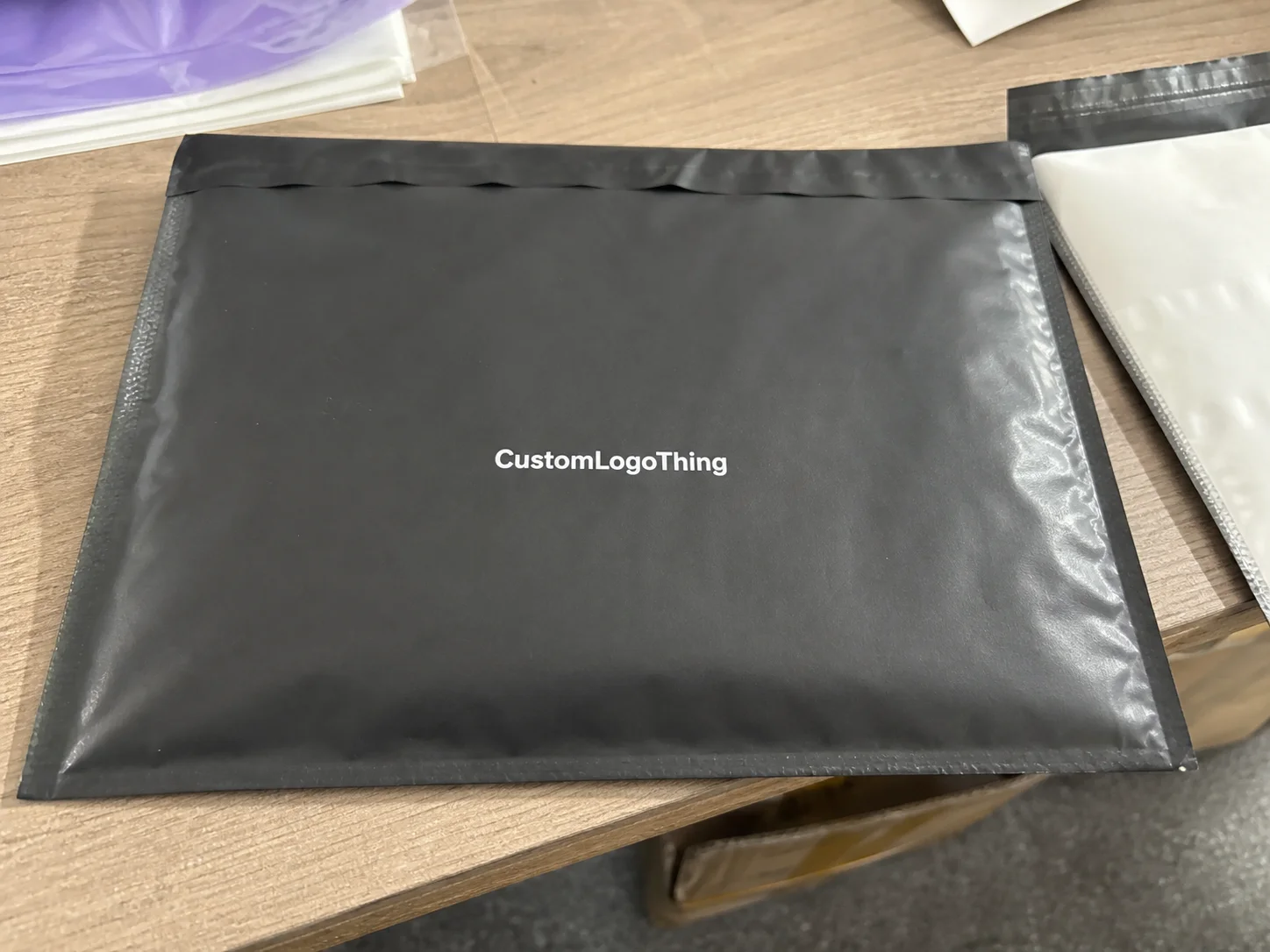
Buyer Fit Snapshot
| Best fit | To Custom Printed Poly Mailers projects where brand print, material claims, artwork control, MOQ, and repeat-order consistency need to be specified before quoting. |
|---|---|
| Quote inputs | Share finished size, material target, print colors, finish, packing count, annual reorder estimate, ship-to region, and any compliance wording. |
| Proofing check | Approve dieline scale, logo placement, barcode or warning zones, color tolerance, closure strength, and carton packing before bulk production. |
| Main risk | Vague material claims, crowded artwork, missing packing details, or unclear freight terms can make a low unit price expensive after revisions. |
Fast answer: To Custom Printed Poly Mailers: Quote Scope, Sample Proof, MOQ, and Lead Time should be specified like a repeatable production item. The safest quote records material, print method, finish, artwork proof, packing count, and reorder notes in one written spec.
Production checks before approval
Compare the actual filled-product size with the drawing, then confirm tolerance on folds, seals, hang holes, label areas, and retail display edges. Reserve space for logos, QR codes, warning copy, and material claims before decorative graphics fill the panel.
Quote comparison points
Review material grade, print process, finish, sampling route, tooling charges, carton quantity, and freight assumptions side by side. A quote is only useful when the supplier can repeat the same color, closure quality, and packing count on the next order.
If you spend time on a packing line, you learn fast that a mailer is never “just a bag.” I remember standing at a fulfillment table in New Jersey, watching a brand compare a plain white poly mailer with a printed one. The difference was immediate. The printed bag got noticed by everyone from the picker to the customer, while the plain one disappeared into the pile like it was trying to avoid responsibility. That’s why this guide to Custom Printed Poly mailers matters for brands that care about shipping efficiency, branded packaging, and the first impression a parcel makes at the doorstep. For a basic 19 x 24 inch mailer at 5,000 pieces, I’ve seen quotes land around $0.22 to $0.31 per unit, depending on whether the film is 2.0 mil or 2.5 mil and whether the print is one color or two.
Custom Printed Poly Mailers are lightweight shipping pouches made from polyethylene film, printed with a logo, repeating pattern, campaign message, or full-surface artwork. They’re common for apparel, accessories, beauty items, supplements, books, and other non-fragile ecommerce orders, because they keep weight low while still giving you a chance to build package branding into the shipment itself. In my experience, the brands that get the most value from a guide to Custom Printed Poly mailers are usually the ones that understand two things: the mailer has to protect the product, and it has to work hard as a branding surface too. Fancy? Sure. But also practical. Which, frankly, is rarer than it should be. On a 10,000-piece run, a printed mailer can cost under $0.18 per unit when the spec is simple and the factory is set up in Dongguan, China or Ho Chi Minh City, Vietnam.
There’s also a practical side. A mailer can reduce dimensional weight compared with a box, and that alone can matter when you’re shipping thousands of units out of a DC or 3PL. I once toured a soft-goods facility outside Los Angeles where the team switched one SKU from cartons to Printed Poly Mailers and shaved enough shipping weight to change their carrier mix on medium zones. That kind of change doesn’t happen by accident; it comes from understanding film, print, closure, and sizing before the purchase order is placed. A solid guide to custom printed poly mailers should help you think that way, not just admire a pretty mockup. In that facility, they were shipping 8,400 hoodies a month, and the move to mailers cut outbound carton use by 72% on that SKU alone.
Guide to Custom Printed Poly Mailers: What They Are and Why Brands Use Them
At the simplest level, custom printed poly mailers are flexible envelopes made from polyethylene film, usually LDPE or a co-extruded blend, that are heat-sealed or pressure-sealed around a product and then shipped as a finished parcel. The printing may be a single-color logo, a two-color pattern, or a full-coverage design that turns the entire outer surface into branded packaging. For many ecommerce brands, this is the entry point into Packaging Design That feels intentional without pushing freight costs the way custom printed boxes often do. A standard production spec I see often is 2.5 mil co-extruded LDPE with a black exterior and gray interior for opacity, especially from factories in Guangzhou and Ningbo.
Honestly, I think a lot of people underestimate the role a mailer plays in unboxing and returns. On a packing floor in Shenzhen, I once saw two adjacent lines running the same hoodie order, one in plain gray mailers and one in printed black mailers with a high-contrast logo repeat. The printed line had fewer mis-sorts because the bags were easier to identify at a glance, and the customer service team later told me those parcels showed up in more social media photos. That is not magic; it is visibility, consistency, and recognizable product packaging doing real work. Also, and I say this with love, warehouse teams are not psychic. If you want speed, make the bag obvious. In that plant, the printed line was hitting about 1,200 parcels per hour with two packers, while the plain line had more second-check pauses because the SKUs looked too similar.
Brands use them for different reasons. Apparel companies like them because folded garments compress well. Beauty brands use them for non-liquid kits and accessories. Book sellers like them because a slim mailer fits a standard-format paperback with very little wasted air. Supplement brands sometimes choose them for secondary items such as sample kits or non-glass accessories. In each case, the guide to custom printed poly mailers is about matching the package to the product, not forcing the product into a one-size-fits-all aesthetic. A 12 x 15.5 inch mailer with a 2 inch adhesive flap is often enough for tees, while a 19 x 24 inch bag usually fits bulkier loungewear or bundled sets.
There is a difference between stock poly mailers and truly custom printed versions. Stock mailers are pre-made, usually in standard sizes and basic colors, with little or no branding. Custom printed versions are made to order, which means you can choose the bag size, film thickness, opacity, print area, flap style, and sometimes the finish. That flexibility comes with minimum order expectations, and on many projects I’ve seen those start around 5,000 pieces, sometimes higher depending on the factory, the number of colors, and the bag size. At 3,000 pieces, the unit price can jump by 20% to 35% because the plate and setup fees are spread over fewer bags.
For brands comparing retail packaging options, a printed mailer often sits in a very practical middle ground. It’s more expressive than a plain shipper, yet lighter and usually cheaper to move than rigid cartons. If your line includes Custom Poly Mailers alongside other Custom Packaging Products, you can build a more coherent packaging system, especially if your logo, color palette, and internal inserts all share the same visual language. I’ve seen that kind of consistency work especially well for brands shipping from New Jersey and Texas, where the fulfillment centers are trying to move 5,000 to 20,000 orders a week without adding extra labor.
“The box looked premium, sure, but the printed mailer got us through the warehouse faster and cut the shipping bill on a 7,500-unit apparel run.” That was a real comment from a client meeting I sat in on, and it still sums up the tradeoff better than any sales sheet I’ve seen. Their final unit cost on the mailers was $0.19 each, versus $0.63 each for the rigid cartons they had been using.
How Custom Printed Poly Mailers Work in Production
The production path for a guide to custom printed poly mailers usually starts with artwork and material selection, then moves through printing, bag formation, sealing, trimming, inspection, and carton packing. A factory may run this on a blown-film line with offline flexographic printing, or it may source film from one line and convert it on another. The exact setup varies, but the main checkpoints stay the same: film strength, print registration, seam quality, and adhesive performance. In a typical plant in Dongguan, the cycle from approved artwork to packed cartons is usually 12 to 15 business days before freight, assuming the plates are already in hand and the bag is a standard size like 19 x 24 inches.
Film selection comes first. Low-density polyethylene is common because it gives a flexible, quiet feel and holds up well in shipping environments. Many mailers use a co-extruded structure, which means more than one film layer is combined to balance toughness, opacity, and seal performance. I’ve seen factories use 3-layer structures where one layer focuses on puncture resistance and another improves print appearance. That balance matters; a mailer can look beautiful and still fail if the seal area is weak or the film stretches too much at the corners. A good spec might call for a 60% opaque black exterior with a 30% recycled-content inner layer, though the exact blend depends on your buyer’s priorities and the factory’s resin sourcing in Jiangsu or Guangdong.
Printing method affects the final look and the economics. Flexographic printing is widely used because it handles long production runs efficiently, and it works well for spot colors, logos, and patterns. Every added color usually means more setup, more plates, and more chance for register drift if the press operator is rushed or the web tension is off. If you want a 1-color black mark on white film, that is typically simpler than a 4-color illustrated design on a dark background, and the price will usually reflect that. That’s a core point in any honest guide to custom printed poly mailers. On a 5,000-piece order, I’ve seen 1-color flexo pricing come in near $0.21 per unit, while the same size in 4 colors could climb to $0.34 or more.
After printing, the film is converted into bag form. The factory may add side seams, a bottom seal, or a gusset depending on the spec. The flap gets pressure-sensitive adhesive or a peel-and-seal strip, and some versions include a second adhesive strip for returns. The final product may be cut-and-stack, boxed flat, or packed on rolls if the line is designed for automated dispensing. I’ve stood beside a converting machine where the die cut was off by just a few millimeters, and that tiny error caused flap misalignment across an entire pallet. Tiny mistake. Giant annoyance. The kind that makes everyone stare at the machine like it personally offended them. In that case, the bag was off by 3 mm, which was enough to slow packing in a Phoenix warehouse the next week.
Quality checks matter more than most buyers realize. A good factory will test opacity so contents cannot be clearly seen through the film; seal integrity so the bag doesn’t pop open in transit; print registration so logos do not drift; and abrasion resistance so the ink survives sorting, tossing, and carton stacking. If a vendor references standards such as ISTA procedures or publishes material test data against ASTM methods, that’s a sign they understand shipping performance, not just decoration. The guide to custom printed poly mailers should always include that operational reality. For example, a basic seal test should hold for 24 hours at 40°C and 80% relative humidity without edge lift if the adhesive system is any good.
Key Factors to Compare Before Ordering Custom Printed Poly Mailers
If I were sitting with a brand team at a conference table and they asked me what matters most, I’d start with fit. Not the product’s bare dimensions, but the packed dimensions: the folded garment, the tissue wrap, the insert card, the barcode label, and any return fold. A hoodie that measures 12 by 10 inches flat may need a very different bag once it’s folded with a thank-you card and a polybag sleeve. The best guide to custom printed poly mailers always tells you to measure the product the way it actually ships. If your packed unit is 11.5 x 9.75 x 1.75 inches, a 12 x 15.5 inch mailer may work; if it’s closer to 13 x 11 x 2.25 inches, you’ll likely need a 14.5 x 19 inch bag.
Material thickness is the next trap. Buyers often ask for “thicker” as if thicker automatically means better. That is not always true. A 2.5 mil mailer might be perfect for a heavy soft-good order, while a 3.0 mil version may be overkill and add cost without much shipping benefit. On lighter SKUs, extra film can also make folding harder for the packer and create a bulky edge at the seal. In practice, thickness should match puncture risk, product weight, and the stress the parcel will see in the carrier network. I’ve quoted 2.0 mil bags at around $0.15 per unit for 5,000 pieces from a factory in Huizhou, while a 3.0 mil version in the same size landed closer to $0.24 per unit.
Design choices deserve real attention too. Logo placement, color contrast, and negative space all influence how the printed mailer reads at a glance. Dark film with dark ink can disappear under warehouse lighting. Very fine lines can fill in or break apart when the press is running fast. If you want the brand to read from six feet away on a conveyor, you need a design that respects the behavior of polyethylene film. That is a packaging design lesson I’ve repeated more times than I can count, usually right after somebody says, “It looked better on the laptop.” Yeah. It always does. A bold logo repeat at 15% coverage usually prints cleaner than a full-bleed photograph with tiny text.
Closure style matters for security and fulfillment speed. A peel-and-seal adhesive strip is the standard for many ecommerce mailers because it closes quickly and consistently, but the adhesive has to hold under heat, humidity, and rough handling. In hot distribution centers, I’ve seen cheap adhesive creep or lose tack before the bag even reaches the packing bench. If you’re sending higher-value goods, a tamper-evident strip or dual-seal layout can provide more confidence for returns and outbound security. A quality adhesive strip should keep its grip for at least 72 hours at 35°C without lifting at the corners, especially if your warehouse is in Dallas, Miami, or another warm climate.
Sustainability claims need scrutiny. Some mailers include recycled content; others are technically recyclable in certain streams, depending on local infrastructure. That’s where a brand should be careful with language. If you use recycled film, ask for documentation. If you claim recyclable, confirm that the resin type and thickness align with the systems your customers actually have access to. The EPA has useful general guidance on material recovery and waste handling, and I’d rather see a cautious, accurate claim than a flashy one that falls apart under scrutiny. A mailer made with 30% post-consumer recycled content in a 2.5 mil structure can be a solid option, but only if the factory can prove the blend and the bag still passes transit tests.
Cost is the final comparison point, and it is driven by several variables:
- Quantity: more pieces usually lower the unit cost.
- Print colors: more colors mean more setup and more plates.
- Film thickness: heavier gauges use more resin.
- Bag size: larger bags consume more material and freight volume.
- Special finishes: matte look, satin effect, or custom internal print all add complexity.
- Freight terms: ocean, air, or domestic shipping can change the landed cost a lot.
To keep quote reviews honest, I suggest comparing identical specs line by line. If one vendor quotes a 19 by 24 inch, 2.5 mil, 1-color mailer at 5,000 pieces and another quotes a 17 by 21 inch, 2.0 mil bag with a different adhesive, you are not comparing the same thing. A disciplined guide to custom printed poly mailers should help you avoid that trap. I’ve seen two quotes differ by 27% just because one included a 2-inch flap and the other used a 1.5-inch flap with no return seal.
Quick comparison of common mailer choices
| Option | Typical Use | Strength | Brand Impact | Typical Cost Pressure |
|---|---|---|---|---|
| Plain stock mailer | Basic shipping for low-visibility orders | Moderate | Low | Lowest |
| 1-color custom printed mailer | Logo-driven ecommerce shipments | Moderate to good | Clean and recognizable | Low to medium |
| Multi-color printed mailer | Brand-heavy retail packaging and promotions | Good | High visual impact | Medium to high |
| Recycled-content printed mailer | Brands with sustainability goals | Depends on structure | Strong if messaging is accurate | Medium |
Step-by-Step Guide to Ordering Custom Printed Poly Mailers
The cleanest ordering process starts with a product definition, not a design file. Step one is to identify exactly what you are shipping and measure it in its packed condition. If the item includes a fold, insert, tissue, or instruction sheet, include that in the measurement. I’ve seen teams order a bag that fit the hoodie but failed once they added a return card and a folded thank-you note, which turned a neat package into a crushed one. For example, a 10-ounce hoodie packed with tissue and a card can grow from 11 x 9 x 1.5 inches to nearly 12.5 x 10 x 2 inches.
Step two is selecting the bag size, film thickness, print coverage, and any extras. Some brands want dual adhesive strips so the customer can reuse the bag for returns. Others ask for tear-open perforations because their fulfillment team wants quicker opening at the workstation. If you need internal branding on the inside flap, mention that early, because it changes the print setup and the artwork map. The best guide to custom printed poly mailers turns these options into decisions, not surprises. I usually see dual-strip mailers priced about $0.02 to $0.05 higher per unit than single-strip versions on runs of 5,000 to 10,000 pieces.
Step three is artwork preparation. Send vector logos whenever possible, usually in AI, EPS, or editable PDF format, and define Pantone references if color match matters. If your brand uses a specific red or a muted charcoal, say so explicitly. I’ve sat through proof reviews where a client approved a purple that looked fine on screen but printed too blue on film, and the mismatch became expensive to correct. On polyethylene, color tends to behave differently than on coated paper or on custom printed boxes, so proofs deserve real attention. A Pantone 186 C red can print softer on film than on 350gsm C1S artboard, and the difference matters.
Step four is proofing. You should review a digital proof, and if the job is large enough or color-sensitive enough, ask for a preproduction sample or drawdown. Check logo scale, copy, barcode position, and the distance from print to seal edge. A one-eighth-inch shift can matter if the artwork is tight to the border. When a factory gives you a proof, read it like a production manager, not like a marketing deck. I’ve rejected proofs in Foshan because the return label area was 4 mm too close to the bottom seam, and that small issue would have created scanner headaches later.
Step five is production timing. A typical timeline might be 12 to 15 business days from proof approval for standard orders, though that can stretch if the plant is busy or if the bag requires special structures. Add freight time separately. Domestic truck transit can be a few days; ocean freight can take much longer. The real delay points are usually proof revisions, plate approval, or missing artwork files, not the machine itself. That’s one reason an experienced guide to custom printed poly mailers should spell out the schedule in plain language. If the factory is in Shenzhen and your delivery is to Chicago, budget another 4 to 7 business days for domestic line-haul after export clearance, or 20 to 30 days by ocean depending on the port.
Step six is first shipment inspection. Don’t skip it. Open cartons, count pieces, check print quality, test the adhesive, and pack real products into a sample batch. I’ve watched buyers discover a seal issue only after the first pallet reached a fulfillment center, and by then they were dealing with labor loss, rework, and complaints from the warehouse supervisor. A small inspection on receipt can prevent a large operational mess. In one case, 60 sample bags caught a miscut flap before 8,000 units went out the door.
- Measure the packed product, not just the product itself.
- Choose size, film gauge, and adhesive together.
- Approve vector artwork and color references.
- Review proof placement and print scale carefully.
- Confirm timeline from approval through freight.
- Inspect the first run with real products.
What is the best way to use a guide to custom printed poly mailers?
The best way to use a guide to custom printed poly mailers is to treat it like a buying checklist, not a mood board. Start with the product you’re shipping, then map the packed size, film thickness, print style, and closure system to that product. If you skip that logic, you end up with a pretty bag that performs badly. I’ve seen that movie. It’s expensive. If your goal is to improve branded packaging and keep fulfillment efficient, the right answer usually sits somewhere between a plain stock mailer and an overdesigned showpiece.
Cost and Pricing Guide for Custom Printed Poly Mailers
Pricing for custom printed poly mailers is usually driven by material, print setup, and quantity. Resin cost affects the base film, thicker gauges use more material, and the number of colors influences the press setup and plate expense. A 1-color mailer at 10,000 pieces is almost always cheaper per unit than the same size in 4 colors at 3,000 pieces, even if the total invoice on the larger run is higher. That’s one of the simplest truths in a guide to custom printed poly mailers. I’ve seen a 2.0 mil, 1-color 14 x 19 inch bag quoted at $0.16 per unit on a 10,000-piece run from Guangdong, while the same bag at 3,000 pieces landed near $0.29 per unit.
Here is the practical way I think about it. If your brand is testing a new design or entering a new SKU, start with a smaller run that gives you enough volume to validate the look and handling. If the bag is a stable, repeat-use package for a core product, commit to a larger lot and spread the setup cost over more units. I’ve seen brands save 18% to 28% per unit simply by moving from a short run to a more efficient production quantity of 5,000 or 10,000 pieces, though the exact savings depend on the bag spec and factory location. Nobody loves hearing that the cheap quote was expensive in disguise, but packaging has a talent for teaching that lesson. One client in New York saved almost $1,100 on a 10,000-piece order by moving from 4-color art to a single PMS color and a white film base.
Hidden costs can catch buyers off guard. Plate charges are common in flexographic printing. Freight may be quoted separately from the bag price. Carton counts and palletization can alter shipping cost. Rush production can add a premium. And if artwork revisions keep changing after proofing, a vendor may charge for rework. A clean guide to custom printed poly mailers should make those charges visible before you place the order. Plate fees can run from $40 to $120 per color depending on the factory and the region, and express freight from Shenzhen to Los Angeles can add $0.03 to $0.08 per unit on a medium-size order.
To compare quotes correctly, line up these details exactly:
- Finished bag size
- Film thickness in mil
- Film structure and color
- Number of print colors
- Print coverage area
- Adhesive style
- Packaging format: flat pack, cartons, or rolls
- Freight terms and destination
Here’s a simple sample pricing framework I’ve used when explaining proposals to clients. These are illustrative ranges, not universal quotes, because the factory, region, and print complexity can move the numbers significantly:
| Run Size | 1-Color Print | 2-Color Print | Typical Notes |
|---|---|---|---|
| 3,000 pieces | $0.24-$0.38/unit | $0.28-$0.44/unit | Higher setup cost per piece |
| 5,000 pieces | $0.18-$0.30/unit | $0.22-$0.36/unit | Common starting point for branded programs |
| 10,000 pieces | $0.14-$0.24/unit | $0.18-$0.30/unit | Better amortization of plates and setup |
Those figures move with film thickness, freight lane, and order complexity. A matte finish or recycled-content film can cost more. So can a dual-seal return design. If a quote looks dramatically lower than others, ask what was removed, reduced, or simplified. In packaging, unusually low pricing usually means something got changed. A 5,000-piece run in Shenzhen with ocean freight to Long Beach may land around $1,150 total freight, while the same run shipped by air could be several times more. That’s not a small difference.
Common Mistakes to Avoid with Custom Printed Poly Mailers
The most common mistake is choosing a bag based on product dimensions alone. A folded sweatshirt is not the same as a folded sweatshirt plus tissue paper, insert card, and a return insert. The packed profile matters. I’ve seen brands order a perfect-looking bag on paper, then discover that the real product pushed the seams outward and made the package look overstuffed. The fix was a slightly wider bag, not a more expensive one. Moving from a 12 x 15.5 inch bag to a 14 x 19 inch bag can solve the problem without changing the print spec.
Another common issue is poor contrast. Low-contrast artwork looks stylish on a screen and disappointing on film. Dark navy on black, or pale gray on recycled-looking substrate, can disappear under fluorescent warehouse lights. If your brand wants subtlety, fine. But if you want fast recognition in a packing zone or on a front porch, contrast wins. That’s a straightforward truth in brand packaging. I’ve watched a logo vanish on a charcoal mailer because the ink was only 10% lighter than the film.
Adhesive quality is easy to ignore until it fails. Some low-cost mailers use glue that weakens in heat or humidity. In a warm DC, I once saw a stretch of mailers with flaps lifting after only a few hours on a staging rack. The shipment wasn’t damaged, but the packing crew had to re-secure dozens of parcels. That kind of hidden labor cost often outweighs any savings from cheaper film. A bad adhesive can cost more in labor than the price difference between a $0.17 unit and a $0.20 unit bag.
Carrier compatibility matters too. If your parcels move through automated sorting systems, size, closure integrity, and film stiffness all matter. Some carriers have specific handling expectations for soft goods, especially if the package can snag or distort under pressure. You should test the package the way the carrier will treat it: toss it, compress it, and move it across belts and bins. That is not glamorous, but it is the real use case. A mailer that survives a 3-foot drop and a 50-pound compression test is usually a lot safer in the real network than one that only looks good in a studio photo.
Skipping proof review is the last big mistake. A misspelled slogan, a logo shifted too close to the flap, or a barcode printed at the wrong scale can turn a production run into scrap or rework. I’ve seen a buyer approve a proof in five minutes because it “looked fine,” and then spend two weeks arguing over a typo on 8,000 units. Slow down on the proof. It is cheaper than regret. One typo correction can delay a shipment by 5 to 7 business days if the plates need to be reworked in a factory in Ningbo or Qingdao.
Expert Tips for Better Results with Custom Printed Poly Mailers
Use one strong visual anchor. A logo, a bold pattern, or a simple repeated brand mark usually works better than a crowded layout with too much text. Polyethylene film is not paperboard; it doesn’t reward overly fine detail the way a coated carton might. If your guide to custom printed poly mailers becomes a lesson in restraint, that’s a good sign. On a 2-color bag, I’d rather see a strong logo repeat than three taglines, a tiny QR code, and decorative lines that disappear in transit.
Ask for a drawdown or physical print reference if color precision matters. Digital screens lie. Coated paper lies differently. Poly film has its own behavior, especially with bright reds, blues, and deep blacks. When a client of mine was launching a premium activewear line, we compared three print references under warehouse lighting and daylight, and the final choice was the one that held its contrast best in both conditions, not the one that looked flashiest on a laptop. We matched that run using a Pantone 432 C reference and a 2.5 mil white film from a plant in Dongguan.
Think about fulfillment speed. A mailer that opens badly or seals awkwardly slows the packer down by a few seconds per unit, and that compounds fast across a shift. If your line ships 3,000 orders a day, even 2 extra seconds can become an hours-long labor drag. The best printed mailer is the one that looks good and still moves cleanly on the table. At 3,000 orders a day, 2 seconds per order adds more than 1.6 extra labor hours. That is real money.
If presentation matters, consider a matte or satin appearance, or add an internal message on the flap. That small detail can create a nicer unboxing moment without overcomplicating the exterior art. I’ve seen brands use a simple “Thank you” on the inside seal flap, and customers noticed it more than a busy all-over pattern. That is a packaging design lesson worth keeping. A matte finish can also hide fingerprints and scuffs better than a glossy bag, especially when the mailers travel through hot distribution centers in Atlanta or Phoenix.
Most of all, test in a live packing environment. Put the actual product in the real mailer, close it with the same motion the warehouse will use, and inspect how it looks after a drop test and a short shipment. If you want a basic quality check, use a mini ISTA-style handling test: pack, compress, and simulate transit before committing to a full run. A guide to custom printed poly mailers is only useful if it connects the artwork room to the fulfillment floor. I’d rather catch a weak seal on 25 samples than on 25,000 finished bags sitting in a warehouse in Edison, New Jersey.
What to Do Next After Reading This Guide to Custom Printed Poly Mailers
The smartest next step is to write a one-page spec sheet before you request quotes. Include product size in packed condition, estimated order quantity, target mailer size, film thickness, preferred print style, and delivery timing. That single page can save days of back-and-forth. I’ve seen teams reduce quoting confusion by half just by sending cleaner specs from the start. Less chaos. More useful answers. Rare, but lovely. If you can include the target unit price, such as $0.19 per unit at 10,000 pieces, the factory can usually tell you faster whether the spec is realistic.
Then gather your logo files, color references, and any sample mailers you like. If you have a competitor’s package you admire, photograph it and note what you like about it: matte finish, black-on-white contrast, internal print, or a particular flap size. Good vendors can use that reference to shape a proposal, especially if you’re comparing custom printed boxes, poly mailers, and other retail packaging options side by side. A vendor in Guangzhou or Xiamen can usually turn that into a workable quote in 24 to 48 hours if your files are clean.
Ask for a sample or proof based on the exact size and film structure you intend to order. Don’t accept a random sample that “looks close enough.” Close enough is how budget line items become warehouse problems. A proper proof should match the finished bag dimensions, print count, and adhesive style. If the sample is a 14 x 19 inch bag in 2.0 mil film and your order is 19 x 24 inches in 2.5 mil film, that is not a proof. That is a polite distraction.
Next, compare at least two quotes with identical specifications. If one supplier says 5,000 pieces at $0.21 each and another says 5,000 pieces at $0.19 each, but the second one is quoting a thinner film or excluding freight, the lower number is not actually the better deal. A disciplined guide to custom printed poly mailers should help you compare true value, not just invoice totals. Ask both vendors to quote the same size, same mil thickness, same adhesive, and the same destination port or warehouse ZIP code before you decide.
Finally, run a small internal test. Pack 20 to 50 orders, seal them, ship them, and inspect the returned feedback from your warehouse or customer service team. That test tells you more than a polished sales presentation ever will. If the bag looks great, seals fast, and survives transit, you’re ready to scale. If not, adjust the spec before ordering the larger run. That’s the practical way to use a guide to custom printed poly mailers and turn it into a working packaging program. A 50-order test across different zones, like New Jersey to Florida and California to Texas, gives you a much better read than a tabletop demo.
For brands building out a wider packaging system, the same logic applies across Custom Packaging Products: define the use case, match the material to the job, and keep the artwork readable in the real world. That’s how product packaging becomes part of the brand story instead of just a shipping expense. I’ve seen that approach work in factories from Shenzhen to Ho Chi Minh City, and it works because the details are specific, not because the slogan sounds nice.
FAQ
How do I choose the right size in a guide to custom printed poly mailers?
Measure the product after packing, not just the bare item. Leave room for inserts, tissue, or a return fold, but avoid too much empty space because a loose bag can look sloppy and ship inefficiently. I usually recommend fitting the product snugly enough that it lies flat without forcing the seal. For example, a 12 x 10 x 1.5 inch packed item often fits a 14 x 19 inch mailer better than a 12 x 15.5 inch one if you’re adding a card and tissue.
What affects the price of custom printed poly mailers the most?
Order quantity, number of print colors, material thickness, and total ink coverage usually drive the biggest cost swings. Plate setup, special finishes, and rush freight can raise the total quickly. The best way to compare is to match all specs exactly across quotes, including size, adhesive, and freight terms. A 5,000-piece run in 2.0 mil film with one-color print might be around $0.18 to $0.22 per unit, while 4-color print can move that closer to $0.30 or more.
How long does it usually take to produce custom printed poly mailers?
Timeline depends on artwork approval, print setup, factory workload, and shipping distance. Proofing delays are common when files need color corrections or layout adjustments. If you need a sample, a revised proof, or international freight, build in extra time so the schedule has breathing room. For standard orders, 12 to 15 business days from proof approval is a common factory timeline in places like Dongguan or Ningbo, not counting ocean or truck transit.
Can I use custom printed poly mailers for fragile items?
Only for items that are flexible and low-risk, like soft goods or non-breakable products. Fragile items usually need inner protection or a different outer shipper. If you’re unsure, test the package by dropping it, compressing it, and handling it like a real parcel before you approve the spec. A glass jar or ceramic item needs a box with protective filler, not a 2.5 mil mailer and a hopeful attitude.
What artwork works best on custom printed poly mailers?
Simple logos, bold patterns, and high-contrast designs usually print most clearly. Very thin lines, tiny text, and overly detailed graphics can lose clarity on film. Vector files, plus approved color references, give you the best chance of a clean result on custom printed poly mailers. If you can keep the print coverage under 60% and use strong contrast, the final bag usually looks sharper from the warehouse floor and at the customer’s doorstep.
Custom printed poly mailers can be one of the smartest packaging purchases a brand makes, but only if the size, film, print, and adhesive are chosen with care. I’ve seen the right mailer improve packing speed, lower shipping weight, and strengthen brand recall all at once, and I’ve also seen the wrong one create avoidable returns, adhesive failures, and mismatched branding. If you treat this guide to custom printed poly mailers as a working checklist rather than a design trend article, you’ll be in a much better place when it’s time to quote, proof, and ship your next run. On a well-run program, the difference between a $0.17 bag and a $0.24 bag can come down to whether you specified exactly what you needed the first time.