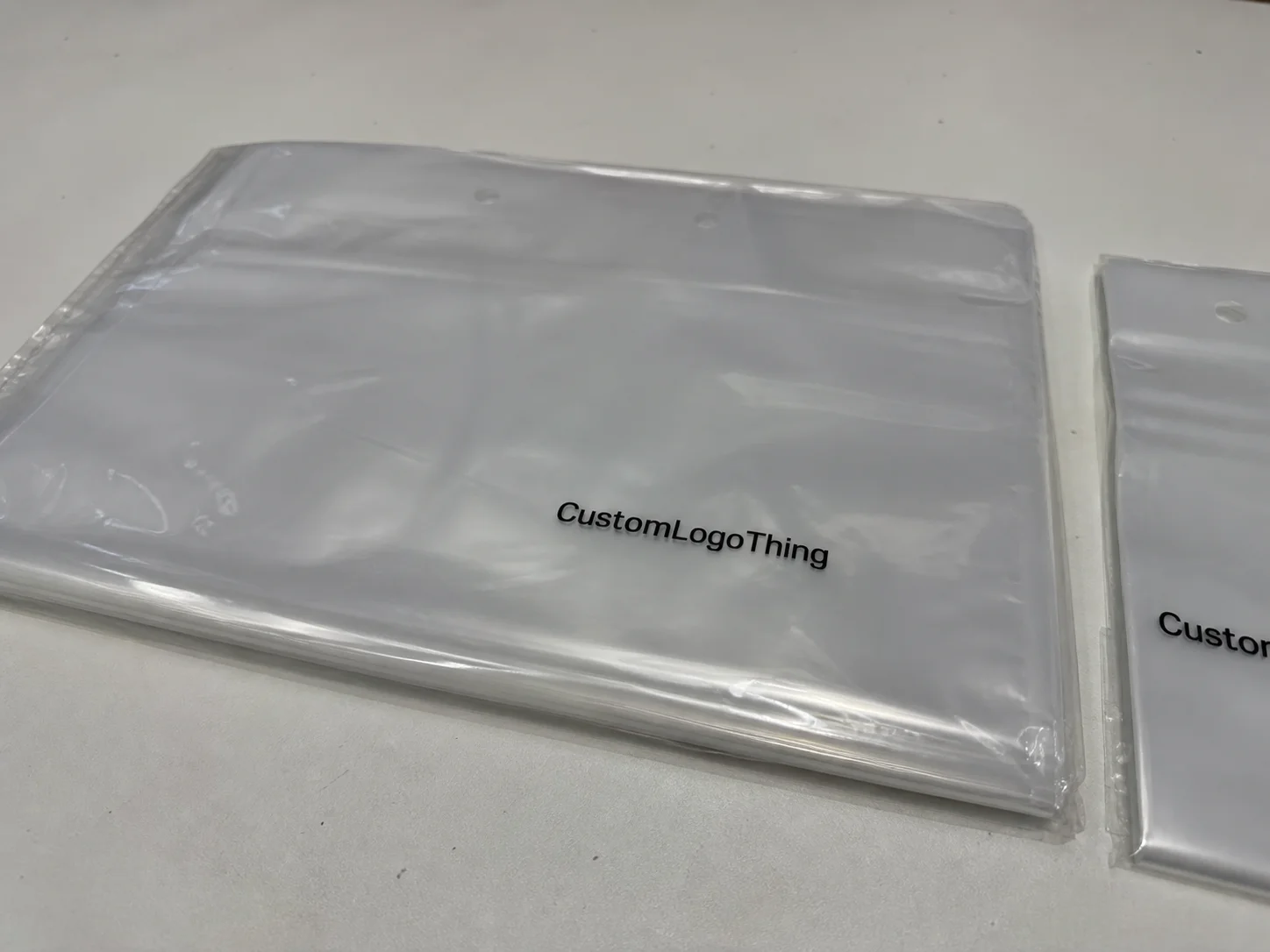
Buyer Fit Snapshot
| Best fit | To Heat Sealable Poly Mailers projects where brand print, material claims, artwork control, MOQ, and repeat-order consistency need to be specified before quoting. |
|---|---|
| Quote inputs | Share finished size, material target, print colors, finish, packing count, annual reorder estimate, ship-to region, and any compliance wording. |
| Proofing check | Approve dieline scale, logo placement, barcode or warning zones, color tolerance, closure strength, and carton packing before bulk production. |
| Main risk | Vague material claims, crowded artwork, missing packing details, or unclear freight terms can make a low unit price expensive after revisions. |
Fast answer: To Heat Sealable Poly Mailers: Film, Print, MOQ, and Carton Packing should be specified like a repeatable production item. The safest quote records material, print method, finish, artwork proof, packing count, and reorder notes in one written spec.
Production checks before approval
Compare the actual filled-product size with the drawing, then confirm tolerance on folds, seals, hang holes, label areas, and retail display edges. Reserve space for logos, QR codes, warning copy, and material claims before decorative graphics fill the panel.
Quote comparison points
Review material grade, print process, finish, sampling route, tooling charges, carton quantity, and freight assumptions side by side. A quote is only useful when the supplier can repeat the same color, closure quality, and packing count on the next order.
I’ve spent enough time on packing floors to know one uncomfortable truth: a lot of shipping problems blamed on “bad packaging” actually start with a weak seal. The first time I saw a carton of returns opened at a contract packout facility outside Chicago, Illinois, the root cause was not the mailer film, the print, or the product size; it was a seal line that looked fine until the load went through a 96°F truck trailer and a rough conveyor turn. That is why this guide to Heat Sealable Poly mailers matters, especially if you need consistency, cleaner presentation, and fewer surprises after the box leaves your table. If you’re comparing samples, even a 2 mm difference in seal width can decide whether a 5,000-unit run holds up or turns into claims.
If you’re trying to sort out the guide to heat sealable poly Mailers for Apparel, soft goods, subscription kits, or light accessories, you’re in the right place. I’ll keep this practical, with the same kind of language I’d use standing beside a sealer in a Dallas, Texas fulfillment center or talking through samples with a buyer who has to hit both unit cost and brand standards. Honestly, if a packaging choice survives a messy Tuesday on the floor, it’s probably a solid choice. And if it survives a 12-hour shift in a warehouse near I-35, that’s even better.
Guide to Heat Sealable Poly Mailers: What They Are and Why They Matter
A heat sealable poly mailer is a flexible polyethylene shipping bag built to close under controlled heat and pressure rather than by a peel-and-stick adhesive strip. In plain English, the edge of the bag has a sealable layer or seam that bonds when a bar, platen, or impulse sealer applies the right amount of energy, usually in a 1.5 to 3 second dwell cycle. That gives you a closed package that feels more uniform than a hand-pressed flap, and in many operations, it is simply easier to repeat at scale. A typical plain structure might use 2.0 mil LDPE film, while heavier-duty versions can run 2.75 mil or 3.0 mil depending on puncture risk.
The guide to heat sealable poly mailers starts here because the product category is broader than many buyers expect. I’ve seen them used for T-shirts, socks, beauty accessories, small textile bundles, promotional kits, and even light hardware where the item is not sharp enough to puncture the film. At a soft-goods co-packer I visited in southern California near Los Angeles, they were sealing 8,000 units a day on a line that fed directly from folding tables into a sealing station, and the supervisor told me their rejection rate dropped once they moved away from manual adhesive closure. Their changeover took three days, and the difference showed up in the first 500-piece test lot. (He also said the team stopped arguing about whether someone had “pressed it hard enough,” which, honestly, sounded like a blessing.)
Compared with standard Adhesive Poly Mailers, heat sealable options can give you a cleaner edge, a more tamper-evident finish, and better repeatability when the packing team is moving quickly. Adhesive strips are convenient, and for some low-volume shippers they are the right answer, but they are sensitive to dust, operator technique, and how firmly the flap is pressed. Heat sealing removes some of that variability, which is why the guide to heat sealable poly mailers often comes up in higher-volume fulfillment lines running 1,500 to 10,000 units per day. If your labor cost is $18 to $24 per hour, saving even 4 to 6 seconds per pack starts to matter fast.
Material structure matters too. You’ll usually see LDPE, co-extruded films, and layered constructions that may include opaque, clear, or printed surfaces. Some mailers are unprinted and built for pure utility, while others carry a custom logo, a black-out interior for privacy, or a matte exterior finish that photographs well for social-media-friendly unboxing. In a supplier plant visit near Suzhou, China, I was shown a film spec sheet that listed a 60 micron outer layer with a sealant layer tuned for 130°C to 150°C impulse sealing, and that level of detail is exactly what buyers should ask for. If you already work with Custom Poly Mailers, this is the point where the sealing method becomes part of the buying decision, not just an afterthought.
“On the floor, the difference between a good mailer and a bad one is often a 3-second seal cycle and whether the film was clean at the edge,” a plant manager told me during a supplier review in New Jersey. He wasn’t being dramatic; he was describing the kind of small process detail that saves a lot of claims. He also showed me a case where a 10 mm seal outperformed an 8 mm seal on the same line, simply because the packers were moving too fast.
For teams balancing branding and shipping performance, heat sealable poly mailers can also fit neatly into broader Custom Packaging Products programs. When the mailer is part of a coordinated package, the finish, print registration, and closure style all affect the customer’s first impression, and that matters even for a $14 apparel order. A well-specified program might pair a 2.0 mil mailer with a 1-color black print and a 25 mm seal margin, which keeps the whole pack looking intentional instead of improvised.
How the guide to heat sealable poly mailers works in production
The sealing process is straightforward, but the execution is where the quality shows up. In a typical workflow, the operator aligns the open edge of the poly mailer under the sealing head, applies heat through an impulse bar or constant-heat platen, and holds enough pressure for the film layers to bond. After that, the seam needs a short cooling period so the polymer sets properly, usually 1 to 5 seconds depending on film thickness. Rush that cooling step, and you may get a seal that looks bonded but opens under load. I’ve watched that happen, and it’s maddening because everyone thinks the machine did its job right until the package fails later.
There are two common equipment styles you’ll hear about in the guide to heat sealable poly mailers. Impulse sealing heats the element only during the sealing cycle, which is handy for smaller packing tables and lower-traffic stations. Constant-heat sealing keeps the element hot, which can support steadier throughput in a more controlled environment. I’ve watched both work well, but the wrong match can create headaches; a bench sealer that is too slow for a 3,500-unit run will bottleneck a line, while a stronger machine than needed can scorch lighter film if nobody tunes it properly. And yes, someone always says, “It should be fine.” That phrase has caused more problems than a dull blade and a coffee spill combined.
Five variables drive seal quality more than anything else: temperature, dwell time, pressure, film thickness, and cleanliness at the seal line. If dust, fabric lint, lotion residue, or product oil lands in the bond area, the seal can fail even if the machine settings are right. I once saw a cosmetics accessory packout where the team blamed “bad bags” for leaks, but the actual issue was that the seal area was catching a fine powder from inner sachets. After they changed the staging order and wiped the table every 30 minutes, the failures practically disappeared. Their defect rate fell from roughly 6% to under 1% in one week.
Bag geometry affects the result more than beginners expect. A straight-edge mailer with a consistent seal zone is easier to run than a bag with awkward gussets or uneven side welds, because the operator has a cleaner target and the sealer jaw meets the material in a predictable way. On one automated table in a Midwest fulfillment center near Indianapolis, Indiana, the difference between a flat profile and a bulky gusset was nearly 12 packs per minute, not because the machine was faster, but because the operator spent less time fussing with alignment. When you are shipping 4,000 units a day, that speed difference becomes overtime or no overtime.
The reason the guide to heat sealable poly mailers keeps coming up in operations meetings is simple: the seal is not just a closure. It is part of the ship test, the tamper evidence, the moisture barrier, and the unboxing experience. A well-sealed mailer closes flat, stays shut under normal transit vibration, and opens cleanly for the customer instead of arriving with a ragged flap or a half-stuck adhesive strip. If a package rides through a 1,200-mile ground lane and still looks tidy at the end, that’s not luck; that’s process control.
If your team needs performance verification, look at industry references like ASTM test methods and carrier transit simulation standards. For broader packaging and sustainability context, the ISTA site is useful for distribution testing, and the EPA sustainable materials pages are a good reminder that material choice and waste reduction belong in the same discussion. I’m not pretending those pages are thrilling reading (they are not), but they save a lot of guesswork later. If your product ships from Shenzhen, China or Monterrey, Mexico, you still want the same basic proof: a sealed bag that survives a drop, vibration, and compression cycle.
Key Factors to Compare Before Buying Heat Sealable Poly Mailers
If you’re using the guide to heat sealable poly mailers to make a purchasing decision, start with film gauge. Lighter films can lower cost and reduce freight weight, but a thinner structure may puncture more easily if your product has sharp corners, zipper pulls, or rigid hang tags. Thicker films usually improve durability and puncture resistance, though they can cost more and sometimes need slightly more heat to seal well. A 1.6 mil film may be fine for a folded tee, while a 2.5 mil film makes more sense for a kit with metal hardware or layered accessories.
Seal strength should be matched to your equipment, not just advertised on a spec sheet. I’ve sat through enough vendor calls to know how easy it is to fall in love with a sample that seals beautifully on a controlled lab machine but behaves differently on a real pack table. Your sealer bar width, jaw pressure, and dwell time all need to fit the film structure. If the film is designed for a 5 mm seal but your machine applies heat unevenly across the width, you may get a weak edge at one side and a strong bond on the other. On one test run in Nashville, Tennessee, a buyer found a 7 mm seal line held 30% better than a 5 mm line when the table was vibrating from nearby conveyor traffic.
Branding options matter too, especially for e-commerce teams that want the mailer itself to reinforce the brand. You can specify custom logos, opaque black-out liners, clear front windows, matte finishes, gloss finishes, and print coverage that ranges from a small centered mark to full-surface graphics. In a supplier negotiation I handled years ago with a factory in Dongguan, China, a fashion client saved money by moving from full coverage to a two-color repeat pattern, and their print cost dropped by roughly 18% without hurting shelf appeal. The buyer was thrilled. The sales rep acted like he had invented packaging. I let him have his moment.
Here’s a practical cost breakdown for the guide to heat sealable poly mailers. The final unit price depends on film material, bag dimensions, print coverage, order volume, tooling or plate charges, and freight. A plain 10" x 14" LDPE heat sealable mailer in a 5,000-piece run may land near $0.18/unit before freight, while a custom printed version with a special size and heavier film can move closer to $0.24 to $0.31/unit, depending on ink count and packaging format. For a larger run of 20,000 pieces, I’ve seen pricing dip to $0.15 to $0.19 per unit on simpler structures. Those figures are directional, not universal, because resin pricing and shipping lanes can swing quickly.
| Option | Typical Use | Approx. Unit Price | Strength | Notes |
|---|---|---|---|---|
| Standard adhesive poly mailer | Low-volume shipping, simple closures | $0.12 to $0.20 | Moderate | Fast to use, but closure consistency depends on operator pressure |
| Heat sealable poly mailer, plain | Apparel, soft goods, kits | $0.16 to $0.24 | Good | Cleaner seal, better repeatability with matched equipment |
| Heat sealable poly mailer, custom printed | Branded fulfillment, retail-ready shipping | $0.24 to $0.35 | Good to very good | Includes print setup, color matching, and possible plate fees |
| Heavier-gauge reinforced structure | Higher abuse transit, denser goods | $0.28 to $0.42 | Very good | More puncture resistance, often worth it if damage claims are high |
Storage and handling are easy to overlook. Keep rolls or stacked mailers flat, clean, and away from excess heat or humidity. If bags sit near a compressor room or under a sunny loading dock window, static, curl, or surface contamination can sneak in. In one Phoenix, Arizona distribution site I visited, they moved stored mailers off a warm mezzanine shelf and immediately reduced edge curl enough to improve sealing speed by a small but real margin. Their operators reported saving about 20 seconds per 100 packs because the bags laid flatter on the table.
The guide to heat sealable poly mailers also needs to account for print quality. Good ink adhesion depends on film treatment and the right surface energy, and if the graphics are built too close to the seal zone, you can create a cosmetic problem or, worse, a bond problem. That is one reason I push teams to review artwork and structure together instead of treating them as separate tasks. Separate tasks sound tidy. Reality usually laughs at tidy. If your artwork is built in Chicago and your bags are made in Ho Chi Minh City, the spec sheet needs to travel better than the sample box.
Step-by-Step guide to heat sealable poly mailers Setup
Here is the practical setup path I recommend when teams ask for the guide to heat sealable poly mailers. First, measure the product exactly, not approximately. Use the longest dimension, the widest point, and the thickest packed condition, because a folded sweater takes different space than a flat one. If the item is 9.5 inches wide after folding, a 10-inch bag may be too tight once you account for the seal margin and operator handling space. I usually want at least 0.5 inch of working clearance on each side if the packer is sealing by hand.
Second, confirm what sealing equipment you already have. A small shop may run an impulse sealer at a packing bench, while a larger operation may use a constant-heat station, a band sealer, or an inline tunnel-style system. The machine type changes the sealing behavior, and the guide to heat sealable poly mailers only works if the mailer structure matches the line you’re actually using. A 14-inch impulse sealer bought for $220 on the open market is not the same as a $1,800 constant-heat unit with a foot pedal and temperature dial, and anyone pretending otherwise is selling something.
Third, test sample pieces before committing to a full order. Make 10 to 20 seals at different settings, then inspect each one for flatness, uniform width, and any sign of scorching or warping. I like a simple test matrix: low heat, mid heat, and target heat at two dwell times. That gives you six data points quickly, and in most factories, that is enough to find a narrow band that works. If your film spec is 2.2 mil co-extruded PE, one setting may produce a clean 6 mm seal while another leaves a glossy burn line.
Fourth, run a small validation test. Put real product in the mailer, close it, and then check the seal with a light peel test and a short drop test. If the shipment is light and soft, a 24-inch drop onto a hard surface may be sufficient to reveal a weak seam. For tougher programs, I’d review the results against internal handling expectations or an ISTA protocol rather than relying on a casual shake test. I’ve seen people shake a package like they’re making cocktails. That is not testing. A simple 10-drop test from multiple angles is more useful than theatrics.
For the timeline side of the guide to heat sealable poly mailers, a normal path usually looks like this: artwork review, material selection, sample or proof stage, approval, manufacturing, and shipment. If the spec is simple and the artwork is ready, I’ve seen production move in 12 to 15 business days after proof approval. If the order needs custom color matching, special gussets, or multiple rounds of sample edits, that window can stretch to 20 business days or more. Ocean freight from a factory in Ningbo, China to a U.S. West Coast warehouse may add another 18 to 28 days, so plan your inventory like a grown-up.
Delays usually come from the same few places. A brand team changes the logo at the last minute, the packaging buyer switches bag size after the first sample, or someone discovers that the barcode needs to sit 18 mm away from the seal zone instead of 10 mm. The more precise the spec sheet, the less time everyone wastes. Honestly, I think that is where many purchasing teams lose the most time: not in production, but in indecision. A spec with bag size, seal margin, film gauge, print count, and target carton pack-out date beats a vague email every single time.
Daily line discipline also matters. Operators should check the seal at shift start, confirm temperature against the machine readout, wipe down the jaw area, and keep a short log of settings. One contract packer in Atlanta, Georgia reduced seal defects simply by making the first 20 units of every shift “check pieces” instead of shipping them straight out the door. That kind of habit sounds small, but it compounds fast when you’re running thousands of units. If the log shows the machine drifted 8°C by lunch, you’ll know why the afternoon run looked ugly.
Common Mistakes with Heat Sealable Poly Mailers
The biggest mistake I see in the guide to heat sealable poly mailers is overheating the film. Too much heat can warp the edge, thin the bond area, or make the seal brittle. That brittle edge may look perfect on the bench, but it can split after a carton is stacked, twisted, and moved through a hot truck. If the seam has a shiny, stretched look or the bag edge curls hard after sealing, that’s a warning sign. One Texas plant I reviewed had a 15% burn-mark rejection rate before they lowered the platen temperature by 12°F.
Under-sealing causes the opposite problem. The package may look closed, but the bond is weak because the pressure or dwell time was too short. This shows up later as a pop-open seam during transit, especially when packages are stacked on a pallet or bunched together in a tote. I’ve seen teams blame carrier handling for those failures when the actual issue was a 2-second dwell setting that was never adjusted after a film change. That one is always fun to explain in a meeting. Nobody loves the answer, but it is usually the right one. If you changed from 1.8 mil to 2.3 mil film and kept the same setting, don’t act surprised.
Sizing errors are another easy trap. A bag that is too small forces the operator to crowd the product into the seal zone, while a bag that is too large leaves excess air and a sloppy top edge. Both problems raise the chance of a poor closure. If you’re sealing a folded hoodie, a 12" x 16" format may behave differently than a 10" x 14" format even if both technically fit the product. I once watched a buyer save $0.01 per unit by downsizing, then lose it all because the packing crew spent an extra 6 seconds wrestling each bag into place.
Contamination at the seal line can ruin an otherwise solid spec. Powders, lotions, dust, and fabric lint all interfere with bonding. In a beauty-adjacent fulfillment center in New Jersey, I watched a team nearly scrap a whole production day because a soft-touch pouch insert was shedding a fine dust that collected at the top edge of the mailer. The fix was not a new bag; it was a process change that kept the top edge cleaner. They added a 15-second air blow-off step and moved the sealing station 8 feet away from the trimming table.
There is also a pricing mistake that comes up more often than buyers admit: choosing the lowest unit cost without modeling rejects, labor, machine fit, and transit damage. A mailer that saves $0.02 per unit but creates a 4% rework rate is not actually cheaper. The guide to heat sealable poly mailers only makes financial sense if you count the entire process, including labor minutes, returns, and the cost of damaged brand perception. A $0.16 bag that works beats a $0.14 bag that triggers 200 returns every quarter.
One more thing: do not assume every supplier’s “same as sample” claim really means the same. Resin lot changes, print changes, and seal layer differences can affect behavior. Ask for batch numbers, and if your volume is high, keep a reference sample sealed and labeled with the machine settings that worked. I know, it sounds annoyingly meticulous. It also saves you from trying to explain a failure three weeks later with nothing but a shrug. If your supplier is in Jiangsu Province, make sure they note resin lot, film direction, and sealing layer thickness on the COA or spec sheet.
Expert Tips for Better Results with Heat Sealable Poly Mailers
If I could give one factory-floor tip from the guide to heat sealable poly mailers, it would be this: keep a written sealing log. Record temperature, dwell time, pressure, and material batch numbers, then note the operator initials and shift. That way, when a setting works on Tuesday morning but fails on Friday afternoon, you have data instead of guesses. A simple log sheet costs maybe $5 to print for a month and can save you thousands in wasted bags and labor.
Order sample packs in more than one thickness if your SKU mix changes often. A 1.5 mil structure may be perfect for one apparel line, while a 2.0 mil structure is better for a heavier kit or a product with sharper edges. I’ve seen growing brands assume one mailer spec would cover all products, only to discover later that their accessories line and their sweatshirt line needed different strength profiles. The “one size fits all” dream is adorable. It is also usually wrong. If you run 300 units of jewelry pouches and 3,000 units of knitwear, you probably need two bag specs, not one compromise.
Bring graphics and structure into the conversation early. Seal placement affects print layout, and barcode positioning can affect scan rates after shipment. If the customer service team needs the return label in a specific zone, the artwork must be built around that from day one. A late-stage redesign usually costs more than it should. A revised plate in the U.S. can run $75 to $250; in Asia, you may pay less on the plate but more in shipping delay if you wait until the last minute.
Check seals after the first few dozen units, not just the first sample. Heat drift is real, especially on longer runs. On one line in an Oregon fulfillment site, the first 15 packages sealed beautifully, but by package 60 the machine had warmed enough that the dwell time needed a tiny adjustment. The operator caught it because the team had a habit of checking every 25 pieces. That habit took about 20 seconds and probably saved a pallet of rework.
From a materials standpoint, choose the lightest structure that still survives transit. That reduces resin use and shipping weight without sacrificing performance. If a 1.8 mil co-extruded film passes your drop test and peel test, there is no prize for moving up to 2.5 mil just because it feels “safer.” The smarter move is the one that meets the actual abuse your product sees. For a Midwest parcel lane with short transit and low crush risk, lighter can be enough; for a cross-country ground route with temperature swings, you may want the extra margin.
For buyers who care about sustainability, the guide to heat sealable poly mailers should include material efficiency and recycling compatibility discussions. Depending on the structure and print system, some films are easier to recover than others. That is where supplier transparency helps, and where references from groups like the Forest Stewardship Council can be useful for broader packaging sourcing conversations, even if the mailer itself is plastic-based. Ask your supplier whether the film is mono-material PE, because that can matter more than a vague “eco-friendly” label printed in green ink.
Next Steps After Reading the guide to heat sealable poly mailers
The most useful next step is simple: measure your product exactly and write it down. Include length, width, thickness, weight, and anything fragile or sharp. Then note whether your current packing line uses impulse or constant-heat equipment, because that determines which mailer options are worth testing first. If your item weighs 11 ounces and has a metal zipper pull, say so. That single detail can change the recommended film thickness.
After that, request two or three samples with different gauges. I like to compare a lighter option, a mid-weight option, and a heavier structure so the team can feel the difference in hand and test seal reliability under real conditions. If the products are soft goods, ask for a plain sample and a printed sample so you can judge both performance and appearance. If you’re sourcing through a manufacturer, pairing that request with your broader Custom Packaging Products needs can help keep the whole program aligned. A 500-piece sample order is usually enough to expose edge issues before you place a 10,000-piece run.
Create a comparison sheet before you talk final numbers. Put cost, thickness, seal quality, branding needs, and expected turnaround in separate columns. That keeps purchasing, operations, and marketing focused on the same facts. A buyer in a busy fulfillment operation once told me that a one-page comparison sheet saved her three meetings because everyone could see the tradeoffs at a glance. I wish more teams did that instead of making everyone sit through the same debate in three different conference rooms. Add a column for freight from the factory, too; a quote from Guangdong means less if the container is stuck for 21 days.
Have artwork ready, too. Make sure the seal area is defined, the barcode placement is approved, and the target pack count is clear. When all of that is ready before the quote, the quoting process is faster and the sample stage is more accurate. That is especially true if you need custom logo printing, privacy lining, or a special finish for customer-facing shipments. If your supplier asks for a dieline at 300 dpi and you hand them a blurry screenshot, don’t be shocked when the proof comes back wrong.
If you are still deciding between closure types, keep the guide to heat sealable poly mailers anchored to your actual use case. For high-volume apparel, clean branded presentation, and repeatable closure, heat sealing often wins. For low-volume operations with simple handling and less equipment investment, adhesive mailers may still make sense. The right answer depends on product shape, transit risk, labor cost, and how much consistency your team needs. A small Shopify brand shipping 150 orders a month has different math than a warehouse in Pennsylvania shipping 8,000 a day.
My honest advice after years around bag-making lines, sealing stations, and post-shipment claims is this: test methodically, keep your specs clear, and do not buy on unit price alone. The best guide to heat sealable poly mailers is the one that helps you choose confidently, run clean trials, and launch with fewer packing surprises. If you want a branded mailer that closes reliably and presents well in the customer’s hands, a well-built heat sealable option is often worth the extra planning. I’d rather spend an extra $0.02 per unit than spend a week cleaning up returns.
Frequently Asked Questions
How do heat sealable poly mailers differ from regular poly mailers?
Heat sealable poly mailers close with applied heat and pressure, while regular poly mailers usually rely on pressure-sensitive adhesive strips or manual closure. Heat sealing can create a more consistent, tamper-evident seam when the equipment and settings are matched correctly. They are often preferred for higher-volume packing operations or products that need a cleaner, more secure finish, especially when a line is running 2,000 or more pieces per day.
What temperature is best for heat sealable poly mailers?
There is no single universal temperature, because the right setting depends on film thickness, sealer type, and dwell time. Most teams dial in settings through sample testing rather than guessing, then record the successful range for repeat use. A good seal should look flat, even, and fully bonded without scorching, warping, or visible thinning. For many PE-based films, the working range may fall somewhere around 130°C to 170°C, but the exact number depends on the structure.
How long does it take to produce custom heat sealable poly mailers?
Turnaround depends on artwork approval, material selection, order quantity, and whether samples or proofs are required first. Delays often come from artwork revisions, sizing changes, or waiting for final approval before manufacturing starts. Clear specs upfront usually shortens the timeline and helps avoid unnecessary back-and-forth. In a straightforward run, production often takes 12 to 15 business days from proof approval, plus shipping time from the plant in places like Guangdong or Zhejiang.
Are heat sealable poly mailers more expensive than standard mailers?
They can be, depending on film structure, custom printing, size, and the sealing performance needed. The unit price should be weighed against labor savings, seal reliability, reduced damage, and fewer returns or replacements. Low-cost mailers may become more expensive overall if they create rejects or shipping failures. A plain custom heat sealable mailer might come in around $0.15 to $0.18 per unit at 5,000 pieces, while a printed version can cost more depending on color count and gauge.
What products work best in heat sealable poly mailers?
They work especially well for soft goods like apparel, accessories, textiles, kits, and lightweight non-fragile items. They are also useful when a clean, branded, tamper-resistant closure matters more than heavy cushioning. Very sharp, rigid, or fragile products may need an inner wrap or different mailer structure before heat sealing. For example, a folded hoodie, socks, or a fabric sample set is a much better fit than a glass component or a box with sharp corners.