Buyer Fit Snapshot
| Best fit | To Minimalist Recyclable Gift Wrap projects where brand print, material claims, artwork control, MOQ, and repeat-order consistency need to be specified before quoting. |
|---|---|
| Quote inputs | Share finished size, material target, print colors, finish, packing count, annual reorder estimate, ship-to region, and any compliance wording. |
| Proofing check | Approve dieline scale, logo placement, barcode or warning zones, color tolerance, closure strength, and carton packing before bulk production. |
| Main risk | Vague material claims, crowded artwork, missing packing details, or unclear freight terms can make a low unit price expensive after revisions. |
Fast answer: To Minimalist Recyclable Gift Wrap: Material Claims, Seal Quality, and Freight Cost should be specified like a repeatable production item. The safest quote records material, print method, finish, artwork proof, packing count, and reorder notes in one written spec.
Production checks before approval
Compare the actual filled-product size with the drawing, then confirm tolerance on folds, seals, hang holes, label areas, and retail display edges. Reserve space for logos, QR codes, warning copy, and material claims before decorative graphics fill the panel.
Quote comparison points
Review material grade, print process, finish, sampling route, tooling charges, carton quantity, and freight assumptions side by side. A quote is only useful when the supplier can repeat the same color, closure quality, and packing count on the next order.
The Guide to Minimalist Recyclable Gift Wrap starts with a simple truth I learned the hard way on a packing line in Shenzhen, Guangdong: people love the moment of unwrapping, then toss half the packaging in the trash by dinner. I remember one client’s holiday display generating three 240-liter bins of mixed wrap waste after a 200-gift event. Half of it was glossy paper with plastic film, and the rest had foil ribbon, glitter, and tape stuck everywhere. Gorgeous for 30 seconds. A mess for the recycling truck. We were quoting wrap at about $0.22 per unit on a 5,000-piece run, and the “fancy” version was closer to $0.49 once the lamination and metallic ribbon were added.
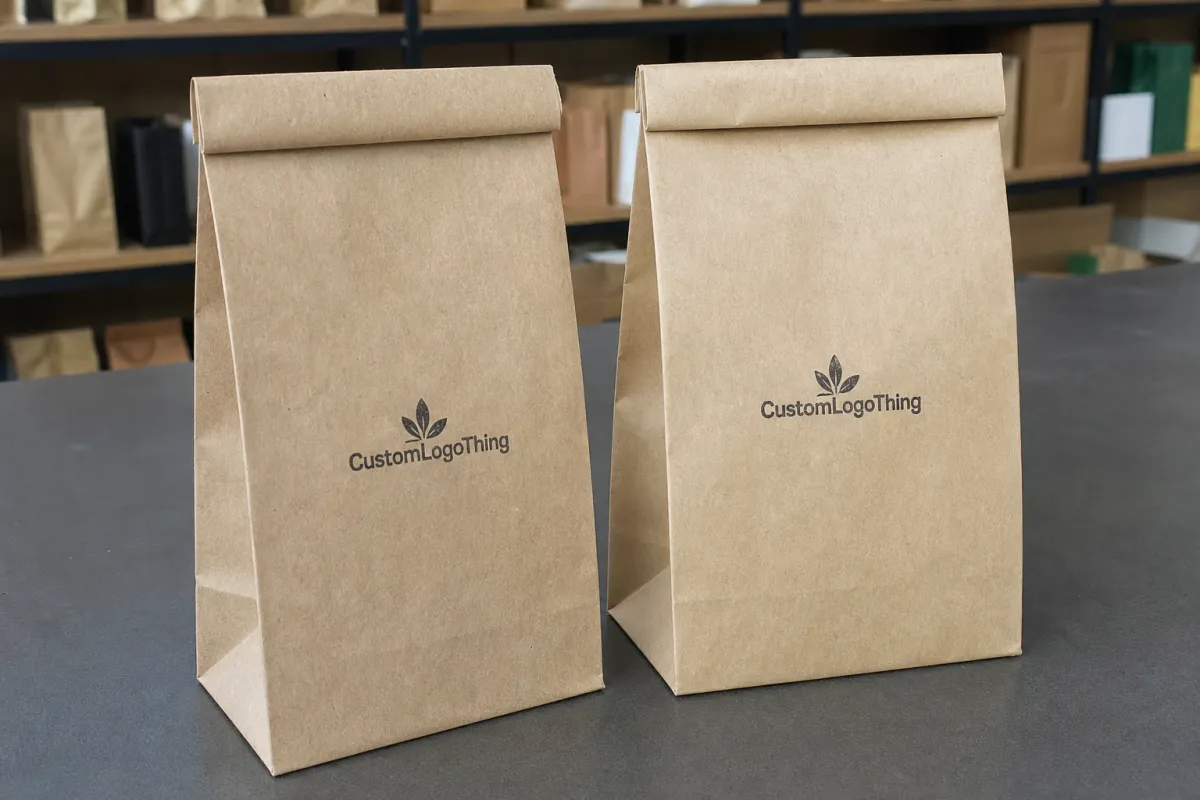
That’s why the guide to Minimalist Recyclable Gift Wrap matters. It’s not about making gifts look cheap. It’s about stripping away the junk that wrecks recyclability while keeping the package clean, premium, and intentional. Honestly, I think most people overcomplicate gift wrap because they confuse “more decoration” with “more value.” Usually, it’s the opposite. (Marketing does love a shiny distraction.) A plain recycled kraft sheet with a crisp black logo can do more for brand perception than a drawer full of glitter ribbon ever will.
For Custom Logo Things, this matters because brands keep asking for packaging that looks refined without creating a landfill in the process. A well-made guide to Minimalist Recyclable Gift Wrap gives you a system you can repeat, scale, and still feel good about. And yes, it can look expensive without being fussy. That’s the trick. In our factory checks in Shenzhen and Dongguan, the winning samples were usually the ones with one paper base, one print color, and one closure method. Nothing dramatic. Just disciplined.
What Is Minimalist Recyclable Gift Wrap? Why It Works
The guide to minimalist recyclable gift wrap is basically a design system that uses fewer materials, cleaner visuals, and paper-friendly components that can usually be recycled with ordinary household paper streams, depending on local rules. Think kraft paper, recycled tissue, paper tape, simple stamps, and maybe one twine tie if you really need it. Not glitter bombs. Not laminated chaos. Not that weird plastic ribbon nobody knows how to untie. For most small brands, the sweet spot is an 80gsm to 100gsm uncoated sheet or a 17gsm recycled tissue layer, both of which fold well and keep costs predictable.
I’ve seen brands spend $1.20 per gift on complicated wrap, only to have the whole thing trashed because the paper had a plastic coating. That hurts twice. First in cost. Then in waste. A smarter guide to minimalist recyclable gift wrap reduces those failure points by removing anything that makes sorting harder for the user or the recycler. When the wrap is just paper, paper tape, and a small tag, the chances of it ending up in the right bin go way up. Amazing how that works.
Here’s the simple distinction people mix up all the time:
- Recyclable means the material can usually enter a recycling stream if it meets local acceptance rules.
- Recycled means the material was made from recovered fiber or content.
- Compostable means it can break down under specific composting conditions, which are not the same as a backyard pile.
- Reusable means you can use it again, like a fabric wrap or gift bag, but it may not be recyclable.
A real guide to minimalist recyclable gift wrap keeps those buckets separate. A recyclable paper wrap does not magically become compostable because the seller slapped a green leaf on it. I’ve had procurement calls where someone proudly said “eco-wrap” and then described metallized film. That’s not eco. That’s marketing doing the cha-cha. If the material spec says PET lamination, the recycling bin does not care about your branding deck.
Minimal design is not boring. Clean kraft with a black logo stamp can look sharper than ten feet of overprinted glitter paper. I saw this firsthand during a retail rollout for a cosmetics client in Los Angeles. We compared a full-bleed floral wrap against a 120gsm uncoated recycled sheet with one-color branding and a natural cotton tag. The simpler version tested better with customers, cost $0.34 less per unit on a 3,000-unit order, and passed easier through the store’s waste sorting process. The guide to minimalist recyclable gift wrap works because restraint communicates intent. The package feels deliberate. Not desperate.
Brands are shifting toward simpler wrap systems for three reasons: waste reduction, better recyclability, and easier production. Households are doing the same because nobody wants to keep buying specialty wrap that can’t be recycled locally. A solid guide to minimalist recyclable gift wrap gives both groups a usable playbook. If you’re buying at scale, the difference between a $0.11 kraft sheet and a $0.31 coated “premium” sheet adds up fast across 2,000 or 20,000 gifts.
If you want industry context, the paper side of this conversation is well covered by organizations like FSC and recycling guidance from the EPA. They won’t choose your ribbon for you, but they will keep you from making expensive mistakes. I’ve had suppliers in Shanghai send samples with beautiful claims and zero specification sheets, which is a great way to waste three weeks and $80 in courier fees.
How Minimalist Recyclable Gift Wrap Actually Works
The mechanics behind a guide to minimalist recyclable gift wrap are not glamorous, but they matter. Paper is a fiber product. Add a coating, too much ink, metallic transfer, or plastic adhesive, and you change how that fiber behaves in recycling mills. The mill wants clean pulp. It does not want confetti made of problems. A standard paper mill in Zhejiang will usually ask for clean fiber input, and that means no foil flakes, no plastic film, and no adhesive mess clinging to the edges.
From a materials standpoint, the best wrap choices usually start with uncoated kraft, recycled kraft, or uncoated printed paper in the 60gsm to 120gsm range. Heavier sheets, like 150gsm or more, can feel premium, but they also raise cost and sometimes make folding awkward. In the guide to minimalist recyclable gift wrap, paper choice is the foundation. Everything else sits on top of it. If you’re sourcing from factories in Guangdong or Fujian, ask for the exact mill grade, finish, and gsm. “Nice paper” is not a spec. 350gsm C1S artboard is a spec. 80gsm uncoated kraft is a spec. “Nice” is what people say when they don’t have the sheet data.
Here’s what generally plays well in curbside recycling, though local rules still vary:
- Uncoated kraft paper
- Recycled-content uncoated paper
- Paper tape with limited adhesive
- Water-based inks in moderate coverage
- Simple paper tags
And here’s what usually causes trouble:
- Plastic film lamination
- Foil stamping over large areas
- Glitter coatings
- Heavy wax or moisture-resistant coatings
- Plastic ribbon, vinyl bows, and mixed-material embellishments
The decorative layer matters more than people think. In one supplier negotiation in Dongguan, I asked a factory why they were quoting recycled wrap at $0.19/unit and a “premium eco version” at $0.41. The answer was a soft-touch coating plus metallic spot UV. Nice finish. Terrible recycling profile. I told them to keep the same base paper, remove the coating, and print one Pantone color. The quote dropped to $0.23. Same brand story. Less nonsense. That is the guide to minimalist recyclable gift wrap in real life. The production time stayed at 12 to 15 business days from proof approval, which is what a simple one-color job should look like.
Minimal embellishments can still add character. Paper tape holds the folds. Twine works if you keep it small and avoid plastic fibers. Dried botanicals are fine for a one-off gift, but they’re not great for high-volume packing because they fall off, crush, or trigger sorting issues. Stamp-based decoration is one of my favorites because it’s cheap, fast, and easy to standardize. A custom rubber stamp might cost $18 to $45 depending on size, then you can use it across hundreds of wraps. That fits the guide to minimalist recyclable gift wrap mindset perfectly. If you order 5,000 paper tags with a simple black stamp from a supplier in Ningbo, your unit cost can land around $0.06 to $0.09 before freight.
As for process, small brands can usually source and test a simple recyclable wrap system in 10 to 18 business days if the design is straightforward and the supplier has stock paper. Custom paper with print plates, color matching, and shipping from Asia can push that to 20 to 35 business days. I’ve had clients assume “paper wrap” means immediate. No. Paper still has lead times, proofs, and freight like everything else. The guide to minimalist recyclable gift wrap works best when you respect production reality. If you’re building from a Shanghai printer, proof approval on Tuesday can still mean cartons on a truck the following Thursday, not magic, not miracles.
Here’s a practical build that stays recyclable from sheet to finish:
- Start with 80gsm uncoated recycled kraft.
- Print one-color black logo in water-based ink.
- Use FSC-certified paper tape for closure.
- Add a folded paper belly band with a small product note.
- Finish with a plain paper tag tied with cotton twine, or skip the twine entirely.
If you keep the components paper-based and removable, you’re already ahead of 80% of the “eco” gift wrap on the market. That’s not an exaggeration. I’ve opened samples from big-name suppliers that looked sustainable until you peeled back the corner and found plastic film hiding under the matte finish. The guide to minimalist recyclable gift wrap is about spotting those traps before they cost you money. One hidden coating can turn a $0.15/unit wrap into a $0.28 mistake, and that’s before you pay to ship the sample cases from Guangzhou.
Key Factors That Decide Cost, Appearance, and Sustainability
Every guide to minimalist recyclable gift wrap has to talk money. Otherwise it’s just Pinterest with better punctuation. Cost depends on paper weight, recycled content, print coverage, size, finishing, and order volume. Freight can quietly become the villain too. I’ve seen a $280 paper order turn into a $540 landed cost after air shipping and customs fees. Beautiful paper. Expensive lesson. That shipment came out of Shenzhen, and the courier bill hurt more than the samples looked good.
Here’s a simple pricing snapshot based on typical sourcing ranges I’ve seen across packaging quotes for small to mid-size orders. These are not fixed rates, because supplier geography, paper mills, and freight change everything. They are, however, close enough to keep you from underbudgeting by a mile.
| Option | Typical Material | Approx. Unit Cost at 5,000 pcs | Look | Recycling Impact |
|---|---|---|---|---|
| Plain kraft wrap | 60-80gsm uncoated kraft | $0.08-$0.14 | Natural, simple | Usually strong |
| Recycled tissue | 17-20gsm recycled tissue | $0.03-$0.07 | Light, soft, layered | Usually strong if uncoated |
| Custom-printed paper | 80-100gsm uncoated paper | $0.14-$0.28 | Branded, clean | Good if ink coverage stays moderate |
| Premium printed wrap | 100-120gsm premium uncoated stock | $0.24-$0.45 | Heavier, gift-like | Good if no coating or film |
The biggest cost driver in a guide to minimalist recyclable gift wrap is often not the paper itself. It’s the printing setup. One-color printing is usually far cheaper than four-color process or full-bleed graphics. A simple kraft sheet with a single black logo can look modern and cost 20% to 40% less than a more elaborate design. That’s why minimalism helps both the budget and the recyclability score. In a factory quote I reviewed from Foshan, dropping from four-color art to one-color print cut the setup fee from $180 to $65 on a 5,000-sheet order.
Appearance changes with paper tone and finish. Warm kraft gives a natural, earthy look. Bright white uncoated paper feels cleaner and more retail-ready. Soft Matte Finishes look premium without causing the same recycling headaches as gloss or film lamination. I personally prefer matte uncoated papers for a guide to minimalist recyclable gift wrap because they photograph well, fold cleanly, and don’t scream “look how much money I spent.” A 90gsm white uncoated sheet from a printer in Suzhou can look far sharper than a coated stock that tries too hard and ends up reflecting like a cafeteria tray.
Suppliers matter just as much as material. Minimum order quantities can range from 1,000 sheets to 10,000+ depending on the factory. Sample costs are usually $20 to $80 before freight. Lead times vary. A domestic printer might turn a simple paper wrap job in 5 to 8 business days, while offshore production can take 3 to 6 weeks. Freight consolidation can save $60 to $200 if you combine wrap with tags or boxes. That advice comes straight from supplier meetings where the freight quote almost always caused the second round of silence. I’ve sat in those meetings in Shenzhen, Shanghai, and Hangzhou, and nobody looks thrilled when the sea freight eats the margin.
A smart guide to minimalist recyclable gift wrap also admits tradeoffs. The most recyclable option is not always the prettiest. The prettiest option is not always the best for recycling. Your job is to find the middle. If the wrap is for customer gifts, a white recycled sheet with one-color branding and a paper tag may be enough. If it’s for a high-end PR kit, you may want a slightly thicker sheet and a custom belly band. The key is staying honest about what actually gets recycled instead of pretending every fancy finish is harmless. A 100gsm uncoated sheet with a 25mm paper band is usually a safer bet than a glossy 120gsm wrap with a plastic bow, even if the bow photographs well.
Step-by-Step Guide to Minimalist Recyclable Gift Wrap
A usable guide to minimalist recyclable gift wrap starts with the item, not the paper. Measure the gift first. I mean really measure it. Not “this looks about right.” I’ve seen teams waste 18% of their wrap stock because they chose oversized sheets for small products. If a candle box needs a 14 x 20 inch sheet, don’t buy 24 x 36 inch sheets because someone liked how they looked in a catalog. That’s how budgets get eaten. On a 1,200-gift rollout, that kind of mismatch can burn through an extra $140 to $260 in paper alone.
1. Choose the smallest workable size
Pick the smallest sheet or bag that still covers the item neatly. For a 5 x 5 x 3 inch box, a 14 x 20 inch wrap sheet is often enough with clean folds. For larger gift sets, a reusable box liner or recycled paper bag may be more efficient. In the guide to minimalist recyclable gift wrap, reducing material use is the first sustainability win. A smaller sheet also means fewer offcuts, less trim waste, and less time spent wrestling oversized paper on a packing table in Dongguan.
2. Select a paper base that can pass the recycling test
Uncoated recycled kraft or uncoated FSC-certified paper is usually a safe starting point. Ask the supplier for the paper specification, not just the pretty sample. I want gsm, coating details, ink type, and whether any film was used. If they can’t answer, that’s your cue to move on. The guide to minimalist recyclable gift wrap depends on boring details, which is exactly why people skip them and get burned. Ask for a written spec sheet, and if they send a WeChat photo instead, keep looking.
3. Keep decoration lean
Use one or two small design elements. That can be a stamped logo, a paper belly band, or a simple tag. If you use twine, keep it natural fiber and easy to remove. Don’t wrap the entire package in string because you watched a lifestyle reel. The guide to minimalist recyclable gift wrap is not performance art. If your embellishment requires scissors, two hands, and patience, it is probably too much.
4. Wrap with clean folds and limited adhesive
Fold edges tightly so the wrap sits flat. Use small strips of paper tape at the seam and corners where needed. If a package needs 11 pieces of tape to stay together, the sheet size is probably wrong. I learned that on a hotel amenity project where the team kept over-taping samples because the paper was too stiff. We changed to a 90gsm uncoated sheet and cut tape use by about 60%. Less tape. Cleaner look. Better recycling odds. That’s the whole point of the guide to minimalist recyclable gift wrap. The next proof batch went from 34 seconds to 21 seconds per gift, which matters when you’re packing 400 room-drop kits before noon.
5. Test durability and recyclability before scale
Do a simple hands-on check. Wrap three sample sizes, shake them gently, let them sit for 24 hours, and inspect the seams. Then review the material against local recycling guidance. If the wrap feels waxy, plasticky, or heavily coated, pause. If the decorations can’t be removed in five seconds, pause again. A practical guide to minimalist recyclable gift wrap is based on actual handling, not assumptions. If you are ordering from a factory in Wenzhou or Ningbo, ask for an overnight humidity test too, because paper curls fast when the warehouse is sticky.
One thing I’ve learned from factory floors: beautiful samples fail when people actually pack them. A paper that looks great in a flat mockup may crack at the corners or curl in humidity. That’s why I recommend an assembly test before you order 5,000 pieces. If the process takes 45 seconds per gift in a sample run, it may be too slow for an event team or retail staff. The guide to minimalist recyclable gift wrap should save time, not create a new bottleneck. A simple fold pattern can be the difference between a 20-minute packing shift and a 45-minute headache.
Here’s a realistic timeline for a small brand:
- Day 1-2: Measure the product and choose wrap size.
- Day 3-5: Get paper specs and request quotes.
- Day 6-8: Review samples and print proofs.
- Day 9-12: Approve final material and order production.
- Day 13-18: Receive stock, assemble kits, and pack gifts.
That timeline can move faster if you use stock materials and a local printer. It can move slower if you add custom die-cuts, specialty ink, or imported freight. The guide to minimalist recyclable gift wrap works best when you keep the system simple enough to repeat without a small nervous breakdown. A proof approved on Monday and a shipment leaving the factory by the following Friday is normal for a clean, one-color paper job in South China. The moment you add soft-touch coating, the calendar starts laughing.
If you want a technical benchmark, paper-based gift wrap design can be sanity-checked using general packaging testing logic from groups like ISTA when the wrap is part of a shipping or product protection system. Not every gift needs lab testing, obviously. But if the wrap is part of a PR kit or retail shipment, drop and vibration considerations matter more than people admit. A box that travels from Shanghai to Berlin or from Shenzhen to Chicago deserves more than wishful thinking.
Common Mistakes People Make With Recyclable Gift Wrap
The guide to minimalist recyclable gift wrap is useful precisely because people keep making the same dumb mistakes. I say that with affection. And some fatigue. After enough sample reviews in factories across Guangdong and Zhejiang, the mistakes start feeling like reruns.
First mistake: glitter, foil, and plastic ribbon. These are the usual suspects. They make everything look festive for about 14 seconds, then they haunt recycling streams. Foil-stamped paper can sometimes be okay in small amounts, but once the coverage gets heavy, recycling gets harder. Plastic ribbon is even worse. It’s tiny, deceptive, and it rarely gets removed properly. I’ve seen a whole production run ruined by a ribbon choice that added $0.05 per unit and made the final package look like it had been attacked by a craft drawer.
Second mistake: assuming every “eco” label means recyclable. It doesn’t. I’ve seen compostable claims on items that required industrial composting facilities not available within 200 miles of the buyer. That is not a solution. It’s a brochure. A proper guide to minimalist recyclable gift wrap checks the actual disposal route. If the wrap needs a specialty facility in Portland or a municipal pilot program in London, it is not a universal answer for a brand gift in Dallas or Denver.
Third mistake: too much print coverage. A full-bleed design can look striking, but it may increase ink load and complicate recycling depending on the substrate. Heavy pigment on thin tissue can also cause show-through and a cheap look. A restrained layout often performs better visually and environmentally. The guide to minimalist recyclable gift wrap is not anti-design. It’s pro-clarity. One logo, one line, one color. That is usually enough. The rest is just noise pretending to be style.
Fourth mistake: ignoring local recycling rules. Some municipalities accept paper wrap only if it is free of foil, wax, glitter, and attachments. Others are stricter. Some flat-out reject anything with tape all over it. I always tell clients to check their local curbside guidance before committing to a design. That little step saves a lot of waste and a lot of awkward emails later. If your customer base spans Toronto, Austin, and Melbourne, you cannot assume one recycling rule fits all three.
Fifth mistake: overbuying the wrong material. I once helped a small lifestyle brand that ordered 12,000 sheets of glossy “sustainable” wrap because the sample looked fantastic in the office lights. It did not work with their uneven box sizes, their staff hated folding it, and the finish caused the recycling question nobody wanted to answer. We reworked the system into 80gsm recycled kraft with a one-color stamp and a paper belly band. Their storage problem disappeared. Their per-unit cost dropped from $0.31 to $0.17. That’s a real-world guide to minimalist recyclable gift wrap win. The production run also moved from 22 business days to 13 business days once the coating was removed.
The easiest way to avoid these mistakes is to keep three questions in front of you:
- Can the main wrap be recycled locally?
- Can the decorative parts be removed fast?
- Does the finish still look good with fewer extras?
If the answer to any of those is “no,” the design needs another pass. The guide to minimalist recyclable gift wrap should simplify decisions, not create a prettier version of waste. A package that looks calm and cleans up easily beats a package that looks clever and goes straight to landfill.
Expert Tips for Better Results on a Real Budget
Real budget planning is where a guide to minimalist recyclable gift wrap stops being theory and starts saving money. My favorite trick is batch ordering. If you’re ordering wrap, tags, and tissue together, ask the supplier to quote one freight lane and one production schedule. Consolidating three small orders into one can save $75 to $180, depending on carton count and distance. Freight is never romantic, but it is very good at ruining margins. In Shanghai, I watched a shipment of three separate cartons cost more to move than the tissue inside them.
Another smart move: standardize sizes. If you use three gift box sizes, build three wrap sheet sizes and stop there. Do not create six variations because somebody on the marketing team wants “options.” Options are how warehouses fill up with dead stock. A lean guide to minimalist recyclable gift wrap keeps the SKU count manageable. Three sizes, two print versions, one paper family. That is enough for most teams that actually have to store the product in a 12-square-meter stock room.
Low-cost upgrades that still stay recyclable include:
- Custom stamps instead of full-color print
- Recycled tissue as an inner layer
- Paper belly bands with a small logo
- Natural-fiber twine used sparingly
- One deliberate color accent, like black, forest green, or warm gray
I also like matte uncoated papers because they photograph well for ecommerce and still feel tactile in hand. A white 100gsm uncoated stock with a single black logo can look cleaner than a shiny premium paper that tries too hard. Premium in the guide to minimalist recyclable gift wrap usually comes from restraint, paper weight, and sharp folding, not from piling on expensive finishes. If your sample looks good under a warehouse LED at 4 p.m. and still looks good on a phone camera at 8 p.m., you probably chose the right stock.
If you’re wrapping customer gifts, PR kits, or holiday packages, think about the unboxing sequence. What does the recipient see first? A tag? A seal? A folded edge? That moment is where brand personality lives. One of my clients in the beverage space used a recycled kraft sleeve with a debossed logo and a short inside message printed in black. Cost: about $0.22 per set at 8,000 units. The effect felt far more premium than a louder, more decorated version they had priced at $0.38. That’s the kind of result the guide to minimalist recyclable gift wrap should aim for. The supplier out of Hangzhou quoted a 14-business-day turnaround from final proof, which was fast enough to keep the campaign on schedule.
Supplier negotiation tip: ask whether they can print without plates for short runs, or use digital printing for lower volumes. Plate-free printing can save setup costs on smaller orders, though the per-unit price may be higher. Ask about MOQ breaks too. Sometimes going from 2,000 to 5,000 units lowers the unit price enough to justify the volume. Sometimes it doesn’t. I’ve had factories quote a 9% drop, and others barely move. You have to ask, because the first quote is often just the opening move. If a supplier in Guangzhou says $0.24 at 2,000 and $0.18 at 5,000, do the math before you clap for the discount.
Here’s a realistic budget view:
- Individual or household: $10 to $30 for paper, tape, stamps, and tags to cover multiple gifts.
- Small shop: $150 to $500 for a basic branded wrap system and one sample run.
- Growing brand: $600 to $2,500 for custom paper, print setup, freight, and buffer stock.
The exact spend depends on volume, supplier location, and how picky you are about color. If you want a very tight Pantone match on uncoated kraft, prepare for variance. Kraft shifts color. That’s not a defect. It’s physics. The guide to minimalist recyclable gift wrap works better when you accept the material’s natural character instead of trying to bully it into looking like coated art paper. A natural brown sheet made in Dongguan will not behave like a bright white coated board from a luxury printer in Milan, and that is fine.
“The nicest recyclable wrap is usually the one that feels calm, not crowded. If I open it and see one good material, one clear message, and one clean fold, I trust the brand more.” — a retail buyer I worked with in London
Next Steps: Build Your Own Minimalist Recyclable Wrap System
The best guide to minimalist recyclable gift wrap ends with action, not inspiration wallpaper. Start by auditing what you already have. Pull out every roll, tag, ribbon, bag, and tissue sheet. Separate the obvious offenders: glitter, plastic ribbon, foil wrap, laminated paper, and mixed-material bows. If it feels suspiciously shiny, it probably is. I did this with a client in Brooklyn who had 17 ribbon SKUs and zero idea which ones were actually recyclable.
Then build a small system instead of an endless shopping list. Choose one paper base, one color palette, one tag style, and one closure method. That’s enough for most use cases. A solid guide to minimalist recyclable gift wrap should help you standardize, not collect decorative clutter like a hobby. If you can pack a gift with 80gsm kraft, one paper tag, and one strip of paper tape, you do not need a velvet bow to make it feel “finished.”
Use this checklist:
- Pick a recyclable paper base with known gsm and finish.
- Test local recycling acceptance for your core materials.
- Set a simple color palette with one or two ink colors.
- Choose paper tape or another minimal closure method.
- Build a sample kit and wrap at least five items.
- Track cost per wrapped gift, including freight and labor.
- Remove any material that slows packing or sorting.
I always recommend a proof order before buying in volume. Even 100 sheets can tell you a lot about fold quality, print accuracy, and whether the paper scuffs easily. If the sample tears on the corner or curls after 24 hours, that’s a useful warning. A practical guide to minimalist recyclable gift wrap pays for that test by avoiding a much larger mistake later. For offshore production, the safest path is usually proof approval first, then 12 to 15 business days of manufacturing, then freight. Simple. Not glamorous. Effective.
One more thing: track labor. A wrap that costs $0.05 less but takes 20 extra seconds to assemble may not actually save money. I’ve watched teams obsess over paper cents while ignoring the wage cost of hand assembly. That is how “cheap” becomes expensive. The real goal of the guide to minimalist recyclable gift wrap is to reduce total friction: material, labor, storage, and disposal. If the wrap saves 12 seconds per gift across 1,000 gifts, that is real money, not a theory.
If you want to move fast, order a small proof batch, test it on real gifts, and refine from there. If you want to move carefully, run a three-sample comparison: kraft, recycled white, and custom-printed uncoated paper. Compare look, cost, and fold performance side by side. Either way, keep the system simple enough that a new team member can pack it after a 10-minute demo. In my experience, the best systems are the ones that survive a busy Friday in a Shenzhen warehouse without requiring a manager, a checklist, and three apologies.
That’s the part most people miss. Minimalism is not about less effort. It’s about less waste in every direction. A strong guide to minimalist recyclable gift wrap helps you make something that looks thoughtful, recycles more cleanly, and doesn’t eat your margins alive. Start with one format. Keep the materials honest. And stop paying for shiny junk that ends up in the trash anyway. If your wrap can be sourced from a supplier in Guangdong at $0.15 per unit for 5,000 pieces, printed in one color, and packed in under 30 seconds per gift, you’re already ahead of the game.
FAQ
What makes minimalist recyclable gift wrap different from regular gift wrap?
It uses fewer materials, keeps decorative elements simple, and avoids plastic coatings, glitter, foil, and hard-to-recycle attachments. The main wrap is usually designed so it can go into paper recycling if your local rules allow it. That’s the practical heart of the guide to minimalist recyclable gift wrap. A 90gsm uncoated kraft sheet with a paper tag and paper tape is very different from a laminated glitter wrap with a plastic bow.
Can you use tape on recyclable gift wrap?
Yes, but use minimal amounts of standard paper tape or other paper-based options when possible. Too much tape can make recycling harder, so keep it limited and place it only where needed. If you want a cleaner recyclable setup, avoid plastic tape completely. In the guide to minimalist recyclable gift wrap, tape is a tool, not a decoration. In my own factory samples, two short strips usually worked better than a full perimeter of adhesive.
How much does minimalist recyclable gift wrap usually cost?
Plain kraft or recycled paper is usually the cheapest option, especially in bulk. Custom printing, thicker paper, and specialty finishes raise the price fast. Freight and minimum order quantities can matter as much as the paper cost itself. I’ve seen simple wrap run from $0.08 to $0.14 per unit, while more branded versions land around $0.14 to $0.28. That’s why the guide to minimalist recyclable gift wrap always talks landed cost, not just paper cost. On a 5,000-piece order, even a $0.03 difference per unit changes the total by $150.
What’s the best process for testing if gift wrap is recyclable?
Check the paper type, ink coverage, and any coatings or attachments. Review local recycling guidelines because acceptance can vary by city. Do a physical review too: if it feels waxy, plastic-like, or heavily embellished, it may not recycle well. A responsible guide to minimalist recyclable gift wrap never assumes the label tells the whole story. I also like to ask for a spec sheet with gsm, coating type, and ink system before I approve a sample from Shenzhen or Ningbo.
How do I make minimalist recyclable gift wrap still look premium?
Use clean folds, strong paper quality, and a simple color palette. Add one deliberate design element like a stamped logo, twine, or a recycled paper tag. Premium usually comes from restraint, not from piling on extras. That’s the cleanest lesson in the guide to minimalist recyclable gift wrap. A 100gsm uncoated sheet with a sharp black stamp and a folded paper band can look more elevated than a coated wrap with three finishes and a plastic ribbon.
If you want packaging that feels thoughtful instead of wasteful, the guide to minimalist recyclable gift wrap is the right place to start. Pick a simple paper base, keep the decorations honest, test the recycling path, and build from there. That’s how I’d do it for a brand I cared about, and it’s how I still advise clients who want better wrap without the usual nonsense. Start with one spec, one supplier quote, and one proof. The rest gets easier once the glitter is gone.