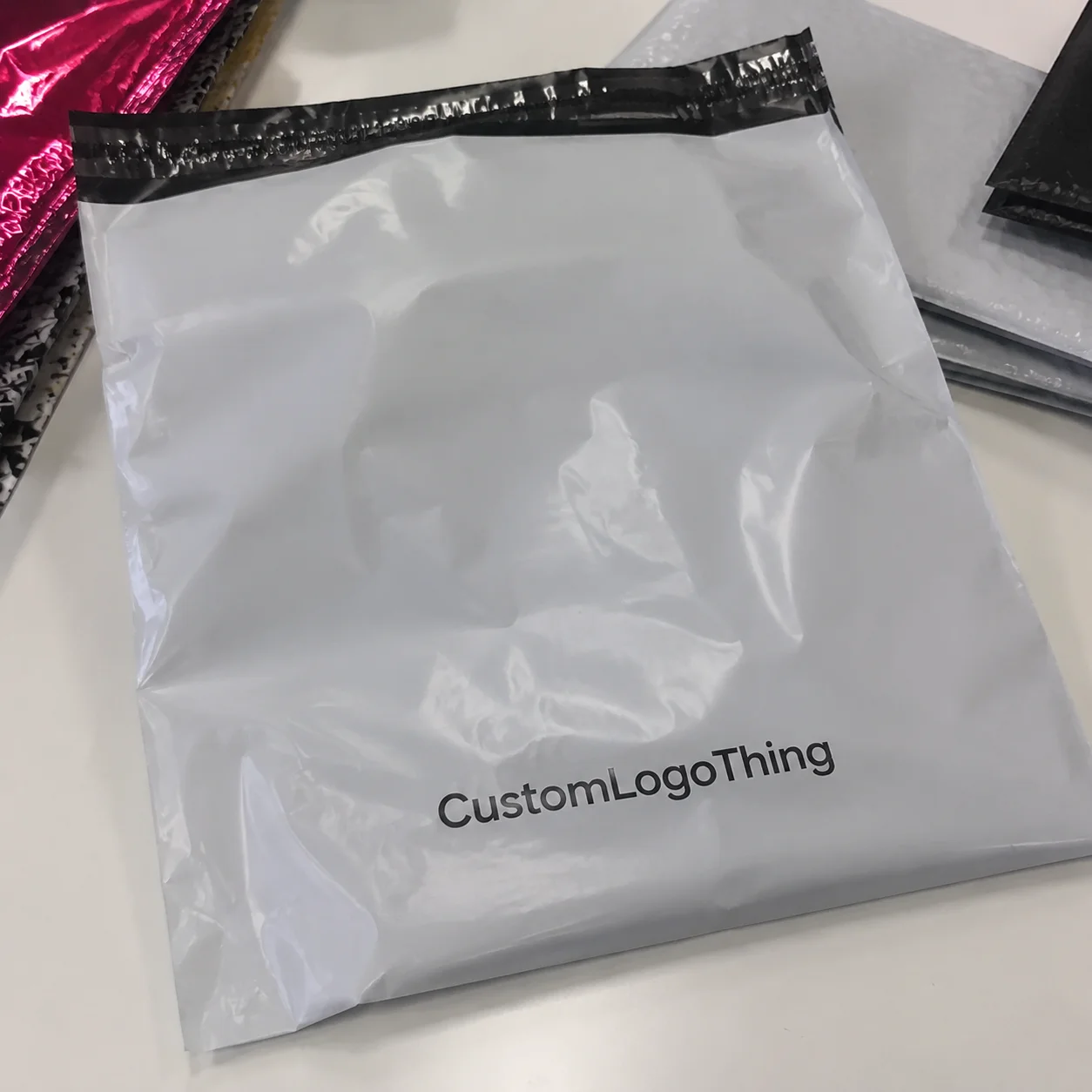
Buyer Fit Snapshot
| Best fit | To Minimalist Recycled Wrap projects where brand print, material claims, artwork control, MOQ, and repeat-order consistency need to be specified before quoting. |
|---|---|
| Quote inputs | Share finished size, material target, print colors, finish, packing count, annual reorder estimate, ship-to region, and any compliance wording. |
| Proofing check | Approve dieline scale, logo placement, barcode or warning zones, color tolerance, closure strength, and carton packing before bulk production. |
| Main risk | Vague material claims, crowded artwork, missing packing details, or unclear freight terms can make a low unit price expensive after revisions. |
Fast answer: To Minimalist Recycled Wrap: Material, Print, Proofing, and Reorder Risk should be specified like a repeatable production item. The safest quote records material, print method, finish, artwork proof, packing count, and reorder notes in one written spec.
Production checks before approval
Compare the actual filled-product size with the drawing, then confirm tolerance on folds, seals, hang holes, label areas, and retail display edges. Reserve space for logos, QR codes, warning copy, and material claims before decorative graphics fill the panel.
Quote comparison points
Review material grade, print process, finish, sampling route, tooling charges, carton quantity, and freight assumptions side by side. A quote is only useful when the supplier can repeat the same color, closure quality, and packing count on the next order.
On a factory floor in Dongguan, I watched a converter trim one extra laminate layer off a folding wrap and cut the pack-out waste by nearly 18% in a single run, with the line running at about 42 cartons per minute and the spoilage bin filling half as fast as it had the week before. That change did more than save material. It made the guide to minimalist recycled wrap feel less like a branding exercise and more like a practical production decision that affected cost, recyclability, and the way the package landed in a customer’s hands. I still remember the operator grinning like he’d personally outsmarted the supply chain, which, honestly, he kind of had.
That moment comes back to me often because it captures why this topic keeps surfacing in client meetings from Shenzhen to Chicago. Brands want packaging that looks considered, not cluttered; sustainable, not preachy; and premium, not fragile. The guide to minimalist recycled wrap sits right at that intersection, where fewer inks, fewer coatings, and fewer mixed materials can actually improve the package if the design is disciplined. I’ve seen teams spend months arguing about a foil accent that nobody noticed on shelf, and I’ve also seen one clean kraft wrap win the room in under ten seconds. Human beings are funny like that, especially when the shelf is 1.2 meters high and the store lights are doing half the work.
People often assume “minimal” means stripped-down to the point of looking cheap. That’s usually wrong. A strong guide to minimalist recycled wrap is about restraint, material discipline, and a visual system that does more with less, whether the substrate is 100% recycled kraft at 120gsm or a lightly coated 350gsm C1S artboard used as a premium sleeve. When it’s done well, the package feels intentional, and the sustainability story is easier to prove because the structure is easier to explain. Honestly, I think the best-looking packaging is often the packaging that knows when to stop talking.
Guide to Minimalist Recycled Wrap: What It Is and Why It Works
The simplest way to define the guide to minimalist recycled wrap is this: it’s packaging wrap designed with a reduced visual load and a reduced material load, using recycled fibers or recycled content where possible, while avoiding unnecessary finishes that make recycling harder. That usually means a clean print layout, a limited color palette, and fewer layers of decoration such as heavy lamination, metallic foils, or mixed-material windows. I’ve sat in enough press approvals in Guangzhou and Ningbo to know that “fewer layers” sounds boring right up until you see the cost sheet.
Why does this work? Because recycling systems generally prefer simpler material streams. The U.S. EPA’s recycling guidance has long emphasized that contamination, mixed substrates, and excess packaging complexity can reduce recoverability, and that logic applies directly here. If you want a practical reference point, the EPA’s materials recovery resources are useful background reading: https://www.epa.gov/recycle. In a plant running 10,000 wraps a day, one extra adhesive layer can mean another manual sorting step, and manual sorting is where costs start quietly multiplying.
The guide to minimalist recycled wrap also works because it aligns with how customers actually experience packaging. One client in cosmetics told me their strongest unboxing feedback came from a 1-color recycled kraft wrap with a crisp black mark and a small debossed logo, not from a heavily printed version with six finishes. People noticed the calm, the texture, and the feeling that nothing was being hidden. I remember thinking, “Well, there goes another expensive lesson in restraint,” especially since the clean version came off a printer in Dongguan for roughly $0.19 per unit at 5,000 pieces, while the finished version sat closer to $0.34.
There’s a distinction that gets blurred all the time: minimalist is a design style, while recycled is a material choice. You can have a minimalist wrap made from virgin stock, and you can have a recycled wrap that is visually loud and overfinished. The best guide to minimalist recycled wrap brings those two ideas together without pretending they are the same thing. If the spec calls for 80% post-consumer content and a single PMS 4625C ink on an uncoated substrate sourced in Zhejiang, that is a real material strategy, not just a mood.
It does not have to look plain. A disciplined wrap can look more expensive than a busy one because the details are sharper. A tight crease line, a single-color logo, and a matte uncoated recycled substrate often communicate more confidence than a package crowded with gradients, spot UV, and layered inserts. The catch is that this style demands better specification. There is less room for sloppy artwork, weak die-lines, or vague print expectations. And if you’ve ever had a printer call to ask what “a little less off-white” means, you know exactly why a clear target like 92 brightness or a natural kraft tone in the 7.5 to 8.5 L*a*b* range matters.
“The moment we removed the soft-touch film and switched to a 100% recycled kraft wrap, the package started reading as honest instead of decorated,” a brand manager told me during a supplier review in Suzhou. “We sold less packaging and more credibility.”
That sentence stuck with me because it captures the point of the guide to minimalist recycled wrap. It’s not about doing less for its own sake. It’s about removing the parts that don’t earn their place, especially when one omitted laminate layer can save roughly $0.03 to $0.07 per unit on a 5,000-piece run and shave two days off finishing. For brands building a sustainable packaging strategy, that kind of restraint can also support the broader shift toward recycled paper packaging and cleaner material streams.
How Minimalist Recycled Wrap Works in Practice
In practice, the guide to minimalist recycled wrap starts with substrate choice. The most common options are recycled kraft paper, recycled folding carton-style wrap stock, post-consumer content papers, and lightly coated papers designed to balance printability with end-of-life recovery. I’ve seen brands use 60% post-consumer content successfully for retail wrap, while others prefer 100% recycled kraft for a more natural tone and better fiber story. I’ll be blunt: if the paper feels wrong in the hand, the design is already fighting uphill, whether that sheet is 90gsm from a mill in Shandong or a 250gsm board converted in Dongguan.
Each substrate behaves differently. Recycled kraft tends to have higher visual texture and slightly more variability in shade, which is normal when the pulp blend includes recovered office paper and corrugated fiber. A lightly coated recycled sheet may hold fine typography better but can introduce a coating decision you need to justify, especially if you’re trying to preserve curbside recyclability in the UK, Germany, or California. Fiber-based alternatives can work well for secondary wrap applications, though the exact performance depends on weight, caliper, and whether the structure needs folding memory or tear resistance. A 120gsm recycled sheet may feel elegant in hand, while a 180gsm board can hold a sharper fold line for a sleeve or belly band.
The production workflow is usually straightforward, but the details matter. First comes substrate selection and print spec. Then artwork reduction: fewer inks, fewer effects, and a cleaner hierarchy. After that, the printer runs proofing, die-cutting if needed, folding or wrapping, and final packing. In one supplier negotiation I sat in on in Foshan, the client saved about $0.04 per unit by dropping a second ink pass, but they lost far more in time because they hadn’t approved the exact recycled sheet early enough. Simple designs still need exact material alignment, and the factory does not care how elegant your mood board looked on Tuesday.
The guide to minimalist recycled wrap also depends on how design choices affect recyclability. Ink coverage matters. Heavy coverage can affect de-inking and fiber recovery, especially on lower-grade recycled stock. Adhesives matter too; pressure-sensitive labels and incompatible glue lines can make a recyclable package behave like a mixed-material package. Lamination is another big one. A film laminate can improve scuff resistance, but it can also complicate repulping unless the system is designed around it. In practical terms, a water-based adhesive and a single-color flexo print often leave a cleaner end-of-life profile than a multi-layer sleeve with synthetic varnish.
Embossing and debossing are worth a separate mention. Used sparingly, they can add premium feel without adding a new material layer. Used carelessly, they can weaken fiber at the fold line or create cracking on lower-caliper recycled paper. The same is true of windows. A clear window might improve visibility, but it often hurts the logic of the guide to minimalist recycled wrap unless the window is mono-material and clearly justified. A PET window on a 100% recycled paper wrap can turn a tidy brief into a sorting headache at the MRF, which is not where you want to spend your margin.
Here’s a simple comparison that comes up in client reviews all the time:
| Wrap Style | Material Complexity | Labor Impact | End-of-Life Handling | Typical Brand Impression |
|---|---|---|---|---|
| Fully decorated wrap | High: multiple inks, coatings, possible film | Higher setup and more QC checks | Harder to recycle if mixed | Busy, promotional, sometimes premium |
| Minimalist recycled wrap | Low to moderate: one or two inks, recycled fiber stock | Lower finishing labor, simpler handling | Usually easier to recover if mono-material | Calm, modern, intentional |
| Minimalist but overfinished | Moderate to high: recycled base with heavy coatings | More inspection and rejection risk | Can undermine recyclability claims | Confusing: sustainable message diluted |
Performance still matters, of course. A wrap that scuffs in transit or tears at the fold line is not a win, no matter how clean the artboard looks. The best guide to minimalist recycled wrap balances dust resistance, handling strength, and basic moisture protection without overbuilding the structure. For e-commerce, that might mean choosing a slightly heavier recycled sheet, maybe 120gsm rather than 90gsm, with a tuck closure that survives 200 to 300 vibration cycles. For retail, the target may shift toward presentation and shelf robustness. I’ve had to explain to more than one founder that “minimal” is not the same as “fragile,” and those two words should never be allowed to share a spreadsheet without supervision.
Key Factors: Cost, Pricing, and Performance Trade-Offs
Cost is where the guide to minimalist recycled wrap gets interesting, because minimal design does not automatically mean cheaper packaging. Sometimes it does. If you reduce ink coverage from four colors to one, eliminate a laminate, and simplify die-cut geometry, you can absolutely lower unit cost. But if you switch to a premium recycled substrate with verified post-consumer content, your material cost may rise even as your decoration cost falls. That’s the bit people forget when they get starry-eyed over “simple,” especially when a mill quote from Guangdong comes back at $1,180 per metric ton versus $890 for a standard virgin sheet.
In a recent quoting round for a health and wellness client, a basic recycled wrap came in at $0.18/unit at 5,000 pieces with plain 1-color flexo printing, delivered from a converter in Dongguan with a 12- to 15-business-day schedule after proof approval. The same client’s first “minimal” concept, with a specialty uncoated sheet and emboss/deboss detail, pushed closer to $0.31/unit at the same quantity. That’s the trap: minimal visual complexity can still require premium materials and tighter tolerances, which changes the economics fast. A tiny raised mark may look understated, but it can add a die charge of $150 to $300 depending on tool size and supplier.
The biggest cost drivers usually include recycled fiber quality, print method, order volume, die-cutting complexity, and any special finishing. Offset printing may deliver cleaner detail at scale, while flexographic printing can be more efficient for simpler art at larger runs. Digital printing helps for prototypes and small runs, but the per-unit price often rises above offset once the quantity gets serious. The guide to minimalist recycled wrap has to account for that trade-off early, not after the first round of samples. I’ve seen teams fall in love with a prototype only to discover the quote was basically a polite warning, like a vendor saying “we can do it” while quietly adding three line items.
Minimum order quantities matter too. A short run of 500 pieces can look appealing, but setup costs spread over fewer units. I’ve seen a 500-piece custom recycled wrap cost $0.62/unit, while a 10,000-piece run with the same artwork landed near $0.14/unit. That gap is normal. It reflects plate charges, machine setup, operator time, and the waste produced during make-ready. On one 8-color offset job in Suzhou, the make-ready waste alone accounted for 240 sheets, which is why the economics improve so sharply once you pass the first few thousand.
Common pricing signals to watch
- Substrate verification: Recycled-content documentation can add time and cost, especially if FSC or chain-of-custody paperwork is requested.
- Artwork simplicity: Fewer colors can lower print costs, but not if the substrate itself is expensive.
- Sampling rounds: Two rounds of revisions are often manageable; four rounds can quietly become a budget line.
- Freight and storage: A large run may improve unit economics but create warehousing pressure.
- QC and compliance: Testing to ISTA or internal transit standards adds expense, but it can save money by preventing damage claims.
Performance trade-offs are just as real. Recycled content can bring natural variation in shade, small specks, or softer print contrast. Some brands treat that as a defect. I usually push back. A slight fiber variation on recycled kraft can communicate authenticity and reduce the “too-perfect to be true” look that many consumers now distrust. That doesn’t mean quality should slide. It means the spec should match the material instead of fighting it, whether the paper comes from a mill in Taicang or a converter outside Ho Chi Minh City.
Another hidden cost is documentation. The best guide to minimalist recycled wrap includes not just physical design, but proof. If you’re making recycled-content claims, you need supplier declarations, sometimes FSC certification, and clear internal records. If you’re claiming recyclability, the exact local recycling pathway matters. A package might be recyclable in one market and problematic in another because of coatings or adhesives. That’s one reason I always ask clients which country, channel, and disposal behavior they’re designing for. Otherwise you end up with a lovely spec that no one can actually defend, which is a special kind of packaging misery.
For durability and transit considerations, the ISTA testing framework is a useful reference point, especially for e-commerce and subscription packs: https://www.ista.org/. The right test level depends on package weight, route, and how much rough handling the wrap is likely to see. A 1.2 kg product shipping from a warehouse in Dallas faces a very different reality than a retail wrap sitting in a climate-controlled boutique in Milan.
The financial sweet spot in the guide to minimalist recycled wrap is usually a design that saves on decoration, avoids unnecessary finishing, and uses just enough material to protect the product. Not too much. Not too little. That balance is where brands start seeing both better shelf perception and fewer headaches in production, and it is often achievable around $0.15 per unit for 5,000 pieces when the spec is a simple recycled sheet, one print color, and no film laminate.
Step-by-Step Guide to Building a Minimalist Recycled Wrap
The cleanest way to use the guide to minimalist recycled wrap is to treat it like a production brief, not a mood board. I’ve watched too many projects start with “simple and elegant” and end with six fonts, a foil stamp, and a recycled stock no one can confidently source again. A better process is more disciplined, and yes, a little less romantic, especially when your supplier in Ningbo needs a locked spec before they can reserve machine time.
Step 1: Define the use case
Start with function. Is this e-commerce outer wrap, shelf-facing retail packaging, gift wrap, or protective wrap around a primary product? Each has different requirements. An e-commerce wrap may need better crush resistance and dust protection. Gift wrap may care more about tactile feel and visual restraint. A retail shelf wrap may need stronger brand blocking and cleaner fold behavior. If the product ships from Shanghai to Tokyo in seven days, the wrap needs a different stress profile than a gift box handed across a boutique counter in Paris.
Step 2: Choose the recycled substrate
Next, choose the sheet or paper grade. For the guide to minimalist recycled wrap, I usually narrow it to three candidates: recycled kraft for natural texture, recycled white or cream stock for cleaner print, and lightly coated recycled paper if the brand needs sharper typography. If possible, request exact specs such as 100% recycled content, 120gsm weight, and whether the stock is FSC-certified. That level of detail saves weeks later. It also saves you from the very charming experience of hearing, “Oh, we assumed you meant a similar paper.” Similar is not a spec. Similar is how projects drift into chaos, especially when one mill quotes 3000 sheets and another quotes by tonnage.
Step 3: Simplify the visual system
Now strip the design down. One primary color is often enough. Two at most, unless there’s a very strong reason. Use a restrained type system, usually one family and two weights. Leave space. Negative space is not emptiness; it is structure. The best wraps I’ve seen use one strong focal point: a logo, a product name, or a single graphic rule. That’s it. If the package has to communicate on a shelf from 1.5 meters away, it needs a hierarchy that survives a glance, not a lecture.
Step 4: Prototype and test
This is where the guide to minimalist recycled wrap becomes practical. Ask for prototypes on the exact substrate, not a substitute. Test fold memory, scuff resistance, closure strength, and how the wrap behaves after vibration or compression. If it’s for shipping, ask for transit testing. If it’s for shelf display, look at edge alignment and how it photographs under retail lighting. One client approved a wrap that looked perfect on a monitor, then found that the recycled stock made the logo too faint under warm store LEDs. The fix was minor: change the ink density and increase contrast by 12%. But only the sample exposed that issue. This is the part everyone wants to skip and then acts surprised when reality shows up wearing work boots.
Step 5: Lock the production timeline
Set a realistic schedule from brief to final delivery. A standard custom run often looks like this:
- Brief and goal setting: 2-3 business days
- Material sourcing: 5-10 business days depending on stock availability
- Design mockups: 3-5 business days
- Sample production: 5-8 business days
- Sample review and revisions: 3-7 business days
- Final production: 10-15 business days after approval for many standard runs
- QC and freight: 3-12 business days depending on destination
That timeline is not universal. A custom die, a special recycled board, or a compliance review can add a week or more. But it gives a useful planning frame. The point of the guide to minimalist recycled wrap is not to rush. It’s to remove unnecessary complexity so that the remaining steps are easier to control, and in many factories around Guangdong that means a real lead time of 12-15 business days from proof approval to ship-ready cartons.
One more thing: write down the final spec. I mean really write it down. Stock name, GSM, recycled-content percentage, ink method, fold direction, glue type, approved Pantone references, and packing method. Teams change. Suppliers change. If the spec lives only in someone’s inbox, the package will drift. A proper spec sheet with a 350gsm C1S artboard reference, a 1-color Pantone print callout, and the named pack-out method is what keeps the next run from becoming a mystery.
Common Mistakes in Minimalist Recycled Wrap Design
The first mistake in the guide to minimalist recycled wrap is confusing minimal with unfinished. Those are not the same. A package with too much empty space, weak hierarchy, and no tactile or visual anchor can look accidental rather than deliberate. I’ve seen founders call that “modern.” Customers often call it “blank.” There’s a difference, and it’s not subtle, especially if the wrap is sitting next to a competitor pack with crisp 2-point type and a properly tuned crease pattern.
The second mistake is piling on too many materials. A recycled paper base plus a plastic window plus a laminated label plus synthetic adhesive is not a minimalist solution. It’s a complicated one wearing a sustainability label. If your structure includes mixed materials, ask whether every layer is truly necessary. If the answer is no, simplify it. I’ve seen a brand in Melbourne save 14% on unit cost simply by removing a PET window and shifting the visibility story to a die-cut reveal, which also reduced sorting headaches for the recycler.
Print limitations are another common miss. Recycled substrates can absorb ink differently, and fine detail can soften. That’s not a defect; it’s a technical fact. But if your artwork includes tiny reverse type, thin hairlines, or gradient fades, you need to test whether those elements survive the stock. The guide to minimalist recycled wrap only works if the artwork respects the material. A 0.25pt rule might look elegant in Illustrator and disappear completely on a rough 100% recycled kraft sheet sourced from a mill in Hebei.
Structural testing gets ignored more often than it should. A wrap may look elegant on a table and fail in a courier bag. I’ve seen closures pop open, corners fray, and scuff marks appear after only a few handling cycles. If your package moves through distribution, test it before you lock the design. Aesthetics are not a substitute for engineering, no matter how many times someone on the marketing side says “it should probably be fine.” Probably is a terrible engineering term, especially when a parcel is bouncing through three hubs and a last-mile van.
The fifth mistake is sustainability overclaiming. If you say “100% recyclable” but the wrap includes a non-separable coating or an incompatible adhesive, you’re inviting trouble. If you say “made from recycled content,” be ready to show the documentation. FSC chain-of-custody records, recycled-content declarations, and local disposal guidance all matter. The most credible guide to minimalist recycled wrap is honest about what the package is and what it isn’t, down to the exact mill invoice and the supplier’s declaration dated by batch number.
Here’s the uncomfortable truth: some brands want the language of sustainability without the discipline of sustainability. That doesn’t hold up for long. Buyers notice. Retail partners notice. Regulators notice. A cleaner package with verified claims usually performs better than a louder one with vague green language, and the difference is obvious when the packaging file includes a recycling claim backed by a 2024 certificate instead of a vague “eco-friendly” note.
Expert Tips for Better Results with Minimalist Recycled Wrap
If I had to condense years of supplier meetings into a short list, I’d say this: texture is your friend, hierarchy matters, and documentation is non-negotiable. The guide to minimalist recycled wrap is less about reducing everything and more about choosing the right details to keep. A good texture spec, a clear print target, and a stable folding pattern can do more for the final result than another round of visual polish ever will.
First, use texture as a design tool. A recycled kraft with visible fiber, a soft uncoated feel, or a subtle emboss can do a lot of the brand work without adding another printed layer. In one luxury accessories project in Milan, the client moved from a glossy printed wrap to a 100% recycled uncoated sheet with a blind emboss, and the result felt more expensive because the finish was calmer, not busier. I remember the creative director tapping the sample and saying, almost suspiciously, “Why does this feel better?” Because paper, when it’s selected properly, has a way of doing emotional labor for free, especially when the caliper is close to 130gsm and the fold lines are tuned with care.
Second, choose one visual hierarchy and stick to it. Is the logo the hero? Is product naming more important? Is the packaging meant to feel archival, earthy, clinical, or gallery-like? A package that tries to say five things at once usually says none of them clearly. The best guide to minimalist recycled wrap uses one message and reinforces it with paper choice, ink density, and spacing. If the logo is set in black on a natural kraft base, let that contrast carry the composition instead of piling on secondary graphics.
Third, ask for verification before you fall in love with a sample. Request recycled-content documentation, ask whether the paper is FSC-certified, and confirm the exact substrate name. If the design will ship internationally, ask what the destination markets expect for paper recovery and label disposal. FSC is useful here: https://fsc.org/en. A supplier in Suzhou should be able to provide a certificate number, mill source, and lot code, not just a friendly promise.
Fourth, do not skip testing. Ask for print samples on the exact stock, then run at least a small compression or transit check if the wrap will travel. If you want a practical internal standard, compare the sample against your shipping conditions, not just against the mockup on screen. Even a 10% difference in caliper can change fold behavior enough to affect line speed. I’ve watched a beautiful wrap catch on a tuck point for no good reason other than a paper choice that looked right in the render and behaved like a stubborn mule in production. One half-millimeter at the fold can turn a clean machine run into a recurring jam.
Fifth, build claims from evidence. If your wrap uses 80% post-consumer recycled content, say that. If the paper is responsibly sourced and FSC-certified, say that. If the package is designed for easier recycling because it uses a mono-material structure and water-based inks, say that too. But only if you can back it up. The strongest guide to minimalist recycled wrap is the one your legal team would not argue with, and the one your supplier in Dongguan can reproduce on the second run without needing a correction call.
“Our biggest win was not the material change itself,” a packaging engineer told me over coffee after a line audit in Guangzhou. “It was getting the artwork team to stop adding things the factory had to solve later.”
I agree with that completely. The factory floor always pays for design indecision. A tighter spec reduces that burden. It also shortens the path to consistency, which matters if you’re shipping 1,000 units or 100,000. A well-briefed 5,000-piece order can often hold unit cost near $0.15, while a messy brief can burn through time and push the total far above budget.
Next Steps: Turning the Guide to Minimalist Recycled Wrap into Action
The easiest way to move from idea to execution is to audit what you already use. Pull one current pack and look for unnecessary layers: film, labels, inserts, decorative coatings, or mixed-material closures. Then ask a blunt question: which of these elements improves protection, branding, or compliance? Anything that does none of those three is a candidate for removal. In many cases, that first audit can cut a wrapper from four components down to two, which is the kind of change that shows up immediately on the quote sheet from a factory in Dongguan or Kunshan.
Next, create a one-page packaging brief. Keep it practical. Include product dimensions, shipping route, target unit cost, target material, brand tone, recycled-content goals, and any required certifications. The guide to minimalist recycled wrap works best when the brief is specific enough for a supplier to quote without guessing. Otherwise you get “best effort” samples, and best effort is not a contract strategy. If the target is a 120gsm recycled kraft sleeve, say that; if the goal is an uncoated cream stock from a named mill in Zhejiang, say that too.
Then request two or three samples. Compare them under real lighting, not just on a screen. I’ve seen recycled kraft look warm and premium in daylight, then read too dark under store LEDs. I’ve also seen a lightly coated recycled sheet look great in photos but feel slippery in hand. Those are not deal-breakers; they are data points. The trick is to treat them like data instead of treating them like drama, though packaging projects do love drama almost as much as they love deadline changes.
Build a small prototype batch and test it in the environment it will actually face. If it ships, simulate shipping. If it sits on shelf, place it next to competitor packs. If it is part of a gift experience, watch someone open it without guidance. Those observations are worth more than a polished render. The strongest guide to minimalist recycled wrap is grounded in handling, not just presentation. A 24-hour humidity test in Singapore or a vibration test on a courier route can tell you more than ten email threads ever will.
Finally, document the approved spec so the look can be repeated. Store the substrate code, print method, Pantone values, fold geometry, and approved sustainability claims in one place. That way your next refresh starts from a stable baseline instead of a fresh round of guesswork. Revisit the guide to minimalist recycled wrap before each update. Materials change. Supplier availability changes. Packaging That Worked last season may need a small recalibration now, especially if the mill shifts from a 90gsm sheet to a 100gsm sheet or changes its recycled pulp mix.
My honest view? The brands that win here are the ones that treat minimalism as a technical discipline. They remove noise, but they don’t remove thinking. They use recycled content because it makes sense, not because it sounds good in a deck. And they accept that a truly good guide to minimalist recycled wrap is not about doing less work. It’s about doing the right work, in the right order, with enough precision that the package still earns its place in the customer’s hand.
FAQ
What makes a guide to minimalist recycled wrap different from standard recycled packaging?
The guide to minimalist recycled wrap focuses on reducing visual clutter and material complexity, not just using recycled content. The goal is a cleaner design that still supports protection, branding, and recyclability, usually with fewer inks, fewer coatings, and simpler construction. In production terms, that often means a one-color print on 100% recycled kraft or a single-sleeve structure instead of a multi-layer assembly.
How much does minimalist recycled wrap usually cost compared with traditional wrap?
Costs depend on substrate, printing, and volume, but simple designs can reduce ink and finishing expenses. Premium recycled materials, custom die-cuts, or small runs can raise unit price even when the design is minimal. In practice, I’ve seen pricing range from roughly $0.14/unit at scale to more than $0.60/unit for short runs, with a common 5,000-piece quote landing around $0.15 to $0.18 per unit for a straightforward recycled wrap from a factory in Guangdong.
How long does the minimalist recycled wrap process usually take?
Typical timelines include brief, sampling, revisions, and production, which can range from a few weeks to longer for custom materials. Delays usually come from material sourcing, approval cycles, or testing requirements, especially if the project depends on a specific recycled stock. For many standard runs, production typically takes 12-15 business days from proof approval, plus 3-12 business days for freight depending on the destination.
What materials work best for a minimalist recycled wrap design?
Recycled kraft, recycled paper stocks, and post-consumer content papers are common choices. The best material depends on whether the wrap needs more strength, better print quality, or a more natural look. A lightly coated recycled sheet can help with sharper artwork, while uncoated kraft often gives the strongest recycled aesthetic. For higher-end sleeves, 350gsm C1S artboard or a 120gsm recycled kraft can work well, depending on the fold and print requirements.
What are the most common mistakes to avoid when using a guide to minimalist recycled wrap?
Avoid mixing too many materials, overprinting the surface, or skipping structural testing. Also avoid vague sustainability claims unless you can verify recycled content and end-of-life guidance. The most avoidable mistake is assuming a simple look guarantees a simple production process. A wrap that seems clean on a screen can still fail if the adhesive, caliper, or die-line has not been tested on the exact stock from the named supplier.
If you’re ready to refine a packaging refresh, the guide to minimalist recycled wrap is a practical place to begin. Keep the structure simple, keep the claims verifiable, and keep the design honest. Start by removing one unnecessary layer, then lock the substrate, print method, and fold spec before you approve the next sample. That one decision is usually what separates a wrap that merely looks minimalist from one that actually performs that way, from the first carton out of the line to the last one in the customer’s hand.
Related packaging resources
Use these related guides to compare specs, costs, quality checks, and buyer decisions before making the final call.