Buyer Fit Snapshot
| Best fit | To Poly Mailer Thickness Options Explained projects where brand print, material claims, artwork control, MOQ, and repeat-order consistency need to be specified before quoting. |
|---|---|
| Quote inputs | Share finished size, material target, print colors, finish, packing count, annual reorder estimate, ship-to region, and any compliance wording. |
| Proofing check | Approve dieline scale, logo placement, barcode or warning zones, color tolerance, closure strength, and carton packing before bulk production. |
| Main risk | Vague material claims, crowded artwork, missing packing details, or unclear freight terms can make a low unit price expensive after revisions. |
Fast answer: To Poly Mailer Thickness Options Explained: Film, Print, MOQ, and Carton Packing should be specified like a repeatable production item. The safest quote records material, print method, finish, artwork proof, packing count, and reorder notes in one written spec.
Production checks before approval
Compare the actual filled-product size with the drawing, then confirm tolerance on folds, seals, hang holes, label areas, and retail display edges. Reserve space for logos, QR codes, warning copy, and material claims before decorative graphics fill the panel.
Quote comparison points
Review material grade, print process, finish, sampling route, tooling charges, carton quantity, and freight assumptions side by side. A quote is only useful when the supplier can repeat the same color, closure quality, and packing count on the next order.
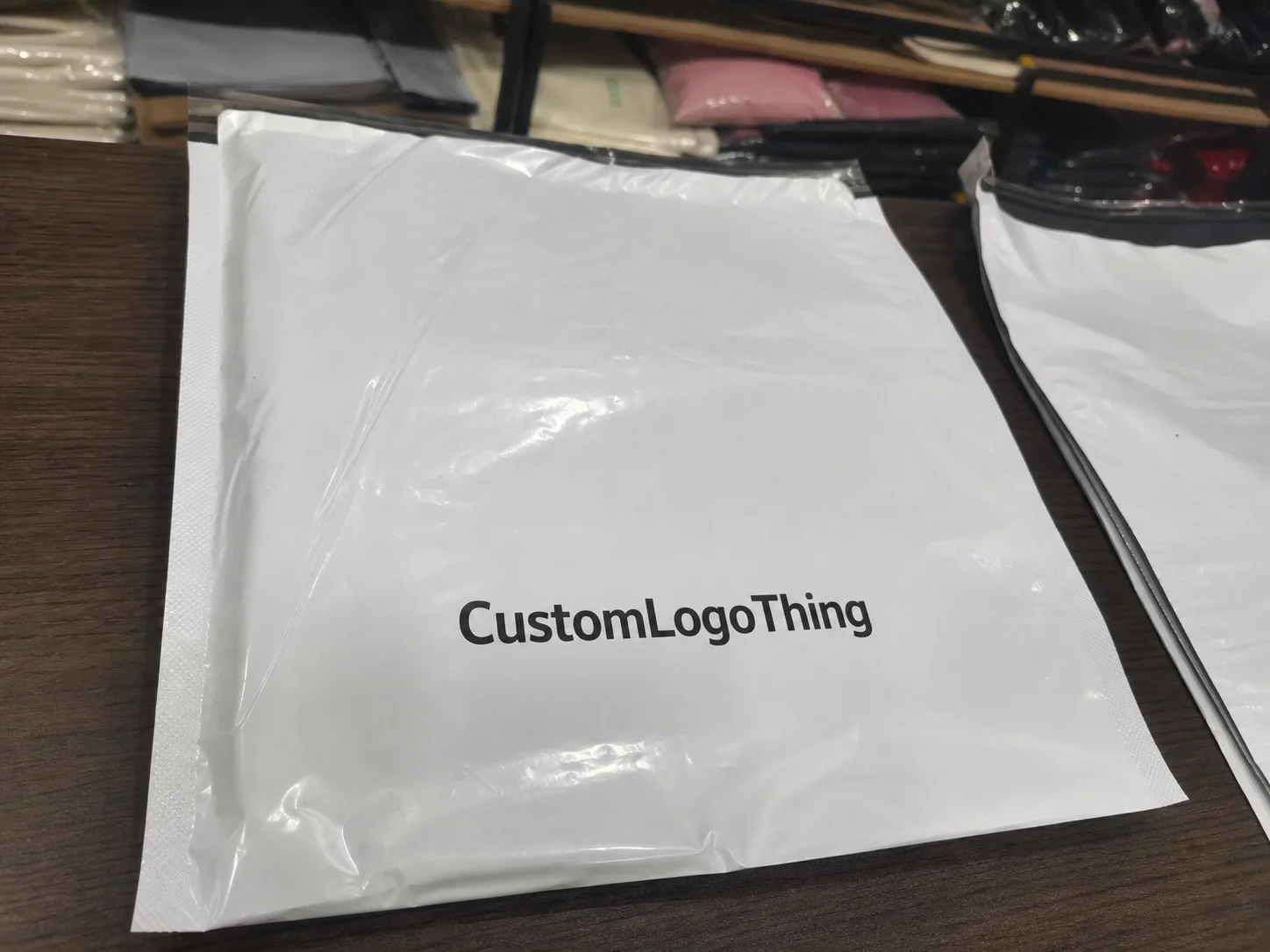
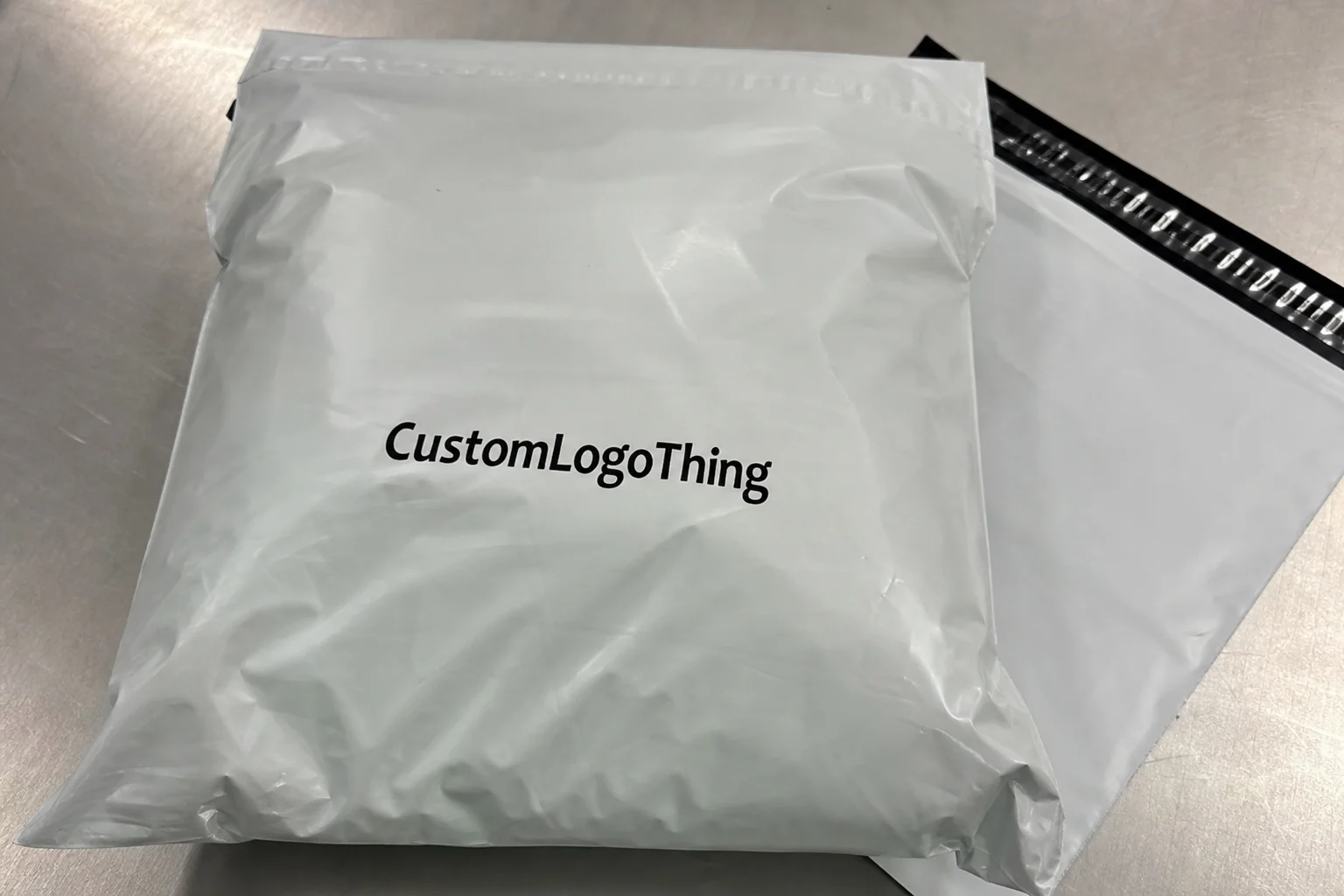
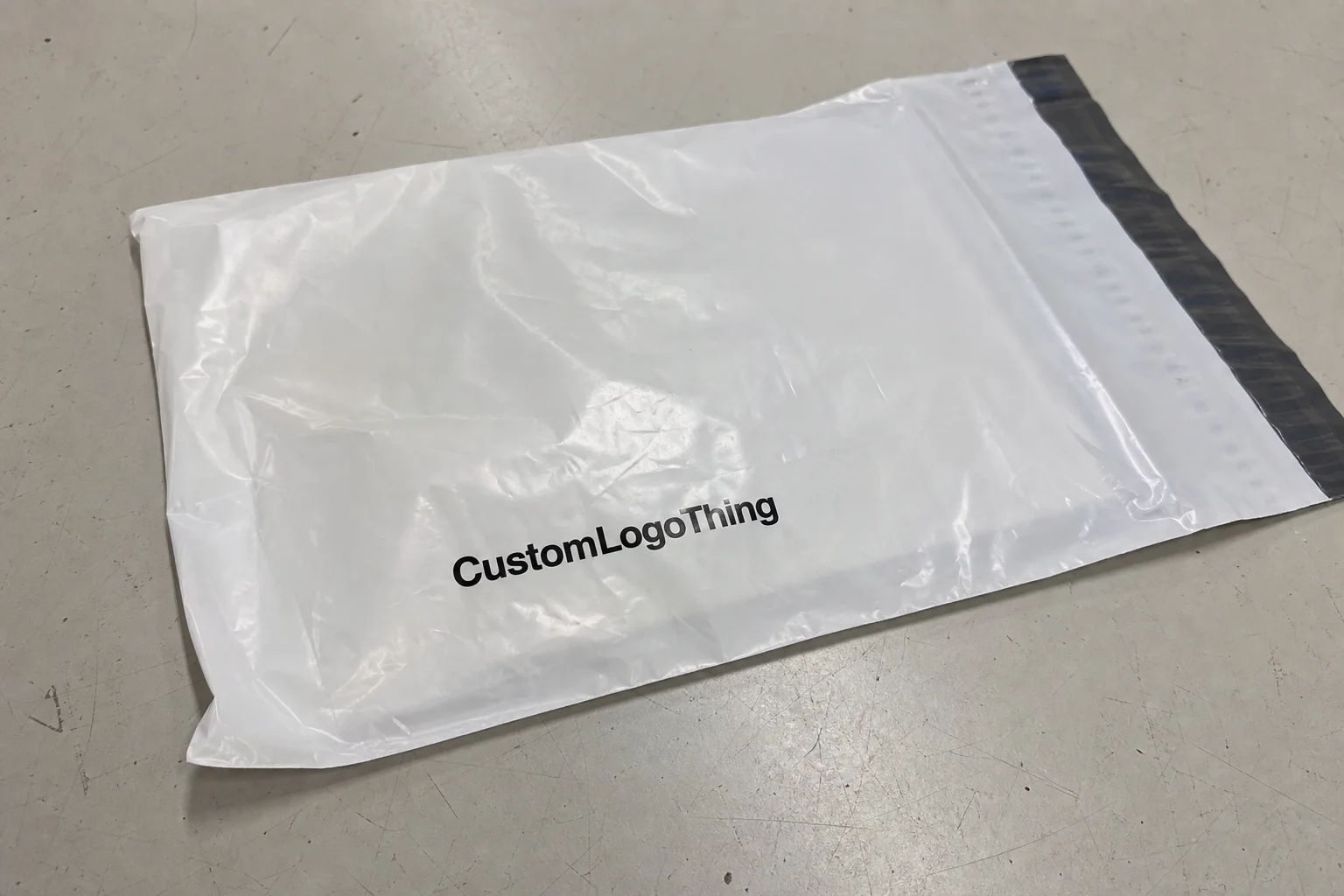
Two poly mailers can sit side by side on a packing table and look almost annoyingly similar, yet one survives a cross-country sort while the other splits at the seam before it reaches the final mile. I’ve seen that exact kind of nonsense happen in a warehouse in Secaucus, New Jersey, where a late-afternoon test run with 1.5 mil and 2.5 mil mailers turned into a mess of damaged returns and a very long conversation near the dock doors. That gap is exactly why a Guide to Poly Mailer Thickness Options matters for apparel brands, subscription boxes, and any shipper sending light goods at scale.
I’ve watched this unfold on factory floors and in client meetings more times than I can count. A 2.5 mil mailer that felt “premium” in hand failed a corner-puncture test on a batch of denim shorts, while a 1.25 mil mailer built with better resin quality outperformed it for folded T-shirts. In one Ningbo, China production visit, the difference came down to film consistency, not just nominal thickness, and the supplier’s own QC sheet showed a variation of 0.08 mil across a ten-roll run. Honestly, people get seduced by the feel of a bag more than they’d like to admit. Thickness matters, though it is only one part of the story.
In plain English, thickness is usually measured in mils or, less often, gauge. One mil equals one-thousandth of an inch. The thicker the film, the more material there is to resist tearing, stretching, punctures, and abrasion. Still, thicker is not automatically better, and that’s where the spreadsheet crowd sometimes gets a little too smug about their “simple answer” — which, of course, turns out not to be simple at all. A useful guide to poly mailer thickness options looks at the whole shipping system: product shape, carrier handling, print setup, seal reliability, and cost per delivered order. For custom runs in facilities around Dongguan or Shenzhen, that also means checking film specs, seal width, and whether the quoted structure is single-layer or co-extruded, because the same 2.0 mil label can hide very different performance.
Teams oversimplify this decision all the time. They chase unit price first, then wonder why returns rise. Others default to the thickest option because it feels safer, even though it adds cost, weight, and sometimes stiffness that slows packing. I’ve had buyers tell me they wanted the “heaviest-duty” mailer, and then they wondered why their packing line started moving like molasses, especially after switching from a 1.5 mil soft film to a 3 mil structure on a 14,000-order weekly line in Phoenix, Arizona. The smarter route is to treat the guide to poly mailer thickness options like a spec comparison, not a guess.
By the time you finish reading, you’ll know how thickness works, which variables actually matter, how to compare options without getting lost in supplier jargon, and where brands usually overspend. I’ll also share a few things I’ve learned after sitting in on packaging trials, watching line teams pack 800 orders a day, and hearing suppliers explain why two films with the same nominal thickness can behave very differently. On a recent run in Los Angeles, California, a supplier quoted 12–15 business days from proof approval for custom-printed stock, while a heavier 3 mil version needed 14–18 business days because of a different extrusion schedule. That part still makes me laugh a little, because packaging can sound so precise right up until it isn’t.
Guide to Poly Mailer Thickness Options: Why Thickness Matters More Than You Think
If a mailer tears, the customer sees the failure before they see your brand story. That is the blunt reality. Thickness affects more than durability; it affects brand perception, carrier resilience, and the odds that your product arrives looking as intended. In a guide to poly mailer thickness options, this is the first thing to understand: thickness is not decoration. It is a performance variable, and on a 5,000-piece order, a difference of $0.04 per unit can change the whole landed-cost model by $200 before you even factor in replacements.
On one client visit in Edison, New Jersey, I watched a fulfillment manager compare two white mailers side by side. Both had glossy exterior film, both carried a clean black logo, and both were listed as “industrial grade.” One was 1.5 mil. The other was 3 mil. The difference showed up fast during a drop test from waist height: the thinner film stretched visibly at the corner, while the thicker one held shape and kept the seal line intact. Same appearance. Very different behavior. I remember the manager looking at me like the bag had personally betrayed him.
That is why a guide to poly mailer thickness options has to move beyond “light, medium, heavy.” You need to think about what the mailer will face: conveyor friction, sorting chutes, stack pressure, moisture, and repeated flexing as the package gets scanned, tossed, and re-handled. Even a good adhesive seal can fail if the surrounding film is too weak, and a 3-inch seal edge in a warehouse outside Charlotte, North Carolina, will still fail if the film tears 1 inch from the seam during transit.
For many shipper categories, the right thickness depends on three things: product type, shipping distance, and the level of risk you can tolerate. A folded cotton T-shirt going 200 miles from a fulfillment center in Columbus, Ohio has a different need profile than a rigid accessory shipping through three hubs to Tacoma, Washington. That is why the best guide to poly mailer thickness options always starts with the item, not the mailer catalog.
One more thing. Thickness often gets discussed as if it were a standalone metric, but in real packaging work it is tied to the whole structure. Film quality, seam width, and adhesive design all influence performance. ASTM and ISTA testing standards are helpful because they remind us not to judge by feel alone. If you need a broader packaging reference point, the Packaging Machinery Manufacturers Institute has useful industry material at packaging.org. In custom production, I’ve also seen factories in Shenzhen quote 350gsm C1S artboard for inserts while simultaneously specifying 2.0 mil LDPE mailers, which is a reminder that the outer film is only one part of the system.
How Poly Mailer Thickness Works in Real Shipping Conditions
Thickness is easiest to understand when you picture what happens in transit. A poly mailer gets slid, stacked, bent, squeezed, and sometimes dropped. Thicker film usually resists puncture and abrasion better because there is more material between the outside world and the product inside. It also tends to stretch less under load, which matters when a package is compressed in a bin or stacked under heavier parcels, especially on routes moving from Atlanta, Georgia through multiple regional hubs.
That said, thickness does not automatically equal toughness. I’ve seen a 2 mil mailer fail faster than a 1.5 mil alternative because the sealing edge was weak and the resin blend was inconsistent. In one case out of a Guangzhou, China factory, the film looked firm, but the sealant layer was underspecified and the first failure showed up at the peel test rather than the drop test. In a real guide to poly mailer thickness options, this is where nuance matters. The number on the spec sheet is only one clue.
Thinner mailers are lighter and more flexible. That flexibility can help when you are packing soft goods like tees or leggings because the package conforms around the contents without wasting space. If the product has sharp corners, hard plastic hardware, or a zipper pull that sticks out, a thinner film can get scored or pierced much more easily. The effect is not subtle. A tiny abrasion on the packing line in Dallas, Texas can become a split seam after 1,000 miles of handling, especially if the route includes two or three sort facilities.
Here is the part teams often miss: the shipping environment is rarely gentle. Conveyor belts create friction. Scanners and sorters add repeated flexing. A damp dock in Portland, Oregon or a rainy delivery route in the Midwest can weaken poor film faster than expected. If your mailer is underspecified, you may see corner punctures, seal failures, scuffing, or product visibility through stretched areas. If it is oversized for the item, you may see wasted material and higher postage. A balanced guide to poly mailer thickness options should show both failure modes.
I once sat with a 3PL team in Columbus, Ohio reviewing damage returns. The surprising pattern was not that the thinnest mailers failed every time. It was that failure clustered around one SKU with metal snaps. The film thickness was only part of the issue; the product shape was the real villain. They moved from a standard lightweight mailer to a thicker option with a better internal fit, and the damage rate dropped sharply over the next two shipment cycles. That’s the kind of fix that feels almost too obvious after the fact.
For shippers who care about sustainability, there is another twist. Using thinner film can reduce plastic use, but only if it still protects the product. A replacement shipment uses more material, more fuel, and more customer goodwill than the original package saved. That trade-off shows up often in a practical guide to poly mailer thickness options, especially for high-return categories like apparel. In one West Coast apparel program, a 0.5 mil reduction saved about $0.02 per bag, but the replacement rate rose enough to erase the savings within a single quarter.
| Thickness range | Typical feel | Common use | Main trade-off |
|---|---|---|---|
| 1.25–1.5 mil | Light, flexible | Light apparel, flat soft goods | Less puncture resistance |
| 2.0–2.5 mil | Balanced, moderate stiffness | Mixed apparel, accessories, small boxed items | Slightly higher cost and weight |
| 3.0 mil and above | Stiffer, more protective | Heavy garments, dense items, rough handling routes | Higher unit price, more material |
The table above is not a rulebook. It is a starting point. Your actual mailer spec should be based on product behavior, not just category labels. That is the most useful mindset shift in any guide to poly mailer thickness options, especially if your packaging line in Nashville, Tennessee handles both light tees and denser knitwear on the same shift.
Key Factors That Influence Poly Mailer Thickness Choice
Product weight comes first. A flat, 6-ounce T-shirt does not need the same protection as a 2-pound hoodie with a metal zipper. Shape matters just as much. Sharp edges, hard corners, and dense products create more risk inside the same mailer size. In my experience, SKU shape explains more failures than gross weight does. I wish weight alone were the answer, because that would make every buying meeting shorter, and I do love a shorter buying meeting, especially when the quote sheet includes a 5,000-piece run at $0.11 per unit versus $0.16 per unit.
Fragility is next. Cosmetics, small accessories, and items with delicate finishes can scuff inside a too-thin mailer, even if the package never tears open. I once reviewed a customer complaint file for a brand shipping hair accessories in shiny metallic pouches. The outer poly mailer was fine, but the contents were scratched because the film was too light and the inner pack shifted too much. Thickness had to be paired with a better interior fit. That is a classic lesson from the guide to poly mailer thickness options: the product must sit still.
Shipping method changes the equation too. If your orders move through multiple sort centers, see heavy conveyor use, or travel farther distances, a thicker film often makes sense. A local delivery route with gentle handling can tolerate lighter material better than a nationwide program with many handoffs. That does not mean every long route needs a thick mailer, but it does mean you should test under realistic transit conditions, not ideal ones. A facility in Memphis, Tennessee handling air-bridge parcels will stress a package differently than a neighborhood route in Austin, Texas.
Brand experience matters more than some teams want to admit. A 2.5 mil mailer usually feels sturdier in hand than a 1.25 mil one. That can create a stronger unboxing impression, especially for premium brands that want the package to feel substantial the moment the customer picks it up. At the same time, minimalist brands often prefer lighter mailers because they communicate efficiency and lower material use. A good guide to poly mailer thickness options should let the brand voice and the operational need meet somewhere in the middle.
Cost is always in the room, even when people pretend it is not. A thicker mailer typically costs more per unit. Depending on order volume and print complexity, I have seen price gaps of $0.03 to $0.09 per unit between adjacent thicknesses on custom runs, and at 10,000 pieces that becomes a real budget swing of $300 to $900. The best guide to poly mailer thickness options treats cost as part of total shipped order expense, not just the mailer line item.
Sustainability goals deserve honest handling. Many brands want the lightest viable mailer, and that is reasonable. But “lightest viable” is the operative phrase. If thinning the mailer increases damage, the environmental win disappears fast. A replacement shipment often carries more emissions and labor than the initial package saved. The EPA’s packaging and waste resources at epa.gov are a good reminder that waste reduction is not only about material reduction; it is also about avoiding avoidable rework.
Here is a comparison that helps in supplier discussions:
| Decision factor | Why it matters | What to ask your supplier |
|---|---|---|
| Product weight | Heavier items stress film and seams | What load range did you test this thickness on? |
| Product shape | Edges and corners can puncture thin film | How does this hold up with rigid or boxed items? |
| Transit length | More handling increases failure risk | Was this tested for multi-node distribution? |
| Brand presentation | Package feel influences perception | How stiff will it feel in customer hands? |
| Budget | Thickness changes unit and landed cost | What is the cost difference at my order volume? |
That is the practical heart of any guide to poly mailer thickness options: choose based on the whole shipment, not a single isolated spec.
Step-by-Step Guide to Choosing the Right Poly Mailer Thickness
Step 1 is inventory. List every SKU by weight, dimensions, and vulnerability. I mean every SKU, not the top 10. One fashion client I advised had 42 styles but only 3 packaging standards. The damage was concentrated in just 6 items, all with hardware or rigid trim. Once they split those SKUs into separate packaging groups, the reorder waste fell quickly. A good guide to poly mailer thickness options starts with sorting reality into categories.
Step 2 is risk definition. What counts as failure for your business? A tear in the corner? A scuffed product surface? A wet package? A customer complaint? Different answers lead to different thickness choices. If your brand can tolerate a little cosmetic wrinkling but cannot tolerate punctures, the spec changes. If returns are costly and customer service volume is already high, you may want a tougher film even if unit cost rises by a few cents. That is not overpacking; it is insurance with a measurable purpose.
Step 3 is scenario testing. Do not compare mailers in a showroom light and call it done. Test them with stacked parcels, drops, repeated bends, and actual product fills. I have watched teams learn more from a 20-minute drop-and-drag test than from a 20-page datasheet. If you want a credible guide to poly mailer thickness options, it needs to include real-life abuse, not just lab language. In one test in Richmond, Virginia, a 2.0 mil mailer passed a simple drop but failed after five repeated conveyor bends, which told us more than a polished spec sheet ever could.
Step 4 is sample ordering. Request adjacent thickness levels, such as 1.5 mil and 2.0 mil, or 2.0 mil and 2.5 mil. That side-by-side comparison is where the real difference becomes obvious. The thinner one may pack faster and save money, while the thicker one may reduce seam strain and customer complaints. Without the comparison, teams often imagine a difference that isn’t there or miss a difference that absolutely is there. For custom printed samples from a plant in Dongguan, China, ask for both structure options on the same artwork so the film behavior, not the design, is what changes.
Step 5 is landed cost analysis. This is where procurement teams earn their keep. Do not compare only unit price. Add postage, storage, replacement shipments, damage claims, and customer service time. If a mailer costs $0.06 more but cuts replacement rates by 2%, it may be the cheaper choice overall. That is one of the main reasons I keep pushing the guide to poly mailer thickness options conversation beyond “how much does the bag cost?”
Step 6 is timeline planning. If you are using custom-printed mailers, the thickness choice can affect production scheduling. Some specialty structures require different sourcing or print handling. At Custom Logo Things, I would want buyers to confirm proof approval timing, expected minimum order quantity, and manufacturing lead time before they lock a launch date. In my experience, custom Custom Poly Mailers usually need more lead-time discipline than buyers expect, especially when they shift from stock thickness to a heavier custom film. A 5,000-piece order from a plant in Shenzhen may move in 12–15 business days from proof approval, while a 3 mil rush run can stretch to 14–18 business days depending on resin availability and press scheduling.
Step 7 is standardization. Once you choose, document it. Put thickness in your packing SOP, supplier notes, and reorder specs. If the team keeps choosing by memory or preference, quality drifts. The best guide to poly mailer thickness options ends with consistency. Otherwise, every new buyer has to rediscover the answer from scratch.
Here is a simple selection framework I’ve used in client meetings:
- Light apparel, low risk: start at 1.25–1.5 mil.
- Mixed apparel, moderate handling: start at 2.0–2.5 mil.
- Dense items, sharp edges, or high-touch routes: start at 3.0 mil or test upward.
That list is a starting point, not a substitute for testing. If your line team packs products that vary by season, buyer profile, or fulfillment center, the right answer can change. A real guide to poly mailer thickness options leaves room for that variability, especially when a Boston, Massachusetts warehouse sees one packing pattern in Q1 and a very different mix in Q4.
Guide to Poly Mailer Thickness Options: Common Mistakes to Avoid
The first mistake is assuming the thickest mailer is always the safest choice. It is not. Thicker film improves resistance to tearing and punctures, yes, but it also raises cost and may add weight. If the product is soft and flat, that extra material may not buy you much. A smarter guide to poly mailer thickness options asks what problem the thickness is solving, whether that’s protecting 8-ounce knits or surviving rough handling from Chicago, Illinois to San Jose, California.
The second mistake is buying based on appearance. Some mailers look glossy, crisp, and premium, but their seam design can be weak or their resin blend inconsistent. I learned that lesson during a supplier negotiation in Hangzhou, China where the sample looked excellent under showroom lighting, yet the production lot failed a simple stretch test at the seal. Customers do not care how good the sample looked under warm LEDs. They care whether the package arrived intact.
The third mistake is forcing one thickness across every SKU. That usually creates overpacking for light items and underprotection for dense ones. It can also distort cost reporting because a single average masks where damage is actually happening. A practical guide to poly mailer thickness options should encourage SKU-level thinking, or at least category-level thinking, rather than one-size-fits-all shortcuts. A 1.5 mil choice for a folded tee and a 3 mil choice for a boxed accessory may both be correct on the same order sheet.
The fourth mistake is ignoring print coverage and adhesive behavior. Heavy ink coverage can affect film feel, and poor adhesive design can undermine the seal even if the film itself is strong. A mailer with a weak closure is like a sturdy suitcase with a broken zipper. The structure looks right. The function is wrong. That kind of packaging failure is maddening because it feels so avoidable after the fact, especially when a factory in Suzhou prints a beautiful exterior on a bag that fails at the flap.
The fifth mistake is skipping transit tests and hoping complaints will stay low. They usually do not. Returns and customer emails are a noisy, expensive way to discover a packaging flaw. If you are writing a serious guide to poly mailer thickness options, you have to recommend a test protocol. Use live product, actual fill weight, and a handful of routes that reflect your real distribution pattern. A 300-shipment pilot in Denver, Colorado can tell you much more than a polished sample viewed at a conference table.
“We thought the problem was the courier,” one ops director told me after a painful month of returns. “It turned out we had chosen a film that looked fine in the office but failed after repeated folding in the hub.” That line still sticks with me because it happens so often.
Another trap is overreacting to one bad batch. If a shipment fails, the issue may be the film thickness, but it may also be poor storage, improper sealing, or a bad run of adhesive. I’ve seen teams jump to a new thickness when the real problem was a heat-seal setting that was 15 degrees off spec. That is why a credible guide to poly mailer thickness options always keeps the root cause question open, particularly when the packaging film was stored for two weeks in a humid warehouse outside Miami, Florida.
Finally, do not ignore the customer’s hands. Some thicker films feel premium. Some feel bulky and wasteful. If your product is high-end, you may want a stiffer mailer that signals protection. If your brand voice is eco-minded and minimal, lighter can feel more aligned. The best packaging choice is rarely only technical. It is also emotional.
Expert Tips for Comparing Cost, Performance, and Timeline
Build a comparison table before you commit. Include thickness, unit cost, minimum order quantity, production lead time, and estimated damage risk. Without those five numbers, teams argue from instinct. With them, the discussion gets sharper. That’s the real value of a guide to poly mailer thickness options—it gives procurement and operations a common language, whether the factory is in Dongguan, Hanoi, or Monterrey.
| Option | Approx. unit cost | Typical lead time | Best fit | Risk profile |
|---|---|---|---|---|
| 1.25–1.5 mil custom mailer | $0.08–$0.14/unit at 5,000 pieces | 10–14 business days from proof approval | Light apparel, soft goods | Lower cost, lower puncture margin |
| 2.0–2.5 mil custom mailer | $0.12–$0.20/unit at 5,000 pieces | 12–15 business days from proof approval | Mixed SKU catalogs | Balanced cost and protection |
| 3.0 mil custom mailer | $0.16–$0.27/unit at 5,000 pieces | 14–18 business days from proof approval | Dense or high-risk items | Highest protection, highest cost |
Those prices are directional, not universal. Material market swings, print coverage, resin blend, recycled content, and order quantity can move the number by a meaningful amount. Still, the table is useful because it shows how quickly thickness changes your cost curve. A tiny price increase per unit becomes material at 10,000 or 25,000 units. Procurement people live for that kind of math, whether they admit it or not, especially when a 25,000-piece order can swing by $500 to $1,750 depending on film spec and print complexity.
Ask suppliers one very specific question: does the quoted thickness reflect the total film structure or only one layer? Two mailers with the same nominal thickness can perform differently if they use different co-extruded layers, different sealant layers, or different recycled-content blends. That distinction shows up in real use more than in marketing copy. If you want a stronger benchmark, ISTA testing resources at ista.org can help frame the conversation around transit performance rather than assumptions.
Another tip: compare landed cost, not catalog price. Add shipping to your facility, storage space, setup costs, and replacement rates. I’ve seen purchasing teams save $900 on a PO only to spend $2,400 later on replacements and customer support credits. That is not savings. That is deferred pain. A serious guide to poly mailer thickness options should always include replacement math, especially for programs routed through fulfillment nodes in Indianapolis, Indiana and Reno, Nevada.
Timeline matters more than many launch calendars admit. If your campaign date is fixed, the wrong thickness can create a production bottleneck. Thicker film may require a different stock roll, different print registration, or a shift in slotting. If your packaging vendor is also handling Custom Packaging Products across multiple categories, sequence and proof approval can affect everything. I’ve sat through more than one launch meeting where the beautiful packaging spec had to be toned down because the production calendar could not absorb the extra lead time, especially when the artwork called for heavy coverage on a 3 mil bag and a matching insert on 350gsm C1S artboard.
Use a test order whenever possible. A pilot of 300 to 500 shipments can tell you more than a theory-heavy spreadsheet. Track damage rate, pack-out speed, customer feedback, and how the mailers behave under actual hand packing. The smart version of a guide to poly mailer thickness options does not end at selection; it keeps measuring after launch. In one Atlanta pilot, a 500-order test revealed that the 2.0 mil bag saved 18 seconds per 100 orders compared with the thicker option, while damage stayed flat enough to justify the lighter film.
How do you choose a guide to poly mailer thickness options for different product types?
Start by matching the film to the item’s weight, shape, and fragility, then layer in transit distance and handling intensity. Light, flat apparel often works well with 1.25 to 1.5 mil, while mixed apparel and small boxed items usually land in the 2.0 to 2.5 mil range. Dense, sharp-edged, or high-risk items often justify 3.0 mil or a tested equivalent. The best choice comes from testing actual product fills under real shipping conditions, not from a catalog description alone.
What to Do Next After You Pick a Thickness
Once you choose a thickness, write it down. Seriously. Put the mailer spec into your SOP, purchasing notes, and supplier records so the decision survives staff turnover. I’ve seen operations teams lose weeks because a new buyer ordered “the same bag” based on memory, only to receive a slightly different structure that changed performance by a noticeable margin. That kind of drift is a sneaky little nuisance, and it causes more headaches than it should, especially when the reorder lands in a warehouse in Louisville, Kentucky and nobody notices the spec change until the first damage report comes back.
Order samples of at least two adjacent thicknesses if you have not already done so. Side-by-side comparison often exposes details that spec sheets hide, like seal stiffness, folding behavior, and how the mailer feels after being packed with a dense item. The best guide to poly mailer thickness options does not end with a single sample approval. If your supplier can also quote a matching print proof within 2–3 business days, that usually makes the selection process faster and more accurate.
Then run a short pilot with live shipments. Track damage, customer complaints, repack time, and any change in packing speed. A 30-second slowdown at the packing bench can matter as much as a 2% reduction in damage if your line ships thousands of units a week. That is why operations and procurement should review thickness together, not separately. A program moving 8,000 orders a week from Nashville, Tennessee can absorb a very different error rate than a boutique line shipping 400 units a month.
After the pilot, check whether the choice still fits your brand, budget, and sustainability targets. A mailer that is technically sound may still feel wrong for your brand voice if it looks or sounds too heavy. Or it may be too thin to support your damage targets. Real packaging decisions sit in that tension. A final guide to poly mailer thickness options has to acknowledge it.
From there, update your reorder specs, supplier notes, and packing instructions. If multiple fulfillment centers are involved, circulate the same standard everywhere. Consistency is what turns a good packaging decision into an operational habit. And that is where savings usually appear, whether the line is in Dallas, Texas, Toronto, Ontario, or a third-party facility in suburban Chicago.
If you want help matching thickness to a branded mailer program, Custom Logo Things can support custom packaging sourcing through Custom Poly Mailers and broader packaging needs through Custom Packaging Products. A spec is only useful if it is repeatable. The best guide to poly mailer thickness options gives you that repeatability, plus enough detail to keep a 5,000-piece reorder looking and performing exactly like the first run.
One last practical note. If your current mailer thickness is already working, do not change it just because a supplier offers a heavier option. I’ve seen plenty of brands upgrade film thickness and end up paying more without any measurable reduction in damage. The goal is not to buy more plastic. The goal is to ship better, with fewer failures and fewer surprises. That is the whole point of a guide to poly mailer thickness options, and it holds up whether your packaging is produced in Shenzhen or packed in a backroom in Minneapolis, Minnesota.
What thickness should I choose in a guide to poly mailer thickness options for clothing?
Lightweight apparel often works well with 1.25 to 1.5 mil options, especially if the garments are flat-folded and have no rigid hardware. Heavier garments, hoodies, or items with zippers and buttons usually benefit from 2.0 mil or higher, depending on route length and handling intensity. For a 5,000-piece apparel run, the difference between 1.5 mil and 2.5 mil can be roughly $150 to $450 in unit cost alone, so it’s worth matching the film to the SKU mix rather than guessing.
Is a thicker poly mailer always better for shipping protection?
No. Thicker film can improve resistance to tearing and punctures, but it also increases material cost and may not solve a poor fit, weak adhesive, or bad seam design. The best choice balances product risk, transit conditions, and budget. A 3 mil mailer on a soft 6-ounce tee may add cost without improving outcomes, while the same bag on a hoodie with metal snaps can be exactly the right call.
How do I compare cost in a guide to poly mailer thickness options?
Compare total cost per shipment, not just unit price. Include replacement rate, postage impact if the package gets heavier, and the labor cost of damaged orders. A mailer that costs a few cents more can still be cheaper overall if it reduces returns and reships. In many programs, a $0.05 increase per unit is easy to justify if it prevents even a 1% to 2% damage rate on 10,000 monthly orders.
Do custom-printed mailers take longer to produce in thicker options?
They can. Thicker films or specialty structures may affect sourcing, printing, and production timing. Before you set launch dates, confirm proof approval timing, minimum order quantity, and estimated lead time with your supplier. A common production window is 12–15 business days from proof approval for standard custom runs, while heavier or more complex structures may take 14–18 business days, especially during peak season.
How do I know if my current mailer thickness is too thin?
Watch for torn seams, corner punctures, product scuffing, and customer complaints that rise after transit. A small shipment test can reveal whether the problem is thickness, fit, or sealing. If multiple damage patterns appear, review the whole packaging structure rather than the film alone. A 300-to-500-order pilot in a live distribution lane will usually show the problem faster than a spec sheet ever will.