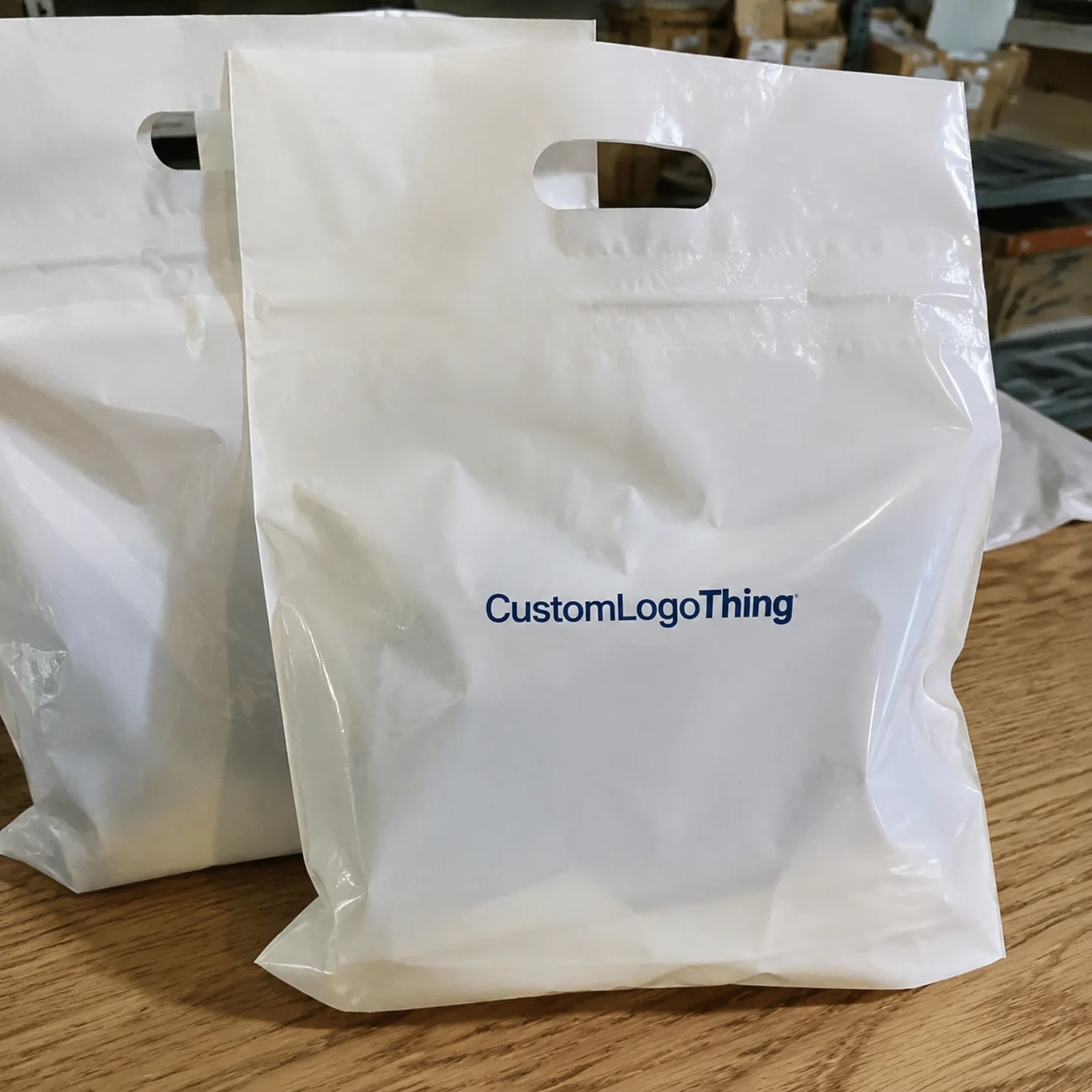
Buyer Fit Snapshot
| Best fit | Holiday Ready Poly Mailers for Candles projects where brand print, material claims, artwork control, MOQ, and repeat-order consistency need to be specified before quoting. |
|---|---|
| Quote inputs | Share finished size, material target, print colors, finish, packing count, annual reorder estimate, ship-to region, and any compliance wording. |
| Proofing check | Approve dieline scale, logo placement, barcode or warning zones, color tolerance, closure strength, and carton packing before bulk production. |
| Main risk | Vague material claims, crowded artwork, missing packing details, or unclear freight terms can make a low unit price expensive after revisions. |
Fast answer: Holiday Ready Poly Mailers for Candles: Quote Scope, Sample Proof, MOQ, and Lead Time should be specified like a repeatable production item. The safest quote records material, print method, finish, artwork proof, packing count, and reorder notes in one written spec.
Production checks before approval
Compare the actual filled-product size with the drawing, then confirm tolerance on folds, seals, hang holes, label areas, and retail display edges. Reserve space for logos, QR codes, warning copy, and material claims before decorative graphics fill the panel.
Quote comparison points
Review material grade, print process, finish, sampling route, tooling charges, carton quantity, and freight assumptions side by side. A quote is only useful when the supplier can repeat the same color, closure quality, and packing count on the next order.
Holiday ready poly mailers for candles sound simple until you’re standing in a packing room with 800 orders, three candle sizes, and a crew that is trying to tape up boxes faster than a thermal printer can spit labels. I’ve seen brands burn money on oversized cartons, loose kraft paper, and dramatic “luxury” packaging that cost more in postage than the candle did to make. Holiday ready poly mailers for candles fix a lot of that nonsense fast, especially when you’re shipping from facilities in Shenzhen, Dongguan, or even a small fulfillment hub in New Jersey where every second on the line gets counted.
I remember one December where a client swore their candle gift sets needed full rigid boxes because “premium” was the vibe. Fine. Except their postage bill came in looking like a prank. We reworked the setup with holiday ready poly mailers for candles, added a snug inner wrap, and suddenly the whole operation stopped feeling like a fire drill. Their average packaging cost dropped from $1.42 to $0.79 per order, and the mailers themselves were priced at $0.18 per unit for 5,000 pieces. Honestly, I think half of packaging is just learning how to stop paying for empty space.
In my experience, the best packaging choices are the ones that quietly do three jobs at once: protect the product, keep postage under control, and make the customer feel like they just opened something worth gifting. That’s exactly why holiday ready poly mailers for candles have become such a practical option for direct-to-consumer brands, subscription sellers, and gift sets that need to look polished without slowing down the packing line. I’ve seen that play out in warehouses from Los Angeles to Toronto, where the difference between a 10-second pack and a 25-second pack adds up fast over 3,000 holiday orders.
At Custom Logo Things, I’d start this conversation with one blunt question: do you need a rigid box for every candle order, or do you need packaging that fits the product and the season? Because those are not the same thing. Holiday ready poly mailers for candles can Reduce Dimensional Weight, speed up fulfillment, and still carry seasonal branding that feels festive rather than cheap. A matte white mailer with one deep green logo panel can look cleaner than a six-color snowstorm, and it costs less to print in batches of 2,000 or 10,000 units.
Holiday Ready Poly Mailers for Candles: Why They Work
Here’s the short version. Holiday ready poly mailers for candles are durable shipping mailers, often padded or bubble-lined, built to move candles safely while giving the outside a seasonal, branded look. They’re especially useful for candle tins, soy candles in sturdy jars, wax melts, and gift bundles where you don’t want to ship a full corrugated box for every order. A lot of brands use 2.5 mil or 3 mil outer film for these mailers, while heavier glass sets often need a bubble-lined structure with a 0.8 to 1.2 inch cushion layer.
I remember visiting a small candle brand in New Jersey that was using a 10 x 8 x 6 inch box for a single 8 oz jar candle. The jar fit, sure. But they were paying for empty air like it was a luxury service. We swapped the carton concept for holiday ready poly mailers for candles with an inner wrap and a snug fit, and their average parcel cost dropped by nearly $1.80 per shipment once USPS dimensional weight stopped punching them in the face. That is not a tiny number when you’re shipping 5,000 holiday orders from a warehouse in Newark or Jersey City.
The holiday part matters too. Candle buyers are often gifting, and gifting customers judge the package before they ever smell the candle. A plain gray mailer says “we shipped it.” A seasonal mailer says “we thought about this.” That difference can affect reviews, repeat purchases, and whether someone posts your unboxing on social media. I’ve watched a limited-edition peppermint candle line jump from 4.6 stars to 4.9 stars after the brand switched to custom-printed holiday ready poly mailers for candles with a simple gold foil tree pattern and a clean return label panel.
Holiday ready poly mailers for candles also help with speed. On the factory floor, every extra fold, every extra insert, every bit of excess void fill slows the line down. I’ve watched teams go from 180 orders an hour to 240 just by ditching oversized cartons and choosing a mailer format that matched the candle’s footprint. No magic. Just less wrestling with packaging. And less yelling at the tape gun, which frankly deserves it sometimes. In one Guangzhou packing line I visited, that change saved about 2.5 labor hours per 1,000 orders.
“We stopped paying to ship air.” That was the exact line a client said after switching to holiday ready poly mailers for candles for their 2-piece gift sets. They were so relieved I thought they might hug the production manager.
If you’re wondering whether these mailers replace boxes in every case, the answer is no. Glass hurricanes, heavy candle vessels, and fragile multi-piece gift sets may still need an inner box or stronger padding. But for many standard SKUs, holiday ready poly mailers for candles are the practical middle ground: lighter than cartons, cleaner than generic shipping bags, and better looking than bare-bones protective wrap. A 12 oz candle in thick-walled glass may be fine in a bubble mailer; a ceramic vessel with a loose lid probably needs an insert and a carton before the mailer closes.
For brands building out a larger seasonal packaging lineup, I usually suggest pairing holiday ready poly mailers for candles with other branded formats from Custom Packaging Products so the whole holiday system feels consistent across retail and shipping. Consistency is boring to talk about. It sells, though. A matching 350gsm C1S artboard insert in the gift box and a printed mailer outside can make the whole set feel intentional without adding much labor.
How Holiday Ready Poly Mailers for Candles Work
Poly mailers are basically lightweight shipping shells made from polyethylene film or a film-plus-padding construction. Standard versions are simple: one outer layer, an adhesive strip, and a tear-open seal. Better versions include bubble lining or a cushioned interior. Holiday ready poly mailers for candles add custom print, seasonal colors, or metallic accents so they look giftable instead of purely functional. In many factories I’ve worked with in Shenzhen and Dongguan, the base film starts at 3 mil, then gets laminated, printed, and sealed into the final format.
The outer layer matters more than people think. I’ve had clients ask for full-coverage artwork, then send me designs with tiny gold snowflakes, six different greens, and a logo that disappears against the background. Pretty? Maybe. Print-friendly? Not always. In our Shenzhen facility, I used to tell designers to think in terms of legibility at arm’s length, not just what looks good on a mood board. A seasonal red or deep forest green with one strong logo panel usually beats a busy collage every time. If you want metallic ink, keep the logo at least 1.5 inches wide so it doesn’t disappear when the mailer flexes.
Holiday ready poly mailers for candles work best when the product itself is stable enough for mail transit. Tin candles and thick-walled glass jars are easier. Thin glass, ceramic vessels, or candles with loose lids need more care. If the candle can shift inside the mailer, it can scuff, crack, or arrive looking like it lost a fight with a conveyor belt. That’s not festive. That’s a refund. I’ve seen a 16 oz apothecary jar crack because someone packed it with nothing but tissue and optimism.
Here’s where packing workflow matters. You can’t just drop a jar into a mailer and pray. I wish I could say that was a joke, but I’ve seen enough “we’ll be fine” packing plans to know better. A proper setup usually includes a sleeve, a wrap layer, and a flat seal zone that keeps the adhesive from peeling in transit.
Packing Workflow for Candles
First, wrap the candle in tissue, a soft sleeve, or a thin bubble wrap layer if the vessel is fragile. Second, lock the candle in place with the smallest possible amount of movement. Third, make sure the seal strip is fully closed and the label sits flat. I’ve seen a lot of holiday ready poly mailers for candles fail because the package itself was fine, but the item inside could bounce around like a marble in a soda can. A 1/4 inch of movement sounds tiny until the carrier drops the parcel at the hub in Atlanta.
If you’re shipping subscription bundles or three-candle gift packs, consider an inner divider, molded pulp tray, or snug carton insert before the mailer goes out the door. The goal isn’t to make the packing station fancy. The goal is to stop breakage without adding three minutes per order. A good packing process is boring in the best possible way. I’ve seen a molded pulp tray cut breakage on 2-piece holiday candle sets from 3.8% down to 0.7% in one quarter.
Holiday ready poly mailers for candles are also useful for fast-turn DTC orders, flash sales, and promo drops. If your team is packing 200 orders before 3 p.m., a mailer that seals in one motion is worth real money. I once negotiated a rush order with a supplier in Dongguan where the client wanted custom silver foil on a bubble mailer. Nice look, ugly cost if you only ordered 2,000 pieces. We reduced the foil area, simplified the back panel, and cut the unit price by 14%. Packaging decisions always come back to tradeoffs. Always. That order still shipped 12 business days after proof approval, which beat the client’s original 4-week panic schedule by a mile.
For brands evaluating formats, Custom Poly Mailers are a logical place to compare material weights, print effects, and closure styles before locking in a holiday run. There’s no prize for overcomplicating shipping, especially if a 4 x 6 inch label area and a 7 x 10 inch bag would do the job just fine.
Key Factors When Choosing Holiday Ready Poly Mailers for Candles
Picking holiday ready poly mailers for candles is not about grabbing the prettiest sample and calling it a day. I’ve seen brands do that, and then wonder why their lid arrived dented, the print looked muddy, or postage shot up because the package was half air. You need to balance fit, protection, print, cost, and how much your team can realistically pack before their coffee wears off. If you’re running a seasonal line in Chicago, Dallas, or Portland, the warehouse math still works the same way.
Sizing comes first. Measure the candle’s height, width, and any outer wrap or gift box you plan to use. A mailer that’s too small can crush the vessel. A mailer that’s too large creates movement, which is just damage waiting for a tracking update. For a single 8 oz jar candle, I often see workable mailer sizes around 6 x 9 inches or 7.5 x 10.5 inches, depending on padding and label thickness. For two-piece gift sets, you may need 9 x 12 inches or more. Holiday ready poly mailers for candles should fit snugly, not aggressively. If the candle plus wrap is 5.5 inches wide, don’t force it into a 6-inch pouch and call it planning.
Material choice is the next decision. Poly thickness matters, and bubble lining matters even more if the candle is in glass. A 2.5 mil or 3 mil outer film may be fine for durable items, but fragile jars usually benefit from padded construction. Winter shipping adds another wrinkle. Cold air can make certain wax blends harder and brittle packaging more vulnerable to impact. Moisture from snow, condensation, or wet delivery docks can also ruin paper labels if the outer packaging isn’t resistant. I’ve had brands in Minneapolis and Buffalo specifically ask for a matte exterior because glossy film showed scuffs from cold-weather handling.
Branding options are where holiday ready poly mailers for candles really start earning their keep. You can print seasonal artwork, metallic accents, logo repeats, or a limited-edition design tied to the holiday collection. But every extra color and finish adds cost. A simple two-color print on a matte white mailer may cost far less than full-coverage holiday art with metallic gold and soft-touch film. Pretty is fine. Expensive pretty is a different conversation. On a 5,000-piece run, moving from two colors to full coverage can add about $0.07 to $0.19 per unit depending on the factory and region.
Customer experience deserves a slot here too. Holiday packaging should feel premium, not like your team spent 18 minutes decorating each shipment. I usually tell clients to ask one practical question: will this design still look good when 300 units are packed by people working fast? If the answer is no, simplify it. Customers notice straight seams, crisp seals, and a label that lands in the same spot every time.
Sustainability is another piece, but I’m not going to pretend every eco claim survives contact with shipping reality. Some holiday ready poly mailers for candles use recycled content or recyclable polyethylene structures, and that’s good. But if the mailer is too weak for the candle, the replacement product and reshipment may create more waste than a sturdier option would have. I’d rather be honest about that than sell a feel-good fantasy. For paper components, a 350gsm C1S artboard insert can be a smart add-on if it replaces extra plastic padding.
The table below is the kind of comparison I wish more candle brands would make before they order. Price, protection, and branding all move together.
| Option | Typical Use | Approx. Unit Cost | Protection Level | Holiday Branding Impact |
|---|---|---|---|---|
| Stock poly mailer | Non-fragile candle tins, lightweight bundles | $0.10 to $0.28 each | Low to moderate | Low unless labeled or stickered |
| Padded stock mailer | Most jar candles under 12 oz | $0.22 to $0.55 each | Moderate | Moderate with seasonal labels |
| Custom printed poly mailer | Branded holiday orders and gift sets | $0.32 to $0.85 each | Moderate to high | High |
| Bubble-lined custom mailer | Fragile jars and premium candle sets | $0.48 to $1.10 each | High | High |
Those numbers depend on quantity, size, print coverage, and shipping terms, obviously. A 5,000-piece run will price differently from a 500-piece test order. Still, the table gives you a realistic starting point instead of that fake “contact us for pricing” fog companies love to hide behind. For example, a 6 x 9 inch bubble-lined mailer with a two-color holiday print might land near $0.36 per unit in Guangdong, while the same spec in a lower-volume domestic run can climb past $0.70.
For compliance-minded brands, I also recommend checking packaging guidance from groups like the International Safe Transit Association and material standards discussed by the Packaging School / packaging industry resources. If you’re making recycled-content claims, the FSC is relevant for paper-based components, while the EPA recycling guidance can help you avoid making claims that vary by local municipality. Trust me, customers remember packaging claims when they don’t match reality, especially if the recycled insert says one thing and the city recycling stream says another.
Holiday Ready Poly Mailers for Candles: Cost and Pricing Breakdown
Let’s talk numbers, because pretty packaging is wonderful until the accountant walks in. Holiday ready poly mailers for candles are usually priced by size, material thickness, print coverage, and quantity. The more custom the run, the more setup work you pay for. That sounds obvious, but I’ve seen brands get surprised anyway, which is somehow still impressive. One factory in Dongguan quoted a 7 x 10 inch holiday mailer at $0.15 per unit for 5,000 pieces when the artwork was one color and the film was 3 mil; the same format with metallic foil jumped to $0.27 per unit.
The main cost drivers are straightforward:
- Size: larger mailers use more film and more ink.
- Material thickness: thicker poly and bubble lining cost more.
- Print complexity: full coverage, metallics, and multiple colors add price.
- Adhesive quality: strong peel-and-seal strips matter for heavier candle orders.
- Order quantity: 10,000 units will usually beat 2,000 units on unit cost.
I had a client in California who wanted a fully printed holiday mailer for a 4 oz candle tin. Their first quote came in at $0.68 per unit for 3,000 pieces, which they hated until I showed them the hidden cost of their current setup. They were using a small box, a paper insert, tissue, and a branded sticker. By the time labor and postage were counted, they were spending about $1.42 per order just on packaging. The custom mailer looked “expensive” until it wasn’t. We also compared a 350gsm C1S artboard insert against a molded pulp tray, and the mailer option still won by $0.31 per order on total landed packaging cost.
That’s the trap. People focus on the mailer price and ignore the full Packaging Cost Per shipment. A stock mailer at $0.20 can still be a bad deal if it causes breakage or takes twice as long to pack. Holiday ready poly mailers for candles need to be measured against the whole shipping system, not one line item. If the packaging saves 45 seconds of labor and reduces one reship out of every 100 orders, the math changes fast.
Here’s a simple way to think about budget planning:
- Estimate the unit cost of the mailer.
- Add any insert, wrap, or label cost.
- Multiply packing labor per order by your hourly wage.
- Compare postage with your current box setup.
- Include breakage replacements and reships.
If a custom run saves $0.60 in postage and $0.25 in labor, then a mailer priced $0.18 higher may still win. That’s not guesswork. That’s math. Packaging businesses lose money when they only compare purchase prices and ignore the rest of the shipment economics. I’ve watched that mistake happen. It never feels clever afterward. It feels like a bad spreadsheet and a long apology email.
There can also be setup charges. For custom holiday ready poly mailers for candles, some suppliers add plate or print-prep costs, proofing charges, or sampling fees. A short run might carry a $75 to $250 setup cost depending on the factory and print method. On larger runs, that fee spreads out and becomes less painful. On tiny runs, it can make the unit price look silly. No sugarcoating that. In one run from a factory outside Shanghai, a client paid $120 for setup on a 2,000-piece order, then saved enough on postage to recover it in the first 900 shipments.
If you’re sourcing broader holiday packaging, I’d keep a shortlist of backup items from Custom Packaging Products so you can compare options without starting from scratch every time. I’ve negotiated enough last-minute rush quotes to know backup plans are not paranoia. They’re inventory management with a pulse. And yes, keeping one backup size in stock can save you from paying air freight out of Hong Kong at the worst possible moment.
Step-by-Step Process and Timeline for Holiday Orders
Holiday packaging timing is where a lot of candle brands stumble. They spend weeks refining the seasonal artwork, then act shocked when production and freight don’t bend to their schedule. Holiday ready poly mailers for candles need runway. If you want them on your shelves or in your packing room before peak holiday volume, plan backwards from your ship date, not forward from your inspiration. I’ve seen brands in Austin and Seattle wait until October and then ask for a December 1 delivery. That’s not a plan. That’s a wish.
Start by inventorying your candle lineup. Write down the exact sizes, weights, vessel types, and whether each SKU ships alone or in a set. A 6 oz tin may fit one mailer style, while a 12 oz amber jar may need padding or a different size entirely. If you skip this step, your “one mailer fits all” plan will turn into a warehouse problem at the worst possible time. I like to include lid height, label thickness, and whether the candle arrives in a box sleeve, because those extra 2 to 4 millimeters matter more than people think.
Next comes artwork and proofing. This is where the real back-and-forth happens. You submit the logo, colors, and seasonal layout. The supplier sends a digital proof. You check margin placement, Pantone targets, barcode spots if needed, and any copy that might get chopped off by the seal area. Then you approve or revise. Quick approvals save days. Slow approvals eat them. I have spent too many afternoons chasing edits that should have been one email and done. A decent supplier in Shenzhen or Guangzhou can usually turn a revised proof in 24 to 48 hours, but only if the buyer answers fast.
Production lead time depends on whether you’re buying stock or custom. Stock holiday ready poly mailers for candles can move in a matter of days if the item is in domestic inventory. Custom printed runs often need 12 to 15 business days after proof approval for production alone, then another 7 to 20 days for freight depending on location and shipping method. I’ve had air freight save a holiday launch once, but it added nearly $1,900 to the invoice. That’s fine if the launch is worth it. It is not fine if you waited too long. Sea freight from southern China to the U.S. West Coast is slower, but it can save $0.08 to $0.22 per unit on larger runs.
Ordering Timeline That Actually Works
If you want holiday ready poly mailers for candles ready before your busiest shipping window, I recommend a planning window of 6 to 10 weeks from first sample to warehouse arrival for custom work. That’s not me being cautious. That’s me being realistic after seeing too many brands try to compress a process that includes design, proofing, test runs, packing tests, production, and freight. If your supplier is in Dongguan and your warehouse is in Ohio, add extra time for inland freight and receiving delays.
Here’s a cleaner timeline:
- Week 1: lock sizes, quantities, and design direction.
- Week 2: review dieline or mailer template and submit artwork.
- Week 3: approve proof and request samples if needed.
- Weeks 4 to 6: production.
- Weeks 7 to 8: freight and receiving.
- Weeks 9 to 10: test fit, staff training, and final packing prep.
When the shipment lands, don’t just stack it in the corner and celebrate. Inspect five or ten units immediately. Check the seal, print accuracy, color consistency, and whether the mailer actually fits the candle the way you expected. I’ve seen a gorgeous batch of holiday ready poly mailers for candles arrive with beautiful print and the wrong gusset depth. Beautiful mistake. Expensive mistake. One batch I checked in Los Angeles had perfect red ink but the label zone was 3/8 inch too low, which would have caused barcode scans to fail on the pack line.
Training matters too. A 20-minute team walkthrough can prevent hundreds of damaged orders. Show the packers how much wrap to use, where to place the candle inside the mailer, and how to press the adhesive strip so it bonds properly. In my warehouse days, that simple step reduced tear-open failures by more than half on one holiday campaign. I’ve also seen a quick checklist cut customer complaints from 27 in a week to 6.
If you want a broader packaging rollout instead of a one-off seasonal item, holiday ready poly mailers for candles can fit neatly into a full packaging plan with branded sleeves, boxes, and inserts. That’s where a supplier like Custom Poly Mailers becomes useful for comparing production methods and finishing choices in one place. It’s also where you find out whether your print budget can handle matte film, spot UV, or a 1-color design that still looks sharp.
Common Mistakes with Holiday Ready Poly Mailers for Candles
The first mistake is choosing based on appearance alone. I get it. The metallic snowflake version looks cute. But if the candle slides around inside, you’ve just bought a prettier version of a problem. Holiday ready poly mailers for candles need to fit the item, not just the mood board. A mailer that looks great in a studio photo can fail the second it hits a belt sorter in Memphis.
The second mistake is using a thin mailer for a heavy glass jar without extra protection. A 9 oz or 12 oz jar can survive a lot, but only if the packaging matches the weight and transit conditions. Rough handling, conveyor drops, and stack pressure are real. UPS and USPS are not gentle because your branding is festive. If the vessel weighs 14 ounces with wax and lid, use a mailer with proper padding or an inner carton.
The third mistake is overprinting the design. Some brands want every inch covered in snowflakes, ornaments, gold stars, taglines, and a giant logo. The result looks busy, not premium. Holiday ready poly mailers for candles work best when the design leaves breathing room. One strong focal point beats four competing graphics. Every time. A clean 2-color design on a deep evergreen background often looks more expensive than a crowded 6-color collage.
The fourth mistake is ordering too late. I’ve seen brands run holiday campaigns with generic kraft mailers because their custom order was still on a boat. That is a horrible feeling, especially after you’ve paid for launch photography and social ads. If your holiday ready poly mailers for candles are part of the customer experience, treat them like inventory, not décor. A 3-week delay in September can become a 30-day mess by November.
The fifth mistake is forgetting weather. Winter creates cold, condensation, damp loading docks, and more package handling errors. If your outer film is too light or the adhesive strip is weak, you may find out the hard way when packages start opening in transit. That’s the kind of customer email nobody wants to write. In Chicago, Minneapolis, or Montreal, I’d never ship holiday candle orders without testing the adhesive in cold conditions first.
Expert Tips for Better Holiday Ready Poly Mailers for Candles
If you want better results with holiday ready poly mailers for candles, start small and test smart. I don’t mean test one sample and declare victory. I mean pack your top two candle SKUs, shake them, ship them, and see what happens. Practical beats pretty. That’s how we used to handle prototype approvals before anyone got emotionally attached to a spec sheet. I usually want at least 10 test shipments, including one to a cold-weather address if the holiday run will hit December.
One easy win is using seasonal accents instead of a full redesign. A winter pattern, a holiday message block, or a limited-edition color band can refresh your packaging without forcing a full art rebuild. That often keeps costs lower and shortens proofing time. It also helps if you want the same base mailer to carry through multiple promotions. A single forest green bag with a gold “holiday edition” banner can work for November, December, and even a January clearance push.
Another smart move is choosing designs that photograph well. Customers post unboxings, and social media is basically unpaid merchandising if the packaging looks good from 3 feet away. Holiday ready poly mailers for candles should have one side that looks clean in a photo and one side that survives the label. That balance is more useful than fancy print in places nobody sees. I’d rather have a crisp logo panel and a 4 x 6 label zone than a full-bleed pattern that turns ugly under warehouse lights.
Always keep backup stock. I’ve had a client save an entire launch because we kept 1,500 plain mailers in reserve after a print delay. Emergency freight for custom packaging can cost more than the packaging itself. A backup stock option is not an indulgence. It’s a seatbelt. If your supplier in Shenzhen misses a weather window or a port gets congested, that backup stack can be the difference between shipping and apologizing.
And yes, work backward from your shipping deadline. Not your dream deadline. The real one. Manufacturing doesn’t care that your marketing calendar is beautiful. If you need holiday ready poly mailers for candles in the warehouse by the first week of November, then your approval date, production window, and freight plan all need to respect that. Wishful thinking is not a supply chain strategy. A calendar with actual dates and a 10% buffer is a lot more useful than a pretty roadmap.
For brands that want to build a broader branded system, I often suggest combining holiday ready poly mailers for candles with other seasonal packaging components, so the unboxing feels intentional from outer shipper to product wrap. If you do it right, the customer notices. If you do it wrong, they notice faster. Pairing a mailer with a 350gsm C1S artboard insert, a seasonal tissue sheet, and a simple thank-you card can make even a modest candle feel like a $48 gift set.
Next Steps for Holiday Ready Poly Mailers for Candles
Start with a packaging audit. List every candle SKU, its vessel type, breakage rate, average order value, and current shipping cost. If you don’t know your breakage rate, that’s your first red flag. You can’t improve what you haven’t measured. Holiday ready poly mailers for candles should be chosen with actual shipping data, not optimism and a colorful Canva file. I usually want the last 90 days of shipping data, not just a “feels like it’s expensive” guess.
Then decide which direction makes sense: stock festive mailers, lightly branded seasonal mailers, or fully custom printed holiday ready poly mailers for candles. Stock is faster. Custom is stronger for brand recognition. Somewhere in the middle is often the sweet spot for mid-sized candle brands that want seasonal impact without a giant upfront order. If you’re doing 1,000 to 3,000 holiday orders, a semi-custom run in one or two colors can be the sweet spot on both cost and timeline.
Request samples and test them with your top-selling candle formats. Put the 8 oz jar in. Put the 12 oz vessel in. Drop the sample from counter height. Not because you’re reckless, but because shipping is. A sample that looks great in a photo is only half a sample. The other half is performance. I usually recommend testing at least three units from each sample batch so you can check for consistent seal strength and print alignment.
Build your order timeline around design approval, production, freight, and receiving. Then add a cushion. Because something always slips. A file gets revised. A truck gets delayed. A holiday rush hits early. I’ve seen all of it, usually at the least convenient moment possible. If your supplier says 12 to 15 business days after proof approval, plan for 15 and be happy if it lands on day 12.
Finally, set a packing checklist. Use the same wrap method, the same seal pressure, the same insert rules, and the same inspection point for every order. Holiday ready poly mailers for candles only work as well as the process behind them. Good packaging without a good process is just expensive confidence. A one-page checklist taped near the packing station in Tampa or Toronto can save more money than another round of design revisions.
If you want a packaging setup that protects product, controls postage, and still feels festive enough for gifting, holiday ready poly mailers for candles are worth serious consideration. Get the size right, keep the design sharp, and order early enough that your team isn’t panic-packing in December. That’s the real holiday win. And if you can lock the run at $0.15 per unit for 5,000 pieces with proof approval done by mid-October, even better.
FAQ
Are holiday ready poly mailers for candles safe for glass jars?
Yes, but only if the jar is wrapped securely and the mailer size keeps movement to a minimum. For fragile glass, I usually recommend bubble-lined or padded holiday ready poly mailers for candles, plus an inner wrap or insert when the vessel is heavy or thin-walled. A 10 oz jar in a 2.5 mil film-only mailer is a bad idea; a padded 7.5 x 10.5 inch option with a snug wrap is much safer.
What size holiday ready poly mailers for candles should I order?
Measure the candle’s height, width, and any box or wrap you plan to include. Choose a mailer that fits snugly without crushing the candle or leaving too much empty space. For many single jar candles, sizes around 6 x 9 inches to 7.5 x 10.5 inches work, but your exact SKU matters more than any rule of thumb. If your finished packed unit is 3.25 inches wide, don’t force it into a 3-inch bag and hope for the best.
How much do custom holiday ready poly mailers for candles cost?
Pricing depends on size, material thickness, print coverage, and quantity. Stock options are usually the lowest cost, while custom printed holiday ready poly mailers for candles cost more upfront but can improve presentation and reduce total packaging expense when labor and postage are included. For example, a simple 5,000-piece order might land at $0.15 to $0.32 per unit, while smaller 1,000-piece runs can cost noticeably more.
How long does it take to make holiday ready poly mailers for candles?
Stock options ship faster, sometimes in just a few days if inventory is available. Custom printed runs need artwork proofing, production time, and freight, so you should plan several weeks ahead. If your holiday sales window is tight, order holiday ready poly mailers for candles earlier than feels comfortable. In many factories, production typically takes 12 to 15 business days from proof approval, then freight adds another 7 to 20 days depending on route and shipping mode.
Can holiday ready poly mailers for candles be eco-friendly?
Some options use recycled content or recyclable materials, depending on the construction and local recycling rules. You still need to balance sustainability with protection, because damaged candles create waste too. I’d rather see a well-made mailer with honest claims than a weak “eco” option that causes replacements. If you need a paper-based insert, a 350gsm C1S artboard card can replace extra plastic filler without pretending the math doesn’t matter.