Buyer Fit Snapshot
| Best fit | Evaluate Packaging Supplier Certifications projects where brand print, material claims, artwork control, MOQ, and repeat-order consistency need to be specified before quoting. |
|---|---|
| Quote inputs | Share finished size, material target, print colors, finish, packing count, annual reorder estimate, ship-to region, and any compliance wording. |
| Proofing check | Approve dieline scale, logo placement, barcode or warning zones, color tolerance, closure strength, and carton packing before bulk production. |
| Main risk | Vague material claims, crowded artwork, missing packing details, or unclear freight terms can make a low unit price expensive after revisions. |
Fast answer: Evaluate Packaging Supplier Certifications: Material, Print, Proofing, and Reorder Risk should be specified like a repeatable production item. The safest quote records material, print method, finish, artwork proof, packing count, and reorder notes in one written spec.
Production checks before approval
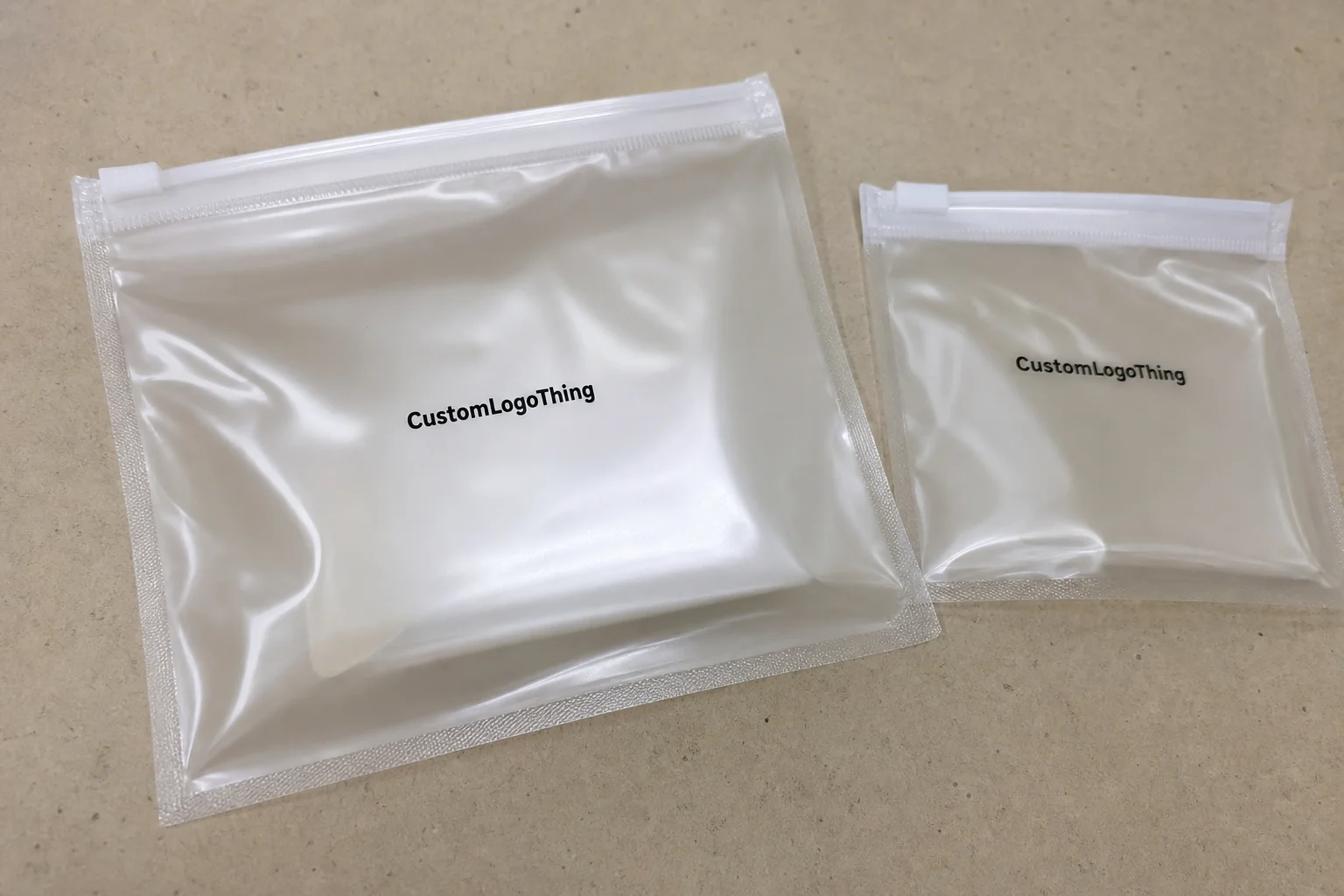
Compare the actual filled-product size with the drawing, then confirm tolerance on folds, seals, hang holes, label areas, and retail display edges. Reserve space for logos, QR codes, warning copy, and material claims before decorative graphics fill the panel.
Quote comparison points
Review material grade, print process, finish, sampling route, tooling charges, carton quantity, and freight assumptions side by side. A quote is only useful when the supplier can repeat the same color, closure quality, and packing count on the next order.
The Hidden Cost of Skipping Supplier Certification Verification
A Tuesday morning call once derailed my entire week. A client had just received their latest shipment of Custom Printed Boxes for a product launch, and three pallets of retail packaging showed visible delamination issues. The substrate testing came back failing moisture resistance specs we'd specified. The supplier had presented impressive certificates during vendor qualification. What we hadn't done was verify them.
That oversight cost us $47,000 in emergency reprints, $18,500 in expedited shipping to meet the launch deadline, and—not quantifiable but equally damaging—eroded trust with a major retail account watching our fulfillment performance.
That night I went home and stared at my ceiling for two hours questioning if procurement was actually my calling. Spoiler: it is. But man, I really questioned everything then.
This isn't unique. Industry data from the International Packaging Institute shows roughly 23% of supply chain disruptions in consumer goods trace back to inadequate supplier verification. When I say "inadequate," I mean the certification documents were requested but never authenticated—or worse, accepted at face value without understanding their scope.
Most procurement pros believe they're being thorough when they ask for certificates. They clip them into the supplier folder, check a box, and move on to the next fire drill on their desk. I've done it myself early in my career. The problem isn't laziness. Nobody explicitly teaches you that the certificate is just the beginning of the conversation, not the end.
Here's the mistake most procurement managers make with how to evaluate packaging supplier certifications: they treat the certificate as the destination. It's not. A certificate is a starting point—a snapshot showing a third party audited this supplier at some point. What it doesn't tell you: whether that certification remains current, whether it covers the specific materials and processes your products require, or whether the supplier's quality management has degraded since the audit window closed.
What follows is a systematic approach I developed after that costly Tuesday call. By the end, you'll have a repeatable framework for evaluating packaging supplier certifications that reduces risk, satisfies compliance requirements, and prevents those "how did this slip through?" conversations with your customers.
Understanding Packaging Supplier Certifications: The Essentials
Before diving into evaluation methodology, establish what certifications actually prove about a supplier—and what they don't.
A certification is written assurance from an accredited certification body that a supplier's processes, facilities, or products meet a specific standard. When you see "ISO 9001 Certified," it means an independent auditor visited the facility, evaluated the quality management system against the ISO standard's criteria, and determined the supplier was conforming at that time.
Process certifications verify HOW a supplier operates—their quality management system, food safety protocols, environmental controls, or labor practices. Product certifications verify specific attributes of what they produce—flame resistance, compostability, recycled content percentages, or food contact safety.
For branded packaging and consumer-facing product packaging, you typically need both. A supplier can hold valid ISO 9001 and still produce a batch of corrugated that fails your burst strength requirements. The certification says their system should prevent that. It doesn't guarantee every single unit passes every single test.
Think of it like a driver's license. If someone hands you a valid license, you know they passed their test at some point. You still have no idea if they're competent today, if they've been drinking, or if they're the type who texts while merging onto the highway.
Third-party audits follow a predictable rhythm. Certification bodies schedule initial audits (2-4 days depending on facility size), followed by surveillance audits annually or semi-annually. The audit team reviews documentation, observes operations, interviews staff, and identifies non-conformances—gaps between the standard and actual practice. Suppliers must address "major" non-conformances before certification; "minor" ones have implementation timelines.
Here's what matters: certifications represent point-in-time verification within a defined audit window. A supplier could have passed their audit in February and be falling apart by August. Your evaluation process has to account for this reality.
Key Certifications to Look for in Packaging Suppliers
Not all certifications carry equal weight for your supply chain. Here's what I tell my team after years of watching these things trip up procurement departments:
ISO 9001: Quality Management Fundamentals
This is the baseline. ISO 9001 certification tells you a supplier has a documented quality management system with clear procedures, measurement mechanisms, and continuous improvement processes. If a packaging supplier doesn't hold ISO 9001, that's an immediate red flag unless you're dealing with a very small operation where formal certification would be cost-prohibitive.
However, ISO 9001 is broad. It doesn't prescribe specific quality thresholds—it just requires that the supplier define their own quality standards and follow their own procedures. I've audited ISO 9001-certified facilities with pristine documentation and surprisingly sloppy actual production. Don't mistake the certificate for a guarantee of excellence. It's proof of structure.
I once watched an ISO 9001-certified facility try to convince me their production floor was "within acceptable variation" while their machinery was literally held together with duct tape and prayer. The documentation was beautiful. The boxes they were producing? Not so much.
FSSC 22000 and BRCGS: Food Safety Standards
If you're sourcing packaging design that will contact food, these certifications aren't optional—they're mandatory for responsible procurement. FSSC 22000 (based on ISO 22000 with sector-specific PRPs) and BRCGS (Brand Reputation through Compliance Global Standard) both require rigorous hazard analysis, allergen control, supply chain transparency, and allergen management programs.
BRCGS has historically been more retailer-demanded in North America and the UK, while FSSC 22000 tends to be favored in European markets. Many large food manufacturers accept either. For supplier qualification purposes, treat them as roughly equivalent, with BRCGS having slightly more stringent requirements around facility environment and product safety culture.
SMETA (Sedex Members Ethical Trade Audit) covers labor practices, health and safety, environment, and business ethics. If your customers have corporate social responsibility requirements or you're selling through retailers with supplier codes of conduct, SMETA audits (typically 2-pillar or 4-pillar) provide the documentation you need.
Forest Stewardship Council (FSC): Sustainability Verification
For any packaging containing paper, board, or wood fiber, FSC certification verifies responsible forestry sourcing. The chain of custody requirements mean your supplier can actually prove the certified fiber in your custom printed boxes came from FSC-certified forests, not mixed with uncertified sources.
Beware of "FSC Mix" versus "FSC Recycled" claims—they represent different supply chains and require separate certifications. If your brand positioning requires recycled content verification, make sure your supplier's FSC scope includes the recycled fiber claim process.
I had a client furious at me because I recommended against putting "100% recycled" on their boxes based on their FSC certification. Their supplier had "FSC Mix" which, while certified, means only a portion of the fiber came from recycled sources. The supplier never corrected them during the sales pitch. That's a fun conversation to have with marketing.
| Certification | Primary Focus | Required For | Typical Audit Frequency |
|---|---|---|---|
| ISO 9001 | Quality management system | Baseline supplier qualification | Annual surveillance |
| FSSC 22000 | Food safety management | Food-contact packaging | Annual + unannounced |
| BRCGS | Food safety & quality | Food-contact packaging | Semi-annual + unannounced |
| FSC Chain of Custody | Responsible forestry sourcing | Paper/board packaging | Annual |
| SMETA 4-Pillar | Ethical trade & labor | Retailer requirements | Biennial |
| SQF | Safe quality food | Food-contact packaging | Annual |
A Step-by-Step Process for Evaluating Packaging Supplier Certifications
Now we get to the practical methodology. Here's how to actually evaluate packaging supplier certifications when assessing a new vendor or re-qualifying an existing one.
Step 1: Request Complete Certification Documentation
Don't accept a PDF certificate alone. Request:
- The actual certificate (should show certification body, standard, scope, issue/expiry dates)
- Most recent audit report summary (the full report or at least the executive summary)
- List of any non-conformances and corrective action documentation
- Scope statement clearly defining what processes/products the certification covers
Legitimate suppliers will provide these within your request timeline. Resistance to sharing audit reports is itself a red flag. I've gotten some impressive creative excuses over the years. "The auditor said it's confidential." No, they didn't. "Our legal department requires a non-disclosure agreement." For a third-party audit report? Sure, Jan.
Step 2: Verify Authenticity with Issuing Certification Bodies
This step is non-negotiable. Call or email the certification body listed on the certificate. Confirm:
- The certificate number is valid and active
- The certification hasn't been suspended, withdrawn, or expired
- The scope matches what your supplier claims it covers
- The certification body itself is accredited (look for ANAB, UKAS, JAS-ANZ, or equivalent marks)
A 15-minute verification call once revealed a supplier claiming FSSC 22000 certification whose certificate number corresponded to a completely different company in a different country. That single phone call prevented a catastrophic sourcing decision. I still have that call logged in my notes as "the one where I saved the company from itself."
Step 3: Review Audit Reports for Scope and Findings
Don't just check that the certificate is valid. Read the audit report carefully. Pay attention to:
- Audit date: How recent? Older audits may not reflect current operations.
- Audit type: Announced versus unannounced carries different weight.
- Non-conformance history: Recurring major non-conformances suggest systemic issues.
- Scope definition: Does it explicitly cover the materials and processes your products require?
Honestly, most people skip this step because audit reports are dry. They're written by auditors, after all, and those folks could put insomnia on a prescription pad. But the executive summary alone can tell you whether you're dealing with a supplier who takes quality seriously or one barely keeping their head above water.
Step 4: Assess Certification Scope Matching Your Requirements
A supplier can hold FSSC 22000 for their offset printing operations but not for their flexible packaging extrusion line. Or FSC certified for one facility but not another. Match the specific scope to your actual purchase orders.
Step 5: Conduct or Request Site Audits for Critical Suppliers
For high-value supply relationships or high-risk applications, nothing replaces your own eyes. Schedule a site audit focusing on:
- Cleanliness and organization of production areas
- Condition and calibration of production equipment
- Incoming material inspection procedures
- Traceability systems and batch records
- Staff training and competence documentation
I've toured facilities where I immediately wanted to take a shower afterward, and I've walked into places so clean you could perform surgery on the production floor. Your nose is actually a pretty reliable audit tool. If it smells wrong, something probably is.
Step 6: Establish Ongoing Verification Protocols
Certification evaluation isn't a one-time event. Set calendar reminders to verify certificate renewal status annually, review any non-conformance notices, and maintain a supplier scorecard that includes certification currency as a scored criterion.
What Certification Verification Actually Costs: Budgeting Realistically
Finance teams sometimes push back on comprehensive certification verification, seeing it as administrative overhead. Let me break down the actual economics.
Direct costs for verification typically include document request and review time (your quality team, roughly 2-4 hours per new supplier), verification calls with certification bodies (15-30 minutes each), and travel expenses for site audits ($1,500-3,000 for domestic travel including flights, hotel, and meals).
Hidden costs that get overlooked: the intellectual overhead of maintaining certification databases, training procurement staff on evaluation methodology, and managing the supplier communication required to gather complete documentation packages.
Now let's discuss the risk-adjusted cost of NOT verifying. Consider a single packaging quality incident involving a shipment of $50,000 in retail packaging that fails customer acceptance criteria:
- Immediate costs: freight back, re-production, expedited re-shipment—typically $30,000-60,000
- Relationship costs: potential loss of the account, penalty clauses, remediation requirements
- Brand costs: if the failure reaches consumers, product recalls or damage to your client's brand equity
A comprehensive certification verification program for a supplier base of 15-20 critical packaging vendors runs approximately $8,000-15,000 annually in direct costs. Compare that to the potential exposure from a single failed lot reaching your customer's distribution network.
I've sat in budget meetings where finance people literally laughed when I proposed spending $12,000 on certification verification. "That's $800 per supplier," they said, like I was advocating for gold-plated audit teams. Those same people didn't laugh quite as hard when I showed them the cost recovery from prevented incidents. Funny how numbers change conversations.
For lower-risk applications—like internal-use-only corrugated or basic poly bags for non-food products—you can streamline the process. Request certificates, verify authenticity, and accept the residual risk. For any packaging touching food, pharmaceuticals, or children's products, full verification is the only responsible approach.
Timeline Expectations: How Long Does Certification Evaluation Take?
New supplier certification evaluation typically runs 4-8 weeks from initial request to approved vendor status. Here's the typical breakdown:
- Week 1: Document request and receipt (supplier response time varies widely—follow up aggressively)
- Week 2: Certificate verification with issuing bodies
- Weeks 3-4: Audit report review and scope assessment
- Weeks 5-6: Site audit scheduling and execution (if required)
- Weeks 7-8: Documentation compilation, internal review, and approval
Fast-track options exist for lower-risk applications. If you're sourcing from a supplier with multiple third-party certifications (ISO 9001, FSC, FSSC 22000) and a solid industry reputation, and your application is standard paperboard cartons for non-food products, you might complete verification in 2-3 weeks by combining document review with virtual audit options.
Red flags that extend the timeline: Incomplete documentation packages requiring multiple follow-ups, inability to reach certification bodies for verification, discovered discrepancies needing additional investigation, or identified non-conformances raising concerns about supplier viability.
Build certification evaluation into your procurement calendar at the start of any new supplier relationship discussion. Rushing this process to meet production deadlines is how $47,000 Tuesdays happen.
Mistakes That Lead to Certification Evaluation Failures
I've made these mistakes. I've watched colleagues make them. Here's what to avoid:
Accepting Certificate Copies Without Verification
The most common failure. Someone downloads a PDF, files it in the supplier folder, and assumes the work is done. Certificates can be expired, falsified, or—forged. Always verify directly with the issuing certification body.
Ignoring Certification Expiration Dates
Certifications have validity periods—typically three years for initial certification with annual surveillance. A certificate valid last month may be suspended this month if the supplier failed their surveillance audit or didn't pay their certification fees. Check the status at least annually, preferably more frequently for critical suppliers.
Accepting Certificates Outside Your Actual Requirements
I reviewed a food manufacturer's supplier qualification file and found a beautiful FSSC 22000 certificate—for the supplier's metal fabrication division, not their flexible packaging operations actually fulfilling the purchase orders. Scope matters. Match the certification to the product line.
The quality manager looked at me like I'd just explained gravity to him for the first time. "They said they're certified!" Yes, they are. For welding stainless steel tanks. Not for printing flexible film. These are not the same things.
Failing to Review Non-Conformances and Corrective Actions
Audit non-conformances aren't inherently disqualifying. What matters is whether they've been addressed and whether patterns suggest systemic problems. Three consecutive audits with major non-conformances in the same area—say, allergen controls—indicates a supplier that isn't genuinely committed to improvement.
Overlooking Certification Body Reputation
Anyone can issue a certificate claiming compliance with ISO 9001. Whether that certificate means anything depends on the accreditation of the issuing body. ANAB-accredited certification bodies (in the US) follow strict auditing protocols. A certificate from an unknown "registrar" with no recognized accreditation should raise immediate skepticism.
I once got a certificate from a "certification body" whose website looked like it was built in 1997 and whose phone number went to a voicemail box that was perpetually full. The certificate itself was printed on what appeared to be cardstock. I'm fairly certain it was worth exactly the $49.99 they charged for it.
Your Action Plan: Start Evaluating Packaging Supplier Certifications Today
Here's your implementation roadmap. Three steps you can take this week:
- Audit your current supplier files. Pull every certification on file for your active packaging vendors. Check expiration dates. Mark any files with certificates older than 12 months as "pending verification."
- Call your critical suppliers' certification bodies. Choose the top five suppliers by spend volume or risk profile. Spend 15 minutes each verifying certificate validity. Document the results.
- Add these questions to your next supplier meeting: "When is your next surveillance audit?" "Can I receive a copy of your most recent audit summary?" "What was your most significant non-conformance and how did you address it?"
For new supplier qualification, implement this framework immediately:
- Document package requirement including certification standards for your product category
- Verification checklist with authentication call requirements
- Site audit criteria for suppliers above a defined spend threshold
- Supplier scorecard incorporating certification currency as a weighted criterion
Certification verification isn't bureaucratic overhead—it's risk management that protects your supply chain, your customers, and your professional reputation. The supplier who presented me those beautiful certificates that Tuesday morning? They had valid documentation for their offset division. They were running flexo on their custom printed boxes through an area that wasn't covered. That's the gap certification evaluation closes.
Start evaluating your packaging supplier certifications today. Your future self, and your clients, will thank you.
What is the most important certification for packaging suppliers?
There's no universal answer—the right certification depends on your industry, product type, and regulatory requirements. For food-contact packaging, FSSC 22000 or BRCGS are essential. For general-purpose retail packaging, ISO 9001 provides a quality management baseline. Match certifications to your specific risk profile and what your customers demand.
How do I verify if a packaging supplier's certification is legitimate?
Cross-reference the certificate number with the issuing certification body's database—most accredited bodies have online verification portals. Contact the certification body directly to confirm active status and scope. Request the actual audit report, not just the certificate. Check for accreditation marks like ANAB, UKAS, or JAS-ANZ on the certificate itself.
Can I trust a supplier with valid certifications?
Certifications are necessary but not sufficient. They indicate baseline capability and a point-in-time audit result, not guaranteed ongoing excellence. Valid certifications mean the supplier passed their audit during the specified window. Regular re-certification cycles (typically annual) mean your verification should be ongoing. Combine certification review with your own quality assessments, supplier scorecards, and periodic site visits.
How often should I re-evaluate packaging supplier certifications?
At minimum, verify status annually when certifications come up for renewal. Re-evaluate immediately if you notice quality issues, customer complaints, or changes in supplier operations. Conduct thorough re-verification when certifications transfer to different certification bodies or when suppliers open new facilities. Include certification status checks in quarterly business reviews with key suppliers.
What should I do if a supplier's certification has lapsed?
Immediately assess whether current inventory meets your quality requirements—put new orders on hold until certification is restored or you've confirmed alternative sourcing. Document the lapse and your response in your supplier quality management system. Evaluate whether the lapse indicates broader organizational issues that affect partnership viability. A lapsed certification during an active contract may constitute a material breach triggering reassessment of the relationship.
Related packaging resources
Use these related guides to compare specs, costs, quality checks, and buyer decisions before making the final call.