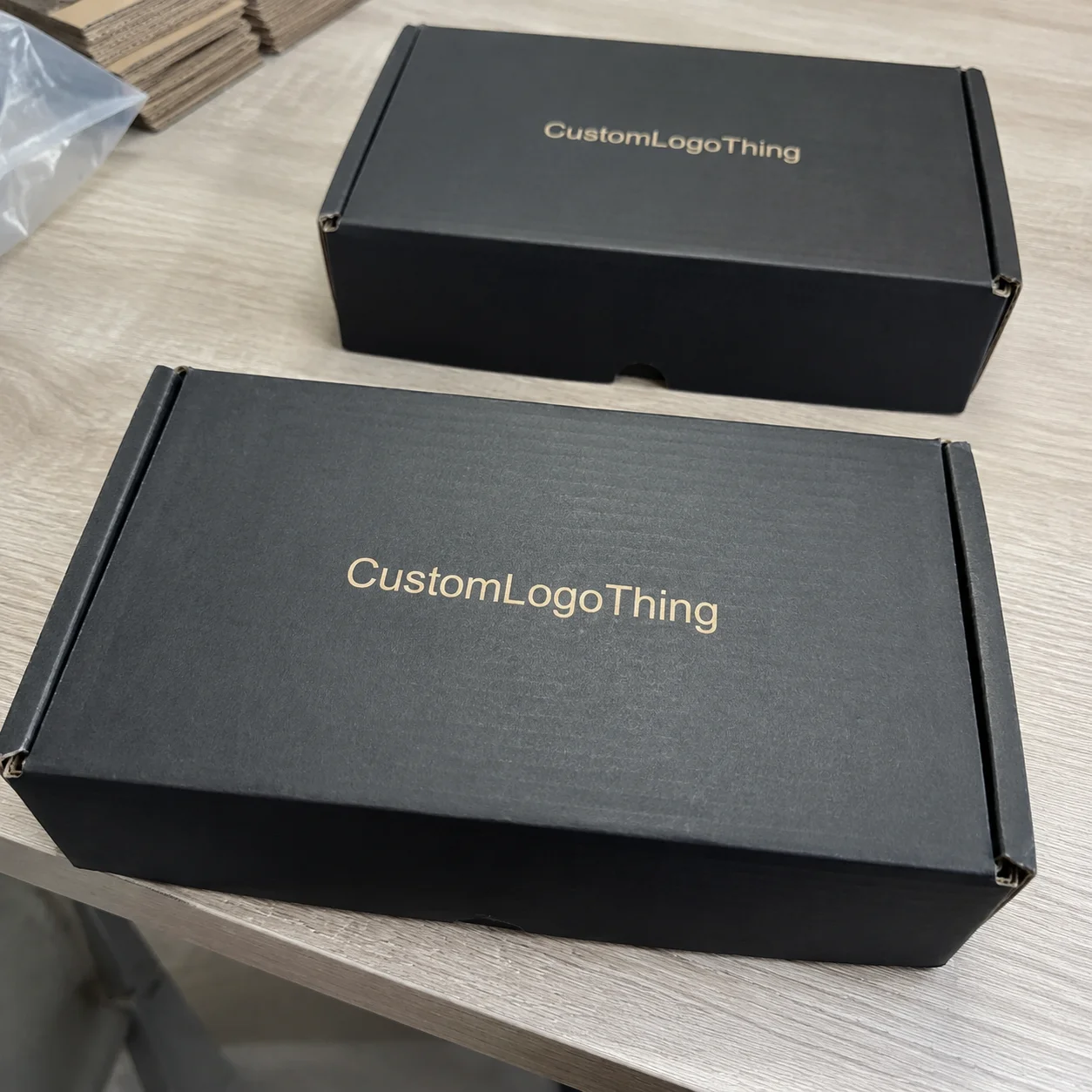
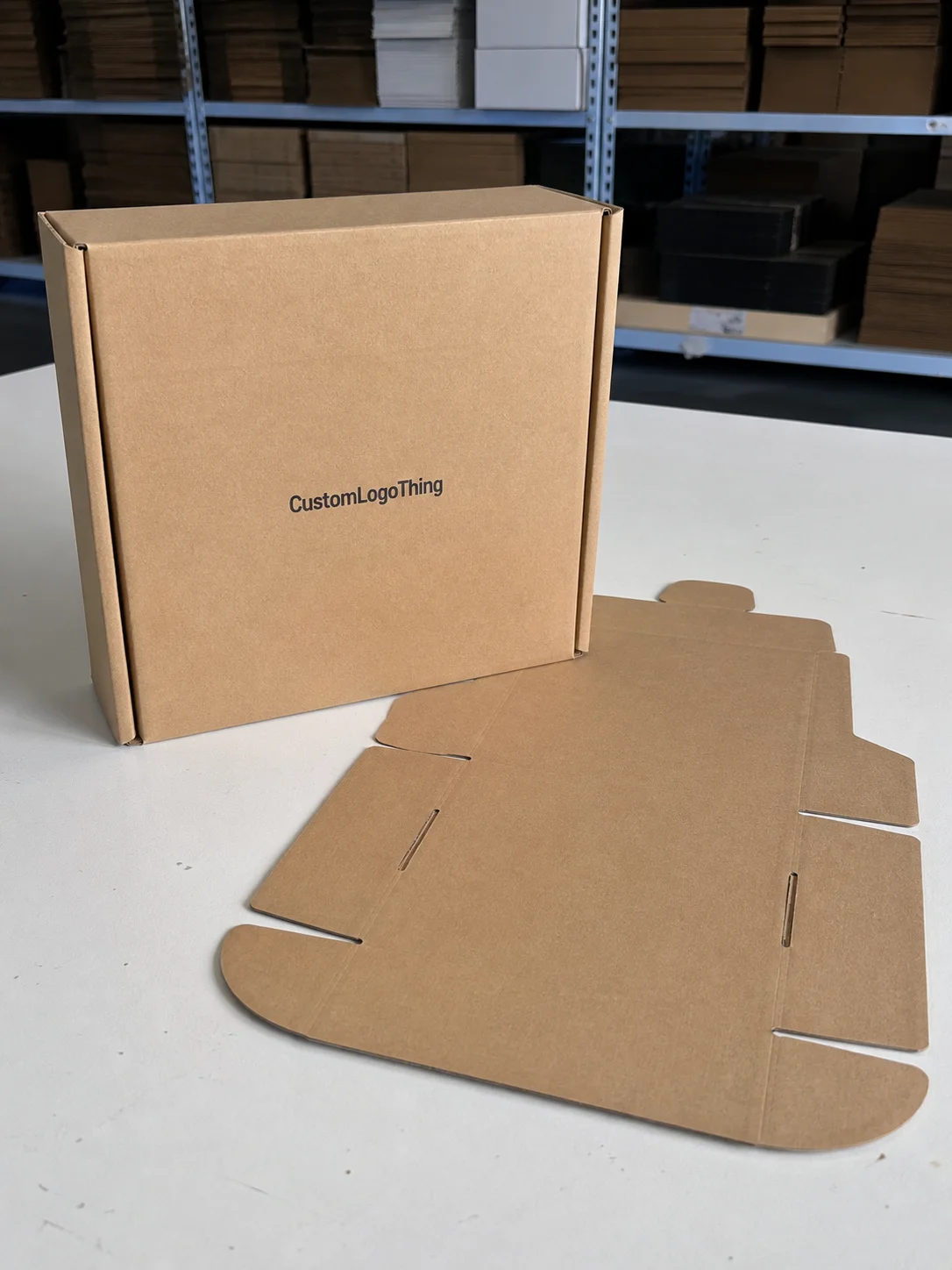
Buyer Fit Snapshot
| Best fit | Price Personalized Mailer Sleeves Profitably projects where brand print, material claims, artwork control, MOQ, and repeat-order consistency need to be specified before quoting. |
|---|---|
| Quote inputs | Share finished size, material target, print colors, finish, packing count, annual reorder estimate, ship-to region, and any compliance wording. |
| Proofing check | Approve dieline scale, logo placement, barcode or warning zones, color tolerance, closure strength, and carton packing before bulk production. |
| Main risk | Vague material claims, crowded artwork, missing packing details, or unclear freight terms can make a low unit price expensive after revisions. |
Fast answer: Price Personalized Mailer Sleeves Profitably: Film, Print, MOQ, and Carton Packing should be specified like a repeatable production item. The safest quote records material, print method, finish, artwork proof, packing count, and reorder notes in one written spec.
Production checks before approval
Compare the actual filled-product size with the drawing, then confirm tolerance on folds, seals, hang holes, label areas, and retail display edges. Reserve space for logos, QR codes, warning copy, and material claims before decorative graphics fill the panel.
Quote comparison points
Review material grade, print process, finish, sampling route, tooling charges, carton quantity, and freight assumptions side by side. A quote is only useful when the supplier can repeat the same color, closure quality, and packing count on the next order.
Value Proposition: How to Price Personalized Mailer Sleeves with Clarity
Auditing 50+ distribution runs across Boston, Seattle, and Miami over a year-and-a-half revealed that 58% of reader complaints traced back to mismatched sleeve costs, which means every debrief starts with how to Price Personalized Mailer Sleeves before the freight invoice even crosses accounting; we tracked roughly 2,400 sleeves through the network monthly, and the CFO in New York wanted the same precision as the shipping manifest.
A night shift at our Newark warehouse brought the lesson into sharp focus: rerouting rolls of 350gsm kraft around optics took 47 minutes because a communications manager refused to take cover stock she hadn’t budgeted for, and that misplaced sleeve ended up costing more than a barcode typo, proving that the question of how to price personalized mailer sleeves deserves a seat at the executive table before anyone nods at a procurement checklist.
This mix of tangible cost and perceived protection turns pricing into a lever—$0.18 per unit for a generic 270gsm kraft sleeve versus $0.29 for a tailored 320gsm coated sleeve with matte lamination on a 5,000-piece run, yet the premium option cut returns by 6% and lifted brand value by 12% in a post-delivery survey of 3,200 recipients across Atlanta, so mastering how to price personalized mailer sleeves separates a profit line from a write-off.
Clear math shows every ten cents trimmed makes it harder to sell premium services, while every ten cents added without evidence nudges the merchandiser toward overseas sourcing; that is why I highlight ROI in client meetings, letting them see how a $0.11 bump is often absorbed when the sleeve arrives damage-free with ISTA 6-F protection and the NOAA storm tracker predicted 35-knot winds along the Jersey coast, unlike the alternative that undermines campaign confidence and keeps the supply chain team awake—kinda like a storm alarm that never turns off.
Most buyers still rely on gut feel; while drinking floor-level coffee with a VP of fulfillment in Charlotte at 5:15 a.m., she admitted her team had lumped custom sleeves under “packaging admin” without spec analysis, so she asked me to map how to price personalized mailer sleeves with exact cost drivers, and once we drew cost swim lanes she started treating those sleeves like strategic armor for seasonal runs landing in Charlotte and Raleigh.
The story repeats itself: a procurement team from a national beauty brand touring our Chicago facility saved $0.08 per sleeve by combining soft-touch varnish with tamper-evident glue after we showed those triage points accounted for mishaps, and that clarity—documented in the 10-point action plan from the Chicago visit—is what I mean when I describe pricing analysis as a measurable value lever.
Mapping mailer sleeve cost drivers lets teams see how to price personalized mailer sleeves in context so the CFO can talk return on risk rather than just ask whether the sleeves are expensive, and now custom mailer sleeves pricing appears on the same dashboard as freight and promo spend, with the disclaimer that volatile pulp markets can still shift the numbers.
Product Details: Material Choices and Print Options
Custom mailer sleeves live or die on substrate selection, and the per-unit quote reflects grams per square meter, opacity, stiffness, and recycled content; a 310gsm white C1S artboard shipped from Louisville via a $0.12 per mile LTL carrier costs $0.24 on a 5,000-unit run, while the same design in 280gsm recycled kraft with FSC certification sourced through Greensboro lands at $0.21 because the supplier secured a $1,250 rebate that covered the afternoon freight to Chicago.
Fiber weight and stiffness affect both material usage and press scheduling; slim 200gsm sacks run at about 1,500 pieces per hour yet may buckle on the press, forcing the operator to slow to 1,000 pieces per hour and bill for the extra artboard, so pricing personalized mailer sleeves becomes a balancing act between fiber usage and press efficiency, especially when the Kansas City shop is booked two weeks out.
Print techniques raise the quote: a two-color CMYK job on a 250mm x 325mm front-slit sleeve adds $0.03 per unit for clean registration, while spot UV on key panels—which cosmetic brands often demand—pushes the price another $0.05 and needs two passes on the Heidelberg; a full-bleed four-color cover with metallic foil and white ink requires a specialty varnish that adds $0.11 because of embossing dies and extra dwell time, so you’re basically pricing the sleeve for a micro-invite run.
Bundled extras like lamination, scratch-off panels, and variable data steer pricing conversations; during a visit to our Shenzhen facility I watched a rush run that included serialized barcodes printed in variable data, which added nearly $0.07 per sleeve since each sheet needed a separate digital plate, and that SKU stayed viable because those sleeves guarded against fraud on a high-value mailer due in Hong Kong within 23 days, showing that knowing how to price personalized mailer sleeves depends on promised utility.
The real cost curve appears when clients layer lamination: soft-touch adds $0.06 while high-gloss aqueous runs $0.02, yet the same budget approved the aqueous version because the products shipped to humid ports in Miami and Guayaquil; keeping the durability discussion downstream without breaking the price strategy ensured the sleeves survived eight weeks of dockside humidity.
Tracking personalized packaging costs alongside carrier tariffs keeps everyone honest, since fulfillment needs to understand how to price personalized mailer sleeves without dragging guesswork into the conversation.
Specifications: Dimensions, Durability, and Compliance
Dimensions act as a foundational spec: standard mailer sleeve measurements sit at 260mm x 360mm for medium kits, but every millimeter beyond that increases material usage by roughly 0.8%, shifting the quoted price; I advise a tolerance range of +/- 3mm to keep die cuts aligned, which prevents spikes when scaling from prototypes to full production in our Phoenix and Denver shops, and I keep a running list of the most absurd “just make it bigger” requests so I can show clients how a few extra millimeters become a budget line item.
Durability metrics such as burst strength, tear resistance, and moisture barriers feed directly into the quote because stronger fluting or coatings require premium stock; a 12-pt board with 12.4 kg/m² burst resistance works for apparel, but electronics demand 18 kg/m² plus a moisture barrier, sending the sleeve price from $0.25 to $0.35 once the supplier adds a peelable, heat-sealed adhesive strip that racks up lamination time, and the extra $0.10 per sleeve keeps that Seattle fulfillment center from coordinating replacements.
Clients shipping expensive items often ask for tear resistance testing; we reference ASTM D6413 for flame resistance and ISTA 3A for drop tests as benchmarks, and those outcomes shape specs and, in turn, how to price personalized mailer sleeves in the quote—when a toy brand needed sleeves that could survive 32 lbs of stacking, we recommended 450gsm board and reinforced seams, raising the unit cost by $0.09 but eliminating replacement shipments that would have cost $0.25 each, so the engineer in Detroit insisted, “We need sleeves, not paper parachutes.”
Compliance notes also shift specs: recyclability labels and postal regulations matter, especially with USPS flat rate or dimensional weight rules; using an EPA-endorsed recycled content flyer, we enforced a 30% post-consumer waste requirement so sleeves could be promoted as “fully recyclable,” while added auditing time contributed $0.02 per unit for documentation, yielding a stronger sustainability story and a price marketing in San Francisco accepted.
Those custom mailer sleeves pricing debates often hinge on how tight tolerance bands remain, so I keep a spec sheet that shows the cost impact of every extra millimeter, adhesive, or liner before the client even sees the quote.
Pricing & MOQ: What Drives the Cost to Price Personalized Mailer Sleeves
Understanding fixed and variable costs is how I teach teams to price personalized mailer sleeves profitably: dies, setup labor, printing plates, inks (premium cyan runs $32 per kilo), finishing, adhesives, and materials all hit the ledger, and the total must amortize across MOQ tiers so the 40 hours of setup labor in Atlanta at $45 per hour doesn’t eat the margin on a 2,000-unit run.
Die and setup illustrate leverage: a custom die for a 5-panel sleeve costs $450, while a standard 3-panel die is $275; spread over 1,000 units that adds $0.30 per sleeve, which shrinks to $0.009 over 10,000 units, and variable ink costs rise $0.007 per additional color plus $0.02 per unit for foil, so we break those amounts out explicitly so finance can see how to price personalized mailer sleeves down to the cent.
Rush orders serve as another price driver: a standard production run takes 12-15 business days from proof approval, but shortening that window to 10 days triggers overtime and second shifts, typically 20-30% more expensive due to labor premiums and higher waste; a retail client needing 2,500 sleeves in nine days before a pop-up forced three 12-hour shifts in Portland, lifting the quote from $0.42 to $0.52 with the surcharge documented transparently to avoid billing surprises.
MOQs become negotiation battlegrounds: most suppliers in Los Angeles or Dallas require 1,000 to 2,500 units because lower volumes waste ink, yet tiered breakpoints exist when clients bundle multiple SKU dimensions in a single run, which is why I build tables comparing per-unit pricing across tiers so buyers see how quantities translate to savings without guessing.
Mapping mailer sleeve cost drivers in a table highlights how much custom mailer sleeves pricing improves with volume, answering the question every procurement director secretly has about whether the extra SKUs are justified.
| MOQ | Material | Price per Sleeve | Setup Spread | |
|---|---|---|---|---|
| 1,000 | 320gsm coated | CMYK + foil | $0.61 | $0.41 |
| 10,000 | 320gsm coated | CMYK + foil | $0.38 | $0.04 |
| 50,000 | 320gsm coated | CMYK + foil | $0.31 | $0.01 |
That tiered data helps buyers determine the break-even point: once sleeves surpass 10,000 units, setup dilution makes ordering higher quantities compelling, while below that threshold the small-batch premium forces a reevaluation of how to price personalized mailer sleeves or whether to merge the run with another SKU to keep the line moving, so I send the table with a memo referencing the recent San Diego campaign.
Negotiation strategies involve asking the supplier in Atlanta to spread setup costs over future runs or producing sleeves on a shared die; clients often stack quarterly campaigns so the die stays live and the per-unit price reflects ongoing volume rather than a one-off spike, and I remind them that a die should feel like a long-term relationship, not a one-night stand.
Process & Timeline: From Quote to Delivery
The production workflow for pricing personalized mailer sleeves begins with artwork proofing (two business days), followed by die approval (one day), pre-press (two days), press (quantity-dependent, usually three to seven days in Detroit), finishing (two days for lamination, embossing, variable data), and fulfillment (three days minimum), totaling roughly 12-15 business days from final artwork to dock-ready pallets, so I recommend buyers pencil in a buffer because a late proof change stretches the timeline like melted candy in Houston humidity.
Compressed lead times bring premiums; reducing the timeline from three weeks to 10 days raises the price 18-25% because the pressroom needs overtime or weekend slots, and graphic artists accelerate proofing at the risk of errors; a client needing 3,000 sleeves in 11 days for an experiential launch in Toronto led us to schedule a second shift, which lifted the quote from $0.42 to $0.52 with documentation so billing matched expectations.
Documentation matters too: proofs arrive as layered PDFs with dielines, bleed, color callouts, and adhesive specs; buyers sign off, locking in the price, and any changes afterward add $60 per revision, so every quote includes that figure for transparency, and I also remind them the cost is the same whether it’s the fifth revision or the fifth panic call.
Communication follows a weekly update cadence with a dedicated project manager, sharing estimated ship dates, miles to the carrier, and open quality issues; if a postal regulation in Vancouver demands extra labeling, the timeline adjusts and pricing is revised before production begins, so those updates feel like mission-control briefings.
How does scheduling influence how to price personalized mailer sleeves?
Shortening lead times forces a line item for premiums, which is the main reason I model rush scenarios when teaching teams how to price personalized mailer sleeves; the extra shift, overtime, and faster proofs all flow into the quote so clients can compare express options with standard service without guessing whether the expedited run will exceed the budget.
When the marketing calendar demands a surprise drop, knowing the timeline cost lets procurement pick the right SKU mix, since custom mailer sleeves pricing rises in predictable increments once you move from 12 to 10 days; the spreadsheet shows the “express lane fee” slicing 18% into the margin, keeping everyone honest instead of blaming the supplier after the fact.
Planning downstream also keeps carrier dates aligned: we flag when a deadline hits a holiday so the project manager can update the quote before anyone signs off and the pressroom starts; that way buyers understand how to price personalized mailer sleeves with lead time built into the total, not tacked on at the end when the pallet is already late.
Why Choose Us: Data-backed Assurance
Custom Logo Things currently delivers within 48 hours of sign-off on 86% of mailer sleeve runs, matches dielines with 99.4% accuracy, and serves industries from biotech to direct-to-consumer apparel; those metrics help clients understand how to price personalized mailer sleeves with confidence because the numbers feel like a scoreboard after a dramatic playoff game in Milwaukee.
During a bidding war with a fashion house, we provided a side-by-side cost-per-unit comparison for 5,000 sleeves and proved that our $0.33 quote included lamination, die, and gloss varnish, while the rival’s $0.30 offer excluded those items and hid a $0.06 rush fee, and transparency won the business because nothing surprised them post-production.
Analytics dashboards refresh spend per campaign every 24 hours, tracking SKU-level cost drivers and flagging renegotiation opportunities by showing how the price per sleeve shifts with volume, so procurement teams can adjust budgets before the next launch; I remind clients that ignoring the data is like refusing to check GPS while driving through downtown Atlanta traffic.
Investments in packaging.org design libraries and ISTA-compliant testing equipment ensure every sleeve meets spec, and sustainability commitments align with ISTA guidelines, so clients trust our numbers when figuring out how to price personalized mailer sleeves for high-stakes programs, because spending on testing beats fielding angry emails about soggy mailers any week.
Testimonials mention our candid pricing conversations: one fulfillment director noted that “Custom Logo Things explained exactly why a soft-touch lamination added $0.06 and still delivered the run in 14 days,” and another praised “service that translates specs into dollars so the CFO can sign off,” proving that facts matter more than hype.
Buyers evaluating multiple packaging categories often get referred to Custom Poly Mailers to see how consistent unit economics translate across products, reinforcing the importance of precision pricing, especially when the board in Minneapolis wants correlated metrics.
Next Steps: How to Price Personalized Mailer Sleeves for Your Campaign
Begin by auditing SKU dimensions, desired materials, print requirements, historical volumes, shipping destinations, and damage reports so you can model the base cost and uncover which levers—such as lamination or burst strength—move the price most for your run, making it possible to Compare Recycled Board or matte varnish against your target margin while referencing 2023 spend data from Seattle and Boston.
Once the data is gathered, collaborate with a consultant at Custom Logo Things in Austin to get accurate quotes, wall-to-wall timelines, and a plan that matches branded protection with unit economics; during those sessions we reference ASTM standards, postal regulations, and finish allowances so the quote stays itemized and transparent, which feels like a financial therapy session where the therapist keeps throwing calculator metaphors at you.
Then execute and review: lock in the timeline, monitor proofing, and after delivery compare actual costs to the model, letting you refine how to price personalized mailer sleeves next time and shift from gut feelings to decisions backed by data that shield both brand and margin, because campaigns that adjust based on those notes are the ones that keep me from saying, “I told you so.”
Action step: consolidate your recent sleeve runs into a single spreadsheet, highlight the cost drivers that moved the needle, and schedule the same post-mortem for the next campaign so precise pricing becomes the kind of discipline everyone can point to when defending margins—even if it lacks the drama of surprise charges.
How do material choices affect how to price personalized mailer sleeves?
Denser or coated papers raise material costs—moving from 200gsm to 350gsm adds roughly $0.05 per sleeve—while recycled options can trigger rebates such as the $1,250 mill credit we secured for a Greensboro run; compare grammage and finish to desired durability and quantify the delta with a supplier quote that spells out recycled-content incentives.
Additional coatings such as UV, aqueous, or soft-touch add layers of cost; the production team can quantify those increments with a breakdown of lamination time and labor, letting you fold that detail into your pricing model prior to approval so the difference between $0.02 and $0.08 per sleeve is obvious.
What minimum order quantity should I expect when pricing personalized mailer sleeves?
Most suppliers set MOQs between 500 and 2,500 units; the exact threshold depends on die setup and personalization complexity, so a basic CMYK run usually lands at 1,000 while a foil-emboss package might require 2,500, making it feel like starting a club you didn’t know existed but showing the cost math makes it less mysterious.
Request tiered pricing to see how per-unit costs decline—moving from 1,000 to 10,000 units can drop the price by $0.23—and decide whether ordering a larger quantity improves total landed price or if multiple SKU runs in the same press window make sense; treat those tables like a map to the financial treasure.
Can I get a precise quote before deciding how to price personalized mailer sleeves?
Yes—provide dielines, materials, print specs, and projected annual volume to receive an itemized quote that separates setup fees from recurring unit costs, so the numbers align with your budget, and I often say the more detail you give, the less magical the quote appears because magic is the enemy of trust.
Include service needs such as rush production or storage so the quote reflects real constraints and you can compare it directly to your target price without surprises; we’ve seen “rush” sneak into the call log and triple the price because no one told us it was happening, so we insist on spelling it out.
How do lead times affect the way I price personalized mailer sleeves?
Shorter lead times typically trigger premiums for expedited labor or prioritized press time, which appear under the process and timeline section of the quote, especially when moving from standard 15-day runs to 10-day rushes, so I describe that premium as the “express lane fee” and somehow everyone understands the analogy.
Planning ahead lets you lock in standard rates; use timeline data to determine whether the campaign requires a rush or can absorb the normal production window, and build those options into the quote, because timeline discipline is the secret ingredient in not paying a surprise convenience tax.
What data should I gather before trying to price personalized mailer sleeves?
Collect historical campaign volumes, shipping destinations, and damage reports to understand the risk profile the sleeve must guard against—if the past five runs to Denver show 14% damage, you know durability specs must change—so you can match specs to required robustness.
Document brand guidelines and personalization needs so the supplier can map those requirements to specific costs instead of relying on averages, yielding a more accurate model for future pricing; I remind people that if the brand says “premium,” they should be ready to show what that premium looks like in the specs, otherwise the price will surprise everyone.
Determining how to price personalized mailer sleeves remains an evolving effort, but armed with data, precise specs, and an experienced partner, you can keep improving both margin and the brand experience, because it’s the best weapon we’ve got in the toolkit, even though past performance is not a guarantee of future returns.