Buyer Fit Snapshot
| Best fit | Reduce Packaging Waste for Your Business projects where brand print, material claims, artwork control, MOQ, and repeat-order consistency need to be specified before quoting. |
|---|---|
| Quote inputs | Share finished size, material target, print colors, finish, packing count, annual reorder estimate, ship-to region, and any compliance wording. |
| Proofing check | Approve dieline scale, logo placement, barcode or warning zones, color tolerance, closure strength, and carton packing before bulk production. |
| Main risk | Vague material claims, crowded artwork, missing packing details, or unclear freight terms can make a low unit price expensive after revisions. |
Fast answer: Reduce Packaging Waste for Your Business: Material, Print, Proofing, and Reorder Risk should be specified like a repeatable production item. The safest quote records material, print method, finish, artwork proof, packing count, and reorder notes in one written spec.
Production checks before approval
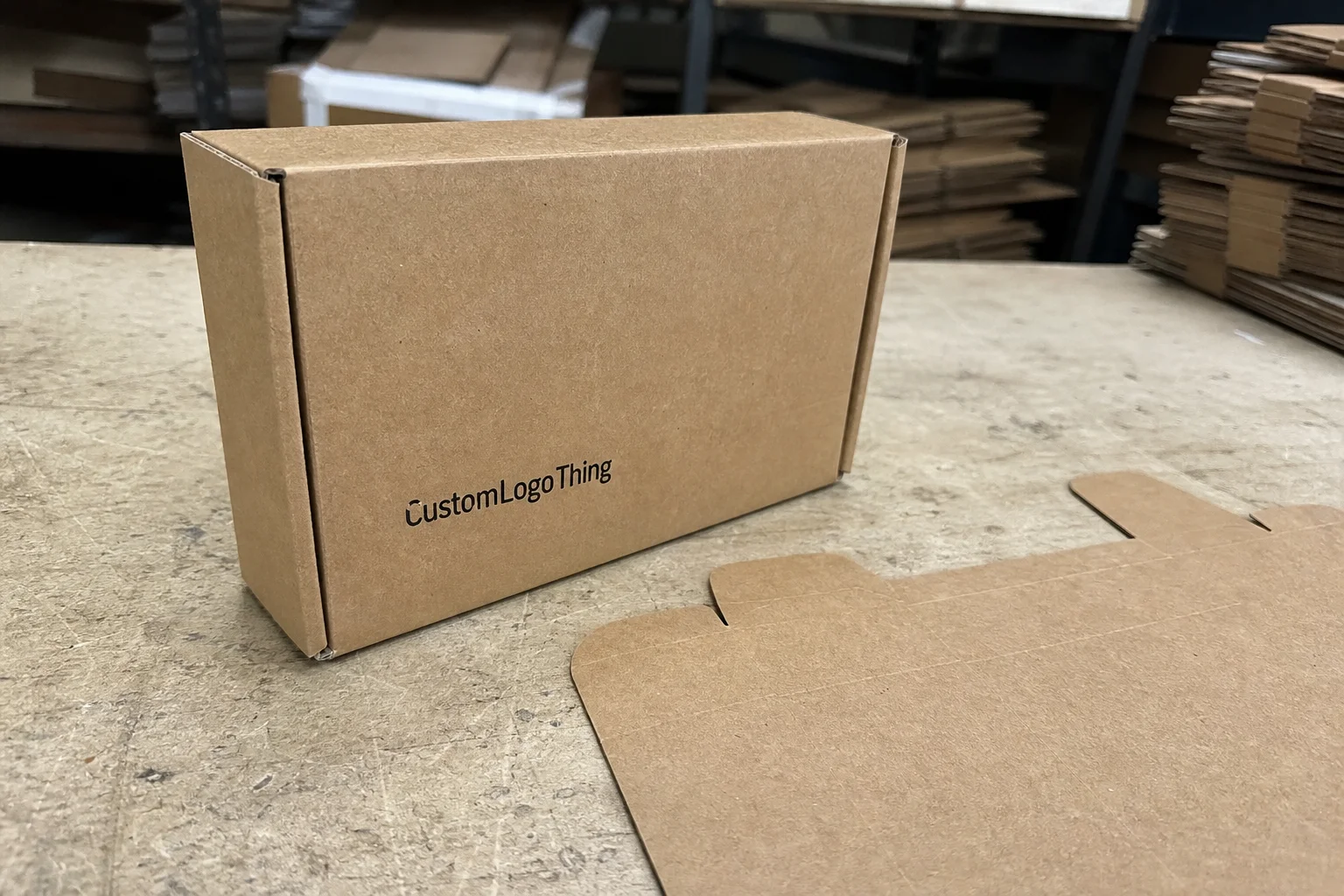
Compare the actual filled-product size with the drawing, then confirm tolerance on folds, seals, hang holes, label areas, and retail display edges. Reserve space for logos, QR codes, warning copy, and material claims before decorative graphics fill the panel.
Quote comparison points
Review material grade, print process, finish, sampling route, tooling charges, carton quantity, and freight assumptions side by side. A quote is only useful when the supplier can repeat the same color, closure quality, and packing count on the next order.
I remember walking through a client's 200,000 square foot fulfillment center in Memphis, Tennessee about six years ago, and I spotted stacks of 18x14x12 ECT-32 double-wall corrugated boxes overflowing with packing peanuts. "How much product actually goes in those boxes?" I asked the operations manager. He shrugged. "Probably about 40% of the volume." Six months later, after a complete packaging audit and redesign with custom printed boxes sized to actual product dimensions, that same company was spending $180,000 less annually on packaging materials alone—and that wasn't even counting the savings on freight, which dropped by an additional $67,000 from reduced dimensional weight charges.
That's the reality most businesses miss: packaging waste isn't just an environmental problem. It's a financial drain hiding in plain sight on every receiving dock and warehouse floor across the country. The best part? Reducing packaging waste is one of the few sustainability initiatives that actually pays for itself, often within the first quarter of implementation.
The Surprising Cost of Packaging Waste Hanging Around Your Warehouse
Packaging is just the cost of doing business? Let me share some numbers that might change your mind. Single-use packaging costs US businesses approximately $11.4 billion annually in disposal fees and material waste—yes, that's billion with a B. Most of that spending happens invisibly, tucked into operational budgets as a line item nobody really examines. I've been in hundreds of budget meetings across facilities in Chicago, Los Angeles, and Dallas, and I've never seen anyone get excited about the packaging line item. Nobody puts "reduced our void fill spending by $40k" on their LinkedIn profile, but they should.
Here's what I see consistently when I walk into a new facility: boxes that are two sizes too large, void fill that exceeds the value of the product inside, and pallets wrapped so thick you need bolt cutters to get through them. Each of these represents money flying out the door.
Excess packaging adds unnecessary shipping weight, and this is where the costs really compound. Carriers like UPS and FedEx charge based on dimensional weight—a formula that considers both actual weight and package volume. An oversized box might weigh two pounds, but if it's large enough, they'll charge you for five or six pounds. I've seen clients paying $3.40 per shipment extra simply because they hadn't right-sized their product Packaging for Smaller items.
The transportation impact extends beyond parcel carriers. LTL freight charges work the same way—dimensional weight pricing means bulky, lightweight shipments cost just as much as dense, heavy ones. Companies shipping 500 packages per day might be paying $1,500-$2,000 monthly in excess dimensional weight charges from over-boxing alone. That's $18,000-$24,000 annually, and most operations managers have no idea it's happening. They find out when I show them the carrier invoices side-by-side with their packaging specs. The expressions are always fun to watch.
Sustainable packaging solutions can reduce per-unit costs by 15-25% while simultaneously meeting growing consumer expectations for environmental responsibility. You don't have to choose between doing the right thing and protecting your margins. In most cases, waste reduction and profit improvement go hand in hand.
What Does It Mean to Reduce Packaging Waste in Business Operations?
Before we get into implementation, let's make sure we're on the same page about what "reducing packaging waste" actually means in practice. I've worked with companies in Seattle, Denver, and Atlanta that thought they were addressing this issue by switching to recyclable materials, only to discover they were still shipping 40% air in every carton. Spoiler: swapping regular cardboard for recycled cardboard while shipping a USB cable in a shoebox is not a sustainability strategy. It's just expensive virtue signaling.
Defining sustainable packaging means thinking about materials designed to minimize environmental impact throughout their entire lifecycle—from raw material extraction through manufacturing, transportation, consumer use, and end-of-life disposal. It means asking: "What happens to this packaging after the customer opens it?" Does it belong in a recycling bin, or does it end up in a landfill regardless of what the marketing says?
The difference between recyclable, biodegradable, and compostable packaging materials matters more than most marketing claims suggest. Recyclable materials like corrugated cardboard and certain plastics can be processed through municipal recycling programs and turned into new products. Biodegradable materials break down naturally over time, though the timeline can range from months to decades, and some leave harmful microplastics behind. Compostable materials, when certified to ASTM D6400 standards, must break down completely within 90 days in commercial composting facilities, leaving no toxic residue.
I've seen brands in Phoenix and Miami switch to "biodegradable" plastic packaging thinking they were solving their sustainability problem, only to learn their local municipality doesn't accept that material type in their recycling stream. The packaging ended up in a landfill anyway, and the company had paid a 30% premium for the privilege.
Circular economy principles apply to your packaging supply chain and vendor relationships worth exploring early in your waste reduction journey. The circular economy model means designing out waste from the beginning—not treating packaging as something to dispose of, but as a material to recover and reuse.
In practical terms, this might look like working with suppliers who take back post-industrial scrap corrugated for reprocessing, designing packaging that uses minimum 30% post-consumer recycled content, or partnering with converters who offer closed-loop programs where your old corrugated becomes someone else's new box material. Several major brands have committed to 100% recyclable, reusable, or compostable packaging by 2025, and their vendor requirements are starting to cascade down through the supply chain.
The Business Case: How Reducing Packaging Waste Impacts Your Bottom Line
This section is where I see eyes light up during client meetings. Material cost savings through right-sizing packaging dimensions to match product actuals represent the lowest-hanging fruit in your waste reduction journey. I worked with a cosmetics company in New Jersey shipping lipsticks in 12x10x6 boxes when the product itself measured 3x2x1 inches. The outer box alone cost $1.45 per unit at 350gsm C1S artboard. We redesigned to a 5x4x2 mailer that cost $0.38 per unit—and that was for a custom packaging solution with full-color printing. Total savings: over $1 per package, and that's before freight. For a company shipping 50,000 units monthly, that's $50,000+ in savings. Let that number sink in for a minute.
Reduced shipping expenses by eliminating void fill and oversized boxes that waste carrier dimensional weight can transform your logistics costs. Here's a concrete example: a small appliance manufacturer in Grand Rapids, Michigan was shipping toaster-ovens in 18x14x12 boxes with two inches of bubble wrap on all sides. Switching to a 14x10x8 Box with Custom foam inserts reduced dimensional weight from 14 pounds to 7 pounds per shipment. At $0.78 per pound for UPS Ground freight, they saved $5.46 per package on shipping alone. Their Packaging Material Costs also dropped by 60%—from $1.85 per package to $0.74 per package. Within six months, they'd recovered the $12,000 investment in new tooling.
Lower disposal and landfill fees as waste volume decreases significantly affects operations budgets that often go unexamined. A mid-sized e-commerce operation in Portland, Oregon was paying $2,400 monthly for waste removal, with cardboard and packaging materials comprising roughly 70% of their waste stream. After implementing right-sized packaging and switching to paper-based void fill, their monthly waste disposal costs dropped to $890—a savings of over $18,000 annually. The additional benefit? They actually started generating revenue from their cardboard recycling program instead of paying for disposal, generating an additional $3,600 annually at current cardboard prices of $85 per ton.
"We thought sustainable packaging would cost us more. The reality was it was costing us more to NOT change. Our packaging waste reduction initiative paid for itself within 45 days of implementation."
— Operations Director, regional 3PL provider in Columbus, Ohio
Tax incentives and sustainability certifications that appeal to enterprise customers requiring ESG compliance are becoming increasingly important in B2B relationships. If you're selling to major retailers or enterprise customers like those served by Custom Logo Things, you've probably noticed Request for Proposal documents now include specific questions about environmental practices, renewable materials usage, and measurable sustainability goals. Companies with documented packaging waste reduction programs have a competitive advantage in these evaluations.
The ESG angle is only going to get more important. We're past the point where "we care about the environment" is enough to win enterprise contracts. Now they want proof. They want metrics. They want to see that you've actually done the work. And if you haven't? Your competitor who has will win the business. Simple as that.
Federal and state tax incentives exist for businesses using recycled content packaging and sustainable materials, though navigating these varies by location and industry. Several utilities offer rebates for companies implementing packaging waste reduction that reduces transportation fuel consumption. The ROI calculation should include these potential incentives alongside direct material and freight savings.
How to Reduce Packaging Waste: A Step-by-Step Implementation Process
Need to know how to Reduce Packaging Waste business operations efficiently? Let me walk you through how to actually implement packaging waste reduction in your operation. I've guided dozens of companies through this process—from 50-person e-commerce startups in Austin to major CPG brands in Minneapolis—and the same steps consistently produce results.
Step one: conducting a packaging audit. Catalog every packaging component you currently use—materials, suppliers, unit costs, and waste streams. Don't guess at this. Pull actual invoices and physically examine what's sitting on your shelves. I recommend creating a simple spreadsheet listing each SKU, the packaging materials used, per-unit cost, and estimated waste percentage. In one three-day audit at a specialty food company in Napa Valley, California, we identified that individually wrapped each jar in bubble wrap, then placed it in a gift box, then wrapped the gift box in tissue paper, then put two gift boxes in an over-sized shipper. Four layers of packaging for a $24 jar of honey. Unnecessary? Absolutely.
Identifying quick wins means looking for unnecessary components you can eliminate immediately. Double-walled boxes where single-wall would suffice. Tissue paper wrapping that adds no protective value. Excessive inner padding that protects against impacts the product will never experience. Poly bagging items that will survive without it. During a recent audit at a consumer electronics company in Shenzhen, China—one of their manufacturing partners—we found a company spending $4,200 monthly on shredded paper void fill for products that could safely ship with die-cut corrugated inserts. We switched them, and their void fill costs dropped to $900 monthly. That's a $3,300 monthly savings with a four-week implementation timeline.
Right-sizing your packaging requires working with manufacturers like custom box producers to match dimensions precisely to your products. Standard box sizes exist because they're convenient for manufacturers, not because they serve your interests optimally. When you work with a custom packaging manufacturer, you can specify exact interior dimensions that accommodate your product with minimum headspace while allowing for any required protective materials.
Custom corrugated pricing varies by specification, but in general, you're looking at $0.35-0.90 per unit for run sizes under 5,000 pieces. For runs of 5,000-10,000 pieces, pricing typically drops to $0.25-0.65 per unit. The material savings in reduced freight and eliminated void fill typically offset this within the first few months. For high-volume items shipping 10,000+ units monthly, the economics are even more compelling—expect per-unit pricing of $0.18-0.42. Lead times for custom boxes average 2-3 weeks for plain stock, 4-6 weeks for printed designs, and 8-12 weeks for complex die-cut structures from facilities in California or Pennsylvania.
Switching to sustainable alternatives opens several options worth exploring. Recycled corrugated board uses 100% post-consumer content and performs identically to virgin material in most applications, typically costing only $0.02-0.08 more per unit. Mushroom packaging, made from agricultural waste and mycelium, provides excellent cushioning for fragile items and decomposes completely in 45 days under commercial composting conditions. Ocean-bound plastic materials, sourced from waste collection programs in coastal communities in Indonesia and the Philippines, offer strong sustainability narratives for retail packaging. Each has different cost profiles and supply chain considerations—expect 6-10 week lead times for specialty materials.
Timeline expectations for waste reduction business-wide: most businesses see initial results within 90 days, with full implementation taking 6-12 months depending on product line complexity and supplier readiness. The key is starting with pilot programs on your highest-volume items, validating the changes through normal distribution, then rolling out across remaining products. Trying to change everything simultaneously guarantees chaos.
Common Mistakes Businesses Make When Trying to Reduce Packaging Waste
After two decades in this industry, I've seen the same mistakes repeat themselves across companies of all sizes. Let me save you the trouble of learning these lessons the hard way.
The most common error is prioritizing aesthetics over functionality. Yes, your branded packaging matters for customer experience, but unboxing delight doesn't require four layers of unnecessary protection. I visited a client in San Francisco who insisted on rigid setup boxes for every product—they looked beautiful but cost $2.80 per unit versus $0.45 for a straight-corrugate mailer with the same branding. For products that don't require that level of structural protection, this decision added over $40,000 annually to their packaging budget. Forty. Thousand. Dollars. Per year. For boxes that looked the same on a shelf but cost six times more to produce.
Choosing the cheapest option without considering total cost of ownership catches many businesses off guard. That thin-wall 60-gauge poly mailer might cost $0.08 less than a heavier 75-gauge version, but if it tears during shipping and causes product damage, your savings evaporate instantly. Or if dimensional weight calculations mean you're paying $0.65 more per shipment in freight charges, the material savings disappear within the first 100 packages. Always calculate landed cost before making packaging decisions.
Switching materials without testing transit performance creates expensive problems. A recycled corrugated board with 30% post-consumer content might behave differently than your current material under high humidity conditions or when stacked on pallets. I once saw a company switch to a more sustainable void fill material that compresses more easily than the expanded polystyrene they'd been using. Their damage rate tripled from 2.1% to 6.8% before they figured out the root cause. Before committing to new materials, request samples and run your own ISTA 3A or 3B transit tests to validate performance—the $3,000-5,000 testing cost is nothing compared to a damaged shipment recall.
Implementing changes across all product lines simultaneously instead of piloting with a single SKU spreads your team too thin and makes troubleshooting nearly impossible. Pick your top 2-3 product categories by volume, implement changes there, measure results, adjust based on what you learn, then expand. When a major athletic apparel brand tried to convert all 12,000 SKUs at once, their warehouse operations descended into chaos for three months. When they re-grouped and piloted category-by-category, the program succeeded smoothly.
Failing to communicate changes to customers causes confusion that costs more than you might think. When you remove tissue paper from your jewelry boxes or switch from glossy to matte finish, customers notice and sometimes interpret these changes as downgrades. A beauty brand in Boston removed the decorative sleeve from their product packaging to reduce material usage, and customer satisfaction scores dropped 8% in the following quarter—customers thought the product quality had changed. Clear communication about sustainability improvements and what customers can expect turns packaging changes into brand-building opportunities.
Expert Tips for Long-Term Packaging Waste Reduction Success
Building relationships with packaging manufacturers who offer design services and material sampling programs delivers long-term value beyond the immediate project. I've worked with the same three corrugated converters in Atlanta, Philadelphia, and Los Angeles for over a decade because they understand my clients' needs and provide responsive service. These relationships mean faster sample turnaround (often within 5-7 business days), more flexibility on minimum orders, and sometimes early access to new sustainable materials before they're widely available.
When evaluating suppliers, ask about their design assistance capabilities. Many converters offer structural engineering support at no charge because they know successful designs generate repeat orders. Request material samples that you can test in your own environment—humidity chambers, compression testers, and actual shipping conditions tell you more than spec sheets ever can.
Negotiate vendor take-back programs where suppliers reclaim and recycle packaging materials. Several major paper mills like International Paper and Georgia-Pacific have programs where they accept post-industrial corrugated waste and credit it toward new material purchases. This keeps waste out of landfills and reduces your raw material costs simultaneously. At a 200,000 square foot e-commerce fulfillment center in Nashville, Tennessee I advised, we negotiated free weekly pickups from our corrugated converter when we committed to sending over 10,000 pounds monthly. The converter used the material for their own recycling stream, and we eliminated our cardboard disposal costs entirely—saving $14,400 annually in disposal fees.
Implement package weight tracking in your warehouse management system (WMS) to identify anomalies and continuous improvement opportunities. Most WMS platforms support weight tolerances—flagging shipments that fall outside expected ranges. When a package weighs significantly more or less than expected, it might indicate wrong materials, loading errors, or quality issues. A client in the pet products space discovered their warehouse team had been using an older, heavier gauge 200# test box for one SKU due to a labeling confusion—they corrected it within 24 hours of the anomaly appearing in their reports, saving $2,340 monthly in unnecessary material costs.
Train fulfillment teams on proper loading techniques that reduce the need for protective materials. Proper carton closure—taping all seams, ensuring flaps are flat, not overfilling—prevents the majority of product damage that drives excess packaging usage. I toured a facility where 15% of damage claims came from improper carton sealing. After implementing training and quality checks, damage claims dropped to under 4%, and their protective packaging requirements decreased correspondingly—saving $18,000 annually in void fill alone.
Set measurable KPIs that guide your program: tracking waste cost per order (target: under $0.35 per order), packaging weight per shipment (target: under 12 ounces for parcels under 5 pounds), and recycling rates (target: 95%+) creates accountability and identifies improvement opportunities. Review these metrics monthly and celebrate improvements with your team. Packaging waste reduction works best when everyone sees their contributions to the program.
Your Action Plan: Getting Started with Packaging Waste Reduction Today
Here's exactly what to do starting today, organized in priority order. No fluff, no motivational quotes—just practical steps you can implement this week if you're serious about change.
First: audit your top 20% of products by volume, identifying oversized and over-packaged items