Buyer Fit Snapshot
| Best fit | Store Compostable Mailers projects where brand print, material claims, artwork control, MOQ, and repeat-order consistency need to be specified before quoting. |
|---|---|
| Quote inputs | Share finished size, material target, print colors, finish, packing count, annual reorder estimate, ship-to region, and any compliance wording. |
| Proofing check | Approve dieline scale, logo placement, barcode or warning zones, color tolerance, closure strength, and carton packing before bulk production. |
| Main risk | Vague material claims, crowded artwork, missing packing details, or unclear freight terms can make a low unit price expensive after revisions. |
Fast answer: Store Compostable Mailers: Film, Print, MOQ, and Carton Packing should be specified like a repeatable production item. The safest quote records material, print method, finish, artwork proof, packing count, and reorder notes in one written spec.
Production checks before approval
Compare the actual filled-product size with the drawing, then confirm tolerance on folds, seals, hang holes, label areas, and retail display edges. Reserve space for logos, QR codes, warning copy, and material claims before decorative graphics fill the panel.
Quote comparison points
Review material grade, print process, finish, sampling route, tooling charges, carton quantity, and freight assumptions side by side. A quote is only useful when the supplier can repeat the same color, closure quality, and packing count on the next order.
How to store compostable mailers: what they are and why storage matters
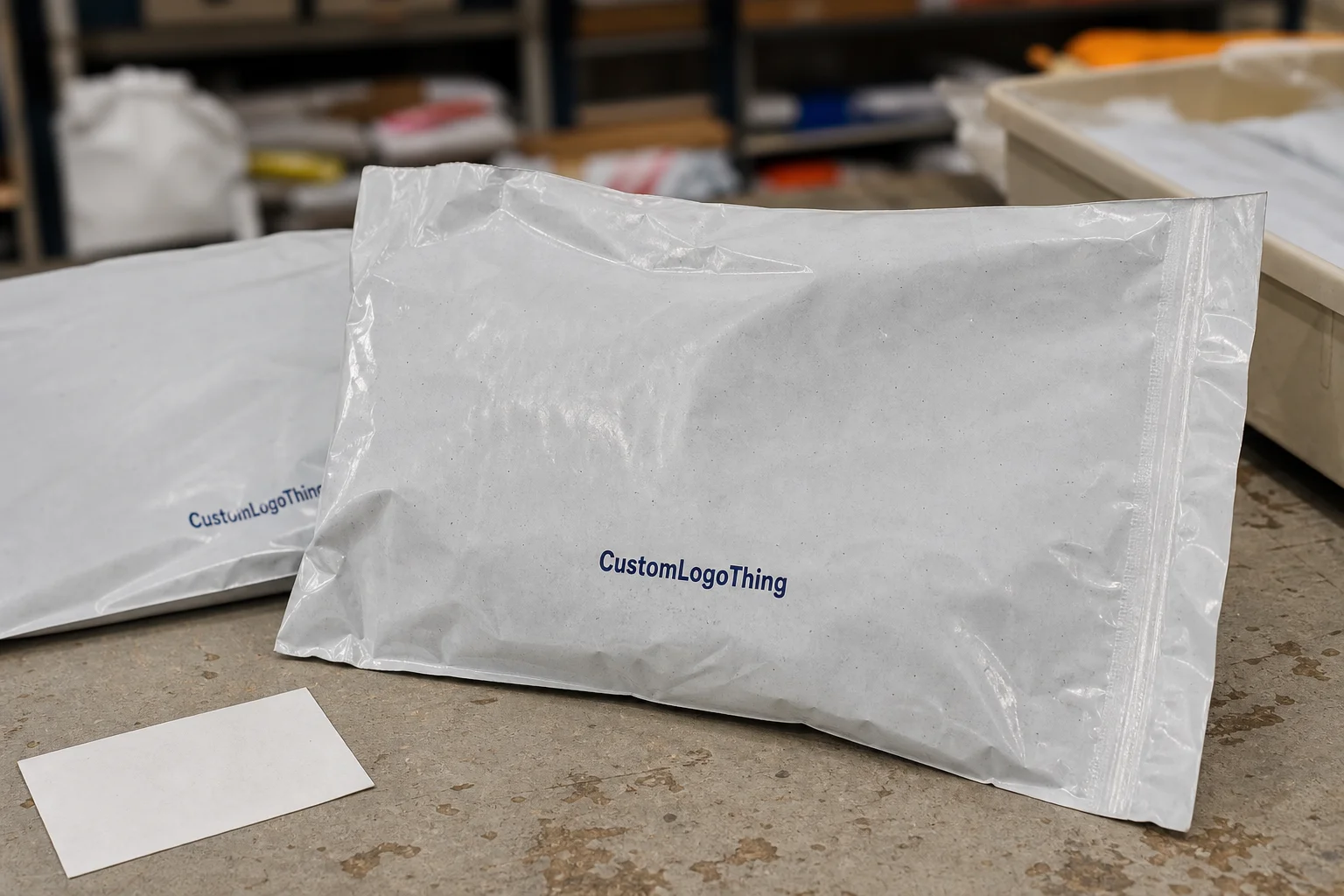
The first time I watched a pallet of compostable mailers go sideways, it wasn’t during shipping. It happened in storage. A receiving dock in Shenzhen had a hot afternoon, a damp night, and cartons parked too close to a bay door. By the time the team opened them two weeks later, the surface had gone slightly tacky, the seals felt weaker, and a few bags had a faint odor that nobody wanted to explain to a customer. That was the moment I stopped treating storage like an afterthought. If you want to understand how to store compostable mailers, start here: these products can lose performance long before they ever reach a bin if the storage conditions are sloppy.
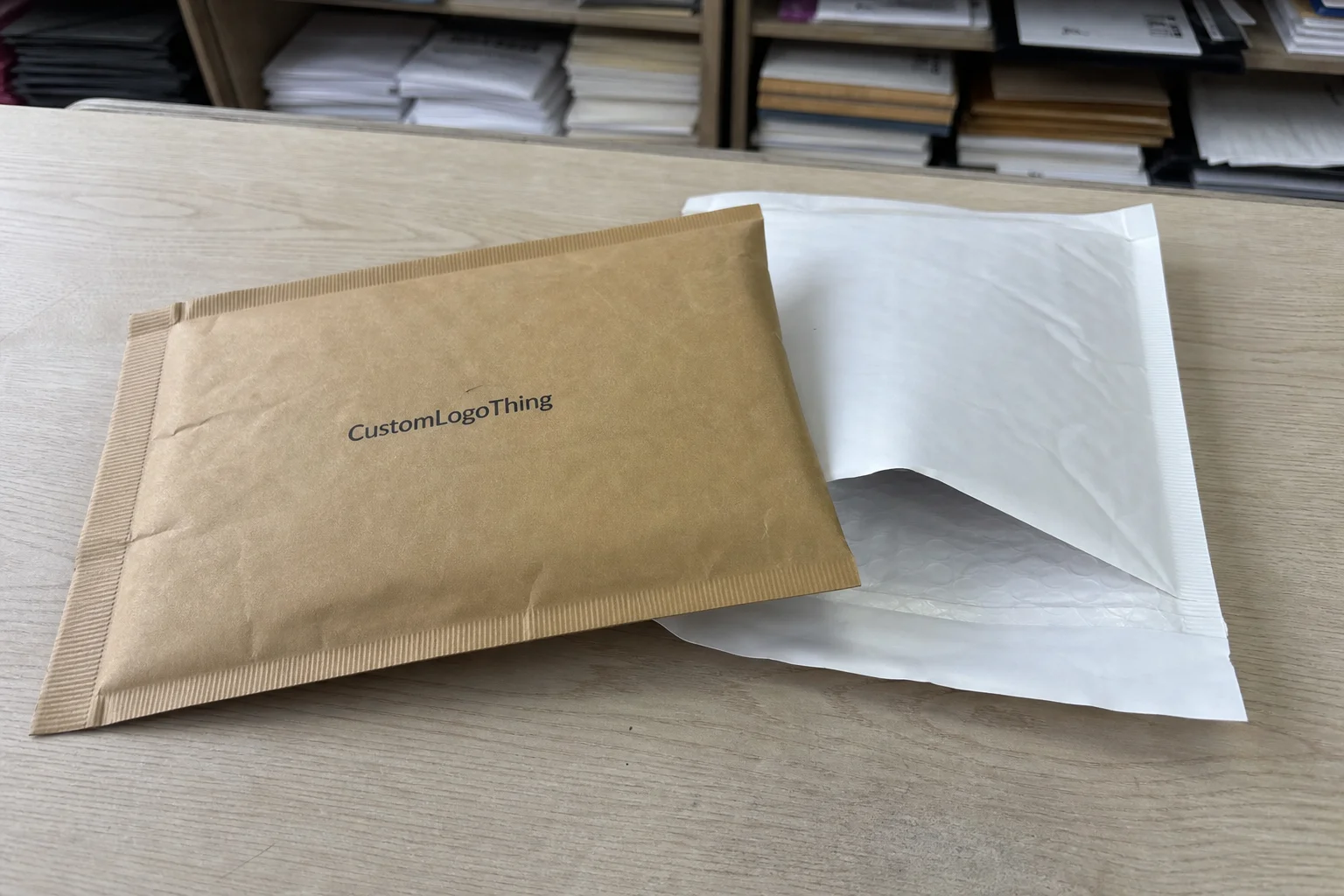
Compostable mailers are usually made from plant-based polymers, certified compostable blends, or layered films designed to break down under the right composting conditions. They are not the same as conventional poly mailers, which are built to resist environmental change for a long time. That difference matters. If you’re trying to figure out how to store compostable mailers properly, you need to treat them as sensitive packaging, not as plastic that can sit anywhere for months on end. I’ve seen people toss them into a warm corner like they’re indestructible. They’re not little superheroes.
In practical terms, poor storage can show up as weakened seals, warped film, sticky edges, print fading, odor changes, and shortened usable life. I’ve seen a brand spend $0.19 per unit on 8,000 compostable mailers, then lose almost 9% of that inventory because it sat near an uninsulated wall and absorbed moisture. That’s not a sustainability win. That’s a silent cost leak. And honestly, this is where a lot of eco-friendly packaging programs stumble: the packaging is chosen for the right reasons, but the warehouse behavior still follows old habits. (Warehouse habits are stubborn. Weirdly stubborn.)
Compostable does not mean indestructible. It means the material is engineered to break down under specific conditions, and storage is part of quality control. If a business is serious about green packaging, zero-waste goals, and a lower carbon footprint, then learning how to store compostable mailers is not a side note. It is part of the product lifecycle.
Here’s the promise: keep the process simple, keep the conditions stable, and keep your stock moving. I’ll show you what affects shelf life, how to store compostable mailers in a real warehouse, and where most teams accidentally create waste without realizing it. No drama. Just useful habits, the kind That Save Money and protect product quality.
How compostable mailers work: material behavior, shelf life, and timing
To understand how to store compostable mailers, it helps to understand why they behave differently in the first place. Many are built from starch-based blends, PLA, PBAT, or other compostable polymers. Those materials can respond to moisture, heat, and UV exposure in ways that conventional polyethylene usually does not. That does not make them fragile in a cartoonish sense. It makes them conditional. They perform well within a storage window, and then the window narrows if the environment is bad.
Three things tend to happen over time. First, embrittlement: the film gets less flexible, which can lead to cracking at folds or stress points. Second, softening: in warmer, humid rooms, the material may feel rubbery or slightly sticky, especially around seals. Third, print and adhesive changes: branding can fade faster, and any pressure-sensitive area may lose consistency. A buyer once told me, after a supplier meeting in Guangzhou, that the mailers “looked fine on the outside but fought us at packing.” That is exactly what storage damage feels like in practice. It hides until the shift starts.
Shelf life is another area where people want a single number, but that number is usually misleading. For how to store compostable mailers, shelf life is not a universal 12 months or 18 months across all SKUs. It depends on the resin blend, the thickness, the print method, the carton style, and whether the supplier used protective secondary packaging. A mailer shipped in a sealed carton with low exposure during transit will generally hold up better than loose product repacked into open bins. A premium run made from 35-micron PLA/PBAT film in a double-wall shipper from Dongguan will behave differently from a lighter 25-micron mailer packed in a single-wall carton out of Ho Chi Minh City.
I like to think about the process as a timeline:
- Receiving: inspect cartons on arrival for punctures, damp corners, and odor.
- Acclimating: let shipments settle if they came from a different climate zone, especially after a cold truck-to-hot warehouse transition.
- Storing: keep inventory in a stable area, off the floor, and out of direct light.
- Rotating: use FIFO so older lots move first.
- Using: pull and test sample mailers if stock has sat for an extended period.
The timeline matters because materials do not care about your reorder schedule. If you buy 30,000 units to chase a lower unit cost, but you only move 3,000 per month, those bags may sit too long and age unevenly. That is why how to store compostable mailers is really a purchase strategy, a receiving process, and a warehouse routine all at once.
One packaging manager I worked with in a Midwest fulfillment center had a simple rule: if inventory sits longer than two stock cycles, it gets rechecked. Not because there’s magic in the number two. Because that team knew their turnover rate, which was roughly 6 weeks for standard SKUs and 10 weeks for seasonal items. That kind of discipline keeps compostable mailers usable and keeps the accounting department from writing off avoidable waste.
For a helpful standards perspective, review general packaging and compostability guidance from industry bodies like packaging.org and certification references from fsc.org. Those sites won’t tell you exactly where to place each carton, but they do reinforce the broader idea: material integrity depends on handling as much as on design.
Key factors that affect how to store compostable mailers
If you want to know how to store compostable mailers without overcomplicating things, start with the four variables that matter most: temperature, humidity, light, and contamination. The rest is operational detail.
Temperature comes first. Keep inventory in a cool, stable environment. Not freezing. Not near a heater. Not in the hot zone beside a dock door that opens 40 times a day. Heat spikes are more dangerous than a steady average temperature because they stress the film repeatedly. A warehouse that swings from 18°C to 34°C is rougher on compostable materials than one that sits at 24°C all day. In a supplier negotiation I sat in on in Taipei, the topic of storage was nearly dismissed as “warehouse stuff.” Then the returns data came out: the highest defect rate came from cartons stored next to a sunlit mezzanine window. The room got quiet very fast.
Humidity is the second big one. Excess moisture can create tackiness, curl, odor changes, and premature weakening. Very dry air can also be a problem because it can alter flexibility and make films behave unpredictably during packing. I’ve seen teams assume a dry warehouse is automatically safe. It isn’t. Too dry can be less damaging than too wet, but “less damaging” is not the same as ideal. If you’re deciding how to store compostable mailers in a humid region, you may need dehumidification or at least a storage room with better environmental control. In one case in Singapore, the dehumidifier cost less than the damage from a single bad pallet. That was a very short meeting.
Light exposure is next. Direct sunlight is the obvious enemy, but strong indoor UV from windows and skylights can matter too. Prolonged light can weaken the material structure and fade printed branding. If your packaging is part of the customer experience, faded logos make the product look older than it is. That matters in subscription boxes, DTC fulfillment, and retail backroom storage alike.
Air quality and contamination are easy to overlook. Dust, oils from machinery, solvent fumes, and even strong warehouse cleaners can affect the surface of compostable mailers. Adhesives and seals don’t always fail immediately. Sometimes they just become less predictable. And unpredictable packaging slows the line. No one notices the cost in the moment, but 3 seconds per parcel adds up fast across 1,500 orders.
Packaging format and stack pressure also change the equation. Cartons that are crushed or overstacked may deform the bags inside. Pallet wrap can help, but it should not create a tight, moisture-trapping cocoon. I’ve seen warehouses stack compostable mailers six pallets high because the footprint looked efficient. Then the bottom cartons showed compression marks, and the material near the seams was visibly stressed. Good storage is not just about where you put the stock. It’s about how much pressure you put on it.
There is a pricing angle here too, and it’s more dramatic than most people expect. A small rack investment, maybe $180 to $450 depending on size and load rating, can prevent losses that are far more expensive. If you’re paying $0.16 to $0.24 per mailer and losing even 500 damaged units, the math gets ugly quickly. Compare that with a simple climate-stable room or a dehumidifier upgrade. In many cases, the storage fix pays for itself in one avoided spoilage event.
For businesses exploring the wider eco-friendly packaging landscape, I often recommend pairing compostable mailers with other Custom Packaging Products that are matched to actual turnover and storage conditions. A green packaging program only stays credible if the warehouse can support it. Otherwise, the carbon footprint savings on paper get eaten by waste in the back room.
| Storage choice | Approximate cost | Protection level | Best use case |
|---|---|---|---|
| Open floor stacking | $0 extra | Low | Short-term overflow only, if unavoidable |
| Basic pallet racking | $180-$450 per bay | Moderate | Most small and mid-sized fulfillment operations |
| Climate-stable storage room | $800-$2,500 setup cost | High | High-volume brands or humid regions |
| Secondary sealed bins | $35-$120 per container set | Moderate to high | Added protection during seasonal humidity swings |
How to store compostable mailers step by step
If you need a field-tested routine for how to store compostable mailers, use the same logic I’ve seen work on factory floors and in fulfillment centers: receive carefully, store simply, rotate relentlessly, and inspect before use. That structure beats improvisation every time.
- Inspect incoming cartons immediately. Look for water staining, crushed corners, torn wrap, and any unusual smell. I once saw a shipment arrive with one soggy pallet board hidden under stretch wrap. The cartons above it looked fine until they were opened three days later. Nobody was thrilled. Least of all the person who had to write the damage report.
- Let temperature-shocked shipments acclimate. If the mailers came from a cold truck into a warm warehouse, give them time to normalize before opening. Condensation on a cool surface can create the exact moisture problem you were trying to avoid.
- Store cartons off the floor. Use pallets or racks, never bare concrete. Concrete holds moisture and temperature swings. I’ve seen floor-level cartons absorb just enough dampness to create edge curl at the bag opening.
- Keep stock in original packaging. Open only what you need. Every extra carton you crack open is another chance for dust and humidity to get involved. For how to store compostable mailers well, unopened is usually safer than reorganized.
- Separate old and new lots. Label by receiving date, lot number, and supplier. If a team can’t identify older inventory in under 10 seconds, FIFO is already slipping.
- Use FIFO every time. First in, first out is simple, but it only works if the labels are visible and the team is trained. This is where many storage systems fail: everyone agrees with FIFO, then nobody actually follows it on a busy Thursday.
- Monitor conditions on a schedule. A basic thermometer and hygrometer can be enough. Record temperature and humidity at least once a week in steady environments, and more often if the warehouse has seasonal changes.
- Test a small sample before a full run. If cartons have been stored for months, pull 10 to 20 units and check seal strength, surface feel, print quality, and odor. That 10-minute check can prevent a 10,000-unit headache.
In one client meeting, the production manager asked me whether they really needed to log humidity every week for mailers that were “already compostable.” My answer was blunt: yes, because compostable doesn’t mean careless storage. That team ended up finding that the back corner of their warehouse spiked to 72% relative humidity in summer, while the main aisle stayed around 49%. Same building. Very different risk.
Build storage discipline into the workflow, not around it. If your team unpacks a carton and leaves it open all day beside a packing bench, you’ve lost some of the protection you paid for. If you use a repacking station, keep a lidded tote nearby and return partial cartons promptly. Small habits matter. They Really Do.
Common mistakes when storing compostable mailers
Most storage mistakes are boring. That’s the problem. They look harmless until the damage shows up in fulfillment, returns, or customer complaints. If you’re learning how to store compostable mailers, watch out for the habits below.
- Leaving cartons on concrete floors. This exposes inventory to moisture and temperature variation from below.
- Storing near heat vents or windows. A 3-meter move can make a real difference if the area gets direct sun or warm airflow.
- Treating compostable mailers like regular poly mailers. They are not the same materials, and storage assumptions should not be the same either.
- Opening too many cartons at once. Air, dust, and humidity get in immediately, which matters more in humid climates.
- Ignoring batch rotation. New inventory goes out because it’s convenient, while older lots quietly age past their best performance window.
- Overbuying for unit price alone. A lower per-unit cost can be a false economy if 6% to 12% of the stock degrades before use.
- Skipping pre-use checks after long storage. If a box sat for 4 months and nobody touched it, it deserves a quick inspection before full production.
The overbuying issue deserves extra attention. I’ve seen companies order 50,000 compostable mailers because the price dropped by $0.02 per unit. That sounds smart until you factor in storage space, handling labor, and the 1,200 units that had to be scrapped after a damp summer. The cheapest inventory is not always the cheapest outcome. When people ask me how to store compostable mailers, I usually say the answer starts with buying quantities that your warehouse can actually protect. Otherwise you save on the purchase order and pay for it later in the least fun way possible.
Another mistake is confusing “still looks okay” with “still performs okay.” A mailer can appear clean and flat while losing seal reliability. The issue often shows up when the packing line starts moving faster, and the operator presses the closure more firmly than usual. That’s when the weak lot starts to fail. It’s sneaky. Packaging has a dramatic streak, apparently.
According to general environmental handling guidance from the U.S. Environmental Protection Agency, moisture, contamination, and storage conditions can all affect waste streams and material performance in ways people underestimate. See the broader sustainability context at epa.gov. Compostable packaging is part of that story, but only if the material reaches the customer in usable condition.
Expert tips to extend usability and reduce waste
There’s a practical side to how to store compostable mailers that goes beyond keeping the room cool. It’s about building a system that protects inventory without creating unnecessary complexity. That is where the best operations separate themselves from the merely busy ones.
Create a one-page storage checklist. Keep it visible near receiving. I’d include temperature range, humidity target, inspection cadence, pallet height limit, and FIFO labeling rules. The point is not bureaucracy. The point is consistency. When a temp worker or a new receiving clerk can follow the same checklist as the site manager, the whole operation gets steadier. Honestly, this is one of the cheapest fixes in packaging operations. A laminated checklist on a $12 clipboard can prevent a $900 scrap incident, and that is the kind of arithmetic warehouse managers understand immediately.
Use secondary protection wisely. In humid climates, a lidded bin or sealed outer carton can help, but don’t trap condensation inside. If the mailers went into the container while warm or damp, you may have just built a moisture chamber. This is where supplier guidance matters. Not every format should be sealed the same way, and a good supplier from Kuala Lumpur or Ningbo should be able to tell you whether an outer liner is safe for their specific film structure.
Track usage velocity. If your average monthly draw is 4,000 mailers and you’re buying 20,000 at a time, you’re holding five months of inventory. That may be fine. Or it may be too long if your warehouse is warm and humid. I’ve seen teams assume bulk buys are automatically efficient, when the real answer depends on turnover and storage stability. A lower invoice price does not help if 2,000 units age out before they ship.
Keep lot numbers and dates. A simple log can reveal patterns fast. If one supplier batch repeatedly shows slightly stiffer film after 60 days, you’ll want to know whether the issue is the material, the packaging format, or the warehouse zone. Good data beats guesswork. Every time. Even a spreadsheet with receiving date, lot number, carton count, and storage bay can tell you more than a memory-based system ever will.
Build a pre-use quality check into packing. Ask operators to pull 3 to 5 mailers from each carton they open and check surface feel, sealing behavior, and odor. It takes under a minute. That minute can save a return wave later. The cost is tiny compared with rework, complaints, and the embarrassment of a parcel arriving in a compromised bag.
Compare storage cost against spoilage cost. I like to frame it this way: if a dehumidifier costs $320 and prevents $1,100 in damaged inventory over a year, the payback is obvious. If a rack system costs $220 and stops cartons from sitting on the floor, that’s not overhead. That’s insurance with a shorter invoice.
For brands that are trying to align sustainable packaging with actual warehouse behavior, I often suggest comparing compostable mailers with Custom Poly Mailers for the applications where compostable isn’t required. That doesn’t mean abandoning sustainability. It means Choosing the Right format for the right use case. A circular economy works better when material choice and storage reality match.
“We thought the material was the problem. It turned out the storage corner was the problem.”
That was a remark from a fulfillment supervisor after we moved compostable mailers away from a loading bay wall that had a hidden moisture issue. The scrap rate dropped by nearly half in the next two receiving cycles. I remember thinking, yes, of course the wall was the villain — because in warehouses, the wall is often the villain.
One last expert point: don’t let perfect become the enemy of good. You do not need a laboratory to manage how to store compostable mailers. You need clean floors, stable conditions, sensible rotation, and a habit of checking the inventory before it becomes an emergency. That is enough for most operations.
How to store compostable mailers: FAQ and next steps
If you’re trying to improve how to store compostable mailers this week, start with the space you already have. Measure temperature, check for damp spots, and identify the cartons that have been sitting the longest. Then separate the oldest stock and mark it clearly. That alone often reveals where the process is breaking down.
How do you store compostable mailers in a warehouse without damaging them?
Keep them in a cool, dry, stable area away from heat, direct sunlight, and moisture. Store cartons on pallets or racks, not directly on the floor. Use FIFO rotation so older stock is used first, and inspect any pallet that has sat near a dock door for more than 7 days.
What temperature is best for how to store compostable mailers?
Use a stable, moderate indoor temperature rather than hot or fluctuating conditions. Avoid placing inventory near heaters, dock doors, or windows. A range around 20°C to 24°C is often workable for many fulfillment sites, but follow the supplier’s storage guidance if it is more specific than general best practices.
Can compostable mailers go bad in storage?
Yes, if they are exposed to heat, humidity, light, or contamination for too long. They may become brittle, sticky, warped, or less reliable at sealing. Regular inspection helps catch changes before they affect shipments, especially after 60 to 90 days in a warm warehouse.
How long can compostable mailers be stored before use?
There is no universal number because shelf life depends on material, packaging, and storage conditions. Use the manufacturer’s guidance and rotate stock quickly. If mailers have been stored a long time, test a sample before full use, particularly after a seasonal shift or a move to a new facility.
Is proper storage of compostable mailers worth the cost?
Yes, because it reduces spoilage, reorders, and labor spent handling damaged stock. Basic shelving, labeling, and environmental control often cost less than replacing unusable inventory. Good storage also protects product quality and keeps sustainability claims credible, whether the cartons came from Shenzhen, Dongguan, or a domestic converter in Chicago.
Before you close the file on how to store compostable mailers, do a quick inventory review this week. Adjust the most exposed storage location first, whether that’s a sunny wall, a damp floor edge, or a hot area near a dock door. Then document what changed, because the best way to improve storage is to compare before and after. That’s how you make compostable packaging work as part of a real green packaging program, not just a marketing line. If you handle how to store compostable mailers carefully, you protect product quality, reduce waste, and keep the sustainability story honest from receiving dock to customer doorstep.