Buying inexpensive custom stickers is not about chasing the lowest number on a quote and hoping the result holds up. It is about getting something that prints cleanly, sticks where it should, and fits the budget without creating a reprint headache later. For a small brand, that difference shows up fast: a clean label makes packaging look finished, while a weak one can make an otherwise solid product feel rushed.
From a packaging buyer’s point of view, the real goal is value, not the absolute cheapest material on paper. A well-chosen sticker can support branded packaging, shipping boxes, retail packaging, and product labels without looking flimsy or failing in transit. There is a meaningful gap between a low-cost sticker that performs and one that only looks inexpensive.
What Inexpensive Custom Stickers Really Mean
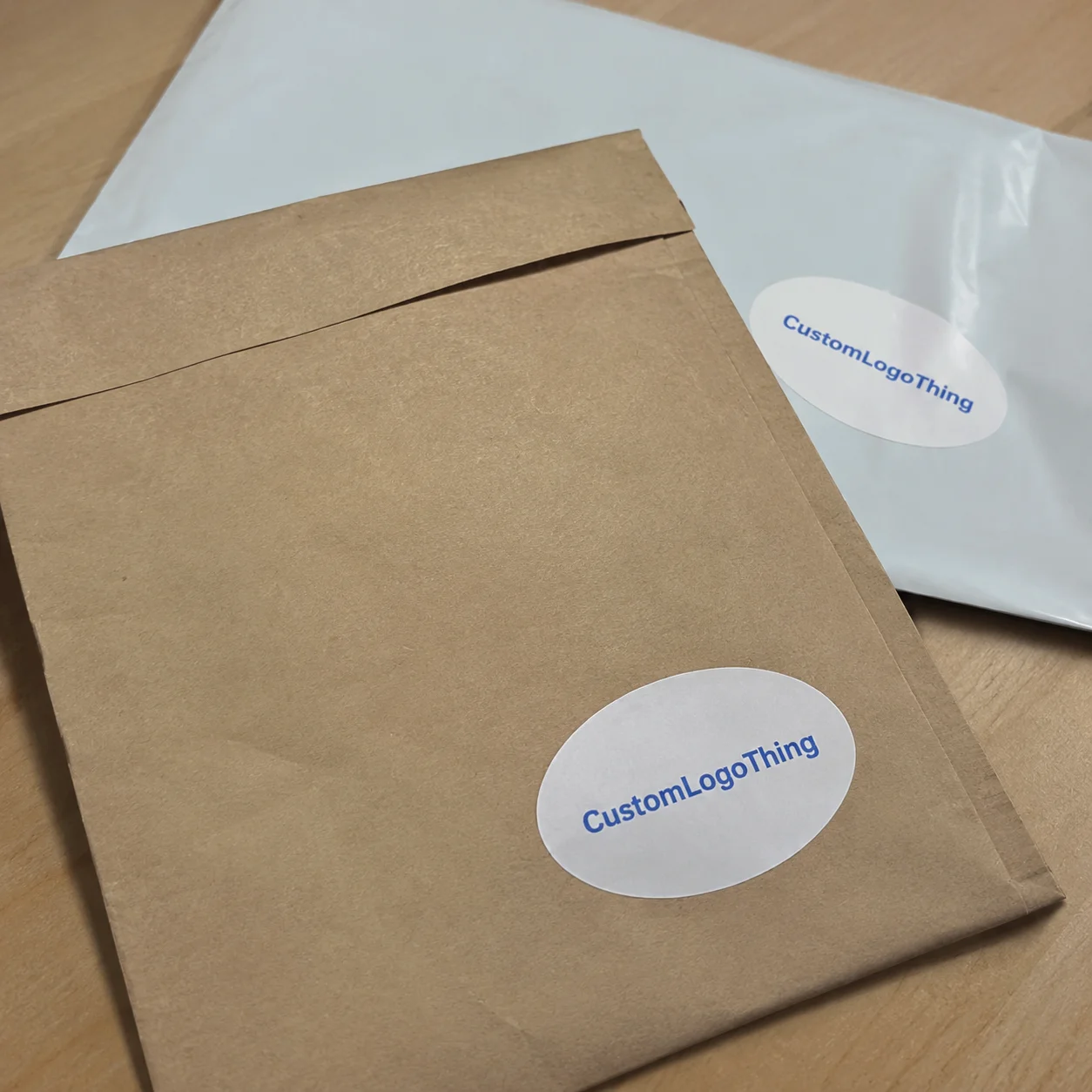
“Inexpensive” should mean controlled total cost, not weak adhesive, thin stock, or print that fades after a few weeks of handling. For buyers, the real cost includes the unit price, shipping, proof delays, rework risk, and the time lost if the first run is wrong. Reprints are never as cheap as the original quote suggests, especially once launch timing is involved.
The right sticker also depends on the surface it will touch. A paper sticker on a dry mailer can be a perfectly practical choice. The same paper sticker on a refrigerated jar, a textured kraft box, or a glossy poly mailer may peel, bubble, or scuff too quickly to be useful. That is not a failure of the printer; it usually means the spec did not match the application.
Common formats include die-cut, kiss-cut, sheeted stickers, and roll labels. Die-cut pieces are trimmed to the final shape and tend to feel more polished. Kiss-cut stickers stay on a backing sheet, which makes them easier to hand out or pack with inserts. Sheet formats work well for smaller quantities and simple fulfillment. Roll labels are often the best choice for faster application when volume starts to climb.
The cheapest sticker is the one you only buy once. The costly one is the reprint that arrives after the packaging is already in circulation.
If you are comparing low-cost Options for Product packaging or retail packaging, it can help to look beyond stickers alone. Depending on the application, Custom Labels & Tags or broader Custom Packaging Products may solve the same problem with better fit. The right format is the one that works for the surface, the schedule, and the budget together.
How the Sticker Ordering Process Works
The process usually follows the same path: request a quote, prep artwork, review a proof, move into production, finish, pack, and ship. The hard part is not printing itself. Delays usually come from file problems, unclear instructions, or a late-stage change that forces everyone to stop and rework the setup.
Pricing depends on size, quantity, shape, material, finish, and whether the artwork is ready for press. A clean vector file with a clear size, correct bleed, and a defined surface type shortens the entire process. A screenshot of a logo sent without dimensions does the opposite.
Most orders move through these steps:
- Quote request with size, quantity, use case, and finish.
- File check to confirm resolution, bleed, and cut line setup.
- Digital proof showing layout, dimensions, and production notes.
- Approval before anything moves into print.
- Production using digital or conventional methods depending on the run.
- Finishing such as cutting, laminating, sheeting, or rewinding.
- Shipping after inspection and packout.
Digital printing is usually the right fit for short runs, fast launches, and orders with multiple designs. It keeps setup costs lower, which is why it often works best for inexpensive custom stickers in smaller quantities. Conventional printing can make sense for large, repeatable runs, but for most smaller programs, digital is the more practical starting point.
For buyers who need stickers to survive shipping and handling, standards-based thinking helps. The ISTA testing standards are useful when labels need to withstand transit abuse, and EPA resources can help teams weighing material selection and packaging waste. You do not need a lab to benefit from a discipline of asking how the sticker behaves after pressure, friction, temperature change, and storage.
Cost and Pricing Factors That Move the Quote
The biggest pricing drivers are straightforward: size, quantity, shape complexity, material, finish, and print coverage. A 2-inch round paper sticker is a much simpler job than a 4-inch custom-shaped vinyl sticker with lamination and white ink. One is a standard run with light setup. The other requires more time, more steps, and more material.
Quantity has a strong effect on unit cost because setup and production overhead get spread across more pieces. That is why 250 stickers can cost significantly more per piece than 2,500. The math is plain, even if the quote feels less friendly at smaller volumes.
Material choice is usually where the tradeoff becomes visible. Paper is often the lowest-cost option for indoor use, inserts, and short-term packaging. Vinyl costs more, but it handles moisture, oil, abrasion, and outdoor exposure much better. Specialty stocks, clear film, and textured papers can improve presentation, yet they raise the cost and are easy to overuse if the sticker only has to survive a short shipping cycle.
| Option | Typical Use | Budget Impact | Durability |
|---|---|---|---|
| Paper sticker | Indoor packaging, inserts, short-term promos | Lowest | Moderate in dry conditions |
| Standard vinyl | Shipping boxes, bottles, moisture-prone use | Mid-range | High |
| Laminate vinyl | Longer wear, abrasion, handling, retail display | Higher | Very high |
| Specialty stock | Premium branding, tactile packaging design | Highest | Varies by application |
Several details can raise the total without improving the actual outcome. White ink adds complexity on clear or metallic films. Lamination adds protection, but also cost. Custom shapes increase cutting time. Rush fees appear when the schedule gets compressed. Extra proof rounds also add time, and once production starts, changes become more expensive than they looked in email.
For small brands balancing product packaging with launch budgets, the best buying decision is usually the one that protects presentation without overspecifying. A sticker that performs on the package and looks intentional is better value than one that is cheap but visibly weak. Saving a few cents does not help if the label lifts, wrinkles, or looks dull beside the rest of the package.
Choosing the Right Specs Without Overbuying
Start with the application, not the finish. Indoor jars, shipping cartons, refrigerated items, and outdoor product displays each call for a different sticker spec. If the environment is dry and the use is short-term, paper may be enough. If there is condensation, oil, or abrasion, move toward vinyl or another more durable stock. That is the cleanest way to avoid paying for durability you do not need, or skimping on durability you do.
Finish affects both appearance and price. Gloss gives strong color and a brighter retail feel. Matte softens the look and can feel more natural or more premium, depending on the design. Soft-touch can be attractive, but it makes more sense on premium packaging than on a box that will be discarded quickly. If the sticker lives on a corrugated mailer, a highly specialized finish may add cost without adding much value.
Adhesive choice matters just as much as face stock. Temporary adhesives work for promotions, event handouts, and removable labels. Permanent adhesives are better for product packaging and shipping labels. Textured surfaces need stronger adhesion or the edges can lift. If the surface is kraft, recycled paper, or uneven in texture, it is worth asking about adhesion rather than assuming every sticker behaves the same way.
Size is another place where buyers often overspend without meaning to. Larger stickers use more material and often more cutting time. A clean 2-inch or 3-inch design can carry a logo well on boxes, pouches, and inserts. Bigger is not automatically better, especially when the sticker is only one piece of a larger packaging system.
A practical rule helps here: match the sticker to the package, not to the mood board. Good packaging design uses the minimum spec needed to get the right look and the right performance. That is how inexpensive custom stickers stay genuinely inexpensive.
Turnaround, Lead Time, and Production Steps to Expect
Most sticker orders move fastest once the proof is approved. A typical timeline is several business days for production, followed by outbound shipping. Clean artwork, standard materials, and stable quantities all help keep the schedule tight. File corrections, special finishes, or late design changes slow the process more than printing itself usually does.
Rush production costs more because it compresses scheduling and often pushes other work aside. That is true for simple die-cut pieces as well as more involved roll labels. If the stickers are tied to a trade show, launch event, or seasonal retail campaign, it is better to plan backward from the in-hand date and leave some margin. Packaging work gets much easier when the deadline is not breathing down your neck.
These are the file issues that most often create delay:
- Low-resolution artwork that prints soft or fuzzy at final size.
- Missing bleed, which can leave a thin white edge after trimming.
- Unclear cut lines, especially on custom shapes.
- Color files that are not prepared in the expected format.
For programs tied to shipping, it helps to think like a quality-control team. A sticker does not just need to look good when it comes off the press; it needs to survive storage, handling, and transport without lifting or scuffing. That question is especially useful for brands shipping in bulk or using labels on packages that will be stacked, moved, and opened more than once.
When stickers are part of custom printed boxes or other packaging that has to land on a specific date, a little schedule cushion is worth more than a faster quote. In practice, the difference between a calm rollout and a rushed one usually comes down to proof timing and file readiness, not the printing method itself.
How to Order Inexpensive Custom Stickers Step by Step
Begin with the application. Before asking for pricing, know where the sticker will go, what it will touch, and how long it needs to last. A sticker for a glass jar, a corrugated box, and a cold beverage cooler are three different jobs. If you treat them as the same, the quote will be less useful and the finished result may be wrong for at least one of them.
Next, lock down the basics: quantity, size, shape, finish, and deadline. Clear specifications make the quote more accurate and help prevent surprises later. A supplier should not have to guess whether the sticker is for indoor retail packaging, shipping, or outdoor exposure. Guessing is how budgets drift.
Artwork prep matters more than many buyers expect. Vector files are ideal for logos and simple shapes because they scale cleanly. Keep critical text inside safe margins. Make sure the file format matches the production method. If color accuracy matters, say so early; a brand color that looks perfect on screen can shift enough in print to matter to a careful eye.
Ask for a proof before production. For premium packaging, sealed mailers, or anything with a demanding finish, proofing is cheap insurance compared with a wrong run. It is also the right moment to confirm whether the quote includes trimming, finishing, packing format, and shipping. A low quote that leaves those out is not really low; it is incomplete.
When comparing suppliers, look beyond the headline price. Compare stock, adhesive, finish, turnaround, proofing, and shipping together. The least expensive order on paper can become the most expensive if the stickers arrive late or fail in use. The better buy is the one that holds up in the real packaging environment.
Common Mistakes That Make Stickers More Expensive
The most common mistake is ordering too few pieces. Small quantities tend to raise the unit price because the setup cost is spread across fewer stickers. Buyers often focus on the total ticket and miss the unit economics, which is how a short run can end up feeling unexpectedly expensive.
Another mistake is choosing the wrong material for the environment. Paper stickers are fine until they meet moisture, friction, or temperature swings. Then they start lifting, wrinkling, or looking worn long before the product has finished moving through the supply chain. If the item ships cold, sits in a humid space, or gets handled often, the material needs to match that reality.
File errors also add cost. Missing bleed, poor resolution, and inaccurate cut lines create rework risk. If the job is already in motion, file corrections can delay production, and a delayed production schedule is usually more expensive than the original error. That is especially true when the stickers are tied to a launch date.
Over-specifying is a quieter budget drain, but it shows up quickly. Not every sticker needs soft-touch lamination, specialty inks, or a complex contour. Sometimes the best way to keep inexpensive custom stickers truly inexpensive is to simplify the structure and spend the savings where they do more good, like on better packaging materials or a cleaner print presentation.
Next Steps Before You Request a Quote
Before asking for pricing, put together a simple spec sheet. Include sticker size, shape, quantity, surface type, finish preference, and deadline. Add a note if the sticker needs to survive shipping, condensation, oil, sunlight, or frequent handling. One clear page often prevents several back-and-forth emails.
Collect final artwork and decide whether color matching matters enough to require a proof. If the sticker is part of a brand system, be specific about what needs to stay consistent. If it is a short-run promo piece, say that too. The clearer the use case, the more likely the quote will match the actual job.
Then decide where to save and where not to save. Shape complexity, oversized dimensions, and premium finishes are good places to simplify. Material and adhesive are not the place to cut corners if the sticker needs to perform. Saving money by choosing the wrong stock is false economy, even if the initial number looks appealing.
Use those details to compare vendors on total fit, not just price. Look for clear file guidance, practical knowledge of packaging use cases, and a schedule they can actually meet. If the quote reflects the real application and the production constraints honestly, you are looking at the right kind of supplier.
Are inexpensive custom stickers still durable enough for shipping boxes?
Yes, if the material and adhesive fit the surface. Strong paper stocks or laminated vinyl usually perform better on corrugated boxes than bargain materials, especially when packages are handled repeatedly. Durability depends more on the application than on the price tag alone.
What affects the unit cost of inexpensive custom stickers the most?
Quantity, size, shape complexity, and material choice have the biggest effect on unit cost. Simple shapes and higher quantities usually lower the per-piece price. Specialty finishes and rush turnaround can push the total up quickly.
What is the best material for low-cost custom stickers?
Paper is often the lowest-cost option for indoor use and short-term packaging. Vinyl costs more but is better for moisture, oil, and outdoor exposure. The best choice depends on where the sticker will be used and how long it needs to last.
How long does production usually take for inexpensive custom stickers?
Standard production often takes several business days after proof approval. Artwork issues and file corrections can add time before printing starts. Rush service is usually available, but it typically increases the total cost.
How can I keep my sticker order affordable without looking cheap?
Use a clean, simple shape and avoid unnecessary specialty finishes. Order enough quantity to reduce the unit cost, but not so much that inventory sits unused. Match the spec to the application so you only pay for performance you actually need.
If you want inexpensive custom stickers that still look professional, the formula is simple: define the use case, Choose the Right stock, keep the artwork clean, and compare quotes on total value instead of sticker price alone. That approach protects both the budget and the brand without adding unnecessary complexity.


