One poorly worded parking notice can create more arguments than accountability. Custom Parking Violation Stickers are adhesive notices used by property managers, towing companies, HOAs, schools, warehouses, hospitals, event venues, and private lots to flag unauthorized, expired, unsafe, or improperly parked vehicles in a way that is visible, specific, and documented.
That last word carries more weight than it seems. A sticker is not just a bright label stuck to a windshield; it is a compact communication system. It tells the driver what happened, where it happened, what to do next, and who issued the warning. If the notice only says “VIOLATION” in tiny type with no contact details, staff may spend the next hour answering the same irritated phone call.
The useful version does less shouting and more explaining.
What Custom Parking Violation Stickers Are Really For
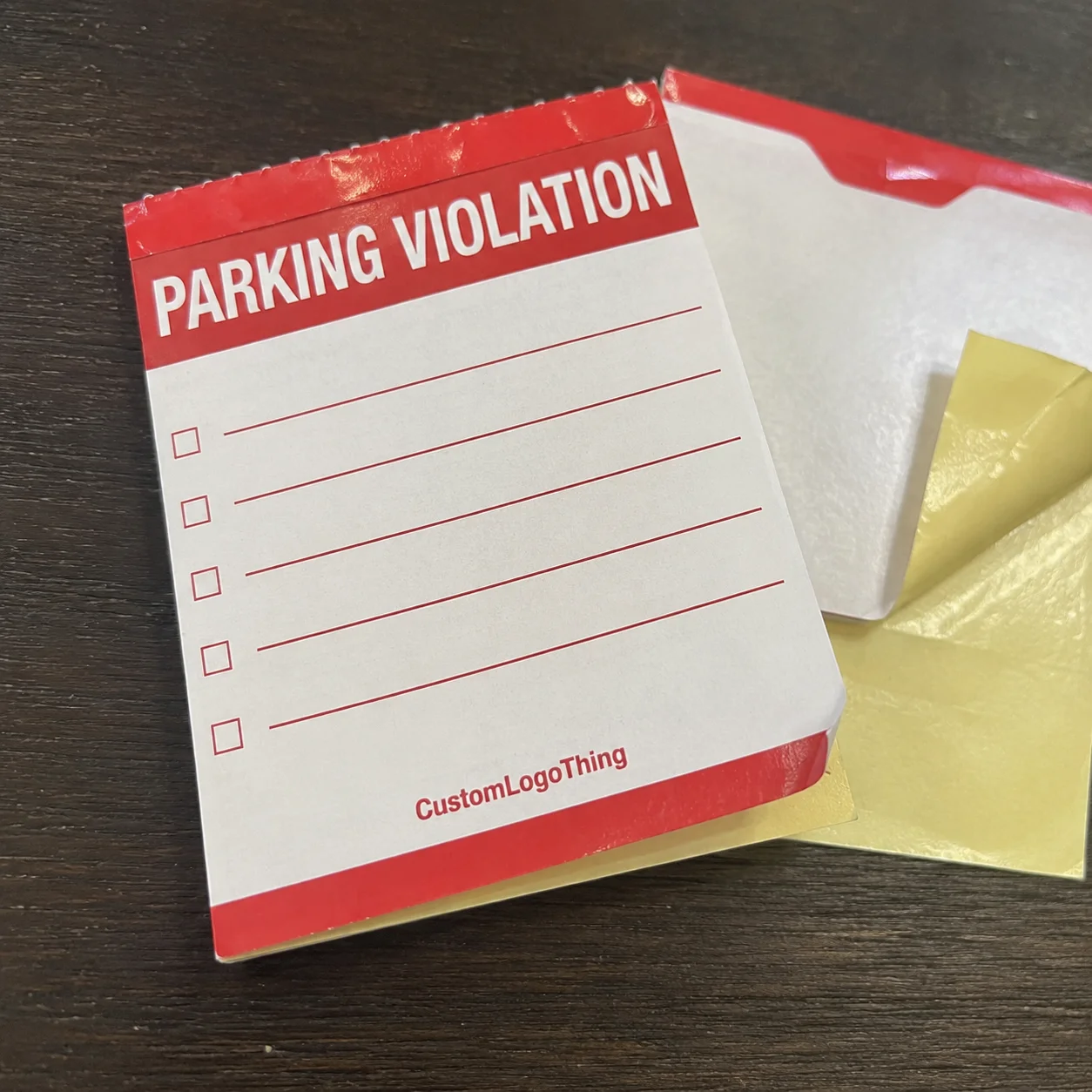
Custom parking violation stickers sit between a paper warning tucked under a wiper and a tow truck call. They are used for reserved spaces, fire lanes, loading docks, visitor parking, apartment lots, employee-only areas, handicap access zones, overnight restrictions, blocked dumpsters, abandoned vehicle warnings, and permit violations. In practice, they help a property show that a warning was issued before the next enforcement step.
Buyers use several names for similar products: parking violation stickers, warning decals, tow notices, removable window labels, no-parking decals, and aggressive adhesive labels. The difference usually comes down to adhesive strength, removal behavior, and tone. A visitor-parking reminder may use a removable adhesive. A repeat-offender tow warning may use a stronger adhesive that takes more time to scrape from glass. A destructible decal may break apart during removal so it cannot be peeled off and transferred to another vehicle.
The best parking stickers are communication tools first and enforcement tools second. They reduce confusion by answering the driver’s immediate questions: What did I do wrong? Who issued this? Do I need to move now, register my plate, contact the office, or expect towing?
Practical rule: if a driver cannot understand the violation in under 10 seconds, the design is probably doing too much or saying too little.
The same logic applies across packaging and labeling work. Whether a company is ordering Custom Labels & Tags, branded packaging, or lot enforcement decals, the printed piece has a job. It has to be readable at actual size, durable enough for the environment, and specific enough that the person using it does not need to explain it twice.
How Parking Warning Stickers Work on Glass, Paint, and Metal
A parking warning sticker looks simple until it fails. Most are built from a printed face stock, an adhesive layer, a release liner, and sometimes a coating or laminate. The face stock might be paper, vinyl, polypropylene, polyester, or another synthetic film. The adhesive may be removable, permanent, ultra-aggressive, or tamper-evident. The liner protects the adhesive until staff peel and apply the notice.
Glass is usually the preferred target, especially the driver-side windshield area where the message is visible without touching painted surfaces. Paint, trim, mirrors, plastic bumpers, and coated metal panels are more sensitive because vehicle finishes vary widely. A sticker that removes predictably from glass may behave very differently on oxidized paint, fresh clear coat, textured plastic, vinyl wrap, or a powder-coated metal gate.
Adhesive performance depends on more than the label spec sheet. Dwell time, surface cleanliness, temperature, moisture, and application pressure all change the result. A sticker slapped onto dusty, cold glass at 6 a.m. may lift at the corners. The same decal applied to clean, dry glass with firm thumb pressure may bond much more predictably. Many pressure-sensitive adhesives perform best when applied above roughly 40°F to 50°F, although cold-temperature adhesives are available for harsher conditions.
That temperature range is not trivia. It affects winter enforcement programs, overnight security rounds, and refrigerated warehouse lots. A standard adhesive chosen for a sunny apartment garage may not perform the same way on a frosted windshield outside a distribution center.
Common formats include rolls for fast field use, singles for controlled office distribution, bright fluorescent labels for visibility, and writable matte finishes for dates, times, license plates, officer initials, and violation categories. Rolls are usually more efficient for security staff walking a large lot. Sheeted labels can make sense when an office manager issues only a few notices each week.
| Adhesive Type | Best Use | Removal Expectation | Buyer Caution |
|---|---|---|---|
| Removable adhesive | First warnings, visitor reminders, temporary notices | Peels from glass with limited residue in many conditions | May not suit long outdoor dwell times or severe weather |
| Permanent adhesive | Repeat violations, stronger private-lot enforcement | Requires more effort and may leave residue | Use approved placement rules, preferably windshield glass |
| Ultra-aggressive adhesive | High-escalation warnings where difficult removal is intentional | Designed to be hard to remove cleanly | Should be reviewed against policy and surface risk |
| Destructible or tamper-evident | Notices that should not transfer or peel away intact | Breaks apart or shows tampering | Often costs more and needs clear application instructions |
Residue expectations should be settled before artwork starts. Some buyers want clean peel-off warnings because the goal is courtesy and compliance. Others need decals that require real effort to remove because the property has repeat abuse in fire lanes, loading zones, or reserved spaces. Neither choice is automatically correct. The enforcement tone should guide the material.
Key Specs That Make a Violation Sticker Easy to Notice
The specs that matter most are size, color contrast, message hierarchy, writable space, adhesive type, indoor or outdoor exposure, roll direction, and whether the sticker needs sequential numbering. A small 3 x 4 inch warning label may be enough for a polite notice in a controlled garage. A 5 x 8 inch or 6 x 9 inch windshield decal is harder to miss and better for serious violations where visibility from several feet away matters.
Color does much of the work. Fluorescent orange, yellow, red, and bright green get noticed quickly, especially against windshield glass and darker vehicle interiors. Black text on a light background usually keeps violation details readable. Reversed-out white text on red can look strong for a headline, but it becomes hard to read when used for small fields or long instructions.
A clean layout usually follows a simple order:
- Headline: “Parking Violation Notice,” “Tow Warning,” or “Unauthorized Vehicle.”
- Violation type: checkboxes for reserved space, expired permit, fire lane, loading zone, visitor limit, or no registration.
- Details: date, time, license plate, space number, officer initials, or property code.
- Next step: move vehicle, contact office, register plate, pay fee, or risk towing under posted rules.
Writable areas deserve more attention than they usually get. Glossy coatings can fight marker ink, especially in rain or cold weather. A matte varnish or uncoated write-in panel gives staff a better chance of writing cleanly with a permanent marker. For field use, leave generous blank areas. A license plate field that is only 0.25 inches tall may look fine on a proof but becomes a nuisance in a parking lot with gloves on.
Print durability needs a practical lens. UV-resistant inks, varnish, and lamination can protect readability through sun, rain, handling, and windshield curvature. Not every parking sticker needs the most expensive finish. If the notice is meant to stay on a windshield for 24 to 72 hours, a durable synthetic face stock with a sensible coating may be enough. If it may remain outdoors for weeks, ask for stronger weather resistance.
Professionalism counts. Avoid threatening language. Keep private-property notices clearly identified. Include the property, company, or management name. If you use icons, keep them simple. If you add a QR code, test it at the final print size after lamination or varnish because glare and small modules can reduce scan reliability.
One more production detail: ask how the stickers will be wound on the roll. For hand-applied labels, unwind direction may seem minor. For dispensers, label guns, or prepacked enforcement kits, it can decide whether staff can use the roll efficiently or have to fight it every time.
Pricing, MOQ, and Unit Cost Factors to Know Before Ordering
Pricing for custom parking violation stickers usually depends on quantity, sticker size, material, adhesive strength, ink coverage, finishing, roll or sheet format, and extras like custom numbering, perforations, or special packaging. The unit cost drops as quantity rises because setup, proofing, press preparation, die setup, and material handling are spread across more pieces. It is the same cost curve seen in product packaging, retail packaging, and custom printed boxes: short runs carry more setup cost per unit.
As a working estimate, simple custom warning labels may land around $0.18 to $0.45 each at several thousand pieces. Larger synthetic windshield decals with stronger adhesive and bright flood color can run closer to $0.45 to $1.25 each, depending on size, quantity, and finish. Very small runs may cost more per piece because the press, proofing, and cutting steps do not shrink much just because the order is smaller. Specialty destructible materials, sequential numbering, and custom roll packaging can push pricing higher.
MOQ, or minimum order quantity, is practical rather than mysterious. Small batches may be possible, but parking enforcement programs often benefit from ordering enough stock for a season, several properties, or multiple enforcement teams. If a property writes 80 notices per month and has two peak move-in periods, ordering 1,000 to 2,500 pieces may be more sensible than reordering every few weeks.
Budget-friendly builds can suit short-term indoor garage use, especially when the sticker is mainly a reminder. Outdoor windshield notices usually need a more durable face stock and adhesive system. For broader sourcing, many buyers group enforcement labels with related Custom Packaging Products or facility labels so artwork, brand colors, and approval steps stay consistent across the operation.
| Build Option | Typical Specs | Common Quantity Range | Estimated Unit Range |
|---|---|---|---|
| Basic warning label | Paper or economy synthetic, 1-2 colors, removable adhesive | 1,000-5,000 pieces | $0.18-$0.45 |
| Outdoor windshield decal | Synthetic film, bright color, writable panel, permanent adhesive | 2,500-10,000 pieces | $0.35-$0.85 |
| Premium enforcement decal | Durable film, aggressive or destructible adhesive, numbering | 5,000-25,000 pieces | $0.60-$1.25+ |
For an accurate quote, give exact specs: size, quantity, adhesive preference, roll or sheet format, writable area, colors, and whether the sticker must be difficult to remove. Cost control is usually simple: standardize one design across properties, use checkboxes instead of multiple versions, avoid oversized labels unless they are needed, and order in a quantity that matches real enforcement volume.
Do not hide special requirements until the proof stage. Sequential numbering, barcodes, split-back liners, perforation between labels, custom cores, and cartons sorted by property all affect production. They are manageable. They are just cheaper and cleaner to plan before the quote is built.
Process and Timeline: From Artwork Proof to Delivered Rolls
A solid order starts with the enforcement goal. Decide whether the sticker is a courtesy warning, a formal private-property notice, a tow warning, or a repeat-offender escalation. From there, choose the size, adhesive, material, and format. Then send the logo, wording, violation categories, contact information, and any placement requirements.
Proofing is where many avoidable problems get caught. The manufacturer checks copy placement, logo clarity, bleed, safe margins, barcode or numbering needs, roll direction, and whether handwritten fields have enough open space. If the sticker will be machine-applied or dispensed from a specific label gun, roll direction and core size matter. For hand application, staff usually care more about easy peeling, perforations, and how many labels fit on a roll.
A typical custom run may take about 7 to 15 business days after proof approval for standard materials, with shipping time added after production. That range can move. Custom materials, large quantities, specialty adhesives, sequential numbering, extra artwork revisions, or testing can add days before the press starts. Repeat orders often move faster because the approved die line, artwork, and material callout are already set.
Production follows a familiar label workflow: substrate selection, printing, coating or lamination if needed, die cutting, waste stripping, rewinding into rolls or trimming into sheets, quality checks, packing, and shipping. On the floor, small details matter. If the die cut is too tight to the print, the edge can look sloppy. If the rewind tension is wrong, rolls can telescope or labels can lift. If quality checks miss a numbering jump, documentation can become messy for enforcement teams.
Useful quality checks are not complicated. Confirm the first article against the approved proof. Check color contrast under normal light, not only on a backlit screen. Write on the matte fields with the marker staff Will Actually Use. Peel a few labels from the roll to confirm release. If numbering is included, spot-check sequence and legibility. For high-stakes enforcement, test adhesion and removal on sample glass before full deployment.
Build in review time for legal, property management, security, or HOA boards before approving production. Wording should match actual policy and posted lot rules. The ASTM catalog includes material and testing standards used across adhesives, films, inks, and weathering evaluations. A buyer does not need to read standards to order decals, but it helps to work with suppliers who understand test methods rather than guessing from a photo.
Order before peak periods: apartment move-ins, school terms, construction phases, warehouse inventory surges, event seasons, or winter weather. Rushed orders reduce room for careful proofing and specification changes. They also make freight more expensive than it needs to be.
Common Ordering Mistakes That Cause Weak Enforcement Notices
The most common mistake is choosing the strongest adhesive by default. Strong adhesive can be useful, but it should match removal expectations, vehicle surfaces, local policy, and the level of escalation. If the goal is a first warning for visitors in the wrong space, a removable windshield label may support compliance without creating unnecessary conflict. If the goal is repeated fire-lane abuse, a more serious adhesive may be justified.
Vague wording creates another problem. A notice that says only “Parking Violation” may not tell the driver what they did wrong, who issued the notice, or what happens next. Specific checkboxes reduce arguments: “No valid permit displayed,” “Parked in reserved space,” “Blocking loading dock,” “Fire lane,” “Visitor time exceeded,” or “Unregistered vehicle.”
Designs That Look Official in the wrong way can create risk. Private-property notices should not mimic government citations unless the organization is authorized to use that language and format. Keep the issuing property or management company visible, and avoid seals, badge-style graphics, or legal wording that overstates authority.
Other weak points are easy to spot once you have handled a few rolls: writable fields too small for a marker, glossy finishes that resist ink, low-contrast colors, type under 8 points for critical details, and layouts that bury the contact phone number or property name. These are not decoration issues. They slow staff down and make the notice less useful.
Environmental mismatches are just as common. Indoor-grade labels may curl, fade, or lose adhesion outdoors, especially with windshield heat, rain, cold mornings, and repeated sun exposure. Cold-weather application may require a different adhesive. Long-term outdoor exposure may call for UV-resistant ink, film face stock, or lamination. The EPA provides broader guidance on materials, waste reduction, and environmental claims, which is helpful if an organization is trying to make responsible purchasing decisions without making unsupported “green” claims.
One overlooked mistake is failing to train the people applying the sticker. The best-designed notice can still cause trouble if staff place it on paint, block a driver’s view, skip photo documentation, or use it for violations not covered by posted rules. A short internal instruction sheet often prevents more problems than another design revision.
Before ordering, run a simple internal review. Test the wording on a real scenario. Ask whether staff can fill it out in under 20 seconds. Confirm the sticker supports the property’s actual enforcement policy. If the answer is no, revise the notice before it becomes 5,000 printed pieces.
Next Steps for Ordering Stickers That Fit Your Lot Rules
Start with enforcement volume. Count monthly violations, list the most common parking issues, decide whether the sticker should be removable or hard to remove, and choose where staff will apply it. For most private lots, the approved placement should be windshield glass, not paint or trim.
Write the message before choosing artwork. Include the violation reason, date and time fields, property or company name, contact details, and a clear next action such as “move vehicle,” “register plate,” “contact office,” or “vehicle may be towed under posted rules.” Then build the design logic around that message: hierarchy first, color second, logo third. Good packaging design works the same way. The brand should support the message, not swallow it.
Samples are useful when the sticker will face outdoor exposure, cold application, windshield heat, or a strong-removal requirement. If samples are not available, ask for a material recommendation that states the face stock, adhesive family, finish, intended surface, and expected removal behavior. A phrase like “sticky vinyl” is not enough for a confident order.
- Estimate monthly usage and add a safety stock buffer of 10% to 20%.
- Choose a common size such as 4 x 6 inches, 5 x 8 inches, or 6 x 9 inches based on visibility needs.
- Prepare vector logo files when available, such as AI, EPS, or print-ready PDF.
- Use matte write-in areas for marker-friendly fields.
- Store delivered rolls in a clean, dry area away from heat and direct sun.
- Train staff on approved placement, photo documentation, and escalation rules.
After delivery, set up a usage system. Track which violations repeat, which properties use the most decals, and whether drivers respond better to certain wording. That feedback helps the next print run. It also keeps enforcement grounded in real behavior instead of guesswork.
Once the size, adhesive, wording, quantity, and enforcement workflow are clear, custom parking violation stickers become a practical tool for keeping private lots organized. Not louder enforcement. Cleaner enforcement.
FAQ
What adhesive should I choose for custom parking violation stickers?
Choose removable adhesive for polite warnings or temporary notices, permanent adhesive for stronger enforcement, and aggressive or destructible adhesive only when removal difficulty is intentional and approved by your policy. For most windshield applications, ask for a material that balances visibility, weather resistance, and predictable removal behavior. Avoid applying any aggressive sticker to painted surfaces unless the material has been specifically reviewed for that use.
Can parking violation decals be printed with my logo and violation checkboxes?
Yes. Custom layouts can include your logo, property name, phone number, violation checkboxes, date and time fields, license plate fields, officer initials, QR codes, and towing instructions. Checkboxes are especially useful because they let one sticker cover multiple violations without ordering separate versions. Keep writable areas matte or marker-friendly so staff can fill them out cleanly in the field.
How much do custom parking enforcement stickers cost?
Cost depends on quantity, size, material, adhesive, color coverage, roll or sheet format, and extras such as numbering, lamination, perforation, or specialty packaging. Basic custom warning labels may cost roughly $0.18 to $0.45 each at higher quantities, while larger or more aggressive decals may run closer to $0.45 to $1.25 each or more. Exact pricing requires size, quantity, adhesive goal, artwork, and intended application surface.
How long does it take to produce custom parking warning labels?
Standard custom runs often take about 7 to 15 business days after proof approval, plus shipping time. Simple repeat orders can move faster because the specs and proof are already established. Build in extra time if the notice needs legal review, sequential numbering, specialty adhesive, unusual roll construction, or testing on real vehicle glass.
Are custom parking violation stickers safe to use on vehicles?
They are generally safest when applied to clean windshield glass, not painted panels, trim, mirrors, wraps, or delicate surfaces. Safety depends on adhesive type, surface condition, temperature, dwell time, and removal method. Your internal policy should specify approved placement areas and removal expectations so staff use the stickers consistently.


