Brands usually search for Custom Stickers Now when they need a fast packaging or labeling fix without reprinting boxes, mailers, or cartons. Stickers can add branding, update product information, flag a short-run SKU, cover outdated copy, or turn plain inventory into something launch-ready.
They are useful because they solve timing problems. If you already have 3,000 unprinted boxes or a batch of labels that needs a compliance update, a well-specified sticker is often cheaper and faster than replacing inventory. Typical unit costs vary widely by material and quantity, but many common runs still cost far less than structural packaging changes.
“Sticker” is also a broad category. A paper circle for sealing a bakery box, a laminated vinyl decal, and a moisture-resistant BOPP label for a bottle are different products with different adhesives, finishes, and performance limits. This guide focuses on the details that help buyers Choose the Right specs, cost range, MOQ, lead time, and inspection points.
Why brands need custom stickers now, not later
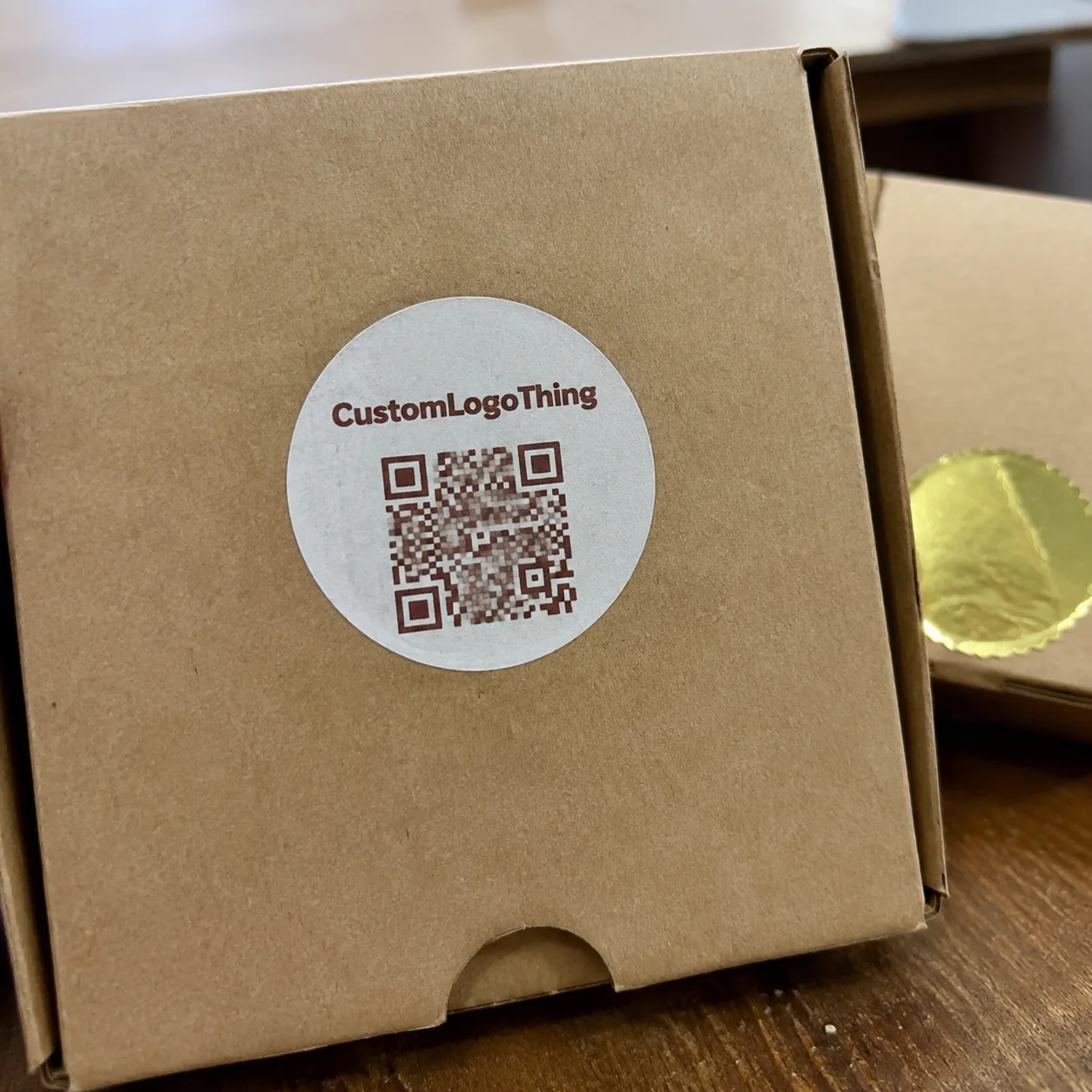
Stickers are most valuable when packaging changes faster than printed inventory. Common situations include:
- updating claims, ingredients, or compliance text before the next carton run
- adding branding to plain mailers, jars, pouches, or inserts already in stock
- launching a seasonal SKU or retail test in low volume
- creating event handouts or promo decals on a short timeline
- identifying temporary barcodes, lot information, or channel-specific messaging
For buyers, the decision is usually operational rather than decorative. A sticker can prevent inventory waste, reduce launch delays, and bridge the gap between current packaging and the next full print cycle.
They also work across channels. E-commerce teams use them for seals, insert branding, barcode overlays, and shipper upgrades. Retail teams use them for bottle and pouch labels, shelf-ready promo updates, and small-run flavor launches. Event teams use die-cut stickers because they are both giveaway items and brand impressions.
How custom stickers work from artwork to finished roll or sheet
The production path is straightforward: artwork submission, file review, proofing, material confirmation, printing, cutting, finishing, packing, and shipping. The process is simple, but each step affects cost, durability, and timing.
Common order formats
- Die-cut singles for giveaways, inserts, and handouts
- Kiss-cut sheets for office use or mixed design sets
- Roll labels for faster repetitive application or dispensing equipment
- Label-style formats for jars, bottles, pouches, and standard packaging runs
Shorter runs often use digital printing because setup is lighter and versioning is easier. Higher volumes can shift to methods that improve unit cost and repeat color consistency. That is why a 500-piece run and a 25,000-piece run can quote very differently even when the art looks similar.
Every sticker has three layers:
- Face stock: the printable top material
- Adhesive: the bonding layer
- Liner: the release backing removed during application
If any of those layers are wrong for the job, the sticker may print well and still fail in use.
Finish also changes performance and appearance. Matte looks softer and often suits understated packaging. Gloss boosts color pop. Clear films can look integrated, but designs often need white ink under text or pale colors to stay legible. Soft-touch and holographic options can add impact, but they usually raise cost and may lengthen scheduling.
Key specs that affect performance, durability, and brand impact
Most sticker failures trace back to the specification sheet, not the artwork. Material, adhesive, size, finish, and exposure conditions determine whether the sticker works after application.
Size and shape
Start with the actual application area, then check reading distance and content load. A 2-inch round mailer seal can work with only a logo. A small sticker carrying ingredients, legal copy, and a QR code usually does not. Barcodes and QR codes need space for quiet zones and reliable scan size after printing and handling.
Custom contours can look better for decals and handouts, but they add cutting complexity and waste. Standard circles, squares, ovals, and rounded rectangles are usually easier to produce and often cheaper.
Material options
Paper is usually the lowest-cost option for dry, indoor, short-life use such as box seals, event handouts, and secondary branding. In moderate volumes, paper stickers often land around $0.03 to $0.12 each depending on size and coverage.
BOPP is common for jars, bottles, and pouches because it handles moisture better than standard paper. White, clear, and metalized BOPP each have different print and visual behavior, especially when white ink is required.
Polyester is useful where buyers need higher chemical resistance or more dimensional stability than paper.
Vinyl is better for decals, rough handling, moisture, and many outdoor uses. Laminated vinyl costs more but improves abrasion and weather resistance. Lower-to-mid quantity runs often fall around $0.18 to $0.60 per piece depending on size and cut style.
Adhesive and surface testing
Adhesive selection is critical. Removable adhesive fits temporary promotions and some window use. Permanent adhesive is common for product labels, mailers, and shipping identifiers, but it does not perform the same on every surface.
Textured kraft, low-surface-energy plastics, oily containers, powder-coated finishes, frozen packaging, and flexible pouches can all affect bonding. A sticker that works on one substrate can edge-lift quickly on another.
Best-looking sticker, wrong surface, failed application.
Test before committing if the sticker will go on curved jars, squeeze tubes, cold bottles, textured packaging, or wet surfaces. If the sticker carries a barcode or compliance information, test scanning after application on the real package. For broader transport and performance testing references, ISTA standards are useful.
Artwork specs matter too. Very small text can become unreliable depending on font weight and substrate. Thin borders reveal cutting tolerance quickly. Bleed should usually extend at least 0.125 inch beyond the cut line unless your printer specifies otherwise. Clear materials often need a white ink layer beneath key elements.
Sticker pricing, MOQ, and unit cost: what really changes the quote
Sticker quotes are driven less by the design itself than by production variables: size, quantity, material, finish, format, cut style, and freight.
MOQs usually reflect setup efficiency, not arbitrary limits. Even small runs still require file prep, proofing, printing, cutting, finishing, packing, and shipment coordination.
Where pricing changes most
- Quantity: unit cost usually drops between 100, 500, 1,000, and 5,000 pieces
- Size: larger stickers use more material and shipping space
- Material: paper is usually cheaper than BOPP, polyester, or vinyl
- Finish: lamination, soft-touch, holographic film, and white ink add cost
- Shape: standard shapes are simpler than intricate contour cuts
- Format: rolls, sheets, and singles have different finishing costs
| Sticker Type | Typical Use | Approx. MOQ | Indicative Unit Cost | Notes |
|---|---|---|---|---|
| 2" paper circle, gloss | Mailer seal, event handout | 100-250 | $0.03-$0.09 at 1,000+ | Fast and economical for dry indoor use |
| 3" die-cut vinyl, laminated | Giveaway decal, outdoor use | 50-100 | $0.20-$0.55 at 500-1,000 | Better durability, higher finishing cost |
| Custom BOPP roll label | Jar, bottle, pouch labeling | 250-500 | $0.05-$0.18 at 5,000+ | Good moisture resistance and efficient application |
Lower unit cost is not always better value. Seasonal art, promo copy, and changing formulations can make smaller runs more economical overall by reducing obsolete inventory.
Also watch for quote variables beyond base print cost: multiple artwork versions, extra proof rounds, split shipments, rush handling, specialty inks, and premium freight. These are normal charges, but they should be visible before approval.
Production timeline and lead time: how fast can sticker orders move?
Lead time usually starts after final proof approval, not when the quote is requested.
- Quote request submitted
- Artwork reviewed
- Proof issued
- Proof approved
- Job enters production queue
- Printing and finishing completed
- Quality review performed
- Order ships
For standard jobs on common materials, production often takes 3 to 7 business days after proof approval. Transit then adds about 1 to 5 business days depending on destination and shipping method. Rush options can shorten the schedule, but printing, curing where needed, cutting, inspection, and packing still take real time.
Typical delays are predictable:
- missing dielines
- artwork built at the wrong size
- low-resolution raster files
- unclear quantities or format
- multiple proof rounds from unaligned stakeholders
- specialty features such as white ink, unusual laminate, or specific roll orientation
If the order supports an event or launch window, build in a buffer week when possible. Most sticker orders do not fail dramatically; they lose time in small increments.
If speed matters most:
- send vector files
- confirm final dimensions early
- lock quantity tiers before proofing
- combine proof edits into one response
- stay with standard materials unless specialty performance is necessary
A step-by-step guide to ordering the right sticker without rework
- Define the job. Decide whether the sticker is for branding, sealing, compliance, promotion, relabeling, or inventory control.
- Measure the real surface. Check curves, seams, folds, lid edges, and pouch wrinkles.
- Match stock to the environment. Dry indoor use may fit paper; moisture, oil, abrasion, refrigeration, or outdoor exposure usually call for film stocks or laminate.
- Prepare artwork at final size. Include bleed, safe margins, readable type, and a dieline if needed. Print a paper mockup at 100% scale when space is tight.
- Choose the right format. Rolls for fast application, sheets for office use, singles for giveaways or inserts.
- Review the proof carefully. Check spelling, size, orientation, cut line placement, color build, and white ink layers for clear materials.
- Test high-risk applications. Curved containers, textured surfaces, cold-chain products, and scannable codes justify a sample or pilot run.
- Order against the in-hand date. Plan for the date your team needs the stickers, not the most optimistic delivery date.
If the project also includes coordinated Custom Labels & Tags or matching Custom Packaging Products, align finish, stock feel, and color expectations early. A sticker can work technically and still look disconnected from the rest of the packaging system.
Common sticker buying mistakes that waste budget and slow launches
The most common mistake is buying on price alone. Paper is cheaper up front, but if the package sees condensation, abrasion, cooler storage, or frequent handling, the replacement cost can erase the savings.
Other frequent problems include:
- adding specialty details without accounting for lead time or setup impact
- using artwork designed for screen use on a very small printed sticker
- skipping application testing on textured, curved, cold, or flexible surfaces
- missing roll direction or orientation requirements
- ordering too many stickers for a short promo window or too few for a launch
If a barcode or QR code matters, print and test it physically at final size. If the sticker will be machine- or high-volume hand-applied, confirm unwind direction and orientation before proof approval. If sustainability is part of the buying criteria, right-size the run and consider suitable substrates for the use case. For certification basics on paper materials, the FSC site is a useful reference.
Simple fixes prevent most waste:
- match material to the environment
- ask how specialty finishes change lead time
- design at final size
- test on the actual surface
- confirm roll direction
- order to the campaign window
Smart next steps before you order: files, samples, and quote details
Before requesting a quote, gather the details that control price and performance: final dimensions, quantity tiers such as 250, 500, 1,000, and 5,000, application surface, use environment, finish preference, format, and delivery deadline.
If the sticker must survive water, oil, refrigeration, abrasion, or outdoor exposure, ask for samples or a short pilot run. For basic promo die-cuts, a digital proof may be enough. For anything carrying compliance copy, scannable codes, or durability requirements, physical testing is safer.
A simple buying framework helps:
- If speed matters most: use standard size, shape, and finish
- If durability matters most: upgrade stock, adhesive, and surface protection
- If cost matters most: simplify dimensions and avoid effects that do not add functional value
Buyer checklist: final size, quantity tiers, application surface, environment, artwork file type, finish preference, required format, deadline, shipping address, and whether a sample test is needed.
If you need custom stickers now, the fastest route is complete specs, realistic timing, quick proof approval, and the simplest construction that will do the job reliably.
Frequently asked questions
How fast can I get custom stickers now for an event or product launch?
That depends on proof approval, production capacity, material choice, and shipping method. Many standard jobs can move through production in 3 to 7 business days after proof approval, then ship in 1 to 5 business days. Simple shapes on common stocks usually move faster than clear materials with white ink, specialty films, or complex die cuts.
What is the best material for custom stickers now if they need to last?
For longer life, buyers usually look at BOPP, polyester, or vinyl rather than standard paper. The best choice depends on moisture, abrasion, outdoor exposure, and the surface being labeled. Lamination can help with scratch resistance, but adhesive selection matters just as much as the face stock.
How much do custom stickers now usually cost per unit?
Unit cost changes with quantity, size, material, finish, and cut style. Basic paper stickers in volume may land around a few cents each, while laminated vinyl die-cuts can cost several times more. A useful quote needs exact specs, because the gap between a dry indoor seal and a durable product label is significant.
Should I order sticker rolls, sheets, or individual die-cut stickers?
Rolls are usually best for faster application and higher-volume workflows. Sheets are practical for small batches, office use, or mixed designs. Die-cut singles work well for giveaways, inserts, and handouts. The right format depends on how the stickers will be stored, applied, and distributed.
What artwork files do I need to order custom stickers now without delays?
Vector files are preferred because they hold crisp text, clean edges, and accurate cut paths at any size. Artwork should include bleed, safe margins, and clearly marked dielines where needed. If raster art must be used, it should be high resolution at final print size so the proof matches the finished result as closely as possible.


