Two stickers can look almost identical on screen and perform like different products once they hit a real package. One stays flat through cold storage, hand contact, and shipping. The other starts curling on a textured carton, clouds up on a chilled bottle, or scuffs before the order even reaches a shelf. That gap between appearance and performance is where most custom stickers usa buying mistakes happen.
For most buyers, the phrase refers to stickers produced domestically and built to spec: size, shape, face stock, adhesive, finish, and delivery format all chosen for a specific use. That use might be a promotional handout, a product label, a warehouse marker, a closure seal, or a branded insert tied to broader packaging goals. The artwork matters, but after application, the material and adhesive do most of the work.
That is why sticker buying is rarely just a design decision. A glossy round piece with sharp color can look perfect in a proof and still fail if it is applied to recycled corrugate, low-energy plastic, or a container that picks up condensation every morning. In practice, surface energy, temperature, friction, and application method decide whether the sticker stays put, peels cleanly, tears during removal, or leaves residue behind.
It also helps to use plain terms. Stickers are often individual pieces or sheets meant for hand application, promotion, or inserts. Labels usually refer to functional product identification pieces, often supplied on rolls. Decals usually imply a more durable graphic for windows, equipment, or outdoor use. Seals are closure or tamper-style pieces for boxes, jars, or bags. Those categories overlap, but the intended job changes the construction.
This guide is built for buyers comparing real options, not browsing pretty samples. If you are evaluating custom stickers usa along with Custom Labels & Tags or other Custom Packaging Products, the goal is to help you spec the job properly, compare quotes on equal terms, and avoid the kind of preventable mismatch that turns a low unit price into a costly reprint.
Custom Stickers USA: Why Small Spec Choices Change Real-World Performance
Small spec changes can create large differences in field performance. A switch from coated paper to white BOPP film may add only a modest amount to the piece cost in a shorter run, yet it can materially improve moisture resistance, scuff resistance, and how the graphic holds up after repeated handling. The same goes for adhesive. Standard permanent adhesive may work well on a dry folding carton, while a freezer-grade adhesive is often necessary for cold-fill packaging or refrigerated storage.
Buyers comparing custom stickers usa suppliers are usually better served by thinking about conditions first and artwork second. A few questions sort out most of the important choices:
- What surface is the sticker being applied to?
- Will it face water, oil, sunlight, cold storage, or abrasion?
- Does it need to stay on for the life of the package or remove cleanly?
- Will it be applied by hand or run through labeling equipment?
- Is it a low-cost giveaway, a shipping aid, or part of visible retail presentation?
That last point is easy to underestimate. A giveaway sticker for an event table and a branded piece used on retail packaging can carry the same art and still need completely different construction. One may work fine as a kiss-cut paper sheet sticker. The other may need film stock, laminate, and tighter print control so it feels consistent with the rest of the package.
Practical rule: If a sticker will face moisture, refrigeration, rough handling, or textured packaging, approve the visual and test the construction. A proof can confirm layout. It cannot confirm field performance.
How Sticker Production Works from Artwork to Finished Sheets or Rolls
Sticker production is fairly straightforward once the spec is clear. The job usually starts with file review, then moves through proofing, material selection, print method, color setup, finishing, die-cutting or kiss-cutting, inspection, and packing. Shops vary in how they label each step, but the sequence is largely the same.
Digital printing is common for short runs, versioned artwork, and jobs with multiple SKUs. It avoids plate costs and is often the practical choice from a few hundred pieces into the low thousands, depending on size and format. Flexographic printing tends to make more sense at higher volumes, especially for roll labels. There is more setup at the front end, but per-unit pricing often improves once quantities climb. Specialty work may add white ink on clear stock, metallic effects, or varnish layers.
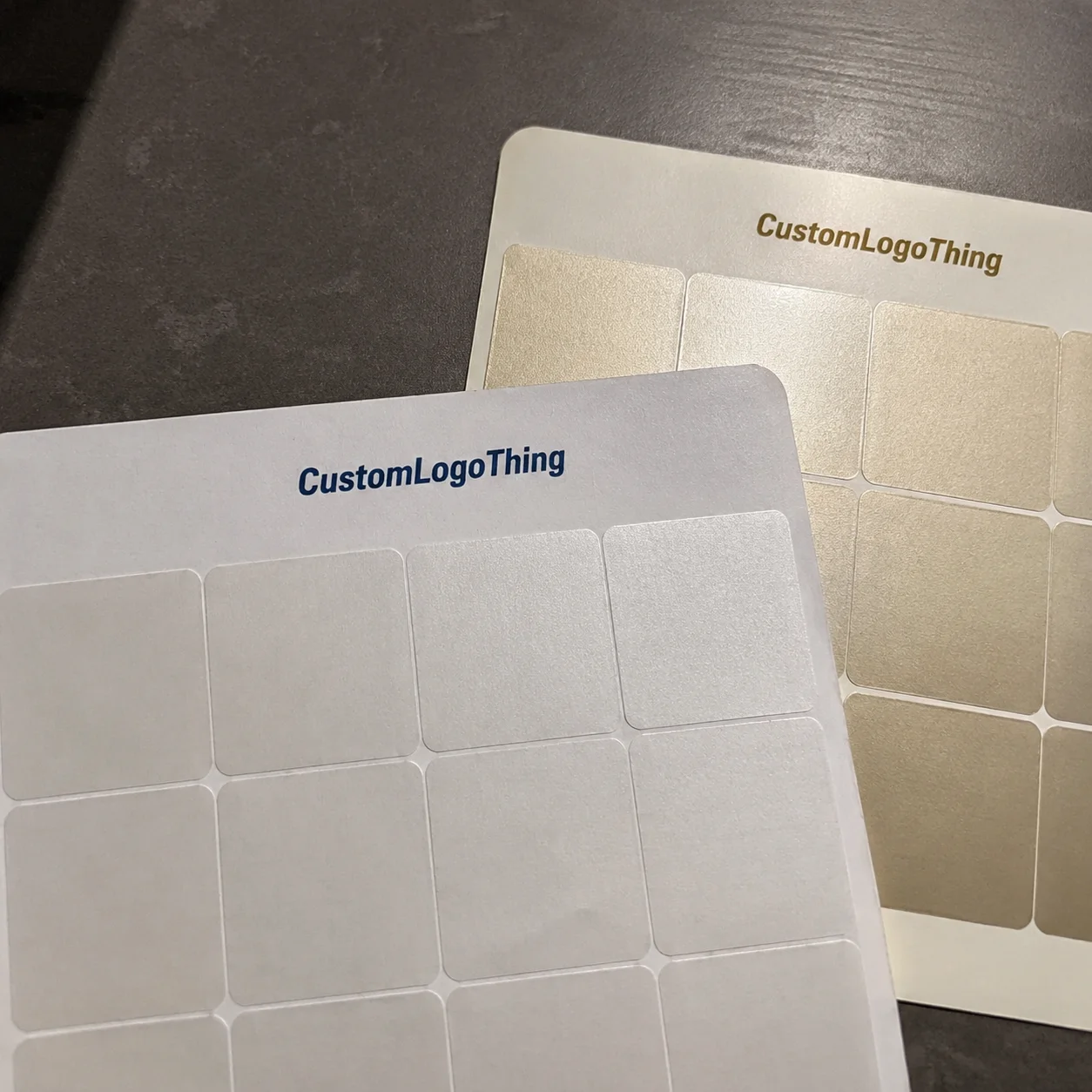
Format matters just as much as print method. Sheeted stickers are useful for hand application, office packing stations, and small-batch fulfillment. Roll labels are the standard for repeated application and are nearly essential for automated labeling, where core size, unwind direction, outside diameter, and gap spacing all need to be specified correctly. Individually cut stickers are often chosen for giveaways, inserts, and merch-style handouts.
Finishing choices affect both function and appearance. Gloss laminate boosts color saturation and adds scuff protection. Matte laminate creates a quieter surface that often fits premium packaging better and photographs with less glare. UV coating can provide some protection at a lower cost than full laminate, though it is not the best answer for every rough-handling environment. Writable coatings are useful for lot coding or hand notation. Crack-and-peel liners can make small stickers much easier to apply.
Proof approval is the point where avoidable mistakes should be caught. Buyers should confirm:
- Finished size and orientation
- Bleed, safe area, and cut line placement
- Minimum readable text size, often around 5 pt to 6 pt depending on font and print method
- Barcode quiet zones, contrast, and scan direction
- Expected color output from CMYK, spot colors, or white ink layers
If the sticker is part of a shipped product, durability expectations may also intersect with broader packaging handling standards. Transit testing references from ISTA can be useful when abrasion, vibration, or repeated case handling are part of the real use environment.
Material, Adhesive, and Finish Factors That Matter Before You Buy
If there is one section worth slowing down for, it is this one. For many custom stickers usa projects, the artwork gets approved quickly while the material decision gets rushed. That is backwards. Material, adhesive, and finish usually decide whether the order succeeds.
Common face stocks
Paper is usually the most economical choice for dry indoor applications. It works well for inserts, carton seals, event stickers, and short-life labels where water resistance is not critical. BOPP film, commonly white or clear, is one of the most useful middle-ground materials for jars, bottles, tubs, and consumer goods because it handles moisture and scuffing better than paper while staying reasonably cost-effective. Vinyl is often selected for tougher indoor or outdoor use, especially decals and promotional graphics. Polyester is more technical and is often used where heat, chemicals, or dimensional stability matter. Clear films can create a no-label look, but they require careful planning around white ink, opacity, and adhesive clarity.
Adhesive options
Permanent adhesive covers a wide range of everyday uses. Removable adhesive is better for temporary promotions or applications where a clean peel matters. Freezer-grade adhesive is formulated for colder conditions and difficult chilled application. Repositionable adhesive gives some room for alignment during hand application. High-tack adhesive is often needed for rough corrugate, textured board, or challenging plastics.
Surface compatibility
Glass and metal are usually straightforward. Smooth PET containers are often manageable as well. Recycled corrugate, kraft mailers, reusable containers, and low-surface-energy plastics such as HDPE and polypropylene are where trouble starts. A sticker that bonds well to a smooth coated carton can struggle badly on a rough recycled shipper because the texture and surface energy are different. That is why sample testing matters, especially for projects tied to custom printed boxes, mailing cartons, or mixed packaging systems.
Environment and finish
Indoor use is one thing. Condensation, oil contact, sunlight, freezer storage, and repeated rubbing change the build quickly. Gloss gives stronger color pop. Matte tends to look more restrained and often works better with premium retail presentation. Lamination improves durability, but it also adds cost, thickness, and stiffness. Not every sticker needs that extra layer, and overbuilding a simple promo piece can waste money just as surely as underbuilding a refrigerated label can cause failure.
| Material | Best Use | Main Strength | Main Limitation |
|---|---|---|---|
| Coated Paper | Dry indoor promos, box seals, short-life labels | Low cost, sharp print quality | Poor moisture resistance |
| White BOPP | Bottles, jars, consumer goods | Good moisture and scuff resistance | Costs more than paper |
| Clear BOPP | No-label look packaging | Clean visual presentation | Often needs careful white ink planning |
| Vinyl | Outdoor decals, equipment marking | Durable and flexible | Higher cost, often more than basic branding needs require |
| Polyester | Technical or industrial applications | Strong dimensional stability | Can be overbuilt for simple retail use |
If sustainability is part of the evaluation, paper constructions and responsibly sourced fiber options may fit certain programs. Certification background from FSC can help frame the conversation, though availability depends on the exact face stock and adhesive construction rather than the broad category alone.
Sticker Pricing and Unit Cost: What Actually Moves the Quote
Sticker pricing is usually shaped by a short list of variables: size, shape complexity, material, adhesive grade, print coverage, finish, quantity, and format. Freight can matter too, particularly for heavier rolls or rush shipments, but most quote movement starts with the construction itself.
Size is obvious. Shape is less obvious and still affects cost. A square, rectangle, or circle generally runs more efficiently than a contour cut with tight curves or internal corners. Material also moves pricing quickly. As a rough market range, a basic coated paper sticker in a moderate size may land around $0.06 to $0.14 each at 5,000 pieces. A laminated white BOPP version of similar dimensions may run closer to $0.10 to $0.22 each. Individually Cut Vinyl Stickers can go higher, particularly in smaller runs where finishing labor carries more of the cost.
Unit cost usually drops as volume rises, but not in a straight line. Setup, waste, die charges, finishing labor, and press efficiency all affect where the breaks happen. Moving from 500 to 2,500 pieces often creates a noticeable reduction per unit. Moving from 25,000 to 50,000 may still help, though the drop is often smaller on a percentage basis.
Several options tend to push price upward:
- Custom contour dies
- White ink on clear stock
- Metallic inks or tactile effects
- Matte or gloss lamination
- Variable data or sequential numbering
- Rush production and expedited freight
Minimum order quantity also matters. Some custom stickers usa jobs are economical as short digital runs. Others only start to make sense above certain quantities because of plates, die setup, or roll handling requirements. That is especially true for long-run labels intended for production lines, where the wrong format can create labor issues that dwarf the print cost.
The most useful way to compare quotes is line by line. Match the finished size, stock, adhesive, coating or laminate, quantity breaks, roll core size, unwind direction, proofing assumptions, and shipping method. A paper sheet sticker and a laminated film roll label may carry the same art and similar dimensions, but they are not comparable products.
| Construction Example | Typical Quantity | Estimated Unit Range | Notes |
|---|---|---|---|
| 2" paper sticker, gloss, sheets | 5,000 | $0.06-$0.14 | Best for dry indoor use |
| 2" white BOPP, matte laminate, rolls | 5,000 | $0.10-$0.22 | Common for product packaging |
| 3" vinyl die-cut sticker, singles | 1,000 | $0.35-$0.85 | Common for merch, promo, and outdoor use |
| Clear BOPP with white ink, rolls | 10,000 | $0.12-$0.28 | Price depends on white ink build and coverage |
Process Timeline and Lead Time: What to Expect Before You Place the Order
The timeline usually starts before anything is printed. First comes file submission. Then prepress reviews the art, confirms dimensions, and flags issues such as low-resolution images, missing bleed, very small reverse text, or unclear spot-color targets. After that, a proof is issued for approval. Only after proof approval does the job usually move into the production queue.
From there, the path is familiar: printing, curing or drying where needed, coating or lamination, die-cutting, slitting or sheeting, inspection, packing, and shipment. Standard domestic lead times for straightforward sticker work often land around 5 to 10 business days from proof approval. More complex constructions, specialty materials, multiple versions, or larger-volume runs can extend that to 10 to 15 business days or longer.
Many delays are preventable. Missing bleed is common. So is tiny text that looks fine at 200 percent on a screen but prints poorly at actual size. Color assumptions create their own problems, especially when RGB artwork is submitted and an exact brand match is expected without any discussion of Pantone references or acceptable tolerance. Late spec changes after approval can reset the schedule entirely.
Rush service is often possible, but it costs more and it does not override physical constraints. If the job needs a new die, a specialty adhesive, or a less common film stock, those pieces still need real time. Buyers planning around launches, trade shows, or seasonal releases usually do better by working backward from the in-hand date and allowing extra days for proof revisions and freight.
Useful planning buffer: If the date is fixed, try to complete proof approval at least two weeks before the stickers need to arrive, and add more time if the order includes custom dies, specialty films, or multiple SKUs.
Step-by-Step: How to Choose the Right Sticker Format for Your Application
A good sticker spec does not need to be complicated. It just needs to be complete enough to match the real job.
- Define the role. Is the piece for brand promotion, product identification, a shipping seal, a giveaway, a compliance message, or equipment marking? The job should drive the build.
- Identify the surface and environment. Note whether the sticker goes onto glass, metal, plastic, paperboard, or corrugate. Add temperature range, moisture exposure, expected lifespan, and how much handling it will see.
- Choose the format. Rolls suit machine application and repeated use. Sheets are practical for hand application in offices, fulfillment stations, and short runs. Singles are usually best for inserts, merch, and handouts.
- Set artwork specs. Include cut line, bleed, safe area, and a realistic minimum text size. Many standard jobs use at least 0.125" bleed, though exact requirements vary by process and size.
- Request a quote with full information. A supplier can only recommend whether the construction is overbuilt or underbuilt if the real conditions are clear.
- Review the proof carefully. Confirm dimensions, finish, quantity, orientation, and color expectations before approving the order.
A lot of sticker purchasing trouble starts with one habit: asking for pricing before defining the use case. That tends to produce generic quoting, and generic quoting often leads to generic performance. If the sticker is part of a coordinated retail package, say so early. The right finish and stock can make a label feel integrated rather than added as an afterthought.
A cosmetics carton with muted graphics and a soft-touch surface may call for matte film or a carefully chosen matte paper construction so the sticker feels consistent with the rest of the package. A warehouse location marker has a different job entirely. It may need stronger adhesive, heavier contrast, and easier application, with aesthetics far lower on the priority list.
Common Sticker Ordering Mistakes That Cause Peeling, Waste, or Reprints
The first major mistake is choosing by appearance alone. A sticker can look polished and still fail if the adhesive is wrong for the substrate or the storage conditions. This shows up often on textured paperboard, recycled corrugate, and certain plastic containers where the bond is weaker than expected.
The second is selecting paper stock to save a few cents when the application really needs film. On a dry insert, that can be perfectly sensible. On a bottle, chilled container, or frequently handled package, it can turn into scuffing, edge lift, or outright failure. The cost difference at quoting stage may be small compared with the labor and waste created by relabeling or replacing packaging later.
Artwork errors are another steady source of reprints. Missing bleed, thin reversed type, tiny legal copy, and low-resolution logos all create preventable trouble. Screen color is not print color, either. If brand color is critical, that needs to be discussed up front rather than assumed after the proof has already been approved.
Application method gets overlooked more than it should. Hand-applied stickers and machine-applied roll labels often require different formats and tolerances. Roll direction, core size, and spacing can make an otherwise correct order unusable on labeling equipment if those details were never specified.
Then there is the cheapest-quote trap. Piece price matters, but it is not the whole cost. From a buyer's standpoint, a sticker that applies cleanly, stays put, and arrives in the right format is usually worth more than saving a few cents on a construction that causes waste or slows packing labor.
- Test adhesive on the actual substrate, not a similar one
- Match stock to the environment, especially moisture and abrasion
- Confirm format for hand application or machine application
- Review proofs with a technical eye as well as a branding eye
- Compare total use cost, not just quoted unit price
What Should You Check Before Ordering Custom Stickers USA?
Before ordering custom stickers usa, check five things: the application surface, the environment, the adhesive type, the format, and the approved artwork specs. Those points answer most of the questions that affect both performance and price.
Start with the substrate. A sticker going onto smooth glass behaves very differently from one applied to textured kraft, recycled corrugate, cold plastic, or HDPE. Then define the environment. Will the piece stay dry indoors, or will it face condensation, freezer storage, sunlight, oil contact, or heavy rubbing during fulfillment?
After that, confirm adhesive and format. Permanent adhesive is common, but removable, repositionable, freezer-grade, and high-tack options each solve different problems. Sheets work well for hand application. Rolls are usually better for repeated use or automation. Individually cut pieces are often the best fit for handouts and inserts. Finally, verify the artwork itself: size, bleed, safe area, text legibility, cut line, and color expectations.
If any of those points are uncertain, sample testing is usually the safest next step. That matters even more for sticker programs tied to branded packaging, consumer product labels, or other visible packaging systems where both appearance and field durability matter.
A short internal checklist can save a lot of back-and-forth: sticker size, quantity, substrate, indoor or outdoor use, application method, preferred finish, and target delivery date. If the surface is tricky, narrow the test to two or three realistic constructions rather than comparing a long list of vague options. For many buyers, that means paper versus BOPP, or gloss laminate versus matte laminate. Better comparisons produce better decisions.
Get the final assumptions in writing before production begins. That includes proof approval status, lead time start point, shipping method, and any special roll instructions. If the stickers need to work alongside custom printed boxes, tags, or other packaging elements, mention that broader system early so the material and finish feel consistent across the line.
FAQ
What are the best materials for custom stickers in the USA for indoor vs outdoor use?
For dry indoor applications, paper stock is often the most economical option and works well for branding pieces, box seals, and short-life uses. For moisture, handling, and better durability, BOPP is a dependable upgrade. Outdoor use usually calls for a weather-resistant film, often vinyl or another durable synthetic stock, plus a protective laminate or coating if UV and abrasion exposure are significant.
How are custom stickers USA orders priced?
Pricing is usually based on size, shape, material, adhesive, finish, quantity, and format. White ink on clear stock, metallic effects, variable data, contour cutting, and rush production can all increase cost. The most accurate quote comparisons match every major spec line by line.
What is the typical lead time for custom stickers made in the USA?
Lead time depends on proof approval, stock availability, finishing steps, order size, and shipping distance. Many routine jobs fall in the 5 to 10 business day range after proof approval, while more involved constructions often need 10 to 15 business days. The easiest way to avoid delay is to submit print-ready artwork and complete specs at the start.
Should I order sticker sheets, rolls, or individually cut custom stickers?
Sheets are practical for hand application and small-batch use. Rolls are better for higher volumes and repeated or machine application. Individually cut stickers are usually the right fit for giveaways, inserts, and retail handouts where presentation matters.
Can suppliers help if I do not know the right adhesive or finish?
Yes, if you provide the real substrate, environment, application method, and expected lifespan. Adhesive and finish recommendations depend on temperature, moisture, removability, handling, and appearance goals. If the application is at all uncertain, testing samples on the actual package or product is the safest way to confirm the spec.