Custom vinyl Decals and Stickers work because they add branding without forcing a full packaging change. A good decal can go on laptops, bottles, tool cases, cartons, windows, or equipment and keep delivering visibility after the first handoff. A poor one peels, fades, or curls, which makes material and adhesive choice more important than the design mockup alone.
For buyers, the real questions are simple: where will it go, how long must it last, and who will apply it? Vinyl is often the default because it handles water, UV, and repeated handling better than paper. That makes it useful for Custom Labels & Tags, short-run package branding, promotional inserts, and durable identification graphics.
This guide focuses on the factors that affect buying decisions: surface fit, material, adhesive, finish, format, cost, MOQ, lead time, and inspection before approval.
Custom Vinyl Decals and Stickers: What They Are and Why They Get Chosen So Often
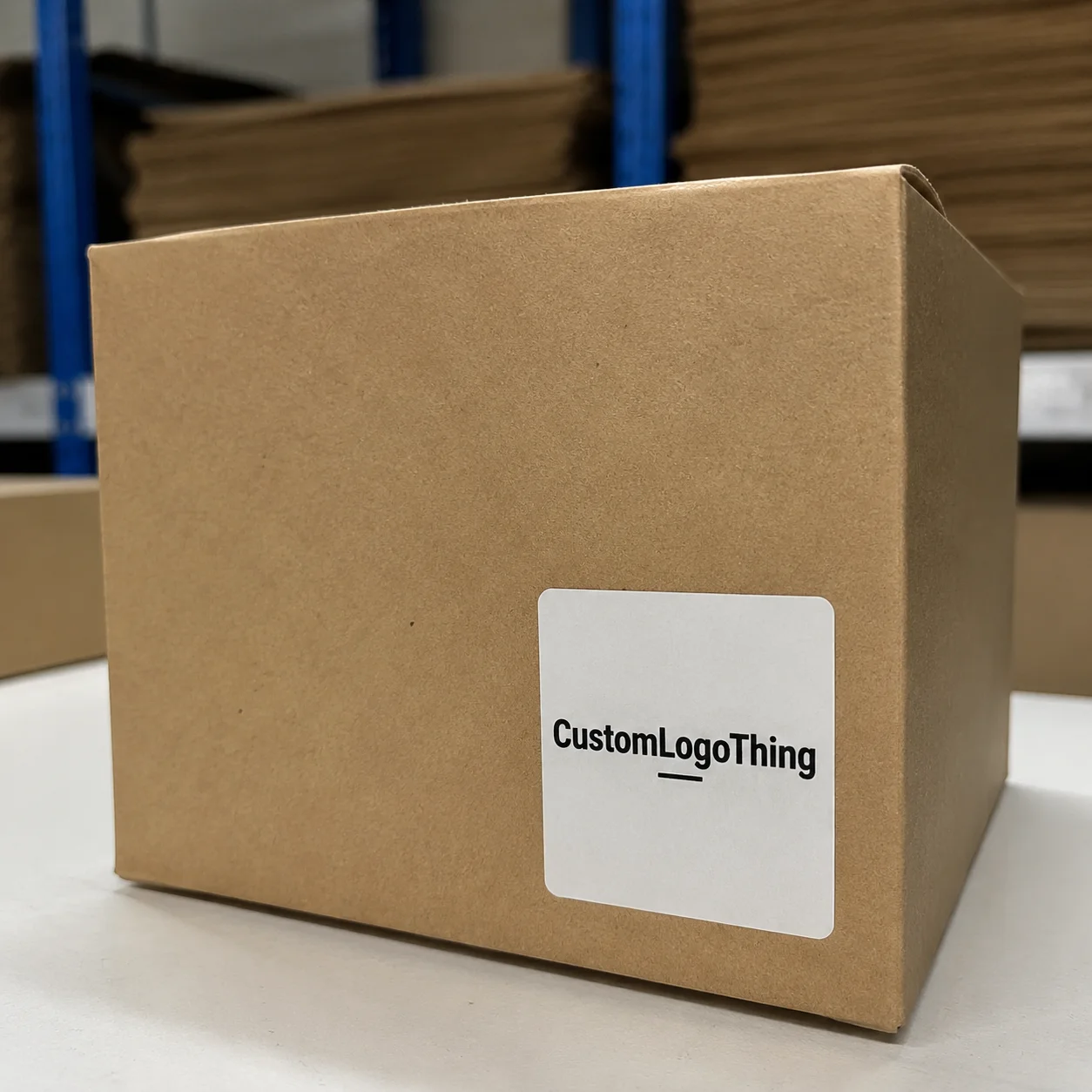
Decals usually mean precision-cut graphics applied directly to a surface, sometimes with transfer tape. Stickers is the broader term and can include die-cut singles, kiss-cut pieces, sheets, and rolls. Most buyers do not need to overthink the wording; use case matters more than label.
They get chosen often because they solve multiple jobs at once: branding, decoration, identification, and short-run flexibility. A startup can use them to upgrade branded packaging before committing to high-volume printed cartons. A manufacturer can use them for equipment marking or window graphics. A promo team can use them as handouts with longer exposure than an insert card or flyer.
They also scale well. Many suppliers can produce a test batch of 100 pieces or a larger roll order for line application. That makes them practical for pilot launches, seasonal campaigns, and businesses that expect artwork or messaging to change.
Quick rule: if the graphic must survive moisture, repeated handling, or outdoor use, vinyl is usually the first material worth pricing.
How Decals and Stickers Work on Real Surfaces, Not Just on a Product Page
A decal is a construction, not just a print. It usually includes face stock, ink, optional laminate, adhesive, and release liner. Each layer affects durability and application, which is why two visually similar products can perform very differently once applied.
Surface matters. Smooth glass is easy. Corrugated board, textured plastic, powder-coated metal, and low-surface-energy plastics are less forgiving. Adhesion can fail on dusty, oily, or uneven surfaces even if the film itself is durable. If the piece will go on a bottle, freezer door, storefront window, or hard hat, the operating environment should be part of the quote request.
Buyers also confuse easy peel with easy remove. Easy peel refers to backing and handling, such as a split liner or kiss-cut format. Easy remove refers to adhesive behavior after application. Removable adhesive works for temporary promotions or seasonal windows. Permanent adhesive is the safer choice for equipment, durable packaging, and outdoor graphics where edge lift is costly.
Format affects labor and usability:
- Die-cut singles work well for handouts, inserts, and merch packs.
- Kiss-cut stickers protect detailed shapes with a larger backing.
- Sheets fit small icon sets or multi-design packs.
- Rolls are usually best for repetitive application on a packing line.
- Transfer decals help align lettering or separated design elements.
Artwork preparation matters too. Vector files such as AI, EPS, SVG, or print-ready PDF usually produce better cut accuracy than raster art. Tiny text and hairline details are common failure points once printing and contour cutting begin.
The Specs That Actually Change Performance: Material, Adhesive, Finish, and Shape
If performance matters, start with the spec sheet.
Standard white vinyl is the most common choice because it prints reliably and suits many promotional and packaging uses. Clear vinyl gives a cleaner integrated look on glass and jars, but often needs white ink planning if brand colors must stay accurate. Holographic or metallic-look films can increase visual impact, but they also raise cost and may distort brand color perception.
Finish is not only aesthetic. Gloss usually gives stronger color pop. Matte reduces glare and often feels more premium. Laminate adds practical protection against scratching, moisture, and UV. For outdoor use, laminated builds usually outperform economy unlaminated options by a wide margin.
Adhesive should match the application. Standard permanent adhesive is enough for many cartons, jars, and branded mailers. Removable adhesive is better for temporary window graphics. Tougher environments may require stronger bond performance or better resistance to cleaning chemicals and repeated wiping. If the application involves curves, rivets, or vehicle surfaces, that usually moves into a higher-performance film category.
Shape changes both cost and risk. Large decals use more material. Intricate contour cuts look sharp on screen but can increase waste, slow production, and create weak points at tiny corners or narrow bridges. Many buyers get a cleaner result with a simpler outline.
Readability matters as much as finish. Leave enough border around logos, avoid very thin reverse text, and test contrast on the actual substrate color. In packaging design, the decal often has to read at arm’s length in seconds.
For programs that combine decals with cartons, pouches, or sleeves, it helps to compare options across Custom Packaging Products so finish and color expectations stay consistent.
Custom Sticker Pricing and Unit Cost: What Moves the Quote Up or Down
Pricing is driven by more than size. Quotes usually reflect material grade, print method, color coverage, laminate, cut complexity, order volume, and packaging format. Two decals with the same dimensions can vary sharply in cost if one uses clear outdoor vinyl with laminate and complex cutting while the other is basic white indoor stock.
The biggest driver is usually total material area combined with quantity. Unit cost drops as setup gets spread over a larger run. As a broad example, a simple 3-inch die-cut white vinyl sticker may run about $0.55-$0.95 each at 250 pieces and around $0.18-$0.32 each at 5,000 pieces. Specialty film, laminate, and difficult contours push those numbers up.
Labor affects price too. Complex cut paths, proof revisions, hand-counting, and special packing all add cost. The cheapest visible line item is not always the lowest total cost if application fails or fulfillment becomes inefficient.
| Format | Best Use | Typical Cost Efficiency | Operational Tradeoff |
|---|---|---|---|
| Die-cut singles | Handouts, order inserts, merch packs | Medium | Easy to distribute, slower for line application |
| Kiss-cut sheets | Small sets, promo packs, internal use | Good for small graphics | Can be less efficient at high volume |
| Rolls | Production lines, repeated application | High | Less consumer-friendly for giveaways |
| Transfer decals | Windows, lettering, alignment-sensitive graphics | Lower | More setup and application care required |
MOQ can change the quote materially. Some suppliers support low-volume promo runs; others become competitive only at 2,500, 5,000, or 10,000 units. Ask whether setup fees, shipping, rush charges, split shipments, and outdoor laminate are included. Those extras can shift a quote by 10% to 25%.
For buyers, the right comparison is not “cheapest sticker” but “lowest-cost option that will actually hold on the target surface for the required lifespan.”
Process and Turnaround: From Artwork Approval to Delivery
A typical order moves through quote request, artwork review, proofing, material confirmation, print, cutting, finishing, packing, and shipping. Straightforward digital jobs often run 5 to 10 business days after proof approval. Larger or more durable builds may take 12 to 15 business days, especially when laminate, multi-SKU batching, or precision contour cutting is involved.
Most delays start before production. Common causes are low-resolution art, missing cut paths, unclear dimensions, undecided finish, and vague revision feedback. Freight errors and address changes also create avoidable problems late in the schedule.
Quantity affects lead time. A 200-piece test run can fit into a digital queue quickly. A 20,000-piece order across several designs needs more planning, more QC checkpoints, and sometimes staged shipping. If an event or launch date matters, schedule backward from the day the order must be in hand, not the ship date.
Before approving the proof, confirm:
- Final dimensions
- Color expectations, especially on clear or specialty media
- Adhesive type
- Indoor or outdoor use
- Format: singles, sheets, rolls, or transfer
- Ship-to address and required date
For repeatability, save the approved proof version and the exact material, finish, and format used on the first successful order.
How to Order the Right Decals Step by Step Without Overbuying or Underspecifying
- Define the job. Decide whether the piece is for promotion, package branding, equipment ID, window signage, or outdoor use.
- Identify the surface and conditions. Note texture, moisture, temperature, cleaning exposure, handling frequency, and desired lifespan.
- Choose format, size, and finish. Match singles, sheets, rolls, or transfer tape to the way the decal will actually be applied.
- Prepare artwork correctly. Use vector art when possible and include bleed, safe area, and cut path if required.
- Request a complete quote. Include quantity tiers, intended use, shipping ZIP, and in-hand date.
- Review and test. If the application is high-visibility or difficult to replace, test a sample on the real surface.
- Set quantity by use rate. Add a spoilage allowance, often 2% to 5% for hand application, and avoid buying far beyond the next branding or product update.
The best order quantity is not always the largest discounted run. It is the quantity that matches actual consumption, storage limits, and expected reorder timing.
The Most Common Buying Mistakes, and the Expert Fixes That Prevent Reprints
Mistake 1: Buying on price alone. Fix: evaluate surface, adhesive, and lifespan before unit price.
Mistake 2: Assuming all vinyl is outdoor-rated. Fix: ask about film grade, ink system, and laminate.
Mistake 3: Sending poor artwork. Fix: use vector files and simplify tiny text or fine outlines.
Mistake 4: Ignoring application method. Fix: choose format based on how the decal will actually be dispensed and applied.
Mistake 5: Skipping a live test. Fix: sample first on unusual surfaces or in harsh conditions.
Mistake 6: Ordering the wrong quantity. Fix: add reasonable overage for spoilage and replacements, but avoid tying cash up in stock that may become obsolete.
Useful heuristics: complex shapes raise setup and waste, and unusual surfaces should be sampled before full production.
What to Do Next: Build a Smarter Quote Request and Compare Suppliers Fairly
Build your RFQ around facts: target surface, indoor or outdoor use, size, quantity tiers, finish, adhesive if known, format, artwork status, destination, and deadline. Better input usually produces better recommendations and fewer proof cycles.
When comparing suppliers, look beyond the headline price. Check whether they explain material choices clearly, call out risk on unusual surfaces, and offer samples or pilot quantities. A useful comparison is to request three levels: economy for short-term indoor use, standard durable for general handling, and premium outdoor for UV, moisture, and abrasion resistance.
For unfamiliar applications, a pilot run of 50 to 200 pieces can reveal adhesion, finish, and handling issues before a larger commitment. If sustainability documentation matters, related packaging standards may also be relevant through organizations such as FSC and ISTA.
Finally, document the approved spec: file version, dimensions, material, finish, adhesive, format, and proof date. That record is what makes reorders consistent across campaigns and locations.
What Are Custom Vinyl Decals and Stickers Best Used For?
Custom Vinyl Decals and stickers are best used where branding or identification must be durable, portable, and easy to apply without redesigning a full package component. Common uses include promotional handouts, laptop and bottle stickers, equipment IDs, window graphics, branded mailers, short-run package branding, and outdoor decals that need more moisture and UV resistance than paper labels can provide.
For buyers, the strongest fit is usually one of three cases: a low-cost promo item with long exposure, a practical packaging upgrade, or an identification decal that must stay readable through handling and cleaning. The right construction depends on surface, lifespan, and application method.
FAQ
What is the difference between vinyl decals and vinyl stickers?
Decals often refer to cut graphics or transfer-style applications, while stickers can include die-cut singles, kiss-cut pieces, sheets, or rolls. For buyers, the more important variables are surface, adhesive, finish, and application method.
How long do custom vinyl stickers last outdoors?
Outdoor life depends on vinyl grade, laminate, sun exposure, moisture, abrasion, and the application surface. Laminated durable films usually last much longer than economy indoor options, so ask for an expected durability range tied to your environment.
How much do custom vinyl decals and stickers cost per piece?
Unit cost usually falls as quantity rises, but material, size, cut complexity, finish, and format can change the economics significantly. A useful quote should show quantity tiers and clarify shipping, setup, and laminate charges.
What file format is best for printing custom vinyl decals?
Vector files such as AI, EPS, SVG, or print-ready PDF are usually best for clean edges and accurate cut paths. High-resolution raster art may work for photo graphics, but fine text and intricate outlines still need review.
Can I order low-MOQ custom vinyl decals for testing first?
Yes. A small pilot batch is often the smartest move for new surfaces, outdoor use, or visible branded applications. Testing first is usually cheaper than reprinting a large order that fails in the field.


