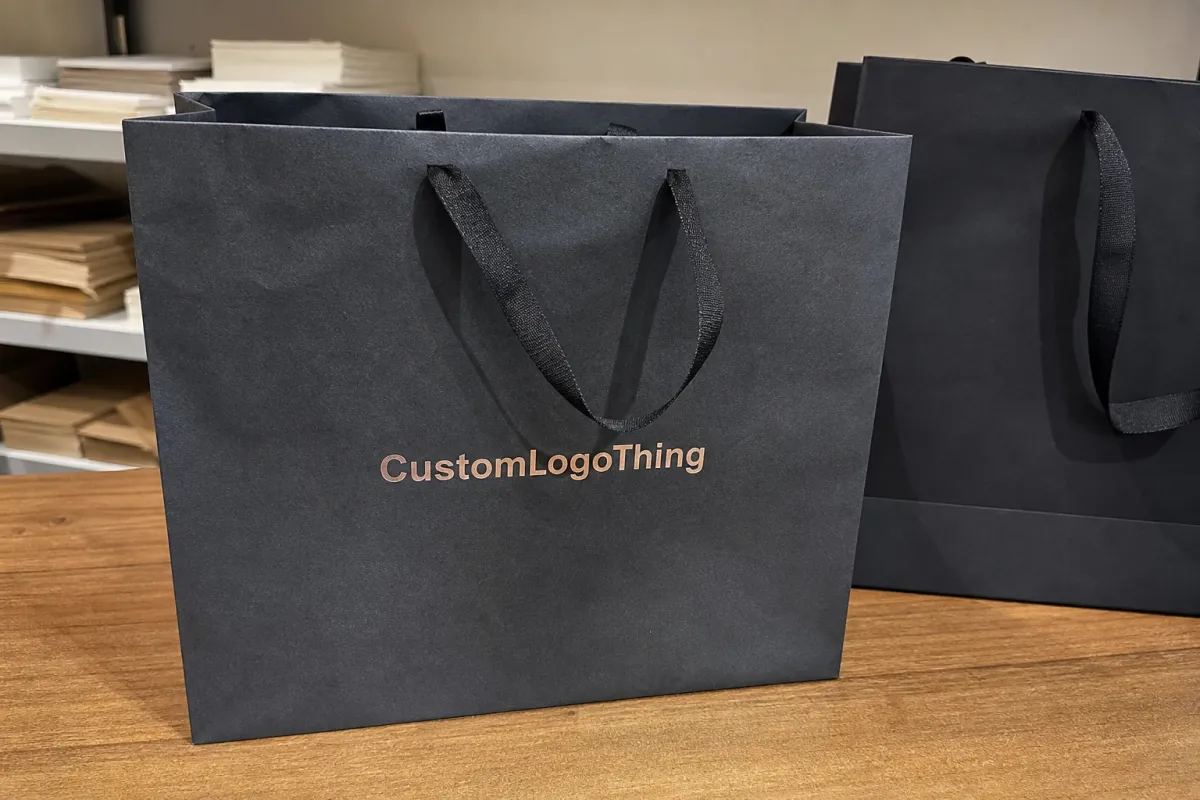
Buyers looking for logo printed Plastic Bags Low MOQ Custom order options usually want the same answers: which bag style fits the product, what specs affect cost, how low the minimum can go, and how fast the order can ship. For boutiques, salons, bakeries, dispensaries, pop-ups, and event sellers, a printed bag is often the most visible branded item a customer carries away.
Low-volume custom bags help businesses test branding, support seasonal promotions, and avoid tying up cash in excess inventory. They also let buyers compare practical tradeoffs such as material, gauge, print complexity, lead time, and total landed cost before committing to a larger reorder.
This guide focuses on buyer decisions. It covers bag types, construction specs, pricing drivers, proofing steps, and the mistakes that create avoidable cost. If you are comparing bags with other Custom Packaging Products, it should also help place plastic carry bags within a broader product packaging plan.
Small bag orders solve a big retail problem

A business can invest in displays, labels, and advertising, then lose brand continuity at checkout with a plain stock bag. Small custom runs solve that gap without forcing a large inventory commitment.
They are especially useful when a buyer needs to:
- Test a concept: launch a new store, booth, or campaign before ordering at full scale.
- Run seasonal graphics: support holiday or event designs without leftover stock.
- Control spend: cap total cash outlay even if the unit cost is higher.
- Refine the spec: confirm size, handle style, and logo readability before reordering.
- Support smaller locations: keep branding consistent across branches with lower volume needs.
For many buyers, the real goal is not the cheapest unit price. It is finding a bag that looks right, carries the actual product weight, and does not leave thousands of obsolete pieces in storage. A slightly higher unit cost often makes sense if it reduces overbuying and improves reorder flexibility.
Practical takeaway: low MOQ orders work best as a controlled test of size, print, and demand rather than as a stripped-down version of a large production run.
Logo printed plastic bags low MOQ custom order options by bag type
Bag style affects carrying strength, print area, appearance, and minimum order economics. The best choice depends on what the customer is carrying, how the bag should look at checkout, and how much setup complexity the project can support.
Die-cut handle bags are one of the most common entry points for low-volume custom orders. They stack flat, offer a clean print surface, and work well for apparel, cosmetics, brochures, and giveaways. They are often among the more accessible styles for smaller runs.
Patch handle bags reinforce the handle area and suit heavier items or denser merchandise. They cost more than basic die-cut styles but offer better durability for pharmacy, beauty, gifting, and specialty retail uses.
Soft loop handle bags push further into premium presentation. They are common for boutiques, jewelry, trade shows, and higher-ticket products, but added material and assembly usually make low-MOQ pricing less favorable.
T-shirt bags remain a utility format for fast checkout and high volume, though local rules may limit them. Mailer-style poly bags are more relevant when the need is e-commerce shipping rather than storefront presentation.
| Bag Type | Best Use | Typical Low-MOQ Position | Buyer Tradeoff |
|---|---|---|---|
| Die-cut handle | Apparel, cosmetics, brochures | Often among the more accessible | Good value, lighter carry profile |
| Patch handle | Heavier retail items, pharmacy, beauty | Moderate MOQ and setup | Stronger handle, slightly higher cost |
| Soft loop handle | Boutiques, gifting, events | Higher setup and unit cost | Premium look, more complex build |
| T-shirt bag | Utility checkout, high volume | Volume-driven economics | Efficient, less premium perception |
| Mailer poly bag | E-commerce and soft goods shipping | Varies by size and print | Shipping function over storefront look |
At lower quantities, customization is usually most efficient when the structure stays standard and the print stays simple. One- or two-color graphics, front-and-back print, matte or glossy film, and handle reinforcement may all be available, but each added variable can push the minimum or the unit cost upward.
If the initial run may expand into a larger repeat program, it is worth comparing with Wholesale Programs before locking in a construction that will be expensive to scale.
Material, thickness, print, and size specs that affect performance
Once the bag style is chosen, the key decisions are film type, thickness, size, and print method. These are the specs that determine how the bag feels, how it performs, and how the quote is built.
LDPE creates a softer, more flexible feel and is commonly used when buyers want a smoother, more premium retail presentation. HDPE is stiffer and crisper, often used in more utility-driven applications.
Thickness is usually measured in mil or micron. For many retail bags, roughly 1.5-4.0 mil is a practical range, depending on size and load. Thin film may be adequate for lightweight cosmetics or handouts, while larger apparel bags or heavier gift items usually need more body. More thickness generally improves tear resistance, opacity, and feel, but increases material cost and freight weight.
Print for low-MOQ projects is often flexographic spot color. It works well for bold logos, simple typography, and solid shapes. It is less forgiving for fine gradients, very small reverse text, or detailed photographic art. Buyers usually get the cleanest result when the artwork is designed for the medium instead of forcing carton-style graphics onto flexible film.
Specs buyers should confirm early
- Size: width x gusset x height based on actual packed product, not product dimensions alone.
- Load weight: what the bag must carry in normal use.
- Material: LDPE or HDPE, plus finish if offered.
- Gauge: target mil or micron range.
- Print layout: number of colors, print sides, and approximate coverage.
Artwork discipline matters. Vector files such as AI, EPS, or editable PDF help maintain sharp edges. Pantone references improve spot-color consistency. Small serifs, hairline rules, and tiny knockout text are common failure points, so proofing should focus on readability as much as color.
Compliance can matter as well. Some buyers ask about recycled content, reuse goals, or regional restrictions on certain bag types. General materials guidance is available through epa.gov, and transport testing context can be reviewed at ista.org when bags will be packed and shipped in master cartons.
Pricing, MOQ, and unit cost: what changes the quote fastest
The fastest way to understand pricing is to look at the variables that move it most: size, material, thickness, print colors, print coverage, handle construction, quantity, and freight destination.
Low MOQ orders usually have a higher unit cost because setup labor, plates, color prep, and press time are spread across fewer pieces. That does not make them poor value. It simply means buyers should compare total spend, reorder risk, and storage impact alongside unit price.
As a rough market range, simple one-color printed die-cut or merchandise bags at lower volumes may fall around $0.18-$0.45 per bag. Reinforced or more premium handle styles can move into the $0.35-$0.90+ range depending on dimensions, film gauge, ink coverage, and freight. These are directional benchmarks, not fixed quotes.
| Quote Driver | Lower-Cost Direction | Higher-Cost Direction |
|---|---|---|
| Bag size | Smaller footprint | Larger width, gusset, height |
| Material | Standard utility film | Softer premium film or specialty structure |
| Thickness | Lower gauge within load needs | Heavier gauge for strength and feel |
| 1-color spot logo | Multiple colors and high coverage | |
| Handle | Die-cut | Patch or soft loop reinforcement |
| Quantity | Lower total spend | Lower price per bag at higher tiers |
One of the most common buying mistakes is comparing quotes that do not match. A 2.0 mil LDPE die-cut bag with one-color print is not equivalent to a 3.0 mil reinforced bag, even if the dimensions are similar. Buyers should request at least two quantity breaks and, when possible, one alternate construction. That usually shows whether the best value sits at the entry MOQ or slightly above it.
Simple branding often protects budget well. A one-color logo on white, black, or frosted film can look clean and retail-ready without the setup burden of multi-color, high-coverage graphics.
Artwork approval process, production steps, and lead time
Most custom bag orders follow a straightforward path:
- Submit specs and artwork.
- Receive a quote with quantity breaks.
- Confirm construction and pricing.
- Review and approve the proof.
- Begin production.
- Pack and ship.
The quality of the quote request determines how fast the process moves. The most useful requests include bag style, width, gusset, height, expected load, material preference, target thickness, print colors, quantity, ship-to ZIP or country, and required in-hands date.
Proofing is the stage where most avoidable errors can still be fixed. Buyers should verify logo scale, print orientation, front-and-back layout, gusset placement, handle location, and color callouts. A proof approval should happen only after dimensions and print placement are confirmed.
Lead time depends on stock material availability, print complexity, press schedule, packing, and freight mode. For many straightforward low-volume runs, production after proof approval may fall in the 12-20 business day range, plus shipping time. Repeat orders with unchanged specs are often faster because the construction and artwork have already been established.
Fastest path to delivery: send vector artwork, use a standard size if it fits, and avoid spec changes after proof approval.
Buyers managing several packaging formats should also keep the bag aligned with the rest of the packaging design system, including labels, tissue, or custom printed boxes, so the program stays visually consistent.
Common buying mistakes when ordering custom plastic bags
Most costly mistakes come from incomplete specifications rather than production defects.
- Guessing the size: measuring the product but ignoring tissue, inner wrap, or multi-item carry scenarios.
- Under-specifying gauge: choosing film that looks acceptable on paper but distorts or tears in use.
- Sending weak artwork: using web-resolution files instead of vector art.
- Comparing mismatched quotes: evaluating different materials, gauges, or reinforcement levels as if they were equal.
- Ignoring freight: overlooking the impact of bulky cartons on total landed cost.
- Missing local rules: checking bag regulations after the order instead of before it.
A short pre-order checklist helps reduce risk:
- Confirm packed product dimensions and carry weight.
- Choose the bag style based on use, not appearance alone.
- Verify material, thickness, and handle construction.
- Provide vector artwork and Pantone references.
- Review proof orientation, print area, and dimensions carefully.
- Compare landed cost across at least two quantity levels.
Buyers who still have open questions on ordering details often review a supplier’s FAQ before final approval.
What is the best way to order logo printed plastic bags at low MOQ?
The best ordering approach is to start with the use case, not the artwork. Define what the bag must hold, how much weight it carries, what visual impression it should create, and whether the design is temporary or repeatable. From there, narrow the style, material, and thickness before requesting pricing.
The strongest quote requests include:
- bag style
- width, gusset, and height
- expected load weight
- material and gauge target
- handle type
- number of print colors
- vector artwork
- shipping location
- required in-hands date
Buyers should ask for at least two quantity options and, if possible, one alternate bag construction. That quickly shows whether a small increase in volume improves the economics enough to justify extra inventory.
In practice, the process is simple: define the use case, shortlist one or two constructions, send production-ready artwork, review the proof carefully, and approve only when size, print placement, and timing are fully confirmed.
The most successful logo printed Plastic Bags Low MOQ Custom order projects are usually the ones with the clearest specs. When the bag style matches the product, the artwork suits flexographic print, and the quote is judged on total business value rather than headline price alone, buyers get a program that is easier to launch and easier to scale.
FAQ
What is the typical MOQ for a custom order of logo printed plastic bags?
MOQ depends on bag style, size, material, and print complexity. Standard sizes with simple one-color printing usually allow lower minimums than custom dimensions or multi-color designs. Requesting multiple quantity tiers is the easiest way to compare startup efficiency with total spend.
How much do logo printed plastic bags cost at low MOQ quantities?
Cost is driven by size, film thickness, material, handle type, print colors, quantity, and freight. Low MOQ orders usually have a higher unit price but a lower total cash outlay. The most useful comparison is total landed cost rather than unit price alone.
What artwork files are needed for a logo printed plastic bags custom order?
Vector files such as AI, EPS, or editable PDF are usually preferred because they reproduce cleanly in spot-color print. Pantone references help set color expectations, and proof approval should confirm placement, scale, and print area before production begins.
How long does a low MOQ custom order for printed plastic bags usually take?
Timing depends on proof approval speed, production queue, print complexity, and shipping destination. Many straightforward runs fall into a 12-20 business day production window after proof approval, with freight added on top. Repeat orders are often faster.
Which plastic bag style is best for a low MOQ logo printed order?
Die-cut handle bags often fit cost-conscious retail programs, while patch handle or soft loop bags suit heavier products or a more premium presentation. The right choice depends on product weight, presentation goal, storage footprint, and budget.