Stickers custom labels do more than add branding. They identify the product, carry compliance copy, support barcodes and lot tracking, and have to stay attached through storage, packing, shipping, and use. A label that looks good on screen can still fail if the adhesive does not match the surface, the stock cannot handle moisture, or the barcode will not scan.
For buyers, the key decisions are practical: surface, environment, adhesive, material, finish, shape, application format, MOQ, and turnaround. The right spec can make a simple jar, bottle, pouch, or carton feel finished without changing the whole package. The wrong one creates peeling corners, unreadable type, smudging, or labor problems at the packing table.
“Stickers” and “labels” often overlap. In practice, labels usually handle product information and operations, while stickers are more often used for branding extras, seals, inserts, or promotions. The materials may be the same; the job determines the spec.
That is why labels should be treated as packaging components, not artwork alone. Well-matched construction can help connect jars, cartons, inserts, and Custom Packaging Products while keeping cost and complexity under control.
Why stickers custom labels matter for packaging
Labels have to work in two places at once: on shelf and in transit. On shelf, they need to be readable and visually consistent with the product. In shipping and storage, they need to resist rubbing, moisture, handling, and temperature changes.
A stronger label brief starts with use conditions, not just appearance:
- What surface is the label applied to: glass, PET, HDPE, corrugated, kraft, or metal?
- Will it face water, condensation, oil, abrasion, sunlight, refrigeration, or freezer storage?
- Will it be applied by hand, with a dispenser, or on a machine?
- Does it need room for ingredients, warnings, barcodes, QR codes, or lot codes?
These answers shape the material and adhesive far more than the artwork style. A refrigerated bottle often needs waterproof film and an adhesive that holds through condensation. A candle in dry indoor storage may work well with paper stock. A carton label may need scan contrast and tack more than any premium finish.
From a buyer’s side, labels affect both presentation and operations. If the spec is right, the package feels deliberate. If it is wrong, defects show quickly: silvering on clear film, crooked hand application, peeling edges, glare, or hard-to-read information panels.
How stickers custom labels work from concept to application
Most custom labels are built from the same layers: face stock, adhesive, liner, print method, finish, and cut shape. Small changes in those layers can change both performance and cost.
- Face stock: paper, BOPP, vinyl, foil, or textured material
- Adhesive: permanent, removable, freezer-grade, high-tack, or tamper-evident
- Liner: the backing used before application
- Print method: usually digital or flexographic
- Finish: gloss, matte, varnish, or laminate
- Shape: standard or custom die-cut
Material choice usually drives the first major decision:
- Paper: lower-cost and suitable for dry goods, cartons, and indoor use
- White BOPP: a common all-around option for bottles, jars, and pouches because it resists water and scuffing better than paper
- Clear BOPP: useful for a no-label look, but often needs white ink for readable contrast
- Vinyl: better for outdoor use, decals, or heavier wear, usually at a higher cost
- Foil or textured stock: decorative options that can limit very fine type and raise cost
Finish also affects use. Gloss makes colors appear stronger. Matte reduces glare and often improves legibility under store lighting. Varnish is a lighter protection layer. Lamination adds better abrasion resistance and is often worth it for tightly packed or frequently handled products.
Format affects labor and application speed:
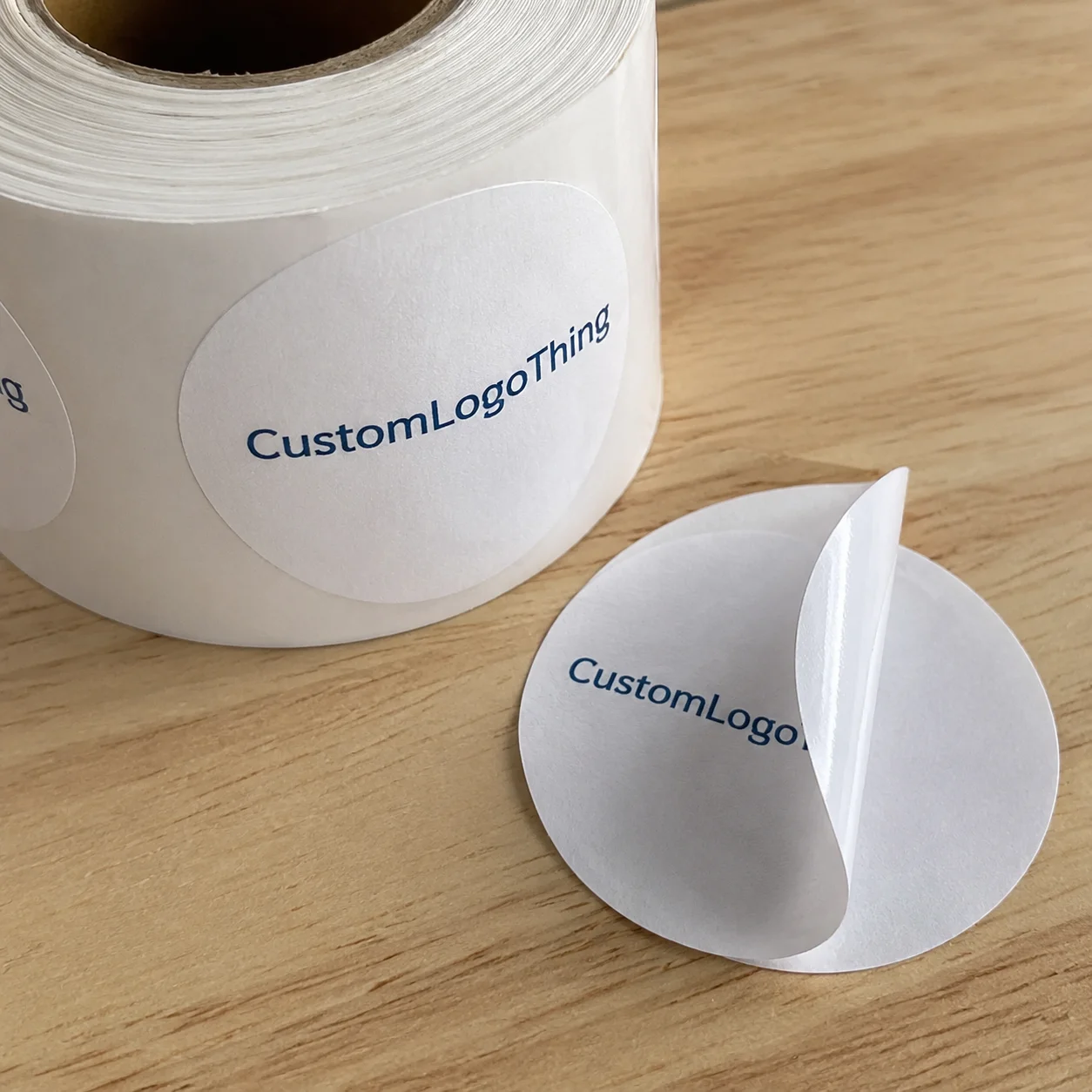
- Rolls: best for faster hand application, dispensers, or machine use
- Sheets: practical for smaller runs and office storage
- Individual die-cut pieces: best for promotional use, inserts, or handouts
Shape matters too. Standard circles, rectangles, squares, and ovals are usually easier to print and apply. Intricate contour cuts, tight inside corners, and very small sizes can increase waste, raise conversion cost, and create edge-lift problems during use.
What factors affect label performance on shelf and in transit?
Surface type is the first checkpoint. Smooth glass and metal are usually easier than rough kraft paper, corrugated board, low-surface-energy plastics, or flexible pouches. Curved tins and tapered bottles can also distort artwork if the label panel is too large.
Environment is the next filter. Moisture and condensation are common issues, but oil can be even more damaging because it creeps into edges and weakens adhesion. Refrigeration, freezer storage, sunlight, heat, and shipping friction can all affect how the label looks and holds over time.
Adhesive choice deserves close attention. Permanent acrylic adhesives cover many general packaging uses. Removable adhesives fit short-term marking better. Freezer-grade constructions help in cold storage, though application timing still matters; labels often perform better when applied before condensation forms. Tamper-evident materials are useful for seals and some personal care products.
Readability is also a performance issue. Very small type can break down on textured or absorbent stock. Barcodes need good contrast, quiet zones, and proper sizing. If scanning matters at checkout or in the warehouse, test the printed sample with the actual scanner rather than relying on a digital proof. Broader transit guidance from ISTA can also help if labels are part of a shipping workflow.
Compliance can affect label size and layout as much as design does. Food, supplements, cosmetics, and chemical products may need ingredient panels, warnings, net quantity, batch coding, or variable data space. Brands making paper-content or sourcing claims may also need standards tied to programs such as FSC.
Rule of thumb: if a label must survive moisture, abrasion, and scanning, choose material, adhesive, and coating first. Decorative effects come after that.
Production steps and turnaround after you request a quote
Most orders move through the same sequence: artwork review, spec check, proofing, prepress, printing, finishing, packing, and shipping. Delays usually come from missing details, not from press time alone.
Common slowdowns include unclear dimensions, low-resolution files, missing bleed, uncertain adhesive needs, vague application notes, and slow proof approval. “2-inch round labels” is not enough by itself; a supplier still needs quantity, material, finish, format, and shipping destination.
Digital printing is often the better fit for short to mid-size runs, multiple SKUs, and quicker proof-to-press timing. Flexographic printing becomes more attractive at higher volumes and on repeat jobs where plate cost can be spread across more units.
Special finishes add time. White ink on clear stock, foil effects, lamination, unusual adhesives, and custom die lines all add steps. Sampling can add several more days, especially if the label needs to be tested on the actual container.
For launch dates or retailer deadlines, build in buffer. In practice, the clock usually starts after proof approval, not when the inquiry is sent. If the order includes several SKUs, specialty materials, or matching custom printed boxes, extra time is usually warranted.
A cleaner quote request should include:
- Final dimensions and shape
- Quantity by SKU
- Container or surface type
- Use environment: dry, refrigerated, oily, outdoor, or freezer
- Application format: roll, sheet, or individual
- Artwork files and target finish
- Required in-hands date and shipping destination
Cost and pricing: what drives unit cost, MOQ, and total order value
Label pricing is usually driven by size, material, adhesive, ink coverage, finish, format, quantity, and freight. A matte paper sheet label can cost far less than a clear BOPP roll label with white ink and lamination, even at the same dimensions.
| Format / Spec | Typical Quantity | Estimated Unit Range | Best Fit |
|---|---|---|---|
| Paper sheet labels, standard shapes | 500–2,000 | $0.05–$0.14 | Dry goods, office use, early product testing |
| White BOPP roll labels, matte or gloss | 1,000–10,000 | $0.03–$0.11 | Bottles, jars, pouches, broader product packaging |
| Clear BOPP with white ink | 1,000–10,000 | $0.06–$0.16 | Premium clear-container presentation |
| Vinyl die-cut stickers | 250–5,000 | $0.20–$0.80 | Promotional use, decals, outdoor handling |
| Foil or textured specialty labels | 1,000–5,000 | $0.12–$0.35 | Candles, cosmetics, boutique packaging |
Unit cost usually falls as volume rises, but that does not always make a larger order smarter. If artwork, compliance text, or container specs may change soon, a smaller test run can be cheaper than carrying obsolete inventory.
MOQs vary by print method and material. Digital work often supports lower minimums on standard stocks. Specialty adhesives, metallic effects, textured materials, and unusual constructions often raise minimums because sourcing and setup are less efficient. Multiple SKUs also add prepress and handling cost.
Common hidden cost drivers include white ink, variable data, sequential numbering, custom die shapes, non-standard roll direction or core size, rush production, and freight on heavier roll orders.
When comparing quotes, send complete specs: dimensions, quantity by version, material preference, finish, application method, shipping ZIP or postal code, and storage conditions. That makes supplier comparisons more useful. It can also help to review Custom Labels & Tags alongside the rest of the pack to decide whether the label or another packaging component should carry more of the visual work.
How to order the right label format in five practical steps
Good ordering comes down to making the key decisions in the right order.
Step 1: Define the job clearly
Start with the product, container, surface, and placement. Mention whether it is hand-filled, chilled, oily, squeezed, or used outdoors.
Step 2: Choose size and shape from the real label panel
Measure usable panel space, not just container diameter. Leave room for compliance copy, barcodes, and seam placement. Tapered or curved containers may need a smaller panel than expected.
Step 3: Match material, adhesive, and finish to handling
Paper works for many dry indoor uses. For moisture or refrigeration, white or clear BOPP is often the safer baseline. Vinyl is more appropriate for outdoor decals or rougher wear. Permanent adhesive is the default for most product labels.
Step 4: Prepare artwork for print
Use vector files when possible, include bleed, keep fine type away from trim, and confirm color expectations early. If the job uses white ink on clear stock, mark that layer clearly. Test barcodes at final size.
Step 5: Proof and test before scaling
Check copy, size, spacing, die line, and orientation carefully. If the environment is demanding, request a sample or pilot run before committing to full volume.
- Choose rolls for faster application or machine use
- Choose sheets for smaller manual runs
- Choose individual stickers for promotional handouts and inserts
Common mistakes buyers make with custom labels and how to avoid them
The most common mistake is choosing by looks alone. A paper label may fit the brand visually but fail on refrigerated, oily, or high-friction products. Real conditions should decide the spec.
Another mistake is ordering the wrong format. Teams sometimes buy individual die-cut pieces for a process that really needs roll labels. The piece price may seem acceptable, but slower application and inconsistent placement increase labor cost quickly.
Unreadable information is another frequent issue. Low-contrast text, cramped ingredient panels, and undersized barcodes create trouble for customers, retailers, and warehouse staff alike.
Skipping a real-world test is also costly. Labels can look fine in proof and still fail on the actual bottle, pouch, or carton because of curvature, condensation, or surface chemistry. Sampling is especially important for flexible packaging, plastic containers, and cold storage.
Finally, buyers often focus too much on price per piece. Better measures include total applied cost, spoilage risk, relabeling risk, scan reliability, and packing speed. A slightly higher-cost label may still be the better buy if it applies faster and fails less often.
Next steps: build a smarter quote request and test before you scale
Better pricing and smoother production usually start with a better brief. A practical checklist includes:
- Final size and shape
- Quantity per SKU
- Rolls, sheets, or individual pieces
- Container material and shape
- Expected environment: dry, wet, refrigerated, oily, or outdoor
- Preferred material, adhesive, and finish
- Artwork files, barcode requirements, and in-hands date
Photos of the container help, and a physical sample is even better for difficult applications. Mention unusual conditions up front, such as cold-chain handling, balm residue, direct sunlight, or rough shipping. Those details often determine whether paper, BOPP, or vinyl is the right direction.
Ask for a proof as standard practice. If the label must perform in a demanding environment, request a physical sample or pilot run too. Once a spec works, document the final dimensions, face stock, finish, adhesive notes, unwind direction if relevant, and application format so repeat orders move faster with fewer errors.
The best order is usually not the flashiest one. It is the one matched to the product, the packing process, and the actual environment, with enough testing to scale confidently.
FAQ
What is the difference between custom stickers and custom labels?
Custom labels are usually used for product identification, ingredients, compliance details, shipping data, or package decoration. Custom stickers more often serve as promotional pieces, inserts, branding extras, or casual applications. The materials may overlap, but the intended use usually determines the right format, adhesive, and finish.
How much do stickers custom labels cost per unit?
Unit cost depends on size, quantity, material, finish, adhesive, print method, and format. Larger roll orders often lower the cost per piece, while short runs raise unit cost but reduce total spend. White ink, metallic effects, Custom Die Cuts, variable data, and rush production usually increase pricing.
What format is best for product labels: rolls, sheets, or individual pieces?
Rolls are usually the best option for faster hand application or machine use. Sheets work well for smaller runs, office storage, and manual peeling. Individual die-cut pieces are better suited to promotional use than routine product labeling.
How long does it take to print custom sticker labels?
Timeline depends on proof approval, print method, quantity, finishing steps, and shipping distance. A simple digital short run may move in several business days, while a larger order with specialty finishes can take one to two weeks or more before transit. Delays often come from incomplete specifications or proof revisions rather than printing itself.
What material should I choose for waterproof or refrigerated custom labels?
BOPP and vinyl are common choices for moisture resistance and tougher handling. Adhesive matters just as much as face stock, especially on cold surfaces or where condensation is present. The safest approach is to test the label on the real container under actual storage conditions before committing to volume.