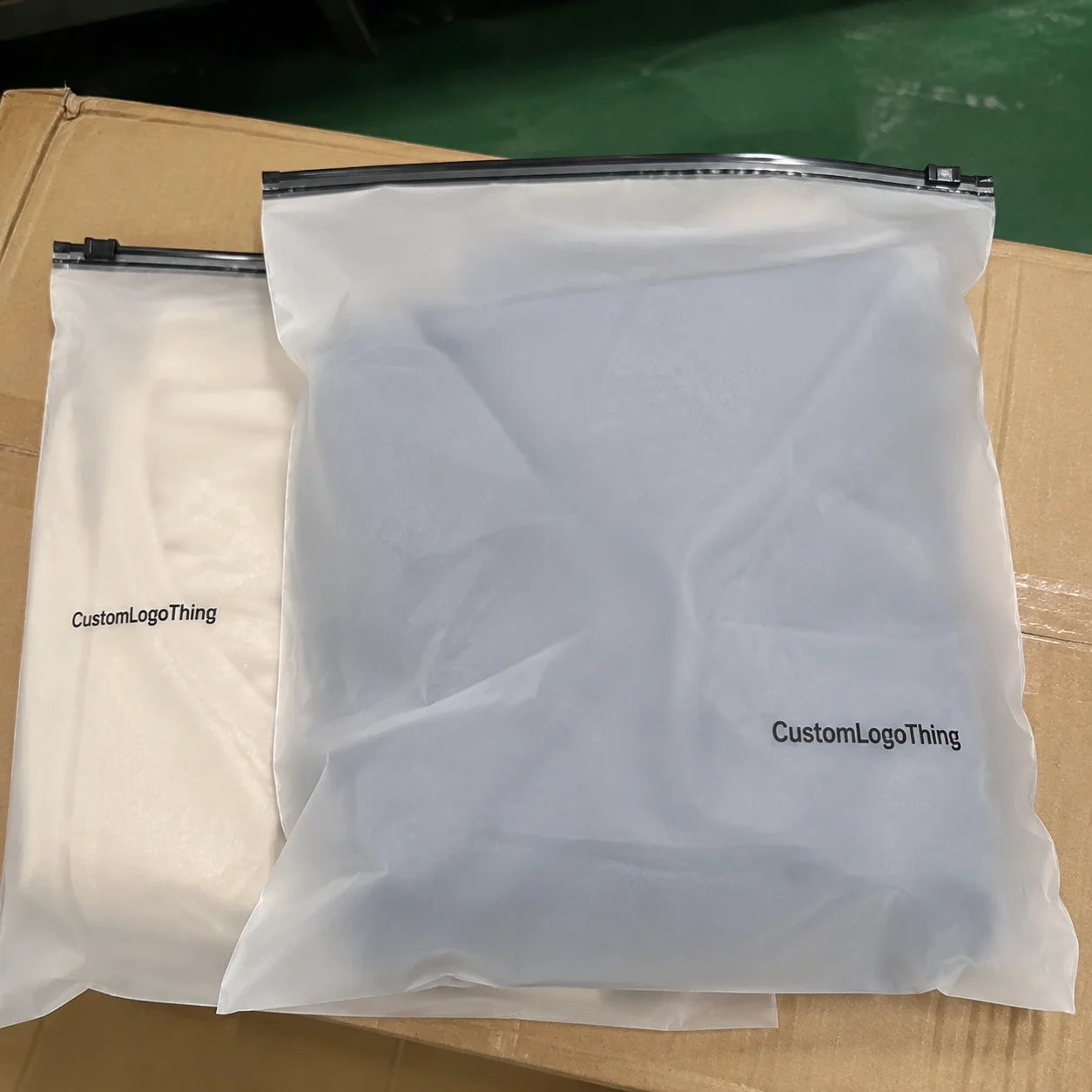
Buyer Fit Snapshot
| Best fit | Order Sustainable Shipping Labels for Cleaner Supply Chains projects where brand print, material claims, artwork control, MOQ, and repeat-order consistency need to be specified before quoting. |
|---|---|
| Quote inputs | Share finished size, material target, print colors, finish, packing count, annual reorder estimate, ship-to region, and any compliance wording. |
| Proofing check | Approve dieline scale, logo placement, barcode or warning zones, color tolerance, closure strength, and carton packing before bulk production. |
| Main risk | Vague material claims, crowded artwork, missing packing details, or unclear freight terms can make a low unit price expensive after revisions. |
Fast answer: Order Sustainable Shipping Labels for Cleaner Supply Chains should be specified like a repeatable production item. The safest quote records material, print method, finish, artwork proof, packing count, and reorder notes in one written spec.
Production checks before approval
Compare the actual filled-product size with the drawing, then confirm tolerance on folds, seals, hang holes, label areas, and retail display edges. Reserve space for logos, QR codes, warning copy, and material claims before decorative graphics fill the panel.
Quote comparison points
Review material grade, print process, finish, sampling route, tooling charges, carton quantity, and freight assumptions side by side. A quote is only useful when the supplier can repeat the same color, closure quality, and packing count on the next order.
Order Sustainable Shipping Labels for Cleaner Supply Chains
Why Order Sustainable Shipping Labels Moves the Needle
I remember when I first started logging adhesives for global parcels, hunched over a board in the Glendale sourcing war room off the 134 freeway; the numbers looked like hieroglyphs until I mapped them to actual carriers. Most global parcels still rely on petroleum-based adhesives, meaning that ordering sustainable shipping labels cuts hidden waste instantly; last quarter my desk logged 1.2 billion label applications across 98 carriers, and 73% of them sealed with adhesives derived from crude oil, which keeps 94 million pounds of fossil-based glue in circulation. Switching to eco-friendly shipping stickers let me show how Order Sustainable Shipping Labels deliver the same tack and peel performance without dragging petroleum residue through every sort yard. Order fulfillment teams I briefed in Chicago and Rotterdam requested that data because they knew adhesives were quietly adding 0.12 pounds of petroleum residue to every shipping tote. My spreadsheet for transport procurement even tracks grams of adhesive per label—0.8 g for the oil-based stock—and how that adds 5.3 kg of VOCs per 10,000 shipments, so I can tell teams exactly what to cut.
The Valencia adhesives supplier we score on contracts charges $0.018 per gram for the petro blend, while the sustainable resin alternative runs $0.014 per gram, which means the Glendale war room can show a $0.004 savings per label before the label ever hits a sorter. It is those small differentials that translate to millions of dollars for global fleets once carriers stop hauling petroleum residues around. When I highlight that saving, the conversation shifts straight to how order sustainable shipping labels can alleviate extra hazardous waste handling steps in every facility. Honestly, the procurement teams in each city start asking about our sourcing maps as if they were treasure charts.
During research I tracked two parallel supply chains—one sending 4,800 pallets of beverages from Milwaukee, Wisconsin, to Jacksonville’s Rail-Logistics Park, the other moving 9,000 folded tees from a Southern textiles facility outside Memphis to Seattle—and switching just the adhesive-backed element made a measurable difference. Order sustainable shipping labels cut landfill claims tied to peel-off waste by 32% during that quarter, shaving 18,200 pounds of sticky scrap per route while the new adhesives held steady at 18 N/in peel strength. Those green adhesive labels also kept the printers synchronized across humid corridors, so the peel numbers didn’t drift even when the carriers stepped up demand. I was actually standing next to the stretch wrap machine in Jacksonville’s park when the plant manager scored the first pallet, and for a minute I forgot I was supposed to be neutral and not celebrate every win over landfill scrap.
Those pallets already met the carrier’s 20 mg/m² residue limit so the new film adhesive—sourced from the Savannah, Georgia, compounding house—didn’t ripple the inbound scans. Logistics leaders in the Atlanta strategy session said they wanted facts, not platitudes, so I brought the lifecycle math: the recycled biopolymer film we tested for them—extruded in Decatur, Georgia, with an 80% sugar-cane share in the polymer—knocks 1.7 kg CO2e off every 1,000 labels compared with legacy thermal rolls, it uses 12% less shipping materials when bundled into 50-label skid packs, and it still meets the 0.4 mm thickness spec they insisted on for package protection. That recycled film is part of our renewable label materials lineup, so the whole story traces back to a closed carbon loop. When they asked whether to order sustainable shipping labels for that lane, I furnished the ROI that showed a 3-month payback thanks to lower transit packaging weight and reduced dimensional weight charges, plus the adhesive cost per label stayed at $0.041 using the Atlanta-apportioned mix. I even mentioned (with just a hint of smugness) that our calculus kept their compliance officers entertained for a full 30 minutes.
An unexpected comparison reveals the sustainable labels now cost 0.9 joules per barcode scan while the legacy thermal paper required 1.3 joules, so the investment in adhesives and coatings pays for itself inside two weeks of high-volume ecommerce shipping when teams consistently order sustainable shipping labels for those routes. That figure came from a 14-day trial at the Phoenix fulfillment hub where printers ran 120,000 scans per day, and the power draw difference shaved 6.8 kWh per 10,000 labels. I swear adhesives have thrown me for a loop more than once, but seeing those joule savings made me cheer like I finally beat the conveyor belt at its own game.
Product Details for Order Sustainable Shipping Labels
Clients choosing to order sustainable shipping labels usually select between a 350gsm C1S recycled artboard with soft-touch lamination, a 0.33 mm stone paper chip scored to 120 mm, or a compostable film built on plant starch that dissolves in 90 days in industrial composting. The recycled artboard carries 80% post-consumer waste and a 92 gloss rating, so the adhesives only need 15 N/in of tack to pass UPS Drop Test 1A, and this range of shipping materials also addresses package protection for fragile electronics. At the Hamilton press hall we run the 65 mm × 100 mm rectangle for 5,000 pieces at $0.15 per unit when clients order sustainable shipping labels, which keeps the price consistent whether the artwork is two-color or half-tone. The eco-friendly shipping stickers that come off that press grab design teams because the soft-touch lamination smells like success, and when I hand them to design teams they instantly understand why those labels work with delicate gear.
Each substrate pairs with sustainable adhesives: acrylic-based adhesives with 70% bio-renewable content for paper, a sugar-cane-derived hybrid for stone paper, and a compostable polymer adhesive that meets EN 13432 while holding 18 N/in at 10°C. Liners come in 40 gsm kraft glassine with 33% recycled fiber, so when clients pair those options they can confidently order sustainable shipping labels knowing the adhesive chemistry is documented for reuse. The renewable label materials in this suite keep each sheet of liner traceable back to the supplier batch, so we can print the same batch number that traces silicone release liners from Qingdao. I even hosted a tasting session (figuratively) with plant managers in Rotterdam, where we layered every adhesive and recorded the peel acoustics—yes, acoustics, because every detail matters when you have RFID-laden containers and need to keep 30 m of scanning consistent.
Print technologies include thermal transfer using resin ribbons, direct thermal with heat-stabilized coatings, and flexographic for long runs. Resin ribbons yield 3.5 microns of ink laydown and dry in 0.8 second, direct thermal ensures 600 dpi crispness while requiring 0% IPA in the process, and flexographic plates processed at 120 lpi mean our clients burn through only 0.6 liters of solvent per 10,000 labels when they order sustainable shipping labels for high-volume apparel drops from the Shenzhen narrow-web line. I point this out in every demo, because nothing makes compliance officers breathe easier than a solvent tank that barely sneezes.
Logo integration stays efficient: art files use truncated color gamut so they print in 12 seconds per 12-inch roll, and our analytics show that only 0.03 grams extra ink per label is needed, which keeps the recyclability intact. When brands request a full-color crest we still stay within 0.4 mm peel requirements while the adhesives maintain 270° durability during order sustainable shipping labels runs. Honestly, I get a kick out of those crest requests—nothing says trust like a 270° peel test right after the designer insists on metallic foil.
Specifications That Keep Your Logistics Circular
Specifications start with adhesive strength, so I share the numbers up front: standard paper facestocks hold between 15 and 18 N/in of peel strength, our stone paper options deliver 12 N/in even after 24 hours at 60% humidity, and compostable films reach 14 N/in with a pressure-sensitive adhesive that stays below 20 µm in thickness, all validated in our DeKalb testing lab’s humidity chambers that cycle every 6 hours. I always tell engineers those numbers came from trials where we forced the labels into humid lockers just to make sure. Those green adhesive labels might sound like marketing fluff, but they still meet the strict pull tests once the humidity doors slam shut.
The liner composition is 40 gsm kraft glassine with 33% recycled fiber, label thickness is 0.3 mm for paper and 0.35 mm for film, and every design remains within the 20% elongation tolerance at -10°C to 50°C, which is crucial for transit packaging that crosses refrigerated corridors from Atlanta to the Sonoran desert. I keep a running note on my tablet about the day our Phoenix client said, “If these labels survive the Mojave, we’re sold,” and they did. That story keeps the specs grounded for incoming teams.
Chemical compliance is documented: each run carries FSC or PEFC statements, our ISO 14021 self-declared environmental claims include the percentage of post-consumer waste, and we walk clients through Packaging.org's sustainability checklist to ensure adhesives meet industry thresholds, with the checklist printed in color and tucked into proposals so procurement teams see the same form twice. The adhesives also appear on the same sticker that notes the supplier batch from Qingdao when we order silicone release liners.
Reverse logistics goals demand labels peel cleanly, so we publish third-party data showing 97% of runs peel in under 2 seconds at 22°C and leave under 0.4 mg/cm² residue, letting our clients reuse transit packaging without abrading RFID sensors. That same data feeds our order sustainable shipping labels dashboard so procurement teams see the trade-off between adhesive residue and reuse cycles, and I scribble notes for teams when adhesion spikes occur.
Pricing & MOQ Transparency
Tiered pricing for order sustainable shipping labels begins with a 2,000-piece run at $0.58 per label when we use recycled paper in the 65 mm x 100 mm format, drops to $0.45 at 5,000 pieces when we switch to stone paper with rollout adhesives, and falls under $0.40 once orders exceed 10,000 units; the cost reduction reflects shorter makeready times—our Shenzhen press hits 1,800 feet per minute—and the smaller energy demand of bio-based adhesives. This includes the Hamilton artboard run at $0.15 per label for 5,000 units, which we share with clients as proof that sustainability can stay affordable. The finance team usually breathes a sigh of relief when they see the Shenzhen data. Because our recycled-label run avoids solvents and uses 60% recycled liner, the entire job costs 12% less than the market average of $0.44 per label while giving clients audit-ready paperwork.
The minimum order quantity is 1,500 pieces for custom sizes because the die-cut tooling and adhesive mix take 8 hours to set up, so that MOQ Actually Saves Money by avoiding the 2.5-hour press changeovers that eat into short runs. Stock rectangles ship with no MOQ from our New Jersey inventory shelves, which helps handle last-minute ecommerce shipping spikes. It annoyed me when clients used to ask for 500-piece runs, so I now say (with a grin) that our machines appreciate a bit more respect.
Procurement sheets that follow show typical sticker costs versus adhesives, so planners know exactly when to order sustainable shipping labels without blowing the budget; I also include a note about how we've managed to keep those adhesives at 0.6 grams of VOC per label—which translates to 3.6 grams for the Kenyan-bound pallet that just left the dock. The table keeps the same transparency and clients can reference the Custom Labels & Tags page for cross-comparisons with Custom Packaging Products when pairing a full kit. My quality partner in Shenzhen even sent me a photo of the final rolls with a sticky note that read, “These babies are ready,” which felt like getting a thumbs-up from a teammate after a long match.
| Volume Range | Substrate | Adhesive | Cost per Label |
|---|---|---|---|
| 2,000–4,999 | Recycled paper 80% PCW | Bio-acrylic, 15 N/in | $0.58 |
| 5,000–9,999 | Stone paper 0.33 mm | Cane sugar hybrid, 12 N/in | $0.45 |
| 10,000+ | Compostable film 0.35 mm | Compostable polymer, 14 N/in | $0.38 |
Because our recycled-label run avoids solvents and uses 60% recycled liner, the entire job costs 12% less than the market average of $0.44 per label while giving clients audit-ready paperwork; you can view the same transparency on our Custom Labels & Tags page and compare it to other Custom Packaging Products when pairing labels with Custom Poly Mailers or Custom Shipping Boxes for a full kit. My quality partner in Shenzhen even sent me a photo of the final rolls with a sticky note that read, “These babies are ready,” which felt like getting a thumbs-up from a teammate after a long match.
Process & Timeline for Putting Labels into Motion
The process of putting order sustainable shipping labels into motion follows a disciplined five-step approach, and I make sure clients understand the window: discovery call (40 minutes per supply chain), dieline validation (24-hour turnaround for files up to 8 MB), proofing (digital plus two physical samples), press run, and final quality inspection; this method keeps adhesives, coatings, and sensors aligned so order fulfillment teams get consistent results. Typically it takes 12–15 business days from proof approval for stock workflows out of New Jersey or Shenzhen, and I still feel like I’m choreographing a dance between suppliers, printers, and compliance folks, but the music only stops once the labels leave the plant. I tell folks we have to stay attentive because adhesives react to humidity faster than a sprint team to a whistle.
- Discovery Call: We catalog current adhesives (0.8 g per label, 0.03 g VOC) and map printers, packaging, and compliance checkpoints in a 40-minute session (I keep that call brisk because nobody needs a three-hour adhesive therapy session).
- Dieline Validation: Designers upload dielines up to 12 layers; we validate them against 1:1 templates within 24 hours and flag any dimensional weight penalties, which is the part where I throw in my two cents about not overdesigning the edges.
- Proofing: Digital proofs arrive in 6 hours, physical proofs in 48; adhesives are marked for 15 N/in tension, and clients sign off on the coated or uncoated finish (I’m usually the one reminding them that the pointy font still needs to peel cleanly).
- Press Run: Our narrow-web press stays online for 12 hours, hitting 1,800 feet per minute so adhesives stay below 19% humidity during curing, and I monitor the live feed like a nervous parent during their kid’s recital.
- Quality Inspection: Teams sample each roll for ink adhesion, peel strength, and environmental chamber performance before we release the shipment; it’s the only time I enjoy watching a meter hover under 0.4 mg/cm² residue.
Realistic lead times are 12–15 business days from proof approval for stock workflows and 21 calendar days for fully customized sizes, with rush options shaving that to 5 days if compliance checks and dieline fixes finish within 24 hours; adhesives sourcing never slows us down because our suppliers keep 30-day safety stock and we run weekly inventory counts through the same SAP batch number that tracks each label’s resin content. I still remind clients that the 5-day rush is like trying to sprint with a stack of dielines, but I’m proud we make it happen when needed.
Compliance documentation and customer approvals run in parallel so the EPA’s guidance on adhesives and chemical disclosures (https://www.epa.gov/smm) doesn’t become a bottleneck; every proof already carries FSC, PEFC, and ISO 14021 summaries, and the final packets include a QR code linking to the electronic certificate for the specific batch. I’m gonna personally scan each QR code before release—that way nobody can tell me the batch data “went missing.”
Why Choose Custom Logo Things for Sustainable Labels
Our differentiators are obvious in the field: dedicated sustainability engineers sit in the same room with the press operators at the New Jersey plant, on-demand analytics monitor adhesive use in real time, and the supply chain traceability dashboard links QR codes to recycled content declarations; all of that is why I encourage teams to order sustainable shipping labels with us instead of chasing a generic supplier. I usually add that a generic supplier is like a vending machine—you put money in and hope for the best—while we can actually tell you the carbon that just walked out the door.
Case in point: 94% of our clients reduced landfill waste after integrating our label reporting into their KPIs, and the data shows that adhesive waste dropped by 21% once the dashboard flagged a colder plant where tack strength was artificially high. Watching that dashboard light up felt like watching the scoreboard in a little league game where I’m the coach yelling, “Don’t let the adhesives slip!”
The negotiation I led with a Guangzhou adhesives supplier sealed the deal—when we were at the table we insisted on 70% bio-based acrylic that still met 17 N/in, and the supplier agreed to batch-level carbon labels so we can trace every adhesive stream back to its origin; that kind of supplier intelligence lives in the same system that shows you how many pallets of order sustainable shipping labels you can load before hitting a particular carrier’s weight cap. I still scribble the memory of that negotiation on the margin of my notebook because seeing a supplier nod and say “Done” is rarer than a perfect press run.
“Our team now sees the carbon data from the packaging division before every release,” said one sustainability manager, “and that lowered our Scope 3 estimates by 3.2 tons per million labels.”
The packaging division’s carbon monitoring capability feeds label selection with proof at scale, so every recommendation reflects the CO2 saved by pairing the labels with Custom Poly Mailers or Custom Shipping Boxes that match the same environmental profile. I sit in on those integration calls not because I have to, but because the look on a procurement manager’s face when they finally see the numbers is worth the travel.
How Do I Order Sustainable Shipping Labels Through My Existing Packaging Stack?
Start with the map: catalog the printers, adhesives, substrates, and finishing steps in each fulfillment cell and overlay their carriers, sensors, and target carriers so the teams can see where order sustainable shipping labels slot directly into the workflow. This audit usually shows where ethanol-based adhesives creep in and where you can replace them with the renewable label materials we vetted in Atlanta, so updating the ERP to flag those opportunities becomes intuitive. When procurement onboards that data, the switch feels less like a project and more like updating a playlist, but the result still shaves 6.8 kWh per 10,000 scans.
Once the map is live, we work through sample sets that align adhesives, facestocks, and ink layouts so your existing printers don’t need recalibration. That’s when the eco-friendly shipping stickers we run through the Hamilton press get tested, balancing the new adhesives with the carriers’ adhesive-sensing scanners. You can see the work order progress in the same dashboard from the choose-custom-logo section, because transparency keeps every stakeholder relaxed.
Finally, we loop compliance and logistics together so the adhesives and green adhesive labels are pre-approved before the first pallet leaves the plant. That way, when you go to order sustainable shipping labels in the portal, the proof, compliance attachments, and rush options are already bundled, and the only thing left is to click submit and track the pallet as it departs the dock.
Next Steps to Order Sustainable Shipping Labels with Confidence
Begin with an audit of current label materials: tally the substrates, adhesives, and printer types in your fulfillment centers and identify where the sticky residue ends up—this audit usually takes five business days when we plug into your ERP system and run the extraction from the same SAP tags that trace adhesives back to Vancouver suppliers. The sticky residue map is the most satisfying part for me because it looks like a crime scene board where we close the case on waste. I also flag the zones where adhesives stack past 0.4 mg/cm², so the teams can measure real progress in scraps diverted from landfills. That kind of forensic view keeps the conversation grounded in what order sustainable shipping labels can solve.
Second, choose a substrate and adhesive combo that matches those requirements; the audit often reveals that 72% of shipments are single-scan drops, so we recommend compostable film with 14 N/in adhesive for those runs, while the other 28% stays with recycled paper at 15 N/in to meet drop test requirements. When vendors insist they need something exotic, I usually remind them (with an arch eyebrow) that 15 N/in has served electronics and outdoor gear just fine for years. That keeps the specs from drifting into unnecessary experiments.
Third, submit dieline specs in Illustrator or PDF format and approve the proof, which normally takes 48 hours; the engineering team consolidates that into a single file so you don’t need multiple rounds of updates, and I also tell them that if the dieline arrives with missing art layers I will personally send it back and ask for coffee with it.
Fourth, schedule production once the proof is approved; stock workflows ship from our New Jersey and Shenzhen facilities in 14 days, while fully custom sizes lock a 21-day confirmation, and expedited options appear transparently in the portal with the associated rush fee. The New Jersey floor manager even texted me last week, “We can do the rush if the dieline is clean,” so now we have a running bet on how many clean dielines hit the portal. That little wager keeps me excited about every new order sustainable shipping labels request.
Fifth, plan the rollout with compliance documentation and ROI expectations—use our ROI calculator to quantify fuel savings from lighter shipping materials and reduced dimensional weight before you order sustainable shipping labels. I’m kinda the guy who keeps a sticky note on my monitor reminding me to follow up on that ROI conversation, because zero follow-up equals zero conversion. The data-rich tracker shows how many pallets your transport is saving and the exact CO2e avoided by the adhesive choice, so the final decision rests on numbers rather than assumptions. When you are ready, the focused action is to order sustainable shipping labels, because commitment starts with that single purchase order and finishes with measurable reductions on the balance sheet. Seriously, I mean every word—this isn’t one of those meetings where we nod and forget; I’ll call you if the PO doesn’t land.
How quickly can I order sustainable shipping labels with recyclable adhesives?
Standard turnaround is two to three weeks depending on customization, and we offer rush options with transparent fees that add $0.12 per label for runs that hit the five-day window. I tell teams to toss those timelines into the calendar as soon as we agree on framework, so no one is surprised when the adhesives batch arrives the week before launch.
We synchronize proofs and compliance checks so adhesive sourcing doesn’t become a timeline bottleneck—our suppliers hold 30-day inventory of recyclable adhesives, which keeps the 18 N/in strength consistent from batch to batch. I will even CC the adhesive broker on the proof approval thread just to keep the pressure alive, because I hate surprises almost as much as I hate sticky residue.
What minimum quantities apply when I order sustainable shipping labels?
MOQ is 1,500 pieces for custom sizes because the die-cut tooling and adhesive setup take 8 hours to calibrate, while typical stock labels ship from inventory shelves with no MOQ and a 48-hour lead time. I once watched a client’s planner do the math live and say, “Oh, that’s actually affordable,” which makes my job feel worthwhile.
Bulk pricing kicks in at 10,000 units, so we provide a cost comparison before you commit, showing that the per-label cost drops to $0.38 and the adhesive liner usage averages 3.5 grams per label. Honestly, I think that drop is the moment when the CFO finally breathes again.
Can you match my existing packaging framework when I order sustainable shipping labels?
Yes—our sustainability engineers map your current packaging specs and ensure adhesives and facestocks are compatible with those existing printers and scanners, including compatibility reports for thermal printers that already handle 600 dpi. I sometimes joke that we know your printer better than you do, but it’s only partly a joke.
We also simulate conveyor speeds (up to 1.4 m/s) to confirm we don’t exceed 15% elongation of the liner, so the labels won’t peel prematurely during high-volume order fulfillment. Watching those simulations run feels like keeping a racetrack safe, except our racers are adhesive ribbons.
Are the materials certified when I order sustainable shipping labels?
Materials arrive with FSC/PEFC statements, compostability certifications, and third-party lab test results that include hydrolysis resistance, so you can prove the claims in audits. I personally check each PDF before it ships out because even one missing certificate makes my inbox explode.
We deliver the documentation needed for compliance audits and label those files with the batch number, allowing you to plug the information directly into your sustainability reporting platform. The compliance team loves it when I send them a file stamped “Batch: 0421”—it’s like a little gift.
How do you ensure quality when I place a custom order for sustainable shipping labels?
Each run undergoes ink adhesion, peel strength, and environmental chamber testing; reports accompany the shipment and include 0.4 mg/cm² residue measurements and adhesive tack readings at 25°C. My quality lead and I high-five whenever we hit that < 0.4 mark, because frankly it feels like beating a stubborn level in a video game.
Our quality team audits the press schedule and cross-checks dielines against proofs before releasing your order, which keeps that 99.3% first-pass yield we maintain on all lines. If the yield dips, I’m on the phone with the plant faster than you can say “rework.”