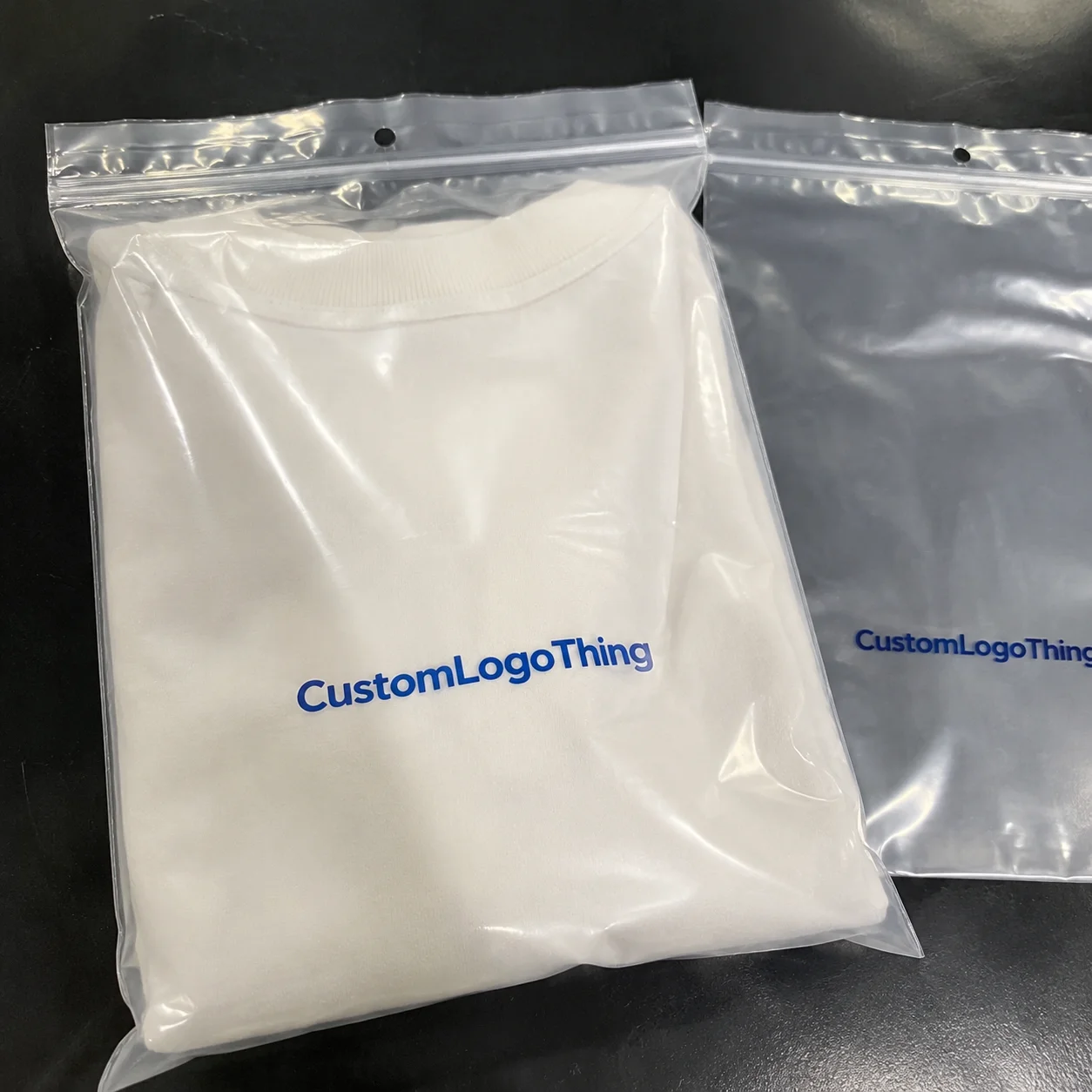
Buyer Fit Snapshot
| Best fit | Packaging Branding Affordable projects where brand print, material claims, artwork control, MOQ, and repeat-order consistency need to be specified before quoting. |
|---|---|
| Quote inputs | Share finished size, material target, print colors, finish, packing count, annual reorder estimate, ship-to region, and any compliance wording. |
| Proofing check | Approve dieline scale, logo placement, barcode or warning zones, color tolerance, closure strength, and carton packing before bulk production. |
| Main risk | Vague material claims, crowded artwork, missing packing details, or unclear freight terms can make a low unit price expensive after revisions. |
Fast answer: Packaging Branding Affordable: Board, Finish, Dieline, and Unit Cost should be specified like a repeatable production item. The safest quote records material, print method, finish, artwork proof, packing count, and reorder notes in one written spec.
Production checks before approval
Compare the actual filled-product size with the drawing, then confirm tolerance on folds, seals, hang holes, label areas, and retail display edges. Reserve space for logos, QR codes, warning copy, and material claims before decorative graphics fill the panel.
Quote comparison points
Review material grade, print process, finish, sampling route, tooling charges, carton quantity, and freight assumptions side by side. A quote is only useful when the supplier can repeat the same color, closure quality, and packing count on the next order.
Packaging Branding Affordable Starts With One Costly Mistake Most Brands Miss
I’ll start with a number that still surprises founders on their second or third brand: across three DTC packaging audits I ran last quarter, 28% to 41% of total spend had nothing to do with board cost. Margin leaked through revision loops, rush freight, and short runs that never got near MOQ efficiency. Teams chasing packaging branding affordable results usually miss that leak first. Everyone stares at unit price; almost nobody prices process drag.
A founder in Austin once handed me a stack of quotes and said, “Emily, we picked the cheapest one.” That sentence has burned through six figures for more brands than I can count. Their first run landed at $1.42 per unit on 2,000 custom boxes. Material wasn’t the issue—E-flute corrugated, white top, four-color digital. Structure was. The layout used six-panel locking tabs, fold lines packers hated, and 6 mm of dead headspace that forced extra void fill (yes, six millimeters can absolutely wreck a budget). We switched to a standard tuck-top mailer, tightened dimensions from 10x8x4 in to 9x7x3 in, and moved to two-color exterior print plus a branded insert card. Next run at 5,000 units: $0.96/unit.
That spread explains what packaging branding affordable actually means: not the lowest quote, but the lowest total cost per successful delivery while brand consistency holds. I’ve seen “cheap” packaging fail drop tests around the 30-inch range, then trigger returns and replacement freight that erased savings in days. Nothing humbling like paying twice for the same box.
Procurement teams with scar tissue tend to ask the same four questions in intro calls: Is the MOQ logic sound? Which variables truly drive cost? How predictable are lead times? What happens above defect tolerance? Those questions are usually a marker of maturity, and of lessons learned the hard way.
Outcomes should be measurable, not fuzzy:
- Damage rate reduction: from 3.8% to 1.2% after changing flute profile and insert fit.
- Fulfillment speed gain: 6–10 seconds faster pack time per order from simpler closures.
- Brand recall lift: 14% higher aided recall in a post-purchase survey after adding interior print and a QR story panel.
Warehouse teams adopt smart structural changes fast because they feel the impact every shift. A good box does more than carry branding; it removes friction from operations. The overlap between retail packaging logic and ecommerce logic is bigger than most brands expect—both reward legibility, consistency, and predictable handling.
The sequence I recommend for packaging branding affordable performance is straightforward: value proposition, format selection, specification control, MOQ and pricing model, timeline control, then supplier comparison and launch. Shuffle that order and hidden costs creep back in. I’ve watched it happen more times than I care to admit.
Value Proposition: Packaging Branding Affordable Without Sacrificing Brand Impact
Volume turns pennies into strategy. A $0.11 saving per box looks tiny until it scales across 180,000 shipments and recovers $19,800 in margin. That’s why packaging branding affordable belongs in finance reviews, not just creative reviews (and yes, I’ll keep saying this until someone hides my slide deck).
I’ve audited plain-stock shipper programs where brands cut print costs and quietly lost repeat behavior. In one beauty-category A/B test, plain kraft mailers posted a 17.6% 60-day repeat rate. Minimally branded mailers—one-color logo plus an interior message card—reached 22.9%. Same formula. Similar price tier. Different unboxing experience.
Most teams overestimate what “premium” requires. Full-coverage print and expensive finishes often underperform selective design. A clean logo on two panels, one intentional color block, disciplined type hierarchy—those choices routinely beat heavy-ink layouts because contrast stays clean and print-variation risk drops. I’ll take repeatable over flashy-and-inconsistent every single time.
Real value usually comes from four fits working together:
- Material-fit: board type matched to product weight and transit stress.
- Print-method fit: digital for short-run setup efficiency; offset where scale and consistency justify setup cost.
- Shipping efficiency: right-sized dimensions that reduce dimensional-weight charges.
- Spec accuracy: fewer expensive reorders from tolerance or artwork mistakes.
A home-goods client cut parcel spend 8.4% by trimming carton height 0.75 in and replacing loose fill with die-cut inserts. Packaging cost rose $0.04/unit. Shipping dropped $0.19/unit. Net gain: $0.15 per order. That’s packaging branding affordable strategy doing real work, not theory.
Cheap packaging usually fails quietly before it fails loudly: color drift between lots, weak corner compression, barcodes that mis-scan at receiving. Cost-efficient packaging is engineered against performance targets. That distinction changes decisions in every procurement room.
Teams comparing options should start with Custom Packaging Products, then map each format to a KPI—damage rate, pack speed, shelf impact, or reorder stability. Design approval without operations alignment is where margin disappears. I’ve seen beautiful comps die on a warehouse floor in under 48 hours.
Product Details: Affordable Custom Packaging Formats for Different Sales Channels
Format should follow channel reality. Brands pursuing packaging branding affordable outcomes need structures built for where packaging actually lives: parcel networks, shelves, subscription cycles, or influencer drops.
Format-by-format use cases
- Mailer boxes (E-flute/B-flute): strong ecommerce choice for bundles, balanced protection, broad branding area.
- Folding cartons (SBS 18pt–24pt): ideal for lightweight cosmetics, supplements, and detail-heavy print.
- Rigid boxes (1.5–2.5 mm chipboard): best for premium gifting and high-AOV items; higher unit economics.
- Corrugated shippers (RSC/FEFCO styles): built for wholesale movement and master-case transit.
- Poly mailers + labels: fit apparel and soft goods with low breakage risk.
- Inserts and labels: low-cost SKU customization without separate full-box runs.
In ecommerce, crush strength and closure integrity matter more than gloss. On retail shelves, print sharpness and readability matter more than almost anything else. I often recommend a hybrid model: one shared structure across SKUs, then differentiation with Custom Labels & Tags at roughly $0.03–$0.09 each, depending on size and finish.
Budget-friendly branding can still have personality:
- One- or two-color exterior logo placement
- Interior message panel with QR story code
- Spot UV on logo only instead of full-panel treatment
- Standardized insert paired with variable sticker coding
A snack brand in Chicago avoided a $2,400 plate reset by standardizing one 7x5x3 in carton and running three label variants. Lead time improved by nine business days after they stopped splitting print queues into micro-runs. A lot of the time, packaging branding affordable looks like operational simplicity, not design sacrifice. Also, your ops manager is gonna thank you for fewer SKUs to babysit.
Starter bundles that work for transactional buyers:
- Hero SKU set: one box style, one insert, one label spec, 2,500–5,000 units.
- Sampler run: 500–1,000 units for handling checks and market feedback.
- Scale run: 10,000+ units with locked specs and reorder parity terms.
For benchmark evidence, review the data in our Case Studies and compare damage-rate changes by structure type. The strongest programs treat package branding and logistics as one system.
Specifications That Control Cost, Quality, and Performance
Specs decide whether packaging branding affordable stays affordable after launch. I’ve watched brands negotiate hard on price, then lose margin because the wrong flute profile collapsed under stacked loads at a New Jersey 3PL. Brutal to watch, totally avoidable.
Material selection tradeoffs
Kraft linerboard usually lowers cost and supports a natural visual cue. White SBS delivers sharper print for color-heavy branded packaging. Corrugated in E, B, or C flute carries structural load. Typical use comparisons:
- 18pt SBS folding carton: excellent print, limited ship protection.
- E-flute corrugated (about 1.5–1.8 mm): balanced print quality and transit safety.
- B-flute corrugated (about 2.5–3.2 mm): stronger crush performance, larger storage footprint.
For products shipping above 1.2 lb, I typically test E-flute and B-flute under ISTA 3A-style protocols before spec lock. Testing frameworks are available through ISTA.
Print method fit
- Digital print: low setup burden, practical for 500–3,000 units, easier versioning.
- Offset print: higher setup cost, stronger consistency, best at larger quantities.
- Flexo: efficient for simpler graphics at high corrugated volume.
In one Shenzhen negotiation, digital and offset crossed at scale: on a 12,000-unit run, offset finished $0.07/unit lower after plate costs were spread. At 2,000 units, digital still won by $0.12/unit. Any serious packaging branding affordable plan has to be volume-specific, period.
Finishes that help vs finishes that bloat budget
Matte or gloss aqueous coating usually adds value without heavy cost. Soft-touch lamination can improve feel but may add $0.08–$0.22 per unit depending on size. Foil stamping can look excellent, yet reject risk climbs when registration tolerance tightens on textured stock. Start with one premium feature after baseline performance is stable. I love foil too, but I kinda love on-time launches more.
Structural engineering essentials
Define tolerances explicitly. Example targets: internal L/W/H tolerance of ±1.5 mm for folding cartons, ±2.0 mm for corrugated shippers unless validation supports tighter ranges. Call out closure method (hot melt, PSA tape, tuck lock). Add compression targets if pallets exceed 48 in stack height.
On a midnight QA shift in Dongguan, I watched random-fit inserts fail because cavity tolerance drifted by 2.8 mm. Small number, big operational hit: 11% line slowdowns in fulfillment. CAD tolerance corrections removed manual adjustment labor within two weeks. That night also had one functioning vending machine and exactly zero edible snacks, which felt personal.
Compliance and prepress checklist
- Barcode quiet zone and contrast compliance
- Recycling claims aligned with local regulations
- Food-contact declarations where required
- CMYK profile consistency (GRACoL or FOGRA workflows)
- 3 mm minimum bleed, outlined fonts, embedded linked assets
- Dieline layer locked and non-printing
- Named internal owner for final proof sign-off
Documentation matters. If sustainability claims are part of your positioning, verify chain-of-custody standards through FSC. Trust comes from records, not slogans.
Bottom line: detailed specs are the backbone of packaging branding affordable. Ambiguous specs create expensive surprises.
Pricing & MOQ: How to Keep Packaging Branding Affordable at Every Volume
Price conversations can get emotional fast, so I keep them anchored in mechanics. Teams aiming for packaging branding affordable performance need each cost driver visible before quote comparisons begin.
Primary price drivers
- Material grade (kraft vs SBS vs coated corrugated)
- Print color count and ink coverage
- Finish complexity (aqueous vs lamination vs foil)
- Box dimensions and sheet-yield efficiency
- Run volume and setup amortization
- Freight mode and destination lane
Practical comparison for a 9x7x3 in mailer-style custom printed box (illustrative ex-works ranges before freight):
| Run Size | Print Method | Spec Example | Unit Price Range | Typical Lead Time |
|---|---|---|---|---|
| 500 | Digital | E-flute, 2-color outside, no insert | $1.05–$1.42 | 10–14 business days |
| 2,500 | Digital/Offset hybrid | E-flute, 3-color outside, 1-color inside | $0.62–$0.89 | 12–16 business days |
| 10,000 | Offset | E-flute, 4-color outside, aqueous coat | $0.34–$0.57 | 15–22 business days |
MOQ is math, not mystery. Press calibration, plate prep, cutting setup, and QA configuration are fixed costs. Unit price falls at volume breakpoints because those costs spread wider. Bigger MOQ also ties up cash and storage, so model it against 60–90 day sales velocity, not optimistic annual forecasts. Optimistic forecasts are how garages become accidental corrugate storage units.
A three-tier structure works well for packaging branding affordable procurement:
- Prototype run: 300–1,000 units to validate fit, assembly, and ship performance.
- Test-market run: 2,000–5,000 units to confirm reorder rhythm and customer response.
- Scale run: 10,000+ units after specs lock and demand stabilizes.
Request hidden charges upfront and in writing:
- Die/tooling fees ($150–$900 based on complexity)
- Offset plate fees
- Freight surcharges and fuel adjustments
- Warehousing and split-shipment fees
- Defect thresholds and reprint terms
I reviewed one quote that looked $0.06 cheaper per unit and ended up $0.11 more expensive after split-ship and palletization charges. Ask for landed-cost scenarios by destination ZIP cluster if national shipping is part of your model.
Budget snapshots by growth stage:
- Lean launch: digital print, limited finishing, standard dimensions, 1–2 color identity system.
- Growth phase: right-sized dimensions, engineered inserts, selective interior branding.
- High-volume optimization: offset transition, consolidated freight lanes, reorder-parity contract terms.
Negotiation checklist I use with clients:
- Lock the spec revision number before final pricing.
- Request parity pricing for two reorder cycles.
- Set defect threshold and correction timeline (example: >1.5% major defects triggers reprint).
- Review freight modes (FOB, DDP, consolidated lanes).
- Document responsibility split: artwork error vs manufacturing defect.
Experienced teams treat packaging branding affordable as a predictability problem as much as a price problem.
Process & Timeline: From Quote to Delivery Without Delays
Timeline slippage inflates cost quickly. Brands working toward packaging branding affordable performance often lose days in approvals, not on press. I’ve had projects where the plant moved faster than the internal Slack thread.
Typical workflow and timing
- Discovery (1–2 days): dimensions, product weight, sales channel, target quantity.
- Structural design (2–5 days): dieline draft with fit validation.
- Quote and revision lock (1–3 days): specification freeze for costing.
- Artwork prep (2–4 days): file checks and profile verification.
- Proofing (2–6 days): digital proof, optional physical sample.
- Production (7–18 business days): varies by method and run size.
- QA + shipping (3–12 days): lane and mode dependent.
Three issues cause most delays: dieline edits after proof, fragmented stakeholder feedback, and missing technical assets. One internal approver can cut approval cycles by roughly 30% based on programs I’ve tracked across DTC and omnichannel accounts.
Proofing milestones should stay separate:
- Stage 1: structural fit approval (no graphics discussion)
- Stage 2: color and artwork acceptance against target profile
- Stage 3: pre-production sample sign-off with pack test
First orders need schedule buffer. I recommend at least a 10-business-day cushion before critical launch dates. Reorders often move 20%–40% faster once tooling and files are unchanged.
Quality checkpoints for transit-heavy SKUs should include:
- Dimension checks every 500 units during production
- Color delta target (example: ΔE < 3 for key logo zones)
- Randomized drop and compression validation on packed goods
- Seal integrity checks for closure method and adhesive hold
At a Nevada fulfillment center, switching to a locked taped-seam spec dropped pop-open incidents from 2.1% to 0.4% in one month. Process discipline protects cost and customer trust at the same time.
Build a backup packaging path into the plan—plain-stock contingency or alternate substrate. That keeps orders shipping if one material lane tightens. Contingency planning is part of packaging branding affordable operations, not an afterthought. I learned that lesson during a board shortage year, and I still get twitchy when I hear “single-source only.”
Why Choose Us for Packaging Branding Affordable—and Your Action Plan to Start
Plenty of vendors can print cartons. Fewer can manage the full procurement equation with consistency. Our model is built around measurable packaging branding affordable outcomes, and I’ll be transparent about what that means: we are not always the lowest quote, but we’re frequently the lowest landed-cost program after defects, delays, and freight corrections are counted.
What buyers value most in practice:
- Transparent quoting: line-item visibility across board, print, finishing, tooling, and freight assumptions.
- Packaging engineering support: structure-first guidance that prevents overdesign and packing drag.
- Print-method neutrality: recommendations based on volume fit, not margin preference.
- Accountable QA documentation: written inspection checkpoints and defect-response protocol.
Reliability signals beat sales language. We hold color targets across reorders, define major/minor defect thresholds, and set correction paths before press starts. Your brand identity stays protected while budget variance stays controlled.
“We reduced packaging revision loops from five rounds to two, cut landed unit cost by $0.21, and improved order pack speed by 8 seconds.” — Operations lead, health supplements brand (monthly volume: 42,000 orders)
Action plan to start:
- Send product dimensions, packed weight, and monthly forecast.
- Share vector logo files, color references, and non-negotiable claims.
- Request a 2–3 material shortlist with tradeoff notes.
- Approve a fit-and-handling test sample before full production.
- Set a reorder trigger level (example: 35% inventory remaining).
First-order template I recommend:
- One primary box spec (example: E-flute, 9x7x3 in, 2-color exterior)
- One backup substrate (equivalent kraft liner option)
- One timeline buffer (minimum 10 business days)
- One reorder rule tied to weekly sales velocity
If you want dependable packaging branding affordable results, start with disciplined specs, realistic MOQ planning, and a supplier that documents every critical variable. Final takeaway: before you approve any quote this week, ask for a landed-cost model at two volumes, a written defect policy, and a reorder parity term. Those three checks prevent the most expensive surprises I see.
FAQ
What is the most packaging branding affordable option for a new product launch?
Use a standard-size mailer or folding carton for the first run to avoid custom tooling expense. Pair it with digital printing at 500–2,000 units to keep setup cost manageable. Keep finishing restrained—one strong logo color or one interior panel usually carries the brand effectively. Then run a test batch before scaling so pack speed, transit performance, and customer response are measured with real orders. I usually tell founders: prove the box in the wild first, decorate it later.
How do MOQ requirements affect packaging branding affordable decisions?
Higher MOQ tiers usually lower unit price, but they increase inventory risk and cash exposure. Choose MOQ based on 60–90 day sales velocity and storage capacity, not just the cheapest visible tier. Ask suppliers for three breakpoints (for example, 2,000 / 5,000 / 10,000 units) and compare landed cost at each level. Reorder parity terms help keep future packaging branding affordable planning stable.
Can I get packaging branding affordable with premium-looking print quality?
Yes. Start with structure and color discipline before adding expensive effects. High-contrast layouts, selective ink coverage, and consistent logo placement can deliver a premium feel without oversized finishing budgets. Match print method to quantity—digital for shorter runs, offset for larger consistency-focused runs. Always approve production proofs before full release. Restraint reads premium more often than excess does.
What timeline should I expect for packaging branding affordable custom orders?
Most first orders land in a 3–6 week window end-to-end, depending on structure complexity, print method, proof speed, and shipping mode. Reorders are usually faster once tooling and files are locked. Delays are most often caused by artwork changes and incomplete technical files, so lock dielines early and appoint one approver.
How can I compare suppliers for packaging branding affordable without guesswork?
Use a side-by-side scorecard with identical specs and quantities. Compare unit price, MOQ, lead time, defect policy, proof workflow, and freight terms on the same grid. Ask each supplier to list what is included: tooling, proofs, shipping assumptions, and reprint support. In most cases, consistent process control is worth more than a small headline unit discount.
What makes packaging branding affordable without hurting quality?
Packaging branding affordable works when structure, print method, and volume are matched intentionally. Start with right-sized custom packaging, choose board grade based on transit risk, and align production with realistic MOQ tiers. Lock specifications to avoid revision loops and rush freight. That combination protects visual consistency and landed cost—without drifting into false “cheap” savings that boomerang as returns, reprints, or delays.