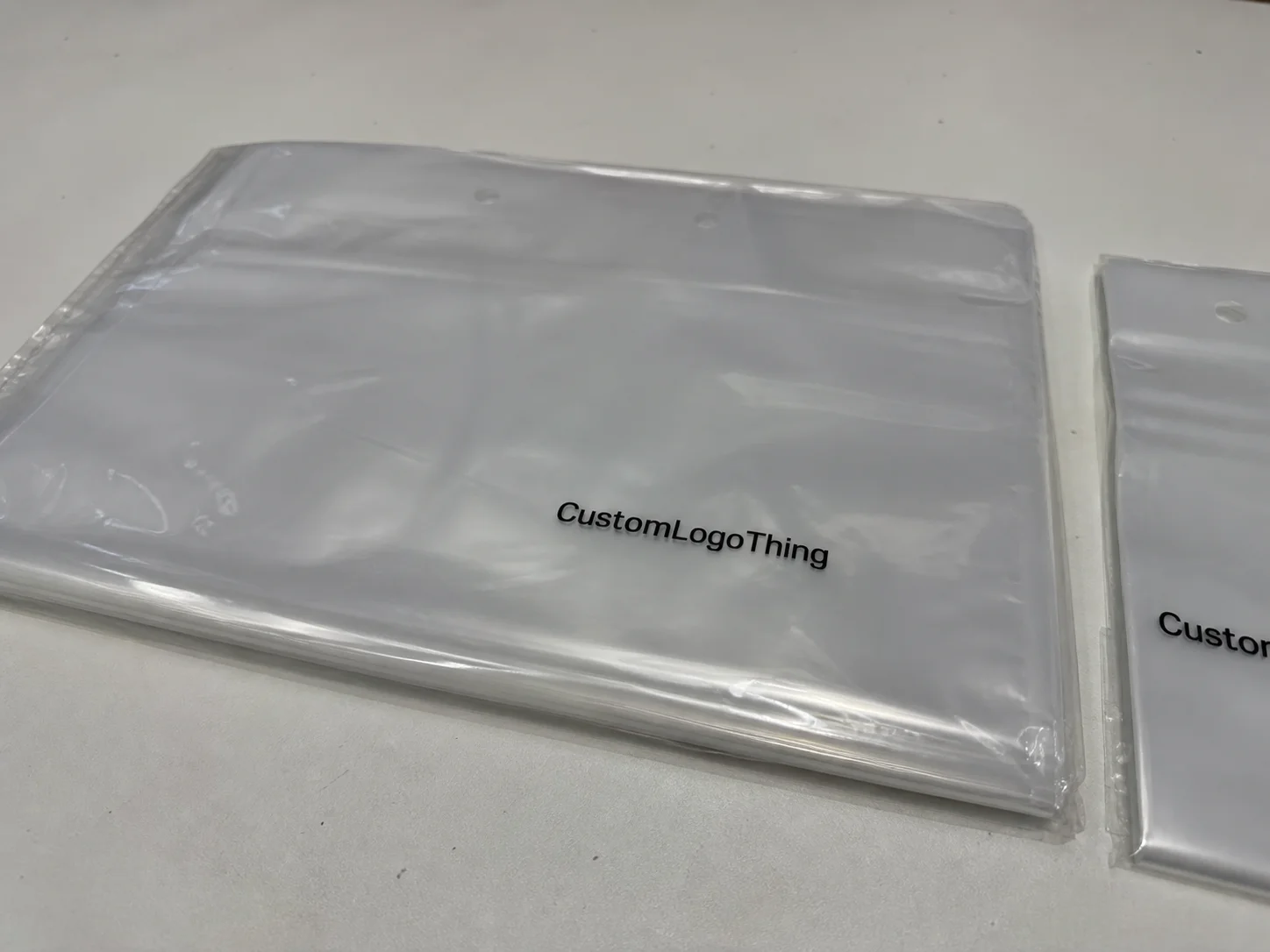
Buyer Fit Snapshot
| Best fit | Packaging Supplier Practices projects where brand print, material claims, artwork control, MOQ, and repeat-order consistency need to be specified before quoting. |
|---|---|
| Quote inputs | Share finished size, material target, print colors, finish, packing count, annual reorder estimate, ship-to region, and any compliance wording. |
| Proofing check | Approve dieline scale, logo placement, barcode or warning zones, color tolerance, closure strength, and carton packing before bulk production. |
| Main risk | Vague material claims, crowded artwork, missing packing details, or unclear freight terms can make a low unit price expensive after revisions. |
Fast answer: Packaging Supplier Practices: Material, Print, Proofing, and Reorder Risk should be specified like a repeatable production item. The safest quote records material, print method, finish, artwork proof, packing count, and reorder notes in one written spec.
Production checks before approval
Compare the actual filled-product size with the drawing, then confirm tolerance on folds, seals, hang holes, label areas, and retail display edges. Reserve space for logos, QR codes, warning copy, and material claims before decorative graphics fill the panel.
Quote comparison points
Review material grade, print process, finish, sampling route, tooling charges, carton quantity, and freight assumptions side by side. A quote is only useful when the supplier can repeat the same color, closure quality, and packing count on the next order.
Quick Answer: Packaging Supplier Best Practices That Actually Work
The first time I watched Packaging Supplier Best practices get ignored on a live factory run, the client lost $4,800 to reprints. The dielines were never checked. The board spec was never confirmed. The box looked fine on a screen, then the folds hit the line wrong and the insert sat 3 mm off. A small error. Expensive in a hurry. That is how a 5,000-unit launch budget in Los Angeles can disappear into what should have been a routine carton order.
The short version is plain: packaging supplier best practices are not about finding the lowest quote. They are about choosing the supplier that delivers what was approved, on time, with fewer surprises. I have sat in Shenzhen conference rooms with sample boxes stacked to the ceiling, and I have watched buyers celebrate a quote that came in $0.06 lower per unit, then pay more in freight, remakes, and downtime. On a 10,000-piece run, that tiny difference is $600 before a single pallet leaves the port in Yantian. That is not savings. That is self-sabotage with line items.
Honestly, I think the core packaging supplier best practices are easy to say and annoyingly hard to skip: compare capability, proof process, lead times, quality control, and total landed cost. A vendor that cannot explain material thickness, printing tolerances, or the difference between a production sample and a mockup is not ready for your order. I learned that after one supplier in Dongguan promised “full support” and still could not show a single past run for Custom Printed Boxes with foil and embossing. We walked. Loudly in my head, at least. Their quoted spec had been 350gsm C1S artboard with matte lamination; their actual sample felt closer to 300gsm and curled at the corners after 20 minutes in a 28°C room.
The right supplier depends on the job. A startup launching 500 units of branded packaging needs a different level of support than a retail chain ordering 20,000 units of product packaging every month. The rest of this piece breaks down supplier types, pricing traps, timeline risks, and the way I would choose if my own money were on the line. That is what packaging supplier best practices are really for: fewer headaches, fewer reprints, and fewer sales promises dressed up as expertise.
Top Options Compared: Which Packaging Supplier Type Fits Your Job?
Supplier type matters more than most buyers admit until an order starts slipping. In packaging supplier best practices, the first decision is not color, finish, or carton style. It is who is actually making the packaging. You would not hire a plumber to install electrical wiring. Same logic, different mess. A 1,000-unit cosmetic mailer in Toronto and a 50,000-unit subscription box in Chicago do not need the same sourcing structure.
A direct factory gives you control. A broker gives you reach. A trading company gives you convenience. A local print shop gives you speed for small runs. I have used all four, and each one has a place. The trick is matching the supplier to the packaging design, quantity, and risk level instead of chasing whichever quote lands in your inbox first. A carton with window patch, foil stamp, and custom insert is a different animal from a plain kraft mailer ordered by Friday at 4 p.m.
| Supplier Type | Best For | Pros | Cons | Typical Cost Behavior |
|---|---|---|---|---|
| Direct factory | Repeat orders, custom structural packaging, tighter margins | Better control, clearer specs, stronger production consistency | More technical, slower onboarding, higher MOQs | Lower unit cost at scale, setup fees still apply |
| Trading company | Multi-item sourcing, moderate complexity | Faster coordination, easier communication, one contact | Less visibility into actual production line | Markup built in, but less time spent managing vendors |
| Broker | Small teams, urgent sourcing, language support | Can find options fast, helpful for mixed orders | Quality varies, factory control can be weak | Price may look okay until freight and changes show up |
| Local print shop | Short runs, rush jobs, simpler retail packaging | Fast sampling, easier visits, less shipping risk | Often higher per-unit pricing, limited finishes | Good for speed, not always for large-volume economics |
A direct factory makes sense when you are doing repeat orders, custom printed boxes with special finishes, or structural packaging that needs tighter control. I visited a plant in Shenzhen where they ran folding cartons on a Heidelberg press and kept separate QC bins for coated and uncoated board. That is the kind of place where packaging supplier best practices start paying off. Process discipline showed up in the sample consistency, and the pre-production proof matched the final run within a 2% color variance.
A broker can help when you need multiple categories quickly or your team does not have procurement staff. That said, I have seen brokers hide behind polished language while the actual factory still could not produce a clean pre-production proof. One client came to me after a “full-service” supplier in Guangzhou sent three gorgeous mockups and then admitted the insert dimensions were not final. That is a problem. Pretty renderings do not keep bottles from rattling around. A 40 ml serum bottle needs a 1.5 mm tolerance; a vague answer does not change physics.
Trading companies sit in the middle. They can be useful if you want one contact for packaging design, inserts, shipping coordination, and a second item like tissue or labels. The downside is that you may not get straight answers on where the work is really happening. If they cannot show production photos, QC流程, and samples from similar work, I treat that as a warning sign, not a minor detail. Packaging supplier best practices are usually boring on purpose, and boring often means organized.
Local print shops are underrated for speed. If you need 300 units of retail packaging for a show next week, they can save the day. For larger runs, the economics usually tilt toward a factory. I once quoted a 2,000-piece paper box run locally in Melbourne at $1.28 per unit, while a direct factory in Dongguan came in at $0.42 before freight. Even after ocean shipping, the factory won by a mile. That kind of comparison is exactly why packaging supplier best practices matter.
Detailed Reviews of Packaging Supplier Best Practices
When I audit a supplier, I start with the stuff that should be easy to show but often is not. Factory photos. QC流程. Material certificates. Reference jobs. If a vendor cannot give you those without drama, I already know the order will need babysitting. That is not me being dramatic. That is pattern recognition from 12 years of custom printing and too many “trust us” emails from plants in Ningbo, Foshan, and Ho Chi Minh City.
Supplier vetting is the backbone of packaging supplier best practices. Ask for real factory photos, not stock images. Ask for the machine list: Heidelberg, Komori, KBA, whatever they actually run. Ask for FSC documentation if your brand needs it, and check whether the paper grade matches the spec sheet. For compliance and environmental claims, I also like to cross-check standards from FSC and packaging guidance from EPA. That extra five minutes can save a five-figure mistake, especially on a 15,000-unit order where a 350gsm C1S artboard specification has to match the approved drawing exactly.
Sampling is where a lot of buyers get fooled. A structure sample tells you if the box holds together. A print proof tells you color and copy placement. A pre-production sample tells you whether the final run will actually match what was promised. In packaging supplier best practices, you do not approve a job from a glossy mockup alone. I have watched too many marketing teams fall in love with a render, then panic when the actual board thickness changes the closure height by 2 mm. On a rigid setup in Shanghai, that 2 mm gap turned a premium lid into a lid that popped open during transit.
“The sample looked expensive. The production run looked like the sample’s tired cousin.” That was a real quote from a client after a rigid box order in Suzhou arrived with color drift and a loose lid. The factory had skipped a proper pre-production signoff. We fixed it, but not before three angry calls and a rushed air shipment that added $1,420 to the project.
Communication is another place where packaging supplier best practices either hold or collapse. I want a supplier who answers technical questions in plain language. If I ask about a 350gsm C1S artboard with matte lamination and they respond with “yes, can do,” I am not impressed. Tell me the board source, the caliper tolerance, the finish lead time, and who signs off on the sample. I want names. I want responsibility. I want a person who owns the job after the PO lands. If the account manager in Shenzhen says the finish will be applied in 2 days, I want the exact machine, not a shrug.
Quality control is not a slogan. It is inspection habits. Good suppliers check incoming materials, inspect in-process printing, and verify finished cartons before shipment. I like AQL-style checks because they force a sample-based view of defects instead of pretending perfection is possible. On one corrugated mailer job in Vietnam, we caught glue-line inconsistency on the third carton pallet because the supplier photographed the stack under inspection lights and sent it to me before loading. That is what good packaging supplier best practices look like in practice.
Red flags are usually boring and obvious. Vague MOQ answers. Quotes missing tooling. Refusal to discuss lead-time assumptions. Silence on insert pricing. “Freight extra” with no numbers. I have seen a quote for branded packaging that looked 18% cheaper until we added plates, die fees, corner protectors, and inland freight from the port in Ningbo. Then it was 11% more expensive than the serious supplier. Cheap quotes love hiding in the corners.
If you want a practical shorthand, here it is:
- Ask for proof — factory photos, past jobs, certificates, and sample photos from similar packaging design.
- Test communication — see if they answer technical questions in 24 hours or less.
- Demand sample clarity — structural sample, print proof, and pre-production sample are not the same thing.
- Confirm QC steps — incoming material, in-process, and final inspection should be written down.
- Read exclusions — tooling, freight, inserts, and special finishes can blow up the “good” quote.
That list is the backbone of packaging supplier best practices. Not glamorous. Very useful. It is also the reason a 3,000-piece launch in Austin can stay on schedule while a similar order in Dallas falls apart on a missing insert spec.
Price Comparison: What Packaging Suppliers Really Charge
Price is where people lose their minds. They see one number and start mentally spending the savings. Then the invoice lands. Then the freight lands. Then the reprint lands. Suddenly the “cheap” supplier is the expensive one. Packaging supplier best practices always start with total landed cost, not ex-factory vanity pricing.
The quote you get usually includes fewer things than you think. Setup fees, plates, dies, sampling, freight, duties, protective packaging, and labor can all sit outside the main number. I have seen a rigid box quote at $2.15/unit that looked outrageous until we compared it to a “cheaper” $1.68/unit option that excluded gold foil, foam inserts, and door-to-door shipping from Guangdong to California. Once fully loaded, the so-called cheaper quote reached $2.44/unit. That is why packaging supplier best practices focus on apples-to-apples specs.
| Packaging Type | Sample Run | Mid-Size Run | Higher Volume Run | Common Cost Drivers |
|---|---|---|---|---|
| Mailer box | $1.20/unit at 500 | $0.62/unit at 5,000 | $0.38/unit at 20,000 | Board grade, print coverage, die complexity |
| Rigid box | $4.80/unit at 500 | $2.35/unit at 5,000 | $1.85/unit at 20,000 | Paper wrap, lining, magnet closure, insert type |
| Paper bag | $0.78/unit at 1,000 | $0.34/unit at 10,000 | $0.22/unit at 30,000 | Handle style, paper weight, print coverage |
| Retail carton | $0.95/unit at 1,000 | $0.41/unit at 8,000 | $0.27/unit at 25,000 | Board thickness, coating, folding complexity |
MOQ changes everything. A 5,000-piece order can price very differently from a 20,000-piece order because plates, dies, and setup labor spread out over more units. That is packaging math, not supplier magic. I once negotiated with a paper box vendor in Guangdong who dropped a carton from $0.58 to $0.44 only after we tripled the run size and removed a hand-applied window patch. Same supplier. Different economics. Same die line, same city, different unit price.
Packaging supplier best practices also mean respecting freight. Ocean freight may look cheap per pallet until you add port fees, customs handling, and domestic delivery. Air freight can make sense for a launch rush, but you should know the bill before you panic-order. I had one beauty brand in New York choose air shipment for 1,200 units of custom packaging because their influencer event was fixed. It cost them $1,860 more than sea freight would have, but losing the event would have cost far more. Context matters, and so does the calendar.
If you want to calculate landed cost, use this simple frame:
- Unit price at the factory.
- Setup, die, and plate fees.
- Sampling and correction rounds.
- Freight to your door or warehouse.
- Duties, taxes, and broker fees if applicable.
- Waste, rework, or buffer stock.
That list is not optional. It is how packaging supplier best practices keep you from comparing fantasy numbers. A low ex-factory quote without all six items is like ordering lunch and getting charged for the plate, fork, table, and breathing air. The math only looks friendly until the freight invoice from Long Beach arrives.
Process and Timeline: How Good Suppliers Keep Orders Moving
Lead time is where strong suppliers earn their keep. A good one does not just say “12 days.” They break the order into milestones: briefing, artwork, sample approval, production, inspection, and shipping. That is one of the most underrated packaging supplier best practices because it exposes where delay risk actually lives.
A standard custom packaging job might look like this: 1 to 2 days for a brief and quote, 3 to 5 days for artwork and dieline refinement, 5 to 7 days for samples, 10 to 18 business days for production, and 3 to 8 days for freight depending on route. Add foil stamping, embossing, or custom inserts and the schedule stretches. Not always by much, but enough to ruin a launch if you guessed instead of planned. A rigid box with a magnet closure and printed insert often lands in the 14-15 business day range from proof approval, while a simple folding carton may finish in 12-15 business days if the board is already in stock.
Most delays are embarrassingly human. Artwork revisions get lost in email. Structural specs are missing. Brand teams cannot agree on matte versus soft-touch lamination. The supplier waits because nobody approved the Pantone target. I have watched a 14-day carton order slide to 29 days because the client changed one copy line after sample approval. That is not a factory failure. That is a process failure. Packaging supplier best practices are partly about keeping people from improvising under pressure, especially when the run is 8,000 units and the launch date is fixed.
Good suppliers communicate milestones. They send proof checkpoints. They tell you when material stock is short. They warn you before they miss a date. Bad suppliers disappear until the truck is late. I have seen both. The difference is usually whether the account manager knows the production floor or just knows how to send cheerful emails. In a factory near Suzhou, the best coordinator I ever worked with tracked every order in a whiteboard grid by carton style, print method, and expected ship date. It was old-school and brutally effective.
One of my ugliest but most educational visits was at a plant outside Dongguan where a brand had ordered premium retail packaging with foil and a textured wrap. The supplier had accepted the job without confirming the emboss depth against the board density. The result was a weak impression that looked flat under retail lights. The buyer had approved a render, not a real proof. After that, we built a stricter sample gate into every job. That became one of my personal packaging supplier best practices rules: never approve a finish until you have held it in your hands.
If your order includes specialty features, build buffer time. Foil stamping can add 2 to 4 extra days. Embossing can add another 2. Custom inserts may require a separate tool or hand assembly. If the supplier promises the same lead time with no adjustment, ask what step they are skipping. Usually the answer is “something.” And “something” is never comforting.
How Do You Apply Packaging Supplier Best Practices to Choose the Right Vendor?
Choosing a supplier is not art. It is a scoring exercise. Start with volume, complexity, urgency, and brand sensitivity. A startup launching 800 units of branded packaging does not need the same supplier setup as an established retail company ordering 50,000 cartons per month. Packaging supplier best practices work best when the buyer stops trying to make one supplier solve every problem. A company shipping skincare to Seattle and candles to Miami should not buy on instinct alone.
Here is the framework I use. Score each supplier from 1 to 5 on price, responsiveness, sample quality, production control, and transparency. If they cannot explain their answer, the score should not be generous. I would rather have a supplier who is honest about a 21-day timeline than one who promises 10 days and then blames “unexpected machine issues” after the PO is locked. A realistic supplier in Guangzhou with a 15-business-day timeline beats a fantasy promise every time.
My shortlist method is blunt and simple: request quotes from 3 suppliers using the exact same spec sheet. Then request samples from at least 2. If one vendor responds in 4 hours and another in 4 days, that tells you something about their internal rhythm. If one can only send a render and another sends a physical sample with board notes and print references, that tells you even more. These are the kinds of details that make packaging supplier best practices actually useful. A 48-hour sample turnaround is not fast if it arrives with the wrong flute profile.
Before signing, ask the questions that make weak suppliers uncomfortable:
- Who owns QC, and at what stage?
- What is included in the quote, and what is excluded?
- What is the reprint policy if defects exceed tolerance?
- How are shipping delays handled?
- Can you show a similar job you completed in the last 6 months?
- What is the lead time assumption if artwork is approved today?
That last question matters. A supplier who says “depends” is not wrong. A supplier who refuses to explain what it depends on is a problem. I have had clients choose the lowest quote, only to discover the supplier was assuming no revisions, no insert changes, and no freight escalation. Three assumptions. Three future arguments. That is why packaging supplier best practices are about clarity, not optimism.
Here is a practical decision matrix I use with buyers:
- Startups: choose a supplier with strong sampling support, lower MOQs, and decent communication. Price matters, but failed launches cost more than a few cents per unit.
- Growing eCommerce brands: choose a direct factory or experienced trading partner with predictable production and solid freight coordination. You need repeatability.
- Established retail businesses: choose a supplier with tight QC, clear documentation, and stable capacity. They should handle custom printed boxes, inserts, and reorders without drama.
If you are building a new line and need options fast, you can also review Custom Packaging Products to see how different packaging structures affect print, pricing, and lead time. I like to compare those options before I commit to a spec. Saves time. Saves arguments. Saves a lot of “why is the box so heavy?” conversations, especially on a 12,000-piece launch in February.
One client in skincare thought they needed a rigid setup because “premium.” We mocked up two versions: a rigid presentation box and a well-executed folding carton with soft-touch coating. The folding carton saved $1.12 per unit at 8,000 pieces and reduced shipping weight enough to cut freight by another 9%. That is the kind of decision packaging supplier best practices should drive. Premium can be engineered with a 350gsm C1S artboard, matte varnish, and a clean insert; it does not always require a magnet-closure box from day one.
Our Recommendation: Packaging Supplier Best Practices to Use Now
If you only remember five things, make them these: verify capability, demand samples, confirm timelines, compare landed cost, and document QC. That is the core of packaging supplier best practices, and it is enough to keep most bad orders from ever leaving the starting line.
My recommended workflow is simple and boring, which is exactly why it works. First, write a spec sheet with size, material, print method, finish, insert type, and quantity. Second, send the same RFQ to at least 3 suppliers. Third, demand a physical sample or pre-production proof before approval. Fourth, compare full landed cost, not just unit price. Fifth, lock the timeline with named milestones and a real contact person. That is how you reduce waste in packaging supplier best practices without turning sourcing into a full-time drama project. A spec sheet that says “custom box” is not a spec sheet; a sheet that says 220 x 150 x 60 mm, 350gsm C1S artboard, matte lamination, and 1-color black inside print is usable.
Here is the part many buyers skip: create a supplier scorecard and keep it for every run. Track quote accuracy, sample quality, on-time delivery, defect rate, and communication speed. After two or three orders, the bad suppliers reveal themselves. So do the good ones. I have kept scorecards on everything from retail packaging to mailer boxes, and the pattern is always the same. The vendor who is honest on day one usually saves you money on day ninety. In one case, the supplier with the second-lowest quote delivered 99.4% on time over four orders; the cheapest vendor missed two deadlines by 11 and 16 days.
Do not let sales language decide for you. “Premium” means nothing unless it is tied to a material spec, a finishing process, or a QC standard. If the supplier claims the box is eco-friendly, ask for FSC documentation. If they claim durability, ask what board and corrugation are being used. If they claim color accuracy, ask what proofing method they follow. These are not rude questions. They are basic packaging supplier best practices.
My final recommendation is blunt: buy the supplier, not the pitch. A decent factory with a clear process and a real sample beats a charming rep with vague promises every single time. I have watched too many brands get seduced by smooth talk, only to spend another $2,000 fixing what should have been right from the start. That is avoidable. And yes, it is frustrating because the fix is usually not sexy. It is just disciplined packaging supplier best practices, repeated consistently, until your packaging runs stop surprising you for the wrong reasons.
If you build your buying process around packaging supplier best practices, you will spend less on mistakes, waste less time on rework, and get better control over branded packaging, product packaging, and package branding across every launch. That is the real win. Not the lowest quote. Not the flashiest sample. Just fewer surprises and boxes that do exactly what they were approved to do. For a 6,000-piece reorder shipped from Shenzhen to Los Angeles, that difference can mean 8 fewer hours spent fixing problems and one much calmer launch week.
The actionable takeaway is straightforward: write a real spec sheet, demand a physical proof, and compare landed cost before you sign anything. If a supplier cannot walk you through those three steps without hand-waving, keep moving. Your packaging budget will thank you later, and so will the people on the floor when the cartons finally show up right the first time.
FAQs
What are the best packaging supplier best practices for first-time buyers?
Start with a detailed spec sheet that includes size, material, print method, finish, and quantity. Then request a physical sample or pre-production proof before approving the full run. Finally, compare total landed cost so you do not miss freight, setup, or tooling fees. Those three steps are the heart of packaging supplier best practices for beginners, and they matter whether you are ordering 500 boxes or 15,000.
How do I compare packaging suppliers without getting fooled by low quotes?
Use the exact same specifications for every quote so the comparison is apples-to-apples. Ask what is included and what is excluded, especially tooling, sampling, and freight. Also check whether the supplier can explain lead times and QC steps in plain language. If they cannot, that is not a bargain. That is a future problem with good typography, usually dressed up as “competitive pricing.”
What is a normal packaging production timeline for custom orders?
Most custom packaging jobs need time for artwork, sampling, approval, production, inspection, and shipping. Special finishes and structural changes usually add extra days or weeks. Strong suppliers give milestone updates instead of waiting until the end to mention delays, and that is one of the easiest packaging supplier best practices to verify up front. A folding carton might take 12 to 15 business days from proof approval; a rigid box with foil and embossing often needs 15 to 20 business days.
How do packaging supplier best practices help reduce defects?
They force early approval of materials, print files, and structural specs. They make QC checkpoints visible before full production starts. They also create a clear path for fixing issues quickly instead of arguing after delivery. That is how defects get caught when they are still cheap to fix, whether the problem is a 2 mm dieline shift or a 5% color drift.
Should I choose a local packaging supplier or overseas factory?
Choose based on urgency, volume, complexity, and total cost. Local suppliers can be faster for small runs, while overseas factories often win on price for larger custom orders. The best choice is the one that matches your packaging needs, not the one with the slickest sales pitch. That is one of the most practical packaging supplier best practices I can give you, especially if your order sits between 300 and 30,000 units.