Personalised woven labels for crafts do a surprising amount of work for something that may be only 20 or 30 millimetres wide. They turn a handmade item into a finished product, help customers recognise your brand later, and give soft goods that small but telling detail that signals care. For makers selling knitwear, bags, toys, quilts, or home décor, the right label can lift the perceived value of a piece without making it feel over-designed.
From a packaging buyer’s point of view, these labels are not decoration alone. They are a branding component, a product identifier, and, in some cases, a size or care marker. The challenge is choosing specs that suit the material, the stitching method, and the scale of the item. A label that looks elegant on a woven mockup can feel clumsy on a finished product if the size, fold, or thread density is wrong.
What personalised woven labels for crafts actually do
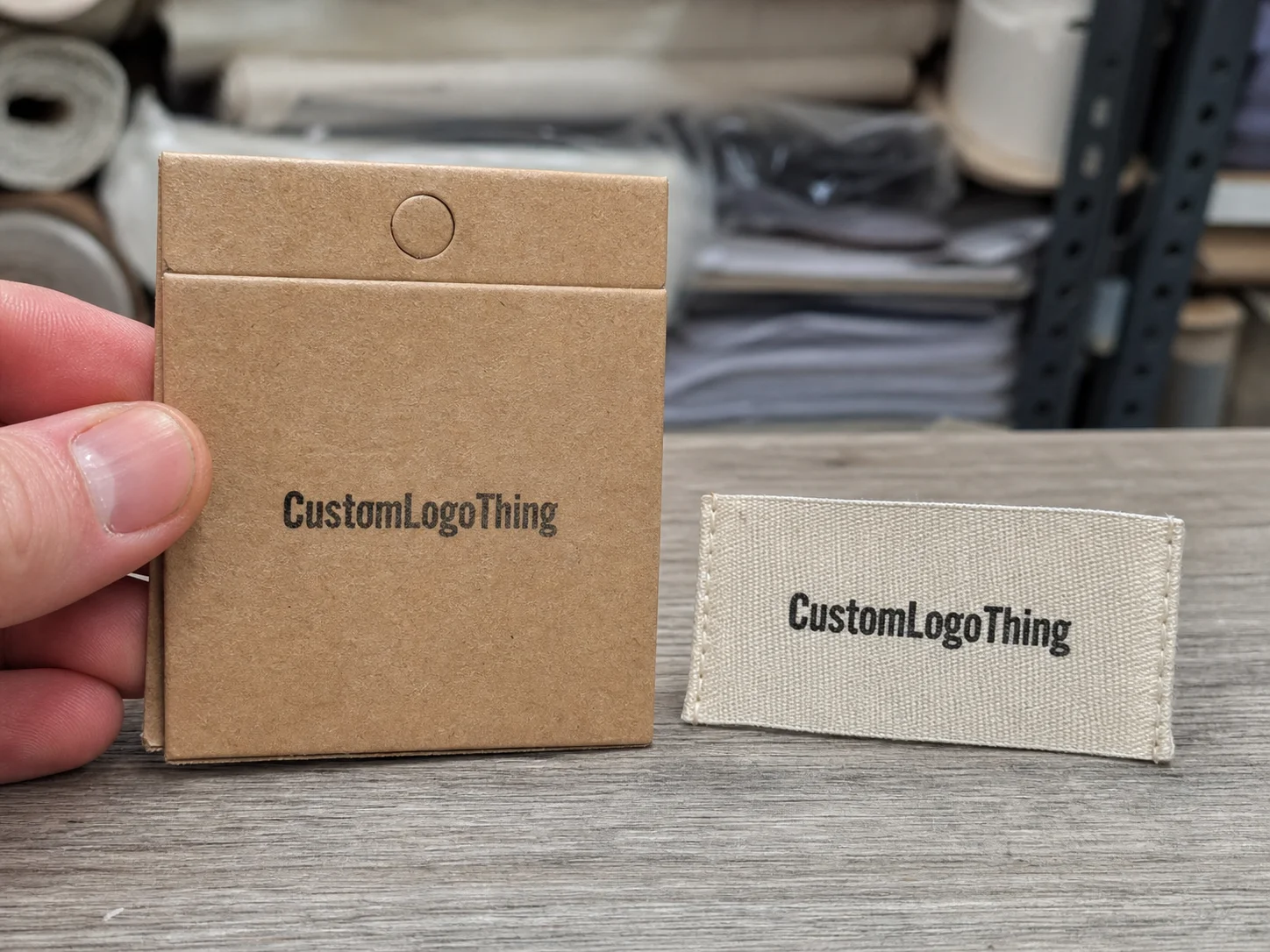
A woven label is made by weaving thread into the design rather than printing ink on top of it. That structure is why personalised woven labels for crafts tend to stay readable for longer, especially on products that are washed, folded, packed, or handled repeatedly. They are commonly sewn into garments, accessories, plush toys, quilts, and handmade home décor where a visible brand mark matters but the label still needs to feel part of the item.
The main benefit is straightforward: a small label can make a product feel retail-ready without stripping away the handmade character. Buyers notice that balance. The piece still feels crafted, but it no longer looks anonymous or unfinished. And when the item is photographed, gifted, or pulled from a drawer months later, the label keeps doing quiet brand work.
Woven and printed labels can both serve a purpose, but they behave differently in use:
- Durability: the design is built into the weave, so it tends to hold up well through wear and laundering.
- Texture: woven labels usually feel more textile-like and less slick than printed satin or film labels.
- Appearance over time: printed labels can crack, fade, or rub away depending on substrate and ink; woven labels generally age better.
Printed labels are not redundant. They are often the better choice for long care instruction blocks because very small text can be hard to reproduce cleanly in thread. But for logos, short messages, and simple branding, woven labels usually give a cleaner finish. That difference becomes obvious once the item has been through a few washes or a season of use.
A good craft label should look like it belongs there. If it shouts louder than the product, the balance is off.
Where they work best depends on the product. Soft folded labels suit knitwear and baby items. Flat labels with a neat edge can suit canvas bags and pouches. Short woven tags also work on plush toys, quilt corners, and handmade décor where the label needs to be visible but not bulky. Scale matters more than many first-time buyers expect. If the label is larger than the visual weight of the item, the finish can feel awkward rather than polished.
For makers building a branded range, Custom Labels & Tags can be a useful place to compare formats before committing to one style across every product line.
How the weaving and finishing process works
Production usually begins with artwork setup. The logo or text is cleaned up, simplified where needed, and converted into a weave-ready format. This stage is where many design issues show up early. Thin strokes, tiny type, and busy artwork often lose clarity once they are translated into thread. Strong contrast and clean outlines typically reproduce better than gradients or overly detailed linework.
After artwork approval, the design is programmed for the loom. Thread count and weave structure affect how crisp the final label looks. Higher density can improve detail, but it can also increase cost and make the label feel slightly firmer. Lower density may feel softer, yet small letters can blur. There is no perfect setting for every project; the right balance depends on whether the label is brand-first, comfort-first, or built to carry more information.
Once woven, the labels are cut and finished according to the requested style. Common options include:
- End fold: the ends are folded under for a clean sew-in finish.
- Center fold: the label folds in the middle, useful for seam insertion.
- Mitre fold: the corners are angled for a neat decorative finish.
- Straight cut: a flat cut edge, often used when the label will be sewn into a seam or backed.
- Iron-on backing: a heat-applied adhesive layer for temporary placement or added convenience.
Fray resistance is closely linked to edge treatment. Straight-cut labels without proper finishing can fray if they are not sewn in carefully. Folded edges protect the weave and usually look tidier on the finished item. Backing choice matters too. Iron-on backing can help with placement on samples or certain craft products, but sewn-in labels generally hold up better over time, especially on items that are washed often.
Quality control is where reliable suppliers earn trust. A proper check should cover colour consistency, edge cutting, fold accuracy, and readability under normal viewing distance. A label that looks fine in a mockup but becomes hard to read in real life is not a good buy. Craft buyers do inspect details closely, particularly when the product is priced as handmade premium.
For broader packaging systems, some suppliers also reference standards such as ISTA for distribution testing when labels are part of a larger packed-goods programme. That matters more for retail-ready shipping than for a simple sew-in tag, but the logic is the same: a label should survive the journey, not just the design stage.
Cost, pricing, MOQ, and what changes your quote
Pricing for personalised woven labels for crafts depends on more variables than most first-time buyers expect. The biggest drivers are label size, number of colours, quantity, fold style, backing, and artwork complexity. Whether the supplier weaves to order or offers a stock-based customisation model also changes the quote. A simple two-colour brand label in a common size will usually cost less than a larger multicolour tag with a special fold and backing.
Minimum order quantity, or MOQ, affects unit price in a very direct way. On smaller runs, setup costs are spread across fewer labels, so the per-label price rises. On larger runs, that setup is diluted and the unit cost usually falls. That is why a quote can look steep at 500 pieces but more reasonable at 5,000. The pattern is normal, not a trick.
As a rough planning guide, a small custom woven label order may land around $0.18-$0.35 per unit for mid-size quantities, while more complex labels, special folds, or tighter detail requirements can push higher. Shipping, sampling, and rush fees are usually separate line items and can change the final landed cost. If you are comparing suppliers, ask whether artwork setup, proofing, and finishing are included. Those are often where the surprise charges hide.
| Option | Typical cost impact | Best for |
|---|---|---|
| Simple brand-only woven label | Lower setup, lower unit cost | Small logos, clean identity marks |
| Multicolour woven label | Higher thread complexity, often higher price | Detailed brand artwork |
| Folded label with backing | Additional finishing cost | Garments, soft goods, frequent handling |
| Rush production | Premium charge, sometimes significant | Launches, craft fairs, stock shortages |
The cleanest way to compare quotes is to compare like for like. Check size, thread count, colour count, fold style, backing, MOQ, proofing, and shipping terms. A lower headline price can hide a smaller label, fewer colours, or a less durable finish. If one supplier appears cheaper but another includes proper finishing and proof approval, the lower quote may not be the better value.
For sustainable packaging and materials decisions, general guidance from FSC can still be useful if your label programme sits inside a wider eco-conscious brand story. Woven labels themselves are not paper, of course, but many craft brands think about the whole product system together, and that is a sensible habit.
Choosing the right specs for handmade products
Spec choices determine whether personalised woven labels for crafts look intentional or cramped. Start with size. Width and height need to fit both the product and the amount of information you want to show. If the design includes a logo and a short phrase, extra space can make the weave cleaner and the brand easier to read. If the label is meant to sit in a seam, smaller dimensions may be the smarter choice.
Thread colour matters just as much. Strong contrast makes logos easier to read, while low-contrast designs can look refined but may disappear on textured fabrics. The best option depends on the material the label is attached to. A cream label with dark lettering may work well on linen. A brighter contrast may be better for canvas goods or darker knits.
Here is the practical way to match label style to product type:
- Knitwear and scarves: softer woven labels, usually with folded edges and a comfortable hand feel.
- Bags and pouches: bolder logo labels with stronger contrast and enough width to stay readable.
- Quilts and home décor: labels that can sit neatly in a corner seam without disturbing the drape.
- Plush toys: short, tidy labels that do not feel bulky or irritating to the touch.
Placement matters too. A label on the neck seam of a garment behaves differently from one sewn into a bag lining or a quilt corner. It should be visible enough to identify the maker, but not so prominent that it distracts from the product itself. The best placement feels like part of the design rather than an afterthought. That is especially true for handmade goods, where customers are paying for craftsmanship as much as function.
You also need to decide whether you want a brand-only label, a logo-plus-size label, a care label, or a small set of mixed-purpose tags. For many makers, the cleanest route is a primary brand label paired with a separate care or size label. That keeps branding simple while leaving room for useful information. If too much text is packed into one small label, readability usually suffers.
Production steps and lead time: from artwork to delivery
The timeline usually starts with artwork submission. You send your logo, text, size request, and any reference details, and the supplier prepares a proof or digital mockup. This is the stage where problems are easiest to catch. Misspelling, awkward spacing, and overcomplicated artwork show up early if the proofing process is handled properly. If a sample is offered, review it carefully before the full run moves ahead.
Once the proof is approved, production moves into weaving. Standard lead times often run about 10-20 business days after approval, depending on quantity and label complexity. Simple orders can move faster, while multicolour, higher-density, or heavily finished labels take longer. Shipping time is separate, and buyers sometimes overlook it when planning a product launch or craft fair stock run.
Delays usually come from a few predictable places:
- Artwork revisions that require multiple proof rounds.
- Colour matching questions when the design needs thread selection.
- Waiting too long to approve the proof.
- Unexpected changes to fold style, backing, or quantity.
If you are planning inventory for a seasonal drop, build in buffer time. That buffer is not wasted time; it is insurance against small production bottlenecks. From a practical packaging standpoint, it is much easier to receive labels a week early than to scramble for a last-minute substitute that does not match the rest of the line.
For buyers who want predictable scheduling, the best habit is to lock the design first, confirm the quantity, and keep the specs stable through production. Even a small change can reset a proof or add a day or two to the process. That does not sound dramatic, but in a launch window it matters.
Common mistakes when ordering woven tags for crafts
Most problems with personalised woven labels for crafts come from design or planning, not manufacturing mystery. The first is tiny text. Screen design software makes fine details look easier than they are. In thread, small lettering can blur, especially if the weave density is not high enough to support it. If the message matters, give it room to breathe.
Another common mistake is using too many colours. More colours can look attractive on screen, but each additional thread colour adds complexity and can raise cost. It also increases the chance that the artwork feels busy once woven. A simple two- or three-colour design often looks cleaner and ages better than an overworked logo.
People also misjudge label size. A label that is too large can overpower a delicate handmade item. One that is too small can vanish into the seam or look accidental. The right size should match the scale of the product and the amount of information on the tag. If the item is small, the label should be restrained; if the product is substantial, a tiny tag can look unfinished.
Fold style causes plenty of avoidable rework. Ordering the wrong fold can create problems during sewing or application. A straight-cut label is not ideal if you were expecting a neat folded seam finish. Likewise, a centre fold may not suit a placement where only one edge is being caught in stitching. It sounds basic, but this is one of the most common reasons for mistakes.
Skipping a sample or proof review is risky, especially on a first order or a rebrand. Even experienced makers should inspect a sample if the product line is changing. A proof can reveal spacing issues, contrast problems, or the need to simplify the logo before the full run is made. That extra check is cheaper than reordering labels that do not fit the product properly.
Expert tips and next steps for a cleaner order
Start with one primary logo version that works at small size. That file can become the anchor for your label system, then you can build out size tags, care tags, or secondary woven labels as needed. If the main logo reads clearly at the intended label size, you will avoid a lot of changes later.
Prepare artwork cleanly before requesting a quote. If you have Pantone references, share them. If not, be ready to describe the colours and accept that thread matching is approximate rather than paint-perfect. Also, measure the actual sewing area on the product. A few millimetres can matter more than many buyers expect, particularly on small handmade items.
Here is a simple order sequence that keeps the process tidy:
- Measure the product and available label space.
- Choose label type, size, fold, and backing.
- Send clean artwork and key text.
- Review the proof carefully.
- Approve only after checking spelling, spacing, and readability.
- Keep a note of the approved spec for reorders.
If you are changing materials, updating your brand, or introducing a new collection, a small test run is a sensible move. That is especially true for makers who sell across multiple product types, because a label that works well on knitwear may not suit a canvas bag or a quilt edge in the same way. There is no universal size or fold that works for everything.
For more general product identification options, it can help to compare your woven tag plan against other Custom Labels & Tags formats and decide which pieces need branding, which need care information, and which need both. That separation keeps the final product cleaner and usually makes production easier too.
In practice, personalised woven labels for crafts are one of those small details that quietly change how a product is read. Choose the Right specs, keep the artwork clear, and work within a realistic timeline, and the label supports the craft instead of competing with it.
FAQ
What are personalised woven labels for crafts used for?
They identify the maker, add a professional branded finish, and can include logos, sizes, or care details. They are commonly sewn into handmade clothing, fabric goods, bags, toys, and other craft products.
How long do personalised woven labels for crafts usually last?
Woven labels are durable because the design is built from thread rather than printed on top. With proper sewing and normal care, they typically hold up well through repeated handling and washing.
Do woven labels work better than printed labels for handmade items?
Woven labels usually look more premium and stay readable longer because the design is integrated into the weave. Printed labels can be useful for very detailed care information, but woven labels are often preferred for branding.
What information should I include on craft labels?
Most buyers start with a logo or brand name, then add size, care, or web/social details if space allows. The best content depends on the product size, where the label will be sewn, and how much readability you need.
How do I know what size woven label to order for crafts?
Measure the available sewing area on the item and compare it to the amount of text or logo detail you want to show. If the design has small text, choosing a slightly larger label usually improves readability and finished appearance.


