Personalized Camp Labels: Buy the Right Labels Fast
Camp gear disappears in ordinary ways. A sweatshirt gets left on a bunk hook, a water bottle ends up at the wrong activity, and a toiletry bag slides into a shared bin because three kids own the same color. That is the basic value of personalized camp labels. They turn a generic item into something a counselor, parent, or camper can identify quickly, before it disappears into the lost-and-found pile.
The buying decision is more practical than it first appears. A label set that costs a few dollars can prevent repeated replacements that cost much more over a single session. It also cuts down on sorting, which matters in busy cabins, day camps, and multi-age programs where dozens of similar items move through the same hands every day.
The best label is not the prettiest one. It is the one that survives the environment it will face: heat, washing, friction, moisture, and occasional rough handling. A design that looks good on a proof can still fail in the laundry room if the material, adhesive, or application method does not match the item.
Why Personalized Camp Labels Matter More Than Most Parents Expect
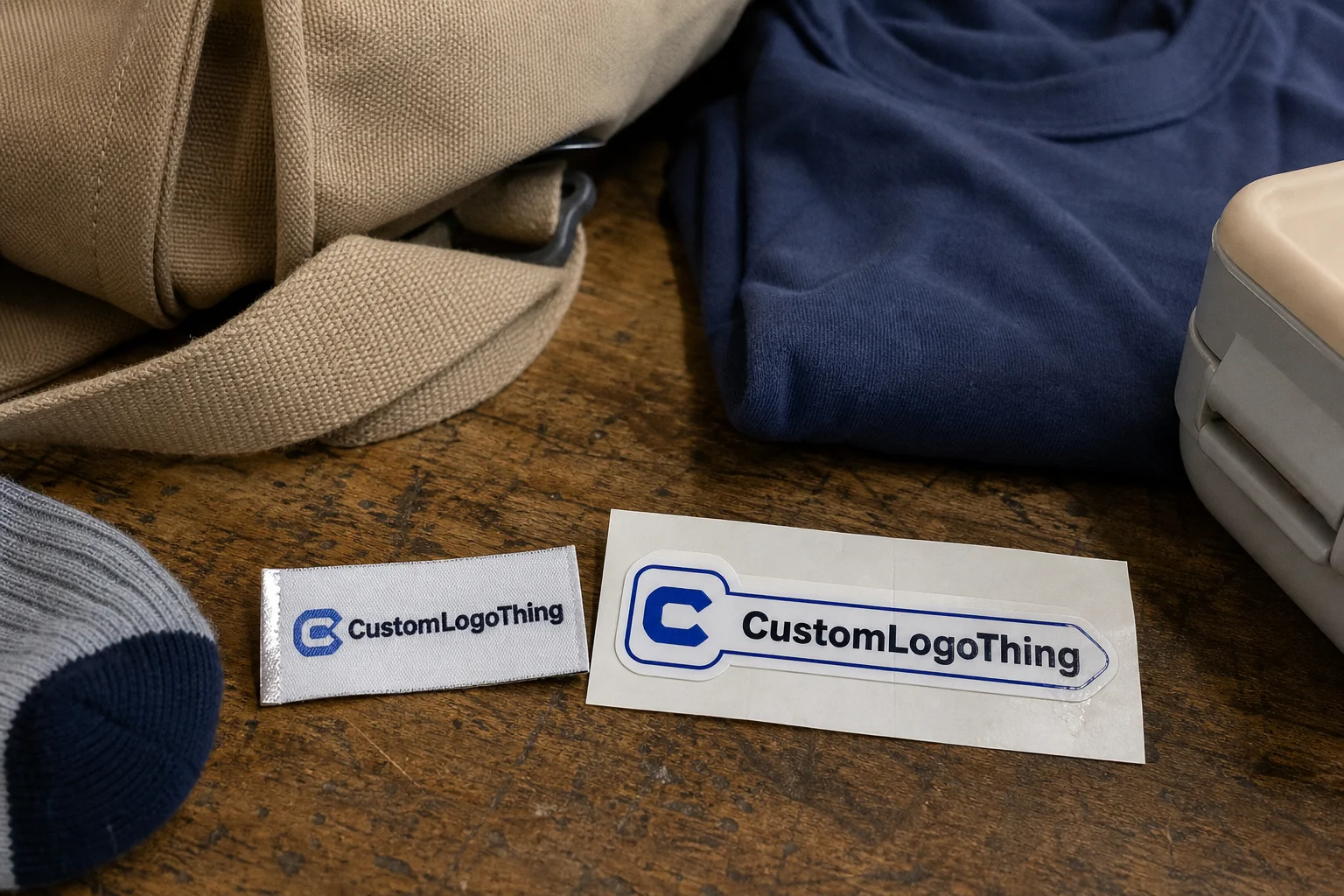
Camp life is hard on ownership. Shirts end up in communal laundry bins, shoes get kicked under cots, towels move between pool, field, and cabin, and bottles circulate through lunch lines and activity stations. In that setting, personalized camp labels do more than add a name. They shorten sorting time, reduce mix-ups, and make staff work less error-prone.
The cost of a lost item is easy to underestimate. A sweatshirt can run $20 to $40. A lunch box, shoe pair, or insulated bottle can cost more. Replace three or four items over a session and the total often climbs past the price of a full label bundle. That is before the time spent searching through shared gear or emailing camp staff to ask whether something was found.
Mixed-age camps create a different problem than day camps. Younger kids may not recognize their own bags or bottles, while older campers swap jackets, chargers, or toiletry items without much thought. Day camps add more handoffs because gear goes in and out of backpacks every morning and afternoon. The label has to work across all of that, not just on the day it arrives.
"The useful label is the one a counselor can read in two seconds and a camper can still recognize after a week of heat, sunscreen, and repeated washing."
That definition matters because camp is less forgiving than school. Clothing gets washed more often, bottles get rinsed and reused, and bags are handled by more people. A label that only looks good in a product photo does not solve the real problem. Durable identification does.
For buyers comparing product formats, the Custom Labels & Tags category is a useful starting point before choosing how much coverage a child actually needs. The item, surface, and wear pattern should drive the decision.
How Personalized Camp Labels Work on Clothing and Gear
There is no single label type that solves every camp need. That is where many rushed orders go wrong. Iron-on labels, sew-in labels, peel-and-stick labels, and waterproof options each serve different surfaces and different levels of wear. The material matters as much as the printed name.
Iron-on labels bond to fabric using heat and pressure. They are a strong fit for cotton tees, polos, towels, and many polyester blends. Sew-in labels work better for items that see heavy washing or frequent stretching, such as jackets, blankets, and uniforms. Peel-and-stick labels are best for smooth hard surfaces and short application time. Waterproof labels are the better choice for water bottles, lunch containers, toiletry bottles, and gear that gets wiped down repeatedly.
Adhesion is not just about glue. It is about whether the label can survive heat, moisture, detergent, friction, and time on a specific surface. A cotton tee and a coated lunch container are different jobs. So are a nylon jacket and a textured shoe tongue. If a supplier says one format works everywhere, the buyer should treat that claim cautiously.
| Label Type | Best Use | Typical Price Range | Durability Notes |
|---|---|---|---|
| Iron-on | Shirts, towels, bedding, cotton blends | $0.18-$0.35 each | Strong on washable fabrics if applied correctly |
| Sew-in | Jackets, blankets, heavy-use garments | $0.25-$0.60 each | Very secure; better for long-term use |
| Peel-and-stick | Bags, shoes, notebooks, smooth hard goods | $0.12-$0.28 each | Fast to apply; surface prep matters |
| Waterproof vinyl | Bottles, lunch containers, toiletries | $0.20-$0.45 each | Good for moisture, wiping, and outdoor use |
Readability matters just as much as attachment. A label that stays in place but is hard to read in a lost-and-found basket loses part of its value. High contrast, a clean font, and a clear name placement help staff identify items quickly. For younger campers, a small icon or color cue can reduce confusion when two children share the same first name.
Construction also affects performance. Printed labels are usually the most affordable. Woven labels often feel more premium and tend to hold up well on garments. Laminated or coated labels are better for hard goods because they resist smudging, soap residue, and repeated wiping. If an item will be washed, scrubbed, or handled with sunscreen-covered hands, the cheapest label is rarely the lowest-cost choice over time.
There are useful standards to borrow from adjacent industries. ISTA testing gives a good reference point for handling and transit durability, while FSC sourcing matters when paper-backed components or sustainability claims are part of the order. Those standards do not replace real-world use, but they help set a better baseline.
Key Specs That Affect Durability, Readability, and Safety
Material selection comes first. Soft fabrics need a different attachment method than slick, textured, or coated surfaces. That sounds obvious, but a lot of failed orders come from using one label style for every item in the bag. A label that works on a cotton T-shirt may peel from a curved plastic bottle or crack on a rough shoe surface.
Adhesive strength, wash resistance, weather exposure, abrasion, and heat tolerance are the performance traits that matter. A parent does not need lab terminology to judge them, but the product description should use those terms clearly. If a label is meant to survive repeated washer and dryer cycles, that should be stated directly. If it is meant for hand-washed items only, that should be spelled out too.
For clothing, comfort and safety matter. Look for smooth edges, non-toxic inks, and secure attachment that will not scratch skin. Labels should sit flat, not bunch under a collar or press into a cuff. In camp, irritation becomes a problem fast because kids wear the same items for long stretches. A label that rubs at the neck is not a good label, even if the proof looks polished.
Simplicity usually wins. High contrast text, minimal decoration, and a readable font are safer choices because counselors are sorting quickly, not inspecting each item. The design should prioritize immediate recognition over visual flourish. A clean first name, optional last initial, and one small icon is often more effective than a crowded layout.
There is also a limit to how much information belongs on a camp label. Too much text shrinks the name, and small type is the first thing to fail in a crowded laundry room or a busy cabin. If a phone number or cabin name is needed, the main identifier should still be the most legible part of the label.
Personalized Camp Labels: Process, Timeline, and Turnaround
The ordering process is usually straightforward, but the details are where delays happen. First comes the label type. Then names, colors, icons, size, and quantity. After that comes proofing. That last step matters more than many buyers expect because a typo or contrast issue caught early is easy to fix. Caught after production, it becomes a reprint.
A normal workflow looks like this: artwork setup, proof review, production, finishing, and shipping. For standard family orders, 7 to 12 business days from proof approval is a common range. If a custom font, unusual icon set, or larger group pack is involved, 12 to 15 business days is more realistic. Rush service can shorten that window, but it usually adds cost and leaves less room for corrections.
Proof approval is the cleanest way to keep the order moving. Review spelling, line breaks, icon placement, and any contact information on a phone and on a larger screen. That two-device check catches a surprising number of layout issues. What looks centered on a desktop may feel cramped on mobile, and the reverse can happen too.
Planning ahead matters because camp packing usually happens all at once. Ordering labels before the suitcases come out gives room for a correction, a reprint, or an extra batch if one sibling suddenly needs the same design. For larger family orders, that buffer is not optional. It is the difference between a calm packing session and a rushed one.
For group programs, the timeline gets tighter. Camps that order labels for cabins, teams, or activities should build in more lead time because the quantity is higher and the proofing is more complex. If a supplier cannot explain its production stages clearly, that is a sign the buyer may be left guessing when the deadline gets close.
Cost and Pricing Factors for Camp Label Orders
Price depends on more than quantity. Label type, number of names, print coverage, icon choices, waterproof construction, and finishing method all affect the total. A simple single-color name label is usually cheaper than a multi-color design with icons and a specialized adhesive. The difference is not only visual. It is production time and material cost.
It helps to separate unit cost from order cost. A small pack may look inexpensive at checkout, but the per-label price can be high. A larger sibling bundle often lowers the per-unit cost enough to make sense, even if the total order is bigger. Families with multiple campers usually do better with a mixed pack than with piecemeal ordering.
Here is a practical way to think about pricing:
- Basic peel-and-stick sets often start around $12-$18 for a small pack.
- Mixed clothing-and-gear bundles commonly land around $18-$38 depending on quantity and finish.
- Waterproof or specialty label sets can run higher, especially if they include custom icons or multi-surface coverage.
- Rush processing often adds a surcharge, which can be worth paying only when the camp date is close.
Add-ons also matter. Icon sets, waterproof coatings, mixed-size packs, and extra shape options all raise the total. The real question is whether the add-on solves a camp problem. A bottle label that survives ice water and hand washing is worth more than a decorative feature nobody needs. Pay for function first.
There is a simple return-on-investment test. If one label bundle prevents two lost shirts, one missing bottle, and a replacement lunch container, it probably pays for itself. That is why families should compare labels against replacement spending, not against the price of another cheap item in the cart. The math becomes convincing quickly.
If you are comparing styles side by side, the Custom Labels & Tags collection helps match the label format to the item instead of forcing one product to do everything.
Step-by-Step Guide to Ordering the Right Labels
Step 1: Make a list by category. Separate clothing, shoes, accessories, toiletries, lunch gear, and bedding. That gives a real quantity estimate instead of a guess. Families often underestimate socks, towels, and backup shirts, which are exactly the items most likely to disappear.
Step 2: Match each category to the right label style. Clothing usually needs iron-on or sew-in labels. Hard goods need peel-and-stick or waterproof labels. Shoes often need a smaller, tougher format that can handle friction and moisture. One format for every item sounds efficient, but it creates failure points.
Step 3: Keep the text short. First name is usually enough for younger campers, especially when paired with an icon or color. If two siblings have similar names or will attend the same camp, add a last initial or a cabin identifier. The goal is quick recognition, not a mailing address.
Step 4: Check the proof carefully. Spelling errors, awkward line breaks, and weak contrast are the common misses. Review the proof on a phone and on a larger screen because layout issues can hide in different viewing sizes. This is the moment to fix the problem, not after the labels are in production.
Step 5: Apply labels before packing. Then test a few items at home. Heat-bonded labels should feel secure. Adhesive labels should sit flat without curling at the corners. If a label goes on a bottle, wash it once and check whether the edge lifts. That small test tells you whether the design is ready for camp use.
For a simple decision rule, use this: clothing gets a fabric-specific label, gear gets a moisture-resistant label, and anything handled daily by multiple people gets the most durable option you can justify. That approach is more reliable than chasing a single "best" product that does not really exist.
Common Mistakes That Make Camp Labels Fail
The first mistake is choosing a decorative font that looks charming but becomes unreadable in a pile of mixed laundry. Camp staff do not have time to decipher script. If the name cannot be read quickly, the label has already lost part of its value.
The second mistake is using the wrong attachment method for the item. A peel-and-stick label on a rough, flexible surface may lift. An iron-on label on the wrong fabric may fail after a few washes. A sewn label on a delicate garment may feel intrusive. The material should dictate the method, not the other way around.
Ordering too few labels is another common miss. Families count shirts and forget socks, towels, goggles, lunch containers, and toiletry bottles. The small items are often the ones that vanish first. If a camper uses it daily, it deserves a label.
Ignoring care instructions can undo an otherwise good order. Heat settings, dryer temperature, and the waiting time before the first wash all matter. If the instructions say to wait 24 hours before washing, skipping that step can shorten the life of the adhesive. That is a production detail, but it affects performance directly.
Proof review is the easiest fix and the one people skip. One missing letter or weak color contrast can reduce the whole order's usefulness. The label still exists, but the function is compromised. The order looked fine; the real-world result did not.
Expert Tips for Better Label Performance and Faster Reordering
Consistency helps. If a family uses the same naming style across siblings, camp staff can sort items faster and parents can reorder later without rebuilding the whole system. That might mean first name plus last initial for everyone, or the same icon system across the household. Small systems save time.
Use one primary label format for clothing and a separate waterproof option for gear. That split reduces failure points and avoids the trap of asking one product to cover everything from pajamas to peanut butter containers. The best camp setup is rarely the simplest-looking one. It is the one matched to actual use.
Keep a spare set at home. A mid-session reorder becomes much easier when the original proof, color choice, and size details are already on hand. That matters for replacement bags, emergency gear changes, or last-minute additions. Reordering should not require starting from zero.
Store the order details where they can be found quickly next season. A saved proof, product type, and quantity history turn a new order into a short task instead of a repeat decision. If a supplier has a labels and tags page, the reorder path should be easy to find and harder to lose.
Build the bundle around camp behavior rather than school supply behavior. Camps involve water, dirt, sunscreen, laundry mix-ups, and constant movement between activities. School labels do not always hold up to that pattern. The right product is the one designed for that friction.
That is the real point of personalized camp labels. They are not decoration and they are not overkill. They are practical identification that keeps items moving back to the right child. If the item, surface, and schedule guide the order, the labels do their job without creating extra work.
Frequently Asked Questions
What are personalized camp labels best used for?
They work best on clothing, shoes, towels, bedding, bags, water bottles, lunch containers, and toiletries. The goal is fast identification in shared spaces where items get mixed or misplaced.
How long do personalized camp labels usually last?
Durability depends on the label type, the material it is applied to, and the care routine. High-quality options can last through repeated washing, drying, and outdoor use when they are applied correctly.
Are personalized camp labels safe for kids' clothing?
Yes, when they are designed for garments and applied according to the instructions. Look for smooth edges, secure bonding, and materials meant for frequent wear and washing.
How many personalized camp labels should I order?
Count every item that leaves the cabin or laundry bag, then add extras for backups and replacements. Families with multiple campers often save money by ordering a larger bundle instead of piecemeal packs.
What should I check before finalizing a personalized camp labels order?
Review spelling, label type, quantity, contrast, and delivery timing. Make sure the design matches the items you actually need to label, not just the ones you remember first.


