Personalized Candy Labels for Custom Product Packaging
Personalized candy labels do more than decorate a pouch or jar. They have to sell the product fast, carry the brand cleanly, and make the pack feel worth picking up. That matters whether the candy is headed to retail, a fundraiser table, a wedding favor box, or a short seasonal run. The label is branding, but it is also a packaging control point. Size, adhesive, finish, and file quality all affect the result.
Shoppers do not spend long deciding on candy. They scan flavor, price, trust cues, and whether the pack looks intentional. If the front panel is cluttered or the label looks improvised, the product feels cheaper than it is. If the label reads clearly, sits straight, and holds up in handling, the candy gets a better shot at being taken seriously.
What Personalized Candy Labels Actually Do on Shelf
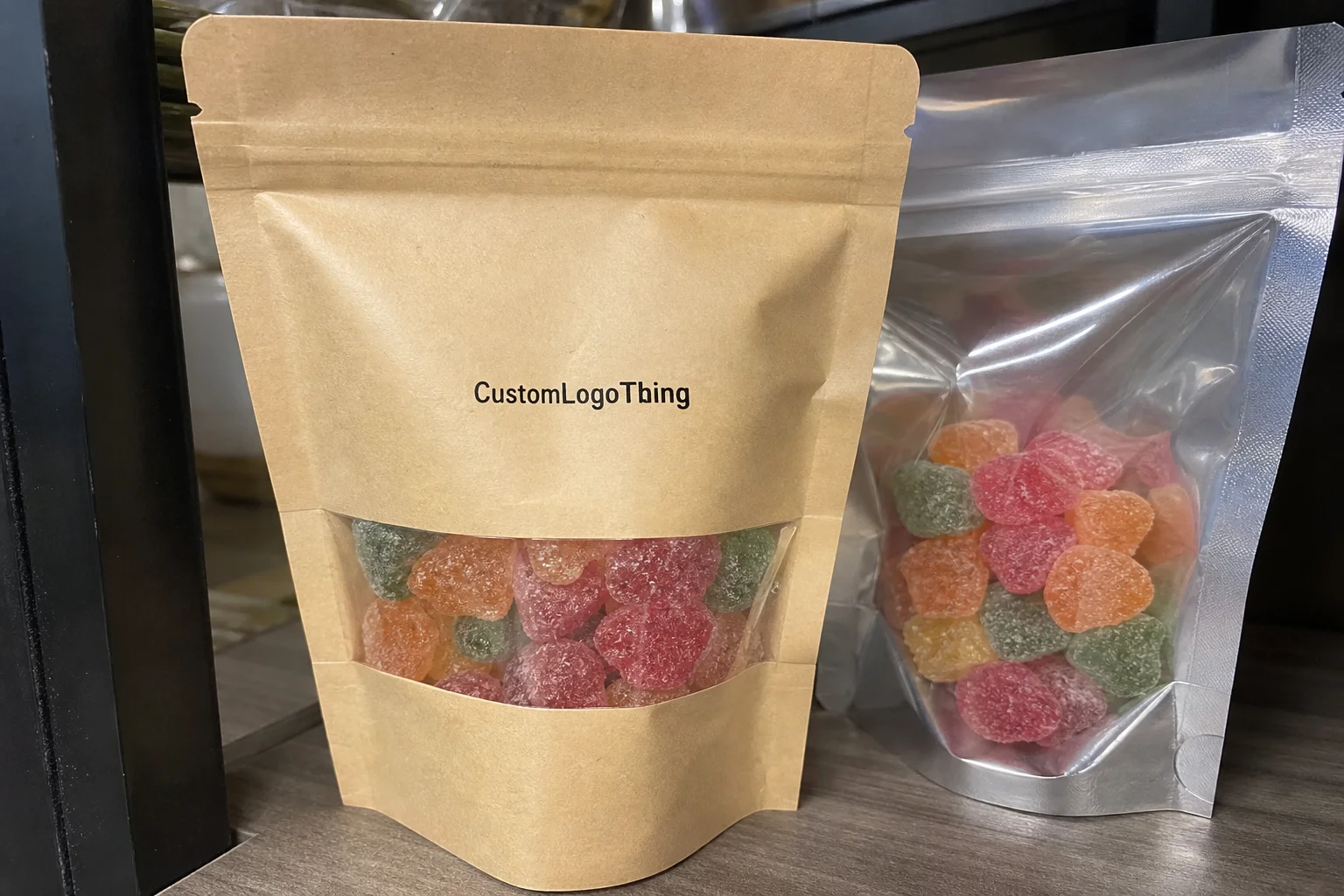
The first job of personalized candy labels is simple: make the pack understandable in a glance. Product name, flavor, brand, and net weight should be easy to find. Anything else has to earn its place. A candy label that tries to say everything usually ends up saying nothing well.
The second job is less obvious. The label has to make the candy feel chosen, not generic. That matters in a category where purchases are often impulsive and low-consideration. A clean front panel can do more for conversion than a long origin story or a stack of badges nobody reads.
The right label strategy changes with the use case. Retail pouches need shelf presence. Party favors need a giftable finish. Seasonal promotions need quick recognition. Private-label test runs need enough structure to look credible without locking the brand into a big inventory of preprinted packaging.
From a buyer’s perspective, a label also reduces friction. A plain wrapper with a handwritten tag can work for one-off events. It breaks down fast in retail. Shoppers trust a pack more when the basics are handled without noise: flavor, brand, quantity or net weight, and any ingredient or handling details that need to be there. That is packaging discipline, not decoration.
A candy label that cannot be read in three seconds is usually carrying too much visual weight.
There is also a resale angle that gets overlooked. A consistent label system makes a small candy line look larger and more organized than it really is. That helps market sellers, event planners, and brands testing a new flavor family. One solid system can support multiple SKUs without forcing every version to look like a separate product.
For candy sold as a gift, the label has to read like part of the product. If it looks bolted on at the last minute, the whole pack drops a tier.
How Custom Candy Labeling Works From File to Pack
The workflow is straightforward if the packaging team stays disciplined. Pick the container first. Confirm the actual label area. Build the artwork to that size. Review the proof. Approve the print file. Then decide whether labels will be hand-applied, machine-applied, or shipped on finished packaging. The shortcut version is tempting. The disciplined version is the one that avoids reprints.
Most label problems start before the press ever runs. Low-resolution logos, missing bleed, fonts that are not outlined, and artwork built for a flat surface can all cause trouble on curved pouches or rounded jars. What looks clean on a screen may wrinkle, stretch, or disappear into a seam once it hits the actual container. A proof is not a formality. It is a production gate.
Material choice changes the outcome more than many teams expect. Paper labels usually work well for dry candy in low-handling environments. Film stocks, especially polypropylene or BOPP, hold up better on chilled packs, handled favors, or containers that may pick up oil or moisture. Adhesive choice matters too. Permanent acrylic adhesives are common for retail packs. Removable options can make sense for temporary promotions or reusable jars. None of that is universal. The package surface and the distribution route decide the right answer.
If the label is part of a broader packaging program, use a printer that can keep files organized across repeat runs. That makes reorders faster and reduces version drift between flavors or seasons. It also helps when labels need to align with related Custom Labels & Tags for other pack formats.
For teams that care about distribution testing, transit standards deserve attention. Packaging that goes through fulfillment or retail channels benefits from ISTA transit testing standards, especially if labels have to survive abrasion, compression, and repeated handling before the product reaches the shelf.
Application method is the last practical decision. Hand-apply makes sense for short runs and event packs. Machine-apply fits higher volume and gives more consistency. Pre-labeled packaging helps when labor is tight, but it requires better planning because artwork, inventory, and packout all need to stay in sync.
Cost, Pricing, and MOQ Basics
Pricing for personalized candy labels usually comes down to five variables: quantity, label size, material, finish, and whether the artwork needs special die-cutting or variable data. The relationship is not linear. Bigger orders lower unit cost, but setup, proofing, and minimums can make a small run feel more expensive than expected. Buyers who only compare sticker price miss the real number: total order cost.
For short runs, digitally printed labels often land in the range of $0.18 to $0.45 per unit at 250 to 1,000 pieces, depending on size and print coverage. At 5,000 pieces or more, the same basic spec can drop closer to $0.06 to $0.16 per unit. That spread is wide for a reason. Full-coverage color, specialty finishing, and smaller label sizes change the math fast. Flexographic printing can improve unit economics at scale, but only after setup costs are absorbed.
MOQ is where budget planning either gets smart or gets messy. A higher minimum can improve unit pricing, but it can also create inventory risk if the candy is seasonal or the packaging changes often. If the product is still being tested, a lower minimum usually makes more sense. If the design is stable and demand is predictable, larger runs can work even if the first quote looks painful.
Rush service deserves a mention because it often hides in the fine print. Faster turnaround usually means higher scheduling priority, extra proofing pressure, or expedited freight. Multi-SKU orders, variable data, and specialty finishes also add cost more quickly than most teams expect. A glitter varnish or soft-touch laminate can be worth it on gift products, but it should be chosen for a business reason, not just because it looks good in a mockup.
| Option | Best Use | Typical Cost Impact | What to Watch |
|---|---|---|---|
| Paper label stock | Dry candy, light handling, low-cost runs | Lowest upfront cost | Can scuff or lift in moisture |
| BOPP film | Chilled packs, handled favors, oil-prone surfaces | Moderate increase | Higher material cost, better durability |
| Removable adhesive | Reusable jars, promo packs, temporary events | Usually a small premium | May fail on textured or dusty surfaces |
| Soft-touch or specialty finish | Premium gifting and seasonal retail | Highest premium | Useful visually, but not always necessary |
For sustainability-minded buyers, stock choice can matter beyond price. If paper content and sourcing are part of the brand story, FSC-certified paper options can support procurement requirements without forcing a full packaging redesign. The label still has to perform. Green claims do not rescue a pack that peels off in transit.
One practical rule: short-run labels work best for testing, events, and seasonal launches. Larger runs make more sense when sales data already shows the design is working. That is the cleanest way to balance risk against unit cost.
Production Steps and Typical Turnaround
Label production usually moves in the same order: estimate, artwork handoff, proof review, revisions, print production, finishing, packing, and shipping. The bottleneck is rarely the press itself. More often, the delay comes from missing files, late copy changes, or internal approval chains that keep the proof sitting untouched for days.
A simple order can move quickly if the artwork is ready and the package dimensions are confirmed. More complex jobs take longer when there are multiple versions, specialty stocks, barcode placement, or compliance review. Simple digital label jobs are often ready in about 5 to 10 business days after proof approval. More involved runs, especially those with multiple SKUs or special finishes, can take 12 to 15 business days or longer. Shipping time sits on top of that. A buyer planning for an event should never build the schedule on the fastest possible turnaround.
Turnaround also shifts with order size. A small rush order may still need artwork review and file cleanup. A larger order may need more production slots, more packing time, and more shipping coordination. The problem is not just speed. It is schedule control. If a launch date is fixed, work backward from that date and leave room for proof corrections, transit delay, and a sample application on the real package.
That sample test matters more than people admit. A label can pass proof review and still fail on the actual pouch because the film has a different surface energy, the jar shoulder curves more sharply than expected, or the adhesive grabs too aggressively at first contact. The cost of one test sheet is tiny compared with a full reprint.
Quality control should also include a basic rub check, a quick scan of barcode contrast if the pack uses one, and a visual check under the lighting where the candy will actually be sold. Gloss can glare. Dark artwork can swallow small type. Lamination can shift the look enough to make a proof feel different once it is printed at scale.
Sizing Labels for Jars, Bags, and Favors
Sizing starts with the flat label area, not the container’s full circumference. That distinction matters on curved bags, squat jars, pillow pouches, and folded boxes. A container can have plenty of surface area overall and still offer only a narrow usable front panel. Measure the area the eye sees, not just the nominal dimensions on a spec sheet.
Shape matters as much as size. A tall vertical label can look clean on a slim tube or narrow bottle. A wider front panel usually works better on pillow bags and clear boxes, where the package has a broader face. Round containers need special care because the label may wrap slightly and still has to avoid seams, curves, and cap interference. A design that ignores container shape usually ends up compressed or crowded.
Readability should drive the layout. Small candy packs cannot support endless copy. If the package is tiny, lead with the brand and flavor, then add secondary information only if it still reads at arm’s length. For favors and gift sets, that rule gets stricter because the pack is often judged by presentation before taste. If the label looks intentional from three feet away, it usually works in hand.
Visual hierarchy is not a graphic-design luxury. It is a packaging decision. The logo should not crowd the edge. The flavor name should not be buried under decorative elements. Safe margins matter because print can drift slightly, especially on complex shapes or laminated surfaces. A file that looks balanced on screen can feel cramped once it wraps the real package.
For buyers building a reusable format across several candy types, keep label sizes consistent where possible. That makes reorder planning easier and reduces waste. It also lets the brand maintain a visual system across multiple pack types without forcing every label to be custom-engineered from scratch. That is where the line starts to feel organized instead of improvised.
If the candy is sold as a gift, the label has to feel like part of the product, not an afterthought. That single detail separates a hobby-looking pack from one that feels retail-ready.
Common Ordering Mistakes That Trigger Reprints
The expensive mistakes are usually boring ones. Wrong dimensions. Blurry logos. Adhesive that was never tested on the real surface. Artwork sent as a low-resolution screenshot because someone assumed the printer could fix it later. None of that is glamorous, and all of it can trigger a reprint.
Finish can create problems too. Gloss can look strong in photos, but it may produce glare under retail lighting or hide small text on dark artwork. Matte and soft-touch finishes reduce glare and can feel more premium, yet they can show scuffs differently. The right finish depends on how the candy is sold, stored, and handled. A finish that performs on a display shelf may not be the best choice for event packs that are handed out and stacked quickly.
Too much copy is another common trap. Once the label gets crowded, the brand looks smaller and the product looks less deliberate. Buyers often try to fit every claim onto the front panel. That makes the pack feel busy and drives down readability. A cleaner layout with fewer claims usually prints better and sells better.
Environmental mismatch causes expensive failures. Candy that ships through heat, sits in a chilled case, or gets handled repeatedly needs labels that can withstand moisture, friction, and time. Adhesion on a dry sample is not enough. The real test is the actual route the pack will take from packing table to customer.
Seasonal and multi-flavor programs need a system, not isolated files. If strawberry, cherry, and watermelon all have different dimensions or artwork logic for no clear reason, the line gets harder to manage and the chance of version errors rises. A consistent label family reduces confusion in production and makes reorders simpler.
Honestly, this is where many teams lose money. They design for the mockup instead of the pouch, the jar, and the supply chain.
What to Check Before You Place the Order
Before approving the run, confirm the size, finish, quantity, artwork resolution, copy accuracy, and the exact package type the label will touch. If even one of those details is unclear, the proof is not ready to approve. That sounds strict, but it saves money more often than it costs time.
Ask for a proof and, if possible, a sample application test on the real package. That catches wrinkles, lift points, and sizing problems while there is still time to correct them. It also shows whether the label visually belongs on the pack or just technically fits. Those are not the same thing.
Match the order plan to the launch plan. If the product is for a retail test, event, or holiday run, add buffer stock so a few damaged packs do not create a shortage. If the candy line performs well, make sure the printer can store the files and repeat the job without rebuilding the artwork from scratch. Reorder speed matters more than buyers often expect.
There is also a simple procurement question worth asking: what happens next time? If the vendor can keep specs on file, note the approved material, and preserve the same die line, the second run becomes cleaner and faster. That is a quiet but real cost advantage.
Before release, a basic QC pass should include edge alignment, text legibility, color consistency, adhesive performance, and pack-level fit. If the label uses a barcode or lot code, verify it scans cleanly after printing and after application. If the design includes a clear window or transparent stock, check how it behaves against the actual candy color inside the pack. Printed samples can look different once the package is filled.
The best orders are the ones that feel boring in production and sharp on shelf. That is the point of personalized candy labels: clear branding, predictable application, and a package that looks intentional the moment a customer sees it.
What should I know before ordering personalized candy labels?
Measure the real package surface, not just the product name or nominal container size. Decide whether the label needs to survive heat, cold, or frequent handling. Prepare final copy before asking for a proof, because late edits slow the job and raise the chance of version errors.
How do personalized candy labels affect unit cost?
Unit cost usually falls as quantity rises. Material, finish, and special cutting add cost faster than simple design changes. Rush production can push the total up even on a small order, so compare full job cost instead of only the per-piece quote.
What is the typical turnaround for candy label orders?
Simple orders can move in roughly 5 to 10 business days after proof approval if the artwork is ready. More complex jobs take longer because of revisions, specialty materials, or multiple SKUs. Build in time for shipping and sample checks before any launch date.
Which label material works best for candy packaging?
Paper works for dry, low-handling applications. Film stocks and stronger adhesives are better for moisture, oil, or chilled storage. The best choice depends on the container surface and how the candy will be distributed, displayed, and handled.
How can I avoid mistakes with personalized candy labels?
Approve the proof only after checking size, text, finish, and application fit. Test the label on the actual package before the full run. Keep the design simple enough to read quickly from a short distance, especially on small packs and favor-sized containers.


