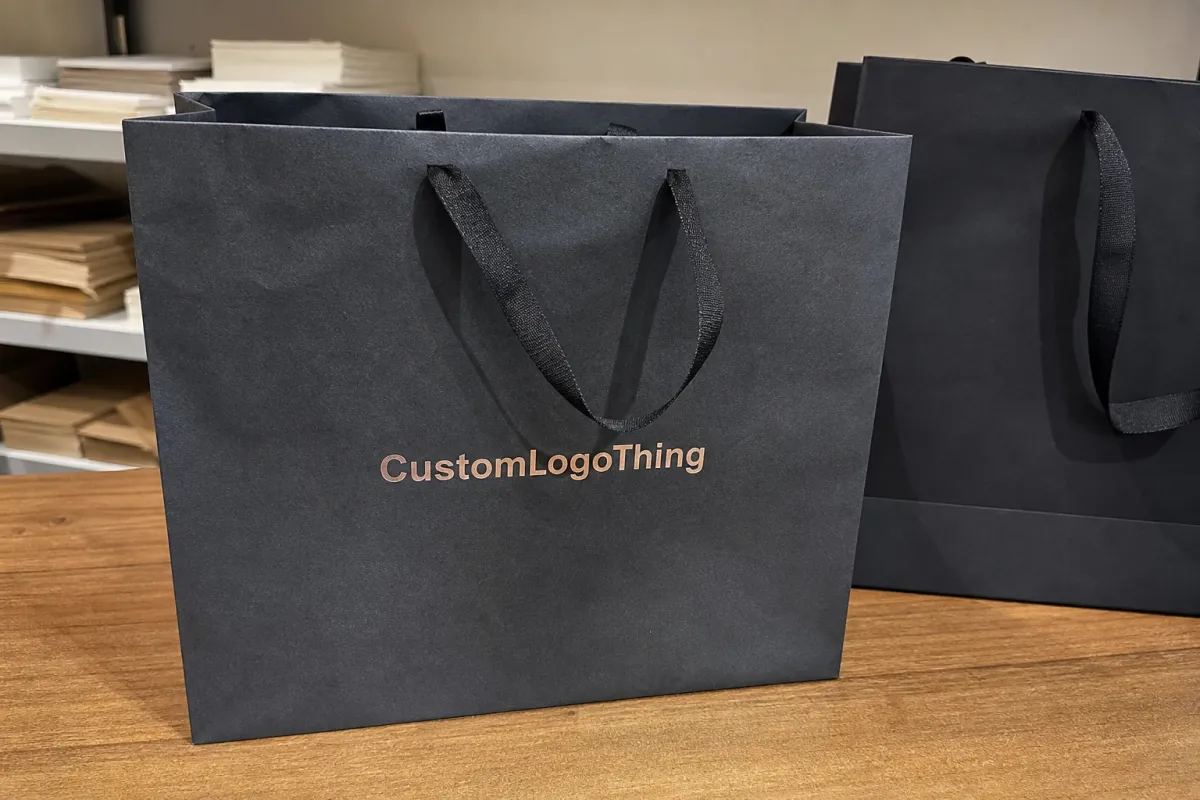
Personalized carry bags do more work than most buyers give them credit for. They hold the product, of course, but they also carry the first tactile impression a customer gets after checkout, and that impression tends to linger longer than the receipt or the thank-you card. If the bag feels thin, awkward, or overly generic, the brand can inherit that same feeling by association.
That is why this purchase should be treated as a spec decision rather than a simple printing task. Size, material, thickness, handle construction, finish, and artwork coverage all affect how the bag performs in the hand and how polished it looks in the wild. A bag that is technically “custom” can still read as cheap if the proportions are off or the film is too light for the load it needs to carry.
There is a practical side to this that buyers learn quickly. A well-made bag is not necessarily flashy; it just feels intentional, holds up under real use, and prints cleanly without fighting the material. That is the standard worth aiming for.
Why personalized carry bags matter more than most brands think
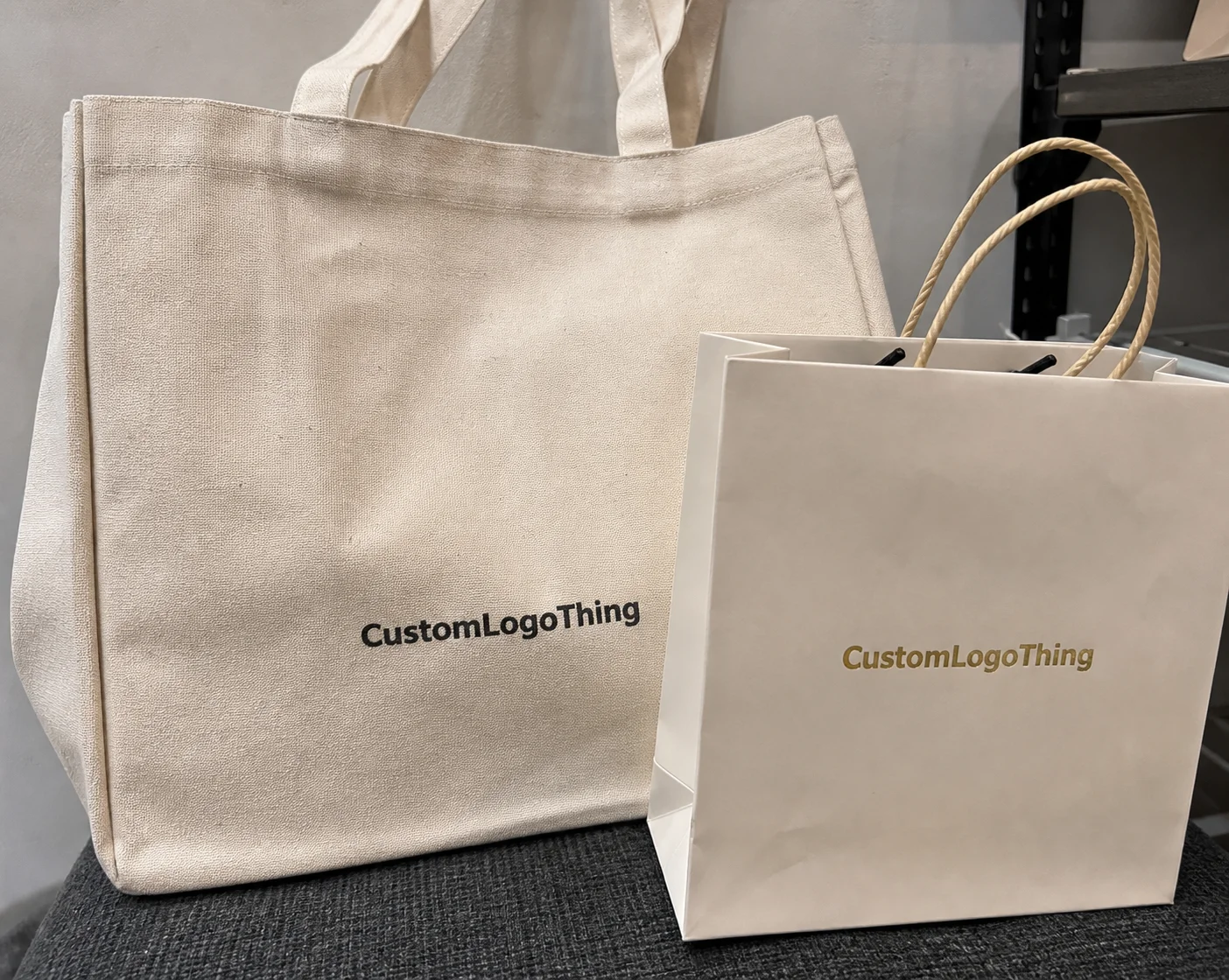
In retail, food service, trade shows, gifting, and event packaging, personalized carry bags are often the last branded item a customer touches before leaving. That makes them unusually visible compared with packaging that gets tossed immediately. A bag can travel through a parking lot, a train ride, an office, or a social post, which gives it far more exposure than many buyers expect when they approve the artwork.
Plainly put, these are custom-printed or brand-specific carry bags designed to move goods while reinforcing the look and feel of the brand. Some are basic logo bags with a small print area and a standard handle. Others are built around specific dimensions, resin types, thicknesses, and finishes so the bag itself feels like part of the product experience rather than a disposable afterthought.
The difference between “printed bag” and “well-specified bag” shows up in the details. Exact width and gusset measurements, handle style, opacity, film gauge, and print placement all change the final result. A one-color logo on a clean white bag communicates something very different from a full-panel design on a heavier film with a matte finish. Neither is inherently better; the right choice depends on what the bag has to carry and how it should be perceived.
Small design choices also influence how premium the bag feels. Strong contrast, generous spacing, and a thickness appropriate for the product can elevate the look immediately. Weak artwork, oversized empty space, and underspecified handles do the opposite. Buyers who handle a lot of custom packaging tend to notice those issues within seconds.
“A bag does not need to be elaborate to look deliberate. It needs the right size, the right film, and enough print discipline to hold together in real use.”
That is the practical lens for the rest of this piece: how the bags are made, what drives cost, where quality usually slips, and how to order a version that performs properly without paying for avoidable mistakes.
How the production process works from artwork to shipment
The production flow is straightforward on paper, but a good order depends on how carefully the details are handled. A buyer typically starts by sending the bag dimensions, preferred material, quantity, artwork, and needed delivery date. The supplier then confirms construction, print method, color count, and any setup requirements before the proof stage begins. After approval, production moves into printing, inspection, packing, and shipment.
The print method matters because it affects both the look and the economics of the order. Flexographic printing is common for medium and larger runs because it handles clean artwork efficiently once setup is complete. Gravure printing is more often used for higher-volume work where image quality and consistency matter enough to justify higher initial setup. Digital or short-run printing can make sense for smaller quantities, launch testing, or orders where setup cost matters more than the lowest possible unit price.
Artwork complexity changes the job more than many buyers realize. A simple one-color logo in a defined area is relatively easy to control. A multi-color design with fine type, gradients, or large coverage areas requires tighter registration, better proofing, and more attention to how ink behaves on film. Plastic surfaces do not accept ink in the same way paper does, so the artwork has to be reviewed with the substrate in mind instead of treated like a flat digital mockup.
That is why proofing is not bureaucracy. A proper proof catches placement errors, proportion problems, color misunderstandings, and text that is too small to reproduce cleanly. One solid revision round is normal. Multiple revision rounds usually mean the artwork was not ready before the quote was requested, which slows everything down and adds risk once production starts.
For buyers who want a neutral reference point on packaging quality and related industry standards, Packaging.org offers useful material on packaging practices and compliance context: packaging.org.
Key specs, materials, and cost drivers to compare
Before asking for pricing, the buyer should lock down the core spec list. Otherwise, quotes look comparable when they are not. The minimum information set should include bag size, material type, thickness, handle style, finish, print coverage, print colors, and quantity. Once those details are defined, the pricing conversation becomes much clearer.
Material choice is where many first-time buyers need the most translation. In practical terms:
- LDPE usually feels softer, more flexible, and more premium in the hand. It can have a slightly smoother drape and is often chosen for retail, apparel, and gift packaging.
- HDPE is typically crisper, lighter, and more economical. It is common for high-volume handouts and straightforward carry applications.
- PP-style options are selected when a stiffer feel or clearer presentation is desired, though the final look depends on the construction and finish used.
Thickness is just as important as resin type. A lighter bag in the 30–40 micron range may be fine for simple retail items, while a 50–80 micron or heavier build may be more suitable for heavier merchandise or repeated use. The exact number depends on the material and the load, but the relationship is predictable: thicker bags feel stronger and more substantial, and they cost more to produce.
Handle style also affects both comfort and durability. Die-cut handles can look neat and modern, but they need enough reinforcement if the bag will carry weight. Loop or patch handles can improve carry comfort and load performance, though they add complexity. Reinforced stress points, particularly around handle openings and side seams, are worth checking on any order meant for real-world use rather than one-time display.
Print coverage pushes cost up faster than many buyers expect. More colors, larger artwork, and full-bleed coverage each add setup burden and production control requirements. Custom Die Cuts and unusual dimensions do the same. Lower quantities increase unit cost because press setup, plate work, and calibration are spread across fewer bags. That is not arbitrary pricing; it is how production math works.
There is also a visual economy at play. A slightly heavier film can solve the common problem of a bag that looks too light for the brand it is carrying. Buyers sometimes save a small amount per unit and then end up with a bag that wrinkles too easily, loses structure, or looks cheap in daylight. The difference is small on a spreadsheet and obvious in the hand.
| Option | Typical feel | Common use | Cost effect |
|---|---|---|---|
| HDPE with 1-color print | Light, crisp | High-volume retail, basic handouts | Lower unit cost |
| LDPE with 1-2 color print | Softer, more premium | Boutiques, apparel, gift packaging | Moderate cost |
| Heavier gauge custom print | Substantial, durable | Heavier items, repeat reuse, upscale branding | Higher unit cost |
| Short-run digital option | Depends on substrate | Testing, launches, limited campaigns | Lower setup, higher unit price |
For buyers who need recycled-content context or waste-reduction references, the EPA’s recycling resources are a useful starting point: epa.gov/recycle.
Pricing, MOQ, and what your quote should include
A proper quote should spell out the unit price, setup costs, any plate or tooling charges, freight, and tax if applicable. If the response only gives a price per bag, the buyer is not seeing the full landed cost. That matters because a quote can look attractive until the hidden items are added back in.
Pricing usually improves as quantity rises, but the sharpest drop often happens after the first few thousand units because the setup burden is spread more efficiently. A 3,000-piece run may look expensive per unit compared with a 10,000-piece run using the same artwork and material, and that gap is normal. It is one reason smaller test orders are useful for validation but rarely impressive from a unit-cost standpoint.
A useful buying framework is simple:
- Low MOQ orders work well for launches, seasonal tests, and smaller brands that need flexibility.
- Mid-volume orders often provide the best balance between cost and inventory risk.
- High-volume orders deliver the lowest unit pricing, but they require stronger confidence in sizing, artwork, and demand.
Quote comparison only works if the specs are identical. A bag with a thinner film, fewer colors, or simplified construction is not the same product even if the size looks similar on paper. Freight can also distort the comparison, especially if one supplier is quoting factory pricing and another is quoting delivered cost. The cheapest number is not necessarily the best buying decision.
Watch for downgraded material or vague language around thickness. Some quotes rely on broad wording that makes the bag sound similar to a higher-grade option while quietly using a lighter gauge or a less durable handle structure. That kind of substitution is easy to miss until the sample arrives or the first shipment is opened.
The order should also match the use case. A retail handout bag, an e-commerce insert bag, and a heavier carry bag are not interchangeable simply because each has handles. If the function changes, the construction should change too.
Process and timeline: from approval to delivery
A realistic timeline starts with the brief and quote, moves through artwork preparation, proof approval, production, quality inspection, packing, and shipping. For straightforward orders, production may take roughly 12 to 18 business days after proof approval, though that depends on quantity, print method, and current production load. Shipping time should be discussed separately, because a finished order is not useful if transit time was underestimated.
The most common delays happen before printing starts. Artwork is not always print-ready. Color corrections take longer than expected. Proof changes arrive late. The requested size or thickness may not be immediately available. The factory is often blamed first, but in practice the file, the proof loop, or the shipping plan is just as likely to be the issue.
Orders tied to launches, events, or seasonal promotions need more runway than buyers usually allow. A schedule that looks generous on paper can evaporate quickly once proof revisions, freight booking, and material availability are added in. The cleanest timeline is the one that includes enough buffer for a second proof if needed, not the one built on best-case assumptions.
Turnaround is not only about how quickly the bags are printed. It also depends on how complex the artwork is, whether tooling is required, how many colors are involved, and which shipping method is chosen. Air freight and express delivery can rescue a deadline, but they change the cost structure immediately. That tradeoff should be planned rather than discovered mid-project.
A practical request that saves time is to ask for production lead time and transit time separately. That one clarification prevents a lot of confusion and makes the delivery estimate much more realistic.
Common mistakes that make custom bag orders messy
One of the most common mistakes is choosing the wrong size. A bag that is too small forces the product to fit awkwardly, while one that is too large looks sloppy and wastes material. Fit matters more than people think, especially when the bag is visible enough to influence brand perception.
Low-resolution artwork is another frequent problem. A logo that looks fine on a screen can reproduce poorly if it is not built as vector artwork or prepared at the right resolution. On glossy or transparent film, weak artwork becomes even more obvious because light reflection makes imperfections easier to spot.
Other errors come up again and again:
- Ignoring bleed and safe area
- Choosing handles that are too weak for the intended load
- Using tiny text that disappears on flexible film
- Mixing multiple logo versions across packaging pieces
- Skipping a sample or proof before mass production
The last point is expensive in the worst way. A sample or proof adds time, but it also prevents much larger losses if the logo is too low, the color lands off target, or the handle shape feels wrong once the bag is in use. That kind of mistake is easy to catch early and awkward to fix late.
Designing only for the mockup is another trap. A bag has to be carried, stacked, folded, handed out, and sometimes reused. A layout that looks elegant in a flat render can feel clumsy once the gusset opens or the contents shift. Real use should shape the specification, not just the visual preview.
Consistency matters across the full packaging system as well. If the carton, insert, label, and bag all use different treatments without a clear reason, the brand can feel pieced together. A simple, repeated system often looks more professional than a heavily decorated bag surrounded by unrelated packaging.
Expert tips to make personalized carry bags look and perform better
The cleanest bags are often the simplest. Strong contrast, clear typography, and a restrained artwork layout usually reproduce better on plastic than complicated graphics full of fine detail. That does not mean plain or boring; it means legible, controlled, and more likely to print the way the buyer expects.
Spend where performance changes. If the bag will carry heavier merchandise, put money into thickness or handle reinforcement. If the bag is meant for gifting or premium retail, improve the hand feel and finish. Decorative extras that nobody notices after checkout are not usually the best place to increase the budget.
Bag size should match the product mix, not just the largest item in the range. If one size has to handle multiple SKUs, it still needs to look deliberate when carrying the smallest one. Oversized bags are one of the quickest ways to make a brand feel less composed than it really is.
Sample testing should reflect the actual load, not an empty bag sitting on a desk. A bag that seems fine when unloaded may distort, stretch, or pull at the handle once merchandise is added. That is especially true for lighter film, longer handles, and wide gussets. The point is to test how the bag behaves when used, not how it looks in isolation.
Packaging testing frameworks from organizations such as ISTA are generally associated with transit and distribution, but the same discipline applies here: verify the real use case rather than assuming the mockup tells the whole story. See ista.org for reference.
If sustainability is part of the buying criteria, ask direct questions about recycled content, material reduction, and related certification where it applies. For paper-based components or hybrid packaging systems, FSC context can be useful: fsc.org.
There is also a broader packaging truth that gets overlooked: a clean bag, a well-sized carton, and a sensible label system usually create a stronger impression together than one highly designed bag carrying all the weight. Buyers notice when the packaging pieces speak the same language.
Next steps: how to spec your order without wasting money
The easiest way to get cleaner quotes is to build a simple spec sheet before reaching out. Include the bag size, material, thickness, handle style, quantity, print colors, and target delivery date. Add the artwork file and note the use case, whether that is retail, events, gifting, or shipping add-ons. That is enough to move the conversation from vague estimating to something that can actually be priced.
Request two or three quotes using the exact same specifications. Not close enough. Exact. Otherwise the numbers do not mean the same thing and the comparison becomes misleading. Ask for a digital proof and confirm color expectations before production starts, especially if the brand color is sensitive or the artwork includes gradients, fine text, or detailed line work.
Then decide what matters most: lowest unit cost, stronger presentation, or a balanced middle ground. There is no production secret that makes a premium, durable, highly customized bag also the cheapest option on the table. The real choice is usually between a lighter spec that saves money and a stronger spec that protects the brand image. That tradeoff is normal and should be made deliberately.
For personalized carry bags tied to launches or repeat programs, ordering early leaves enough room for proof revisions and shipping without panic. The best orders tend to feel uneventful from the buyer side because the specification was clear, the proof was reviewed carefully, and the timeline had enough buffer for the real world.
What affects the price of personalized carry bags the most?
Order quantity, material type, thickness, size, print colors, and setup charges are the biggest cost drivers. Freight and any plate or tooling fees should also be included when comparing quotes. Larger runs usually reduce the unit price, while heavier gauges and custom construction usually increase it.
What is the usual MOQ for personalized carry bags?
MOQ varies by supplier and print method, but custom bags usually have a minimum because setup costs need to be spread across enough units. Shorter runs may be available, though the unit cost is often higher. Ask whether the MOQ applies to one size and artwork combination or to the entire order.
How long does production usually take?
Timeline depends on quantity, artwork readiness, print method, and current production load. Most delays happen before printing starts, usually during proofing or artwork corrections. Always confirm production lead time and shipping time separately so the delivery estimate is realistic.
Can I print full-color artwork on plastic carry bags?
Yes, but the result depends on the bag material and the print method. Bold, high-contrast graphics usually reproduce better than tiny details or subtle gradients. A proof is wise if the design includes fine text, shadows, or color transitions.
What should I send to get an accurate quote?
Send the bag size, material preference, thickness, handle style, quantity, artwork file, print colors, and needed delivery date. If you have a target budget, include it up front. A clear spec sheet leads to a cleaner quote and fewer revision rounds.