Personalized clear cosmetic bags look uncomplicated on a product page, yet they do a surprising amount of work once they reach a shelf, a hotel amenity kit, a travel set, or a promotional mailer. The right version shows the contents clearly, keeps the pack feeling organized, and gives the entire presentation a cleaner, more intentional finish than a generic pouch usually can. That is why personalized clear cosmetic bags deserve a closer specification review before an order is placed.
Buyers often start with logo placement and color, then run into practical issues that were not visible in the mockup stage: film clarity, zipper action, seam strength, odor, print alignment, or the way the bag sits once it is filled. Those details change how customers judge the product, and they also affect cost, minimum order quantity, and how quickly an order can move through production.
Why personalized clear cosmetic bags seem simple but have many choices
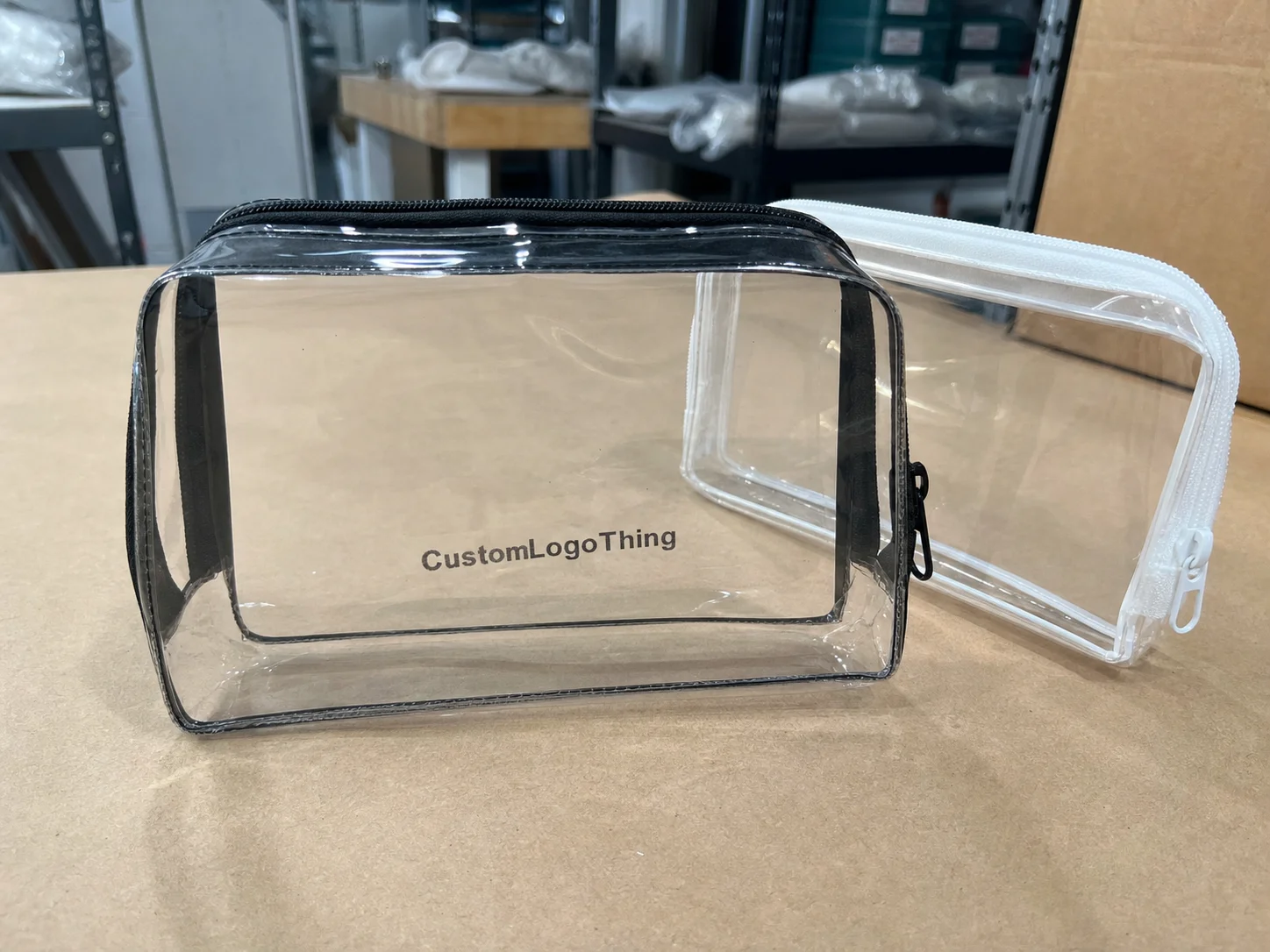
A clear cosmetic bag looks like one of the easiest packaging items to source. It is transparent, closes with a zipper, and holds makeup or skincare products. Once the spec moves from concept to production, though, the number of decisions grows quickly: material, thickness, size, shape, decoration method, zipper style, and whether the bag must remain fully transparent for travel rules or retail display.
The main appeal is visibility. Clear packaging lets the product become part of the presentation, which works especially well for travel kits, influencer mailers, spa sets, hotel amenities, and retail gift-with-purchase programs. If the contents are neat and visually coordinated, the bag can look premium without needing an elaborate outer carton.
There is also a functional reason these bags stay popular. Customers can identify items quickly at security checkpoints, in lockers, or inside a larger tote, and that easy visibility can be a practical selling point. For buyers planning travel-oriented packs, that feature matters as much as the logo.
“Clear does not have to mean generic. The strongest versions feel intentional, stay clean-looking after handling, and match the product load instead of fighting it.”
The tradeoff is that transparency reveals weak choices immediately. A flimsy bag, a crooked logo, or a cloudy film can be obvious the moment the pouch is unwrapped. For that reason, buyers have to balance clarity against durability, decoration against budget, and structure against portability. Those decisions shape both the final look and how the bag performs in real use.
How the bag is built and what personalization actually means
Most personalized clear cosmetic bags begin as plastic film or sheet material that is cut into panels and then sealed, stitched, or welded into shape. A zipper is added, usually along the top edge, and decoration is applied either before or after assembly depending on the construction method. The process sounds basic, but material selection and build method influence stiffness, gloss, print sharpness, and the way the finished piece feels in hand.
PVC remains common because it is cost-effective, clear, and easy to process. In a decent grade, it can offer good visibility and a glass-like look. Lower-grade PVC, however, may smell stronger, feel tackier, or look slightly cloudy, which is why film quality matters just as much as the material name.
TPU usually feels more flexible and often reads as a more refined option. It bends more comfortably, travels well, and tends to have a cleaner hand-feel. EVA can work well for a softer, more controlled appearance, especially when the buyer wants body without the harder plastic feel. None of these is automatically the best choice; the right option depends on the product load, price target, and compliance requirements.
Personalization can mean several different things, and not all of them involve printing. A brand may specify the size, zipper color, seam color, gusset depth, tint level, label placement, or the inclusion of an insert card. Decoration can be done with screen Printing for Bold coverage, digital printing for detailed graphics, hot stamping for metallic accents, or a woven label if the design calls for a quieter finish.
For practical ordering, it helps to break customization into a few categories:
- Size and shape: flat pouch, bottom gusset, boxy case, or wider travel format.
- Material: PVC, TPU, EVA, or a blended construction based on the quality target.
- Decoration: one-color logo, multi-color print, foil, or added label.
- Hardware: standard zipper, slider zipper, or a custom pull tab.
- Presentation: insert card, tissue, tag, or retail polybag packaging.
What cannot always be controlled is just as important. Some constructions limit print placement because seams or zipper tape interrupt the artwork. Fine gradients may not reproduce well on clear film, and small text can disappear once the bag is filled. In practice, simple and bold branding placed where the eye naturally lands tends to look better than artwork that tries to do too much.
Key spec factors that change look, durability, and use
Film thickness is one of the first specs worth checking. In clear bags, gauge affects how the pouch feels, how well it resists scuffing, and how much shape it holds after packing. A thinner film may lower cost, but it tends to wrinkle more easily and can look less substantial. A thicker film usually reads better on shelf and holds up better through repeated use, although it may feel stiffer and push the unit price up.
Size matters just as much. A makeup pouch for lipstick, compact, and brush set does not need the same dimensions as a travel pouch for liquids, skincare, and tools. A compact pouch might sit comfortably around 7 x 5 inches, while a travel-ready format may need something closer to 9 x 7 inches or a gusset that adds useful volume. If the bag is too small, the zipper fights the load. If it is too large, the contents slide around and the presentation feels loose.
Gussets deserve more attention than they usually get. A side or bottom gusset helps the bag stand upright and hold more product without looking stuffed. That can make a real difference in retail sets, because a bag that stands neatly reads as more premium than a flat pouch sagging in the tray.
Closure style also affects daily use. A standard zipper is fine for many applications, but a slider zipper can feel easier to open and close, especially on larger pouches or on packs that will be reused frequently. Snap closures and specialty hardware exist, though they usually move the product into a higher price bracket. The right closure is the one that fits the use case, not the one that sounds most impressive in a quotation.
Several finishing details influence the final look more than buyers expect:
- Seam placement: clean seams keep the logo area unobstructed.
- Print coverage: one crisp logo often looks better than crowded artwork.
- Color accents: zipper tape or pull tabs can support the brand palette.
- Transparency level: fully clear feels different from lightly frosted or tinted film.
For retail programs, it is often smarter to refine a few visible details than to add decoration everywhere. A clear bag with good proportions, a tidy zipper, and a well-placed logo usually outperforms a heavily printed pouch that feels busy and less polished.
| Option | Typical feel | Best use | Common cost impact |
|---|---|---|---|
| Thin PVC flat pouch | Light, flexible, basic | Promos, giveaways, short-term kits | Lowest |
| Thicker PVC with gusset | Clearer shape, better structure | Retail sets, travel kits | Moderate |
| TPU pouch with branded print | Softer, more premium hand-feel | Higher-end cosmetics, repeat use | Higher |
| EVA zipper case | Cleaner, softer look with some body | Gift sets, premium promotions | Moderate to higher |
Process and lead time from quote to production
The fastest quotes come from complete specifications. If you can send dimensions, quantity, material preference, print colors, artwork format, zipper style, packaging needs, and destination, a supplier can usually give a much firmer number without repeated follow-up. Missing even one of those items often creates price swings that make comparison difficult.
The workflow is usually straightforward. It begins with a request for quote, moves to artwork review, material confirmation, and sample or proof approval, then enters production, inspection, packing, and shipment. A simple repeat order can move fairly quickly. A new shape or a special decoration method usually takes longer because setup and approvals add steps before the line can run.
Lead time is driven by a few common variables:
- Tooling or setup: a new size, zipper style, or print layout can add preparation time.
- Sampling: physical samples slow the schedule, but they reduce risk.
- Material availability: specialty film or hardware may need to be sourced first.
- Factory scheduling: peak periods can push an order behind others in the queue.
- Shipping method: ocean freight, air freight, and courier all change the calendar.
Most delays happen before production actually starts. Buyers often approve artwork late, or they send a logo file that needs cleanup before printing can be finalized. Another common slowdown happens when a proof is already issued and then the artwork changes. That is understandable, but it can reset the timing if screens, plates, or print files need to be revised.
For packaging programs with a fixed launch date, it is wise to build a little cushion into the schedule. Extra days on the front end usually cost less than rushed freight on the back end, and they leave room for one more round of correction if the first sample needs adjustment.
For buyers who want to think about shipment risk as part of packaging planning, guidance from the International Safe Transit Association can be useful, especially when the bags will be packed with heavier product sets or shipped long distance. The bag itself is only part of the equation; the carton, fill, and transit conditions matter too.
Cost, pricing, and MOQ: what really drives unit cost
Unit price usually falls as quantity rises because setup work, print preparation, and labor are spread across more pieces. That is why a small order can feel expensive even when the bag looks simple. The supplier still has to cover the cost of screens, proofs, cutting, and handling before the first finished unit is packed.
For personalized clear cosmetic bags, a rough pricing pattern might look like this: a 5,000-piece run can sometimes land around $0.18 to $0.28 per unit for a basic PVC pouch with limited print coverage, while a thicker or more detailed premium version may move into the $0.30 to $0.60+ range depending on size, material, and hardware. Smaller quantities are often much higher per piece because setup costs do not shrink much.
Several factors move the price up or down:
- Material choice: TPU and higher-grade EVA usually cost more than basic PVC.
- Bag size: larger dimensions use more film and more labor.
- Print coverage: multiple colors or full-surface graphics raise setup and ink use.
- Hardware: custom zipper pulls, sliders, or specialty closures add cost.
- Packaging needs: insert cards, belly bands, and retail packing add handling steps.
MOQ exists because production efficiency matters. A factory does not want to interrupt a line for a small special batch if the same line could run a larger order more efficiently. Standard sizes and simpler decoration can sometimes reduce the minimum or at least keep the pricing manageable. If a buyer needs low volume, fewer options and higher per-unit cost are usually part of the tradeoff.
The cleanest budget controls are often the simplest ones. Standardize the size where possible, reduce the number of print colors, keep artwork away from complex seam zones, and avoid custom hardware unless it actually improves the user experience. In many cases, a clean one-color logo on a well-proportioned clear pouch looks better than an overloaded design that costs more and performs no better.
Some buyers also review guidance from the U.S. Environmental Protection Agency when discussing packaging waste, recyclability claims, or broader compliance messaging. Those conversations should stay specific, because not every clear film behaves the same way in recovery streams.
Common ordering mistakes that waste time and money
The first mistake is assuming all transparent bags are basically the same. They are not. Film grade, odor, stiffness, seal consistency, and surface clarity can vary a lot between suppliers and even between production runs. If the bag is intended for retail display, small differences become visible quickly.
Artwork issues are another frequent problem. Low-resolution files print blurry, and thin text can disappear on transparent film, especially when the logo is small. Seam and zipper interference also matter. A logo placed too close to a weld line may look distorted, and a design that stretches across a fold may not register cleanly once the bag is filled.
Sizing mistakes happen when buyers approve by eye instead of measuring the actual contents. A skincare set that looks compact in a photo may need extra gusset depth once bottles, droppers, and card inserts are added. Travel-related bags also need a compliance check if they are intended for liquids or carry-on use. If the functional size is wrong, the print cannot fix the problem.
Expectation gaps create more rework than most people expect. If the buyer wants exact color matching on clear film without agreeing on a reference standard, disappointment is likely. If the delivery window is vague, the order can collide with a launch date. If packaging requirements are not fully described, the supplier may quote one format while the buyer imagined another. That is where delays and extra freight charges usually appear.
Expert tips for a cleaner-looking retail presentation
Design for what people will actually see through the bag. That sounds obvious, but it is where many programs go wrong. Clear packaging becomes part of the brand story, so the contents need to be arranged with as much care as the outer artwork. If the product colors are chaotic, the pouch can look messy even when the print is perfect.
Restraint usually ages better than heavy decoration. A strong logo in one or two colors often looks more premium than a dense print that competes with the contents. High contrast helps too, because it stays legible under different lighting conditions and across more retail environments. On transparent material, simple usually wins.
It is also wise to inspect one sample packed with the actual product load before final approval. That tells you whether the zipper is stressed, whether the seams bow, and whether the bag still holds shape once filled. A pouch can look excellent empty and fail to present well when packed, so this test pays for itself quickly.
A few finishing touches can make personalized clear cosmetic bags feel deliberate rather than generic:
- Branded insert cards to frame the contents and reinforce the message.
- Coordinated zipper pulls that echo the brand palette.
- Minimal label placement for a cleaner retail look.
- Consistent packing layout so every bag presents the same way.
If the project is for a premium retail set, decide early whether the bag should stay perfectly clear or use a faint tint, frosted finish, or partial opacity. Those choices change the feel noticeably, and they can help hide visual clutter while still keeping the contents visible enough for the product story to work.
What to prepare before you request a quote
Before asking for pricing, pull together a simple spec sheet. Include target size, quantity, preferred material, print details, zipper style, packaging requirements, and the latest date you can approve a proof. That one document can save a surprising amount of time because it gives the supplier a clear basis for comparison.
Then gather your logo files. Vector artwork is usually the safest starting point, especially if you want a crisp printed logo on a transparent surface. If you are deciding between full transparency and a tinted or frosted finish, make that call early because it affects both appearance and cost.
It helps to compare at least two directions: one value-focused and one upgraded. A basic version shows the lower cost boundary, while a more refined version shows whether a small spend increase materially improves shelf appeal. That comparison is often more useful than asking only for the lowest price.
Finally, confirm the end use. Is the bag for retail, hospitality, promotions, travel kits, or subscription packaging? The answer changes the best material, print style, and hardware choice. Once the use case is clear, personalized clear cosmetic bags become much easier to spec, price, and approve with confidence.
If you focus on the details people actually touch and see—clarity, zipper action, size, print quality, and packing presentation—the pouch stops looking like a simple accessory and starts acting like a polished brand asset.
FAQ
What should I look for when buying personalized clear cosmetic bags for retail or promos?
Check material clarity, seam quality, zipper smoothness, and whether the size fits the products you plan to pack. Make sure the print method matches your artwork and budget, and confirm whether the bag needs to stay fully transparent.
What material is best for personalized clear cosmetic bags: PVC, TPU, or EVA?
PVC is common and usually cost-effective, TPU often feels more flexible and premium, and EVA can offer a softer, cleaner look. The best choice depends on durability needs, appearance, budget, and whether odor sensitivity or environmental positioning matters.
How long does production usually take for custom clear cosmetic bags?
Timing depends on artwork approval, sampling, material availability, and order size, with revisions often creating the biggest delays. Simple repeat orders usually move faster than fully new specs with custom sizing or special printing requirements.
Why does the MOQ affect pricing on personalized clear cosmetic bags?
Minimums help cover setup work, printing preparation, and production efficiency, so lower quantities usually raise unit cost. Choosing standard sizes and simpler decoration can sometimes reduce MOQ pressure and improve pricing.
Can I print a detailed logo on clear cosmetic bags without losing clarity?
Yes, but fine detail works best with the right print method and clean vector artwork. Bold lines, strong contrast, and thoughtful placement usually look better than tiny text or dense gradient artwork.