Personalized Cookie Boxes That Help You Sell More
Good cookies rarely fail because of the recipe alone. In a bakery case, a holiday assortment, or a mailed gift set, packaging changes how the product is judged before the first bite. Personalized cookie boxes can make a batch feel like a specialty item instead of a commodity, and that shift affects everything from shelf appeal to price tolerance.
The box has two jobs. It has to protect a fragile product with irregular height, icing, sprinkles, or toppings, and it has to create a clean first impression that makes the buyer slow down. If either side fails, the cookie pays for it. Crushed corners, scuffed glaze, or a box that looks generic can erase the value of a well-made product faster than most teams expect.
That is why packaging decisions deserve more than a logo placement exercise. The right carton can support a premium position, reduce damage, and make repeat orders easier because the packaging is easier to recognize and easier to trust.
Personalized cookie boxes: what they are and why they work
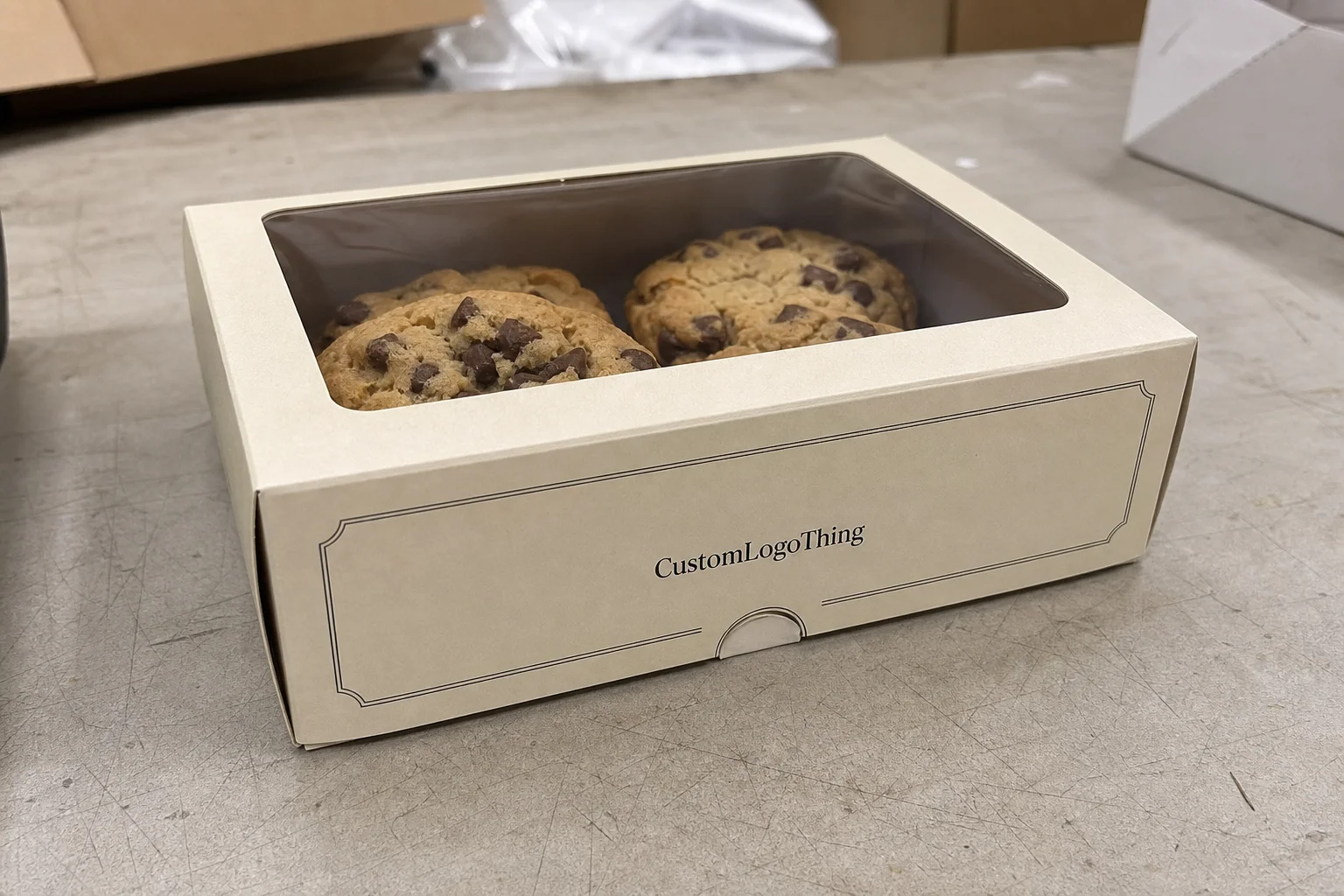
Personalized cookie boxes are printed cartons built around a specific cookie count, size, use case, and brand look. They may be simple folding cartons for retail counters, windowed boxes for gifting, or rigid presentation boxes for premium assortments. The personalization is not limited to a printed logo. It includes the structure, the board grade, the finish, the insert configuration, and even how the box opens in the customer’s hand.
That structural detail matters because cookies are not uniform products. A flat sugar cookie behaves differently from a thick stuffed cookie. A set of decorated shortbreads has different clearance needs than a mixed box with multiple toppings. If the package is built around the wrong assumption, it will either crush the product or leave too much room for movement.
From a retail perspective, the package also carries a signal. A plain stock carton says the packaging was chosen first and the product fit later. A tailored box says the product was designed as a finished offer. Buyers notice that distinction quickly, often before they consciously process the ingredients list or pricing. That is not decoration. It is commercial framing.
There is a practical reason the effect is so strong. Packaging is compared fast. A customer scans shape, color, clarity, and structure in seconds. If the box looks intentional, the cookie often gets the benefit of the doubt on quality, freshness, and gift value. That gives brands a better starting point than a generic carton can offer.
How custom cookie box production actually works
The production process is straightforward only when the brief is specific. It begins with dimensions, cookie count, and the intended use: retail display, gifting, shipping, or a mix of all three. After that comes the box style, then the dieline, artwork setup, proofing, sample approval, and full production. Each step depends on the one before it.
The dieline is the file that defines where the carton folds, closes, locks, and glues. Artwork needs to be built to that template, not adjusted after the design is finished. If a logo lands too close to a fold, or if a pattern crosses a flap without planning, the result usually looks awkward in production. That is one of the fastest ways to turn a clean concept into a compromised box.
Most cookie packaging falls into a few common structures:
Tuck-top folding cartons are efficient, easy to assemble, and common for retail use. They are usually the most practical option when cost and speed matter.
Window boxes add visibility. They work well when the cookie itself is part of the sell, especially for frosted, colorful, or highly textured products.
Sleeve boxes create a more layered presentation. They can make an assortment feel more deliberate, although they add material and assembly steps.
Rigid gift boxes sit at the premium end. They feel substantial, but they cost more, take more space in shipping, and are less forgiving on budget.
Inserts and trays matter when cookies are stacked, decorated, or likely to shift. A good insert can reduce breakage and keep a presentation consistent across the whole order.
Finishing choices change how the box reads in person. Matte coatings usually feel calmer and more refined. Gloss can make color look brighter and works well for bold seasonal graphics. Foil can elevate holiday packaging, though too much of it quickly tips into clutter. Spot UV is useful when the goal is to highlight a logo or small design area, not to cover an entire panel. If oil migration or frosting contact is likely, ask about barrier coatings or liners so the board does not absorb grease and dull the print from the inside.
For teams building more than one format, it is often worth reviewing a wider set of Custom Packaging Products. Cookie boxes rarely live alone in a product line, and the same packaging vendor may be able to keep inserts, sleeves, and secondary cartons consistent across assortments.
Cost and pricing: what changes the quote most
Pricing for personalized cookie boxes is driven by a small set of variables that are easy to list and easy to underestimate: size, board thickness, print coverage, finishing, quantity, and whether the job needs inserts, windows, or a custom die. Each one affects material usage, setup time, or production complexity.
Size is usually the first cost lever. A larger panel consumes more material and usually more print area. Board grade matters next because thicker or higher-grade material increases cost but can improve stiffness and perceived quality. If the box is meant to travel, the extra stiffness is often justified. If it is only for counter display, there may be no reason to overbuild it.
Quantity changes the unit price because setup costs are spread over more boxes. A short run can look affordable until the per-box cost is calculated. A larger run may reduce the unit price sharply, but it also raises inventory risk. For a seasonal flavor or a new product test, that tradeoff matters more than a few cents on paper.
Finishing is where the quote can shift faster than buyers expect. Foil stamping, embossing, specialty coatings, and multiple print passes each add setup and production time. Even artwork choices can move the price. Heavy coverage, photo imagery, and full-bleed color often require more careful press control than a simple one- or two-color design.
| Box style | Best use | Typical unit cost range | Notes |
|---|---|---|---|
| Basic folding carton | Retail counters, value sets | $0.35-$0.70 at 5,000 units | Lowest structure cost; best for simple print and limited finishing |
| Window tuck-top box | Gift packs, shelf display | $0.55-$1.10 at 5,000 units | Window film and extra die work add cost, but product visibility can improve sell-through |
| Rigid gift box | Premium assortments, corporate gifting | $1.80-$4.00+ depending on specs | Higher material and assembly expense, but stronger presentation value |
Those numbers are only useful if the assumptions are clear. A quote for a box that ships flat is not the same as a quote for one that arrives assembled. A box with an insert is not the same as a box without one. Even the placement of a window can affect die complexity and waste. If a price looks unusually low, check what was left out.
One more variable is compliance. If sourcing documentation matters to a retailer or corporate buyer, ask about FSC-certified paper through FSC. That does not improve the package by itself, but it can remove a procurement obstacle. For some buyers, that matters as much as the visual finish.
Cheap packaging gets expensive when it causes breakage, forces a reprint, or looks good only in a mockup and fails in the hand.
Process and timeline: from proof to delivery
The cleanest projects follow the same rhythm: submit specs, receive a structural recommendation, review a digital proof, approve a sample, move into production, then ship. Each step can fail for a different reason. A wrong dimension at the start cannot be fixed by a prettier design later. A barcode or nutrition panel added at the last minute can delay approval even if the artwork already looks finished.
Most delays come from avoidable gaps in the brief. Missing measurements. Unclear cookie count. No finish specified. Artwork sent without bleed or a final logo version. Vague color instructions such as “make it pop” do not help a production team match expectations. They usually slow the job down instead.
For a standard printed folding carton, a realistic timeline is often 12-15 business days after proof approval. More complex builds, such as rigid structures, custom inserts, or specialty finishes, can stretch to 18-25 business days. Multiple proof cycles and custom tooling can push that further. Rush production may be possible, but it usually narrows finishing options and raises freight cost.
Shipping deserves separate planning. A box that looks polished in a display tray can still fail in parcel delivery if the corners are weak or the closure opens under vibration. If the order will move through a distribution network rather than a shelf, ask about transport testing, including established protocols such as ISTA methods. Decorative packaging and shipping durability are not the same problem.
The fastest way to keep a launch on track is to treat the first brief as a production document, not a design sketch. The more specific the file set, the fewer revisions the project needs.
Key factors that affect fit, freshness, and shelf appeal
Fit comes first. Measure the finished cookie, not the cut dough size. Decorations add height. Icing can overhang. Toppers can create pressure points. A cookie that seems small in the bakery can become much larger once it is finished and bagged. If the box is too tight, the lid will scuff the surface or crush the decoration. If it is too loose, the cookies will slide and the presentation will look unfinished.
Freshness depends on more than the recipe. Board choice, coating, and liner material all influence how the package behaves over time. Grease migration can darken the interior. Moisture pickup can soften crisp cookies. Strongly scented cookies can transfer aroma to nearby products if the package is too open or the inner wrap is too thin. Barrier coatings and liners help, but they are a controlled compromise, not a cure-all.
Shelf appeal is mostly about clarity. Buyers do not read a crowded panel the way designers hope they will. They scan. If the typography is too small, if the panel tries to say too much, or if the visual hierarchy is unclear, the box feels cheaper than it should. The strongest packages usually make one point fast and let the product do the rest.
Window placement deserves real attention. Too small, and the buyer cannot see enough of the cookie to trust the product. Too large, and the package loses surface area for brand storytelling or structural strength. The best placement shows texture, color, and shape without compromising the front panel.
Stacking and handling are easy to ignore in the design phase and hard to ignore later. A box that looks stable by itself may collapse when packed in a master carton or stacked in a display. Corner strength, closure behavior, and compression resistance should all be checked before the order is locked. That is especially true for mail-order programs, where handling is not gentle and returns are expensive.
The material spec matters as much as the print file. An 18pt SBS board behaves differently from a kraft carton, and a coated surface will show fingerprints differently than an uncoated one. Samples are the only reliable way to see how the structure and print actually work together. Screens do not show stiffness, scuffing, or how a lid closes after the insert is loaded.
Common mistakes that lead to wasted budget and reprints
The most common mistake is undersizing the box. Decorative cookies are fragile, and a carton that looks elegant in a layout can still crush icing, drag sprinkles across the lid, or warp a stacked assortment. If the closure needs force to shut, the size is wrong.
Another mistake is designing before the dieline is final. That creates text on a fold, artwork that breaks at a seam, or a logo that disappears into the tuck flap. On a mockup, it can look acceptable. In production, it looks like a production error because it is one.
Vague specifications are expensive. If the supplier does not know the cookie count, total weight, finish type, shipment method, or whether the box ships flat, the quote is less reliable. It may also be based on assumptions that do not match the actual use case, which means the final invoice can change after the details become clear.
Late changes are another budget leak. Once a die has been made, plates approved, or a production slot reserved, edits cost more. Even a small change can trigger extra proofing, material waste, or missed schedule time. In a seasonal category, losing the launch window often costs more than the rework itself.
Price-first buying creates its own problems when the box has a job beyond holding product. If it ships, it has to survive handling. If it sits on a shelf, it has to read clearly under store lighting. If it is meant as a gift, it has to feel substantial in the hand. Those are different goals. A single spec sheet should not pretend otherwise.
Next steps for a clean launch and better repeat orders
Start with the non-negotiables: cookie dimensions, count per box, target quantity, artwork files, and whether the package ships flat or assembled. That list is basic, but it is the fastest way to avoid a misleading quote. If a buyer sends a logo without measurements, a finish request without a substrate spec, or a shipping goal without a weight target, the vendor is forced to guess.
Ask for a physical sample or mockup before committing to volume. A real cookie inside a real carton tells you more than a rendered image. You will see whether the fit is generous enough, whether the print reads correctly under lighting, and whether the closure still feels secure when the tray is loaded.
Compare quotes on more than unit price. Look at board grade, print method, finishing, shipping assumptions, proofing support, and whether structural guidance is included. A higher quote can still be the better commercial decision if it lowers damage, reduces reprints, or avoids a correction after the season starts.
If the first run performs well, lock the spec. Keep the dieline version, board type, finish details, insert layout, and any production notes that made the order work. That is how personalized cookie boxes stop being one-off projects and start becoming efficient reorder items. Consistency is not boring here. It protects margin.
For teams moving from concept to purchase, the practical starting point is to review Custom Packaging Products, confirm the structural fit, and build the artwork around the package that actually protects and sells the cookies. Packaging works best when it is treated as part of the product, not as a wrapper added at the end.
What size should personalized cookie boxes be for decorated cookies?
Measure the finished cookie, not the cut dough size, because icing, sprinkles, and toppers add height and width. Leave enough clearance for an insert or tray so the decoration does not touch the lid during transport.
How much do personalized cookie boxes usually cost?
Cost depends on box size, quantity, board thickness, print coverage, and finishing, so the unit price can vary widely between simple and premium builds. Larger orders usually lower the per-box price because setup costs are spread across more units.
How long does it take to produce personalized cookie boxes?
Timeline depends on proof approval speed, sample review, finish complexity, and order size. Standard folding cartons often take 12-15 business days after approval, while more complex builds can take 18-25 business days or longer.
Do personalized cookie boxes need inserts or trays?
Use inserts when cookies are decorated, stacked, or likely to shift during shipping or retail handling. A tray also helps keep the presentation consistent, which matters when the buyer opens the box before tasting anything.
What should I send for an accurate quote on personalized cookie boxes?
Send cookie dimensions, count per box, desired quantity, artwork files, and any required features such as windows, coatings, or inserts. Include how the product will be used, because retail display, gifting, and shipping often require different materials and structures.