Custom Bracelet Boxes: What Matters Before You Approve a Run
Bracelets are small, but the packaging decision behind them is rarely small. The box has to hold shape, protect delicate finishes, present well in photos, survive shipping, and still fit the price point. That is a tighter brief than it first appears, which is why custom bracelet boxes end up influencing customer perception as much as the jewelry itself.
The best packaging does two jobs at once. It keeps the bracelet from scratching, twisting, or shifting in transit, and it gives the product a more deliberate, gift-ready presence. Miss either side and the result is predictable: damaged inventory, underwhelming shelf appeal, or a box that looks premium but fails in real handling. For brands comparing Custom Packaging Products, the useful question is not whether the box looks good in a render. It is whether the structure, insert, and finish still work once the order is packed, shipped, opened, and repacked.
Why custom bracelet boxes change perceived value
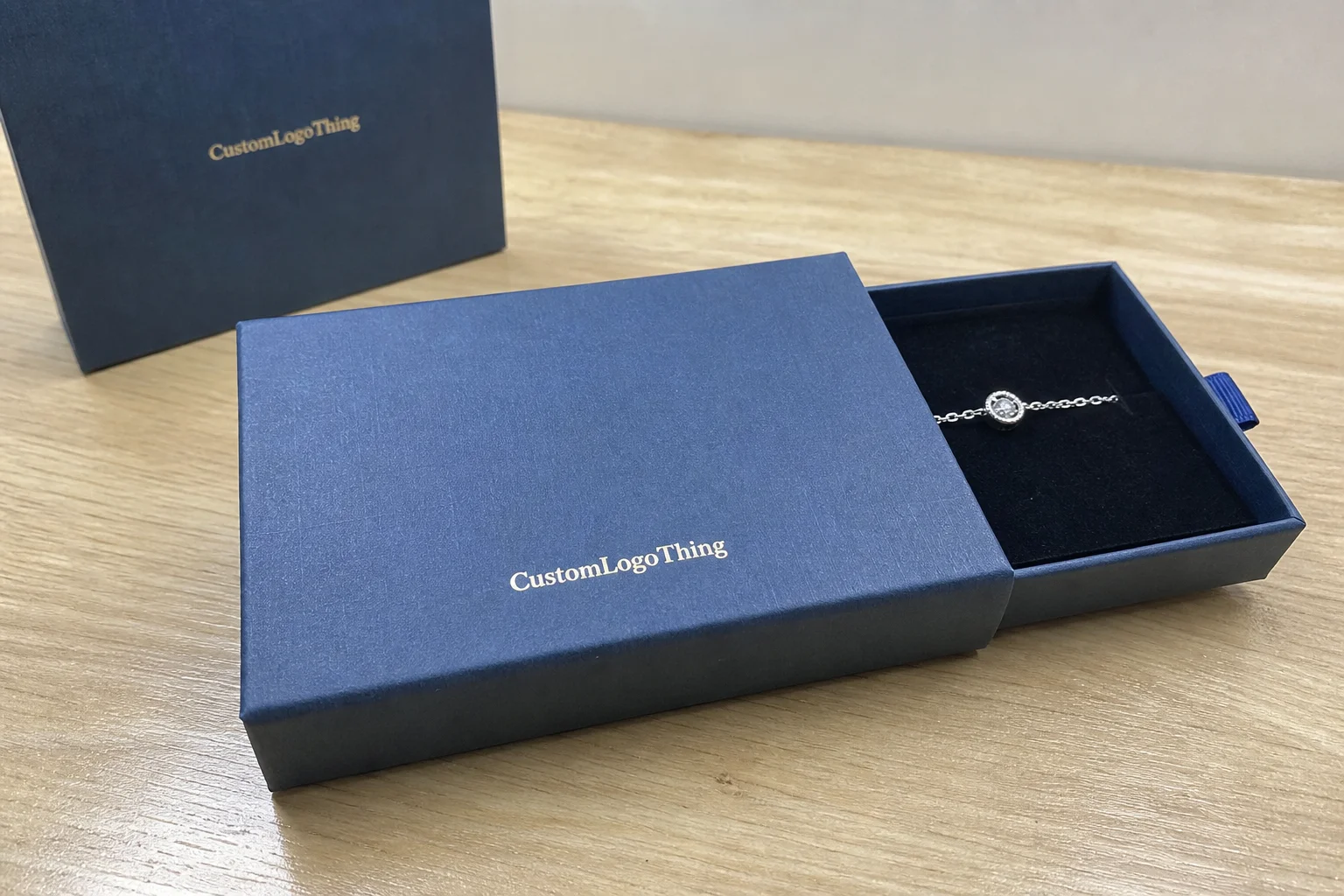
A bracelet often weighs less than its packaging, and that imbalance is part of the psychology. Buyers do not judge the box by weight or board grade. They read it as a signal. A rigid box with a clean insert, controlled opening motion, and restrained logo placement suggests care. A loose carton or generic mailer suggests the opposite, even if the bracelet inside is well made.
That perception matters because jewelry is rarely evaluated in isolation. Customers compare the packaging to the price, the occasion, and the channel. A piece sold as a gift needs a different presentation than a piece sold as a low-friction add-on. The same bracelet can feel like a $30 impulse purchase or a $120 keepsake depending on what surrounds it.
There is a functional reason to pay attention as well. Bracelets are vulnerable to surface wear, tangling, and shape distortion. Polished metal shows friction quickly. Chain styles can knot around loose inserts. Bangles and cuffs can deform if the cavity is too tight or too shallow. Once the product arrives scuffed or awkwardly packed, the box has already failed, no matter how polished the logo looks on top.
Packaging truth: a premium-looking box that lets the bracelet move around is not premium packaging. It is preventable damage with better branding.
Shelf presence matters too. Small accessories can disappear visually, especially next to rings, earrings, and other compact items. A well-proportioned box gives the bracelet a stronger footprint, and that can change how the product reads in retail displays, gift sets, and unboxing content. The package does not just protect the item. It frames the purchase.
How bracelet box construction works inside the package
Most custom bracelet boxes fall into one of four structural families: rigid boxes, folding cartons, drawer-style boxes, and sleeve-and-tray formats. Each has a different balance of cost, presentation, and protection. Rigid magnetic boxes feel polished and hold their shape well. Folding cartons are lighter and easier on budget. Drawer-style boxes add a slower, more ceremonial reveal. Sleeve-and-tray designs sit in the middle, with enough surface area for branding and enough structure for a more elevated feel.
The insert does most of the real work. Without a proper insert, even a well-built box allows movement. Movement causes scratches, scuffs, and the small internal shifts customers notice the moment they pick up the package. A good insert holds the bracelet firmly enough to prevent travel, but not so tightly that the piece bends, stresses, or becomes difficult to remove. That balance is easier to miss than it sounds.
Common insert options include die-cut paperboard for cost-sensitive programs, foam for stronger retention, velvet or flocked inserts for a more giftable look, and ribbon or tab retention for pieces that need repeated removal and replacement. The right choice depends on the bracelet type. A thin chain behaves differently from a cuff. A charm bracelet behaves differently again, especially if it is sold with a care card or extra components.
Closure style changes the user experience in a more subtle way. A magnetic closure feels polished and is easy to reopen. A tuck-end carton is efficient for higher-volume fulfillment. A sleeve offers more print space, but it needs tight tolerances or it begins to rattle, drag, or loosen over time. These are small details on paper. In production, they decide whether the box feels controlled or cheap.
That is why packaging design should be treated as part of the product architecture rather than a decorative afterthought. The outer structure sets the tone. The insert manages movement. The closure controls the reveal. If any one of those three is wrong, the whole package feels off, even when the print quality is good.
Key specs that affect fit, protection, and branding
Fit starts with dimensions, not artwork. The brief should include bracelet length, width, clasp type, and any extras that ship with it, such as a care card, polishing cloth, authenticity card, or gift pouch. A slim chain may fit in a shallow cavity. A cuff or bangle usually needs more depth and a wider cutout. If the piece is sold as a set, the package needs to account for every component, not only the main item.
Material choice has a direct effect on feel and durability. A rigid chipboard around 1200-1400 gsm gives the box more weight and resistance than a standard 300-400 gsm folding carton. That does not automatically make it the right choice, but it does change how the package handles stacking, transport, and repeated opening. Finish matters too. Matte lamination is clean and restrained. Soft-touch feels more refined, but it also changes how the surface reacts to friction and scuffing. Foil stamping adds contrast. Embossing and debossing add tactile depth that customers notice in hand, not just in photos.
Color contrast is easier to underestimate than material. A pale bracelet can disappear against a pale liner. A black velvet insert makes silver, chrome, and gemstone details read more clearly. White interiors look crisp, but they also show dust, fingerprints, and handling marks sooner. These are not cosmetic issues only. They affect photography, store presentation, and how customers remember the product after the sale.
Sustainability requests now show up in the brief early, and for good reason. FSC-certified paperboard is a common option for brands that want to document responsible sourcing. You can review the standard at FSC. The caveat is simple: a greener material choice is not automatically the better choice if the box fails in transit. A replacement shipment, a return, or a damaged bracelet can carry more waste than a slightly heavier, better-protected package.
A few specs deserve more attention than they usually get:
- Board thickness: too thin and the box collapses under handling or stacking pressure; too heavy and the cost climbs fast.
- Insert depth: shallow inserts allow movement, while overly deep cavities make the piece awkward to remove.
- Finish selection: soft-touch looks premium, but it may mark more easily in high-contact shipping or retail environments.
- Logo placement: centered branding reads cleanly for retail packaging; corner placement can feel more fashion-driven and less formal.
If the unboxing sequence matters to the brand, define it early. A box can look correct and still feel wrong if the inner tray, sleeve, or closure does not support the way the customer opens it. That is one of the hidden advantages of custom printed boxes: they let the reveal be intentional rather than accidental.
Production steps, approval flow, and lead time
Production usually follows the same sequence: brief, dieline, artwork setup, proof or sample, revisions, bulk production, and final inspection. The order matters because each step locks in assumptions for the next one. If the insert dimensions are wrong at the start, there is no amount of good artwork that will save the finished box.
The brief should be specific. Include bracelet dimensions, target quantity, preferred box style, insert requirements, shipping conditions, and whether the packaging has to hold extras like a card or pouch. If the product ships flat-packed to a fulfillment center, say so. If it is sold in a store as a gift item, say that too. Those are not interchangeable channels, and the box should not pretend they are.
Lead times vary by structure and finish. A sample or proof often takes 5-10 business days, depending on revision count and whether a physical mockup is required. Simple folding cartons may move into bulk production in 10-15 business days after approval. Fully Custom Rigid Boxes with magnets, foil, specialty inserts, or more complex assembly usually land in the 15-25 business day range. Rush schedules are possible, but they raise cost and reduce the time available for meaningful quality control.
The delays that cause the most trouble are usually predictable:
- Artwork is approved before the dieline is finalized.
- The insert is designed from photos instead of measurements.
- Finish and closure options keep changing after sampling starts.
- Final logo files or legal copy arrive late.
Good projects have a visible schedule. Ask for dates tied to each milestone: artwork approval, sample dispatch, production start, packing, inspection, and shipment. A supplier that cannot lay out those steps clearly is usually leaving too much to chance. That is where packaging programs drift from controlled to messy.
For high-value jewelry or rough shipping lanes, ask whether the boxes have been tested against transit standards. The International Safe Transit Association publishes widely used distribution test methods; see ISTA. Not every bracelet line needs formal testing, but it becomes more relevant when the package must survive parcel shipping, stacking, or repeated handling before it reaches the customer.
Custom Bracelet Box Pricing, MOQ, and unit cost
Pricing depends on more than size. Structure, board grade, insert complexity, coverage, and finishing all affect the final number. A simple folding carton with a one-color print will sit far below a rigid magnetic box with foil, a flocked insert, and a sleeve. That price difference is not cosmetic. It reflects materials, tooling, assembly time, and the amount of manual handling the job needs.
MOQ changes unit cost in a way that catches newer buyers off guard. Setup costs are spread across fewer boxes on small runs, so 500 custom bracelet boxes almost always cost more per unit than 5,000 boxes with the same spec. That is normal. The real decision is whether the inventory load is acceptable in exchange for lower per-unit pricing.
The ranges below are useful for planning, not quoting:
| Box Type | Typical MOQ | Approx. Unit Cost | Best Use |
|---|---|---|---|
| Folding carton with insert | 1,000-5,000 | $0.18-$0.45 | Entry-level retail packaging, lighter bracelets |
| Drawer-style box | 500-3,000 | $0.70-$1.60 | Gift sets, stronger unboxing presentation |
| Rigid magnetic box | 500-2,000 | $0.85-$2.20 | Premium jewelry, gifting, higher perceived value |
| Rigid box with specialty finish | 1,000+ | $1.40-$3.00+ | Luxury branding, seasonal launches, premium gifting |
Those numbers shift quickly with spec changes. A low-coverage print job on standard paper with a simple insert will sit near the bottom. A branded packaging program with foil, soft-touch lamination, and custom tooling will move upward fast. The useful habit is to compare quotes on the same spec, not just on the same box size. A cheaper quote that omits the finish you need is not a cheaper quote. It is a different product.
There are ways to hold the line without making the package feel stripped down. Standardize one box size across several bracelet SKUs if the fit allows it. Limit premium finishes to the logo panel instead of coating every surface. Use one insert format and change only the cavity depth where needed. Those choices reduce tooling variation, simplify inventory, and cut the risk of dead stock that nobody wants to carry into the next season.
Shipping efficiency should be part of the cost conversation as well. A box that stacks better, collapses flatter, or cuts damage rates may be more economical even if the unit price is higher. That is a practical packaging decision, not a theoretical one. The cheapest box on paper can become the most expensive box once returns and replacements start showing up.
For teams comparing multiple quotes, it helps to review the broader line of Custom Packaging Products alongside the price sheet. Structure, finish, and cost need to be seen together. Separating them usually produces a false economy.
Common mistakes that cause damage, reorders, or weak margins
The most common failure is an insert that does not control movement. If the bracelet slides, the clasp can snag the lining or rub against the box walls. If the insert clamps too tightly, the piece can bend, stretch, or become difficult to remove without stress. Both problems are avoidable, but only if the sample is treated as a functional test rather than a visual approval.
Another recurring mistake is approving artwork before the dimensions are final. Print files may look perfect on screen, but board thickness changes can shift closure alignment, sleeve fit, and logo placement by enough to matter. A centered mark that lands a few millimeters off once assembled can make the whole run feel sloppy. Packaging buyers notice that immediately, and so do customers.
Over-customization causes its own damage. Not every bracelet SKU needs a different box if the sizes can be normalized. Too many variants mean higher MOQs, more storage, more proof cycles, and more inventory risk. For smaller brands, that is how margin quietly disappears. The cost is not only in production. It is in the carrying burden after the boxes arrive.
Finishes can create similar problems. Soft-touch lamination looks elegant in mockups, but it can show handling marks in real use. Heavy foil coverage can be visually strong, yet it increases the chance of production scrap if the foil crosses a fold line or sits too close to an edge. The same is true of deep embossing on thin stock. A detail that sells the design can also make the run harder to produce consistently.
One more gap shows up in the brief. Teams often describe how the box should look, but not how it should perform. A box for parcel shipping needs different protection than a box for shelf display. A box that will be reopened often needs different closure behavior than one meant for a one-time gift moment. Those are different jobs, and the packaging should be specified accordingly.
Evidence matters more than reassurance. Ask for samples, dielines, material swatches, and closure photos. If the supplier cannot show how the artwork becomes a finished sample, slow the process down. That is not friction. It is quality control.
Expert tips and next steps before requesting a quote
Before asking for pricing, put together a complete brief. Include bracelet dimensions, clasp style, target quantity, box structure, finish preferences, shipping method, and any extras that need to fit inside the package. A clean brief cuts revision cycles because it removes the guesswork that usually delays approval.
If the bracelet is fragile, premium, or sold as a gift, order a sample first. A sample is not only about checking the exterior. It tells you whether the insert tension is right, whether the logo scales well, whether the surface finish behaves as expected, and whether the opening motion supports the brand. For delicate chains and higher-value pieces, that step usually pays for itself.
Comparing two or three structures side by side is often the smartest move. A rigid magnetic box may win on presentation, but a drawer box can offer a better balance of cost and unboxing. A folding carton may be the right answer for a high-volume promotional line, especially if the bracelet already ships in an inner pouch. The best choice is the one that fits the product, the channel, and the margin target together.
Before approval, ask for three things:
- A measured dieline with tolerances.
- A material and finish spec sheet.
- A milestone schedule from proof to shipment.
That keeps the conversation anchored in actual packaging performance, not just visual preference. It also makes supplier comparisons fairer, which matters if one quote includes a stronger insert, a more precise print registration, or a better finish than another.
The practical goal is simple. Custom bracelet boxes should protect the product, support the brand, and reduce avoidable friction in production and fulfillment. If the brief is clear, the package can do all three without paying for unnecessary complexity.
What should custom bracelet boxes include for a jewelry brand?
A secure insert that prevents the bracelet from moving, a structure that fits the product plus any card or pouch, and branding choices that match the price tier. For higher-end lines, foil, embossing, or a soft-touch finish can help, but only if the box still protects the piece during handling and shipping.
How much do custom bracelet boxes usually cost per unit?
The unit price depends on material, size, print coverage, insert style, and finishing. Smaller runs carry more setup cost per unit, while larger quantities usually reduce the price. A rigid box with custom inserts will almost always cost more than a basic folding carton.
What is the typical lead time for custom bracelet box production?
Sample or proof approval usually comes before bulk production starts. Simple packaging can move faster than fully custom rigid boxes with special finishes. Artwork delays, insert changes, and revision cycles are the most common reasons timelines slip.
Which materials work best for custom bracelet boxes?
Rigid board works well when the goal is a premium gift presentation and stronger protection. Folding carton is better for lighter, more cost-sensitive programs. Interior inserts should be chosen based on bracelet type, not just appearance, because chains, bangles, and charm bracelets each behave differently.
How do I order custom bracelet boxes without overbuying?
Start with one standard size that fits your core products instead of creating a different box for every SKU. Ask for quotes at several quantities so you can see how MOQ affects unit cost. Request a sample first if the bracelet is fragile, high-value, or sold in gifting channels.