Personalized dust bags are one of those packaging items that can look simple right up until the moment they fail. If a handbag arrives with a scuffed panel, a pair of shoes picks up lint in transit, or a polished accessory loses its finish before the customer even opens the box, the packaging has already become part of the problem. Brands that care about product condition, storage, and presentation tend to learn quickly that a dust bag is not just a nice extra. It is a working layer of protection.
Used well, these bags do two jobs at once. They keep dust, abrasion, and handling marks off the product, and they carry a logo, woven label, or printed mark that makes the packaging feel deliberate rather than generic. That is why personalized dust bags show up so often in fashion, footwear, accessories, gift sets, and even small electronics. They are lighter than rigid boxes, less expensive than complex inserts, and far easier to reuse after purchase.
The practical value is easy to understand from a buyer’s point of view. A soft bag that fits properly can reduce returns caused by cosmetic damage, improve the unboxing experience, and extend the life of the item once it moves into a closet, suitcase, or retail stockroom.
Why personalized dust bags matter more than most brands expect
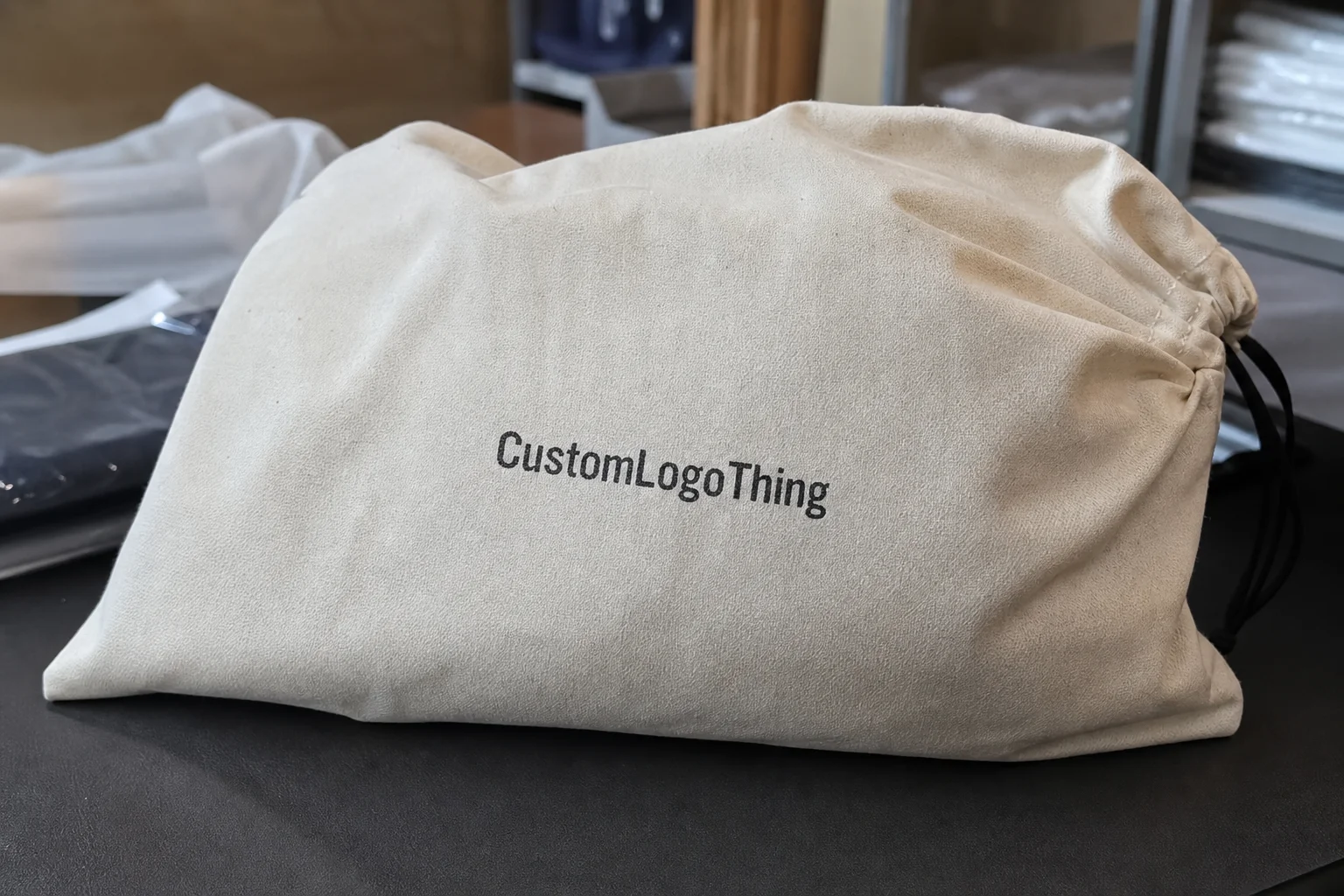
Dust bags often get treated as a finishing touch, but they are usually the first line of defense against problems that show up later. A breathable cotton bag can help keep leather goods clean without trapping moisture. A smooth satin bag can reduce friction on hardware or coated surfaces. A simple drawstring closure can keep the product from rubbing against rough carton walls while it moves through storage and shipping.
That makes them useful across a wider range of products than luxury handbags alone. Sneakers, belts, scarves, candles, wellness items, watch accessories, and travel goods all benefit from some kind of soft protective layer. In many of these categories, the packaging also needs to feel reusable and easy to store, not bulky or disposable.
- Protection: helps guard against dust, scuffs, and light storage wear.
- Presentation: creates a cleaner first impression before the product is handled.
- Reusability: customers can keep using the bag for storage or travel.
- Brand recall: a visible logo or label stays in sight long after purchase.
That last point is underrated. A dust bag that gets reused in a wardrobe, drawer, or suitcase becomes a repeated brand touchpoint without demanding attention. It is quiet marketing, which is often exactly what premium packaging should be.
How custom dust bag production works from file to finish
The production sequence is straightforward enough, but every stage affects fit, durability, and appearance. It usually begins with material selection, then bag dimensions, then artwork setup, followed by printing or labeling, cutting, sewing or edge finishing, inspection, and final packing. When one of those steps is vague, the result tends to show it.
Logo application depends on the fabric and the decoration budget. Screen printing works well for simple one- or two-color logos on cotton or polyester. Heat transfer can suit certain short runs or more detailed artwork, although it performs best on the right substrate. Woven labels are common when the brand wants a durable mark without covering too much of the bag surface. Some buyers prefer an all-over pattern, while others choose a small logo placed low on one panel so the product remains the main focus.
Common closure and shape choices
Closure style changes both function and appearance. Drawstring bags are the most familiar option and are practical when the product will be taken in and out frequently. Flap and envelope styles work well for flatter items and tend to look cleaner on shelf. Slip-cover formats are sometimes used for boxes or rigid forms that need light dust protection without a full pouch structure.
Fit matters more than many teams expect. If the bag is too tight, seams carry extra stress and packing becomes awkward. If it is too loose, the product shifts around and the packaged piece loses that fitted, premium look. Sampling should confirm not only logo placement and color, but also insertion fit, seam allowance, and drawcord function. A proof that looks right on a screen can still feel wrong in hand.
For projects where sustainability or material reduction is part of the packaging brief, the EPA’s sustainable materials guidance is a useful reference point. It helps teams think more clearly about packaging function, reuse, and end-of-life considerations before committing to a final build.
Material, size, and branding factors that change the final result
Material choice affects nearly everything: hand feel, protection, visual tone, durability, and unit price. Cotton is breathable and familiar, which makes it a strong match for leather goods, shoes, and products stored for long periods. Polyester tends to hold shape well and often produces more consistent print results. Satin has a smoother, more polished surface, though it wrinkles more easily and can show handling marks faster than denser fabrics. Nonwoven fabric is usually the more economical option for high-volume programs. Organza creates a decorative, airy look, but it offers less abrasion protection than woven materials.
Size is just as critical. A good bag should accept the product without forcing it through the opening, but it should not be so large that the item slides around inside. Weight, shape, and hardware all matter. A flat scarf needs a different spec than a structured shoe or a hard-sided cosmetic case. If the product has corners, zippers, buckles, or a wide base, seam strength and gusset depth should be reviewed before any artwork is approved.
| Material | Best for | Main benefit | Typical tradeoff |
|---|---|---|---|
| Cotton | Leather goods, shoes, apparel | Breathable, soft, broadly accepted | Can wrinkle and cost more than basic nonwoven |
| Polyester | Retail sets, travel items, tech accessories | Stable, durable, good print clarity | Less natural hand feel than cotton |
| Satin | Gift items, premium fashion accessories | Elegant surface and strong visual appeal | More prone to snagging and creasing |
| Nonwoven | Higher-volume promotional or retail use | Lower cost, lightweight, simple structure | Less premium touch than woven fabrics |
| Organza | Light gift packaging, decorative presentation | Sheer, distinctive, decorative | Limited protection for delicate surfaces |
Branding decisions shift the final result in a meaningful way. A single-color logo usually keeps the bag cleaner visually and simplifies setup. Multi-color decoration can work, but it raises print complexity and increases the chance of alignment issues on textured fabric. Some buyers ask for edge-to-edge graphics; others prefer tonal branding where the mark is only slightly darker or lighter than the bag itself. That quieter approach often feels more premium because it does not compete with the product.
If the item has a delicate finish, ask about surface safety during spec review. A rough print layer, loose lint, or abrasive seam can matter more than the visual treatment. For products that touch coated metal, polished leather, or glossy plastic, the bag should protect the finish rather than create new marks.
Personalized dust bag pricing: what actually drives cost
Pricing usually comes down to a small set of variables: fabric type, bag size, print complexity, closure style, stitching method, and order quantity. A simple cotton drawstring bag with one-color screen printing will price very differently from a satin bag with two-sided artwork, woven labeling, and a custom closure. More steps mean more labor, more setup, and more opportunities for inspection.
MOQ, or minimum order quantity, matters just as much. Small runs carry higher unit costs because cutting, print setup, and finishing work do not change much whether the order is 500 pieces or 5,000. As quantity increases, the unit price usually improves because those setup costs are spread across more bags. That is why Buyers Should Ask for pricing at several volumes instead of requesting only one target number.
| Order factor | Cost effect | Buyer takeaway |
|---|---|---|
| Basic fabric and single-color print | Lowest setup complexity | Good for price-sensitive programs |
| Premium fabric or lining | Raises material cost | Useful when the product value supports it |
| Dual-sided printing or detailed artwork | More press time and alignment control | Better for strong brand visibility |
| Custom labels, special closures, extra stitching | More assembly labor | Adds polish, but watch the budget closely |
| Higher quantity | Lowers unit price | Request price breaks at multiple volumes |
For planning, buyers often see small custom runs starting around $0.70 to $1.50 per unit, with simpler high-volume programs sometimes dipping lower depending on fabric and decoration. Premium materials, larger sizes, or more involved branding can push the cost above that range. Those are not fixed quotes, but they are realistic enough to frame an internal budget before asking for formal pricing.
If the order includes unusual dimensions, custom closures, or a heavier hand-feel requirement, expect the price to move upward even if the logo itself is simple. The material and construction usually drive more cost than the artwork.
Process and timeline: from quote approval to delivery
The process typically starts with an inquiry and a specification review. A supplier needs the product dimensions, target quantity, preferred material, closure style, logo file format, and any special requirements such as Pantone matching or individual inner packaging. Once those details are clear, the next steps are quotation, artwork proofing, sampling if needed, and production after approval.
A straightforward order often takes about 12 to 15 business days after proof approval. More complex projects take longer, especially if the bag needs a sample, special finishing, or tighter color matching. Rush timelines may be possible, but they often reduce material options and can increase cost.
Most delays come from the same few issues: blurry artwork files, changing dimensions after proofing has started, waiting too long to approve the sample, or not agreeing on logo placement early enough. A clean spec sheet prevents a lot of that friction. If the final dimensions and artwork are submitted up front, the process stays much calmer.
For buyers concerned with transport stress, testing references from ISTA can help frame how the packaging will behave through warehousing, shipping, and retail handling, especially if the dust bag is part of a larger protective system.
Common mistakes buyers make when ordering branded bags
The first mistake is choosing a fabric because it looks premium in a swatch while ignoring how it behaves against the actual product. A material can feel nice in the hand and still pill, shed lint, or wrinkle quickly. That becomes a real issue if the bag sits against polished surfaces or gets reused often.
The second mistake is oversizing or undersizing the bag. Too tight, and the seams are stressed while packing slows down. Too loose, and the product feels under-packaged. The best fit usually leaves enough room for easy insertion and closure, but not much more.
Artwork mistakes are just as common. Soft surfaces do not forgive weak files, and a logo that looks crisp on a monitor can blur or distort on woven fabric. Color can shift too. A bright blue that appears correct on screen may look slightly cooler or more muted on satin, which is why proofing on the actual material matters.
“The best dust bag spec protects the product first and supports the brand second. If those priorities get reversed, the result is often a pretty bag that performs badly.”
Skipping a sample is the last major risk. Teams often feel pressure to move quickly, especially for retail launches, but a pre-production proof can reveal size issues, closure problems, or print placement mismatches before the full order is cut and sewn. One approved sample is usually far cheaper than correcting a full run.
Expert tips for getting better results from personalized dust bags
Start with the product, not the packaging. A heavy item with edges or hardware needs a stronger seam and a more forgiving opening. A delicate finish needs a softer interior and a fabric that will not snag. If the bag will be stored in humid or dusty environments, breathability and closure tightness deserve as much attention as decoration.
Artwork should usually be simplified for soft goods. Fine lines, tiny serif type, and delicate gradients can disappear or break up on fabric. A clean logo mark, enough contrast, and smart placement usually outperform an overcomplicated layout. That is one reason woven labels and single-color prints stay popular: they hold up well and remain readable across larger runs.
It also helps to think of the bag as a reusable brand touchpoint. If customers use it for travel, closet storage, or gifting, the logo has to stay legible after repeated handling. That means print quality, seam quality, and cord quality all matter together, not just the first impression.
- Ask for a size mockup against the actual product.
- Review seam allowance and closure length before production.
- Confirm print placement on the front panel and near the side seams.
- Check how the fabric behaves when folded, stuffed, and tied.
If the broader packaging program includes paper components, inserts, or branded collateral, the FSC site is useful for thinking about responsibly sourced materials that can sit alongside the bag without complicating the presentation.
Next steps for ordering the right custom bag spec
The most efficient way to get a clean order is to build a concise spec sheet before requesting quotes. Include the product dimensions, target quantity, preferred material, closure style, branding method, and whether the priority is premium feel, lower cost, or maximum durability. A single clear page removes a surprising amount of back-and-forth.
Prepare artwork in vector format if possible, and keep the logo treatment realistic for the chosen fabric. If the branding should be bold and visible, say so. If the goal is subtle presentation, say that too. Those decisions are easier to solve on proof than after production starts.
Then request pricing at multiple volumes, along with a sample or proof. Once those arrive, check four things: fit, finish, print clarity, and storage performance. If all four pass, the dust bag is doing its job the way it should: quietly, consistently, and without calling attention to mistakes.
FAQ
What are personalized dust bags used for?
They protect products from dust, scuffs, and light storage wear while adding branded presentation. They are commonly used for apparel, shoes, handbags, accessories, and premium gift items.
Which material is best for custom dust bags?
The best material depends on the product and budget. Cotton is breathable, satin feels more premium, and nonwoven or polyester can be more cost-effective. Match the fabric to how delicate the item is and how often the bag will be reused.
How much do personalized dust bags usually cost?
Cost depends on size, material, print style, stitching, and quantity. Higher quantities usually lower the unit price, while complex branding or premium fabrics raise it.
What is the typical turnaround time for custom dust bags?
Turnaround varies by material availability, artwork approval, sampling needs, and order size. Simple runs can move faster than fully custom builds, especially when artwork and specs are finalized early.
How do I choose the right size for personalized dust bags?
Measure the product at its widest, tallest, and thickest points, then add enough room for easy insertion and closure. If the item has hardware, delicate finishes, or an unusual shape, request a size mockup before production.