A custom painted tote bag can look premium, or it can look like a rushed craft project. The difference is usually not the artwork alone. It comes down to the fabric, the paint system, the drying or curing method, and how tightly the production spec is controlled before anyone starts.
Buyers often treat a painted tote as an add-on. That is usually the first mistake. A tote sits inside the same brand system as the box, the insert, the label, and the rest of the presentation. If the bag is going into retail, gifting, or a launch kit, the finish has to hold up next to the rest of the package. For teams already building coordinated packaging, the tote should sit comfortably beside Custom Packaging Products and the broader branded packaging mix.
Custom Painted Tote Bag Basics: What Buyers Are Really Getting
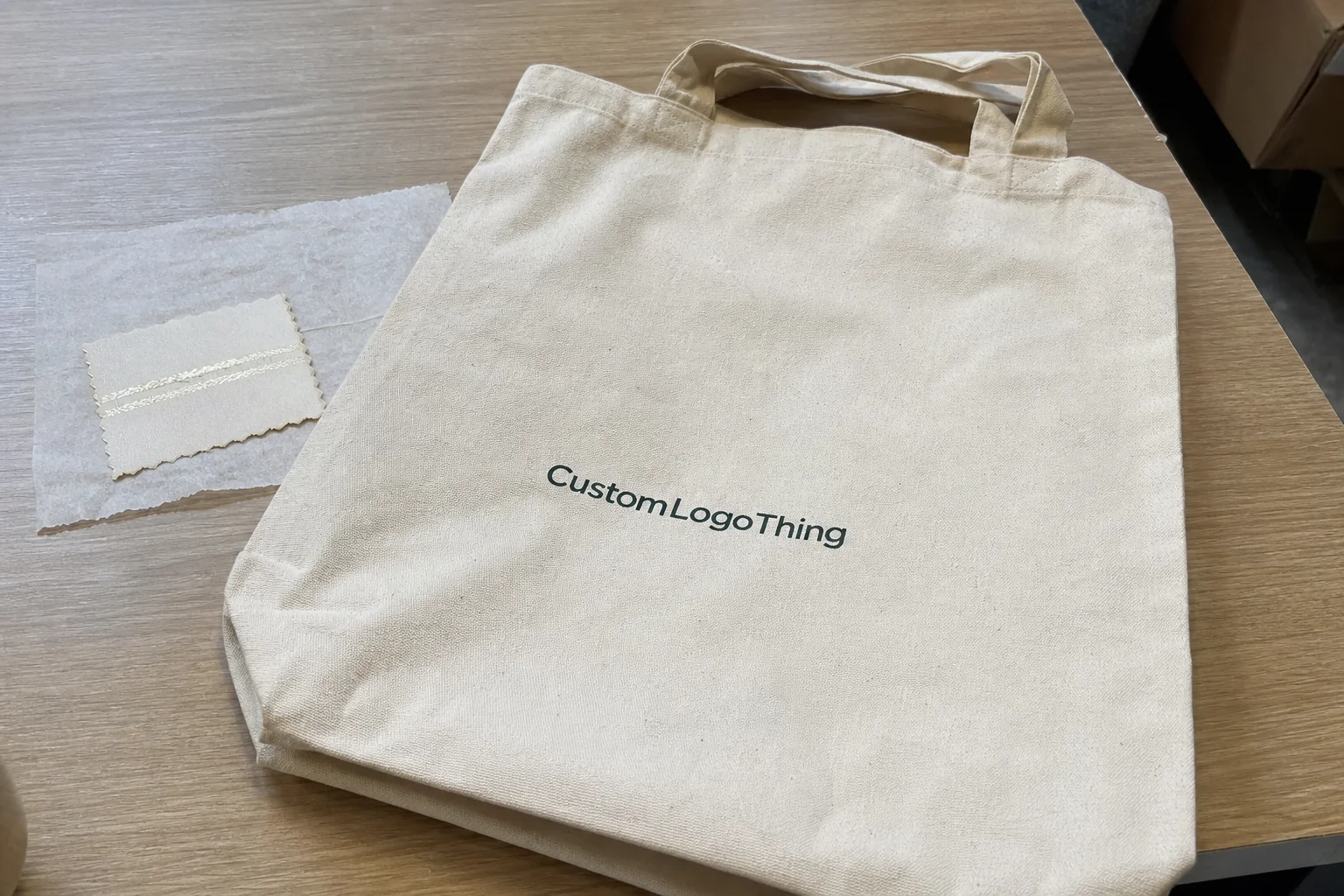
A custom painted tote bag is not the same thing as a printed tote with a decorative overlay. Painting puts more pressure on the surface itself, so weave density, absorbency, and hand feel matter before the artwork even enters the conversation. One fabric may hold a crisp edge. Another may pull pigment sideways and blur the same design.
That is the first practical point buyers need to understand. Printed totes can hide some surface variation because ink lays down more predictably. Painted totes expose more of the substrate. That can be a strength if the goal is a hand-finished look. It can also reveal brush texture, edge softness, or slight opacity shifts when the spec is loose.
Use case decides how much variation is acceptable. A retail merch tote needs tighter consistency than a one-off event giveaway. Boutique packaging may call for a more artisanal surface, while a resale item needs stronger abrasion resistance and more repeatable color. The buyer who says, “make it nice,” usually ends up paying for surprises. The buyer who defines audience, load weight, and shelf life gets a better result.
Rule of thumb: the closer the tote is to a retail item, the more you should care about finish tolerance, edge control, and repeatability. A casual giveaway can tolerate some variation. A paid product usually cannot.
The branding angle matters too. A tote does not just carry a logo. It carries the visual tone and quality signal of the whole offer. If your cartons, inserts, and labels are precise, the tote should not feel like it came from a different program. That is why buyers often ask for matching elements such as hang tags, tissue, labels, and a retail insert through branded packaging components.
Fabric, Finish, and Paint Choices That Change the Outcome
The best-looking painted tote usually starts with a tighter weave. Canvas weight is one of the first numbers to ask for, but it is not the only one that matters. A 10 oz canvas, a 12 oz duck, and a 16 oz heavy cotton tote will all behave differently under paint. A smoother surface gives cleaner edges. A rougher weave tends to break up detail and absorb more color than expected.
Paint choice matters just as much. Flexible fabric paint is usually safer for repeated handling because it moves with the cloth. Opaque hand-applied paint can look richer on dark substrates, but it can also make the tote stiffer if it is applied too heavily. Sealed finishes improve durability, yet they may change the hand feel and make the bag less soft in use. There is no single best option. The right answer depends on whether the bag is meant for a launch, regular carry use, or retail display.
Buyers get tripped up by the same materials over and over. Dark backgrounds, coarse weaves, and highly absorbent fabrics all raise the risk of bleed, weak contrast, or visible brush marks. The same artwork that looks clean on an ecru, tight-weave canvas may look flat on charcoal jute or a loose recycled cotton blend. That is not necessarily a production failure. It is often a material mismatch.
Construction details shape the final impression too. Handle width, gusset depth, top hem finish, and seam alignment all influence whether the tote feels intentional or improvised. A well-painted front panel still looks cheap if the handles twist, the side gusset collapses, or the body wrinkles badly. In packaging, the container matters almost as much as the graphic. That applies to boxes and it applies to a tote.
| Bag Spec | Typical Look | Durability | Best Fit |
|---|---|---|---|
| 10 oz cotton canvas | Softer, more casual, slight texture visible | Moderate | Event giveaways, light retail use |
| 12 oz duck canvas | Cleaner paint edges, balanced hand feel | Good | Boutique resale, branded merchandising |
| 16 oz heavy canvas | Substantial, premium, holds shape well | High | Premium product packaging, long-use totes |
| Loose recycled blend | More texture, more variation, less sharp detail | Variable | Eco-forward campaigns where texture is part of the look |
If the tote will ship inside a retail set, think beyond the bag itself. Outer carton performance, insert protection, and transit abuse matter. The ISTA framework is useful because it pushes brands to think about how products survive movement, not just how they look on a table.
Process and Timeline: From Concept to Finished Tote
The cleanest jobs follow a simple sequence: brief, art review, mockup, sample, approval, production, drying or curing, inspection, and shipment. Skip one of those steps and you usually pay for it later in rework, delays, or mismatched expectations. That is especially true with a custom painted tote bag, where finish quality depends on more than the artwork file.
- Brief: define the bag size, quantity, use case, and target quality.
- Artwork review: confirm file type, color references, and placement.
- Mockup or sample: test scale, spacing, and how the surface behaves.
- Approval: lock the version before production starts.
- Production: apply paint, dry or cure, and inspect.
- Shipping: pack to prevent scuffing, transfer, or distortion.
Delays usually show up in the same places. Vector files are missing. Colors are described with words instead of references. The buyer decides, after seeing a sample, that the logo should be larger, smaller, or shifted half an inch. Those sound like minor changes, but they often trigger another sample pass. If the artwork is already complex, the timeline can move quickly from “simple” to “why is this taking so long?”
For small runs, production can move fairly quickly once the sample is approved. A straightforward order might ship in 7 to 12 business days after approval. A more detailed hand-finished run often needs 12 to 20 business days, sometimes longer if artwork revisions or extra curing time are involved. Add shipping and holiday congestion, and the calendar stretches again. Buyers who need a launch date should build a buffer instead of trusting the first estimate as final.
Curing is not optional. If a painted surface is packed too early, it can tack, scuff, or transfer onto the next bag. I have seen buyers focus on the image and ignore handling, then wonder why the last 10 percent of the order looks worse than the proof. That final step is where a lot of quality issues are created.
Cost and Pricing: What Drives Unit Cost and MOQ
Pricing on a painted tote is driven by labor first, then materials, then complexity. Quantity still matters, but not the same way it does for a standard printed run. If the decoration is hand-applied or semi-hand-finished, the labor curve is real. Bigger orders reduce the unit cost, but they do not erase the extra work involved in alignment, drying, and inspection.
The main price drivers are easy to list and easy to underestimate:
- Quantity: higher volume spreads setup and sampling costs.
- Artwork complexity: fine detail and multiple layers raise labor time.
- Color count: more colors usually mean more handling.
- Bag material: premium canvas and heavier construction cost more.
- Decoration coverage: front-only is cheaper than multi-panel work.
- Packaging: folding, labels, inserts, and polybagging add labor.
MOQ is where buyers need to be practical. Low minimums are useful, but they usually come with higher per-unit pricing and fewer finish choices. A small order may allow more manual attention, while a larger order may require tighter standardization so the supplier can hold consistency. If the project is tied to retail packaging or product packaging, ask for an MOQ that reflects how the bag will actually be used, not just how many you want to test.
| Quantity Tier | Typical Unit Range | What Usually Changes | Buyer Tradeoff |
|---|---|---|---|
| 50-100 pcs | $6.50-$14.00 | More hand labor, fewer automation advantages | Best for pilots, samples, and small brand drops |
| 250-500 pcs | $3.75-$8.50 | Better spread on setup and artwork prep | Balanced option for boutique retail or events |
| 1,000+ pcs | $2.10-$5.50 | More efficient production, tighter spec control | Best unit economics, but less flexibility |
If the order needs labels, inserts, or packaging that reinforces the same visual system, ask for it in the same quote. Coordinating those items through one team helps the final package branding stay consistent and reduces friction from splitting jobs across vendors.
For tote projects that ship inside a retail set, FSC-certified paper inserts are worth asking about. They are not a magic badge, but they do support a cleaner sourcing story. See the standards and certification approach at FSC if your buyer team needs a recognized reference point.
How to Prepare Artwork So the Design Comes Out Clean
Vector files are the safest starting point. Clean paths make scaling easier, keep placement decisions faster, and reduce the chance that a supplier has to redraw part of the design before production. If the artwork is raster-only, the file may still work, but the buyer should expect more back-and-forth and a higher risk of soft edges.
Simple shapes usually perform better than thin lines, tiny text, or tight gradients. Painted applications reward bold contrast. That does not mean the design has to be blunt. It means the artwork should respect the medium. A delicate line drawing might look elegant on screen and weak on canvas. A strong logo block with enough negative space usually reads more clearly.
Color communication needs discipline. Spot colors and Pantone references remove a lot of ambiguity. Words like cream, sand, vintage blue, or warm gray are not enough for production because people interpret them differently. If the final bag has to match another item in a package branding system, the color reference should be tied to the full program, not chosen by eye at the last minute.
Placement is another area where buyers lose quality without noticing. A tote can be structurally fine and still look awkward if the logo sits too close to the seam, floats too high on the body, or gets squeezed by the gusset. Ask for a proof that shows scale, safe margins, and the relationship between the artwork and the bag edges. That is especially important for a custom painted tote bag because brush movement and surface texture can make tight placements feel busier than expected.
When a brand is already developing Custom Printed Boxes or other retail packaging, the tote art should be checked against that system before approval. The customer sees the set as one object, not as separate print jobs. If the tote uses a different tone, a different type weight, or a slightly off logo mark, the whole package can feel less deliberate.
A strong quote packet usually includes these items:
- Vector artwork, ideally in AI, EPS, or PDF format.
- Exact color references or Pantone numbers.
- Finished bag dimensions and handle style.
- Placement notes, including distance from seams and top edge.
- Desired finish, such as matte, sealed, or hand-textured.
Common Mistakes That Lead to Weak Finish or Rework
The biggest mistake is choosing a fabric that fights the design and then blaming the decorator when the result looks uneven. If the substrate is too rough, too dark, or too absorbent, the artwork has to work much harder to stay clean. This is one reason a pretty mockup can mislead a buyer. The mockup does not show weave pull, drying behavior, or how much the paint sits on the surface.
The second mistake is approving artwork without a physical or photo sample. For a custom painted tote bag, the sample is not just a formality. It is where you see edge softness, color density, and finish behavior. If the design depends on layered fills, exact spacing, or a specific tactile feel, skipping the sample is the fastest path to disappointment.
Third, people assume durability will behave like a laminated print. It will not. A painted tote can be durable, but only within the limits of its paint system, fabric, and finish. Some versions are made for repeated carry use. Others are better for light handling, display, or a short retail cycle. If the bag will be washed often or shipped repeatedly, say that up front. Otherwise the supplier may spec a finish that looks good but ages too quickly in real use.
Here is the part many teams miss: poor communication about audience and price point creates more trouble than the artwork itself. A bag intended for a $12 retail shelf needs a different finish standard than a promotional giveaway handed out for free. If the buyer never defines that threshold, the supplier has to guess, and the order usually lands in the wrong place.
Common warning signs are easy to spot if you know what to look for:
- The spec sheet says “premium” but gives no fabric weight.
- The color direction is written only in adjectives.
- The team asks for a sample after approval, not before.
- The order needs retail-ready folding, but no one mentioned packaging.
- The buyer expects a hand-finished tote to behave like a mass-printed promo bag.
Most rework is preventable. It happens when the buyer treats decoration as the whole job and ignores the bag structure, packaging plan, and real-world handling.
Next Steps: Build a Quote-Ready Brief and Compare Samples
If you want a clean quote, gather the basics before asking for price. Size, fabric, quantity, artwork files, target use case, deadline, and preferred finish are the minimum. If the tote is part of a launch kit or retail bundle, add the carton or insert requirements too. That lets the supplier price the job as a system instead of as a loose concept.
Then ask for two or three sample approaches if the budget allows. One sample can tell you whether the art is technically possible. Two or three can show how the result shifts across fabric weight, finish type, and surface texture. That comparison is especially useful if the order is being judged on retail packaging quality rather than just promotional usefulness. A mockup can promise a lot; a sample tells you what the buyer will actually touch.
Before approval, review a short checklist:
- Artwork placement and scale.
- Color references and approved references from other packaging design elements.
- Bag construction, including seams and handle spec.
- Packaging method for shipment and retail display.
- Timeline, including drying or curing time and any buffer for transit.
If your program already includes custom printed boxes or other coordinated product packaging, line everything up before production begins. That keeps the look consistent and prevents the tote from feeling like an unrelated add-on. For buyers who want a more polished retail outcome, the safest move is simple: specify the material, define the finish, and compare samples against the same standard you would use for the rest of the package.
The best custom painted tote bag order is rarely the flashiest one. It is the one that was specified clearly at the start, so the fabric, paint, and finish all agree with the brand intent. That is how you reduce surprises, protect margin, and end up with a tote people actually want to keep.
How much does a custom painted tote bag usually cost?
Pricing depends on quantity, artwork complexity, bag material, and whether the design is hand-finished or partly automated. For smaller runs, unit cost is usually higher because labor and setup do not spread out as much. Ask for tiered quotes at several quantities so you can see the real breakpoints instead of relying on one estimate.
What fabric works best for a painted tote bag?
Tighter-weave canvas usually gives the cleanest paint edges and the most consistent color appearance. Heavier cotton duck or dense canvas often holds detail better than loose, highly absorbent fabrics. Very rough or open weaves can make the finish look softer, patchier, or less premium.
How long does production take for a custom painted tote bag?
Timeline depends on sample approval, drying or curing time, and order size, so hand-applied runs usually take longer than simple printed runs. A straightforward order can move quickly after approval, while more detailed work often needs extra calendar time. Build in buffer if artwork revisions or packaging changes are still in play.
What artwork files should I send for a painted tote design?
Vector files are best because they preserve clean edges and make scaling easier without losing quality. Include exact color references, placement notes, and any size limits so the quote and sample match your expectations. If you only have a raster file, send the highest-resolution version available and expect a review step.
Can a custom painted tote bag be washed or reused often?
Durability depends on the paint system, fabric, and finish, so some totes are made for repeated use while others are better for light wear or retail display. Ask for care instructions before ordering if the bag needs to survive frequent handling, shipping, or resale. If repeated washing is a requirement, say so early and let the supplier spec accordingly.