Personalized gift Labels for Clothing do one job well: they make a garment feel finished before anyone opens the package. Get them wrong, and even decent apparel can look flimsy, overworked, or oddly temporary. Get them right, and the whole piece reads as intentional, gift-ready, and worth opening carefully.
The catch is that labels are not just decoration. On clothing, the label may be handled, folded, worn, washed, peeled off, or tucked back into a package. That means the material, adhesive, size, and finish matter more than the artwork alone. A design that looks clean on screen can turn unreadable once it lands on textured fabric or a busy surface.
What personalized gift labels actually do for clothing
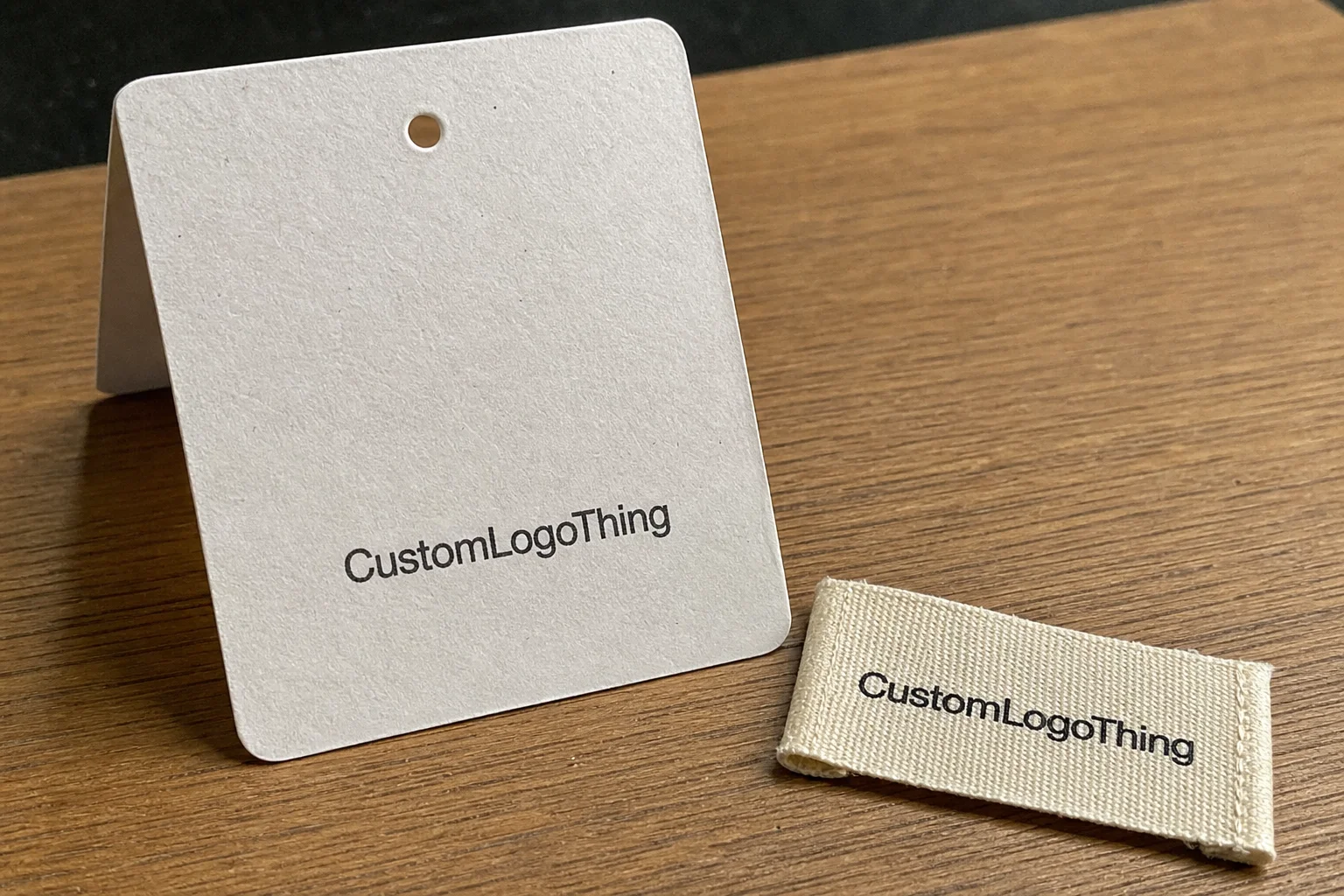
The easiest mistake is treating labels like a visual accessory only. That works on a gift box. On apparel, the label has to survive handling and still look deliberate. If it is presentation-only, the material can be lighter and more decorative. If it needs to stay with the garment, the production choice changes fast.
There is a real difference between presentation-only labels and labels that need to function as part of the garment system. Decorative messaging can live on paper stock, satin, or a removable sticker if the job is just to improve the unboxing moment. Functional garment labeling asks harder questions: adhesion, abrasion resistance, washability, and legibility all start to matter. That is usually where buyers discover that “looks nice” and “works on fabric” are not the same thing.
Placement matters more than most people expect. On a small chest area, a label that is two millimeters too tall can look crowded. On a folded sleeve, a heavy adhesive may curl at the corners after a few hours. On soft knits, some finishes look fine until the label is bent, and then the edges telegraph every flaw. For apparel, the safest designs are usually simple: short copy, strong contrast, one clean finish, and a size that fits the real garment, not the mockup.
A label can rescue plain apparel. It can also make good apparel look cheap if the material, size, and message are fighting each other.
From a buyer’s point of view, the practical question is not “What looks cute?” It is “Should this be permanent, removable, or only for presentation?” If the answer is permanent, you are closer to a care label, woven label, or sewn-in tag. If the answer is removable, the adhesive has to match the fabric. If the answer is presentation-only, you have more freedom, but the label still needs to survive shipping and handling without curling, smudging, or scuffing.
If your product mix goes beyond one format, the Custom Labels & Tags category is the right place to compare constructions before locking a spec. Name alone tells you almost nothing. Material tells you most of what matters.
Process, timeline, and production steps
A clean order starts with a complete brief. Suppliers usually need dimensions, quantity, text, logo file, intended garment type, finish, and whether the label is permanent or removable. Leave out any of that and the quote becomes a guess with a nicer font. That is how delays start before production even begins.
The usual flow is simple: request, proof, revisions, approval, production, then shipping. A straightforward order with ready-to-print artwork can move fast, but “fast” still has steps. A proof often comes back in one to three business days if the file is clean. Revisions may take another round or two, especially if the buyer has not finalized the copy. Production commonly runs seven to fifteen business days after approval, and shipping sits on top of that.
Rush jobs cost more than people expect because they compress more than print time. They compress queue position, inspection time, and packaging buffer. If the order is tied to an event, product launch, or seasonal gift drop, build in margin rather than hoping the fastest estimate holds. Shipping delays are not a character flaw in the supplier; they are part of the schedule.
If the label is going onto higher-value apparel, a sample or pre-production approval is worth the extra day or two. It gives you one chance to catch the wrong adhesive, the wrong size, or a layout that looked fine on a laptop and awkward on fabric. That is the cheapest mistake you can make.
For broader packaging standards, the education resources at packaging.org are useful because they focus on function instead of just aesthetics. The same principle applies here: the label should fit the product, the use case, and the handling cycle.
If you also need hang tags, seal stickers, or garment identification, the broader Custom Labels & Tags line can help you compare formats before you commit. That is usually faster than asking three vendors to explain the same thing three different ways.
Pricing, MOQ, and unit cost: what actually moves the quote
Pricing is driven by a few variables, and most of them are boring in the best possible way. Quantity matters first. Size matters next. Then comes material, print complexity, finish, and whether the design needs variable personalization across the run. If every piece has a different name, number, or message, setup gets more involved and the quote moves with it.
MOQ is where small buyers get a rude lesson in printing economics. A low quantity can carry a setup-heavy price because the supplier is spreading proofing, plate or file prep, inspection, and packing across fewer units. That does not mean the quote is inflated. It means the math is honest. Once the run gets bigger, unit cost usually drops fast, especially on repeatable artwork.
For comparison, these are common ranges for clothing-focused label formats at around 5,000 pieces. Small runs under 1,000 units are usually much higher per piece.
| Format | Best use | Typical unit price | Main strength | Main tradeoff |
|---|---|---|---|---|
| Paper label | Presentation, gift packaging, short-use tags | $0.04-$0.10 | Low cost, crisp print, easy branding | Weakest for wear, moisture, and abrasion |
| Removable adhesive label | Gift-ready apparel, temporary branding | $0.09-$0.22 | Cleaner removal, better handling on fabric | Adhesive must match the surface |
| Satin or fabric label | Soft apparel touchpoints, premium presentation | $0.10-$0.24 | Better feel on garments, less visually harsh | Print clarity can drop if the design is too busy |
| Woven label | Permanent garment branding | $0.12-$0.30 | Strong perceived quality, durable under use | Needs simplified artwork for best results |
| Vinyl label | Durable temporary marking, some washable applications | $0.08-$0.18 | Good resistance to handling and moisture | Can feel less refined on delicate fabrics |
The cheapest quote is not always the best value. A lower number can hide a weaker adhesive, a lighter stock, a finish that cracks under handling, or extra charges for revisions that were never made clear. A better quote spells out what is included: setup, proof rounds, trim or die-cut, packaging, and whether the supplier is using FSC-oriented paper stock or a generic substitute.
For performance claims, buyers often ask about transit testing or adhesive behavior under stress. That is a healthy habit. The ISTA standards are a useful reference point when the labels will travel with apparel through packaging, handling, and shipping. If a vendor cannot explain how the material behaves in transit, that is not a great sign.
One more practical point: custom shapes, rush schedules, special adhesives, and premium finishes all add cost. Foil, embossing, or layered construction can look good, but each one adds a reason for the factory to slow down and charge more. Printing still obeys physics.
Materials and finishes that hold up on apparel
Paper is the cheapest option, and it is fine for presentation labels that will not be abused. Vinyl is tougher and handles moisture better. Fabric and woven constructions feel more integrated with clothing, which is why they are common on better garments. If the label is supposed to live on the item instead of the packaging, the material choice is doing most of the quality work.
Soft hand-feel matters, but it should not be the only priority. A label can feel nice and still be useless if the text blurs, the corners lift, or the finish scratches in transit. On apparel, the balance is usually some combination of tactile feel, durability, and print clarity. You rarely get all three for free.
Finish changes perception quickly. A matte label looks cleaner and more modern. Gloss can make colors pop, but it also highlights fingerprints and imperfections. Foil looks premium in small doses and overdone in large ones. Textured stock can feel elevated, yet it can interfere with tiny typography. Busy designs usually lose their appeal the moment they leave the mockup stage.
Adhesive strength is the other thing buyers underestimate. A label that is too weak lifts on smooth packaging. A label that is too aggressive can damage delicate knits, brushed cotton, or soft synthetics. For garments, removable adhesive, low-tack options, or sew-on formats are often safer than a generic stick-anywhere solution. There is no prize for making the label impossible to remove.
For paper-based options, FSC-certified stock is a sensible sourcing benchmark if sustainability matters to the buyer or end customer. It will not fix a bad design, but it does improve the story behind the product. Pair that with controlled print coverage and you get something that feels intentional instead of overdesigned.
In practice, the safest default for premium gift apparel is a simple layout on a material that matches the garment. If the product is delicate, skip heavy finishes. If the garment will be washed, ask specifically about abrasion resistance and color fastness. If the label is only meant to stay on until the gift is opened, do not pay for overbuilt construction. That money belongs elsewhere.
Production detail matters too. Ask about trim tolerance, adhesive consistency, and whether the finish can be repeated across the full run without visible shade drift. Those are the checks that separate a label that looks fine in a proof from one that holds up in a carton of five thousand.
Step-by-step order checklist for a clean result
A good order starts with the garment itself. What is it? T-shirt, robe, baby bodysuit, folded set, or boxed accessory? Where will the label sit? Front, sleeve, neck, belly band, or package seal? If you guess the placement, you usually guess the size wrong too. Start with the actual object, not the idea of the object.
- Confirm the garment type and placement.
- Write the copy in full, including names, messages, and any repeat fields.
- Choose the format: permanent, removable, or presentation-only.
- Collect the artwork in the correct file type and check resolution.
- Confirm bleed, safe margins, and cut lines before proofing.
- Review the proof against the brief, not against memory.
- Lock the deadline only after the production window and transit time are both clear.
The copy checklist matters more than people think. Spellings, punctuation, fonts, spacing, and variable names all need to be confirmed before proof approval. One missed accent or one line break in the wrong place can make the entire run look careless. That is especially true for personalized gift labels, where the whole point is that the item feels made for a specific person.
Artwork files should be clean enough that the proof is about layout, not rescue work. Send vector art when possible, or high-resolution files with enough margin for trim. If the supplier has to guess the edge, you are already behind. Also, ask for a proof deadline. If there is no deadline, revisions tend to wander.
For orders that touch delicate or high-value clothing, a small test batch is worth it. You learn more from twenty pieces applied to the actual fabric than from a hundred opinions about a digital mockup. If the test passes, the full run is easier to approve with confidence.
Practical rule: if the label cannot survive a real garment, a real fold, and a real shipping cycle, it is not ready to buy in volume.
Common mistakes that make labels look cheap
The fastest way to wreck a small-format label is to cram too much into it. Tiny labels do not reward ambition. Long taglines, multiple fonts, logos with thin lines, and excessive icon sets all fight for space. The result is clutter, not elegance. Keep the message short and the typography disciplined.
Contrast is another easy failure. Light gray on cream looks refined on a mood board and invisible on an actual garment. Dark text on a busy background can disappear even faster. If the label has to be read from arm’s length, the contrast should be strong enough that nobody has to squint like they are inspecting legal fine print.
Bad artwork files are a quiet disaster. Low-resolution images, stretched logos, and fuzzy edges make even a good print process look suspect. The supplier can only print what you give them. If the source file is weak, the finished label will show it. That is not the factory being difficult. That is ink obeying math again.
Another common failure is choosing the wrong material for the surface. A label that behaves fine on a rigid box may curl or fail on a soft knit. A finish that looks premium on a sample card may feel heavy on delicate fabric. This is where test applications save money. Skipping the test and approving full production is how buyers discover peeling, curling, or poor fit after the order is already in motion.
Finally, do not let tiny layout mistakes slide. Spelling, spacing, crop alignment, and trim position all matter. People notice when a label is slightly off, even if they cannot name the problem. They just feel that something is wrong. That is enough to make the product look cheaper than it should.
A premium look is usually boring up close: clear type, enough space, the right stock, and a finish that does not fight the garment.
There is also a habit some buyers fall into: adding every possible proof element because they are afraid of missing something. That usually makes the label worse, not safer. If the design needs a second logo, a tagline, and a decorative border to feel complete, the base idea is probably too crowded. Strip it down. Let the material do some of the work.
Next steps: choose specs, request proofs, and order
Start with three decisions: the garment type, the quantity, and the budget tier. Those three choices narrow the material, finish, and production method faster than any design discussion. Once those are set, collect the logo file, personalization text, size target, and preferred finish before asking for pricing.
Ask for a proof and a clear turnaround window. If revisions are needed, you want to know whether the supplier can handle them without pushing the shipment into the wrong week. That sounds obvious, and yet this is where many orders slip. The proof is not a formality. It is the point where expensive mistakes are still cheap.
If the order is going onto delicate, expensive, or highly visible apparel, order a small sample or test batch first. That extra step is not overcautious. It is sensible buying. You are checking how the label behaves on the real fabric, under real handling, with real lighting. That is the only test that matters.
Compare the finished proof against the actual garment before you approve production. Check the scale, the contrast, the placement, and the removal behavior if the label is temporary. When those details line up, personalized gift labels stop being a small accessory and start doing the job they were hired to do: make the clothing feel complete, specific, and worth giving.
One last production detail: confirm the pack-out method before the run starts. Labels that arrive loose, stacked, or stuck to the wrong backing create problems downstream. If the end user has to peel, sort, or rework them, the product already lost efficiency. That is easy to prevent and annoying to fix.
What are personalized gift labels for clothing made from?
Common options include paper, vinyl, fabric, and woven constructions, and each one behaves differently on apparel. Adhesive, sew-on, and removable formats all have a place depending on whether the label needs to stay with the garment or come off after gifting. For washable clothing, durability and fabric compatibility matter more than a fancy finish.
How much do personalized gift labels for clothing usually cost?
Price usually depends on quantity, size, material, finish, and whether the design is simple or highly customized. Small runs tend to cost more per piece because setup and proofing are spread across fewer units. Custom shapes, rush orders, and premium finishes can push the quote up quickly, so compare quotes by spec instead of by headline price alone.
What is the normal turnaround for custom clothing labels?
Proofing can move quickly if the artwork is clean and the brief is complete. Production time varies by material and quantity, but shipping time should always be added to the schedule. If the order is tied to an event or launch, build in buffer time instead of assuming the fastest estimate will hold.
Can personalized gift labels be used on delicate fabrics?
Yes, but the adhesive strength and placement need to match the fabric so the label does not damage the garment. For delicate textiles, test a sample first and avoid aggressive adhesives or heavy finishes. When in doubt, removable or sew-on options are safer than permanent stick-on formats.
How do I make personalized gift labels look premium?
Keep the message short and the layout clean so the design feels intentional instead of crowded. Use strong contrast, good spacing, and one finish that supports the garment rather than fighting it. Test the label on the actual fabric before placing the full order. That is usually the difference between generic output and personalized gift labels that feel worth keeping.