Personalized moving boxes sound straightforward until a real packing job exposes the weak points in a carton spec. The right box can cut down on filler, reduce damage, speed up sorting, and make a move feel organized rather than improvised. The wrong one adds tape, labor, and frustration fast.
That is why buyers tend to care less about the idea of customization and more about the practical outcome. personalized moving boxes can be sized around the contents, printed for room or department identification, built in stronger corrugated board, and paired with inserts or labels so a packing team spends less time guessing.
For office relocations, retail rollouts, archive storage, and e-commerce support moves, the box itself becomes part of the workflow. If the carton stacks well, reads clearly, and survives the route it has to travel, the whole project runs cleaner. If it does not, every other material has to work harder to compensate.
The best moving box is rarely the fanciest one. It is the one that fits the load, holds its shape, and makes the packing process easier from the first carton to the last.
What personalized moving boxes are and why they solve real packing problems
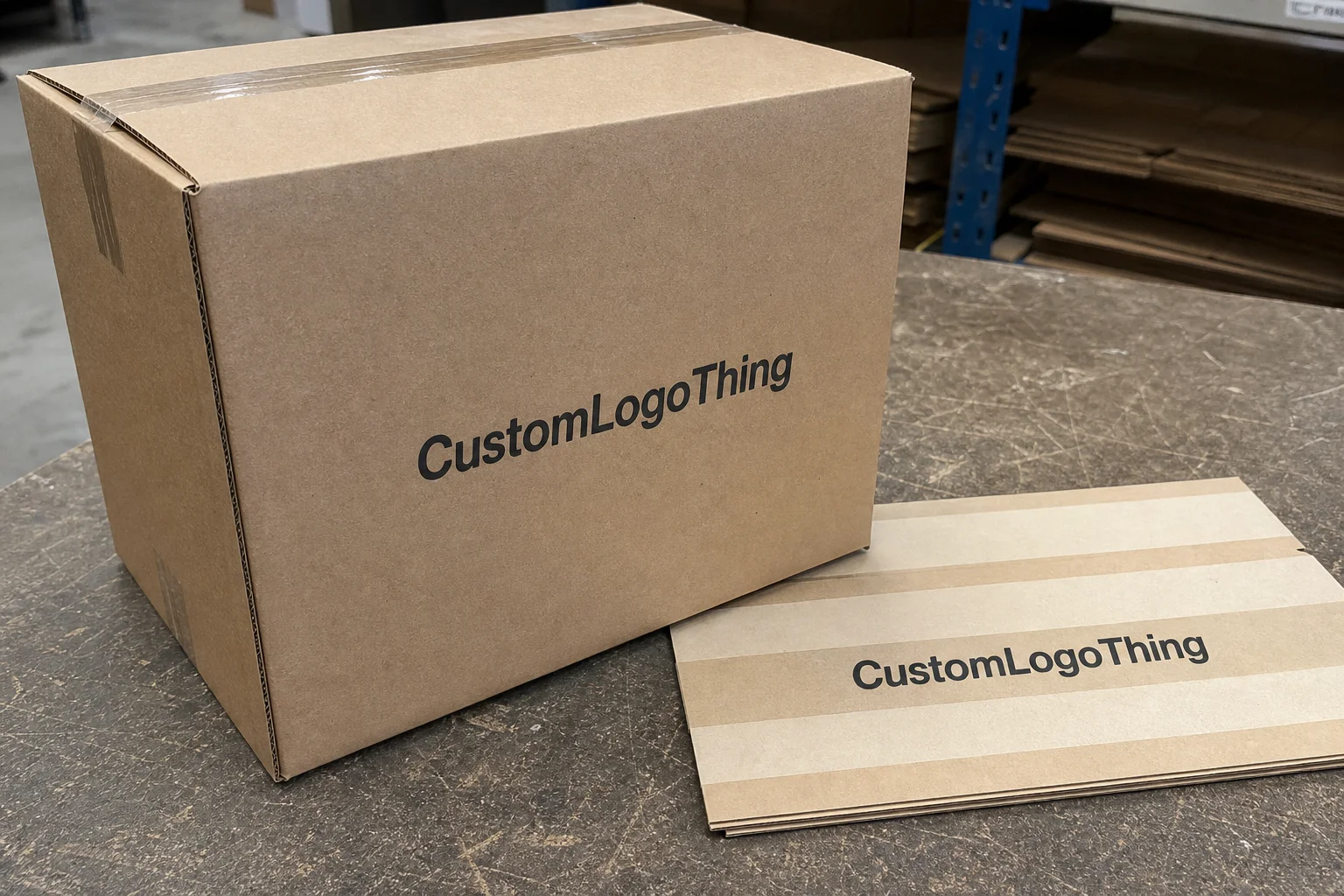
At the most basic level, personalized moving boxes are cartons made to a specific size, strength, or print requirement instead of being chosen from a standard shelf size. Personalization can be as simple as a room label and an internal reference code, or as involved as a custom die-cut style with reinforced panels, handles, or dividers.
The main advantage is fit. A box that is too large invites movement inside the carton, which means more void fill, more packing time, and more chance of shifting during handling. A box that is too small creates pressure on edges and corners, which can lead to crushed product, split seams, or awkward overpacking. Most damage in moves comes from poor fit and poor load planning, not from a dramatic failure of the board itself.
That is especially true with mixed contents. Books, binders, small electronics, tools, and archive materials can all look manageable until they are packed together and weighed down. A well-specified carton keeps the load under control and helps the box behave predictably when stacked on a pallet or carried through a loading area.
Branding is part of the value, but it is not the only value. Printed panels can carry logos, department names, handling instructions, or color-coded identifiers that help movers and internal teams sort faster. On larger projects, those visual cues are often more useful than decorative artwork because they reduce hesitation and keep cartons moving in the right direction.
Useful personalization options usually include:
- Exact or near-exact dimensions for the contents
- Printed identifiers for rooms, departments, or handling instructions
- Board grade selection matched to the load weight
- Handle cutouts or tear strips for easier opening and carrying
- Inserts or dividers for fragile or mixed items
In practice, these boxes often sit inside a broader packing system that includes poly bags, labels, inserts, and other materials. That matters because a move is rarely just about boxes. It is about how quickly the team can identify contents, separate categories, and avoid having to reopen cartons to check what was packed where.
How the customization and production process works
The production process usually begins with a specification sheet, even if the project is small. A supplier needs the inside dimensions, the approximate weight per carton, the type of contents, how the boxes will be used, and whether the cartons need to ship flat, assemble quickly, or hold up under stacked storage. If print is involved, artwork files and placement instructions matter as much as the box dimensions.
Once those details are set, the structure is chosen. That might be a regular slotted carton, a reinforced corrugated style, or a custom configuration with a special opening, divider, or insert. From there, the supplier creates a dieline or structural layout, confirms the fold pattern, and checks the print area. For more complex jobs, a sample or pre-production proof is worth the extra step because fit problems are much cheaper to catch before the run begins.
Printing method depends on run size and design needs. One-color flexographic print works well for room names, arrows, handling marks, and simple logos. Digital print makes more sense for shorter quantities or more detailed graphics. Buyers who need crisp branding on a moderate run often compare both options before choosing, because the right method can lower setup cost without sacrificing legibility.
Board selection carries just as much weight as print. Flute profile, liner quality, coating, and board grade affect stacking strength, surface appearance, and how well the carton resists scuffing or light moisture. For broader packaging standards and testing references, the Packaging Alliance and ISTA both publish material on performance and transport testing.
| Option | Best for | Typical strengths | Typical tradeoffs |
|---|---|---|---|
| One-color flexo print | Room labels, handling marks, simple branding | Lower setup cost, fast production, good repeatability | Less detail, limited color range |
| Full-color digital print | Short runs, detailed branding, varied graphics | More design flexibility, no plate charges on some jobs | Higher unit cost on larger runs |
| Plain custom-size carton | Protection-first packing, storage, or internal moves | Best fit, lower void fill, simpler approval | Less visual branding |
Rush work is possible, but only within limits. If the size is already defined, the art is clean, and the board is in stock, a supplier can move quickly. If the carton is fully custom and the artwork still needs correction, the timeline expands. That is not a red flag; it is just how corrugated production works.
Cost, pricing, MOQ, and what drives the unit cost
Pricing for personalized moving boxes usually comes down to a handful of variables that are easy to understand once you see them laid out. Size, board grade, print coverage, quantity, finishing, and whether tooling or plates are needed all influence the final price. Freight can shift the total more than buyers expect, especially on large or palletized orders.
MOQ matters because setup costs do not shrink just because the order is small. A 500-piece run has to absorb artwork prep, machine setup, changeover time, and packaging labor across fewer units than a 5,000-piece order. That is why small orders often carry a higher unit price even when the carton design is identical.
As a broad budgeting range, a plain custom-size corrugated moving carton might land around $0.40-$0.90 per unit on moderate runs. Printed or heavier-duty versions can move higher, particularly when the board is thicker, the print area is large, or the order is small. Very short runs can be much more expensive per unit, and freight can push the landed cost up quickly.
Buyers sometimes compare a custom carton to a stock box and stop there, but that misses the bigger picture. Better fit can reduce void fill, packing time, and breakage. Cleaner stacking can lower rehandling. A slightly higher box price may still reduce the cost of the whole move, especially when the job involves hundreds or thousands of cartons.
It helps to ask about charges that may sit outside the per-unit quote:
- Artwork setup or plate charges
- Sample or prototype fees
- Freight and pallet delivery
- Storage or staged release charges
- Palletization and wrap requirements
The smartest budget decision usually depends on the goal. If presentation matters most, spend more on print clarity and finish. If protection matters most, put the money into board strength and fit. If speed matters most, stay close to available tooling and avoid unnecessary structural complexity.
Choosing dimensions, strength, and materials for the job
The right box spec starts with the contents, not with a generic room name. Measure the largest item, weigh the heaviest item, and note whether the carton will hold one category of product or a mixed load. That is the simplest way to avoid boxes that are oversized, underbuilt, or awkward to stack.
Single-wall corrugated is often enough for lighter loads, internal moves, and cartons that will not be stacked very high or stored for long. Double-wall is the safer choice when loads are heavier, boxes are handled several times, or the cartons will sit in a warehouse before they are used. A lot of buyers underestimate how much pressure builds up when pallets are stacked, wrapped, and left in storage for days.
Corrugated performance depends on a few measurable factors. Flute type influences cushioning and compression behavior. ECT, or edge crush resistance, gives a useful picture of how well the board handles stacking pressure. Burst strength says more about general board toughness. None of these numbers replaces actual testing with the product, but they are a practical starting point when comparing options.
Moisture deserves attention too. A box that performs well in a dry, climate-controlled room may soften if it is exposed to humidity, long transit, or exterior staging. That is why many buyers build in a little extra margin when the move involves loading docks, cross-region freight, or storage before distribution. A small increase in board quality can prevent a weak carton from becoming a problem later.
Readability matters just as much as strength on a busy packing floor. High-contrast print, clear room labels, simple icons, and writable panels all make it easier to sort cartons without opening them. If the boxes will also be used for storage or archive retention, FSC-certified materials can be a sensible option, and the certification basics are outlined at fsc.org.
Material and design choices that usually pay off
- High-contrast print for quick identification
- Writable white space for inventory notes or room names
- Reinforced handles for heavier cartons
- Tear strips for cleaner opening at destination
- Moisture-resistant coating for longer moves or storage
These features are not necessary for every order. A simple carton often does the job well, especially for internal moves or short-distance packing. But once cartons will be reused, stored, or handled repeatedly, the extra structure tends to pay for itself in fewer failures and less frustration.
Step-by-step ordering process and typical turnaround
The ordering process is not complicated, but it does work best when the requirements are written down clearly. First, define what needs to be packed. Then gather dimensions, weight, quantity, and any print or labeling needs. After that, the supplier can quote the structure and recommend the right board and production method.
- Identify what must be packed and estimate carton count.
- Measure the largest contents and weigh the heaviest likely load.
- Choose the box style and board grade.
- Submit artwork or handling copy for proofing.
- Approve a sample or digital proof.
- Release the order and confirm shipping details.
Turnaround depends on whether the job is a stock-size carton with print or a fully custom structure. A straightforward printed order may take roughly 10-15 business days after proof approval. More complex custom cartons can take longer because die cutting, gluing, bundling, and pallet wrapping all add time. Freight should be added on top of production time, especially if the delivery requires appointments or crosses regions.
Proofing deserves attention because small mistakes become expensive later. A low-resolution logo, missing bleed, or unclear print placement can hold up the run. Clean vector artwork, proper file dimensions, and specific instructions reduce back-and-forth and keep the schedule moving. The less guesswork in the file, the less likely there will be a delay at press.
Large orders need more planning than small ones, especially if the cartons must arrive with labels, bags, or inserts. It is easier to build a buffer into the schedule than to try to recover from a late freight issue after pallets are already wrapped and staged. That kind of delay is usually avoidable if delivery method, dock access, and receiving hours are confirmed early.
Common mistakes buyers make with moving box specs
The most common mistake is choosing the box before measuring the contents. That usually leads to either wasted filler in a carton that is too large or crushed corners in a carton that is too tight. Both outcomes create more labor downstream, even if the carton itself looked fine on paper.
Another frequent issue is underestimating weight. Books, binders, tools, and mixed office items become heavy quickly, and a carton that seems acceptable by volume may not be suitable once it is full. If the box will be carried by hand or stacked on a pallet, it is safer to specify a little more strength than to discover the limit during the move.
Artwork is another place where buyers lose time. Low-resolution files, unclear placement, and missing bleed can all slow approval or produce muddy print. On a carton that will be seen up close, poor artwork quality is not a cosmetic problem only; it can create production delays and weaken the finished look.
Receiving logistics are often overlooked as well. Freight access, pallet counts, and storage space all affect the success of the order. If the dock cannot take the pallets or the receiving team is not ready, even a well-designed carton creates avoidable friction. Confirm delivery method, pallet stack height, and unload requirements before releasing the job.
The cheapest quote is not always the best value. If a lower-cost box increases damage, slows packing, or forces a reorder, the real expense rises quickly. A better spec can cost a bit more up front and still save money across the full job.
Expert tips for better branding, labeling, and post-move use
Simple branding usually works better than crowded graphics. Large logos, clear room names, and high-contrast text remain readable when cartons are stacked, wrapped, or marked up during a move. Thin lettering and pale color combinations tend to disappear after the first few handling cycles.
If inventory tracking matters, reserve a clean writable area or barcode space on the carton. That small detail makes a real difference when staff need to track rooms, archive numbers, or return items after the relocation. Many teams use the box as a temporary record-keeping surface, and it works well if the print layout leaves room for it.
Color coding can speed sorting more than a long set of instructions. One color for receiving, another for office supplies, another for fragile contents, and the team has a visual shorthand that reduces mistakes. Movers and internal staff react quickly to clear visual cues, especially when dozens or hundreds of cartons are moving at once.
For longer moves, moisture resistance, reinforced handles, and tear strips are worth considering. These features are not mandatory, but they help when cartons will be opened, moved, stored, and possibly reused several times. Reusability is worth planning for too. A well-made carton can become archive storage, return packaging, or a future relocation box, which improves the value of the original order.
If a carton still looks useful after the move, the specification probably hit a good balance between cost and durability.
For buyers building a full packing program, it often makes sense to coordinate cartons with other custom packaging items from Custom Packaging Products so labels, bags, and inserts follow the same visual system.
Next steps to get the right moving box spec for your project
Start with an inventory of what actually needs to be packed. Measure the largest items, weigh the heaviest ones, and note whether the cartons will be carried, palletized, stored, or shipped long distance. That gives a supplier enough information to quote realistically instead of guessing from a rough description.
Then decide whether the job needs plain custom sizes, printed branding, or a complete moving kit that includes labels, bags, and inserts. Each option has a different cost profile, and the right choice depends on whether protection, presentation, speed, or a mix of all three matters most.
If print is part of the plan, have artwork ready in a clean format before requesting final approval. Strong files shorten the proofing stage and reduce the chance of revisions. If the order is for fragile or heavy goods, ask for sample materials or compare board grades before the full run is released. A small test is easier to manage than a large correction.
Finally, line up Cost, Lead Time, and delivery method together. Those three need to work as a unit if the boxes are going to arrive ready for the move. Done properly, personalized moving boxes do more than hold product. They help the move stay organized, reduce avoidable loss, and make the entire process easier to manage from packing through arrival.
FAQs
How do personalized moving boxes differ from standard moving boxes?
They can be built to specific dimensions, which reduces empty space and improves stacking. They can also include custom printing, labels, or handling marks for better organization. Standard boxes are easier to buy quickly, but custom boxes usually perform better for specific items or branded moves.
What information do I need before requesting personalized moving box pricing?
Have the largest item dimensions, approximate weight, and the number of boxes you expect to need. Share artwork files if you want print, plus any color or labeling requirements. Tell the supplier whether you need single-wall, double-wall, or another strength level.
What affects the unit cost of personalized moving boxes the most?
Size, board grade, quantity, and print coverage are usually the biggest cost drivers. Setup charges and freight can matter a lot on smaller orders. Custom dimensions may cost more per box but can lower labor and damage costs overall.
How long does production usually take for custom moving boxes?
Timeline depends on whether the box is a stock style or a fully custom size and print job. Artwork approval, sampling, and production scheduling can all affect turnaround. Order earlier if you need them for a move during a busy season or for a large corporate project.
Can personalized moving boxes be reused after the move?
Yes, many are reused for storage, archives, returns, or future relocations if the board grade is strong enough. Better print placement and durable materials help them stay readable and functional longer. Reusability improves value, especially for office moves and repeat-moving operations.