Buyer Fit Snapshot
| Best fit | Personalized Packaging for Online Business projects where brand print, material claims, artwork control, MOQ, and repeat-order consistency need to be specified before quoting. |
|---|---|
| Quote inputs | Share finished size, material target, print colors, finish, packing count, annual reorder estimate, ship-to region, and any compliance wording. |
| Proofing check | Approve dieline scale, logo placement, barcode or warning zones, color tolerance, closure strength, and carton packing before bulk production. |
| Main risk | Vague material claims, crowded artwork, missing packing details, or unclear freight terms can make a low unit price expensive after revisions. |
Fast answer: Personalized Packaging for Online Business: Artwork Proof, Packing Count, and Landed Cost should be specified like a repeatable production item. The safest quote records material, print method, finish, artwork proof, packing count, and reorder notes in one written spec.
Production checks before approval
Compare the actual filled-product size with the drawing, then confirm tolerance on folds, seals, hang holes, label areas, and retail display edges. Reserve space for logos, QR codes, warning copy, and material claims before decorative graphics fill the panel.
Quote comparison points
Review material grade, print process, finish, sampling route, tooling charges, carton quantity, and freight assumptions side by side. A quote is only useful when the supplier can repeat the same color, closure quality, and packing count on the next order.
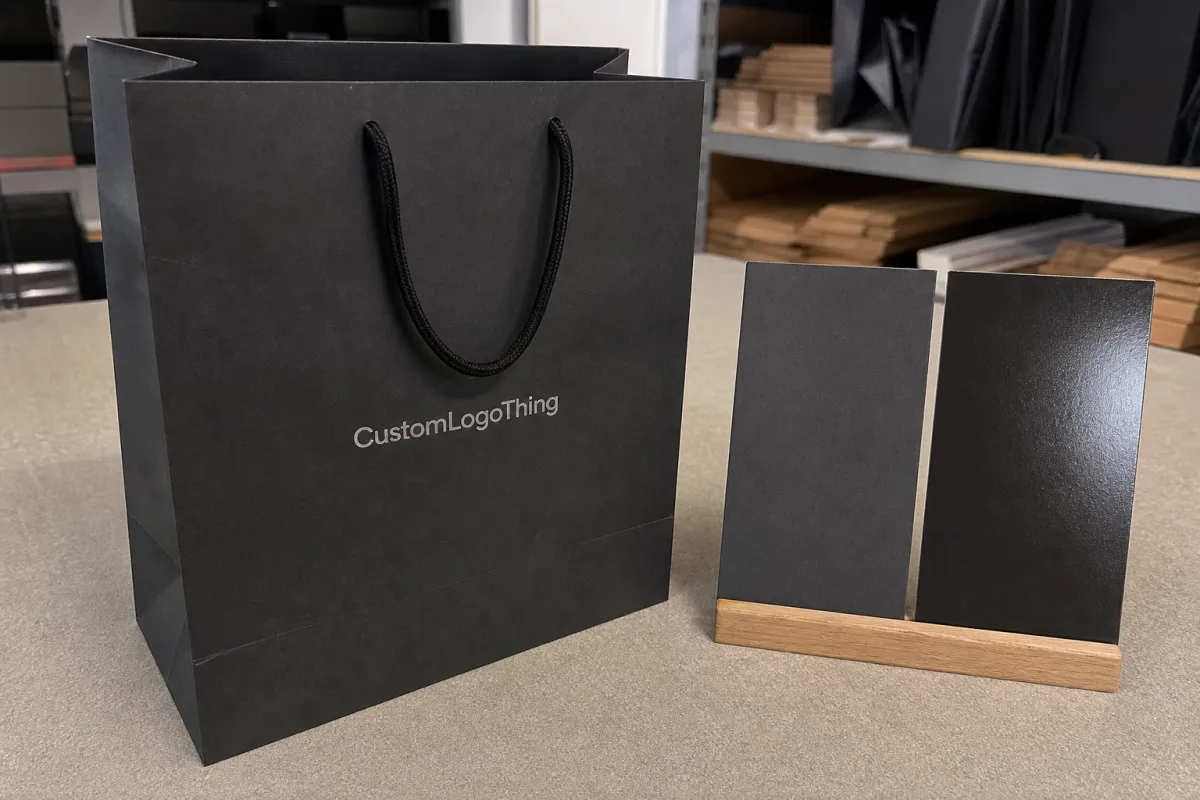
I’ve watched a customer decide whether a brand felt “worth it” in under ten seconds, and the trigger was not the product itself. It was the box, a matte black mailer with a 1-color white logo and a 350gsm C1S artboard insert that made the order feel intentional from the first touch. Personalized Packaging for Online business matters because it turns a shipment into a brand experience, and in my experience, that first physical touchpoint does more heavy lifting than most owners expect.
At Custom Logo Things, I’ve seen small shops in Austin, TX, subscription brands in Los Angeles, CA, and fast-scaling DTC sellers in Charlotte, NC use Personalized Packaging for Online business to lift repeat orders, reduce damage complaints, and make unboxing feel deliberate instead of generic. Honest truth? A plain shipper can move a parcel. A well-planned package can move memory, loyalty, and referrals, especially when the structure, print, and insert all work together at a cost like $0.15 per unit for 5,000 pieces on a simple branded mailer insert.
One client I met during a packaging review in New Jersey was spending nearly $1.10 more per order on generic void fill and oversized cartons than they needed to, and the warehouse was burning an extra 22 seconds per pack-out. We trimmed the structure to a 9 x 6 x 3 inch mailer box, added a printed insert, and the brand kept the premium feel while cutting freight waste. That’s the kind of win personalized Packaging for Online business can create when it’s designed like a system, not an accessory.
Why personalized packaging for online business matters
Customers judge faster than most brands realize. In a retail aisle, a shopper can touch five competitors in a minute. Online, the box becomes the store shelf, the sales associate, and the first impression all at once, often in a 14-second delivery-to-doorstep moment. That makes personalized packaging for online business more than decoration; it is the physical proof that a brand knows who it is.
Plain English version: personalized packaging can mean custom printed boxes, branded mailers, tissue paper, stickers, inserts, tape, sleeves, and even a short thank-you note printed on 16pt C2S stock. It also includes structural choices, like whether a product ships in a mailer box with a tuck top or a corrugated outer shipper with an inside reveal. That mix of design and function is what people often mean when they talk about branded packaging or package branding, especially when the art is produced in a facility in Dongguan, Guangdong, or Shenzhen, China.
Why does this matter more for an online business than for a brick-and-mortar store? Because e-commerce removes the handshake, the shelf conversation, and the in-person product demo. The package has to carry the brand story by itself, often across a UPS or FedEx lane that takes 2-5 business days. I’ve sat in client meetings where founders thought the product would “speak for itself,” then later wondered why repeat purchase rates stayed flat. The missing piece was usually a forgettable delivery moment. Personalized packaging for online business fills that gap.
There’s another reason this works: perceived value. A product inside a well-considered box often feels more expensive, even when the product cost hasn’t changed. I’ve seen a $28 skincare item feel “premium” in a rigid box with a soft-touch finish and a 2mm greyboard core, while a similar item in a plain poly mailer felt bargain-bin to the same shopper. Same formula. Different presentation. Different result.
Social sharing matters too. Unboxing videos are not the entire market, but they are a useful signal. A package that looks thoughtful gets photographed more often, and that can create free reach. Personalized packaging for online business supports that behavior without asking the customer to do extra work, whether the content is filmed in a Brooklyn apartment or in a studio warehouse in Nashville, TN.
“The box was better than I expected,” one founder told me after her first branded rollout. “And then our support tickets dropped because people stopped asking whether the order was from us.”
That last line is more important than it sounds. Good packaging doesn’t just create delight; it reduces confusion. It can support customer retention by making every shipment unmistakably yours. In packaging terms, that is product packaging doing marketing work, operations work, and trust work at the same time, often for less than the cost of a single paid ad click in a competitive niche.
How personalized packaging for online business works
Most personalized packaging for online business follows a fairly practical path. First comes the order brief. Then design. Then sampling or proofing. Then production. Then pack-out and delivery. That sounds simple, but the details matter. The difference between a smooth project and a frustrating one is usually whether the brand knows its dimensions, shipping method, and cost ceiling before asking for quotes, especially if the minimum order quantity is 1,000 pieces or 5,000 pieces.
The customization methods are broader than many people think. Printing is the obvious one, but there are several layers you can combine:
- Printing: full-color exterior graphics, one-color logos, interior print, or brand patterns.
- Labels and stickers: fast, flexible, and useful for short runs or seasonal campaigns.
- Sleeves: ideal for turning stock boxes into branded packaging without custom structural tooling.
- Inserts: corrugated, molded pulp, foam, or paperboard pieces that hold the product securely.
- Tissue and wraps: lightweight layers that improve presentation at low cost.
- Branded tape: useful for outer shipping cartons and tamper evidence.
- Shipper branding: logos or messaging on the outer container for recognition in transit.
How those pieces are used depends on the product. A candle brand shipping glass jars needs different protection than a t-shirt label or a supplement bottle. Fulfillment method matters too. If a merchant self-packs ten orders a day, a slightly more complex structure might be fine. If a 3PL is packing 2,000 orders a week in a facility in Louisville, KY, assembly speed becomes a major constraint. Personalized packaging for online business has to fit the workflow, not fight it.
Here’s where a lot of brands get tripped up: they design for the reveal but ignore the ship. I’ve visited facilities in Commerce, CA, and Secaucus, NJ where a beautiful mailer box looked perfect on a sample table and failed once it hit a conveyor. Corners crushed. Closures popped open. Fillers migrated. The lesson was simple: test the packaging in the conditions it will actually face, not just on a white studio backdrop or a designer’s screen.
Typical timing depends on the format. A printed mailer with standard inks may move from approved proof to production in roughly 10-15 business days, and shipping from the factory to a U.S. warehouse usually takes another 4-7 business days by ocean freight plus local drayage if the run is coming from Shenzhen or Ningbo. A more complex rigid box with specialty foil or embossing can take 20-30 business days, especially if there’s a custom insert or multiple revisions. Personalized packaging for online business is rarely about raw speed alone; it is about the right balance of speed, price, and consistency.
Some of the work can happen in-house. Small shops often apply stickers, add printed cards, or pack tissue before sealing orders. A packaging supplier can handle the structural side: printed cartons, custom inserts, and production finishing. The best systems I’ve seen split the labor intelligently. Brands keep the flexible, low-volume touchpoints in-house and outsource the parts that need press equipment, die-cutting, or repeatable color control, whether those parts are made in Illinois, Vietnam, or the Pearl River Delta.
One supplier negotiation that sticks in my memory involved a beauty brand that wanted interior print, a separate insert card, and gold foil on the lid. We broke the package into three layers and priced each one separately, with the foil alone adding about $0.11 per unit on a 10,000-piece order. Once the founder saw the math, she dropped the foil, kept the insert, and used the savings on a thicker board. Better structure. Lower damage. Cleaner budget. That is personalized packaging for online business at its most practical.
Key factors that shape packaging design and pricing
Packaging cost is rarely just “box price.” It is material, print method, order quantity, setup, freight, storage, and labor. Personalized packaging for online business gets expensive fast when those pieces are not looked at together, especially if the packaging is coming from a factory in Guangzhou and the fulfillment center is in Dallas, TX.
Materials are the first lever. Corrugated board remains the workhorse for shipping because it handles compression and transit abuse well, and a typical E-flute mailer can support better crush resistance than a poly mailer at a similar size. Folding cartons are lighter and often better for shelf-like presentation inside an outer shipper. Rigid boxes feel premium and are excellent for gifting, but they cost more and take up more storage space. Poly mailers are cheap and light, though they are not right for fragile products. Kraft paper and recycled board appeal to brands with sustainability goals, but “eco-friendly” should be matched with the right product weight and durability requirements.
Specialty finishes change both price and perception. Soft-touch lamination, aqueous coating, matte varnish, foil stamping, embossing, and spot UV all add character. They also add setup complexity. A 350gsm C1S artboard with soft-touch lamination may be a smart choice for a cosmetic set, but not for a heavy subscription kit that needs crush resistance. Personalized packaging for online business works best when the material spec matches the shipping reality, whether the package is riding in a local courier van or a cross-country LTL pallet.
Quantity matters even more than many first-time buyers expect. A run of 1,000 custom printed boxes might carry a much higher unit cost than 10,000 pieces, because the print setup and die-cut setup get spread across fewer units. Small brands often pay more per unit because they need flexibility. Bigger brands usually negotiate lower unit pricing because they can order deeper and store more inventory. That trade-off is not always worth it if the packaging design changes every month, especially for dropshipping catalogs and short-run seasonal launches.
Here’s a simple comparison I use with clients:
| Packaging option | Typical use | Relative unit cost | Main advantage | Main trade-off |
|---|---|---|---|---|
| Printed poly mailer | Light apparel, low-fragility goods | Low | Cheap, light, fast to use | Limited premium feel |
| Mailer box with one-color print | General DTC shipments | Medium | Strong brand presence and solid protection | More storage than mailers |
| Rigid box with specialty finish | Gift sets, premium product packaging | High | Strong unboxing impact | Higher cost and shipping weight |
| Stock box + branded sleeve | Small brands testing demand | Low to medium | Flexible, lower setup burden | Sleeve can shift if not designed well |
The brands that overspend usually do one of two things. They add decoration before solving protection, or they choose premium finishes across every surface. Both are costly mistakes. A better move is to put the money where the customer actually notices it. For many businesses, that means one strong logo placement, a single interior message, and a good insert that keeps the product safe, often at a finished packaging cost of $0.42 to $0.95 per unit depending on volume.
Carrier costs also deserve attention. A box that is one inch larger in each direction may push a shipment into a more expensive dimensional weight band. That can matter more than a 10-cent savings on print. I’ve watched a client celebrate a cheaper box quote, only to lose the savings in UPS charges within two weeks. Personalized packaging for online business has to be measured against freight, not just factory pricing.
Brand requirements can be surprisingly specific. Some teams want exact Pantone color control. Others need logo placement aligned with a social media photo angle. Some want tissue that matches the box ink within a two-point color tolerance. None of that is unreasonable, but each detail carries a cost and a tolerance limit. That is why sample approval matters so much, especially when the printer is matching Pantone 186 C on coated stock versus uncoated stock.
For brands looking at Custom Packaging Products, I usually recommend separating “must-have” features from “nice-to-have” ones. A must-have is structural integrity. A nice-to-have might be a foil accent that adds perceived value. That distinction keeps personalized packaging for online business from becoming an unplanned luxury project.
If sustainability is part of the brand promise, the materials need to match the claim. FSC-certified board, recycled corrugated content, and right-sized packaging can support that story. For the bigger context, the Forest Stewardship Council and the EPA recycling guidance are useful references for brands trying to make better material choices. I’m cautious here, though: “recyclable” depends on local infrastructure and contamination, so don’t oversell it, particularly if the package uses laminated film or magnetic closures from a plant in Zhejiang.
Step-by-step: building a packaging system that fits your store
The best personalized packaging for online business starts with a hard look at the actual product and the actual fulfillment process. Not the mood board. Not the competitor’s Instagram reel. The real product, real box size, real shipping lane, and real labor cost, down to the minute it takes to fold a carton at the packing bench in Indianapolis, IN.
Step 1: Audit your product and fulfillment needs. Measure the item, its accessories, and any protection requirements. A ceramic mug and a knit scarf do not need the same structure. Write down weight, dimensions, fragility, and whether the item ships alone or in bundles. I’ve seen brands skip this step and end up reworking the entire system after the first 500 orders, which usually means another $300 to $1,200 in sample and revision costs.
Step 2: Define the goal. Are you trying to build awareness, reduce returns, improve unboxing, or support repeat purchases? Personalized packaging for online business can do all four, but one goal usually deserves priority. If the product already has strong margins, you may be able to spend more on presentation. If margins are tight, damage reduction and freight efficiency should come first.
Step 3: Choose the format and materials. Custom printed boxes are often the default, but they are not the only answer. Branded mailers, sleeves, inserts, and printed tape can create a memorable experience at lower cost. The right choice depends on the product category and how often the packaging changes. Seasonal brands need flexibility. Core catalog brands may prefer a standard structure with variable artwork, such as a 12 x 9 x 4 inch mailer box with a single-color exterior print.
Step 4: Develop artwork carefully. Keep print zones realistic. Check bleed, safe areas, and barcode placement if needed. If the packaging includes a logo, make sure it appears clearly at the customer’s first view point. I always tell founders to look at the design from three angles: on a shelf, in a mailbox, and on a phone screen when shared on social media. Personalized packaging for online business should hold up in all three views, with copy that still reads well at 1080 pixels wide.
Step 5: Request a sample and test pack-out. This is where good projects become great. Run a physical sample through the actual fulfillment process. Time the assembly. Shake the carton. Drop-test it from a realistic height. If the product is fragile, follow basic ISTA thinking and evaluate transit stress, not just aesthetics. For more formal guidance, the ISTA testing standards are a useful benchmark, and a simple ASTM-style drop check can reveal weak corners before production begins.
Step 6: Launch in a controlled batch. Do not rush straight to a six-month inventory commitment unless you have already tested demand. Start with a batch that gives you room to compare order speed, packaging waste, and customer feedback. After that, refine the system. The best personalized packaging for online business evolves in response to data, not guesswork, whether the first order is 250 units or 2,500 units.
One apparel client I worked with had a classic problem: gorgeous box, terrible pack-out time. The team was spending 90 seconds per order tying ribbon and folding tissue. We cut the ribbon, kept a printed wrap and a sticker seal, and the team dropped to 34 seconds per order. That is the kind of math that makes a packaging program sustainable, especially when labor in a U.S. 3PL runs $18 to $24 per hour.
Here’s the sequence I recommend most often:
- Measure product and shipping constraints.
- Choose one primary packaging format.
- Pick one or two branded elements that matter most.
- Approve a sample after a real pack-out test.
- Order a pilot quantity.
- Review damage rate, assembly time, and customer response.
Process and timeline: what to expect from idea to delivery
From first brief to delivery, personalized packaging for online business usually moves through six stages: brief, concept, quote, proof or sample, revisions, production, and freight. Some projects move in under three weeks. Others take two months or more. The difference comes down to structure complexity, print method, and how quickly the brand approves decisions, plus whether the factory is in a nearby region like Mexico or across the Pacific in Ningbo, China.
Digital printing tends to be the fastest option for short runs and variable graphics. Offset printing can deliver excellent color consistency and lower unit costs at scale, but setup is heavier and minimums are usually higher. Specialty finishing, like foil or embossing, adds production steps and can extend lead time. If a project combines structural design with custom inserts and coated artwork, expect more back-and-forth. Personalized packaging for online business is only “quick” when the scope stays controlled and the dieline is approved on the first or second round.
Rushed timelines have a cost. They can increase unit pricing, limit design revisions, and reduce finish options. More than once, I’ve had a client ask for a faster turnaround and then discover the only way to hit it was to simplify the artwork or accept a thinner board spec. That may be fine, but it should be a conscious decision rather than a surprise, especially if the quote changes from $0.28 to $0.41 per unit because of rush production.
Common delays usually come from predictable places: artwork changes after proof approval, missing dieline measurements, specialty materials that are temporarily unavailable, and freight schedules that slip by a week. Seasonal launches are especially sensitive. If a brand plans holiday shipments, I advise building in a buffer of at least 3-4 weeks beyond the supplier’s quoted lead time. Personalized packaging for online business does not forgive last-minute planning, and a Black Friday launch can expose every weak link in the chain.
A realistic planning window looks like this:
- Simple branded mailers or labels: roughly 2-3 weeks.
- Mailer boxes with custom print: roughly 3-5 weeks.
- Rigid boxes with specialty finishes: roughly 5-8 weeks.
- Highly custom packaging systems: often 8 weeks or more.
That said, I never treat those numbers as guarantees. A nearby production facility, a stable paperboard supply, and fast proof approval can shorten the schedule. International freight, artwork corrections, or a material shortage can push it out. That’s normal. Planning with a cushion is smarter than promising a date you can’t defend, and in one recent case a shipment from Shenzhen to Long Beach needed 19 days door to door before inland trucking even began.
For brands doing drops, subscriptions, or campaign-based launches, the planning question should be, “When do I need inventory in hand?” not “How fast can a supplier print?” That shift sounds small, but it changes how teams buy, design, and schedule work. Personalized packaging for online business succeeds when it fits the launch calendar instead of scrambling to catch it.
Common mistakes online businesses make with personalized packaging for online business
Some mistakes are obvious. Others hide inside good intentions. I’ve seen brands spend money on beautiful boxes that failed in transit, and I’ve seen others choose eco-friendly materials that looked good on the spec sheet but buckled under a 2-pound product. Personalized packaging for online business punishes wishful thinking, especially when the board grade is too light for the route from a factory in Dongguan to a fulfillment center in New Jersey.
First mistake: choosing packaging that looks good but fails in transit. If a carton crushes, splits, or pops open, the customer remembers the failure more than the print. The box is supposed to protect the product first. Presentation comes after that, and a 32 ECT corrugated board may be a better choice than a prettier but weaker alternative.
Second mistake: over-branding every surface. A logo on the lid, side panels, interior flap, insert, tissue, tape, and card can become visual noise. More brand marks do not automatically create stronger branding. Sometimes they just create clutter. One or two well-placed elements usually work better than six competing ones, especially in a narrow 8 x 6 inch mailer.
Third mistake: ignoring freight and storage. A gorgeous rigid box can eat shelf space fast. A bulky mailer can trigger dimensional weight charges. Personalized packaging for online business should be evaluated against warehouse space, cartoning speed, and carrier pricing, not just the mockup. A 15% increase in carton volume can erase a savings of $0.05 per unit in printing.
Fourth mistake: ordering too much too soon. Forecasting is hard, especially for new products. If you order 25,000 boxes before testing demand, you may end up with dead inventory when the logo, product size, or promotion strategy changes. Start smaller when possible. Test. Then scale. A first run of 2,000 units is often enough to learn without tying up too much cash.
Fifth mistake: approving artwork too quickly. A proof is not a formality. It is the last chance to catch logo placement issues, color shifts, language errors, barcode problems, and dieline mismatches. I still remember a supplier call where a client approved a sample without noticing the return address was printed inside the closure panel. That became a reprint. Expensive lesson.
Sixth mistake: using materials that conflict with sustainability claims. If your brand says “recyclable,” but the package uses mixed laminations, magnetic closures, and plastic foam that customers can’t easily separate, trust erodes. Be accurate. If a material choice is recyclable in some regions but not others, say that plainly. Honesty is better than overstatement, especially if the packaging uses adhesives that complicate recycling streams.
Here’s what most people get wrong: they think the packaging project is finished when the artwork looks good. It isn’t. The real test is whether the system holds up across 500 orders, three warehouse staff members, and one busy shipping day when the printer jams and the carrier arrives early. Personalized packaging for online business has to survive real life, not just a clean proof on a conference room table.
Expert tips to make packaging work harder for your brand
The smartest brands do less, better. They pick one high-impact branded touchpoint and make it memorable. That could be a crisp logo on the lid, a bold interior print, or a thank-you insert with a strong offer. Personalized packaging for online business does not need to shout everywhere to be effective, particularly when the buyer opens the carton at a kitchen counter in Denver, CO.
Tip 1: Use one hero element. If the box is printed, keep the tissue simple. If the tissue is custom, maybe the outer carton stays restrained. The eye needs a focal point. Too many competing accents flatten the experience.
Tip 2: Build a modular system. I like packaging systems that can stretch across multiple SKUs and seasons. For example, one mailer size, one insert family, and artwork that changes by campaign. That reduces SKU sprawl and keeps fulfillment manageable. Modular design is one of the most underrated ideas in personalized packaging for online business, especially for brands shipping 12 different sizes from the same warehouse shelf.
Tip 3: Add one interior surprise. A short note, a printed inside flap, or a small sample can create the emotional payoff customers remember. It does not need to be expensive. It just needs to feel intentional. I’ve seen a 12-cent insert outperform a much pricier exterior finish because it spoke directly to the customer.
Tip 4: Measure the outcome. Track damage rate, average assembly time, support tickets, repeat purchase rate, and customer mentions. Packaging should earn its keep. If the new box adds 18 seconds to fulfillment but reduces returns by 7%, that may be a good trade. If it increases shipping cost by 14% and nobody notices, it may not be worth it.
Tip 5: Keep operations in the loop. A packaging idea that delights marketing but frustrates fulfillment is not a win. I’ve seen founders fall in love with a magnetic closure, then discover the line staff needed extra training and the closure added too much labor. Personalized packaging for online business works best when operations, marketing, and finance all review it together, with a hard look at pack-out time, box count, and storage space.
Tip 6: Treat packaging like a marketing channel. Most businesses measure ads, email, and retention. Packaging often gets filed under “shipping expense,” which is too narrow. A printed carton can carry a coupon, a QR code, a referral prompt, or a product education message. If it’s planned well, personalized packaging for online business becomes one of the few channels customers physically hold in their hands.
During a supplier walk-through at a corrugated plant in Wisconsin, one production manager showed me a simple change that saved a client nearly 8% in board usage: reducing the box footprint by just 6 millimeters on two sides. That tiny adjustment mattered because it improved nesting and cut shipping volume. Small changes can have outsized results when they repeat across thousands of orders.
For brands wanting to expand their packaging toolkit, I usually suggest reviewing Custom Packaging Products alongside your fulfillment process map. That’s where the best decisions come from: product, process, and presentation all in one place, with actual labor costs and carton specs in front of the team.
Bottom line: personalized packaging for online business should feel branded, protect the product, and stay practical to run. If it fails any one of those tests, the system needs another round of refinement.
FAQ
What is personalized packaging for online business in simple terms?
It is packaging customized with a brand’s logo, colors, messaging, or structural design so the delivery experience feels specific to that business. It can include boxes, mailers, tissue, inserts, stickers, tape, and thank-you cards, often printed on materials like 350gsm C1S artboard or E-flute corrugated board.
How much does personalized packaging for online business usually cost?
Cost depends on material, print method, order volume, and finishing options. A simple printed insert might start around $0.15 per unit for 5,000 pieces, while a custom mailer box with one-color print may land around $0.42 to $0.65 per unit at 3,000 to 5,000 pieces. Higher quantities usually reduce the unit price, but storage and cash flow matter too.
How long does it take to create custom packaging for an online store?
Timeline depends on design complexity, proofing, production method, and shipping distance. A basic project may move from proof approval to production in 12-15 business days, while a fully custom structural package with special finishes can take 20-30 business days. Build in extra time if you need artwork revisions or seasonal launch coordination.
What packaging format works best for small online businesses?
The best format depends on the product’s size, fragility, and shipping method. Mailer boxes, Branded Poly Mailers, and custom inserts are common starting points because they balance cost and presentation. For example, a 9 x 6 x 2 inch mailer with a 1-color print can be a practical choice for apparel and light accessories.
How can I test personalized packaging before ordering in bulk?
Request a sample or prototype and run it through a real fulfillment test. Check durability, assembly time, customer perception, and shipping cost before scaling the order. If possible, test at least 25 to 50 pilot units and measure whether the pack-out stays under your target, such as 40 seconds per order.
Personalized packaging for online business is not a decorative extra. It is a practical brand tool, a cost decision, and a customer-experience signal all at once. I’ve seen it raise perceived value, reduce transit damage, and make repeat buyers feel recognized. If you plan it with real specs, real samples, and real shipping conditions, personalized packaging for online business can pay for itself in ways that show up well beyond the box.