Personalized Party Favor boxes do more than hold a small gift. They shape how the gift is perceived, how the table looks, and how much work the host has to do when the event is already moving fast. That makes them a packaging decision, not just a decoration detail.
Weddings use them for candy, mini candles, and keepsakes. Baby showers fill them with wrapped treats or small soaps. Birthday tables use them to tie together colors and theme elements. Corporate teams rely on them for client gifts, launch kits, and branded bundles that need to feel finished instead of thrown together. If you are comparing structures, sizes, or finishes, the Custom Packaging Products catalog is a useful place to start because the box shape usually affects the assembly workflow as much as the final look.
The practical value is simple. A good favor box keeps loose items organized, reduces last-minute bagging, and makes a modest giveaway feel deliberate. A bad one does the opposite. It can make even a decent gift look thin, cramped, or rushed. Packaging has a habit of exposing the parts nobody planned well enough.
There is also a cost angle. The right structure can reduce wasted filler, limit assembly time, and cut down on damaged contents. That matters more when the event has a fixed delivery date or when the order includes a few hundred units that need to be packed by hand. The cheapest box on paper is not always the cheapest box in the real workflow.
What Personalized Party Favor Boxes Actually Solve
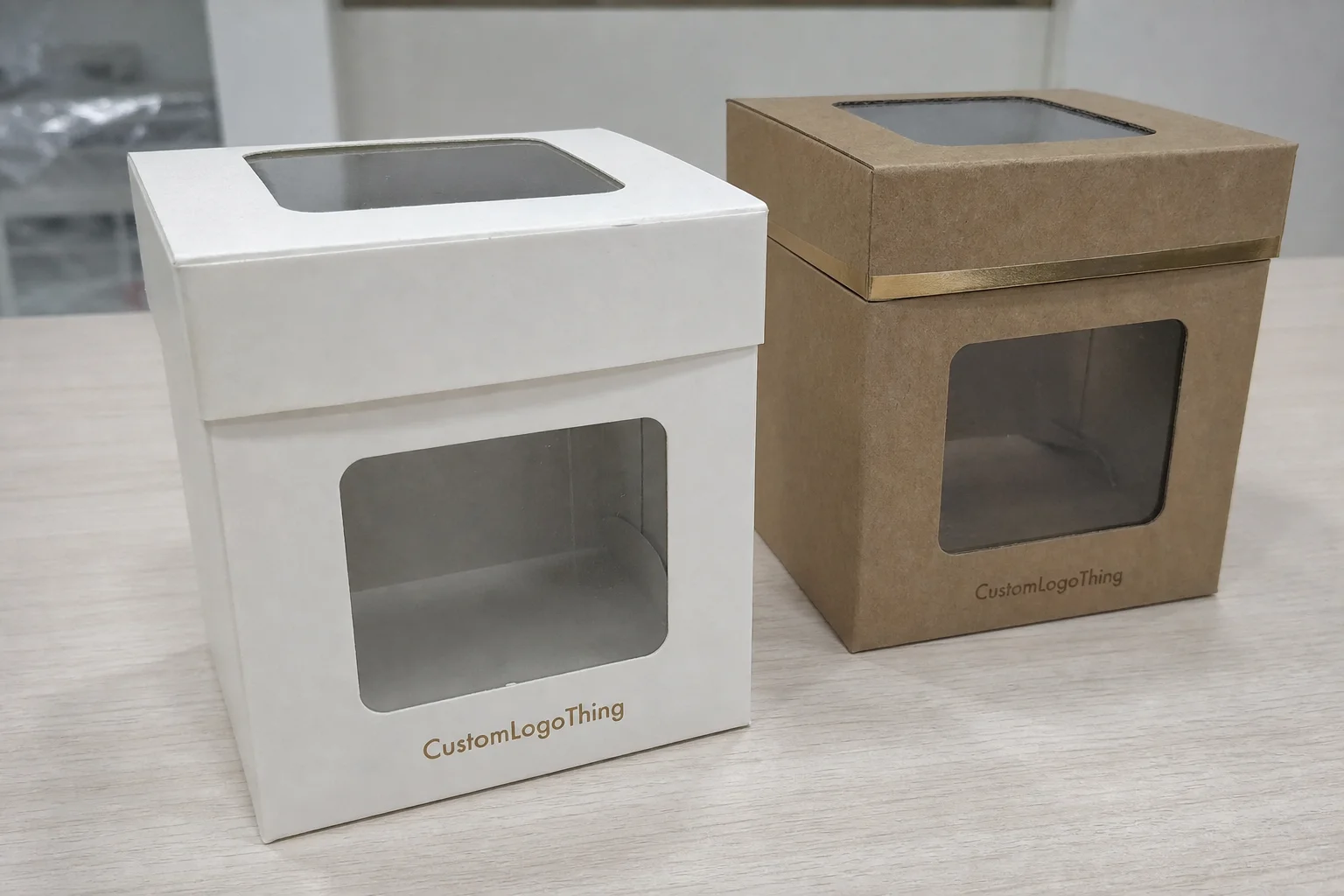
Generic containers only handle storage. Personalized party favor boxes do storage, presentation, and branding at the same time. They can carry a name, date, logo, color palette, or short message, so the packaging becomes part of the event instead of a generic container sitting on the side.
That matters because guests notice packaging before they open it. A box with the right proportions and graphics creates a stronger impression than a loose pouch or plain tuck box. For weddings, that may mean initials and a date. For business events, it may mean a logo and a short thank-you line. For retail bundles, the box may be the only thing preventing the whole package from feeling like a loose assortment of items.
From a buyer’s point of view, the value is control. You can match the box to the contents, keep the table clean, and make sure the gift feels intentional. You also get a surface for design cues that would never fit on a tag or sticker. That is a small advantage on a screen and a large one when the box is sitting next to twelve others under event lighting.
Personalized boxes also simplify quantity management. If every unit uses the same dimensions, folding and filling become repeatable. That sounds minor until someone is assembling 200 favors the night before an event and discovers that the “simple” box was not designed around the actual contents. It is amazing how fast an elegant plan turns into a pile of tape and regret.
- Weddings: candy, mints, candles, or keepsakes that match the table setting.
- Baby showers: wrapped sweets, soaps, or tiny decorative items tied to the theme.
- Birthdays: toys, treats, and party favors that need a neat display.
- Corporate events: branded gift sets, sample kits, and client thank-you packs.
- Retail bundles: curated assortments that need cleaner shelf appeal and safer transit.
If the favor is fragile, edible, or meant to feel premium, a custom box usually does a better job than a pouch or clear bag. It can also support inserts or secondary packaging if the contents travel in a larger kit. That is where the broader Custom Packaging Products range becomes useful, because the favor box has to work inside a real packing process, not just in a mockup.
One thing buyers often miss: presentation is not only about decoration. It is about what the package hides. If the contents are uneven, delicate, or likely to shift during transport, the box structure matters as much as the printed artwork. Good packaging makes a simple favor look thought through. Weak packaging makes a good idea look unfinished.
How the Production Process and Timeline Usually Work
Most production runs follow a predictable sequence. Artwork comes in first. Then the supplier checks the dieline, which is the cut-and-fold template that controls panel size, glue placement, and closure behavior. After that comes the proof, where the buyer checks spelling, alignment, logo placement, fold direction, and any color issues before production starts.
Once the proof is approved, the job moves into manufacturing. For a simple one-color run, the process may include printing, cutting, creasing, and packing. More complex boxes add extra steps: foil stamping, embossing, spot gloss, window patching, magnetic closures, or inserts. Each one affects schedule and risk. A plain printed carton can move fast. A box with multiple finishes cannot. Physics and labor still exist, which is inconvenient for everyone.
Proof approval is the point where the layout, spelling, structure, and finish become fixed. After that, changes cost time and money.
Typical lead times depend on complexity. A straightforward custom run may take roughly 7 to 12 business days after proof approval. More detailed work often lands closer to 12 to 18 business days. Shipping is separate. That is the part people like to ignore until the boxes are still in transit and the event is tomorrow.
Ask for four time frames up front: proof turnaround, production lead time, ship date, and in-hand date. If a supplier cannot separate those clearly, the schedule is not clear enough yet. Event packaging lives and dies by dates. A vague timeline is not a small issue. It is a production risk with a pretty mockup.
If the order will travel with other event materials or be shipped in bulk, it is worth asking whether the structure has been checked against common handling and distribution stress. That is where transit testing standards matter. For a general reference point, see ISTA. The goal is not to over-engineer a favor box. The goal is to keep corners from crushing and inserts from shifting before the package even reaches the venue.
Materials, Sizes, and Finishes That Change the Final Look
Material choice affects hand feel, print sharpness, and structural strength. A 300gsm to 400gsm paperboard is common for lightweight favor boxes that need a clean print surface without a high price tag. For a sturdier feel, buyers often move to thicker SBS, C1S, or specialty folding board. Rigid boxes sit in a different category entirely. They are premium because they are built that way, not because the artwork is more exciting.
Size should follow the contents, not the other way around. Small candy assortments need very little depth. Mini candles, folded apparel, and cosmetic samples need more internal clearance and often work better with an insert. Mixed gift sets are harder. If the items vary in shape, the box needs enough room for the tallest piece while still holding the contents in place. Too large, and the package looks empty. Too tight, and the contents scuff, bend, or crush.
Finishes change the perceived value quickly. Matte lamination gives a softer, more modern look. Gloss makes color pop and can feel more festive under bright event lighting. Foil accents work well for initials, dates, or logos that need a stronger focal point. Soft-touch coating adds a velvety finish, though it raises cost and is not always the smartest choice for food-heavy handling. Clear windows are good when the contents are part of the design, but they also reveal assembly quality, so the internal packing has to be better.
For buyers who care about sourcing, ask whether FSC-certified material options are available. The FSC system is widely used for responsible forest management. Procurement teams care about that more than many event planners expect, especially when packaging is part of a branded or regulated purchase.
The rule that saves money is not complicated: match the box to the contents and the event, not to a vague idea of luxury. A well-proportioned 350gsm box with clean typography usually beats an overbuilt structure chosen only to feel expensive. Buyers like to spend on visible upgrades, but shape discipline and finish consistency do more work than fancy extras.
| Box Style | Typical Use | Approx. MOQ | Common Unit Range | What Changes the Price Fastest |
|---|---|---|---|---|
| Printed folding carton | Candy, small favors, light retail gifts | 500 to 1,000 | $0.28-$0.68 | Print coverage, finish, and board thickness |
| Tuck-top box with insert | Candles, samples, mini skincare, small toys | 1,000 | $0.42-$0.95 | Insert complexity, die-cut shape, and color count |
| Rigid favor box | Premium weddings, VIP gifts, luxury kits | 300 to 500 | $1.20-$3.20 | Board wrap, magnetic closure, and specialty finish |
| Window box with custom print | Retail bundles and display-style gifting | 1,000 | $0.60-$1.40 | Window size, patching, and structural reinforcement |
That table is a working guide, not a quote. Pricing shifts with dimensions, quantity, artwork coverage, finish, and freight zone. Still, it gives buyers a way to sanity-check a number instead of treating every estimate like a black box. A decent quote should be explainable.
Personalized Party Favor Boxes Cost, MOQ, and Quote Drivers
The price of personalized party favor boxes usually comes down to five things: board grade, print coverage, structure, finish, and quantity. Change any one of those, and the unit cost moves. A small box with heavy coverage can cost more than a larger box with simple one-color branding. That surprises first-time buyers, but it should not.
Minimum order quantity matters because setup costs have to land somewhere. If a run requires die-cut tooling, proofing, and press setup, a 250-piece order will usually cost much more per unit than a 2,000-piece order, even when the design is simple. Smaller runs are possible in many cases, but the labor share is higher and the material pricing is usually less friendly.
Watch the extras. Common charges include die fees, plate fees, sample fees, structural revisions, rush fees, and freight. Some suppliers include proofing in the quote. Some do not. Some quote packing. Others quote the box only and leave shipping as a separate line. That is why two quotes that look similar can land far apart once the invoice is final.
A useful way to compare quotes is to ask two questions. First, what is included? Second, what would change the price if the design stayed the same? The second question usually reveals the real savings. A smaller print area, simpler finish, or lower color count can move a quote faster than a buyer expects. So can quantity consolidation. If the same design is used across multiple events or product bundles, the per-unit cost usually improves.
I would ask for two scenarios every time:
- The minimum quantity the supplier can run.
- A higher tier that may lower the unit cost enough to justify a little overage.
That comparison shows where the pricing curve bends. Sometimes moving from 500 to 1,000 units barely changes the total. Sometimes it drops the unit cost enough that the larger order is the smarter move. The only way to know is to ask for both numbers.
One more thing buyers tend to ignore: artwork complexity has a cost even when it is not obvious on the quote. Fine lines, small type, full-bleed coverage, and multiple spot colors can all increase production risk. Risk tends to show up as extra proofing, slower production, or more conservative print handling. None of that is dramatic. It just costs money.
Step-by-Step Ordering Checklist for a Smooth Launch
Start with event math. Count the guests, add a buffer, and decide whether every box must be identical or whether a few variations are acceptable. Then define what the box has to hold. Fill weight matters. So does shape. A candy cube and a folded apparel pack behave very differently inside the same carton.
Next, turn the theme into actual packaging specs. Choose the base color, accent color, artwork placement, and closure style. If the invitation uses soft neutrals, do not force a bright, high-contrast box unless the rest of the event supports that choice. A favor box should echo the design system, not argue with it. If the boxes are part of a broader packaging setup, make sure they work with inserts, labels, and outer cartons from Custom Packaging Products.
Then prepare the artwork. Vector files are safest. AI, EPS, and print-ready PDF files usually give the cleanest results, especially for logos and small typography. Keep text away from folds and edges. Check spelling. Check dates. Check exact color instructions if the design depends on a precise shade. The proof stage is not the place for discovering a missing apostrophe.
Before approving the proof, check five things:
- Artwork placement on every panel
- Bleed and trim margins
- Spelling and punctuation
- Closure direction and fold orientation
- Whether any finish affects legibility
Build in assembly time. If the boxes arrive flat, someone still has to fold, fill, and seal them. That can be quick for a small batch and annoying for a large event. Test one finished unit before the final assembly starts. It is the simplest way to catch a box that looks fine on screen but does not hold the intended contents once packed.
Protect the schedule. Shipping delays are not rare enough to ignore, especially for event orders with fixed dates. If the deadline is non-negotiable, plan backward from the in-hand date, not the ship date. That one habit prevents more mistakes than most design tricks ever will.
Also check the packing method if the favor boxes are going to be stored, transported, or distributed in stages. A structure that folds beautifully can still fail if it is too thin for stacking or too loose for inserts. Good packaging design accounts for the full route, not just the photo shoot.
Common Mistakes That Make Favor Boxes Look Cheap
The fastest way to cheapen a favor box is to overload a tiny surface with too much text. Small panels cannot carry brochure-level messaging. A name, date, logo, and full paragraph all fighting for space will look cramped even if the print quality is excellent. Keep the hierarchy simple. Let the box breathe.
Material mismatch is another common problem. A luxury theme paired with thin board, weak closures, or a glossy finish that clashes with the rest of the event looks inconsistent. Buyers often overspend on decor and then underspec the box. That imbalance is easy to spot. Guests notice it too, even if they cannot explain why.
Skipping proof review is expensive. So is approving artwork from a screen without checking scale. A font that feels readable online can become borderline illegible on a three-inch panel. The same applies to logos. If the file is low resolution, the edges will soften or pixelate in print. That is not a manufacturing mystery. It is a file problem.
Assembly is another hidden trap. A box can look excellent flat and still fail once it is filled. Corners may split. Closures may spring open. Gloss finishes may scuff more than expected. If the favor includes chocolate, candles, or anything that can stain, test the internal behavior before ordering at full volume. A small sample run is cheaper than reworking 200 boxes the night before the event.
If the boxes will travel to a venue, be shipped to several locations, or sit inside a larger kit, ask whether the structure has been tested for handling and vibration. Transit standards from organizations such as ISTA are useful because they expose weak folds, loose inserts, and poor stacking before the real shipment does.
Pretty artwork does not rescue weak structure. If the box cannot survive filling, handling, and transport, the design budget was spent in the wrong place.
There is also a temptation to chase every trend at once. Metallic foil, colored rope, window cutouts, layered labels, embossing, patterned tissue, and custom inserts can all work. All at once, they usually do not. The best favor boxes usually have one strong visual idea and a clean structure around it.
Expert Tips and Next Steps Before You Request a Quote
Before you send a request, gather the details that actually drive price: final quantity, box dimensions, artwork files, desired finish, delivery ZIP code, and the date the boxes must be in hand. Those six items shorten the quoting process and reduce the back-and-forth that usually slows buyers down.
Ask for two pricing scenarios. One should match the minimum quantity. The other should show a higher tier. That comparison reveals where the unit economics improve and whether it makes sense to order a small overage for future use, samples, or replacement units. It is simple, but it keeps the buyer from fixating on the first number that lands in the inbox.
For high-stakes events, request a physical sample or at least a strong proof. Color shifts are normal across screens, printers, and paper stocks. Structure can also feel different in hand than it does in a mockup. A sample answers questions that a PDF cannot. That includes how the closure behaves, whether the box sits level, and whether the print weight feels balanced on the front panel.
If the favor box is part of a broader packaging program, think in systems rather than single items. Cartons, inserts, labels, and shipping packs all affect the final result. That is where buyers save money over time. Not by chasing the cheapest box, but by choosing a structure that reduces assembly time, waste, and rework.
Used well, personalized party favor boxes do more than hold a small gift. They clean up the table, support the theme, and make the takeaway feel deliberate. That is the real value. The smartest buyers treat the box as a final design decision, not an afterthought somebody remembers after the ribbons are already tied.
How many personalized party favor boxes should I order for an event?
Base the count on the guest list, then add a 10% to 15% buffer. That extra margin covers damage, last-minute additions, and a few assembly mistakes. For corporate or retail use, build in extras for replacements, photography, and internal approvals. Also check the supplier’s MOQ before you commit, because a plan that looks fine on paper can fail if the factory cannot run that quantity.
What affects the price of personalized party favor boxes the most?
Material thickness, print complexity, box size, and total quantity usually move the price more than anything else. Special finishes such as foil, embossing, gloss coating, or a custom window can raise the total quickly. Setup fees, freight, and rush production are the other variables that often change the final quote more than buyers expect.
How long does production usually take for custom favor boxes?
Proofing is often the first checkpoint and can take a few days if artwork revisions are needed. Standard production commonly runs from about one to three weeks, depending on complexity and order size. Shipping time is separate from manufacturing, so Buyers Should Ask for a confirmed in-hand date, not just a ship date.
What files do I need to order personalized favor boxes?
A vector file such as AI, EPS, or a print-ready PDF is usually the safest starting point. Include the correct dimensions, bleed, and exact spelling so the proof stage does not become a redesign stage. If you do not have print-ready artwork, ask whether the supplier can help convert a logo or build a simple layout.
Are personalized party favor boxes safe for food items?
Only if the material and finish are approved for the intended use, especially when food touches the inside surface directly. For dry goods or wrapped treats, the box may be fine without direct-food-contact certification, but you should still verify with the manufacturer. Use inserts, liners, or wrappers when you need extra protection for chocolate, baked goods, or items that can stain.