Neck label printing sits in a small space with an outsized job. The inside of a garment has to carry identity, sizing, care information, and sometimes legal disclosure, while staying soft enough that the wearer forgets it is there. Miss that balance and the customer feels it immediately, even if the exterior branding looks polished.
That tension is why experienced apparel buyers treat the neck area as a production decision, not a design afterthought. A printed neck label can reduce scratch, remove bulk, and clean up the inside finish of the garment. It can also fail in ways that are expensive and annoying: fading after a few washes, poor contrast on dark fabric, ink that cracks under stretch, or copy that becomes unreadable once it is folded into the seam allowance.
The practical question is not whether a label can be printed. It is which print method, base material, and finish fit the garment, the wash target, and the order size without creating avoidable rework. A clean spec sheet usually matters more than a pretty mockup. The mockup sells the idea. The spec keeps the factory from guessing.
What neck label printing is and why it matters inside the garment
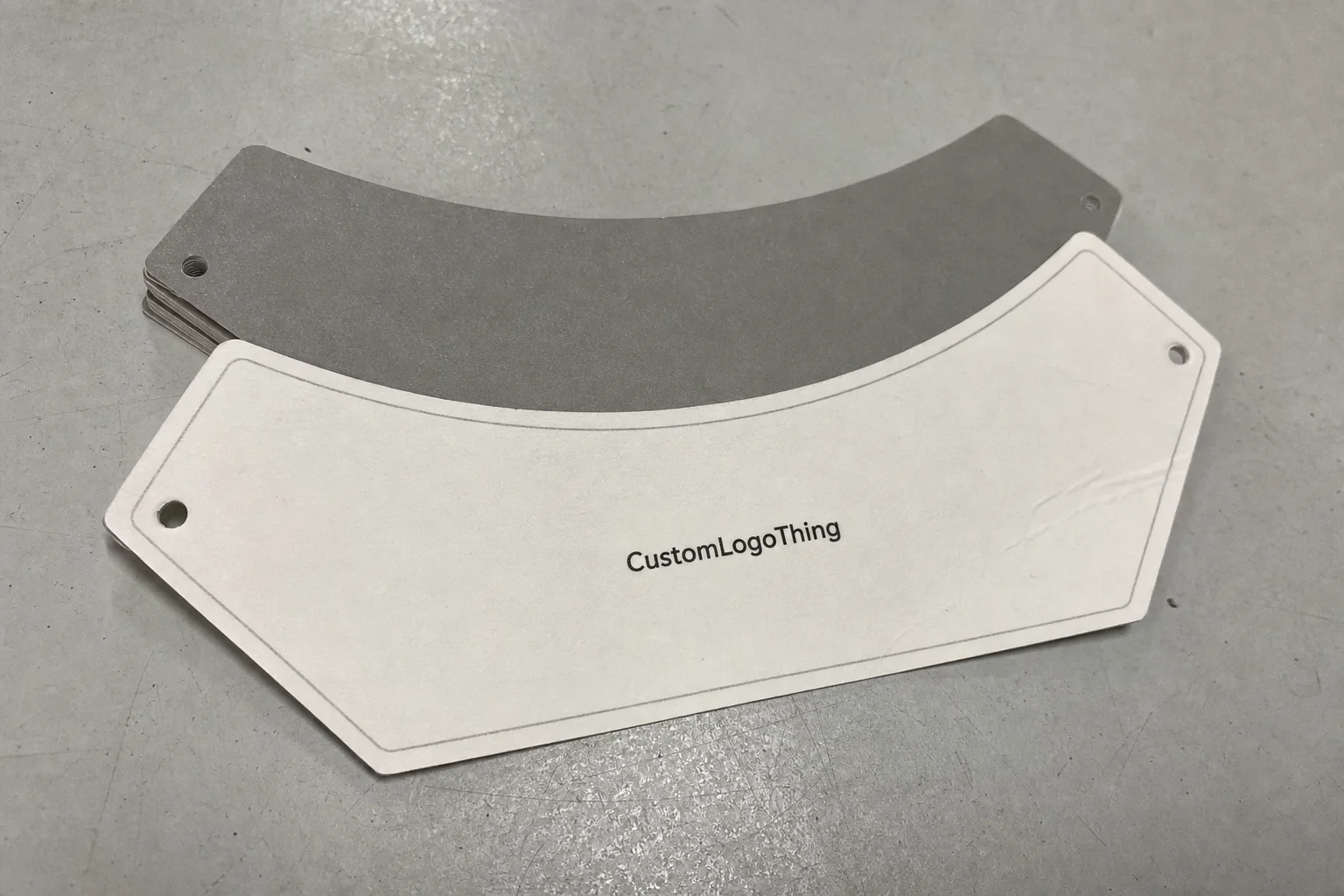
Neck label printing replaces or supplements a sewn-in woven label with a printed identifier inside the neckline. The effect is simple but useful: a flatter hand-feel, less friction against skin, and a cleaner look in an area the wearer notices every time they put the garment on. For tees, activewear, loungewear, and kidswear, that difference often matters more than the decoration on the outside.
The label area has to do more than hold a logo. It often contains the brand name, size, fiber content, care instructions, and country of origin. Some brands also add a website or line name, but the more copy you pack into a small panel, the more likely the information becomes hard to scan after stitching, folding, or laundering. In practice, concise layouts tend to age better than crowded ones.
Compared with woven labels, printed neck labels usually reduce bulk and can feel better in close-fitting garments. Compared with tear-away tags, they stay with the product and avoid the unfinished look left behind after removal. The tradeoff is durability and visual sharpness, both of which depend on the printing system, the substrate, and how well the ink bonds to the base material.
From a buyer’s point of view, the comparison should center on comfort, legibility, and total unit cost. A woven label can read as more premium in some categories, but not every product benefits from texture. On soft basics, stretch garments, and children’s apparel, a printed label often makes more sense because it works with the garment’s hand-feel instead of against it.
Compliance is part of the equation too. If a garment is heading into retail or wholesale channels, the label content usually has to satisfy basic textile disclosure requirements. That does not mean the inside print has to become cluttered. It means the brand has to treat content, size, and placement as a controlled production spec rather than a last-minute design detail.
One useful way to think about it: the neck area is a high-contact zone with low tolerance for mistakes. A tiny print defect can create more customer complaints than a much larger flaw elsewhere on the garment because the wearer feels it directly, often before they even look at the chest print or woven patch.
How the artwork, substrate, and ink system work together
Good results start before the first sample is printed. Artwork should be supplied as a clean vector file with the logo, size mark, and text set to the actual print dimensions. A proof should show the label in context on the garment, not just floating in a blank box. That makes it easier to catch spacing issues, seam interference, and text that looks acceptable on a monitor but collapses at production size.
The substrate matters as much as the art. A printed neck label may sit on a cotton patch, satin panel, heat-transfer film, or a direct print area on the garment itself. Each choice changes softness, stretch, and durability. Cotton tends to feel natural and familiar. Satin can look more refined. Heat-transfer film is often flatter and can work well on performance pieces. There is no universal winner; the garment has to drive the decision.
Ink system choice changes the outcome in subtler ways. Screen print still performs well for simple graphics and dense white ink on dark material. Digital printing is useful for fine detail and short runs because setup is lighter. Flexographic printing shows up often in label manufacturing where consistency and speed matter. For color-heavy artwork, CMYK may be enough; for a brand color that has to stay consistent across repeats, spot color can be the safer route.
Finishing matters more than most buyers expect. A soft-hand finish, proper curing, or a low-profile transfer can keep the inside of the garment from feeling plasticky. Weak curing causes the opposite: tackiness, cracking, poor adhesion, or visible wear after laundering. If the garment will be stretched repeatedly, as with activewear or fitted basics, the print system needs enough elasticity to move with the fabric instead of sitting rigidly on top of it.
Fabric structure changes the math too. A smooth combed cotton tee behaves differently from a brushed polyester knit. Ribbing, side seams, garment dyeing, and heathered yarns all affect contrast and print behavior. A label that looks crisp on a flat proof can soften or shift once it is placed on the actual garment. That is why the fabric itself belongs in the spec, not just in the product description.
There is also a practical connection between label method and production risk. A print system that works perfectly on one style may fail on another with a different surface tension, coating, or stretch profile. That is why suppliers often ask for the actual garment or at least a fabric swatch before final approval. The question is not whether the art looks good. The question is whether it survives contact with the material.
Cost, MOQ, and quote factors that change the unit price
The price of neck label printing moves with the same variables that drive most apparel trim work: quantity, color count, print size, substrate, finishing method, and handling. A 5,000-piece run with one or two colors is not priced like a 500-piece run with multiple colors and a specialty finish. That difference is not arbitrary. It reflects setup time, material waste, and the amount of process control required to keep the run clean.
MOQ, or minimum order quantity, exists because setup costs have to be spread across the run. Screens, plates, proofing, and material preparation all happen before the first sellable unit comes off the line. On small runs, the setup cost is divided over fewer pieces, so the unit price rises even if the design looks simple. Buyers sometimes read that as a markup. More often, it is just the math of production.
To get a quote that means something, suppliers need the same inputs from every bidder. At minimum, they should know the garment type, label placement, approximate dimensions, expected wash performance, artwork status, quantity, and target delivery date. If the only input is a logo and a request for “pricing,” the response will usually be too vague to compare.
These are the most common cost drivers:
- Quantity - higher runs usually lower the unit cost.
- Color count - more colors often mean more setup and more risk of registration drift.
- Label size - larger print areas use more material and require more careful handling.
- Substrate - cotton, satin, film, and specialty panels do not price the same.
- Print finishing - extra curing, soft-touch treatments, and specialty coatings add cost.
- Packaging - folded, polybagged, or individually sorted labels add labor.
Typical unit pricing can vary widely by region and supplier, but a working range helps with planning. For a mid-size order around 5,000 pieces, a printed satin neck panel may land around $0.10-$0.22 per unit, while a heat-transfer label may sit closer to $0.12-$0.28 depending on stretch and finish. Direct garment print can fall near $0.08-$0.20 on stable fabrics. If the spec moves into more premium construction or heavy packaging, the number climbs quickly.
| Option | Typical Use | Approx. Unit Cost at 5,000 pcs | Notes |
|---|---|---|---|
| Printed satin neck panel | Basic tees, loungewear | $0.10-$0.22 | Soft hand, clean look, moderate durability |
| Direct garment print | Fashion basics, promo tees | $0.08-$0.20 | Works best on smooth, stable surfaces |
| Heat-transfer neck label | Activewear, kidswear | $0.12-$0.28 | Good for stretch, but cure quality matters |
| Woven label alternative | Premium branding | $0.15-$0.30 | More texture and structure, less softness |
The right quote only becomes meaningful when every supplier prices the same spec. If one bid uses a smaller print area, thinner material, or fewer finishing steps, the lower number is not a saving. It is a different product. That distinction is easy to miss on paper and obvious once the samples arrive.
For brands that also need trims, packaging, or broader production support, reviewing a supplier’s Manufacturing Capabilities and Custom Labels & Tags can help clarify whether the quote is based on a narrow print job or part of a fuller production workflow.
Production steps, proofing, and turnaround from sample to ship
The usual path runs from inquiry to proof, sample, approval, production, inspection, and shipping. That sounds ordinary because it is. The delays tend to come from the handoffs: missing artwork, unclear color calls, placement revisions, or late sign-off from someone who is not the final decision-maker. The faster jobs are usually the ones where the buyer arrives with a clean file and a narrow set of variables.
Proofing is where many schedules slip. A care block with legal text, a size line that wraps awkwardly, or a logo that needs simplification can turn into back-and-forth that consumes days. Once production starts, those issues are far more expensive to fix. A cautious review before approval is cheaper than any reprint.
Turnaround should be read operationally, not as a soft promise. Standard schedules need room for screening, curing, inspection, and packing inside the factory queue. Rush production compresses that window and usually raises price while reducing flexibility. If a launch date is fixed, say so early. That gives the supplier a chance to tell you whether the spec is workable or whether something has to be simplified to meet the date.
A pre-production sample is worth the extra step when the order is tied to a retail launch, a wholesale program, or any garment that needs exact placement control. It is also useful on unusual fabrics, such as deep garment dyes, heathered knits, brushed surfaces, or specialty finishes that can change contrast. A sample on the actual garment tells you more than a screen render ever will.
The job often looks easy until the fabric changes the result. A sample catches that problem before the whole order is committed.
From a quality standpoint, inspection should cover registration, legibility, opacity, placement, feel against skin, and edge behavior. If the print is stiff or uneven, the customer will notice during the first wear, not after a month of use. The best internal labels are the ones no one thinks about because they behave exactly as they should.
Timeline expectations also need some realism. A simple repeat job may move quickly once artwork is approved, but complex label programs can take longer than a buyer expects because the proof stage, color matching, and sampling all add time. A small amount of patience up front usually prevents a larger delay later.
Common mistakes that make printed neck labels fail
The first mistake is artwork that is too small or too detailed for the available space. Thin lines, tiny legal copy, and crowded size information can disappear once the label is printed and folded into the neckline. If the space is limited, the design should be simplified before the first proof, not after the first complaint.
The second mistake is choosing a print method because it looks good in a mockup rather than because it matches the fabric and the wash target. A label can look sharp on day one and then crack, peel, or fade if the cure is weak or the substrate does not suit the garment. That risk rises on activewear and children’s apparel, where laundering is harsher and more frequent.
Contrast causes more problems than buyers expect. Dark fabrics, heathered cloth, and textured knits can swallow fine detail. White ink on a dark tee is the obvious solution, but the opacity has to be strong enough to stay readable after wear and washing. On lighter garments, a tonal print may look elegant, yet it still has to be visible at a glance.
Skipping wash testing is probably the most expensive mistake because it pushes the failure past approval and into the market. A small trial on the actual garment should check fade resistance, adhesion, surface feel, and edge behavior. If the print gets sticky, brittle, or visibly worn after a few cycles, the spec needs to change before full production.
- Do not place fine legal text too close to the seam.
- Do not approve color from a screen mockup alone.
- Do not assume one print system works on every fabric.
- Do not skip wash or abrasion testing on launch goods.
Another failure point is the physical build of the neckline itself. A label that looks acceptable when flat can feel bulky once it is sewn into the garment. The stitch line, fold style, and placement relative to the collar all affect comfort. Buyers often focus on print quality and forget that the wearer interacts with a finished garment, not a file.
Expert checks for comfort, durability, and brand consistency
The best printed neck labels are usually the simplest ones. A clear brand line, a readable size treatment, and only the care information the garment truly needs often outperform a crowded block of copy. Hierarchy matters. A customer should be able to find the brand and size quickly without reading a paragraph inside the shirt.
Brand consistency depends on repeatable specs. If the company sells premium basics, the label should feel soft and restrained. If it sells performance wear, stretch and wash life may matter more than visual texture. Children’s apparel needs extra attention on softness because the neckline is already a sensitive area. The spec should reflect the product category, not just the brand story around it.
Requesting a strike-off or sample on the actual fabric color is a smart move whenever the garment uses deep dyes, heathered yarns, or specialty finishes. A proof on white stock can mislead you on charcoal, navy, olive, or forest green. Real fabric changes contrast, and contrast changes readability. A sample forces that decision into the real world, which is where the customer will judge it.
For repeat programs, a short review checklist helps keep production stable:
- Confirm spelling, fiber content, and care symbols.
- Check placement from seam to print edge.
- Verify the size mark is readable at arm’s length.
- Compare the sample to the approved artwork file.
- Test wash, feel, and stretch on the actual garment.
Quality control should also include a practical look at the production environment. Ink viscosity, curing temperature, and material handling all affect the final result. If a supplier cannot explain how they control those variables, the buyer is taking more risk than the quote suggests. A low unit price does not help if the return rate climbs later.
Where sustainability or sourcing claims matter, ask whether the label material, ink system, and packaging support the brand’s requirements. That may mean checking the origin of the textile trim, confirming traceability for packaging components, or making sure any paper inserts match the rest of the program. The details do not need to become a compliance spectacle, but they do need to add up.
According to the Forest Stewardship Council, chain-of-custody and sourcing claims require traceability. That principle translates cleanly to apparel trims: if a brand wants to tell a consistent story, the inside label, packaging, and handling instructions should all point in the same direction.
Next steps before you place the order
Before requesting pricing, lock down the garment type, label size, placement, quantity, and finish. That one step removes most of the back-and-forth that slows procurement. If the supplier knows the spec, the quote can be grounded in reality instead of assumptions.
Gather the artwork file, care copy, and target ship date in one place. If the design still needs revision, say so. If the garment is still in development, say that too. A supplier can price uncertainty, but only if the uncertainty is visible.
Then decide what matters most for this run. Is the priority the lowest unit cost? The softest hand-feel? The longest wash life? The fastest delivery? Those answers shape the spec. A budget-focused launch may accept a simpler substrate and fewer finishing steps. A premium retail program may justify a softer, more durable label system. Neither choice is wrong if it matches the product and the margin.
A final review on the actual garment should check fit, comfort, and legibility before the order is released. That last look protects the customer experience where it matters most, right inside the neckline. It also keeps the printed label from becoming the hidden reason a good garment feels unfinished.
What is the difference between neck label printing and woven labels?
Printed labels usually sit flatter and feel softer against the skin, which helps reduce scratchiness at the neckline. Woven labels often look more textured and can feel more premium in some categories, but they can also add bulk depending on weave, fold, and stitch construction. The better choice depends on comfort, brand style, wash performance, and the garment’s target price point.
How long should printed neck labels last through washing?
A well-made printed label should hold up through repeated wash cycles without major fading, peeling, or cracking. Durability depends on the print method, cure quality, fabric type, and how aggressively the item is washed and dried. Always test the label on the actual garment before approving the full production run.
What file format works best for neck label printing artwork?
Vector files are usually the safest starting point because they keep text and logos crisp at label size. A strong proof should show the exact dimensions, placement, colors, and any required care text or size mark. If the logo has fine details, ask for a simplified version that will stay readable after printing.
What affects neck label printing cost and MOQ the most?
Quantity, number of colors, label size, substrate choice, and finishing method are usually the biggest price drivers. MOQ matters because setup work and material preparation are spread across the run, which raises the unit cost on smaller orders. A quote is only useful when every supplier is pricing the same spec sheet.
Can neck label printing work for small apparel runs?
Yes, but the unit cost is often higher because setup costs are spread across fewer pieces. Small runs make sense when the priority is launch speed, product testing, or a limited-edition release. Ask for a sample or proof first so the smaller order still matches the final look and feel.