Personalized shipping envelopes are easy to underestimate until a customer actually touches one. That first surface does more brand work than most teams expect, and it does it before the product, invoice, or insert ever shows up. In practical terms, the right personalized shipping envelopes can lift perceived quality, protect the contents, and make ecommerce shipping feel deliberate without forcing every order into a rigid box.
There is a simple reason they matter: the outer mailer is part of the experience, not just transit packaging. A good one can speed up order fulfillment, keep shipping materials under control, and still look polished enough for apparel, subscription kits, samples, and return-friendly programs. That balance is where the buying decision usually lives. Not in theory. In the warehouse, on the packing line, and in the hands of the customer.
Personalized shipping envelopes: what they are and why they stand out
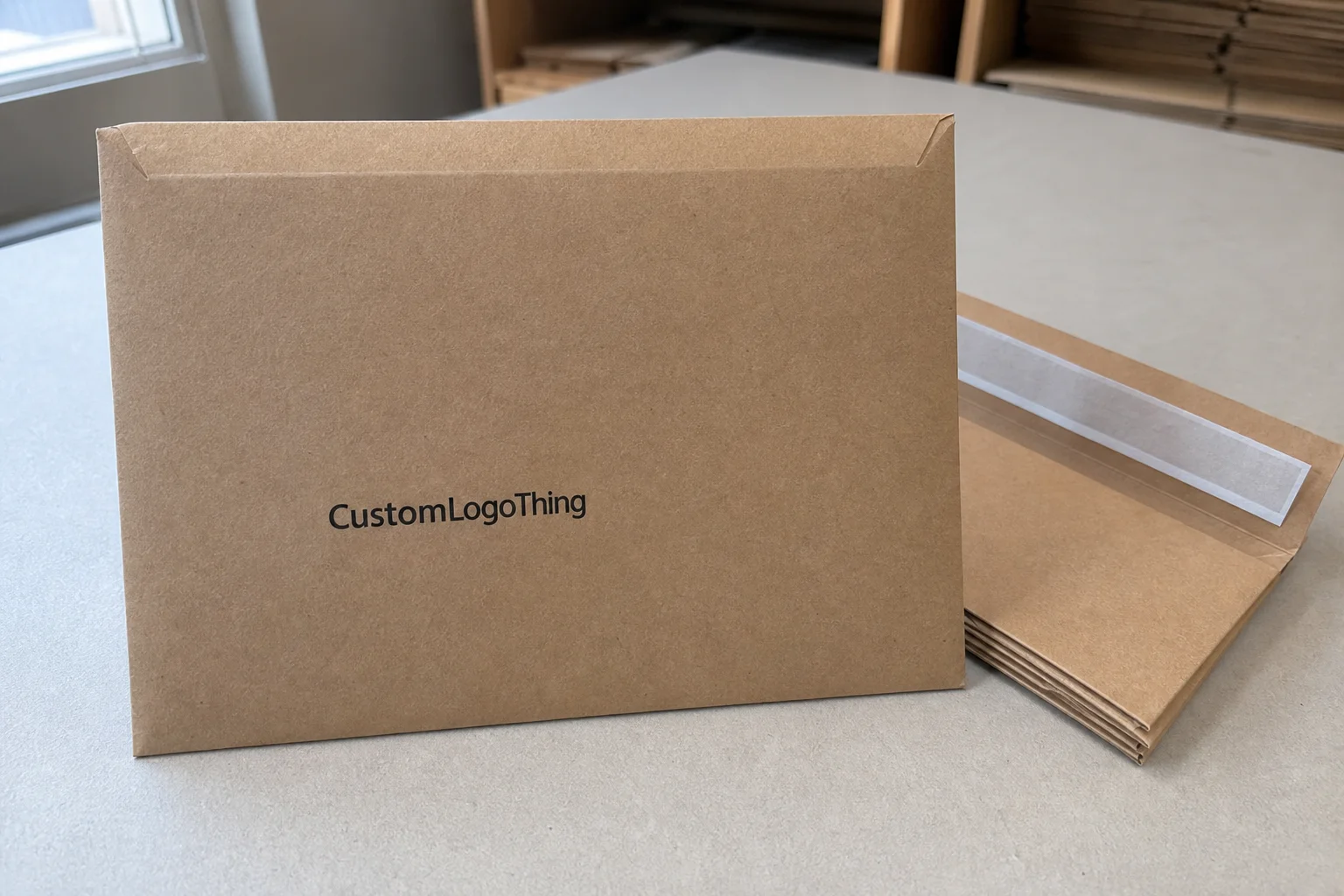
At a basic level, personalized shipping envelopes are printed or custom-built mailers used to ship flat or soft goods. They show up in ecommerce shipping, sample distribution, promotional kits, and returns. Most buyers notice the branding first, but the better question is whether the envelope also fits the product, seals reliably, and protects what is inside.
That is the difference between decoration and functional customization. A logo alone does not make a package better. Real customization includes size, thickness, opacity, closure style, print placement, and whether the outside surface holds up to handling. If the mailer looks sharp but fails at the seal, or if the artwork crowds the shipping label, the design starts working against operations instead of for them.
From a packaging buyer’s point of view, these envelopes sit between plain poly mailers and more structured cartons. They can create a clean unboxing moment without the higher material cost of a box. For many brands, that is the sweet spot: enough presentation to support repeat recognition, enough flexibility to keep shipping light, and enough efficiency to avoid bloating freight or labor.
They also make sense when the product itself is already well protected. If the item ships flat, has low crush risk, and does not need a heavy insert, a custom envelope often does the job with less waste. If the product is fragile, oddly shaped, or expensive enough to justify extra protection, the envelope should be treated as one layer in a larger system, not a miracle fix.
The outer mailer is often the first branded surface a customer touches. If it feels flimsy, the brand feels flimsy too.
If the program also uses other transit packaging, it helps to compare formats early. Some teams need a full set of Custom Packaging Products, while others can solve the job with Custom Poly Mailers alone. For heavier or more structured shipments, Custom Shipping Boxes may still be the better answer.
There is also a practical branding issue that gets missed. A mailer travels through more hands than the product does. Warehouse staff, carriers, sorting centers, and sometimes retail partners all see it before the customer does. If the outer package is inconsistent, the whole program feels less controlled. That is not a design problem. It is a process problem, and the envelope exposes it quickly.
How the customization process works from artwork to proof
The process is more orderly than many first-time buyers expect. It usually starts with specifications: what the product is, how it ships, the target quantity, and the size range that will fit without excess movement. Once those basics are clear, the supplier can confirm available materials, print methods, and any limits on coverage or color count.
After that comes artwork. The buyer should send vector logo files when possible, plus brand colors, copy placement, barcode or label requirements, and any legal text that needs to sit on the exterior. If the mailer needs a return address panel, QR code, or shipping label window, those details should be in the brief before proofing begins. Changing them later is where schedules start slipping.
Digital mockups are useful, but they are not production proof. A mockup shows layout. A proof shows how the art will sit on the actual dieline, where the bleed extends, where the safe zones fall, and whether the seal area or tear strip interferes with the design. On screen, a deep red may look rich and controlled. On film or coated stock, it may print warmer, flatter, or darker than expected.
That is why the approval stage matters so much. The best buyers look for boring details first: barcode contrast, safe margins, seal placement, fold lines, and whether fine text remains readable at production size. Most expensive mistakes are not dramatic. They are small. A logo clipped by the edge. A QR code too close to a seam. A return label hidden by a flap. Those are the mistakes that turn into rework.
Print method matters here as well. Flexographic printing tends to make sense for larger runs where setup cost can be spread across volume. Digital printing can be useful for smaller batches, shorter test runs, or designs that change often. Neither one is automatically better. The right answer depends on quantity, artwork complexity, and how tight the color expectations are.
If the shipment must stand up to distribution stress, it is worth asking whether the package spec has been tested against a recognized method such as ISTA procedures. The International Safe Transit Association publishes methods used across the industry for distribution testing, and it is a better conversation than guessing at durability from a glossy proof alone. You can review its resources at ISTA.
Material choices, size, and finish decisions that change performance
This is where the buying decision becomes concrete. Two envelopes can look similar in a spec sheet and perform very differently in real transit. Thickness, opacity, closure type, and finish all affect how the mailer feels, how it prints, and how it survives handling.
For lightweight apparel or soft goods, a thinner poly mailer may be enough, especially if the product is already protected in an inner bag. For sharper corners, denser contents, or parcels that go through rougher distribution, a heavier gauge makes more sense. Opaque film helps with privacy and a cleaner look. Clear or semi-clear formats can work for some programs, but they give up discretion and usually feel less premium.
Size is equally important. Oversized envelopes waste material and can push dimensional weight higher than the actual product weight, which matters in ecommerce shipping. A package that fits loosely may also shift in transit and create a bad first impression when opened. Too small, and the seal gets stressed or the envelope wrinkles in a way that makes the brand look careless.
Finish changes perception more than many buyers realize. Matte finishes read calmer and more premium. Gloss can make color pop, but it can also highlight fingerprints and scuffs. Soft-touch and specialty effects increase tactile interest, yet they also add cost and may not suit high-volume order fulfillment where handling speed is the priority. Metallic accents can work, but only if the layout is restrained enough to keep them from looking noisy.
The seal deserves its own attention. A strong peel-and-seal strip, a tamper-evident feature, or a tear strip can improve usability immediately. Weak adhesive is one of the fastest ways to create returns and damage claims, and that is true whether the shipment contains one garment or a full subscription kit. If the closure is hard to open, easy to split, or unreliable under temperature swings, the package becomes a liability.
Paper-based mailers deserve a separate note. They can fit programs that want more fiber-based shipping materials, but they are not interchangeable with poly. Paper handles differently in moisture, folds differently on the line, and can show wear sooner if the route is rough. That does not make it a bad choice. It just means the material should match the transit path, not the marketing brief.
| Option | Typical use | Common spec | Indicative unit cost at 5,000 pcs | Notes |
|---|---|---|---|---|
| Lightweight printed poly mailer | Apparel, accessories, flat soft goods | 2.5 to 3 mil, one- or two-color print | $0.14 to $0.24 | Best when cost control matters and package protection needs are modest |
| Opaque custom mailer with stronger seal | Beauty kits, samples, subscription orders | 3 to 4 mil, full-color branding, tamper-evident closure | $0.22 to $0.38 | Better privacy and a more finished presentation |
| Premium mailer with matte or soft-touch finish | High-value retail sends, influencer kits | 4 mil equivalent feel, special finish, tear strip | $0.30 to $0.48 | Useful when the outer package is part of the brand story |
| Paper-based mailer with printed branding | Programs prioritizing fiber-based shipping materials | FSC-certified stock where applicable, printed exterior | $0.28 to $0.52 | Can support sustainability messaging, but verify performance in transit |
That last point matters. If your company uses paper-based components, FSC-certified stock can help with procurement requirements and sustainability claims, but it should be treated as one input, not the whole strategy. If you want a cleaner paper trail for sourcing, the Forest Stewardship Council maintains certification details at FSC.
Another detail that gets ignored until the first sample arrives: print contrast against the chosen substrate. White ink on dark film, fine black text on colored material, and gradients on matte finishes all behave differently in production. A proof may look tidy, but small type can disappear once the ink lays down on the actual material. If you need readability, keep the layout disciplined and avoid forcing the design to carry too much detail.
Cost, pricing, and MOQ factors that shape your quote
Pricing is usually less mysterious than it first appears. The largest cost drivers are material thickness, print complexity, number of colors, overall size, finish, and quantity ordered. Once those variables are fixed, the quote becomes much easier to understand.
MOQ, or minimum order quantity, is the other big lever. Lower quantities almost always raise the unit cost because setup work is spread over fewer pieces. Higher volumes reduce the per-unit number, but only if the spec is stable enough to avoid expensive changes later. For buyers ordering personalized shipping envelopes for the first time, the correct question is not “What is the cheapest version?” It is “What is the least expensive version that still protects the shipment and supports the brand?”
Setup fees and proofing also matter. First runs can include file preparation, plate or print setup, color matching, and sometimes tooling for special closures or tear features. Repeat orders often cost less because that groundwork is already done. If the supplier offers pricing tiers, ask for them in a way that reflects actual volume plans. A quote at 3,000 pieces may not tell you much if the business is likely to reorder at 10,000.
Freight belongs in the same conversation. A low unit price can be erased fast by poor packing efficiency or a shipping method that adds days and charges. Ask for landed cost, not just ex-factory price. If the mailer ships in multiple cartons, if palletization is required, or if the order needs split delivery, those details change the number more than most buyers expect.
For teams comparing options, a useful framework is simple: lock the must-have specs first, then compare unit price, freight, and the cost of any secondary packaging the mailer lets you avoid. A slightly more expensive envelope can still be the smarter buy if it eliminates an inner pouch, reduces void fill, or lowers damage rates in transit packaging.
That tradeoff is easy to miss in spreadsheet mode. In practice, the cheapest mailer can become the most expensive one if it fails in the field. Replacement shipping, support time, and re-fulfillment are real costs. So is the brand damage when the outer package tears before the customer opens it. A buyer who only chases the lowest unit price usually ends up paying for it somewhere else.
Turnaround time and production steps from approval to delivery
A realistic timeline starts after artwork approval, not before it. Once the proof is signed off, the production sequence usually runs through material sourcing, printing, curing or finishing, quality checks, packing, and freight planning. If the art is already clean and the spec is standard, the whole process is straightforward. If the file needs correction, the schedule stretches immediately.
For a typical custom run, production often lands in the 12 to 15 business day range after proof approval, though that varies by method, quantity, and finishing requirements. Simple single-color jobs can move faster. Full-coverage printing, special seals, or uncommon sizes can take longer. Rush jobs are possible in some cases, but they usually narrow material choices and increase cost.
Transit time deserves its own line item. A shipment that leaves the press quickly can still arrive late if the freight mode is wrong or the route is inefficient. Distance, carrier choice, and whether the order ships in one consolidated load or several partials can change the final delivery date almost as much as the press schedule. Buyers who only ask for production time are not asking the full question.
For launch planning, ask for two dates: the production completion date and the estimated arrival date. That keeps marketing, fulfillment, and inventory teams aligned. It also makes it easier to decide whether a launch buffer is needed, especially if the envelopes are tied to a seasonal release or a subscription start date.
Quality control should not be vague here. A sensible checklist includes print registration, seal strength, material thickness, color match against the approved proof, and packaging count per carton. If the order is going to a fulfillment team, carton labeling and count verification matter too. The best-looking mailer in the world is useless if half the shipment arrives short or mixed.
The best programs treat customized mailers as part of the operating schedule, not an afterthought. That is where the margin lives. A late outer package can stall order fulfillment even if the product itself is ready to ship.
Common mistakes that make mailers look cheap or fail in transit
Most failures are predictable. The first is designing for a screen instead of for print. Fine details, tiny text, and delicate lines may look elegant in a mockup, then disappear once they hit film or coated stock. If the logo depends on hairline strokes, simplify it before the order goes to press.
The second problem is poor sizing. A mailer that is too small stresses the closure and distorts the art. One that is too large wastes shipping materials and can raise dimensional weight, which is especially painful in ecommerce shipping models where carrier pricing punishes empty space. From a buyer’s standpoint, oversizing is not a safety margin. It is a hidden cost.
Weak adhesive is another repeat offender. If the seal does not hold through handling, returns become more likely and the mailer starts failing at its most basic job. The same is true for low-opacity film used on sensitive products. Privacy may not sound glamorous, but it matters when customers expect discretion. If the package exposes the contents before it arrives, the outer branding has already failed.
Layout decisions can also damage readability. Low-contrast text, busy backgrounds, and logo placement too close to folds all make the package harder to understand at a glance. That hurts brand recall, and it can interfere with barcodes, shipping labels, or return information. A beautiful design that complicates scanning is not a good design.
Another avoidable mistake is approving the proof before checking how the envelope will be handled on the line. Will it be machine packed or hand packed? Will labels be applied over the artwork or in a reserved blank area? Will the mailer slide into a secondary carton? Those operational details affect where graphics can safely go. Packaging should fit the workflow, not force the workflow to adapt after the fact.
Here is the practical takeaway: test orders are cheaper than fixing a full run. A short pilot order can expose problems with dimensions, print contrast, or closure performance before the larger production hits your warehouse. That small step often saves more money than it costs. It also gives the team something real to inspect instead of arguing over a rendering.
Next steps for ordering the right mailer for your shipment
Start with the contents. Know the product dimensions, the ship weight, and whether the package needs moisture resistance, tamper evidence, or extra puncture protection. Then decide whether the mailer is doing the whole job or just part of it. That one question determines whether you should stay with an envelope format or move into a box-based program.
Next, gather the information your supplier actually needs: logo files, brand colors, quantity range, label placement requirements, and any compliance text. If you do not know the final quantity yet, give a realistic range. A quote built around 2,000 to 5,000 pieces tells you more than a vague “medium volume” request ever will.
For premium launches, subscription kits, or products with a high return risk, order a sample or proof before committing to the full run. The extra cycle is worth it because it lets you inspect the feel, the print quality, and the closure performance in real handling conditions. That is a better decision filter than a rendered image on a screen.
Before you approve, compare three things: appearance, protection, and landed cost. The cheapest option is not always the best fit, and the most attractive option is not always durable enough. Good packaging buyers know how to balance those tradeoffs without pretending that one factor solves everything.
For brands that want a cleaner first touchpoint, personalized shipping envelopes can do a lot of work. They are visible, practical, and relatively fast to deploy. Choose the Right fit, and the mailer supports the shipment from the first scan to the final unseal. Choose the wrong one, and it creates friction at every step after that.
Frequently asked questions
What size should I choose?
Measure the product plus any inserts, wraps, or protectors, then leave enough room for a flat fit without forcing the seal. If the contents slide around too much, move up a size. If the mailer is oversized, you may waste postage and lose the tight presentation that makes the package look intentional.
Are custom mailers better than plain ones?
Usually, yes, if brand recognition matters. Personalized shipping envelopes create a stronger first impression and can make the shipment feel more valuable before the product is even opened. Plain mailers still make sense for low-cost, low-touch programs, but they do less to support repeat recognition.
What changes price the most?
The main drivers are material thickness, print coverage, size, finish, and order volume. Setup work and MOQ also matter, especially on the first run. If you add special closures, tear strips, or premium surface finishes, expect the quote to move upward.
How long does production usually take?
Production time depends on proof approval speed, material availability, print method, and finishing complexity. A simple order may ship in about 12 to 15 business days after approval, but rush requests, revisions, and freight routing can change the total delivery window.
How do I avoid print problems?
Use clean vector artwork where possible, respect bleed and safe-zone rules, and confirm how colors will print on the actual substrate. Keep fine text, QR codes, and barcodes away from folds, seals, and edges so the finished mailer stays readable and functional.


