Buyer Fit Snapshot
| Best fit | Poly Mailers Price Per Unit projects where brand print, material claims, artwork control, MOQ, and repeat-order consistency need to be specified before quoting. |
|---|---|
| Quote inputs | Share finished size, material target, print colors, finish, packing count, annual reorder estimate, ship-to region, and any compliance wording. |
| Proofing check | Approve dieline scale, logo placement, barcode or warning zones, color tolerance, closure strength, and carton packing before bulk production. |
| Main risk | Vague material claims, crowded artwork, missing packing details, or unclear freight terms can make a low unit price expensive after revisions. |
Fast answer: Poly Mailers Price Per Unit: What Drives the Real Cost should be specified like a repeatable production item. The safest quote records material, print method, finish, artwork proof, packing count, and reorder notes in one written spec.
Production checks before approval
Compare the actual filled-product size with the drawing, then confirm tolerance on folds, seals, hang holes, label areas, and retail display edges. Reserve space for logos, QR codes, warning copy, and material claims before decorative graphics fill the panel.
Quote comparison points
Review material grade, print process, finish, sampling route, tooling charges, carton quantity, and freight assumptions side by side. A quote is only useful when the supplier can repeat the same color, closure quality, and packing count on the next order.
Poly Mailers Price Per Unit: What Drives the Real Cost
Shipping teams love a clean quote. One line. One number. Everyone feels good for about ten seconds.
Then the orders start moving and that neat little number stops being neat. Poly mailers price per unit only tells part of the story until you add damage rates, packing speed, re-ships, and whether the bag actually fits the product. A thicker mailer costs more up front, yes. It can also keep a shipment from failing, which is usually the cheaper outcome by a mile. I have seen a five-cent savings turn into a very annoying pile of replacement orders. Not exactly a victory lap.
The cheapest mailer on paper is not always the cheapest choice in practice. Oversized bags waste film and can inflate dimensional weight. Thin bags save pennies and sometimes create expensive messes later. A realistic conversation about poly mailers price per unit starts with product size, shipping method, and the level of damage risk your operation can live with. If the bag does not fit the product cleanly, the quote is already lying to you a little.
The best value usually comes from the mailer that wraps the product neatly, seals without fuss, and keeps packing consistent for the person on the line. That is why experienced buyers treat poly mailers price per unit as one input in a larger packaging model, not the whole decision. The goal is not to buy the thinnest bag. The goal is to buy the right bag, in the right quantity, with the right print and the right performance for the orders you ship every day.
Packaging is not just material cost. It is throughput, inspection time, customer experience, and whether the team can pack orders without fighting the seal or worrying about a sharp corner punching through the side. Smart buyers keep poly mailers price per unit grounded in product dimensions, transit conditions, and a clear view of the risks they are actually paying to avoid.
The lowest quoted number is not always the lowest real cost. A mailer that protects the product, packs fast, and ships in the right cube often saves more than a cheaper bag that fails once in the field.
Poly Mailers Price Per Unit and the Product Details That Matter
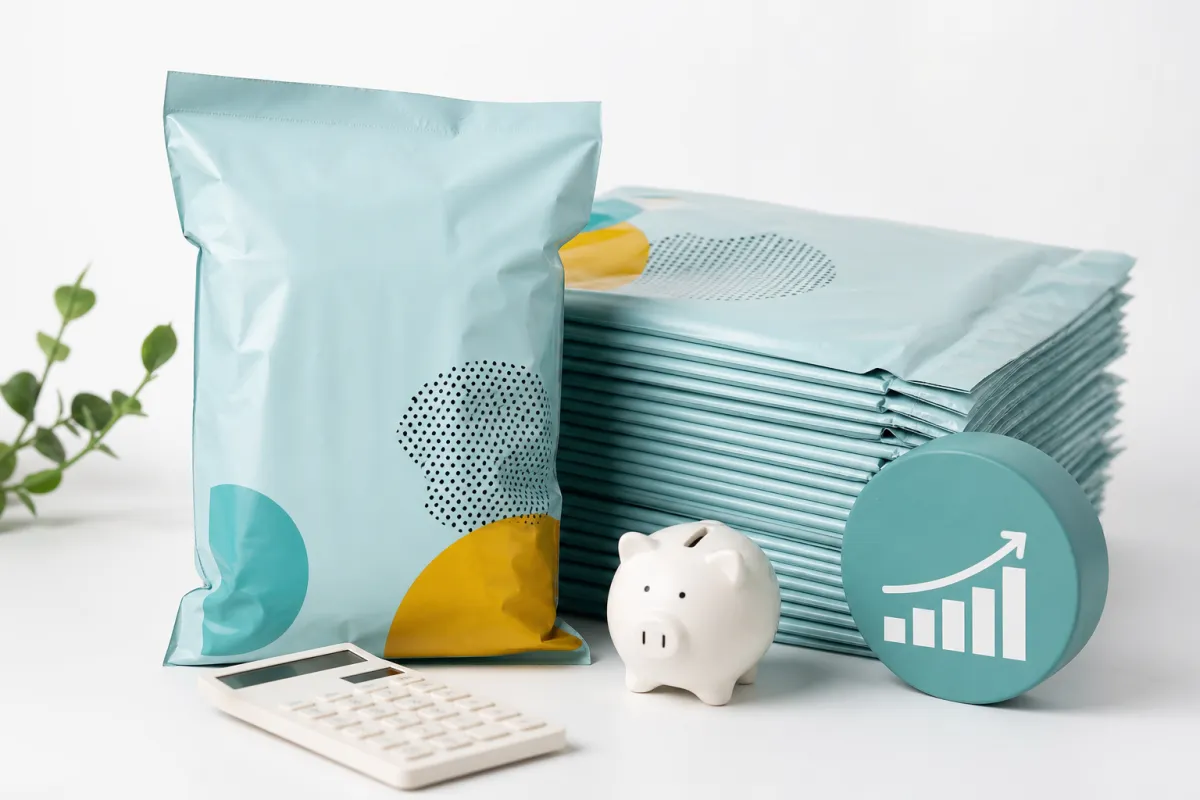
A poly mailer has a pretty narrow job: protect lightweight, soft goods from moisture, abrasion, dust, and handling while staying thin enough to keep shipping efficient. Sounds basic. It usually is not. Poly mailers price per unit changes fast once you move beyond a plain stock bag. Resin blend, film construction, adhesive strip, print coverage, and opacity all affect the finished cost. For apparel, accessories, subscription kits, and e-commerce fulfillment, those details are not decoration. They are the reason the bag works the way your operation needs it to work.
Most mailers are made from LDPE film, usually in a mono-layer or co-extruded structure. LDPE gives the bag flexibility, a reliable seal, and the soft feel buyers expect. Co-extruded film can improve puncture resistance or give the exterior a cleaner look without adding much bulk. Recycled-content blends appeal to brands trying to reduce virgin plastic use, although they can require tighter controls around print consistency and film feel. Each version has a different cost curve, so poly mailers price per unit should always trace back to the material structure, not just the final size.
Closure style changes the math too. A permanent adhesive seal is common because it is fast and dependable. Peel-and-seal strips can improve pack-out speed when workers want a cleaner application. Tamper-evident closures help when product security or customer confidence matters, especially for higher-value items. Need a bold logo, bright interior, or stronger opacity for privacy? The print and film choice shifts again. In many jobs, poly mailers price per unit moves more from the print spec than from a small difference in film gauge.
Brands shipping soft goods often ask whether stock or custom printed makes more sense. The answer depends on repeat volume, branding goals, and how much consistency the fulfillment team needs. Stock bags work for basic operations with changing SKUs. Custom-printed bags support a more polished customer experience and better brand recall. If the program also includes paper inserts, outer cartons, or presentation sleeves, it may help to coordinate with Custom Packaging Products so the outer presentation does not fight the bag. That is where poly mailers price per unit turns into a program decision instead of a one-off purchase.
Testing language helps too. Industry references like ISTA methods and common tensile or tear checks give buyers a way to compare performance instead of guessing from a sample. If the shipping program is sensitive to abrasion, seam failure, or drop impact, ask for test-related details. It keeps poly mailers price per unit aligned with the actual abuse the mailer will face, which is a lot more useful than a pretty sample on a desk.
I still remember one apparel launch where the team insisted the mailer looked fine because the sample sat flat on the table. Cute. In actual packing, the zipper pull on the product kept snagging the inner seam. The first run of returns made that “cheap” bag look stupidly expensive. That kind of thing is exactly why spec details matter.
Specifications That Shape Poly Mailers Price Per Unit
Size is usually the first lever worth checking. A larger mailer uses more film, more adhesive coverage, and sometimes more ink if the artwork stretches across a wider print area. It also increases shipping cube, which can raise freight or dimensional weight charges depending on the carrier and service level. A tight, sensible size makes pack-out more predictable because the operator is not folding extra film or forcing a product into a bag that barely fits. That is why poly mailers price per unit should always be reviewed beside the actual product dimensions, not guessed ones.
Thickness comes next. Poly mailers are often described in mils, and higher gauge film usually means better puncture resistance, stronger seams, and a more premium feel in hand. More resin in the finished bag means more cost. For light apparel, a 2.5 to 3 mil mailer may be enough. For items with zippers, hard edges, or dense folded corners, 3 to 4 mil can be the safer bet. In that range, poly mailers price per unit tends to rise in a fairly predictable way, but the extra protection can pay for itself fast if damage is already a concern.
Print specs matter more than many buyers expect. One-color print on a white bag is usually simpler than full-color artwork on a dark or highly opaque film. Add front-and-back coverage, white underbase, tighter registration, or multiple spot colors and the print setup gets more involved. A logo centered on the front panel is one thing. A wraparound pattern with precise alignment is another. If branding depends on visual consistency, ask how the print method affects poly mailers price per unit before the artwork gets approved. A design that looks tiny on screen can still push the production cost up on press.
Performance details deserve the same attention. Seal strength, tear resistance, opacity, and film clarity all affect how the mailer behaves after it leaves the packing table. A weak adhesive can open in transit. A thin, see-through bag may fail a privacy requirement. A matte or soft-touch finish can feel more premium, but it changes the production path. Buyers should also ask whether the mailer is stock, custom printed, or specially made to order, because that answer changes poly mailers price per unit as much as thickness or size.
Here is a practical comparison many teams use while narrowing options:
| Mailer Type | Typical MOQ | Common Spec | Typical Poly Mailers Price Per Unit | Best Fit |
|---|---|---|---|---|
| Stock unprinted | 1,000 to 5,000 | 2.5-3 mil LDPE, standard seal | $0.04-$0.10 | Basic fulfillment, fast turnaround |
| Custom 1-color print | 5,000 to 10,000 | 3 mil co-extruded film, peel-and-seal | $0.09-$0.18 | Branding with controlled budget |
| Custom full-color print | 10,000+ | 3-4 mil film, front-and-back coverage | $0.14-$0.30 | Retail presentation, subscription programs |
| Premium recycled-content build | 10,000+ | Recycled blend, enhanced opacity | $0.13-$0.28 | Sustainability-focused brands |
Those numbers are broad working ranges, not promises. The real poly mailers price per unit depends on film width, color count, resin pricing, order volume, shipping destination, and whether the bag needs special print coverage. Still, the table gives buyers a useful benchmark for quotes and makes it easier to spot a number that is too high or too low to be believable. When a quote comes in dramatically below market, some spec tradeoff is usually hiding in the fine print.
If sustainability matters, do not confuse marketing copy with manufacturing reality. Recycled-content mailers can be a strong choice, but they are not automatically cheaper and they are not always the best fit for every fulfillment line. If the broader packaging program includes paper inserts or carton components, FSC-certified paper may matter for the rest of the system, while plastic mailers should be judged on film performance, waste reduction, and local recovery rules. For a quick look at recycling guidance, the EPA recycling resources are a practical reference. That context keeps poly mailers price per unit tied to real environmental and operational goals instead of slogans.
Pricing and MOQ: How Poly Mailers Price Per Unit Is Calculated
Every quote starts with the same basic stack of costs: resin and film, converting, printing, adhesive application, packaging, and freight from the plant to your warehouse. Some orders also add plate or setup charges. Others add color matching, special finish work, or tighter quality checks. Spread those costs across the order and poly mailers price per unit starts to make sense. A 2,000-piece run and a 20,000-piece run may use the same artwork, but the smaller order almost always carries a higher unit price because setup costs are divided across fewer mailers.
Minimum order quantity, or MOQ, is one of the biggest reasons quotes vary. Low-volume buys usually cost more per piece because the production line still has to be prepared, the print still has to be checked, and the same handling steps happen whether the order is tiny or huge. As quantity rises, unit cost often steps down in bands. That is why poly mailers price per unit can drop sharply at 5,000, 10,000, or 25,000 pieces, especially for custom printed work where the setup effort is front-loaded.
Stock mailers usually offer the lowest entry price because they are already produced in standard sizes and colors. Custom mailers can include tooling, print setup, or artwork preparation even when the finished bag looks simple. A buyer who compares only the base material price may miss the larger picture. The number that matters is the total landed cost: unit price, freight, and any production-related charges. From a packaging buyer's point of view, poly mailers price per unit only means something when every supplier quote is measured on the same basis.
Freight should be separated from the unit quote whenever possible. A low bag price can turn into an expensive landed buy if cartons ship from a distant plant, if the freight class is awkward, or if surcharges show up later. For recurring fulfillment, I always recommend checking the full landed cost per unit instead of accepting a headline number at face value. Once shipping is included, the true poly mailers price per unit can shift enough to change which supplier actually wins.
Here is a simple way to think about the pricing stack:
- Material: film gauge, resin blend, opacity, and recycled content.
- Production: converting, sealing, bag sizing, and trim waste.
- Printing: color count, coverage, white ink, and registration.
- Packaging: carton count, bag quantity per case, labeling.
- Freight: origin, destination, fuel, and delivery method.
That list looks plain because the math is plain. It explains most of the spread you will see in poly mailers price per unit. If one vendor quotes a fully printed mailer in 3.5 mil film and another quotes a thinner 2.5 mil stock bag, the numbers are not really competing with each other. They are different products. A fair comparison needs the same size, the same gauge, the same print coverage, and the same delivery assumptions.
For buyers shipping regularly, a modest increase in unit price can still be the smarter choice if it reduces labor time or returns. A mailer that seals faster, stacks better, and resists puncture is often worth a few extra cents. That matters even more in subscription programs or multi-SKU fulfillment, where operators need packaging that behaves predictably across hundreds or thousands of orders. In those cases, poly mailers price per unit is really a productivity question wearing a packaging label.
One thing I tell teams that want a “cheap” quote: compare the number that hits the dock, not the one in the email subject line. Subject lines are free. Freight is not.
Process and Timeline for Ordering Poly Mailers
The cleanest ordering process starts with the product itself. Before you request a quote, confirm the finished product dimensions, whether the item is folded or flat, and how much extra room the mailer needs for sealing and handling. A packed garment is not the same as a boxed accessory, and the mailer that works for one can feel awkward on the other. That is the right moment to think about poly mailers price per unit, because the wrong size locks waste into every order you ship.
Next comes the specification sheet. Give the supplier the quantity, thickness target, color count, print placement, sealing style, and whether the bag needs to be opaque or transparent. If you already know the monthly volume, include that too. It helps the pricing team show where unit cost drops happen. A good quote should make it easy to see how poly mailers price per unit changes at different volumes instead of burying the breakpoints inside one number.
Artwork review is where many schedules slip. A file may need cleanup, color corrections, bleed adjustments, or a revised logo position before production can begin. Proofing should show the bag size, artwork placement, and any caution areas near the seal or fold. If the design uses multiple colors or a dark film with a white underbase, plan time for that review. A clean approval process keeps poly mailers price per unit from getting distorted by rework that should never have happened.
Lead times vary by order type. Stock or unprinted mailers can move quickly, often within a few business days if inventory is on hand. Custom Printed Mailers usually take longer because the artwork, setup, and production queue all have to line up in sequence. For many programs, 12 to 20 business days after proof approval is a realistic planning window, though larger or more complex jobs may need more time. If you need a faster turnaround, ask early. Rush work often raises both freight and production pressure. A rushed poly mailers price per unit can look fine until expedited shipping gets added.
Several things can delay an order: missing vector files, unclear color definitions, changing the bag size after proofing, or shifting the quantity at the last minute. Seasonality matters too. If a product launch or holiday demand creates a tight shipping window, plan ahead so you do not end up paying premium freight for packaging you could have ordered earlier. I have seen too many teams lose time because the mailer was treated as an afterthought. In reality, the best poly mailers price per unit only matters if the bags arrive when the warehouse actually needs them.
Buyers who care about testing should ask for samples or pre-production proofs before a full run. That extra step helps confirm fit, seal performance, and print appearance under real handling conditions. It is a small investment compared with the cost of remaking an order that misses the mark. If the product line is sensitive to impact or abrasion, compare sample behavior against your own pack-out and shipping standards, including basic drop and compression expectations where appropriate. A controlled sample review often saves more than it costs, and it gives you better confidence in poly mailers price per unit before you commit.
Why Choose Us for Poly Mailers Price Per Unit
Custom Logo Things focuses on practical packaging choices, not oversized promises. That matters because the right mailer is usually the one that fits the product, the packing line, and the shipping budget without creating extra handling problems. We look at size, thickness, seal style, and print clarity together because those are the factors that shape poly mailers price per unit in a real production quote. If the bag is wrong for the product, the price does not matter much.
Clear quoting is a big part of the value. Buyers should be able to see how quantity, print detail, material choice, and freight shape the final number before they place an order. That transparency helps teams compare stock against custom options, or a basic one-color print against a fuller brand presentation. It also makes it easier to judge whether a lower quote is actually the better one. In many cases, poly mailers price per unit looks best only when all the hidden pieces are separated out cleanly.
Consistent construction matters as much as a low quote. A mailer that seals well, stacks neatly, and prints consistently can save labor every day. One weak run may seem small on paper, but in a fulfillment environment it can create rework, damaged shipments, and avoidable replacement cost. That is why the conversation around poly mailers price per unit should always include quality control, not just the number on the invoice.
We also help buyers match the mailer to the product instead of pushing a one-size-fits-all recommendation. That approach is especially useful for apparel brands, accessories, subscription kits, and seasonal programs where order mix changes throughout the year. If you are comparing packaging formats across a broader program, browse Custom Poly Mailers alongside your other packaging options so the whole line stays aligned. A strong match between product and mailer can improve both customer experience and poly mailers price per unit over time.
There is also a compliance and standards angle to keep in mind. If your operation is validating package performance, references such as ASTM tensile testing and ISTA shipping procedures give you a structured way to judge whether a mailer is fit for purpose. The point is not to turn a bag purchase into a science project. The point is to make sure the mailer you choose can survive the handling it will actually see. That is the kind of thinking that keeps poly mailers price per unit tied to performance instead of marketing.
And honestly, that’s the part a lot of suppliers skip. They toss out a price and hope nobody asks how the bag will behave after a conveyor belt, a freight truck, and three impatient warehouse hands.
Next Steps for Poly Mailers Price Per Unit
Start with the product dimensions, the monthly or quarterly volume, the thickness target, and whether you need stock or Custom Printed Mailers. Those four items do most of the heavy lifting in a quote request. If you can also share how the product is folded, whether it has sharp edges, and how often it ships by carrier rather than local delivery, the pricing team can get much closer to a realistic recommendation. That is the fastest path to a useful poly mailers price per unit comparison.
Next, gather the artwork and the non-negotiables. If you need a specific logo placement, a certain opacity level, a tamper-evident seal, or a defined color count, list it early. Missing details usually turn into delayed approvals, and delayed approvals push production back. A tidy file package keeps poly mailers price per unit from drifting because of artwork revisions or last-minute spec changes.
Ask for a quote that separates unit price, setup, freight, and lead time. That way you can compare suppliers on the same basis and avoid getting distracted by a low headline number that becomes expensive once shipping is added. If you are testing a new bag size or a new print style, request samples first. A sample gives you a practical read on fit, finish, and seal strength, which is often more useful than a longer sales pitch. It is a small step, but it can protect your poly mailers price per unit decision from expensive surprises.
If your packaging program is moving toward more branded presentation, think about how the mailer fits into the full unboxing sequence. The right poly bag should support the product, the insert card, any tissue or secondary wrap, and the way the customer opens the package. That does not mean every order needs premium finishing. It means the packaging stack should make sense as a system. When the system is balanced, poly mailers price per unit becomes easier to defend because the packaging is doing exactly the job you bought it to do.
Use poly mailers price per unit as a working decision tool, not a shortcut. The right size, the right film, the right print method, the right quantity, and the right timeline should all line up before you place the order. That is the point where cost and performance meet in a way that supports the rest of the shipping process, and it is usually the point where the best value becomes obvious.
Frequently Asked Questions
What changes poly mailers price per unit the most?
Size, thickness, print coverage, and order quantity usually move poly mailers price per unit more than anything else. Freight and setup charges can also change the landed cost, especially on smaller custom runs where the production and shipping overhead is spread across fewer pieces.
Are custom-printed bags worth the higher poly mailers price per unit?
They usually are when branding, unboxing consistency, and customer recognition matter to the shipment experience. The added cost makes the most sense when you ship often enough to benefit from a repeatable branded pack-out process and when the package itself is part of the customer impression.
How can I lower my poly mailers price per unit without hurting quality?
Match the bag size closely to the product so you are not paying for extra film and extra shipping cube. Then ask whether a slightly lower thickness still meets your handling needs, and compare price breaks at higher quantities before you decide on a final spec. Those two steps often improve poly mailers price per unit without sacrificing reliability.
What information do I need to quote poly mailers price per unit accurately?
Provide dimensions, quantity, thickness target, print requirements, artwork files, and whether you want stock or custom construction. It also helps to include your timeline and shipping destination, because those details affect production scheduling and freight. The more complete the request, the more accurate the poly mailers price per unit quote will be.
How long does it take to get custom poly mailers price per unit and production started?
Simple stock or unprinted orders can move quickly, while custom printed orders usually need artwork review and approval first. Lead time depends on quantity, artwork complexity, and whether revisions are needed before production begins, so it is smart to plan ahead rather than forcing a rush order.
For most buyers, the best result comes from treating poly mailers price per unit as a complete packaging decision rather than a single-line quote. Once size, thickness, print method, MOQ, freight, and timing are all in the same conversation, the right choice usually becomes clear. If you want a quote that reflects the real cost of the mailer instead of just the headline number, start with the product details, the artwork, and the quantity you actually need. That is the surest way to get a poly mailers price per unit that makes sense on paper and holds up in the warehouse.