Buyer Fit Snapshot
| Best fit | Custom Printed Mailer Bags Order projects where brand print, material claims, artwork control, MOQ, and repeat-order consistency need to be specified before quoting. |
|---|---|
| Quote inputs | Share finished size, material target, print colors, finish, packing count, annual reorder estimate, ship-to region, and any compliance wording. |
| Proofing check | Approve dieline scale, logo placement, barcode or warning zones, color tolerance, closure strength, and carton packing before bulk production. |
| Main risk | Vague material claims, crowded artwork, missing packing details, or unclear freight terms can make a low unit price expensive after revisions. |
Fast answer: Custom Printed Mailer Bags Order: Pricing and Lead Times should be specified like a repeatable production item. The safest quote records material, print method, finish, artwork proof, packing count, and reorder notes in one written spec.
Production checks before approval
Compare the actual filled-product size with the drawing, then confirm tolerance on folds, seals, hang holes, label areas, and retail display edges. Reserve space for logos, QR codes, warning copy, and material claims before decorative graphics fill the panel.
Quote comparison points
Review material grade, print process, finish, sampling route, tooling charges, carton quantity, and freight assumptions side by side. A quote is only useful when the supplier can repeat the same color, closure quality, and packing count on the next order.
Custom Printed Mailer Bags Order: Pricing and Lead Times
A Custom Printed Mailer bags order is usually the first physical thing your customer touches. That matters more than people admit. The bag lands on the doorstep before the product gets opened, before the unboxing moment, and before anyone decides whether your brand looks intentional or kinda thrown together. For e-commerce brands, apparel sellers, subscription boxes, and retail shippers, a well-planned custom printed mailer bags order improves presentation, keeps packing simple, and makes the shipment feel finished. If you already know you need a place to start, our Custom Packaging Products page and Custom Poly Mailers page are good reference points while you compare materials, sizes, and print options.
The early questions are plain business questions. What size fits the product without wasting space? Which material gives the right protection and look? How much print coverage is worth paying for? How long will the order actually take? Those answers decide whether a custom printed mailer bags order helps your operation or adds another headache. The good part: once the specs are clear, the whole process gets much easier.
Why a custom printed mailer bags order pays off fast
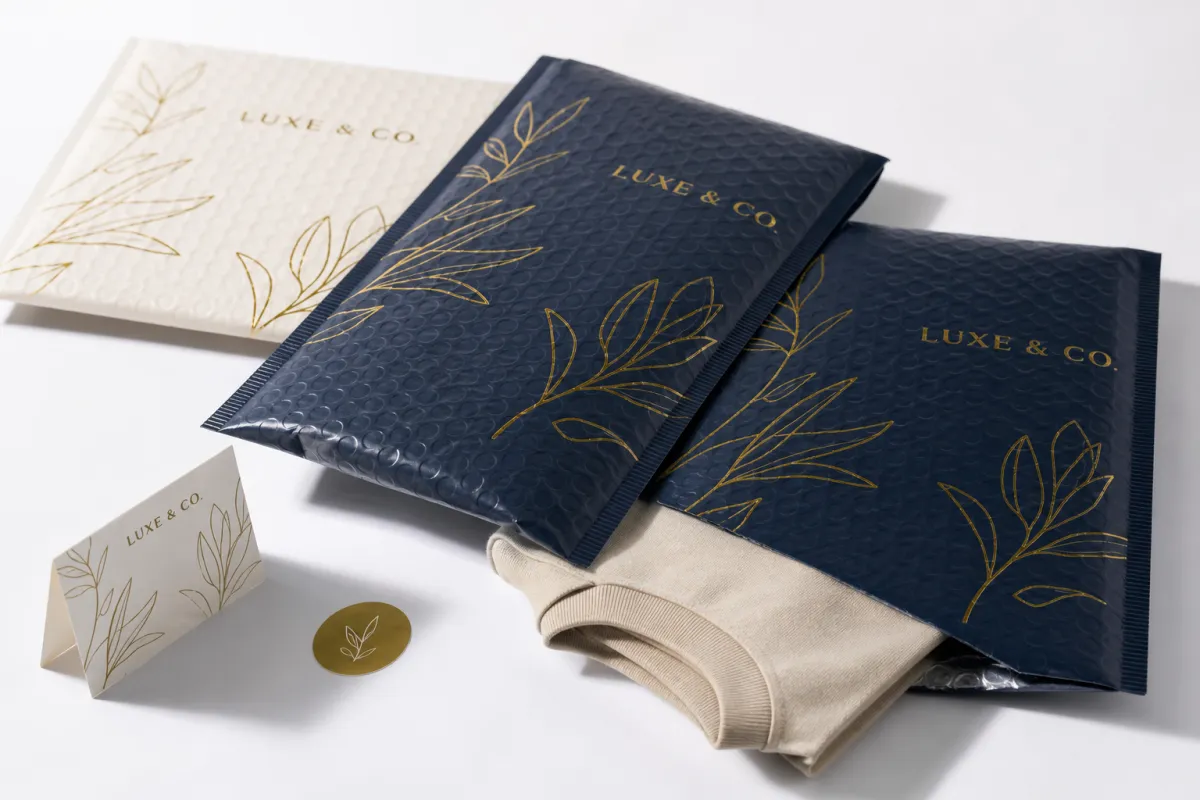
A well-built custom printed mailer bags order does more than move goods from one place to another. It frames the product before the customer even sees it. That first impression changes how the shipment feels. A crisp mailer with clean branding says someone cared. A plain generic bag can still do the job, sure, but it rarely adds value the way a branded package does.
For apparel, beauty, accessories, and lightweight soft goods, printed mailers create a cleaner presentation without adding another packing step. Seal the bag. Label it. Ship it. Done. That matters on a busy packing line. Nobody wants extra inserts, extra cartons, and extra handoffs just to make a shipment look acceptable. A custom printed mailer bags order handles that job with one component instead of three. Less fiddling. Fewer mistakes. Nice change.
There is an operational side people like to ignore until the freight bill shows up. In the right use case, branded mailers can reduce the need for outer cartons, which lowers corrugate use, trims dimensional weight, and makes packout more consistent across teams. That does not mean every product should ship in a mailer. Fragile items, rigid goods, and mixed-SKU orders may still need a box. For many soft or low-bulk items, though, a custom printed mailer bags order supports faster packing and a steadier customer experience.
Buyers often ask whether the print really matters if the product already sells. It does. Packaging is part of the product experience, whether people admit it or not. If some orders ship in custom printed boxes and others show up in plain bags, the mismatch is obvious. Consistency keeps the brand from feeling patched together. It also helps seasonal staff, warehouse teams, and third-party fulfillment centers follow the same packout standard instead of improvising their own version of “close enough.”
Think of mailers as the speed-and-weight choice. Boxes bring structure. Mailers bring efficiency. A custom printed mailer bags order sits in the middle of those goals and works best when the product and the shipping lane are both understood. Guessing rarely helps here.
A clean mailer should not compete with the product. It should protect it, present it well, and make packing easier for the people actually handling the order.
For standards-minded buyers, it helps to keep the real transit path in view. Groups such as the Institute of Packaging Professionals and ISTA both push the same core idea: match the package structure to the journey it has to survive. That is the right mindset for a custom printed mailer bags order. Pick the bag for the shipment, not for the mockup.
Custom printed mailer bags order: bag styles and material choices
The best custom printed mailer bags order starts with the right build. Buyers usually compare a few basic formats first, and each one solves a different problem. Poly mailers are the lightest and often the lowest-cost option. Kraft mailers bring a paper-based look that feels more natural and retail-ready. Padded mailers add cushioning for items that need extra protection without jumping to a full carton. Specialty barrier bags are the heavy-duty options for products that need moisture resistance, odor control, or tighter product protection.
Poly mailers are common for apparel, textiles, soft goods, and other items that do not need rigid protection. They are lightweight, flexible, and easy to print on. A custom printed mailer bags order using poly is often the fastest route when the priority is shipping efficiency and a clean branded appearance. The material can be matte or glossy, and the print usually stands out well because the surface handles strong contrast nicely.
Kraft mailers suit brands that want a more natural finish. They work well for retail packaging programs where the buyer wants a paper-forward look, but the bag still needs to function as a mailer rather than a box. In a custom printed mailer bags order, kraft often signals sustainability. That said, buyers should still check whether the full build includes paper laminates, internal liners, or mixed materials that affect recyclability. Packaging claims should survive more than a marketing meeting.
Padded or reinforced mailers make sense for books, small electronics, cosmetics, hard accessories, and parts that need scratch resistance. They are not a substitute for proper drop testing, but they do add a useful buffer. A smarter custom printed mailer bags order for these items often balances protection against shipping cost, because padding increases both material weight and unit price. Protection is great. Overpaying for it, not so much.
Closure features matter just as much as the base material. Peel-and-seal strips are standard on many mailers, and they speed packout while keeping closures consistent. Tear strips help the recipient open the bag cleanly. Tamper-evident seals show whether the bag was opened in transit. Resealable closures can support returns or repeat use, which helps some apparel and subscription programs. When the structure is chosen well, the custom printed mailer bags order becomes easier to use on the floor and easier to trust in transit.
Material choice also changes the economics. Lightweight poly usually gives the lowest shipping weight. Kraft can raise cost a little, especially with specialty finishes. Padded formats cost more because there is simply more material in the build. That is why a custom printed mailer bags order should be discussed as total landed cost, not just unit price. A bag that saves a few cents in shipping weight may beat a cheaper bag that creates damage claims or slows down packout.
If you ship several product lines, match the mailer to the SKU family. Thin apparel might fit a compact poly bag. A premium accessory may deserve a kraft mailer with a cleaner retail-style finish. A denser product may need padding or a larger gusset. A custom printed mailer bags order usually works best when the bag matches the product instead of trying to force one structure to do every job.
| Mailer type | Best use | Typical look | Relative cost | Practical note |
|---|---|---|---|---|
| Poly mailer | Apparel, soft goods, low-bulk orders | Clean, bold, high-contrast print | Lowest | Strong choice for fast packout and light shipping weight |
| Kraft mailer | Retail packaging, natural presentation | Warm, paper-based, understated | Moderate | Good for brands that want a more tactile presentation |
| Padded mailer | Books, accessories, light protection needs | Bulkier but reassuring | Moderate to higher | Useful when a product needs cushioning without a box |
| Specialty barrier bag | Moisture-sensitive or controlled products | Technical, functional, often more utilitarian | Higher | Choose only when product requirements justify the build |
The point is not which material looks best in a pretty sample photo. The point is which one keeps the custom printed mailer bags order aligned with your product, your shipping lane, and your budget. That answer usually comes from a short, practical conversation about size, weight, handling, and how the package will be opened at the other end. Real-world stuff. Annoying, useful, unavoidable.
Print specifications that keep your custom printed mailer bags order sharp
Print quality is where a custom printed mailer bags order either feels polished or looks like someone rushed through the last mile and hoped nobody would notice. The first decision is usually simple: one-color print or multi-color print. A single solid color with a well-placed logo can look sharp, especially on darker substrates. Multi-color artwork adds depth and more brand detail, but it also raises cost and needs better file prep. If the design has gradients, small type, or fine linework, the print method needs to handle that level of detail. Otherwise the artwork starts looking tired before it even leaves the dock.
Most packaging buyers do best when they prepare vector artwork for logos and text. Vector files keep edges crisp and scale cleanly. Raster artwork can work, but it needs enough resolution to survive production size. Line art and logo files should be built with safe zones, bleed, and correct placement margins. A custom printed mailer bags order should not depend on someone eyeballing the final location. The proof needs to show where the logo sits relative to the fold, seal, gusset, and any warning text.
Color consistency matters too. In real shipping conditions, a bright ink can look different on glossy poly than it does on kraft or matte stock. Ink opacity, substrate finish, and print coverage all change the result. Dark substrates need enough ink density to keep logos readable. Light substrates need clean registration so fine text does not blur. A careful custom printed mailer bags order includes proof review with that in mind, because a nice screen mockup can still fail if the ink and substrate do not cooperate.
Front-only print is often enough for a practical mailer. Full-wrap artwork creates a stronger branded packaging presence, but it costs more and takes more planning. Some buyers choose a large front panel with a smaller repeat mark on the back flap or seam. That gives good visibility without overcommitting to heavy print coverage. For a custom printed mailer bags order, the smartest design is often the one that balances visual impact with print efficiency. Flashy is fine. Wasteful is not.
Proofing is not a checkbox. It is the point where small layout issues get caught before they become expensive mistakes. A good proof should confirm dimensions, placement, orientation, colors, legal copy, and the final look of the closure area. If the artwork includes a QR code, website, or social handle, check those details carefully. A custom printed mailer bags order should move into production only after the proof matches the intended packout. Anything less is a gamble.
There is also a hard limit to what flexible packaging can reproduce cleanly. Tiny serif text, ultra-thin rules, and highly detailed illustrations can get muddy. Large logos, strong typography, and simple shapes usually print better. That does not mean the design needs to be bland. It means the design should respect the material. The best packaging graphics know how they will be handled. That sounds obvious. People still ignore it.
Brands that use mixed packaging programs should keep the visual system coherent across formats. If shipments also use custom printed boxes, bags, and inserts, the colors, typography, and mark treatment should feel related. A custom printed mailer bags order that borrows the same visual language as the rest of your package branding creates a more believable brand experience. Consistency is not flashy, but it does the job. That is usually the point.
If your team is comparing material behavior against transit conditions, ISTA testing methods are worth a look, especially when the product is sensitive to impact or handling. Pair that with paper sourcing from certified forests when a paper-based build is part of the plan, and the custom printed mailer bags order becomes easier to justify internally because the choices are tied to performance and sourcing, not just appearance.
Pricing, MOQ, and what changes the cost of a custom printed mailer bags order
Pricing for a custom printed mailer bags order comes down to a handful of variables that interact more than buyers expect. Size is one of the biggest drivers because larger bags use more film, more board, or more padding. Material matters as well, since poly, kraft, and padded builds sit in different cost bands. Print complexity can push the price up quickly when you add more colors, larger coverage, or special effects.
Quantity has a major effect on unit cost. Lower runs usually cost more per bag because setup, plate creation, proofing, and press time get spread over fewer pieces. Larger volumes bring better efficiency and usually a lower per-unit price. That is why a custom printed mailer bags order for 1,000 pieces and one for 10,000 pieces can look like two different markets. The difference is not just volume. It is how production economics work.
As a practical guide, many buyers see rough pricing like this for a custom printed mailer bags order at mid-sized quantities, though exact numbers depend on the final spec:
- Standard poly mailers: often around $0.12-$0.28 per unit at about 5,000 pieces, depending on size and print coverage.
- Kraft mailers: often around $0.22-$0.45 per unit at similar volume, depending on coating, structure, and ink count.
- Padded mailers: often around $0.38-$0.90 per unit, with cost rising as protection and finish improve.
- Specialty builds: can run higher when barrier properties, tamper evidence, or custom gussets are added.
Those ranges are not promises, and they should not be read like a quote. They are simply a useful way to think about where a custom printed mailer bags order might land before artwork and shipping are finalized. If a supplier gives only a unit price without clarifying freight, proofing, or packaging configuration, the number is incomplete. Ask for the full landed estimate so you can compare apples to apples.
Minimum order quantity, or MOQ, depends on the construction and print method. Standard structures usually support lower MOQs more easily than highly customized formats. If your run is small, expect a higher unit cost because setup costs have less volume to absorb them. If your run is larger, ask whether there is a break point that improves pricing. A smart custom printed mailer bags order often comes from moving just above a threshold where the unit economics improve enough to justify the extra pieces.
Artwork revisions can also affect price. Simple proof corrections are usually manageable. Major design changes after quoting can add time and cost because the layout, color count, or print area may need to be reworked. Freight matters too. A heavy shipment to one region can look inexpensive on paper until shipping gets added. That is why the best buyers ask for an all-in estimate that includes the bag, print, packing configuration, and destination freight whenever possible.
Some other cost variables are easy to overlook:
- Print area: front-only print is usually cheaper than full-coverage print.
- Ink count: one-color jobs are simpler than multi-color builds.
- Finishes: matte, gloss, metallic, or specialty coatings can increase cost.
- Structure: tear strips, double seals, gussets, and padding add material and labor.
- Shipping cadence: split shipments or rush freight can raise the final total.
If you are consolidating product lines, there is usually value in keeping the SKU count tight. One or two standard mailer sizes are easier to manage than five or six variations that each need their own inventory slot. A custom printed mailer bags order becomes more cost-effective when the bag structure is standardized and the artwork is designed to work across a smaller set of dimensions.
For brands that need a repeatable sourcing path, our Wholesale Programs page is a useful place to review ordering patterns and volume planning. The same idea applies whether the item is a mailer, a carton, or another branded packaging item: fewer surprises in spec and freight usually mean a cleaner real cost picture.
Proofing, production, and delivery timeline for your order
The timeline for a custom printed mailer bags order usually starts with a quote request, but the real clock begins once the specs are confirmed. A typical sequence looks like this: project review, bag and print confirmation, artwork submission, proofing, approval, production, and shipment. Each step has a purpose, and each one can move fast if the information is complete.
Delays usually happen for ordinary reasons, not dramatic ones. Missing vector artwork slows proof creation. Unclear bag dimensions create back-and-forth during specification review. Color changes after the proof is already prepared can add time. A late approval can push the job out of the production window entirely. If a custom printed mailer bags order is tied to a launch or seasonal promotion, those delays matter a lot more than they would on a replenishment order.
Production lead time depends on the print method, the material, and the size of the run. A straightforward custom printed mailer bags order can often move through production in roughly 12-15 business days after proof approval, while more complex builds or heavier volumes may require 15-25 business days or longer. That is a planning range, not a promise. Freight time then sits on top of production time, and that part depends on destination, mode, and whether the shipment is going by parcel, LTL, or ocean.
For buyers, the best planning habit is simple: work backward from the in-hand date, not the order date. If you need bags at a launch wall or in a fulfillment center by a specific day, give yourself room for proofing, revisions, and transit. A custom printed mailer bags order that looks quick on the quote sheet can still miss the target if the schedule was built too tightly. Paper is patient. Deadlines are not.
One useful habit is to keep a small approval checklist before the proof is signed off:
- Confirm the bag dimensions and closure style.
- Check artwork placement and safe zones.
- Review color expectations on the chosen substrate.
- Verify any legal copy, barcodes, or website text.
- Approve only when the proof reflects the final packaging plan.
That checklist is especially helpful if the custom printed mailer bags order is part of a larger packaging design update. If your team is also changing labels, inserts, or custom printed boxes, coordinate the timing so the shipping materials arrive together. Mixed launch timing creates confusion on the floor, and it can make inventory look out of sync even when the purchase orders were correct.
If you are building a sustainability story around the package, this is also the stage where sourcing notes should be documented. Paper from certified forests, recycled content claims, and transit performance testing should all be recorded before the first shipment goes out. A careful custom printed mailer bags order does not leave those details for later, because later usually means confusion.
Why choose us for a custom printed mailer bags order
Custom Logo Things is a good fit for buyers who want practical guidance instead of inflated promises. A custom printed mailer bags order works best when someone helps narrow the field quickly, and that is where a packaging partner earns trust. The useful work happens in the details: choosing the right material, keeping the print sharp, setting realistic quantities, and making sure the delivery window matches the launch plan.
What buyers usually need most is clarity. They want to know whether a poly build is enough, whether a kraft option better supports the brand, or whether a padded structure is worth the extra cost. A custom printed mailer bags order should not take a week of guesswork to answer those questions. Straightforward quotes, proof support, and realistic lead times make the whole process easier to manage.
There is also value in consistency. Once a mailer spec works, it should keep working. That means the print should reproduce the same way on repeat runs, the closure should behave the same in packing, and the bag should arrive packed in a format the warehouse can use without retraining. Buyers of a custom printed mailer bags order are usually looking for repeatability as much as visual appeal.
We also understand that not every order is a branding exercise. Sometimes the goal is simply to get the right product out the door without damage and without slowing down the line. Sometimes the goal is to make the shipment look more retail-ready. Sometimes the job is to support a promotion, an event, or a subscription program. A custom printed mailer bags order can support any of those goals, but only if the spec is grounded in the actual use case.
If you are comparing options across categories, the same disciplined approach applies to custom printed boxes, shipping labels, and other branded packaging items. Good package branding does not come from piling on decoration. It comes from making the right packaging choices in the right places, with dimensions, materials, and print coverage matched to the business need.
Next steps to place your custom printed mailer bags order
The fastest way to move a custom printed mailer bags order forward is to gather the core specifications before asking for a quote. Have the bag size ready, along with the product type, estimated quantity, artwork files, preferred material, and target delivery date. If you already know the bag needs tamper evidence, a matte surface, extra protection, or a retail-ready finish, include that too. The clearer the starting information, the cleaner the quote and proof process will be.
It also helps to answer a few decision points before you submit the request. Do you want a lightweight poly bag or a paper-based look? Will the bag ship one product or several SKUs? Does the design need front-only printing, or do you need more coverage? A custom printed mailer bags order becomes much easier to estimate when those questions are already settled.
Send the details together if you can. That lets the team review pricing, proofing, and timing in one pass instead of piecing the project together over several messages. For buyers, that usually means fewer revisions and a more accurate ship date. For the production side, it means less ambiguity and a better chance of hitting the plan on the first try.
If you are ready to move, start with the basic spec package and let the quote process do the sorting. A custom printed mailer bags order should feel like a controlled packaging purchase, not a scavenger hunt. Share the dimensions, artwork, quantity, and due date, and the rest of the project becomes much easier to manage. If you still need background details, the FAQ page is a useful place to check common ordering questions before you place your custom printed mailer bags order.
FAQs
How do I start a custom printed mailer bags order?
Start with the bag size, product type, quantity, and any artwork files you already have. It also helps to confirm whether you want poly, kraft, padded, or another structure before requesting a quote. If you are unsure about print placement or file setup, ask for proofing guidance early so the custom printed mailer bags order moves forward without avoidable revisions.
What size should I choose for my custom printed mailer bags order?
Choose a bag that fits the product with enough room for the item, any inserts, and a little working space, but not so much extra space that the package looks loose. Measure the shipped item in its final form, including folding or protective wrap, before choosing dimensions. If you ship multiple SKUs, ask for sizing guidance across your most common products so the custom printed mailer bags order supports the full line.
What affects the price of a custom printed mailer bags order most?
Quantity, size, material, and number of print colors usually have the biggest effect on cost. Features such as padding, tamper evidence, tear strips, or full-coverage printing can raise the price further. Shipping method and artwork revisions can also change the final total, so it is smart to ask for an all-in estimate when planning a custom printed mailer bags order.
What is the usual MOQ for custom printed mailer bags?
MOQ depends on the construction, material, and print method selected. Standard formats often support more efficient production than highly customized builds, which is why they may have more flexible quantity thresholds. If you need a lower run, ask what the tradeoff is in unit pricing and whether a different structure would better fit the custom printed mailer bags order.
Can I approve a proof before production starts?
Yes, a proof should be reviewed before the order moves into production. Use it to confirm artwork placement, color expectations, dimensions, and any required text or codes. Approve only after the layout matches your packaging and shipping goals, because the proof is the last chance to catch issues before the custom printed mailer bags order is made.
A strong custom printed mailer bags order comes down to practical choices: the right material, a print spec that suits the substrate, a price structure that includes freight, and a timeline that respects proofing and production. Get those pieces right, and the mailer does its job without creating extra work. That is the real value of a custom printed mailer bags order, and it is why thoughtful buyers treat packaging as part of the product experience rather than a last-minute add-on.
The clearest takeaway is simple: before you place a custom printed mailer bags order, lock down the SKU size, packaging material, artwork format, and in-hand date. If those four pieces are solid, everything else gets a lot less messy. If they are not, the project is gonna drift, and nobody wants that.

