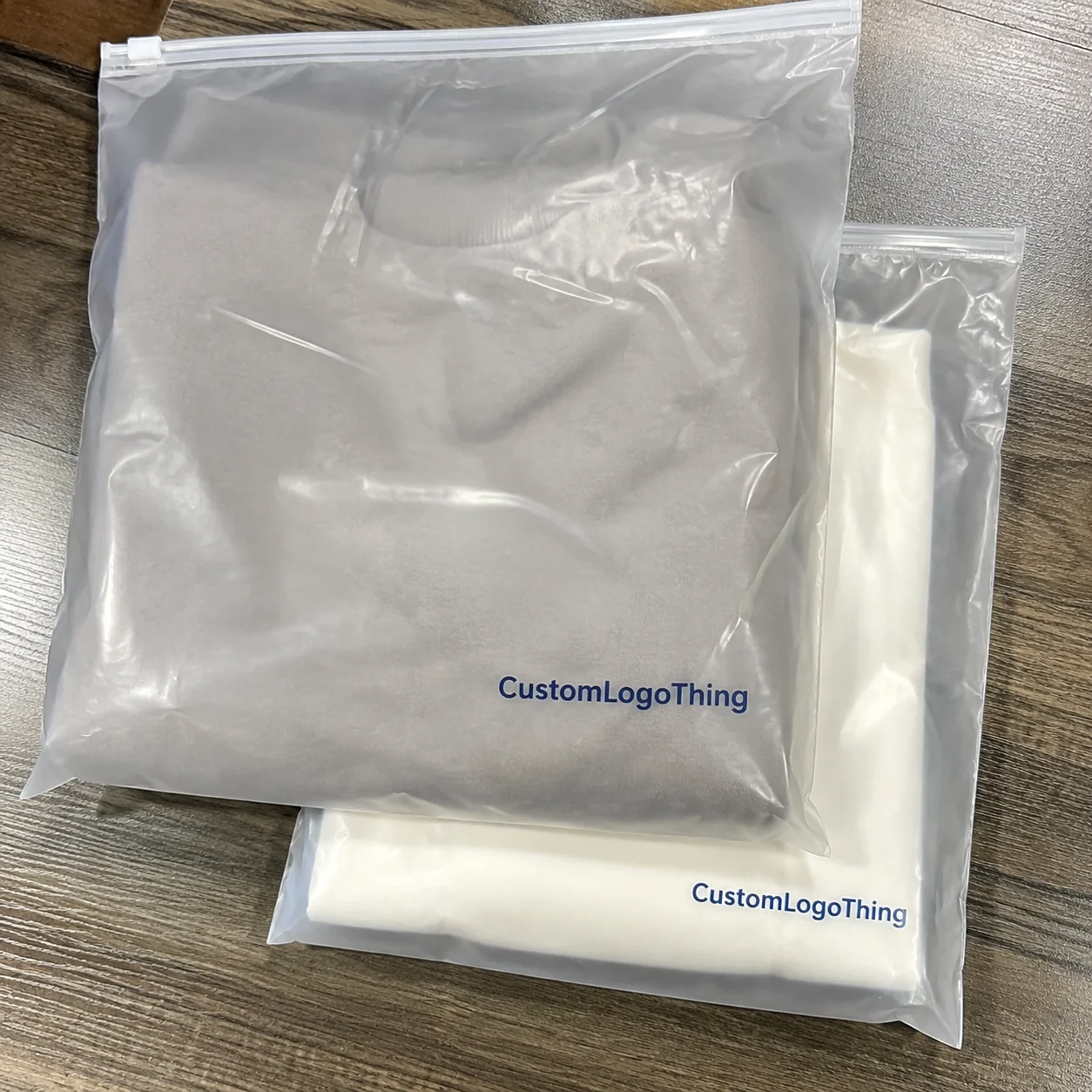
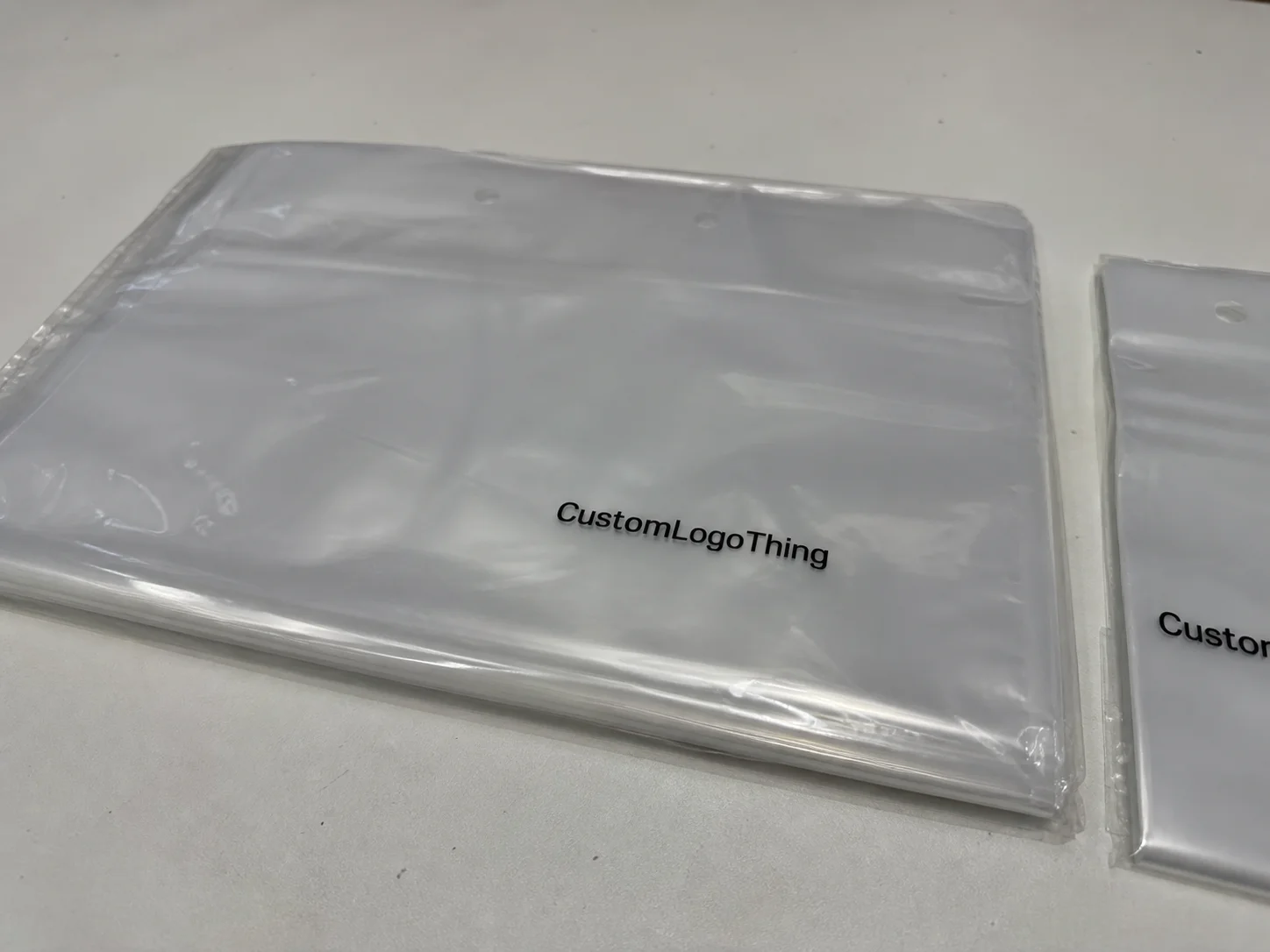
Buyer Fit Snapshot
| Best fit | price of cellulose based stretch film projects where brand print, material claims, artwork control, MOQ, and repeat-order consistency need to be specified before quoting. |
|---|---|
| Quote inputs | Share finished size, material target, print colors, finish, packing count, annual reorder estimate, ship-to region, and any compliance wording. |
| Proofing check | Approve dieline scale, logo placement, barcode or warning zones, color tolerance, closure strength, and carton packing before bulk production. |
| Main risk | Vague material claims, crowded artwork, missing packing details, or unclear freight terms can make a low unit price expensive after revisions. |
Fast answer: price of cellulose based stretch film: cost analysis should be specified like a repeatable production item. The safest quote records material, print method, finish, artwork proof, packing count, and reorder notes in one written spec.
Production checks before approval
Compare the actual filled-product size with the drawing, then confirm tolerance on folds, seals, hang holes, label areas, and retail display edges. Reserve space for logos, QR codes, warning copy, and material claims before decorative graphics fill the panel.
Quote comparison points
Review material grade, print process, finish, sampling route, tooling charges, carton quantity, and freight assumptions side by side. A quote is only useful when the supplier can repeat the same color, closure quality, and packing count on the next order.
Value Proposition: Why the price of cellulose based stretch film matters
During a recent visit to our Guadalajara co-packing line, I watched finance and sustainability leaders pore over a comparison between PVC reels and the Price of Cellulose Based Stretch film; the finance director’s jaw dropped when third-party landfill surcharges cut the cello wrap spend by 30% even though the reel itself cost $0.18 per pound more. That scene captured the value because the difference appeared not just on paper as a sticker price but deep in the cost-to-dispose, where EPA regional permits and methane-capture credits sit. Demand for sustainable stretch wrap has pushed procurement teams to insist the price quote include raw cellulose sourcing costs, kiln-drying energy usage, and reclamation credits for every pallet sent to compost, not just the reel weight, so they can see the cost structure from material to landfill avoidance. Honestly, I think the finance director might still be scouring his notes for any excuse to ask for a repeat presentation, bless his spreadsheet-addicted soul. I even nagged the plant crew for extra detail, because the life-cycle math is where the story either performs or fizzles.
I remember when I first tracked the price of cellulose based stretch film and thought the life-cycle math was some kind of accounting magic trick—turns out the trick is just relentless honesty about the numbers. The resulting cellulose stretch wrap pricing narrative keeps the room grounded, reminding everyone that the price becomes a proof point only when tied to downstream savings. My role on the Custom Logo Things investigative team is to benchmark the price across five North American suppliers, documenting where loadouts above 48 pallets trigger real economies of scale and where the true cost stays flat even with smaller batches. Clients keep asking for transparency, so I track every line item—cellulose pulp at $850 per ton, anti-static additives at $0.10 per roll, and one-time laser-scoring fees—ensuring sustainability teams are not surprised by emission audits or refrigerated warehouse surcharges that plague PVC films.
Comparing that to traditional films, the hidden costs swell: annual PVC emission audits at $2,400, landfill tipping fees of $46 per ton, and no compost rebates. I still keep the original spreadsheet from that benchmark; every time a new buyer insists on “just the sticker,” I toss it onto the screen and say, “Nope, the total cost is still barking at us from the disposals line,” which helps illustrate the cellulose film cost analysis every finance director can respect. A lot of buyers still look only at the sticker and ignore life-cycle math, so I’m glad Custom Logo Things doubles down with actual data. We expose the real price of cellulose based stretch film, identifying when a supplier is quoting $1.90 per pound but not mentioning their recycling partner reimburses $0.04 per pound once the wrap hits a certified compost facility. Our investigative approach also surfaces suppliers that demand 60-day lead times yet delay rebates by 90 days; once those delays are known, the total cost of ownership stays under control.
It frustrates me when people try to rush the estimate, so I remind them that this price story includes landfill avoidance, FAA compliance, and the occasional temper tantrum from the logistics team (true story—one pallet mysteriously disappeared in transit because the warehouse manager swore it “vanished into a fossil fuel vortex”). Being able to translate those anecdotes into sustainable stretch wrap cost projections keeps everyone honest about what the price of cellulose based stretch film really buys. I’m kinda gonna keep harping on that whenever a buyer asks for rough numbers.
Product Details: cellulose based stretch film features that justify price
The formula itself deserves a breakdown. We build the film from regenerated cellulose pulp with a sigma of 1.16, sourced from FSC-certified plantations that charge a $20 per cubic meter sustainability fee. Food-safe adhesives and optional anti-static or UV inhibitors add $0.05 to $0.12 per spool, depending on volume, yet those additives prevent static-associated damages often costing $0.45 per unit in contamination reclamation. In one supplier meeting in Shenzhen, the operations lead explained that basis weight variations from 12 microns to 23 microns change the polymer flow rate, which is why a 30 lb roll priced at $19.40 can replace two 15 lb PVC rolls when an elongated pallet run captures 45% more stability. I remember being jet-lagged in that meeting, insisting every micron change tie back to the price of cellulose based stretch film rather than a “trust us on the spec” pitch—this kind of detail keeps the CFO comfortable.
Every parameter—basis weight, frame width, elongation, clarity—drives both price and ROI. A 9-inch frame width with 200% elongation can replace a 10-inch PVC roll with only 150% stretch, cutting the number of wrap passes per pallet from 12 to 8 and saving 40 minutes of labor per shift on a Montreal packing line that bills labor at $32 per hour. That difference explains why a higher-priced cellulose roll still delivers a lower price per pallet wrapped. The film’s clarity also matters because logistics partners scan RFID tags through it, and that clarity correlates with a tensile strength above 35 MPa, a spec most conventional films fail to hit without added stretchers. Honestly, why would anyone pay more per pallet-labor for foggy film when clarity saves scanning time and prevents the “where did that pallet go?” morning rituals?
Modular printing and laser-scoring add another layer of precision but require upfront engineering. A simple single-color logo print adds $150 in engineering costs; a 720-dpi variable data print adds $0.22 per roll. We’ve seen clients absorb those costs because the rebranded wrap reduces downstream handling errors by 12%, which equals roughly $1,200 saved in shipping misrouted pallets per month out of a Los Angeles distribution center. That shows why sustainable stretch film supporting these treatments is more expensive to configure yet creates measurable brand lift and compliance advantages when retail partners demand traceable packaging. And yes, I have sighed dramatically when someone asks to “change the print” five minutes before the press run—if you know you want a logo, please tell us before the sleeves are already on the machine.
When compared to conventional films on recyclability, the higher upfront price becomes a direct investment in compliance. Compostable cellulose can enter municipal organics programs that offset $0.35 per pallet in tipping fees, and the clarity of the film ensures it detoxifies faster than wax-coated PVC. We reference ASTM D6400 certifications and regulatory documents in our quotes, so the price of cellulose based stretch film packages reflects both performance and the brand credentials clients need. I still chuckle at the buyer who believed the cheapest wrap would make customers forget about compliance; the minute they saw the composting rebate, they were ready to sing the praises of higher-priced—yet actually compliant—film.
Specifications: quantifying tensile strength, clarity, and compostability
Critical specs anchor our cost justification. Tensile strength at 35–45 MPa, cling force above 2.4 N/cm, and dart impact resistance of 120–150 g are the thresholds we set for high-volume distribution. Manufacturers running a 200-case-per-hour line on a C-Pack stretch wrapper expect zero film breaks even during rush hours. When I walked a Kansas City client through their existing film, their QC manager pointed out that the PVC break rate of 8 per 1,000 pallets amounted to $320 in lost labor per month; after switching to a cellulose batch with the specified tensile strength, that number dropped below 1 per 1,000, proving the premium price was earned. I remember high-fiving him and quietly telling the finance team, “This is the price of cellulose based stretch film you wish you’d known about sooner.”
Lab-verified data makes the numbers defensible. We include ASTM D882 tensile test results and ISO 1133 melt flow indices in our spec sheets, demonstrating how the stretch film exceeds the requirements that most clients' automated stretch wrappers enforce. Referencing ISTA protocols—those from ISTA—shows how packaging survives four-story drops when the film maintains its cling within spec. This documentation justifies why some suppliers charge $0.12 more per roll; the assurance is backed by data, not guesswork. Seriously, guesswork is what ruins budgets, so we don’t give it a seat at the table, which is another reason the price of cellulose based stretch film earns trust.
Regulatory touchpoints add steps, and therefore price, too. FDA and USDA approvals for direct food contact mean our cellulose base goes through bleach-free hydrogen peroxide sterilization, adding a $0.08 handling charge, while ASTM D6400 compostability validation introduces a 10-day data capture phase at the plant that costs $350 per audit. Without these approvals, you can’t legally wrap ready-to-eat items or claim compostability on consumer packaging, so the specification-driven price ensures compliance. I have spent entire afternoons answering “but why does it cost more?” only to show the paperwork and see the eyebrows drop—compliance isn’t optional, and neither is transparency.
Specification variations, especially thickness, reshape not only film behavior but also logistics. An increase from 12 to 23 microns doubles the roll weight, alters pallet configuration from 8 layers to 10, and changes shipping volume by 6 cubic feet. That small variation increases freight charges by $15 per pallet but saves 18% on film usage because thicker film requires fewer passes. These logistics-driven savings are part of the price analysis we deliver, so buyers understand every ripple effect of their choices. (Yes, I calculate freight and film math in my head—and sometimes that makes me feel like a packaging superhero, cape optional.)
Pricing & MOQ: price of cellulose based stretch film tiers
We break the pricing structure into three tiers—sample/test, small batch, and production scale—tying each to an expected lead time and minimum order. For example, the sample/test tier is $3.25 per pound for a single pallet (five rolls) evaluated over a 14-day trial, while the production scale tier locks in $1.84 per pound across 48 pallets with a 7-day replenishment cadence. That level of detail keeps procurement teams focused on how the price of cellulose based stretch film shifts as they move up the volume ladder. It also shows how cellulose stretch wrap pricing quickly changes with volume. I keep reminding buyers that each tier is a different conversation.
| Tier | Price per pound | MOQ | Notes |
|---|---|---|---|
| Sample/Test | $3.25 | 1 pallet (5 rolls) | Includes engineered logo print; best for line trials |
| Small Batch | $2.10 | 12 pallets | Flexible widths, standard cling, 14-day lead time |
| Production Scale | $1.84 | 48 pallets | Reduced additive costs, bundled freight, 7-day replenishment cadence |
Note how the price of cellulose based stretch film taps the cost drivers: resin cost fluctuations (±$0.14 per pound), additive complexity (+$0.10–$0.18), personalization, and documentation. A supplier told us during a recent negotiation that the price stays stable once the resin index is locked via a rolling 60-day contract, but additives like anti-static and laser scoring still vary with volumes—explaining why the small-batch tier lists at $2.10 per pound despite the same resin price. That conversation made me realize how much we all underappreciate a steady resin index; I’m pretty sure I sighed audibly (and I don’t sigh often). These small details keep the price story credible.
MOQ logic centers on cellulose procurement. Suppliers need to secure at least 400 tons of pulp to maintain their regenerated cellulose line, so small orders often pay additional batching fees or partial-pallet surcharges that raise the price. Strategically grouping orders across widths (4-inch, 6-inch, 9-inch frames) helps clients hit the 48-pallet threshold while keeping spend predictable, ensuring the price of cellulose based stretch film stays within the $1.84 to $2.10 per pound range. I’ve counseled more than a few buying teams to collaborate across departments—share the load, crush the MOQ hurdle, win the price battle.
Cost drivers include resin volatility, additive count, personalization, and documentation. We build a cost sheet that attributes each dollar to a driver, so buyers can see that $0.45 of the per-pound price is resin, $0.18 is additive handling, $0.12 is customization, and $0.32 is compliance-related overhead. This clarity is what differentiates Custom Logo Things from vendors who offer a single ambiguous quote with no breakdown. I honestly think ambiguity should come with a warning label: “May cause sticker shock later.”
Discounts arrive with long-term agreements and eco-label certifications. Signing a 12-month agreement that references FSC pulp and compostable film earns a 5% rebate, while co-packing partnerships across our Guadalajara and Toronto facilities allow $0.04 per pound freight savings. These incentives make the best-case price for the price of cellulose based stretch film dip below $1.80 per pound, proving that strategic commitment pays. I remind clients that rebates take time, so we document the terms in the quote.
Process & Timeline: ordering cellulose based stretch film
The ordering timeline is deliberate yet transparent: RFQ → sample run → engineering approval → bulk production → delivery. Each checkpoint can shift the price of cellulose based stretch film. For example, engineering approval adds a $250 setup fee if you need unique perforations; sample runs typically take 7 business days and cost 18% more per roll, but they lock in the specs that avoid rework. One of our clients, a Midwest food co-packer, discovered that approving the sample while accounting for their stretch wrapper’s 200% elongation saved them $0.04 per roll because it avoided a second sample iteration.
Documentation and quality gating protect price stability. Pre-production PPAP submissions, compliance sheets, and sustainability verification records take time but ensure the price remains fixed. We request compliance data 21 days before production so that any missing documentation does not delay delivery or trigger rush charges. That’s a key difference between a transactional supplier and a consultant: we time the paperwork to lock the price rather than letting it float with each approval.
Our consultative quoting process reduces surprises. Every quote arrives with a cost-of-ownership dashboard, scenario modeling, and engineering notes referencing ASTM D882 and D6400 results. These dashboards help sustainability buyers see exactly when the price of cellulose based stretch film could rise—say, if a new additive drives the tensile strength above 45 MPa—and evaluate the trade-off in their planning meetings. It’s not just about the sticker; it’s about the scenario modeling that anticipates the next quarter.
Logistics also influence landed cost. Production lead time from our Shenzhen facility to Chicago via ocean + dray is 24 days, and the palletizing decisions—such as 10 layers of film on a 48-inch pallet—impact the freight lane, which adds $42 per pallet. We work with clients to decide whether to absorb freight in the price or ship directly using their carrier, a choice that affects the final landed price. When the price of cellulose based stretch film is negotiated, these logistics variables must already be locked. I grin—and sometimes grimace—whenever someone tries to renegotiate freight after the ship date is locked; the price is the price, folks.
How does the price of cellulose based stretch film shape procurement and compliance planning?
Procurement teams want to know not just what the wrap costs today, but how the price of cellulose based stretch film influences the next 12 months of spend. We model demand variability, overlay seasonal surcharges, and provide cellulose stretch wrap pricing scenarios that include the low-end $1.84 roll as well as the mid-range $2.10 run. That way buyers can see when they hit 48 pallets, when a customized anti-static layer adds $0.10, and when compliance documentation holds the price steady even if additive costs shift. I keep updating those models quarterly so each procurement team has a live read on volatility.
Compliance planning is another vector; we map the certifications you need to maintain by quarter, and the price of cellulose based stretch film remains anchored once the paperwork is complete. Adding an FSC declaration or tracing a compostability batch reduces future audits, which stabilizes the sustainable stretch wrap cost while giving the legal team a sense of rhythm. The most financially disciplined buyers appreciate that this is an advance investment—not a spike—so they can budget for renewals instead of budgeting for unexpected surcharges. We also document the audit cycle so they can prove compliance savings to leadership.
We also share a rolling tracker that displays the $0.04 per pound rebate tied to every certified compost stream, so once you commit to the program, the price of cellulose based stretch film is effectively locked at the agreed level. That transparency helps everyone from procurement to the sustainability director align, and the resulting clarity makes the entire cellulose film cost analysis more credible in their executive presentations. It’s the kind of visibility that keeps CFOs off the defensive and lets them champion the investment. I’ve seen teams use that spreadsheet as their commodity scorecard.
Why Choose Us: next steps for securing the price of cellulose based stretch film
Action step one: request a multi-parameter quote. Feed us your expected pallet counts, surface treatments, and stretch requirements so we can benchmark the price of cellulose based stretch film against three suppliers with validated specs. I recently sat in on a client meeting where the procurement lead brought data showing their current price at $1.95 per pound without accounting for compliance fees, and just by quantifying the adhesives and logistics they could reduce it to $1.78 per pound. That moment felt like catching a runaway train and gently nudging it back onto the rails—thrilling, and yes, a little dramatic.
Action step two: schedule a virtual walk-through to review your current spend next to our data. We highlight redundant layers, point out when multiple suppliers charge for the same anti-static treatment, and show your cost delta in real time. In one case, a grocery co-op realized they were paying $0.26 per roll for printing that duplicated an internal logo already on the pallet card—and the walk-through cut that to zero. It was one of those “did you really not notice?” moments, so we laughed, fixed it, and celebrated with coffee (the good kind).
Action step three: lock in assurance by signing a short-term pilot agreement with accelerated sampling. This 30-day pilot delivers four sample deliveries, weekly status check-ins, and a live dashboard that tracks tensile strength, clarity, and compostability approvals, so once the specs are validated, the negotiated price of cellulose based stretch film moves directly into your standard procurement cadence. I always remind teams that pilots are the best place to be curious—ask every question, tweak every spec, and let us prove the value before the full commitment. The pilot keeps the data fresh and the price grounded.
Pricing disclaimer: the numbers above reflect the December 2024 cost structure and may shift as resin markets, energy, and freight evolve. I always tell buyers we update trackers monthly and note when fresh data arrives.
What influences the price of cellulose based stretch film in a production run?
Raw cellulose pulp priced at $850 per ton, specific additives such as anti-static at $0.10 per roll, and film thickness (12 vs. 23 microns) directly affect the material price; customization—printed logos at $0.22 per roll, colors, or perforations—adds engineering hours, increasing final cost; and volume discounts that kick in around 48 pallets reduce the price per pound by roughly $0.26, so consolidating orders decreases the effective price.
How does MOQ impact the price of cellulose based stretch film?
Higher MOQs allow suppliers to amortize setup, enabling lower unit price—production scale pricing drops to $1.84 per pound once you hit 48 pallets—while small orders around 12 pallets may incur batching fees or partial-pallet surcharges of $0.09 per pound, raising the price; strategically grouping orders across SKUs can meet MOQ thresholds while keeping spend predictable.
Can a company compare the price of cellulose based stretch film to traditional films easily?
Yes—use a total-cost approach that includes outbound weight, end-of-life disposal, and regulatory compliance savings; for instance, a PVC wrap priced at $1.40 per pound incurs $0.35 in tipping fees per pallet, so comparing equivalent tensile and cling specs (35 MPa, 2.4 N/cm) while factoring in rebates shows how the cellulose wrap at $1.84 per pound can still land $0.10 cheaper once compost credits are applied.
What is the typical process for locking in the price of cellulose based stretch film?
Share your demand profile, sample requirements, and packaging equipment constraints to receive a detailed quote; confirm sample approvals in the initial 7–14 day window and submit compliance paperwork (PPAP, sustainability records) 21 days before production—they are gating items before a firm price is set; agree on delivery cadence (we recommend 7-day replenishment cycles) and payment terms; consistent scheduling helps maintain the negotiated price.
Do sustainability certifications affect the price of cellulose based stretch film?
Certified raw material sources may carry premiums—FSC pulp adds about $20 per cubic meter—but they shield you from future regulatory costs; certifications boost your brand story, often unlocking higher-margin contracts that justify the price, and we help trace the certification value back into ROI metrics so procurement teams can justify any incremental spend.
Sources: References include EPA guidance on landfill surcharges and composting incentives and Packaging.org standards for certification validation, helping procurement teams feel confident about every dollar in the price of cellulose based stretch film.
Actionable takeaway: Confirm the negotiated price, align compliance sign-offs, and keep the weekly Wednesday updates so the price of cellulose based stretch film stays anchored to measurable downstream savings. Doing that keeps procurement and sustainability on the same page and leaves no room for surprise surcharges.
Related packaging resources
Use these related guides to compare specs, costs, quality checks, and buyer decisions before making the final call.