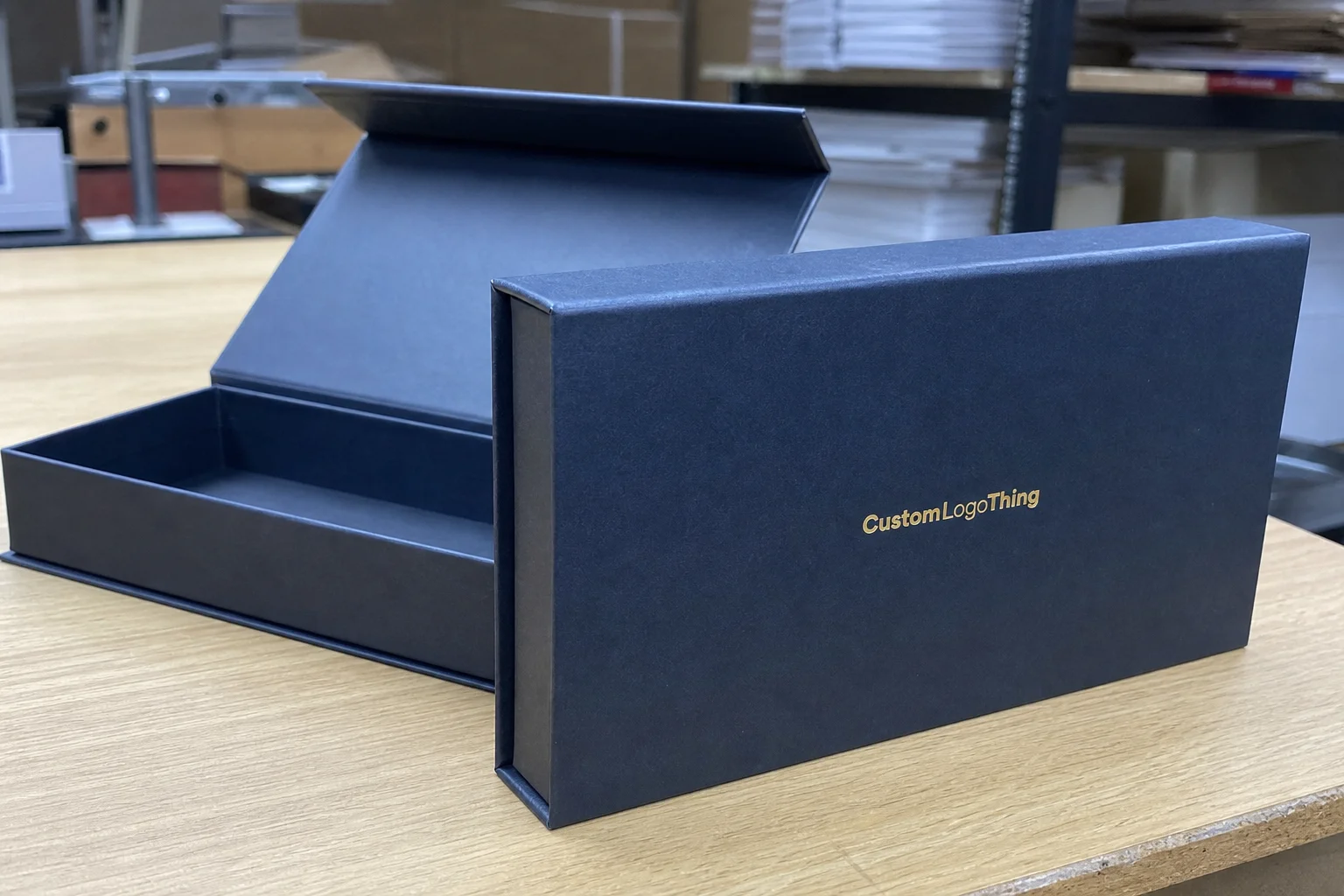
Buyer Fit Snapshot
| Best fit | price for luxury magnetic closure boxes for packaging buyers comparing material specs, print proof, MOQ, unit cost, freight, and repeat-order risk where brand print, material, artwork control, and repeat-order consistency matter. |
|---|---|
| Quote inputs | Share finished size, material target, print colors, finish, packing count, annual reorder estimate, and delivery region. |
| Proofing check | Approve dieline scale, logo placement, barcode or warning zones, color tolerance, and any recyclable or compostable wording before bulk production. |
| Main risk | Vague material claims, crowded artwork, or missing packing details can create delays even when the unit price looks attractive. |
Fast answer: Price for Luxury Magnetic Closure Boxes: What Drives Cost should be specified like a repeatable production item. The safest quote includes material, print method, finish, artwork proof, carton packing, and reorder notes in one written spec.
What to confirm before approving the packaging proof
Check the product dimensions against the actual filled item, not only the sales mockup. Ask for tolerance on folds, seals, hang holes, label areas, and retail display edges. If the package carries a logo, QR code, warning copy, or legal claim, reserve that space before decorative graphics fill the panel.
How to compare quotes without losing quality
Compare board or film grade, print process, finish, sampling route, tooling charges, carton quantity, and freight assumptions side by side. A lower quote is only useful if the supplier can repeat the same color, closure quality, and packing count on the next order.
The price for Luxury Magnetic Closure boxes can look simple on a quote sheet and still be wildly misleading. I’ve seen two samples that looked nearly identical on a screen—same black wrap, same lid style, same logo position—yet one landed at $1.42 per unit and the other came in at $2.11 because of board grade, magnet size, and a hand-applied finish that nobody mentioned in the first email. That kind of gap is normal, not unusual, and it is exactly why buyers need to understand what sits behind the Price for Luxury Magnetic Closure boxes before they compare suppliers. In Dongguan and Shenzhen, I’ve watched quotes move by 15% to 25% after a buyer finally asked for the real spec sheet instead of a mood board.
Honestly, I think a lot of packaging buyers get tricked by the pretty mockup. The mockup is usually doing its job: looking expensive and making everyone feel good in the meeting. The actual box is where the money goes. A rigid magnetic box is part structure, part decoration, part labor, and part logistics. Once you strip away the marketing language, the price for luxury magnetic closure boxes is really a bundle of very specific decisions: chipboard thickness, wrap paper, magnet count, insert type, printing method, and how much hand work the factory must absorb. A common build might use 1200gsm greyboard with a 157gsm C2S art paper wrap, two 10mm x 2mm magnets, and matte lamination. If you want predictable landed cost, you have to price the box like a manufactured product, not a gift accessory.
The goal is not the cheapest box. It is the right box at a defensible cost, with quality that matches the brand promise. For a fragrance brand, that might mean a 1,500-unit run with soft-touch lamination and a custom EVA insert. For a jewelry brand, it may mean a tighter footprint, a satin ribbon lift, and foil stamping that holds up under retail lighting. Different use cases, different economics. Same principle. And yes, I’ve sat through enough “why does this cost so much?” meetings in Guangzhou and Los Angeles to know nobody enjoys that part. But a $0.30 cheaper box that dents on arrival is not a saving. It’s a future complaint.
Price for Luxury Magnetic Closure Boxes: Why the First Quote Can Mislead
The first quote often tells you almost nothing useful unless the supplier has already locked down the specs. I’ve sat in supplier negotiations where a buyer asked for “premium magnetic boxes” and got a clean-looking number back in 24 hours, only to discover later that the quote assumed 1200gsm greyboard, a standard paper wrap, no insert, and a single-color exterior print. That is not the same product as a rigid luxury presentation box with a 157gsm art paper wrap, full-wrap artwork, and a concealed magnetic flap. The price for luxury magnetic closure boxes shifts quickly once those missing details are added. In practice, a quote that starts at $0.88 per unit can jump to $1.56 per unit the moment you specify foil, soft-touch, and a die-cut EVA tray.
Two boxes can look identical in a PDF and still be built on completely different cost structures. One supplier may quote a plain wrap with machine-folded corners; another may include hand-wrapped edges, stronger magnets, and a cleaner hinge line. On a factory floor in Shenzhen, I watched a production manager reject a batch because the lid pull felt weak by about 8 millimeters of travel. That small adjustment required a different magnet placement and a new assembly step. One tiny change. Real cost impact. That is the part people miss when they shop only by headline price. The same outer dimensions—say 240mm x 180mm x 70mm—can hide very different internal construction and labor time.
Set your expectations early: a basic rigid box can be far less expensive than a fully customized magnetic closure box because hidden variables add up quickly. You are paying for more than material. You are paying for setup, sampling, structural engineering, finishing, inspection, and the labor needed to keep the corners tight and the lid aligned. For buyers comparing the price for luxury magnetic closure boxes, the key question is not “What is the lowest number?” It is “What does this number actually include?” If a supplier in Ningbo gives you a quote without specifying board grade, wrap stock, and freight terms, the number is just a suggestion with a logo on it.
“The quote looked fine until I asked what paper grade it assumed. That changed everything.” — A cosmetics buyer I worked with during a line review in Dongguan
Value per unit matters more than unit price. A box that costs $0.18 less but creates a 4% return rate because inserts fail in transit is not cheaper. It is expensive in disguise. The smartest brands judge the price for luxury magnetic closure boxes against packaging performance, shelf impact, and damage prevention, not just against a competitor’s headline number. I’ve had brands argue over pennies and then spend thousands fixing avoidable damage. That’s not strategy. That’s self-inflicted pain, usually followed by a second meeting with more coffee and worse moods.
Price for Luxury Magnetic Closure Boxes: Product Details That Affect Cost
Once you open the design file, the cost drivers become obvious. The box anatomy alone can create a 30% to 60% swing in the price for luxury magnetic closure boxes. A rigid chipboard shell typically starts with greyboard or chipboard in the 1000gsm to 1800gsm range, then gets wrapped with paper that may be offset printed, specialty textured, or even laminated with soft-touch film. Add magnets, ribbon pulls, foam inserts, or a two-piece nested tray, and you have a very different production pathway. A standard build in Yiwu might use 1400gsm board with 128gsm coated paper, while a higher-end presentation box in Dongguan could move up to 1800gsm board and 157gsm art paper with a foil logo.
I’ve seen buyers fall in love with specialty textures without realizing the labor consequence. Linen paper, pearlized stock, and heavily embossed wraps often need slower application speeds and more inspection. If the wrap stock is delicate, corner cracking becomes a defect risk. That risk turns into waste, and waste turns into price. This is why the price for luxury magnetic closure boxes is never just about the printed artwork; it is about how friendly that artwork is to machine handling and hand finishing. Packaging looks glamorous right up until a corner splits and the factory manager gives you that look (you know the one). At that point, the “premium” finish becomes the reason a line stops for 20 minutes.
Premium finishes each carry their own cost logic. Embossing and debossing usually require tooling, pressure control, and extra setup checks. Spot UV adds a separate coating pass. Foil stamping needs dies, heat, and alignment. Soft-touch lamination changes the tactile feel but can add material cost and sometimes increase scuff sensitivity during transit. If you want a quick comparison, the table below shows the kind of tradeoffs buyers usually face.
| Finish / Feature | Typical Cost Impact | Production Complexity | Best Use Case |
|---|---|---|---|
| Standard CMYK print with matte lamination | Lower | Moderate | Launch boxes, broad retail runs |
| Soft-touch lamination | Moderate | Moderate to high | Premium gifting, cosmetics, fragrance |
| Foil stamping | Moderate to high | High | Logos, monograms, luxury branding |
| Emboss / deboss | Moderate to high | High | Texture-led presentation boxes |
| Custom EVA or molded insert | Moderate to high | High | Jewelry, electronics, fragile products |
Custom inserts deserve special attention. A cosmetics set with a carton divider is very different from a jewelry box with velvet foam or an apparel kit with a folded tissue insert. Every added cavity or cutout affects material and labor. During a client meeting last spring in Shanghai, a brand owner asked why the quote jumped when she added a perfume bottle, a sample vial, and a card pocket to the same magnetic box. The answer was straightforward: the insert had to be redesigned so the bottle neck would not shift by 2 to 3 millimeters in transit. That redesign was worth it. It also changed the price for luxury magnetic closure boxes. In one example, the insert alone added $0.27 per unit on a 5,000-piece order.
Structural complexity matters before decoration even enters the room. A straight-line, top-opening magnetic box is easier to assemble than a deep hinged box with an extended flap and ribbon pull. Fewer assembly steps usually mean lower cost and lower defect risk. More moving parts mean more labor checks, more glue points, and more chances for inconsistency. That is why packaging engineers and brand teams should evaluate structure with the same seriousness they give artwork. I’ve seen more budgets go off the rails because of structure than because of print. People love to blame “decorations.” The skeleton was the real issue, usually a 2-piece base and lid that looked elegant in Photoshop and annoying on the production line.
Specifications That Shape the Price for Luxury Magnetic Closure Boxes
Specifics drive the number. Not vague ideas, not mood boards, not “premium feel.” The price for luxury magnetic closure boxes starts with measurable specs: dimensions, board thickness, paper GSM, magnet count and size, insert type, and print coverage. If any one of those is undefined, the quote is already at risk of being inaccurate. That’s the frustrating part, because teams often spend weeks debating “luxury” and never decide the actual board grade. A proper spec sheet should name the substrate, such as 350gsm C1S artboard for the wrap or 157gsm art paper for the printed jacket, plus the exact greyboard thickness underneath.
Precise sizing matters more than most teams expect. Oversized boxes consume more board and wrap paper, which increases material cost. Undersized designs trigger fit problems, product scuffing, or a last-minute remake. I once reviewed a luxury gift box for a skincare set where the inner tray was 4 mm too tight after lamination. That tiny tolerance issue caused 11% rework on the first run. The factory did not “mess up” in the dramatic sense. The spec sheet was simply too loose. The price for luxury magnetic closure boxes rises when tolerance is ignored because the factory has to compensate with extra checks and corrections. In practice, I ask buyers to lock internal clearances at 2 mm to 6 mm depending on product shape, lid pressure, and insert material.
Here is the sizing workflow I trust when the product actually matters on shelf or in unboxing:
- Measure the product at its widest, tallest, and deepest points, including caps, labels, and protective sleeves.
- Add internal clearance for inserts, finger access, and closure pressure, usually 2 mm to 6 mm depending on the item.
- Confirm a prototype before mass production so fit, lid closure, and magnet alignment can be checked physically.
- Lock tolerance checks for production, especially if the box will hold glass, metal, or irregular shapes.
Printing specs also change the economics. CMYK printing is often more flexible for artwork-heavy projects, while Pantone matching can improve brand consistency but may require additional setup or ink handling. A one-color logo on a black wrap is usually simpler than full-surface artwork that must align cleanly across the lid, spine, and base. Matte lamination is common. Gloss can be more reflective. Soft-touch feels richer but may show scuffs differently. Each choice nudges the price for luxury magnetic closure boxes in a measurable direction. If the artwork uses a full-bleed navy print with metallic gold foil, expect more setup and more proofs than a plain white box with one blind emboss.
Protection and compliance matter too. If the box is carrying a heavier bottle, a glass candle, or a high-value electronic accessory, stronger board and denser inserts may be necessary. That adds cost, yes, but it can reduce breakage claims and protect the brand’s reputation. For teams shipping internationally, it is also smart to ask whether the packaging passes basic transit testing principles aligned with ISTA shipping test standards. If the box fails the distribution chain, the savings disappear fast. A $0.05 savings on the box can become a $12 replacement cost if the product arrives damaged in Chicago, Toronto, or Frankfurt.
One more detail from the factory floor: magnet strength is not a cosmetic choice. Small magnets are fine for light lids, but a heavier flap needs stronger pulls or multiple magnets to maintain closure feel. If the clasp is too weak, the lid pops open during handling. Too strong, and the box feels stiff or awkward. The correct specification depends on lid weight, paper wrap thickness, and user experience. That balance has a direct effect on the price for luxury magnetic closure boxes. I still remember a sample that snapped shut so hard it felt like a mousetrap in a tuxedo. Pretty? Sure. Practical? Not exactly. In Suzhou, a factory once solved that problem by switching from two 8mm magnets to four 6mm magnets, which added about $0.03 per box and fixed the user feel immediately.
Price for Luxury Magnetic Closure Boxes: MOQ, Volume Breaks, and Unit Economics
MOQ, or minimum order quantity, is where many buyers get surprised. Low-volume orders cost more per box because the factory still has to pay for setup, cutting, printing, magnet insertion, and finishing whether you order 300 units or 30,000. The price for luxury magnetic closure boxes often looks steep at small quantities because fixed costs are being spread over fewer pieces. A 500-piece run in Guangzhou might carry a setup-heavy unit cost of $1.95, while a 5,000-piece run with the same structure could land closer to $1.18 if the specifications stay stable.
Small runs are not irrational. A brand launching a new serum line may only need 500 boxes for testing retail response. A seasonal gifting campaign may need 1,000 units with a fast turnaround. In those cases, the higher unit cost can still make commercial sense. The mistake is comparing a 500-unit quote to a 10,000-unit quote and assuming the supplier is overcharging. They are usually not. They are just applying unit economics honestly. If the MOQ is 1,000 and your real demand is 640, the smarter move may be a short run with simpler finishes instead of pretending the price will magically behave like a bulk order.
Volume breaks typically reward the buyer in steps, not smooth curves. For example, a quote might sit around $1.95 per unit at 500 pieces, drop to $1.42 at 3,000 pieces, and fall again to $1.18 at 10,000 pieces if the same structure and decoration are retained. Those numbers are illustrative, but the pattern is real. Setup cost gets diluted. Material purchasing becomes more efficient. Labor can be planned more tightly. That is why the price for luxury magnetic closure boxes becomes more defensible as the order grows. In a factory near Dongguan, I’ve seen the cost difference between 3,000 and 10,000 units come mostly from die-cut efficiency, wrap paper buying, and lower per-unit inspection time.
Use this simple comparison as a planning tool:
| Order Profile | Typical Unit Cost Behavior | Risk Level | Best Fit |
|---|---|---|---|
| 500 units | Highest per-unit cost | Lower commitment, higher setup burden | Launch testing, VIP mailers, samples |
| 3,000 units | Notably lower per-unit cost | Balanced | Retail trials, seasonal programs |
| 10,000 units | Lowest per-unit cost among common runs | Higher inventory commitment | Ongoing packaging programs |
Hidden costs deserve a loud mention. Buyers often focus on the ex-factory number and forget sampling fees, freight, customs, and the cost of packing finished boxes for delivery. In one negotiation I handled, a U.S. buyer saved $0.09 per unit on the box itself but spent more than that on urgent ocean freight because the timing slipped by nine days. The total landed cost went up. The price for luxury magnetic closure boxes only tells the truth when freight and lead time are part of the equation. I still remember staring at that spreadsheet and thinking, “Great, we saved pennies and paid dollars.” Classic. If your boxes are shipping to California, Texas, or the Netherlands, freight can easily add $0.12 to $0.38 per unit depending on carton count and season.
Ask whether designs can share a base structure if your team needs multiple SKUs. Keeping the same board size, magnet placement, and wrap style across several product lines can cut setup complexity. I’ve seen brands save meaningful money by standardizing one luxury shell and varying only the printed sleeve or insert. That is a cleaner way to manage the price for luxury magnetic closure boxes across a growing assortment. If the base shell stays at 240mm x 180mm x 55mm and only the outer artwork changes, you can often avoid paying for a full new tooling cycle.
For brands planning repeat packaging programs, the landed-cost conversation should also include sustainability requirements. FSC-certified board or paper can alter the budget slightly, but many buyers consider that a necessary line item rather than an optional upgrade. If certification is part of your brand standard, ask for material documentation upfront. You can verify certification pathways through FSC. When sourcing is transparent, the price for luxury magnetic closure boxes becomes easier to justify internally. A documented FSC paper wrap may add a few cents per unit, but it also removes a headache during retailer review in Europe or North America.
How We Quote the Price for Luxury Magnetic Closure Boxes
A clean quote process saves time and prevents surprises. At Custom Logo Things, I prefer to start with the brief, not the price. That means product specs, artwork review, structural choice, finish selection, and quantity confirmation before the number is finalized. If one of those inputs is missing, the quote is provisional by definition. That is not a weakness. It is honest manufacturing. I’d rather be the annoying person asking too many questions than the person explaining a surprise cost later. A buyer in Bangkok once sent a logo file only, and we still had to ask for product dimensions, closure style, insert depth, and carton quantity before we could do anything useful.
The best quote should be transparent enough that a buyer can compare options apples-to-apples. It should list dimensions, board grade, wrap paper type, magnet spec, finish methods, insert material, MOQ, sample cost, production time, and shipping terms. If a supplier cannot break out those elements, the price for luxury magnetic closure boxes is too fuzzy to trust. I’ve seen too many low quotes hide expensive substitutions later. That little trick always shows up eventually. Usually when someone is already in a hurry. A good quote should also identify whether the wrap uses 157gsm art paper, 250gsm specialty paper, or a 350gsm C1S artboard sleeve, because those distinctions change both print quality and cost.
Sample and prototype stages are where the real work happens. Before mass production, the box should be tested for fit, closure strength, print registration, and finish consistency. The sample is not merely a pretty object for approval. It is a functional proof. A client once approved a soft-touch prototype by sight alone, then discovered during packaging line testing that the surface marked easily when stacked ten high. The factory adjusted the lamination choice, and the final run performed better. That adjustment changed the price for luxury magnetic closure boxes, but it also prevented a costly complaint later. A prototype fee of $65 to $180 is cheap compared with redoing 3,000 boxes after approval.
Timeline matters because time changes money. A standard custom run may take 12 to 15 business days from proof approval to production completion, but complex finishes, insert tooling, or international freight can extend that. Rush orders may require overtime or expedited shipping. Those are real costs, not arbitrary surcharges. If a buyer needs a faster schedule, the price for luxury magnetic closure boxes will often rise because the factory must compress the production window and prioritize your order over others. If the box needs foil dies cut in Shanghai and final assembly in Dongguan, add a few days for transfer and press setup.
Here is the kind of quoting structure I like to see:
- Structure: rigid magnetic closure box, two-piece or hinged style
- Board: 1200gsm, 1400gsm, or 1800gsm greyboard
- Wrap: printed art paper, textured paper, or specialty stock
- Finish: matte, gloss, soft-touch, foil, emboss, spot UV
- Insert: paperboard, EVA, molded pulp, or foam
- Quantity: clearly stated with unit break pricing
- Terms: sample fee, lead time, shipping destination, and Incoterm
When we quote, I also recommend asking for two or three scenarios. One might be cost-controlled with standard wrap and basic print. Another might be premium with foil and custom insert. A third could be a lower MOQ option for launch testing. That gives you a realistic view of the price for luxury magnetic closure boxes across different design choices instead of locking yourself into a single path too early. If you want to review broader packaging options, our Custom Packaging Products page is a good starting point. I’ve seen teams save two weeks of back-and-forth just by comparing a $0.96 standard version, a $1.28 premium version, and a $1.61 fully customized version side by side.
Why Choose Us for Luxury Magnetic Closure Boxes
Some suppliers sell a box. We try to sell clarity. That difference matters because the price for luxury magnetic closure boxes is only useful when you understand the tradeoffs behind it. At Custom Logo Things, I focus on helping buyers see where money is going, where it can be saved, and where cutting corners would backfire. That is the kind of packaging partner I would want if I were responsible for a launch budget. It’s also the kind of partner that keeps your procurement team from discovering “surprise” costs in week three.
Our strength is rigid packaging, especially custom magnetic closure structures built for presentation, gifting, and retail impact. We work with custom inserts, controlled finish application, and quality checks that catch problems before they leave production. In my experience, a well-managed rigid box program is less about flashy selling and more about repeatability. If one run looks good and the next run drifts by 1.5 mm in lid alignment, the brand notices. So do customers. Then everyone is in the meeting asking why the “same” box looks different. Fun times. We’ve managed programs from 500-unit trial runs in Shenzhen to 20,000-unit retail runs headed to New York and Paris, and consistency is what keeps reorder pricing sane.
We also pay attention to how the box functions in the real world. Does the magnet feel right? Does the lid hold closed after five openings? Does the insert protect the product after vibration testing? Those are not abstract questions. They affect damage rates, returns, and customer perception. A slightly better spec can preserve margin later, which makes the initial price for luxury magnetic closure boxes easier to defend internally. I’ve seen a $0.06 upgrade to the insert prevent a $9.00 replacement shipment. That math is not glamorous, but it is excellent business.
Another advantage is material guidance. If a client wants a premium look on a controlled budget, I can usually suggest a smarter combination than the one they first imagined. Maybe that means choosing a textured wrap with foil logo instead of full-surface print. Maybe it means shifting from EVA to paperboard insert if the product weight allows it. Maybe it means standardizing the base structure across multiple SKUs. These are the kinds of decisions that make the price for luxury magnetic closure boxes more efficient without undermining the unboxing experience. A 350gsm C1S artboard sleeve paired with 1400gsm greyboard underneath can sometimes outperform a more expensive fully printed wrap if the design is planned correctly.
One client meeting stands out. A subscription brand wanted luxury mailer-style boxes, but their annual forecast was unstable. Instead of pushing them toward a high-cost structure, we built a lighter rigid concept with a magnetic flap, a recycled board core, and a printed insert card that could change each month. The result was a better cost envelope and fewer inventory headaches. That is what good packaging planning looks like. Not more boxes. Better decisions. Their landed cost came in at $1.09 per unit on 3,000 pieces, which beat the original rigid mailer concept by almost 18%.
To keep the process grounded, we align with recognized standards and material expectations where relevant. For shipping and transit performance, international testing norms such as ISTA matter. For responsible material sourcing, FSC documentation matters. I also like to reference broad environmental guidance from EPA sustainable materials guidance when clients are evaluating board selection and waste reduction. None of that replaces good design. It simply makes the buying decision more credible. If a factory in Guangdong can show material documentation, sample photos, and a 12- to 15-business-day production window, procurement usually breathes easier.
Next Steps to Get an Accurate Price for Luxury Magnetic Closure Boxes
If you want a real quote, send real inputs. That is the fastest way to get a trustworthy price for luxury magnetic closure boxes. Start with product dimensions, target quantity, artwork files, preferred finish, and insert needs. If your item has a neck, clasp, charger, pump, or irregular edge, mention it. Those details affect fit and internal clearance, which affects cost. A 48mm perfume atomizer does not fit the same way as a flat skincare jar, and the box price reflects that difference.
I also recommend requesting two or three scenarios so you can compare the price for luxury magnetic closure boxes by material, quantity, and finish level. One scenario might be the best-value version. Another might be the premium version. A third could be the fastest production option. Seeing those side by side helps internal stakeholders make decisions faster because the tradeoffs are visible in black and white. For example, a standard version at $0.94, a premium foil version at $1.26, and a high-touch soft-touch version at $1.39 gives everyone a real basis for discussion instead of guesswork.
Order a sample or prototype if the box will support retail display, gifting, or influencer unboxing. I have never seen a successful premium packaging launch that skipped fit validation entirely. A physical sample catches issues that PDF approvals never will: magnet pull, corner tension, gloss reflection, and how the box feels in the hand after three openings. That test can save you from a much more expensive correction later, even if it adds a small fee to the price for luxury magnetic closure boxes. A prototype usually takes 5 to 7 business days, and that is a far better investment than discovering a lid gap after 2,000 units are already packed.
Confirm your shipping destination and timeline early. Freight can materially change landed cost, especially for bulky rigid packaging. A box may be economical at the factory gate and still expensive delivered to a warehouse in California, Texas, or Rotterdam. If your launch date is fixed, tell the supplier upfront so they can assess whether standard production is enough or whether a rush schedule is needed. The price for luxury magnetic closure boxes is always tied to timing, whether buyers want to admit it or not. Ocean freight from Shenzhen to Los Angeles and air freight to London are not the same animal, and neither is the bill.
Here is the shortest path from research to purchase:
- Measure the product carefully.
- Choose a target quantity.
- Select the finish level you can afford.
- Decide whether you need an insert.
- Ask for sample, production, and freight costs separately.
- Approve a physical prototype before full run.
If you follow that sequence, you will get a far more reliable price for luxury magnetic closure boxes than a buyer who sends a logo file and hopes for the best. That hope is expensive. Precision is cheaper. A quote built from dimensions, 1200gsm or 1400gsm board, and a named finish will usually hold up much better than a quote built on “luxury vibes” and optimism.
FAQs
What affects the price for luxury magnetic closure boxes the most?
Board thickness, paper wrap, finishing, insert type, and order quantity usually have the biggest impact on the price for luxury magnetic closure boxes. Complex artwork, foil stamping, embossing, and custom inserts add labor and setup costs. If the box needs stronger magnets or tighter tolerances, that can also push the number up. A 1400gsm greyboard box with matte lamination can cost far less than an 1800gsm version with soft-touch, foil, and EVA inserts.
Can I get a lower price for luxury magnetic closure boxes with a smaller MOQ?
Yes, but the unit cost is usually higher because setup costs are spread across fewer boxes. If you need a small run, simpler materials and fewer decorative steps can help keep the price for luxury magnetic closure boxes manageable. Short-run orders often make sense for launches, samples, or seasonal campaigns. For example, 300 pieces may be practical for a VIP drop, while 5,000 pieces usually give a much better per-unit rate.
How long does production take for custom magnetic closure boxes?
Timeline depends on sampling, artwork approval, finish complexity, and order size. In many cases, production may take 12 to 15 business days from proof approval, though complex projects can take longer. Rush orders may be possible, but they often increase the price for luxury magnetic closure boxes. If you need foil, custom inserts, and export packing, allow extra time for die cutting, assembly, and final inspection in Guangdong or Zhejiang.
Do inserts change the price for luxury magnetic closure boxes significantly?
Yes, custom inserts can add cost depending on material, shaping, and product protection requirements. EVA, foam, molded pulp, and paperboard inserts all sit at different cost levels. The upside is that a proper insert can reduce damage in transit and improve the unboxing experience, which often justifies the added price for luxury magnetic closure boxes. On a 5,000-piece run, an EVA insert might add $0.22 to $0.40 per unit, depending on cavity depth and tooling.
What should I compare when reviewing quotes?
Check dimensions, board grade, finish type, insert material, MOQ, sample cost, and shipping terms. A lower quote is not always better if the supplier uses thinner materials or hides fees until later. To compare the price for luxury magnetic closure boxes properly, make sure the quotes are based on identical specs. Ask whether the quote includes 350gsm C1S artboard wrap, what magnet size is used, and whether production starts after proof approval or after deposit.
In the end, the smartest buying decision is not the lowest number on the page. It is the most defensible price for luxury magnetic closure boxes for your product, your timeline, and your brand standard. If you can define the specs, verify the sample, and compare landed cost honestly, you will avoid the classic trap of paying less for a box that costs more later. And if a supplier in Shenzhen, Dongguan, or Ningbo can’t explain the quote in plain numbers, keep shopping.