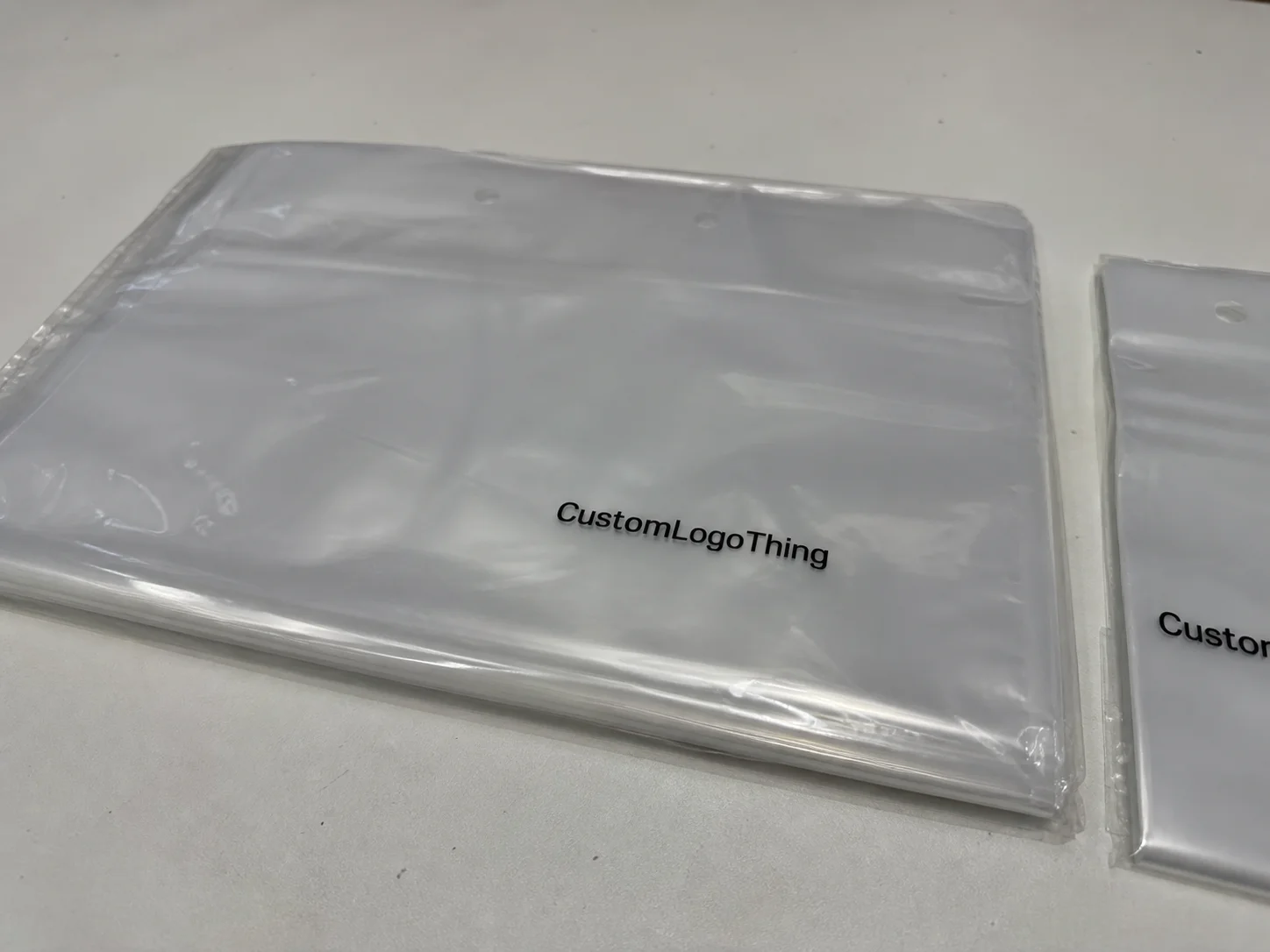
Buyer Fit Snapshot
| Best fit | Price Per Dozen Poly Mailers Bulk projects where brand print, material claims, artwork control, MOQ, and repeat-order consistency need to be specified before quoting. |
|---|---|
| Quote inputs | Share finished size, material target, print colors, finish, packing count, annual reorder estimate, ship-to region, and any compliance wording. |
| Proofing check | Approve dieline scale, logo placement, barcode or warning zones, color tolerance, closure strength, and carton packing before bulk production. |
| Main risk | Vague material claims, crowded artwork, missing packing details, or unclear freight terms can make a low unit price expensive after revisions. |
Fast answer: Price Per Dozen Poly Mailers Bulk: Real Costs should be specified like a repeatable production item. The safest quote records material, print method, finish, artwork proof, packing count, and reorder notes in one written spec.
Production checks before approval
Compare the actual filled-product size with the drawing, then confirm tolerance on folds, seals, hang holes, label areas, and retail display edges. Reserve space for logos, QR codes, warning copy, and material claims before decorative graphics fill the panel.
Quote comparison points
Review material grade, print process, finish, sampling route, tooling charges, carton quantity, and freight assumptions side by side. A quote is only useful when the supplier can repeat the same color, closure quality, and packing count on the next order.
I’ve stood on more than one factory floor in Shenzhen and Dongguan while a buyer stared at a quote and said, “Wait, that was supposed to be the price per dozen Poly Mailers Bulk?” Then the line manager started adding up film thickness, print sides, adhesive, carton packing, and freight like he was reading a grocery receipt from a very expensive supermarket. I remember one guy literally rubbing his forehead like the numbers might rearrange themselves if he looked annoyed enough. They didn’t. That’s the real game. Not the exception. And if you’ve ever tried to buy 5,000 pieces on a Tuesday and needed them in California by Friday, you already know the story.
If you buy poly mailers in volume, the price per dozen poly mailers bulk only means something if you know exactly what’s inside the quote. A dozen plain 10 x 13 mailers in 2.5 mil LDPE is not the same thing as a printed, recycled, dual-seal mailer with black interior film and a return strip. Same category. Very different bill. I’ve seen a quote in Guangzhou start at $0.11 per unit for 10,000 pieces and jump to $0.19 per unit once the buyer asked for a 1-color logo, 2.5 mil film, and shipping to Dallas. Same bag family. Different math. And yes, suppliers will absolutely pretend those things are “basically the same” if it helps them move the conversation along. Funny how that works.
I’m Sarah Chen, and I’ve spent 12 years in custom printing and packaging. I’ve negotiated with film suppliers in Shenzhen, watched seal tests fail by 3 mm in Suzhou, and had art files delayed because a brand sent a logo in a screenshot from a phone. Fun times. I’ve also had a factory hand me a sample that looked perfect, then watch the second sample arrive with the logo printed three shades darker because someone “adjusted” the ink mix in Dongguan. Anyway. The point is simple: if you want a real price per dozen poly mailers bulk, you need the right spec, the right quantity, and the right landed-cost math. Otherwise you are just collecting numbers.
Price Per Dozen Poly Mailers Bulk: What Factory Quotes Really Mean
The first thing buyers get wrong is assuming every supplier is quoting the same way. They are not. Some quote by dozen, some by case, some by thousand, and custom factories may quote by finished bag after print setup. If you compare those numbers without normalizing them, your budget gets crushed before the order even starts. I’ve watched perfectly smart procurement teams do this on a Tuesday afternoon in Los Angeles and then act surprised on Wednesday. The spreadsheet was the problem, not the factory. The factory was just being very literal, which is apparently offensive now.
I had a client bring me a “cheap” quote for a 12 x 16 poly mailer that looked great on paper. Then we checked the spec sheet line by line. The quote was for 1.8 mil, one-color print, no return strip, and FOB Ningbo only. Once we matched the real spec—2.5 mil, two-color print, reinforced seal, shipped to Texas—the price per dozen poly mailers bulk jumped by almost 28%. That’s not a surprise. That’s just math with a loud personality. In packaging, the details always show up on the invoice even if nobody invited them.
Here’s the practical meaning of price per dozen poly mailers bulk: it’s the unit cost you should use to compare suppliers after you account for product spec, print coverage, and shipping to your location. Not some fantasy number that ignores cartons, pallets, customs fees, duty, or the little “miscellaneous” charges that somehow appear like weeds after rain. If your supplier says $0.15 per unit for 5,000 pieces, that sounds neat until you learn it excludes inner cartons, export packing, and a $180 plate fee. Then the real unit cost is higher, and the pretty quote was just decoration.
The biggest price drivers are always the same three:
- Size — a 10 x 13 bag uses less film than a 14.5 x 19.5 bag.
- Thickness — 1.5 mil, 2.0 mil, 2.5 mil, and 3.0 mil all cost differently.
- Customization — plain stock is one thing; full-bleed custom print is another.
Tint matters too. Recycled content matters. Tear strips matter. A clear front with opaque back can change the price per dozen poly mailers bulk more than buyers expect because the film structure changes. I’ve seen a “small” spec change add $0.06 to $0.14 per mailer, which sounds tiny until you’re buying 20,000 pieces and your finance team starts asking very pointed questions. And by “pointed,” I mean the kind of questions that make your calendar suddenly very full. I once saw that happen on a supplier call in Ningbo. Silence is a valid negotiation tactic, but only when the numbers are on your side.
Cheap is only cheap if the mailer survives shipping, seals properly, and fits the product without void-fill drama. If it bursts in transit or your packing team needs to fold it like origami, the “savings” disappear fast. I have personally watched a warehouse supervisor in Phoenix hold up a torn bag and say, “Great, now we’re paying twice.” He wasn’t wrong. A bag that saves $0.02 but creates one return is not savings. It’s theater.
Ask for these exact details before comparing any price per dozen poly mailers bulk quote: finished dimensions, thickness in mil or microns, print colors, closure type, shipping destination, carton count, and whether the quote includes freight, palletizing, and setup fees.
If a supplier won’t give you those details, that quote isn’t a quote. It’s bait. And honestly, I think half of sourcing stress comes from people pretending bait is a strategy. A real quote from a factory in Shenzhen or Ho Chi Minh City should be boring in the best possible way: precise, itemized, and hard to misread.
Poly Mailer Product Details That Change the Price Per Dozen
Material choice drives a lot of the price per dozen poly mailers bulk, and not all films behave the same. LDPE is the standard workhorse. Co-extruded film gives better strength and puncture resistance. Recycled blends can reduce resin cost depending on supply, but color consistency may be less predictable. Compostable alternatives are a different animal entirely, and they usually cost more because the resin itself is pricier and the production controls are tighter. In a factory outside Suzhou, I was shown a recycled blend that looked fine until the third pallet. The tint shifted slightly from batch to batch. Not catastrophic, but if your brand palette is specific, “slightly off” is still off.
I once visited a plant where the buyer insisted on the cheapest recycled film available. The first run looked fine until we tested seam strength under load. Three out of ten bags failed early. We switched to a better blend, and the price per dozen poly mailers bulk went up by $0.09, but defect claims dropped hard. That’s the kind of tradeoff people ignore until returns hit the books. Then suddenly everyone discovers the word “quality” and starts saying it like they invented it. I’ve seen that exact conversation happen after a 2,500-piece apparel order landed in Atlanta with split seams on the first 300 bags.
Customization also changes everything. A plain white poly mailer is not the same as a colored bag with a logo and full back print. Ink coverage, plate count, setup time, and drying requirements all affect production cost. A simple one-color logo on one side is usually the most efficient branded option. Full-bleed artwork on both sides? Pretty, sure. Cheap? Not even close. In one Guangdong factory, moving from one-color to two-color print added a $120 plate change and pushed production out by two business days because the press needed a full recalibration.
Here’s the part most brands get wrong: overdesigned mailers often cost more and perform worse. A clean logo in one high-contrast print zone usually does the job. I’ve seen brands spend an extra $0.12 per unit on busy artwork that barely improved shelf presence. That money could have gone toward better film or lower freight. Smart branding wins. Loud branding just burns budget with confetti. I’d rather see a crisp black logo on a 2.5 mil mailer from Dongguan than a rainbow design that turns packing into a puzzle.
Performance features matter because they protect the shipment and your margin:
- Tamper-evident adhesive for secure closure.
- Extra-strong seam welds for heavier or sharper contents.
- Puncture resistance for accessories, hard goods, or boxed items.
- Tear strips for better customer experience.
- Dual adhesive strips for return-friendly ecommerce orders.
Heavier is not always better. A 3.0 mil bag for a soft T-shirt is usually overkill. A 2.0 or 2.5 mil bag can keep the price per dozen poly mailers bulk under control while still doing the job. The right spec is the one that protects the product, not the one that sounds toughest in a sales email. Sales emails love drama. Products just need to arrive intact. If your average order is a folded tee at 180 grams, a 2.0 mil mailer in a 9 x 12.5 size is often enough. If you’re shipping a rigid box or bundled accessories, step up to 2.5 or 3.0 mil and stop pretending physics is optional.
Common use cases follow predictable patterns:
- Apparel — 2.0 to 2.5 mil is often enough.
- Cosmetics — stronger seal and cleaner print matter more.
- Books — edge protection is key.
- Accessories — puncture resistance helps.
- Subscription boxes — brand appearance and repeat shipping performance matter.
If you want a branded bag that doesn’t blow up your margin, keep the artwork practical. One clear logo, one strong message, and a film spec that actually fits the product. That’s how you control the price per dozen poly mailers bulk without creating problems in packing. In my experience, a clean one-color design on a 2.5 mil mailer is usually the sweet spot for brands shipping 3,000 to 10,000 pieces per month.
For buyers building packaging systems, I usually point them toward our Custom Poly Mailers options or broader Custom Packaging Products when the mailer needs to match other branded materials. Consistency matters. Random packaging looks cheap, even when the unit price does not. I know that sounds harsh, but I’ve seen beautiful products get undercut by a sloppy mailer. It’s like wearing a suit with muddy shoes. Not tragic. Just self-inflicted.
Specifications to Compare Before You Buy Poly Mailers in Bulk
If you’re comparing suppliers on price per dozen poly mailers bulk, put the specs side by side before you look at the number. Otherwise you’re comparing a 9 x 12 unprinted stock bag against a custom 14 x 20 printed mailer and pretending they belong in the same spreadsheet. They don’t. That’s how bad buying decisions get dressed up as “market comparisons.” I’ve seen teams do this in Chicago with three tabs open and one very confident smile. The smile did not survive the spec sheet.
The exact specs that matter are straightforward:
- Width and length of the finished bag.
- Flap size and adhesive width.
- Thickness in mil or microns.
- Opacity and film color.
- Seal strength.
- Print area and number of colors.
Size affects usage more than people think. A bag that’s too large wastes film and freight space. A bag that’s too small slows packing and can cause returns when products don’t fit right. I’ve watched warehouse teams in Dallas fight with an undersized mailer during a holiday rush. They burned 20 extra seconds per pack. Multiply that by 8,000 units and tell me the “cheaper” bag was really cheaper. It wasn’t. It was a liability with a discount sticker. A 10 x 13 mailer may cost $0.02 less than a 12 x 15, but if it adds 2 extra packing motions, the labor wipes out the savings immediately.
Thickness deserves a real conversation. Thin mailers can work well for soft goods like tees or socks. Fragile items, rigid boxes, or products with sharp corners usually need thicker film or a different mailer structure. I like giving clients a practical range instead of a fake universal answer. For example, 1.5 to 2.0 mil may work for light apparel, while 2.5 to 3.0 mil is safer for mixed merchandise and higher abuse in transit. In one test I saw in Shenzhen, a 2.0 mil mailer failed after 14 drop cycles, while a 2.5 mil co-extruded version held up through 20.
Finish matters too. Matte film can feel more premium and hide scuffs. Glossy film pops more under light. Frosted or translucent options are useful when the brand wants a partial view of the product. None of those are just “looks.” They affect perceived quality, label adhesion, and in some cases the final price per dozen poly mailers bulk. A matte finish may add a little cost, but on a retail-facing DTC brand it can also reduce visible scratches from carton-to-carton rubbing during transit from Ningbo to the U.S. West Coast.
If your mailers will carry shipping labels, barcodes, or international tracking labels, ask about surface printability and scan reliability. A slick finish can look clean but create trouble if the label doesn’t stick. That’s how small packaging decisions become customer service problems. And those always cost more than the mailer itself. I’ve seen one peel-off label create three support tickets, one reshipment, and one very unhappy operations manager in Austin. Nobody wants to hear “the label fell off” after paying for express freight.
For compliance and shipping performance, I prefer buyers reference recognized standards where relevant. For packaging testing, ISTA provides test methods many shippers use. For materials and sustainability checks, the FSC framework matters when fiber-based components are involved. Poly mailers are plastic, obviously, but if your broader packaging system includes inserts or paper components, standards are not decoration. They are part of the buying decision, especially when you’re sourcing across regions like Guangdong, Jiangsu, or Ho Chi Minh City.
Always request a spec sheet and sample before you commit. Always. I know that sounds basic, but I’ve seen six-figure procurement decisions made off one PDF and a hopeful email thread. A physical sample tells you more in 30 seconds than a sales pitch does in 30 minutes. Plus, you can actually feel whether the adhesive is sticky or just pretending to be. If the sample arrives in 7 business days from a factory in Shanghai, great. If it takes 3 weeks and nobody can explain why, that tells you something too.
| Spec | Budget Mailer | Standard Custom Mailer | Premium Custom Mailer |
|---|---|---|---|
| Film | LDPE | Co-extruded LDPE | Reinforced co-extruded blend |
| Thickness | 1.8 mil | 2.5 mil | 3.0 mil |
| None | 1 color logo | Full-bleed 2 color | |
| Closure | Single adhesive | Strong tamper seal | Dual adhesive return strip |
| Typical use | Low-risk apparel | Retail ecommerce | Higher-value shipments |
| Relative price per dozen poly mailers bulk | Lowest | Moderate | Highest |
Price Per Dozen Poly Mailers Bulk: Pricing, MOQ, and Sample Math
The biggest drivers are size, thickness, print complexity, and order quantity. A larger bag uses more film. Thicker film raises material cost. More colors add plate and setup charges. Smaller orders push setup costs into each unit, which raises the price per dozen poly mailers bulk. Freight, carton packing, and destination also matter. A quote that looks low on the screen can get expensive fast once the real spec is applied.
MOQ is where a lot of buyers get annoyed, then confused, then expensive. Some factories will start with a few hundred pieces per size for stock mailers. Custom print usually needs a larger run because plates, setup, and color calibration are part of the process. Lower MOQ means a higher price per dozen poly mailers bulk. That is not punishment. It is production reality. I know, I know. Everybody wants factory pricing with boutique quantity. The universe remains uncooperative. In Dongguan, a 1,000-piece custom run can cost almost as much per unit as a 5,000-piece run because the setup effort barely changes.
Here’s a useful way to think about pricing buckets:
- Plain stock bags — lowest setup cost, faster production, limited branding.
- Custom printed bags — moderate setup cost, better brand control, higher unit price at small quantity.
- Premium specialty film — highest material cost, strongest branding or performance benefits.
I’ve quoted hundreds of orders, and the pattern is consistent. The smaller the order, the more setup cost gets shoved into each unit. The larger the order, the more that cost gets spread out. That’s why the price per dozen poly mailers bulk often drops sharply between the first breakpoint and the next one. Buyers love small orders until the math starts wearing a tie and explaining itself. A run of 2,000 pieces at $0.31 each is $3.72 per dozen; a run of 10,000 pieces at $0.19 each is $2.28 per dozen. Same design, different scale.
Let me give you a real procurement-style example. A buyer asked for 2,000 pieces of a 10 x 13 printed mailer. The quote came in at $0.31 per unit, which sounds okay until you break it down. That’s $3.72 per dozen. When we pushed to 10,000 pieces, the same spec dropped to $0.19 per unit, or $2.28 per dozen. Same bag. Same logo. The difference was setup spread, not magic. The factory in Shenzhen did not suddenly become generous. It just stopped charging the setup across a tiny run.
Hidden costs are where the ugly surprises live. Ask about these before you approve anything:
- Plate fees for printing.
- Artwork prep or file cleanup.
- Sample fees for pre-production checks.
- Color matching charges for specific brand tones.
- Carton packing requirements.
- Freight and destination charges.
One supplier quoted me a gorgeous price per dozen poly mailers bulk until we added pallet packing and ocean freight to Chicago. Suddenly the “best deal” wasn’t even in the top three. That’s why landed cost matters more than unit cost. If you only compare bag price, you’re leaving out half the bill. Sometimes the cheap quote is like a cheap hotel room with a resort fee the size of your rent. I’ve seen a quote in Ningbo go from $0.14 per unit to $0.23 per unit once packing, export documentation, and port delivery were included.
Here’s a simple negotiation move that works more often than people think: ask for pricing at two or three quantity breakpoints. For example, ask for 3,000, 5,000, and 10,000 pieces. You’ll see where the real savings begin. Sometimes a 20% volume increase only saves 4%. Sometimes it saves 18%. That’s useful information. It also gives you actual leverage at the factory table in Guangzhou instead of crossing your fingers and hoping the first number was a gift.
If you’re buying through a broader supply program, our Wholesale Programs are useful when you want repeat ordering and steady pricing across multiple packaging items. Consistency keeps the accounting team from tearing their hair out. It also makes it easier to forecast the price per dozen poly mailers bulk over a quarter instead of reacting to random reorder panic.
Below is a rough example structure buyers can use to evaluate price per dozen poly mailers bulk. These are sample ranges, not a promise, because size, film, printing, and shipping destination all move the number.
| Order Size | Plain Stock Unit Price | Custom Printed Unit Price | Approx. Price Per Dozen |
|---|---|---|---|
| 1,000 pieces | $0.10 - $0.14 | $0.18 - $0.28 | $1.20 - $3.36 |
| 5,000 pieces | $0.08 - $0.11 | $0.14 - $0.22 | $0.96 - $2.64 |
| 10,000 pieces | $0.07 - $0.09 | $0.12 - $0.18 | $0.84 - $2.16 |
Again, that table is directional. If your artwork is complex, your film is recycled, or your shipping lane is expensive, the price per dozen poly mailers bulk will move. That’s normal. Anyone promising a fixed low price without a spec sheet is selling fantasy, not packaging. If the supplier can’t tell you the cost difference between 1-color and 2-color print at 5,000 pieces, they are either guessing or hiding something.
How long does a bulk poly mailer order usually take?
Stock orders can move quickly, often within days. Custom Printed Poly Mailers usually take 12 to 15 business days after proof approval, plus freight time and customs if applicable. Artwork review, sample sign-off, and shipping method all affect the timeline. If you need air freight, the timeline gets shorter and the unit cost gets uglier. That is the tradeoff. No magic wand. Just math with better posture.
The order flow is usually pretty consistent: spec confirmation, artwork review, sample approval, production, quality check, packing, and shipment. The difference between a smooth job and a mess is usually paperwork discipline. Not glamour. Paperwork. I wish I could tell you the secret was charisma, but no. It’s usually a PDF named correctly and approved on time. The best orders I’ve handled in Jiangsu moved because someone responded to the proof within 24 hours and the factory could keep the line scheduled.
For stock bags, the timeline can be relatively quick because there’s no print setup. For custom jobs, you need to allow for artwork review and proof approval before production starts. If the buyer changes the design after approval, the timeline stretches. If the buyer sends blurry files, it stretches again. If the buyer decides the logo should be 18% bigger after the sample is made, well, that’s a self-inflicted delay. I’ve watched a two-week schedule turn into four because someone wanted “one small tweak” after approving the final proof from a factory in Guangdong. That tiny tweak cost both time and money.
A realistic planning window for Custom Poly Mailers is often 12 to 15 business days after proof approval, depending on quantity and print complexity. Add freight time. Add customs if applicable. Add a little buffer because factories are not clairvoyant and port schedules are not emotional support animals. I’ve seen a “rush order” become a “why is this on the water already?” conversation in less than forty-eight hours. If your delivery is headed to the U.S. East Coast, ocean freight can add 25 to 35 days after production; air freight can cut that to 3 to 7 days, but your unit economics will hate you for it.
I’ve had a client lose a launch window because they waited until 10 days before a promo drop to ask for a custom order. We could still do it, but the price per dozen poly mailers bulk went up because air freight replaced ocean freight. That’s the kind of premium nobody loves paying. It’s the procurement version of ordering emergency takeout because nobody planned dinner. The package arrives faster, yes. The bill arrives faster too.
Here’s what slows orders down most often:
- Missing artwork files.
- Last-minute color changes.
- Vague bag size requirements.
- Late payment or delayed deposit.
- Unclear shipping destination.
Sample approval matters more than people realize. If color accuracy and seal quality are important, request a physical sample or a production-style proof. A digital mockup is helpful for layout, but it will not tell you whether the adhesive peels too fast or whether the seam weld is clean. I’ve seen too many teams discover that after full production. Painful. Expensive. Preventable. And somehow always happening right before a launch, which is just rude. A sample sent from a factory in Shanghai or Taizhou can save you from a 10,000-piece mistake.
Inspection should cover the basics: seam integrity, print alignment, adhesive performance, carton counts, and thickness consistency. A quick pinhole test and a seal check can save a lot of headaches. If you work with a supplier who actually measures these things, you’ll feel the difference in defect rates. I like suppliers who can tell me the seam tolerance, the print registration, and the carton count without turning the answer into a poem.
For shipping standards and packaging tests, I often point buyers to the Packaging Corporation / packaging industry resources when they want broader material context and terminology guidance. Not because every detail there solves your sourcing problem, but because bad vocabulary leads to bad sourcing. And bad sourcing is expensive. A buyer in Chicago asking for “better plastic” is not a spec. It’s a cry for help.
Why Choose Us for Price Per Dozen Poly Mailers Bulk Orders
I’ll be blunt. Buyers don’t need another vendor who just forwards a quote and disappears. They need a packaging partner who can read the product, recommend the right spec, and keep the price per dozen poly mailers bulk aligned with real business goals. I’ve built those relationships the hard way, by standing in factories in Shenzhen, Dongguan, and Ningbo, checking samples, and pushing back when a supplier tried to swap in a weaker film under the same quote. That happened more than once, because apparently some people think nobody notices when the bag suddenly feels like a grocery sack.
At Custom Logo Things, the value is in translation. You tell us what the product weighs, how it ships, and where it lands. We turn that into a spec That Actually Works. That means less guessing, fewer revisions, and fewer “why did this arrive damaged?” emails. Those emails are never fun. They’re the packaging equivalent of a bad breakup text. I’d rather prevent one reshipment to Denver than apologize for it later.
Direct factory coordination matters because it lets us see what actually drives the number. Sometimes the quote jumps because a resin grade changed. Sometimes it’s because a print plate needs rework. Sometimes freight is the villain. A supplier who understands those differences can keep the quote honest instead of dressing it up. That’s especially useful when resin markets swing in Zhejiang or when port congestion changes the math in Shanghai.
I’ve negotiated pricing where the factory wanted to charge extra for a two-tone logo, but we simplified the print zones and cut the setup cost by $180 on the job. That kind of adjustment is practical. It doesn’t hurt branding, and it keeps the price per dozen poly mailers bulk in a more reasonable place. On a 10,000-piece order, that kind of fix can matter more than a tiny resin discount.
Quality control is another place where real experience saves money. We check seal strength, print consistency, and thickness before freight leaves the plant. If a bag is supposed to be 2.5 mil and it measures low, we catch it. If the logo drifts 6 mm off center, we catch that too. Catching it after delivery is a much more expensive hobby. And yes, I’ve had to reject whole cartons in a warehouse near Yiwu because the adhesive was inconsistent across the first 300 bags. Nobody loves that meeting, but everyone loves not shipping defective product.
We also help with logo placement and print limits. A good mailer should look clean from six feet away and still feel credible when the customer opens it. Overcrowding the design often makes the bag look cheaper, not better. Honestly, I think people sometimes confuse “more ink” with “more brand.” That is not how this works. A giant logo with five slogans is not sophistication. It’s shouting. A single sharp mark on a matte 2.5 mil mailer usually does more for perceived value than a wall of copy ever will.
For customers building a broader packaging program, pairing poly mailers with matching cartons, labels, or inserts can improve brand consistency across shipments. That’s where our Custom Packaging Products and Wholesale Programs can help the buying process stay organized without bloating costs. If your cartons come from a factory in Shenzhen and your mailers come from a plant in Dongguan, we can still keep the brand story consistent across both.
Our goal is value, not the lowest number on the screen. A slightly higher price per dozen poly mailers bulk can still be the smarter buy if the bags arrive on time, seal correctly, and protect the product. Cheap bags that fail are not cheap. They are just delayed expenses with a logo on them. I’ve had enough factory visits to know that saving $0.01 per bag can cost you $1.00 in support, labor, and replacements if the spec is wrong.
Next Steps to Lock In the Right Bulk Poly Mailer Price
If you want an accurate quote, send the right information the first time. That saves back-and-forth and gets you a real price per dozen poly mailers bulk instead of a rough guess. You should prepare:
- Exact product dimensions.
- Estimated order quantity.
- Print artwork or logo file.
- Target ship date.
- Shipping destination ZIP code or country.
- Thickness preference if you have one.
Ask for two options: one budget spec and one upgraded spec. That gives you a real comparison. For example, a 2.0 mil single-color mailer versus a 2.5 mil dual-strip version can show you exactly how much the better spec costs per dozen. Then you can decide based on damage risk, not guesswork. If the upgrade adds $0.04 per bag but cuts return damage by one shipment out of 500, the higher spec may actually save money.
Also ask for the landed-cost quote in the same conversation as the sample and spec sheet. If freight and carton packing are left out, the quote is incomplete. I’ve watched teams approve a great per-unit number only to discover the freight doubled the final cost. That kind of surprise makes procurement look bad for no good reason. A quote from a factory in Guangdong that excludes pallets and delivery to the port is not a final quote. It’s an opening act.
Confirm whether setup, freight, and carton packing are included before you approve. Confirm it in writing. I know that sounds tedious. It is. So is explaining to your CFO why the price per dozen poly mailers bulk ended up 17% higher than the number on the first email. If you want to avoid that conversation, ask for the line items upfront and make the supplier spell them out.
Once you have the product specs and target quantity, you can move from rough estimates to a reliable quote. That’s the difference between hoping and buying. And if you’re spending real money, hope is a terrible procurement strategy. A quote should tell you the bag price, the setup fee, the carton plan, and the shipping lane, not just the headline number. Headline numbers are how people get burned.
So send the dimensions, the artwork, the quantity, and the destination. We’ll take it from there and give you a quote that reflects the actual price per dozen poly mailers bulk, not a headline number designed to look cute in a spreadsheet. If your order is headed to the U.S., Europe, or Australia, tell us that upfront. The freight math changes faster than most buyers expect.
FAQ
What is the price per dozen poly mailers bulk for custom printing?
It depends on size, thickness, print colors, and MOQ. Plain stock mailers cost less than custom printed mailers because setup and artwork add expense. For example, 5,000 pieces at $0.15 per unit equals $1.80 per dozen before freight; if you add a second color or a return strip, the number moves. Ask for landed pricing by dozen so you can compare suppliers fairly and avoid comparing a 1-color 2.0 mil bag to a 2-color 3.0 mil one.
How many poly mailers do I need to meet MOQ in bulk?
MOQ varies by factory and print method. Stock mailers can start at lower quantities, while custom printed orders often need larger runs. A factory in Dongguan may accept 1,000 pieces for stock, while custom print may start at 3,000 or 5,000 pieces depending on the artwork and plate setup. Request pricing at multiple quantity levels, such as 3,000, 5,000, and 10,000 pieces, so you can see the real break point.
Does thicker film always mean a higher price per dozen poly mailers bulk?
Usually yes, because thicker film uses more material. But the right thickness can reduce damage and replacement costs. A 2.5 mil mailer may cost a little more than a 2.0 mil version, but if it prevents one torn shipment per few hundred orders, the total cost can be lower. The cheapest bag is not always the cheapest option overall, especially if it causes returns or tears in transit.
How long does a bulk poly mailer order usually take?
Stock orders move faster than custom printed runs. For custom orders, plan on typically 12 to 15 business days from proof approval, plus freight time and customs if applicable. Artwork approval, sample sign-off, and shipping method all affect the timeline. If the bags are needed for a product launch or seasonal sale, start early so you’re not paying air freight from Shanghai because someone waited too long.
What should I send to get an accurate bulk quote?
Send exact size, thickness preference, quantity, print details, and shipping destination. If possible, include a photo or sample of the product being packed. The more specific the request, the more accurate the quote, and the less time you spend correcting avoidable assumptions. If you already know the ship-to city, carton count, and deadline, include those too. That’s how you get a real quote instead of a vague estimate.